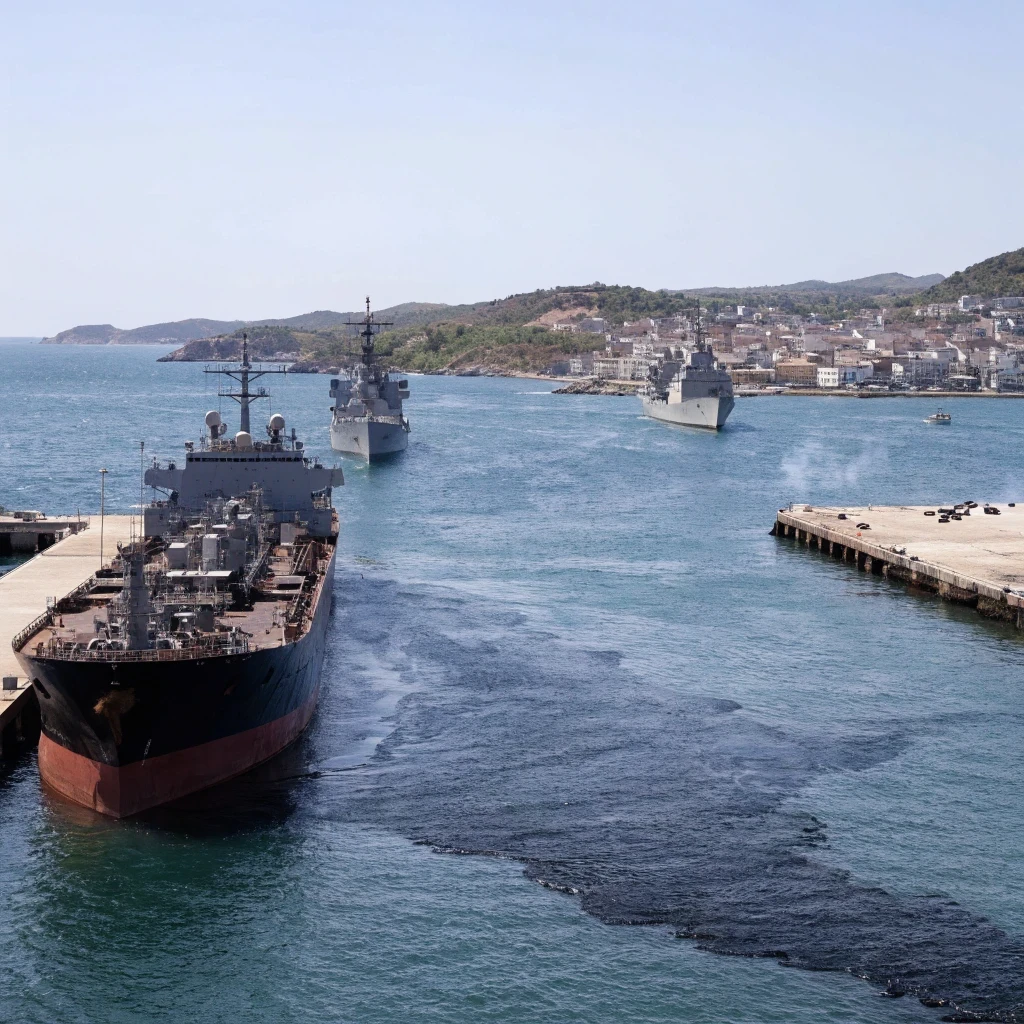
The United States has once again tightened its decades-long economic stranglehold on Cuba, this time by intensifying naval quarantines on oil deliveries. The immediate consequence is unmistakable: widespread blackouts have plunged Cuban cities into darkness, hospitals are straining to keep emergency generators fueled, and ordinary citizens face the grim reality of a humanitarian situation deteriorating by the hour. This is not a hypothetical policy debate; it is a live experiment in coercive statecraft unfolding in real time.
The central question driving this analysis is deceptively simple yet profoundly consequential: can economic sanctions alone force political change in Cuba, or do they merely manufacture a humanitarian catastrophe that strengthens the very regime they seek to weaken? History offers no clean answer, but the current escalation provides a stark case study in the limits of economic warfare.
The Biden administration's continuation of Trump-era maximum pressure tactics, now amplified by naval interdiction, signals a deliberate choice to prioritize regime-change ambitions over humanitarian considerations.
On This Page
What makes this moment particularly significant is the convergence of multiple pressures: Cuba's already fragile economy, the collapse of Venezuelan oil subsidies, the lingering effects of pandemic-era tourism losses, and now a naval blockade that cuts off the island's primary energy lifeline.
The Cuban government's response—rolling blackouts, rationing, and defiant rhetoric—reveals a regime that has weathered six decades of sanctions and shows no signs of capitulation. The policy question, therefore, is not whether sanctions work, but whether they have ever worked, and at what human cost.
TL;DR The United States' intensified naval quarantine on Cuban oil shipments has triggered widespread blackouts and a deepening humanitarian crisis. This analysis examines whether economic sanctions alone can achieve political change in Cuba, drawing on historical evidence, current geopolitical dynamics, and humanitarian impact assessments. The evidence suggests sanctions have consistently failed to topple the Castro regime while inflicting severe civilian suffering, raising fundamental questions about the ethics and efficacy of coercive economic statecraft.
The Mechanics of Economic Coercion: How Sanctions Are Supposed to Work
Economic sanctions operate on a simple theoretical premise: by denying a regime access to essential resources, you create domestic pressure that forces political concessions. The logic assumes that populations will blame their government for shortages and mobilize against it, compelling leadership to change course or face internal collapse. This theory has guided US policy toward Cuba since the 1960 embargo, yet the empirical record remains deeply ambiguous.
The current naval quarantine represents an escalation beyond traditional sanctions. By physically intercepting oil tankers bound for Cuban ports, the US has moved from economic pressure to maritime interdiction—a tactic with significant legal and humanitarian implications. International law generally permits blockades only during armed conflict, raising questions about the legality of this action under peacetime conditions. The Cuban government has condemned the move as an act of war, while Washington frames it as enforcement of existing sanctions.
Proponents of maximum pressure argue that Cuba's economic desperation will eventually force political liberalization. They point to the 1990s "Special Period," when the collapse of Soviet subsidies created severe shortages that led to limited market reforms. However, those reforms were carefully managed by the regime and did not result in democratic transition. The Cuban Communist Party has demonstrated remarkable resilience, adapting its economic model just enough to survive without surrendering political control.
Critics counter that sanctions have precisely the opposite effect of their intended purpose. Economic hardship tends to consolidate authoritarian regimes by creating a siege mentality, justifying repression as necessary for national survival, and providing a convenient scapegoat for domestic failures. The Cuban government has masterfully used the embargo to explain every economic shortcoming, deflecting blame from its own policy failures onto Washington.
The Historical Record: Six Decades of Failed Regime Change
The United States has maintained economic sanctions against Cuba for over sixty years, making it the longest-running embargo in modern history. Throughout this period, the stated goal has remained consistent: to bring about democratic governance on the island. Yet Cuba remains a one-party state with a command economy, and the Castro regime—now led by Miguel Díaz-Canel—shows no signs of imminent collapse.
Historical analysis reveals a pattern of sanctions failing to achieve their political objectives while imposing significant humanitarian costs. The 1962 embargo, the 1992 Cuban Democracy Act, the 1996 Helms-Burton Act, and the 2017 rollback of Obama-era normalization have all failed to dislodge the regime. Each escalation has been met with Cuban defiance and international condemnation, particularly from Latin American and European nations.
The most instructive comparison is with other sanctioned regimes. North Korea has endured sanctions for decades without political change. Iran's economy has been devastated by sanctions, yet the Islamic Republic persists. Venezuela's Maduro government has survived multiple rounds of sanctions that have triggered a massive humanitarian crisis. These cases suggest that sanctions rarely achieve regime change, particularly when the targeted government controls the narrative and has external allies.
What sanctions do accomplish is the systematic impoverishment of civilian populations. In Cuba, this manifests as food shortages, medicine scarcity, infrastructure decay, and now energy blackouts. The humanitarian toll is not collateral damage; it is the primary mechanism through which sanctions are supposed to work. This raises profound ethical questions about whether such suffering is an acceptable price for political objectives that may never be achieved.
The Humanitarian Crisis: Blackouts, Medicine Shortages, and Civilian Suffering
The recent intensification of naval quarantines has produced immediate and visible consequences. Cuba's aging power grid, already struggling with fuel shortages and inadequate maintenance, has collapsed under the strain. Major cities including Havana, Santiago de Cuba, and Camagüey have experienced prolonged blackouts lasting up to twelve hours daily. Hospitals operate on emergency generators, water pumps fail, and food spoils in unrefrigerated storage.
The medical situation is particularly dire. Cuba's healthcare system, once celebrated for its achievements, now faces critical shortages of essential medicines, surgical supplies, and even basic analgesics. The US embargo restricts not only direct trade but also third-country transactions involving US-origin components, making it difficult for Cuba to purchase medical equipment containing American parts. Humanitarian organizations have documented shortages of insulin, antibiotics, and chemotherapy drugs.
Food security has deteriorated to crisis levels. Cuba imports approximately 80 percent of its food, and the blockade has disrupted supply chains for basic staples including rice, beans, wheat, and cooking oil. The government's rationing system provides minimal caloric intake, and black markets have emerged where those with resources can purchase goods at inflated prices. Malnutrition rates, particularly among children and the elderly, are rising according to UN reports.
The psychological impact of prolonged scarcity cannot be overstated. Cubans describe a pervasive sense of hopelessness, with many young people seeking to emigrate despite the dangers of irregular migration. The US policy of welcoming Cuban migrants while simultaneously strangling the island's economy creates a paradoxical dynamic: the sanctions that are supposed to liberate Cubans are driving them to risk their lives in the Florida Straits.
International Response: Condemnation, Solidarity, and Geopolitical Realignment
The international community has largely condemned the intensified blockade, with the United Nations General Assembly voting overwhelmingly for the 31st consecutive year to demand an end to the US embargo. The 2025 vote saw 187 nations in favor of the resolution, with only the United States and Israel opposing. This near-unanimous condemnation reflects growing frustration with Washington's unilateral approach to Cuba policy.
China and Russia have stepped into the vacuum created by US sanctions, providing Cuba with economic assistance, investment, and diplomatic support. Chinese state media has framed the blockade as evidence of American hypocrisy and imperial overreach, while Russian officials have offered military and energy cooperation. These partnerships have helped Cuba weather the sanctions but have also deepened its dependence on authoritarian allies.
Latin American nations have been particularly vocal in their opposition to the blockade. Mexico, Brazil, Argentina, and Colombia have all called for an end to sanctions, viewing them as a violation of Cuban sovereignty and a destabilizing force in the region.
The Community of Latin American and Caribbean States (CELAC) has made Cuba solidarity a central pillar of its diplomatic agenda, challenging US hegemony in the Western Hemisphere.
European Union members have maintained a more nuanced position, opposing the extraterritorial application of US sanctions while engaging in limited economic cooperation with Cuba. The EU's Common Position on Cuba, established in 1996, conditions closer ties on democratic reforms, but European nations have increasingly criticized the blockade's humanitarian impact. This diplomatic friction has created tensions within the transatlantic alliance.
We Also Published
The Geopolitical Chessboard: Cuba's Strategic Position and External Alliances
Cuba's significance extends far beyond its immediate humanitarian crisis. The island occupies a strategically vital position in the Caribbean, just ninety miles from Florida, and has historically served as a flashpoint in US-Russia-China competition. The current blockade must be understood within this broader geopolitical context, where Cuba functions as a pawn in great power rivalries that transcend its domestic politics.
Russia's renewed interest in Cuba represents a direct challenge to US hegemony in the Western Hemisphere. Following the Ukraine invasion and subsequent Western sanctions, Moscow has sought to cultivate allies capable of resisting American pressure. Cuba, with its historical ties to the Soviet Union and its strategic location, has become a natural partner.
Russian naval vessels have made port calls in Havana, and discussions of restoring the Lourdes signals intelligence facility have circulated in diplomatic circles.
China's engagement with Cuba has grown steadily, focusing on economic investment, telecommunications infrastructure, and military cooperation. Chinese companies have invested in Cuban ports, including the Mariel Special Development Zone, which Beijing views as a gateway to Latin American markets. This economic penetration provides Cuba with alternatives to US trade while giving China a strategic foothold near American shores.
The blockade's effectiveness is further undermined by these external alliances. Sanctions work best when they are multilateral and comprehensive, but Cuba's ability to source oil, goods, and financing from China, Russia, and other partners blunts their impact. The naval quarantine attempts to close this loophole, but it also risks direct confrontation with vessels flagged to allied nations, raising the specter of an international incident.
The Oil Question: Energy Security as the Battleground
Oil is the lifeblood of Cuba's economy, and the naval quarantine targets this vulnerability with surgical precision. Cuba produces minimal domestic oil—approximately 40,000 barrels per day from aging onshore fields—and relies on imports to meet the remainder of its roughly 150,000 barrel daily consumption.
Venezuela has historically supplied the bulk of this oil under preferential terms, but Venezuela's own production collapse has reduced these shipments to a trickle.
The United States has sought to exploit this vulnerability by interdicting oil shipments from alternative suppliers. Tankers carrying crude from Russia, Iran, or other non-US sources have been intercepted or turned back, creating a de facto energy blockade. The Cuban government has been forced to implement rolling blackouts, ration electricity for industrial users, and prioritize power for hospitals and critical infrastructure.
Energy scarcity has cascading effects throughout the economy. Without reliable electricity, factories cannot operate, refrigeration fails, and water treatment plants struggle to maintain service. The tourism sector, Cuba's primary source of hard currency, has been devastated by blackouts that make the island unappealing to visitors. This economic contraction reduces the government's ability to import food and medicine, creating a vicious cycle of deprivation.
The long-term solution to Cuba's energy crisis lies in diversification, but sanctions actively prevent this. US restrictions block investment in Cuban oil exploration, including potentially significant offshore reserves in the Gulf of Mexico. Chinese and Russian companies have expressed interest in developing these fields, but the threat of US secondary sanctions has deterred many potential investors. Cuba remains trapped in energy poverty by the very policies designed to pressure its government.
Domestic Cuban Politics: Resilience, Repression, and the Limits of Pressure
The Cuban government's response to intensified sanctions reveals both its resilience and its authoritarian character. Faced with blackouts and shortages, the regime has doubled down on control, restricting dissent, monitoring social media, and arresting activists who attempt to organize protests. The 2021 protests, the largest in decades, were met with a crackdown that resulted in hundreds of arrests and lengthy prison sentences.
Yet the regime has also demonstrated adaptability. The government has expanded private sector activity, legalized small businesses, and allowed limited foreign investment in tourism and other sectors. These reforms, while modest, have created new economic actors with a stake in stability. The regime calculates that controlled liberalization can relieve pressure without threatening its monopoly on political power.
Succession dynamics add another layer of complexity. President Miguel Díaz-Canel, who assumed office in 2018, represents a generational shift from the revolutionary leadership of Fidel and Raúl Castro. While he has maintained orthodox positions on key issues, his government has shown pragmatic flexibility in economic matters. Whether this pragmatism extends to political liberalization remains doubtful, particularly under the pressure of intensified sanctions.
The Cuban military, which controls significant portions of the economy through its business conglomerate GAESA, has a vested interest in regime survival. Military leaders benefit from the current system and have little incentive to support democratic transition. This institutional entrenchment makes sanctions-driven regime change even less likely, as the military's economic interests are tied to the status quo.
Humanitarian Law and the Ethics of Economic Warfare
The intensified blockade raises serious questions under international humanitarian law. The Geneva Conventions and customary international law prohibit collective punishment and require that civilian populations be spared from the effects of hostilities. While economic sanctions are not traditionally classified as armed conflict, the naval quarantine's physical interdiction of shipping arguably crosses into acts of war.
Human rights organizations have documented the humanitarian impact of the blockade with increasing alarm. Amnesty International, Human Rights Watch, and the UN Office for the High Commissioner for Human Rights have all called for the easing of sanctions to allow humanitarian access. The blockade's impact on medical supplies, food security, and basic infrastructure constitutes a violation of economic, social, and cultural rights under international law.
The United States defends its policy by citing Cuba's human rights record, arguing that sanctions pressure the regime to improve its treatment of citizens. This justification inverts the causal relationship: sanctions worsen the humanitarian situation, which the regime then uses to justify repression. The policy creates a self-fulfilling prophecy where the Cuban government's authoritarianism is reinforced by the very measures designed to undermine it.
Ethical analysis of economic sanctions must weigh their intended political benefits against their predictable humanitarian costs. Even if sanctions could theoretically achieve regime change, the question remains whether the suffering inflicted on civilians is proportionate to the objective. The evidence from Cuba, and from other sanctioned regimes, suggests that the humanitarian costs are severe while the political benefits remain speculative at best.
- 01
- 02
- 03
- 04
Alternative Futures: Scenarios for Cuba and US Policy Options
The current trajectory of US-Cuba relations points toward continued confrontation, but alternative futures remain possible. Policy choices made in Washington, Havana, and allied capitals will determine whether the island descends further into humanitarian crisis or finds a path toward stability and gradual opening. Examining these scenarios clarifies the stakes and the potential consequences of different approaches.
The most likely scenario, absent a major policy shift, is continued stalemate. The United States maintains sanctions, Cuba endures with external support, and the humanitarian situation remains dire but not catastrophic enough to trigger international intervention. This outcome perpetuates suffering without achieving political change, representing the worst of both worlds: ineffective coercion and ongoing humanitarian harm.
A second scenario involves a negotiated settlement, perhaps brokered by third parties such as the Vatican or European Union. Such an agreement might involve phased sanctions relief in exchange for Cuban political reforms, including the release of political prisoners, legalization of opposition parties, and internationally monitored elections. While this outcome seems distant given current political dynamics, historical precedents suggest that seemingly intractable conflicts can be resolved through sustained diplomacy.
A third scenario, increasingly discussed in policy circles, involves a fundamental reassessment of US strategy. Some analysts argue that engagement, not isolation, is more likely to produce gradual liberalization in Cuba. The Obama-era opening, which saw increased travel, remittances, and diplomatic relations, created conditions for modest reforms and expanded civil society space. Reversing course toward engagement would require political courage but might ultimately prove more effective than six decades of failed sanctions.
The Case for Engagement: Lessons from the Obama Era
The 2014-2016 normalization period provides a natural experiment in alternative approaches to Cuba policy. During this window, the United States restored diplomatic relations, eased travel restrictions, and allowed increased remittances and trade. The results were measurable: Cuban private sector activity expanded, internet access improved, and civil society organizations gained greater operating space.
Proponents of engagement argue that these changes demonstrate the superiority of constructive engagement over isolation. By creating economic opportunities for ordinary Cubans, engagement empowers those with a stake in reform and reduces the regime's ability to blame external enemies for domestic failures. The Cuban government's limited reforms during this period, while insufficient, represented progress that sanctions had failed to achieve in five decades.
Critics of engagement counter that the Obama-era opening merely provided economic oxygen to a repressive regime without securing meaningful political concessions. They point to continued arrests of dissidents, restrictions on independent media, and the regime's refusal to allow multiparty elections. From this perspective, engagement rewards authoritarianism and undermines the credibility of US human rights advocacy.
The empirical record suggests both perspectives contain elements of truth. Engagement did create space for civil society and economic liberalization, but it did not produce democratic transition. Sanctions have failed to achieve regime change but have maintained pressure on the Cuban government. The policy question is not which approach is perfect, but which produces better outcomes for the Cuban people at acceptable costs.
Regional Dynamics: Latin America's Shifting Position
Latin American governments have increasingly distanced themselves from US policy toward Cuba, viewing the blockade as anachronistic and counterproductive. The region's leftward shift in recent years has strengthened solidarity with Havana, while even conservative governments have criticized the extraterritorial application of US law. This regional consensus undermines the legitimacy of US policy and provides Cuba with diplomatic cover.
Mexico, historically a key player in Latin American diplomacy, has maintained strong ties with Cuba despite its own complex relationship with Washington. Mexican presidents from both left and right have opposed the blockade, and Mexico has provided Cuba with oil and other assistance during shortages. The recent election of a leftist government in Mexico has further solidified this solidarity.
Brazil's position has fluctuated with its domestic politics. The leftist governments of Lula da Silva and Dilma Rousseff maintained close ties with Cuba, while Jair Bolsonaro's right-wing administration aligned more closely with Washington. Lula's return to power in 2023 has restored Brazil's traditional solidarity with Cuba, though economic constraints limit the scope of Brazilian assistance.
Colombia, historically a US ally, has also shifted toward engagement with Cuba. The 2016 peace agreement with FARC guerrillas was brokered in Havana, and subsequent Colombian governments have maintained diplomatic relations despite US pressure. This demonstrates that even close US allies in the region are unwilling to fully endorse the blockade.
Humanitarian Corridors: A Path Forward?
One potential compromise involves the establishment of humanitarian corridors that allow essential supplies to reach Cuban civilians while maintaining sanctions on the regime. Such arrangements have been used in other conflict zones, including Syria and Yemen, to mitigate humanitarian suffering without legitimizing the targeted government. Applying this model to Cuba could address the most acute humanitarian needs while preserving political pressure.
Implementation would require agreement on what constitutes humanitarian goods, mechanisms for monitoring distribution, and guarantees that supplies reach civilian populations rather than being diverted to the regime. International organizations, including the Red Cross and UN agencies, could serve as neutral intermediaries. The United States would need to accept some risk that humanitarian assistance might indirectly benefit the regime.
Critics argue that humanitarian corridors would be exploited by the Cuban government to import goods that free up resources for military and security purposes. They point to similar arrangements in other contexts where aid has been diverted or used to consolidate authoritarian control. These concerns are legitimate but should be weighed against the ongoing humanitarian catastrophe that the blockade is causing.
The humanitarian corridor approach has the advantage of being politically feasible in the current environment. It does not require the United States to abandon its sanctions policy or the Cuban government to make political concessions. It simply addresses the most urgent humanitarian needs while the broader political impasse continues. Whether either side would accept such an arrangement remains uncertain, but it represents a pragmatic middle ground.
Conclusion: The Moral and Strategic Failure of Sanctions-Only Policy
The evidence presented in this analysis leads to an inescapable conclusion: sanctions alone cannot bring about political change in Cuba, and the current intensified blockade is causing a humanitarian crisis without achieving its stated objectives. Six decades of economic warfare have failed to dislodge the Cuban regime while inflicting systematic suffering on the Cuban people. The policy is both strategically ineffective and morally indefensible.
The Cuban government's resilience stems from multiple factors: external support from China and Russia, effective propaganda that blames the United States for domestic problems, institutional control through the military and security services, and a population that has learned to survive under conditions of scarcity. Sanctions have not weakened these factors; if anything, they have strengthened them by providing the regime with a convenient external enemy.
The humanitarian consequences of the blockade are not abstract statistics but lived realities for millions of Cubans. Blackouts disrupt every aspect of daily life, from cooking and heating to medical care and education. Food shortages cause malnutrition, particularly among vulnerable populations. Medicine scarcity leads to preventable deaths and suffering. These outcomes are not collateral damage; they are the intended mechanism of sanctions policy.
International law and ethical principles require that civilian populations be spared from the consequences of political disputes. The United States' continued blockade of Cuba violates this fundamental principle, imposing collective punishment on a population for the actions of its government. The near-unanimous international condemnation of the embargo reflects this moral judgment, yet Washington persists in a policy that has demonstrably failed.
The path forward requires a fundamental reassessment of US policy toward Cuba. Engagement, not isolation, offers the most realistic prospect for gradual liberalization and improved living conditions for the Cuban people. Humanitarian corridors could address immediate suffering while broader political negotiations proceed.
The status quo of intensified sanctions serves neither American interests nor Cuban welfare, and its continuation represents a failure of both strategy and conscience.
From our network :
- Former Soap Stars Embark on Ambitious Writing Projects and Theatrical StagesDiscover how former soap opera actors are transitioning into independent scriptwriting and high-profile theatrical stage productions.
- Committed Mediterranean Precipitation Decline: Why Emissions Cuts Alone Cannot Restore Winter RainsNew NOAA research reveals that Mediterranean winter rains may decline irreversibly even with emissions cuts. Explore the science of committed climate change and regional impacts.
- Analyzing Hoya Corporation’s Midday Volume Shifts and Financial FundamentalsExamine Hoya Corporation’s midday trading volume contraction, technical moving averages, robust solvency ratios, and stellar quarterly earnings performance.
- How AI Agents Will Change the Way We Manage Personal FinancesExplore how AI agents are transforming personal finance through automated budgeting, bill payment, and investment management, while examining the critical security protocols and governance frameworks required for safe deployment.
- The Final Descent: How ESA Retired the Legendary Cluster Constellation After 24 Years of Space Weather ScienceAfter 24 years mapping Earth’s magnetosphere, ESA’s Cluster mission concluded with a precisely controlled reentry over the South Pacific. This analysis explores the scientific legacy, engineering decisions, and debris mitigation principles behind one of space exploration’s most responsible retirements.
- The Hidden Cost of AI Convenience: Why Over-Permissioned Agents Are a Security Time BombDiscover why AI agents with excessive permissions create dangerous single points of failure, and learn how implementing least privilege principles can protect your organization from exploitation.
- Forbidden Matrix Patterns and Visible Lattice Points: A Geometric DictionaryExplore how multidimensional 0–1 matrices encode geometric truths, linking forbidden patterns to visible lattice points and hypergraph theory, with applications in combinatorics and computational geometry.
- CISA’s Ten-Advisory Wave: Why Generic Patching Fails in OT and How to Build Product-Specific PlaybooksCISA released ten ICS advisories in one week, exposing critical infrastructure risks. Generic patching fails in OT. Learn to build product-specific remediation playbooks.
- Norbert’s Uncertain Path: Why Hawaii’s Storm Watch Demands Patience Over PanicTropical Storm Norbert strengthens in the Eastern Pacific with winds near 50 mph, forecast to reach Category 1 hurricane status by Friday. Long-range models disagree sharply on whether Hawaii faces any threat around September 19–23, making official guidance essential.
RESOURCES
- UN experts condemn US executive order imposing fuel blockade on ...ohchr.orgFeb 12, 2026 ... ... oil from third countries to Cuba.“The ... Related. Press releases. Cuba: UN experts condemn new US sanctions as humanitarian…
- Cuba: Independent experts condemn new US sanctions ... - UN Newsnews.un.orgAug 6, 2026 ... Washington has widened unilateral sanctions on key sectors of the Cuban economy since June 2026. The US took measures to…
- The Crisis in Cuba, Explained - TIMEtime.comMar 17, 2026 ... Díaz-Canel has blamed U.S. sanctions and an ongoing oil blockade for crippling Cuba's ... In late February, as the humanitarian…
- Children are dying as US sanctions push Cuba to the brink, warns ...news.un.orgJun 8, 2026 ... Cuba energy crisis: Humanitarian needs remain despite fuel supplies. 6 April 2026. Humanitarian Aid. The UN has issued an urgent…
- Cuba Hunkers Down as a US Oil Blockade Brings a Humanitarian ...thenation.comFeb 17, 2026 ... Cuba Hunkers Down as a US Oil Blockade Brings a Humanitarian Crisis ... Fear but no panic on the streets.…
- Markey, Warren, McGovern Demand Trump End Crushing Sanctions ...markey.senate.govFeb 25, 2026 ... ... Sanctions on Cuba Before Humanitarian Situation Worsens. Letter Text (PDF). Washington (February 25, 2026) - Senator Edward J. Markey…
- Cuba's Health Care Buckles Under Fuel Blockadethinkglobalhealth.orgMay 19, 2026 ... ... oil blockade, in Havana, Cuba, on March 21, 2026. REUTERS/Norlys ... U.S. secondary sanctions. The clinical meaning of these…
- U.S. lawmakers visiting Cuba denounce effects of 'economic ... - PBSpbs.orgApr 6, 2026 ... ... sanctions against Cuba to alleviate the ongoing humanitarian crisis. ... oil tanker bringing relief to Cuba despite blockade. By…
- General Assembly Resumes Debate on Ending Cuban Embargo, as ...press.un.orgJul 7, 2026 ... ... oil tankers by the United States military. “In the last few ... humanitarian crisis in Cuba. The needs of…
- Meeks, Velázquez Introduce War Powers Resolution to Stop ...democrats-foreignaffairs.house.govMay 27, 2026 ... ... U.S. military action against Cuba. The resolution follows months of escalation by the Trump administration, including an oil blockade ...
- Trump's 'Maximum Pressure' Campaign on Cuba, Explainedcfr.orgMar 31, 2026 ... Trump has repeatedly claimed that the Cuban government is nearing a breaking point due to the U.S. embargo, saying the…
- US to allow Venezuelan oil sales to Cuba as alarm grows in the ...aljazeera.comFeb 26, 2026 ... US eases oil embargo on Cuba as Caribbean neighbours warn worsening humanitarian crisis could destabilise region.
- Cuba is going dark under US pressure. How the crisis unfolded and ...cnn.comMar 18, 2026 ... Almost three months after the US effectively imposed an oil blockade on Cuba that worsened its energy crunch, nearly every…
- CEPR Sanctions Watch February 2026cepr.netTrump's oil blockade spurs economic and humanitarian crisis in Cuba;; US and Israel strike Iran amid negotiations over nuclear program and sanctions;; Trump ...
- Congressional Black Caucus Urges Trump Administration to End the ...cbc.house.govMay 23, 2026 ... ... Cuba in light of the accelerating humanitarian crisis on the ... We are demanding that you end the oil…
- 01
- 02
- 03
- 04
- 05
- 06
- 07
- 08
0 Comments