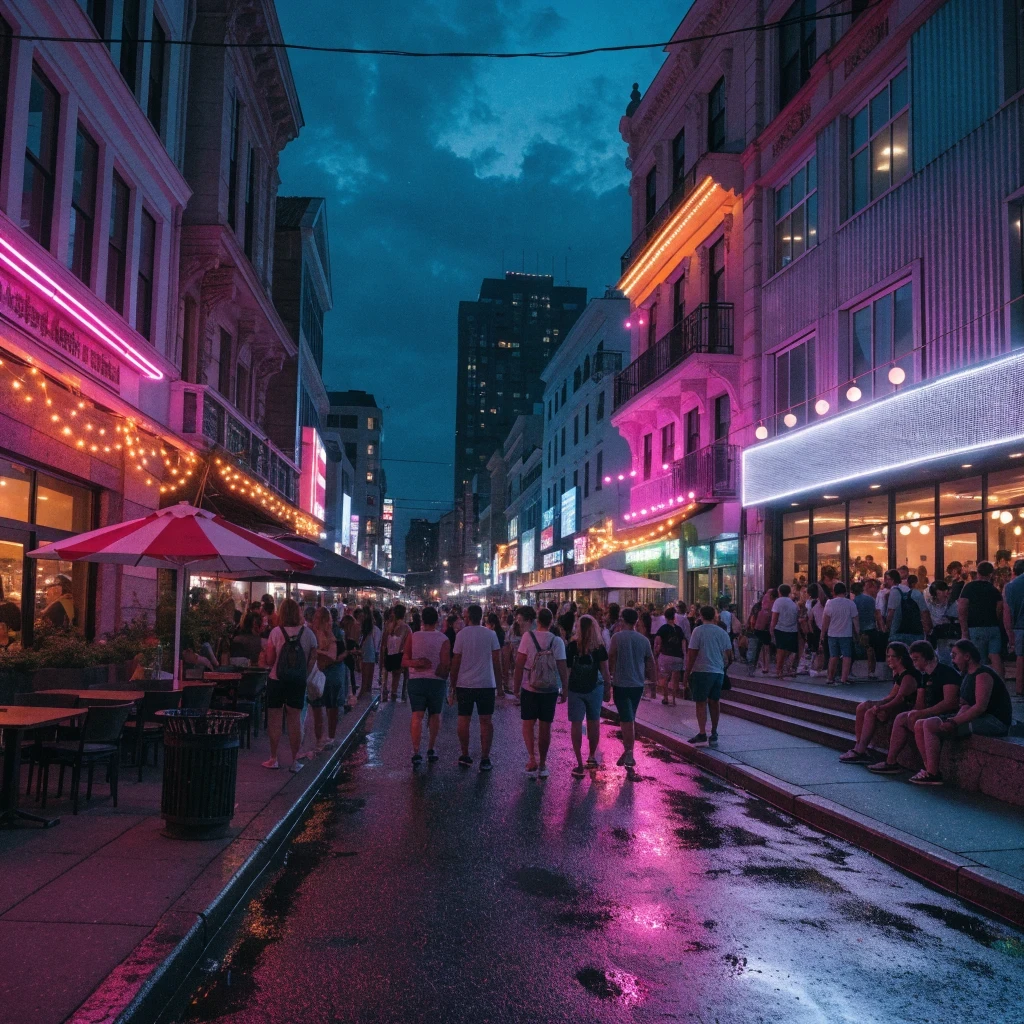
The after-hours economy has long been the pulse of urban vitality, a nocturnal ecosystem where culture, commerce, and community collide. Yet the pandemic delivered a knockout blow to this sector, shuttering iconic venues and forcing a global reckoning with what nightlife means. Now, as inflation gnaws at disposable incomes and consumer behavior shifts seismically, the industry is not merely recovering—it is fundamentally reinventing itself.
This transformation is not cosmetic. It is a survival-driven evolution that touches every corner of the late-night landscape, from the dive bar on the corner to the sprawling entertainment district. Operators are no longer passive hosts; they are agile entrepreneurs deploying data analytics, hybrid revenue streams, and experiential design to weather economic storms. The result is a leaner, smarter, and more resilient nightlife economy that offers profound lessons about urban consumer health.
Understanding this reinvention requires dissecting the forces at play: the lingering psychological scars of lockdowns, the brutal math of inflation, the rise of experience-driven spending, and the technological leapfrogging that now defines the sector. This analysis unpacks those forces, examines the innovative business models emerging, and projects where the after-hours economy heads next.
On This Page
TL;DR The post-pandemic, inflationary era has forced the nightlife industry to abandon outdated playbooks and embrace radical innovation. Venues are diversifying revenue, leveraging technology, and repositioning themselves as essential community anchors rather than mere consumption points. This reinvention serves as a critical barometer for urban discretionary spending and economic resilience, revealing how consumer priorities are reshaping the very fabric of our cities after dark.
The Economic Squeeze: Inflation and the New Consumer Calculus
Inflation has fundamentally altered the arithmetic of a night out. A cocktail that cost twelve dollars in 2019 now commands eighteen, while cover charges and ride-share fares have climbed in lockstep. For the average urban consumer, these increases are not trivial; they represent a direct assault on the disposable income once earmarked for entertainment.
This financial pressure has triggered a discernible shift in spending behavior. Consumers are not abandoning nightlife wholesale; they are becoming more selective, prioritizing quality over quantity. The era of the spontaneous, multi-venue bar crawl is yielding to planned, high-value experiences where every dollar must deliver measurable satisfaction and memorable moments.
The Shrinking Discretionary Dollar
Real wage growth has lagged behind inflation across most major economies, squeezing household budgets. Data from the Bureau of Labor Statistics indicates that while headline inflation has moderated, cumulative price increases since 2020 remain sticky, particularly in services. This persistent gap forces consumers to make stark trade-offs between essential goods and leisure activities.
Nightlife operators feel this squeeze acutely. Foot traffic analytics from major metropolitan areas show a bifurcation: premium venues with strong brand equity are holding occupancy, while mid-tier establishments struggle to fill seats. The middle market is being hollowed out, creating an hourglass shape in the industry where luxury and value thrive, but the comfortable middle ground erodes.
This dynamic demands a strategic response. Venues that simply raise prices to offset costs risk alienating their core demographic. Instead, successful operators are re-engineering their value propositions, offering tiered pricing models, membership programs, and bundled experiences that make the cost-per-unit-of-fun more palatable to budget-conscious patrons.
The psychological impact of inflation cannot be overstated. Consumers are acutely aware of price increases, and this awareness breeds caution. Even those who can afford a lavish night out are moderating their spending as a hedge against future uncertainty, a behavioral shift that directly impacts venue revenue projections and staffing decisions.
Experience Over Excess: The New Spending Logic
The modern nightlife consumer is chasing memories, not just intoxication. This fundamental shift has birthed the "experience economy" within the sector, where immersive themes, interactive performances, and Instagram-worthy aesthetics drive attendance more than the quality of the pour. Venues are transforming into content studios, producing shareable moments that extend their reach far beyond their physical walls.
This pivot is data-backed. Surveys consistently show that millennials and Gen Z prioritize experiences over material goods, a preference that has only intensified post-pandemic. Nightlife venues are capitalizing on this by investing heavily in production value—lighting design, sound engineering, and spatial aesthetics—to create environments that feel like events in themselves, justifying premium pricing.
The rise of the "day club" and "brunch rave" exemplifies this trend. These hybrid formats blur the lines between dining, socializing, and entertainment, capturing consumers who crave the energy of nightlife but reject the late hours and associated costs. This expansion into new time slots effectively creates additional revenue streams without requiring significant capital expenditure.
Operators are also leveraging scarcity and exclusivity. Limited-run pop-ups, secret guest lists, and themed residencies generate urgency and demand, allowing venues to command higher prices while maintaining a sense of novelty. This strategy converts the inflationary pressure from a threat into an opportunity for premium positioning.
Technology as the Great Equalizer
Technology has become the silent partner in nightlife's reinvention. Advanced booking platforms, dynamic pricing algorithms, and customer relationship management systems are now standard tools for forward-thinking operators. These technologies enable precise demand forecasting, allowing venues to optimize staffing, inventory, and pricing in real time to maximize profitability.
Contactless payments and digital wallets have streamlined the transactional friction of a night out, reducing queues and increasing throughput. More importantly, these systems generate invaluable data on consumer preferences and spending patterns. This data goldmine allows venues to personalize marketing efforts, tailor drink menus, and predict trends with unprecedented accuracy.
Social media remains the dominant marketing channel, but its use has matured. Venues are moving beyond simple promotional posts to sophisticated influencer partnerships and user-generated content campaigns. The goal is authenticity; a recommendation from a trusted local voice carries more weight than a polished advertisement, particularly among younger demographics skeptical of traditional marketing.
However, technology also introduces new challenges. Cybersecurity threats, data privacy regulations, and the constant pressure to upgrade systems create operational burdens. Smaller venues, in particular, struggle to keep pace with technological demands, creating a competitive disadvantage that accelerates industry consolidation and the dominance of well-capitalized entertainment groups.
We Also Published
Business Model Innovation: Survival Through Reinvention
The economic headwinds have forced nightlife operators to abandon the "build it and they will come" mentality. Survival now demands a portfolio approach to revenue generation, where the traditional bar or club is just one component of a diversified business strategy. This section explores the innovative models reshaping the industry's financial architecture.
Diversification is the new mantra. Venues are transforming into multi-purpose spaces that generate income across different times of day and different customer segments. A single establishment might operate as a coffee shop by morning, a workspace by afternoon, a restaurant by evening, and a club by night, maximizing the utility of every square foot of real estate.
Hybrid Venues and the All-Day Economy
The hybrid venue model represents a radical departure from the single-use nightclub. These spaces are designed for flexibility, with modular furniture, adaptable lighting, and acoustic treatments that allow seamless transitions between vastly different functions. This adaptability spreads fixed costs across multiple revenue streams, insulating operators from the volatility of any single market segment.
This model also addresses the labor challenge. By offering consistent employment across day and night shifts, hybrid venues attract a more stable workforce. Employees enjoy predictable schedules and diverse skill development, reducing the high turnover rates that have historically plagued the hospitality industry and driving down recruitment and training costs.
The financial logic is compelling. A venue operating at capacity for sixteen hours a day generates significantly more revenue per square foot than one active for six hours. This efficiency is critical in an era of soaring commercial real estate prices, where rent constitutes a substantial fixed cost that must be amortized over as many revenue-generating hours as possible.
Successful implementation requires sophisticated operational expertise. Managing a coffee service and a nightclub under one roof demands distinct skill sets, supply chains, and regulatory compliance. Operators must invest in robust management systems and cross-trained staff to execute this model effectively, a barrier that prevents casual adoption but rewards those who master it.
Membership and Subscription Models
Nightlife is borrowing a page from the software playbook with the rise of membership and subscription models. These programs offer patrons exclusive benefits—priority access, discounted drinks, members-only events—in exchange for recurring fees. This model provides venues with predictable, recurring revenue that stabilizes cash flow and reduces dependence on walk-in traffic.
The psychology behind this shift is powerful. Membership creates a sense of belonging and investment in the venue's success. Members become brand ambassadors, organically promoting the establishment to their networks. This word-of-mouth marketing is particularly valuable in the nightlife sector, where social proof and exclusivity drive desirability.
Data is the hidden treasure of membership programs. Every transaction, attendance record, and preference logged provides venues with a detailed profile of their most valuable customers. This intelligence enables hyper-personalized marketing, tailored event curation, and predictive inventory management, all of which contribute to enhanced profitability and customer retention.
However, subscription fatigue is a real risk. Consumers are increasingly wary of recurring charges, particularly for discretionary services. Venues must ensure their membership offerings deliver tangible, consistent value that justifies the monthly outlay. Failure to do so results in churn, which can be more damaging than never acquiring the member in the first place.
Experiential and Immersive Entertainment
The demand for immersive experiences has exploded, and nightlife is responding with theatrical productions, interactive dining, and multi-sensory installations. These offerings transform a passive night out into an active participation event, commanding premium ticket prices and generating substantial social media buzz that serves as free marketing.
This trend aligns with the broader cultural shift toward "live" experiences that cannot be replicated digitally. In an increasingly virtual world, the tangible, in-person nature of immersive nightlife becomes a powerful draw. Venues that successfully create these environments position themselves as destinations, not just locations, attracting customers from beyond their immediate geographic footprint.
The economics of immersive entertainment are attractive. High ticket prices, limited capacity, and strong demand create scarcity that drives profitability. Additionally, these events often have lower alcohol sales as a percentage of revenue, reducing exposure to the volatile liquor market and its associated regulatory burdens.
Yet the production costs are substantial. Immersive experiences require significant upfront investment in set design, technology, and talent. The risk of a poorly received production is financial ruin. Successful operators mitigate this risk through extensive market research, phased rollouts, and partnerships with established creative agencies.
- 01
- 02
- 03
- 04
Urban Vitality and the Future of the After-Hours Economy
The health of a city's nightlife is a leading indicator of its broader economic vitality. Vibrant after-hours scenes attract talent, drive tourism, and generate substantial tax revenue. Conversely, ailing nightlife districts signal deeper urban malaise, deterring investment and accelerating the flight of young professionals to more dynamic locales.
Policymakers are beginning to recognize this connection. Cities like London, New York, and Berlin have appointed "night czars" and implemented "night mayor" initiatives to coordinate policy, streamline licensing, and promote the sector. These efforts acknowledge that nightlife is not a frivolous indulgence but a critical component of urban economic infrastructure.
The Role of Regulation and Policy
Regulatory frameworks are evolving to accommodate the new nightlife economy. Zoning laws that once segregated entertainment from residential areas are being revisited to support mixed-use developments. Licensing processes are being streamlined to reduce the bureaucratic burden on operators, encouraging entrepreneurship and innovation in the sector.
However, regulation remains a double-edged sword. Stricter noise ordinances, capacity limits, and safety requirements impose compliance costs that disproportionately affect smaller venues. Balancing the legitimate concerns of residents with the economic benefits of nightlife is a persistent challenge for urban planners and elected officials.
The rise of the 24-hour city concept is gaining traction. Proponents argue that extending public transit hours, relaxing liquor sales restrictions, and supporting late-night services create a virtuous cycle of economic activity. These policies not only benefit nightlife venues but also support the broader ecosystem of late-night workers, from ride-share drivers to convenience store clerks.
Public safety remains the paramount concern. High-profile incidents of violence in entertainment districts have prompted crackdowns that can stifle the very vibrancy they aim to protect. Successful cities are adopting a collaborative approach, working with venue operators, community groups, and law enforcement to create safe environments without resorting to draconian measures.
Demographic Shifts and Changing Tastes
The demographics of nightlife consumers are shifting dramatically. The aging of the millennial generation and the emergence of Gen Z as a spending force are reshaping demand. Younger consumers exhibit different preferences, showing a marked preference for wellness-oriented options, non-alcoholic alternatives, and experiences that align with their social and environmental values.
The rise of the "sober curious" movement is a significant trend. A growing segment of consumers is reducing alcohol consumption for health, financial, or personal reasons. Venues are responding by expanding their non-alcoholic offerings, creating sophisticated mocktail menus, and hosting alcohol-free events that cater to this underserved demographic.
Diversity and inclusion are also becoming competitive differentiators. Venues that actively cultivate safe, welcoming environments for women, LGBTQ+ individuals, and people of color are capturing a broader customer base. This inclusivity is not just ethically sound; it is a smart business strategy that expands the addressable market and enhances brand reputation.
The globalization of nightlife culture continues, with trends spreading rapidly across borders via social media. A successful concept in Tokyo can inspire imitators in New York within months. This cross-pollination accelerates innovation but also intensifies competition, as consumers develop increasingly sophisticated expectations for their nightlife experiences.
Technological Frontiers: AI, VR, and the Metaverse
The next frontier of nightlife innovation lies at the intersection of physical and digital experiences. Artificial intelligence is being deployed to personalize music selection, optimize lighting, and predict crowd flow. These applications enhance the customer experience while improving operational efficiency, reducing energy costs, and maximizing staff utilization.
Virtual reality and augmented reality are beginning to infiltrate the sector. VR nightclubs offer a social experience for those unable or unwilling to attend physical venues, while AR overlays can enhance physical spaces with digital art, interactive games, and personalized information. These technologies expand the definition of nightlife beyond the physical realm.
The metaverse presents both an opportunity and a threat. Virtual venues can operate without the overhead of physical real estate, potentially undercutting traditional operators. However, the demand for authentic, in-person human connection remains strong, suggesting that digital and physical nightlife will coexist, each enhancing the value of the other.
Data analytics will be the cornerstone of future success. Venues that harness the power of their data to understand customer behavior, predict trends, and personalize experiences will gain a decisive competitive advantage. The winners in the next era of nightlife will be those who treat data as a strategic asset, not a byproduct of operations.
The after-hours economy is not dying; it is evolving into something more resilient, more diverse, and more integral to urban life than ever before. The venues that thrive will be those that embrace change, leverage data, and understand that they are selling more than drinks and music—they are selling belonging, escape, and community in an increasingly fragmented world.
For investors, policymakers, and urban planners, the message is clear: nightlife is a serious economic sector deserving serious attention. Its health reflects the confidence of consumers, the creativity of entrepreneurs, and the vitality of our cities. The reinvention of the after-hours economy is a story of adaptation and hope, a testament to the enduring human need for connection and celebration.
From our network :
- Former Soap Stars Embark on Ambitious Writing Projects and Theatrical StagesDiscover how former soap opera actors are transitioning into independent scriptwriting and high-profile theatrical stage productions.
- How AI Agents Will Change the Way We Manage Personal FinancesExplore how AI agents are transforming personal finance through automated budgeting, bill payment, and investment management, while examining the critical security protocols and governance frameworks required for safe deployment.
- CISA’s Ten-Advisory Wave: Why Generic Patching Fails in OT and How to Build Product-Specific PlaybooksCISA released ten ICS advisories in one week, exposing critical infrastructure risks. Generic patching fails in OT. Learn to build product-specific remediation playbooks.
- Forbidden Matrix Patterns and Visible Lattice Points: A Geometric DictionaryExplore how multidimensional 0–1 matrices encode geometric truths, linking forbidden patterns to visible lattice points and hypergraph theory, with applications in combinatorics and computational geometry.
- Norbert’s Uncertain Path: Why Hawaii’s Storm Watch Demands Patience Over PanicTropical Storm Norbert strengthens in the Eastern Pacific with winds near 50 mph, forecast to reach Category 1 hurricane status by Friday. Long-range models disagree sharply on whether Hawaii faces any threat around September 19–23, making official guidance essential.
- Committed Mediterranean Precipitation Decline: Why Emissions Cuts Alone Cannot Restore Winter RainsNew NOAA research reveals that Mediterranean winter rains may decline irreversibly even with emissions cuts. Explore the science of committed climate change and regional impacts.
- The Hidden Cost of AI Convenience: Why Over-Permissioned Agents Are a Security Time BombDiscover why AI agents with excessive permissions create dangerous single points of failure, and learn how implementing least privilege principles can protect your organization from exploitation.
- The Final Descent: How ESA Retired the Legendary Cluster Constellation After 24 Years of Space Weather ScienceAfter 24 years mapping Earth’s magnetosphere, ESA’s Cluster mission concluded with a precisely controlled reentry over the South Pacific. This analysis explores the scientific legacy, engineering decisions, and debris mitigation principles behind one of space exploration’s most responsible retirements.
- Analyzing Hoya Corporation’s Midday Volume Shifts and Financial FundamentalsExamine Hoya Corporation’s midday trading volume contraction, technical moving averages, robust solvency ratios, and stellar quarterly earnings performance.
RESOURCES
- Economic and Fiscal Contributions of the Nightlife Economy in ...dallascityhall.comThe City's Role in the Continued Success of the Dallas Nightlife ... Venues. Figure: Nightlife Economy Business Data. Oak Lawn / Cedar Springs Entertainment ...
- Producer Price Indexes Introduced for Golf Courses and Country ...bls.govAug 15, 2006 ... Inflation & Prices · Consumer Price Index · Producer Price Indexes · Import ... Municipal facilities are golf courses owned…
- Atlanta-Nightlife-Impact-Report_21225.pdfroughdraftatlanta.comIts supply of restaurants, bars, clubs, and performance venues helps attract visitors from around the region, and the city features a varied supply of ...
- CPI Home : U.S. Bureau of Labor Statisticsbls.govThe Consumer Price Index (CPI) is a measure of the average change over time in the prices paid by urban consumers for a market…
- How Local Governments Can Support Small Businesses Struggling ...urban.orgDec 12, 2025 ... But economic uncertainties over the past several years, including inflation ... enabling priority processing for nighttime entertainment venues, ...
- Nightlife in Fort Worth bounces back from inflation - KERA Newskeranews.orgFeb 1, 2023 ... The nightlife economy, much like the rest of the greater economy, is ... While some Fort Worth venue owners and…
- Atlanta nightlife generates $5.1 billion in revenue but hampered by ...wabe.orgFeb 14, 2025 ... Economy · Entertainment · Workforce. Atlanta nightlife generates $5.1 billion in revenue but hampered by inflation and transit options. Economy.
- Tourism's Role in New York City's Economy - NYC Comptroller's Officecomptroller.nyc.govMar 12, 2025 ... ... City a destination. Thus, our focus here includes museums, theatres, sightseeing, sports venues, and so on, as well as…
- r/boston on Reddit: Where's the fun/lively nightlife part of the city? I ...reddit.comNov 15, 2025 ... I'm thinking like Broad Street in Philadelphia where you have so many diverse restaurants, shops, cafes, and it's in the…
- Toronto Night Economy Reviewtoronto.ca106 Toronto Night Economy Review. NIGHT. ECONOMY. REVIEW. Licensing and Zoning of Bars, Restaurants and Entertainment Venues ... “A real nightlife city has venues ...
- Tourism Leaders See Strong Summer Potential - Newsstockton.eduMay 27, 2026 ... Arts & Entertainment Venues · Social Media · Photos on Flickr · Athletics ... economic uncertainty, tariffs and inflation. Total…
- Corporate Profits Contributed a Lot to Inflation in 2021 but Little in ...kansascityfed.orgMay 12, 2023 ... Center for Agriculture and the Economy. Leveraging expertise from ... Inflation?” Federal Reserve Bank of Kansas City, Economic Review, vol.
- Eau Claire Named One Of America's 'Best Small Cities' In...volumeone.orgJun 30, 2026 ... ... entertainment venues, museums, outdoor experiences, nightlife, etc. Prosperity: Measures a city's economic strength and opportunity. GDP per ...
- Insights on Agricultural and Rural Economies - Federal Reserve ...kansascityfed.org... economic trends from the Center for Agriculture and the Economy ... Center, and Federal Reserve Bank of Kansas City Staff Calculations. Related ...
- A wave of closures has hit Denver's hospitality industry ... - Instagraminstagram.comJun 24, 2026 ... week, seven restaurants, bars, cafes, and entertainment venues ... Supporters say the measure could boost the city's nightlife, entertainment ...
- 01
- 02
- 03
- 04
- 05
- 06
- 07
- 08
0 Comments