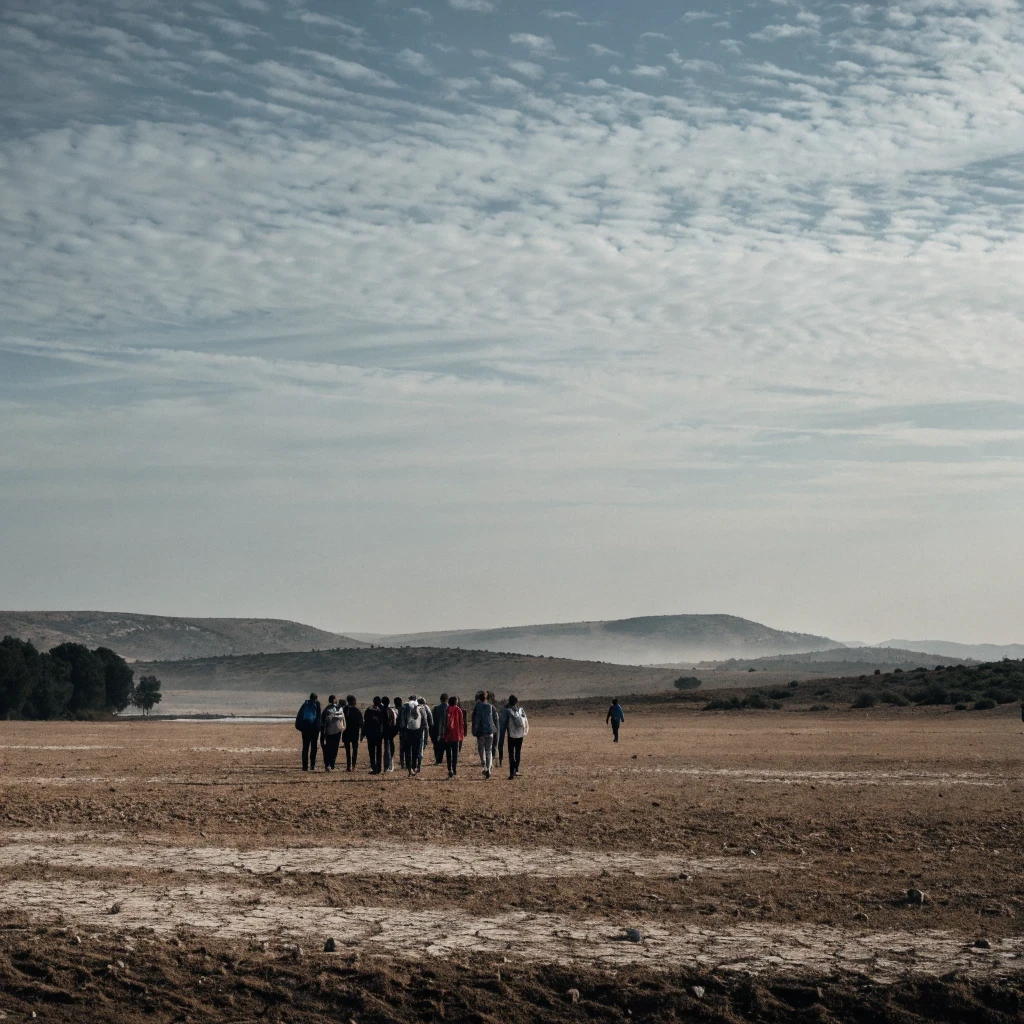
Migration has become the defining geopolitical phenomenon of our era, reshaping nations, economies, and political landscapes with relentless force. The movement of nearly 300 million international migrants worldwide represents not merely statistics but the collective response of humanity to pressures that no single border can contain. Understanding these forces demands a sober examination of the conflicts, climate catastrophes, and economic disparities that compel people to abandon everything familiar.
The current migration crisis is not a temporary disruption but a structural transformation of the global order. As conflicts in Ukraine, the Middle East, and Africa displace millions, and as climate change renders entire regions uninhabitable, the distinction between voluntary and forced migration blurs beyond recognition.
Nations that once viewed migration as a peripheral policy concern now recognize it as central to their security, economic vitality, and demographic future.
On This Page
This analysis dissects the complex machinery of global displacement, examining the geopolitical calculations, humanitarian obligations, and demographic imperatives that define our response to the human tide. The evidence demands that we move beyond simplistic narratives and confront the uncomfortable realities of a world in motion.
TL;DR Global migration in 2026 is driven by intersecting conflict zones, accelerating climate shocks, and persistent economic inequality, creating unprecedented displacement patterns. International cooperation remains fractured between sovereign border enforcement and humanitarian obligations, while demographic collapse in wealthy nations paradoxically increases their dependence on migrant labor. The article examines geopolitical drivers, climate-induced displacement, and the policy frameworks struggling to manage this human tide.
The Geopolitical Engine: Conflict, Instability, and the Weaponization of Displacement
War remains the most potent catalyst for mass migration, yet its mechanics have evolved dramatically in the twenty-first century. Modern conflicts increasingly target civilian infrastructure deliberately, transforming displacement from a byproduct of war into a strategic objective. The weaponization of migration has become a diplomatic tool, with states using refugee flows to destabilize adversaries and extract concessions.
Syria's civil war demonstrated how a regional conflict could trigger a continental crisis, with over 6.8 million Syrians fleeing abroad and millions more internally displaced. The pattern repeats across the Sahel, where jihadist insurgencies have displaced over 30 million people, and in Myanmar, where ethnic cleansing drove the Rohingya into Bangladesh. Each crisis compounds the last, creating cascading displacement that overwhelms regional capacity.
The Ukraine Conflict and European Migration Realignment
Russia's full-scale invasion of Ukraine in February 2022 triggered Europe's largest refugee crisis since World War II, displacing over 8 million Ukrainians across the continent. The European Union's activation of the Temporary Protection Directive marked an unprecedented departure from its historically restrictive asylum framework, granting immediate residence and work rights to millions.
This response revealed the selective nature of humanitarian solidarity, as European nations that had resisted Middle Eastern and African refugees embraced Ukrainian arrivals with remarkable speed. The disparity exposed uncomfortable truths about racial hierarchies in migration policy, with white European refugees receiving preferential treatment over non-European asylum seekers facing comparable desperation.
Ukraine's demographic catastrophe compounds its wartime losses, with millions of working-age citizens now scattered across Europe. The country's pre-war population of 44 million has fallen to approximately 32 million, a demographic wound that will persist for generations regardless of the conflict's outcome. Reconstruction efforts face the impossible task of rebuilding a nation whose human capital has been dispersed.
European host nations now confront their own demographic dilemmas, as Ukrainian refugees fill labor shortages in aging economies while straining housing and social services. Poland, which absorbed over 1.5 million Ukrainians, has experienced both economic benefits and political backlash, illustrating the double-edged nature of mass migration for receiving states.
The Middle East and the Perpetual Displacement Cycle
The Middle East remains the world's most volatile migration corridor, with overlapping conflicts in Syria, Yemen, Iraq, and Palestine generating continuous displacement. The Gaza conflict that erupted in October 2023 displaced over 1.9 million Palestinians, nearly the entire population of the territory, in what humanitarian agencies describe as one of the most severe displacement crises in modern history.
Regional powers have weaponized refugee populations as instruments of political leverage, with Lebanon, Jordan, and Turkey hosting millions of Syrian refugees while receiving inadequate international support. The burden-sharing mechanism has collapsed, leaving host countries to bear costs that exceed their economic capacity and fueling anti-refugee sentiment that threatens regional stability.
Iran's use of proxy militias across Iraq, Syria, Lebanon, and Yemen has created a permanent state of low-intensity conflict that prevents refugee return and perpetuates displacement. The United States' withdrawal from Afghanistan in 2021 added another layer, with over 80,000 Afghans evacuated and millions more facing Taliban rule or precarious existence in neighboring Pakistan and Iran.
The Abraham Accords and subsequent normalization agreements have not addressed the root causes of displacement, focusing instead on security cooperation against Iran. Without a comprehensive regional settlement addressing governance failures, economic collapse, and sectarian tensions, the Middle East will continue generating refugees at rates that overwhelm international response capacity.
Africa's Cascading Crises and the Sahel's Collapse
The Sahel region has become the world's fastest-growing displacement hotspot, with military coups in Mali, Burkina Faso, and Niger creating governance vacuums that jihadist groups exploit. Over 3.3 million people are displaced across the Sahel, with Burkina Faso alone experiencing over 2 million displacements from a population of just 22 million.
Climate change compounds the region's security crisis, as desertification and erratic rainfall destroy pastoral livelihoods and intensify competition for scarce resources. Lake Chad, once a vital water source for 30 million people, has shrunk by 90 percent, forcing herders and farmers into conflict and driving migration toward coastal West African states and North Africa.
European migration policies have externalized border control to North African states, paying Libya, Morocco, and Tunisia to intercept migrants before they reach European shores. This approach has produced horrific abuses in Libyan detention centers, where migrants face slavery, torture, and death, while doing nothing to address the conditions driving migration in the first place.
The African Continental Free Trade Area offers theoretical promise for intra-African mobility, but implementation remains stalled by infrastructure deficits and political resistance. Without meaningful economic integration and investment in climate resilience, African migration pressures will intensify, making the continent both the primary source and primary victim of global displacement.
Climate Migration: The Slow-Motion Catastrophe Reshaping the Planet
Climate change has evolved from an environmental concern into the primary driver of long-term migration patterns, with the World Bank projecting that over 216 million people could become internal climate migrants by 2050. Unlike conflict-induced displacement, which offers the possibility of return, climate migration is permanent and accelerating, as rising seas, extreme heat, and water scarcity render regions uninhabitable.
The international legal framework remains catastrophically inadequate for climate displacement, as the 1951 Refugee Convention does not recognize environmental factors as grounds for asylum. This legal vacuum leaves climate migrants in a precarious status, neither recognized as refugees nor protected as economic migrants, and vulnerable to exploitation and arbitrary deportation.
Sea-Level Rise and the Sinking Nations
Small island states face existential threats from sea-level rise, with nations like Tuvalu, Kiribati, and the Maldives projected to become uninhabitable within decades. Tuvalu has negotiated a pioneering treaty with Australia that grants its citizens a pathway to resettlement, but this bilateral arrangement cannot address the scale of displacement facing the Pacific region.
The scientific consensus indicates that sea levels will rise by at least one meter by 2100, threatening the homes of over 800 million people living in low-lying coastal zones. Major cities including Miami, Jakarta, Dhaka, and Shanghai face chronic flooding that will progressively displace their populations, creating migration pressures that dwarf current refugee flows.
Jakarta, the world's fastest-sinking city, is subsiding at rates of up to 25 centimeters per year due to groundwater extraction, forcing Indonesia to construct a new capital city in Borneo. This relocation project, costing over $32 billion, represents the first major state-led climate migration initiative, but its scale is minuscule compared to the challenges ahead.
The legal concept of "climate refugees" remains unrecognized in international law, leaving affected populations dependent on ad hoc arrangements and humanitarian discretion. The Global Compact for Safe, Orderly and Regular Migration, adopted in 2018, acknowledges climate as a migration driver but creates no binding obligations for states to protect climate-displaced persons.
Extreme Heat and Agricultural Collapse
Rising temperatures are rendering vast agricultural regions unproductive, with the Middle East, South Asia, and sub-Saharan Africa facing conditions that exceed human physiological tolerance. The 2023 heatwaves that pushed temperatures above 50 degrees Celsius in parts of Iran and Iraq demonstrated the lethal potential of climate change, with wet-bulb temperatures approaching survivability limits.
Agricultural collapse in Central America's "Dry Corridor" has driven hundreds of thousands of migrants toward the United States, where they face increasingly militarized border enforcement. The correlation between drought intensity and migration flows is well-documented, yet US policy continues to treat climate migration as a border security issue rather than a humanitarian crisis requiring regional investment.
India faces the world's largest climate migration challenge, with projections suggesting that over 45 million people could be displaced by 2050 due to flooding, drought, and extreme weather. The country's monsoon-dependent agriculture employs over 40 percent of its workforce, making it extraordinarily vulnerable to climate variability that disrupts established rainfall patterns.
Water scarcity is emerging as the most immediate climate migration trigger, with the UN estimating that 2.3 billion people already live in water-stressed countries. Transboundary water disputes, particularly over the Nile, Indus, and Mekong rivers, threaten to generate conflict and displacement as upstream nations develop infrastructure that reduces downstream water availability.
The Urbanization Trap and Climate Vulnerability
Climate migration is increasingly urban, as displaced rural populations move to cities that lack the infrastructure to absorb them. Dhaka, Bangladesh, receives an estimated 2,000 new migrants daily, many fleeing river erosion and cyclones, and now hosts over 10 million people in a city with inadequate housing, sanitation, and flood protection.
Urban climate vulnerability creates a feedback loop, where migration to cities exposes people to new climate risks while straining municipal capacity to provide basic services. The 2022 Pakistan floods, which submerged one-third of the country and displaced 33 million people, demonstrated how climate shocks can overwhelm even relatively developed urban centers.
Informal settlements, where over one billion people live globally, are disproportionately exposed to climate hazards while lacking the resources to adapt. These communities face a double burden of displacement, first from their original homes and then from the precarious urban environments where they sought refuge.
Planned relocation has emerged as a policy response, but its implementation remains rare and controversial. The World Bank's Global Program on Forced Displacement has funded relocation projects in Fiji, Vanuatu, and the Solomon Islands, but these initiatives face resistance from communities unwilling to abandon ancestral lands and from governments reluctant to acknowledge the scale of climate displacement.
We Also Published
The Economic and Demographic Imperatives: Migration as Structural Necessity
While conflict and climate drive forced migration, economic inequality and demographic divergence create powerful pull factors that shape migration patterns. The global economy is fundamentally dependent on migration, with remittances to low- and middle-income countries reaching $669 billion in 2023, exceeding foreign direct investment and official development assistance combined.
Demographic collapse in wealthy nations has created structural labor shortages that migration alone can fill. Japan, Germany, and Italy face population declines that threaten their economic viability, while their aging populations require migrant workers to sustain healthcare systems, care for the elderly, and maintain economic productivity.
The Demographic Divide and Labor Market Dependency
The world's population is bifurcating dramatically, with wealthy nations experiencing fertility rates below replacement levels while sub-Saharan Africa's population is projected to double by 2050. This demographic divergence creates an inevitable migration pressure, as young populations in high-fertility regions seek economic opportunities that their domestic economies cannot provide.
Germany's labor shortage has reached crisis proportions, with over 1.7 million unfilled positions costing the economy an estimated $100 billion annually. The country's 2023 Skilled Immigration Act represents a fundamental policy shift, abandoning its historical resistance to immigration and actively recruiting workers from non-EU countries to fill critical gaps.
Japan's demographic trajectory is even more extreme, with its population projected to decline from 125 million to under 100 million by 2050. Despite this, Japan maintains one of the world's most restrictive immigration policies, relying instead on automation and labor-saving technology to compensate for its shrinking workforce.
The United States faces a paradoxical situation, with an aging population requiring migrant labor while political discourse increasingly demonizes immigration. The Congressional Budget Office projects that net immigration will add 8.7 million workers to the US economy by 2033, yet border security remains the dominant political framing of migration policy.
Remittance Economies and the Development Paradox
Remittances have become the lifeblood of many developing economies, exceeding export revenues and foreign aid in countries like Nepal, Tajikistan, and Honduras. These financial flows represent a private welfare system that supports millions of families, funds education and healthcare, and provides a buffer against economic shocks.
The development paradox of migration is that it simultaneously drains human capital from source countries while providing essential financial inflows. The Philippines, which deploys over 2.3 million overseas workers annually, has built its economic strategy around labor export, yet this approach perpetuates dependency and undermines domestic development.
Brain drain remains a persistent concern, with sub-Saharan Africa losing an estimated 70,000 skilled professionals annually to wealthy nations. The health sector is particularly affected, with countries like Malawi and Zambia losing over 50 percent of their trained physicians to emigration, crippling their ability to provide basic healthcare.
Circular migration programs, which allow workers to move between source and destination countries, offer a potential solution to the brain drain problem. However, these programs remain limited in scope and often fail to provide the rights and protections that would make them attractive alternatives to permanent emigration.
Policy Frameworks and the Future of Migration Governance
The Global Compact for Migration, adopted by 152 countries in 2018, represents the first comprehensive international framework for migration governance, yet its non-binding nature limits its effectiveness. The compact's principles of shared responsibility and human rights protection remain aspirational rather than operational, with states retaining full sovereignty over admission decisions.
Regional integration frameworks offer more promising avenues for managing migration, with the European Union's free movement zone and the African Union's Protocol on Free Movement providing models for managed mobility. However, these frameworks face political resistance, as evidenced by Brexit and the rise of anti-immigration parties across Europe.
Labor migration partnerships, such as those between Canada and Caribbean nations or Germany and India, represent pragmatic approaches that benefit both source and destination countries. These agreements provide legal pathways for workers, reduce irregular migration, and create frameworks for skills development and remittance flows.
The future of migration governance will require moving beyond the false dichotomy between open borders and fortress states. The evidence demonstrates that well-managed migration benefits both sending and receiving countries, while poorly managed migration creates humanitarian crises and political instability. The challenge lies in building political consensus for policies that acknowledge migration as a permanent feature of the global landscape.
The human tide shows no signs of receding, and the forces driving it are intensifying. Climate change will accelerate displacement, conflicts show no resolution, and demographic pressures will continue to push people across borders. The question is not whether migration will continue, but whether the international community will manage it humanely and effectively or allow it to become a source of perpetual crisis.
Nations that embrace migration as an opportunity rather than a threat will prosper in the coming decades, while those that retreat into fortress mentality will face economic decline and demographic stagnation. The evidence is unambiguous: migration is not a problem to be solved but a reality to be managed with wisdom, compassion, and strategic foresight.
From our network :
- Former Soap Stars Embark on Ambitious Writing Projects and Theatrical StagesDiscover how former soap opera actors are transitioning into independent scriptwriting and high-profile theatrical stage productions.
- The Hidden Cost of AI Convenience: Why Over-Permissioned Agents Are a Security Time BombDiscover why AI agents with excessive permissions create dangerous single points of failure, and learn how implementing least privilege principles can protect your organization from exploitation.
- Norbert’s Uncertain Path: Why Hawaii’s Storm Watch Demands Patience Over PanicTropical Storm Norbert strengthens in the Eastern Pacific with winds near 50 mph, forecast to reach Category 1 hurricane status by Friday. Long-range models disagree sharply on whether Hawaii faces any threat around September 19–23, making official guidance essential.
- The Final Descent: How ESA Retired the Legendary Cluster Constellation After 24 Years of Space Weather ScienceAfter 24 years mapping Earth’s magnetosphere, ESA’s Cluster mission concluded with a precisely controlled reentry over the South Pacific. This analysis explores the scientific legacy, engineering decisions, and debris mitigation principles behind one of space exploration’s most responsible retirements.
- CISA’s Ten-Advisory Wave: Why Generic Patching Fails in OT and How to Build Product-Specific PlaybooksCISA released ten ICS advisories in one week, exposing critical infrastructure risks. Generic patching fails in OT. Learn to build product-specific remediation playbooks.
- How AI Agents Will Change the Way We Manage Personal FinancesExplore how AI agents are transforming personal finance through automated budgeting, bill payment, and investment management, while examining the critical security protocols and governance frameworks required for safe deployment.
- Forbidden Matrix Patterns and Visible Lattice Points: A Geometric DictionaryExplore how multidimensional 0–1 matrices encode geometric truths, linking forbidden patterns to visible lattice points and hypergraph theory, with applications in combinatorics and computational geometry.
- Analyzing Hoya Corporation’s Midday Volume Shifts and Financial FundamentalsExamine Hoya Corporation’s midday trading volume contraction, technical moving averages, robust solvency ratios, and stellar quarterly earnings performance.
- Committed Mediterranean Precipitation Decline: Why Emissions Cuts Alone Cannot Restore Winter RainsNew NOAA research reveals that Mediterranean winter rains may decline irreversibly even with emissions cuts. Explore the science of committed climate change and regional impacts.
RESOURCES
- Fragility, Conflict and Violence | World Bank Groupworldbank.org75% of acutely food-insecure people live in FCS. Seventeen of the top 25 countries most vulnerable to climate-related impacts (Notre Dame Global Adaptation ...
- Conflict and violence become the leading driver of internal ...internal-displacement.org- The Global Report on Internal Displacement 2026 confirms that internal displacement represents a global structural crisis that governments need to address.
- Colombia's Climate Displacement Law Can Be a Model for the Worldcarnegieendowment.orgJun 25, 2026 ... The Sustainability, Climate, and Geopolitics Program explores how climate change and the responses to it are changing international politics, ...
- Mixed Migration Reviewmixedmigration.orgIt applies the mixed migration lens to analyse global trends, drivers, and ... Hadia Khan explores how climate change and conflict intertwine in Kashmir,…
- How Caribbean States Became Climate Mobility Policy Innovatorscarnegieendowment.orgJan 20, 2026 ... The Sustainability, Climate, and Geopolitics Program explores how climate change and the responses to it are changing international politics, ...
- The Rohingya crisis and geopolitical tensions driving the failure of ...sciencedirect.comSpatial assessment of climate stressors driving migration in coastal Bangladesh using AHP and GIS ... Global humanitarian overview 2026. Rohingya joint ...
- Kenya: climate change, mobility, and conflict dynamicsmixedmigration.orgApr 2, 2026 ... Flooding (26%) and prolonged drought (89%) are the most frequently cited environmental drivers of mixed migration. ... © 2026 Mixed…
- UNHCR report reveals extreme weather driving repeated ...unhcr.orgNov 10, 2025 ... Yet, most national climate plans still overlook refugees and other displaced people, as well as the communities that host them.…
- A New Framework for U.S. Leadership on Climate Migration - CSIScsis.orgOct 23, 2020 ... Geopolitics and International ... international protection and support for climate migrants exists in this indirect displacement category.
- The climate crisis, migration, and refugees - Brookings Institutionbrookings.eduJul 25, 2019 ... ... climate change as a driver of migration. Whether in terms of ... “Global Trends: Forced Displacement in 2018.” June…
- World Migration Report 2022 | IOM Publications Platformpublications.iom.intSince 2000, IOM has been producing its flagship world migration reports every two years. The World Migration Report 2022, the eleventh in the world ...
- Climate Migration 101: An Explainermigrationpolicy.orgNov 16, 2023 ... ... global climate change is triggering more internal and international migration and displacement. ... Driver of Migration and Displacement ...
- Mali Crisis Response Plan 2023 - 2024crisisresponse.iom.intSouth Pacific Climate Mobility Action Plan 2026 - 2028. East, the Horn ... displacement, migration and other crises. By mainstreaming protection, IOM ...
- Webinar alert How do climate change, biodiversity loss and land ...instagram.comJun 24, 2026 ... BONN CLIMATE CONFERENCE 2026: A Crucial Turning Point for Global Climate Governance ✍️ By Avijeet Das Geopolitical Expert As ...
- 01
- 02
- 03
- 04
- 05
- 06
- 07
- 08
0 Comments