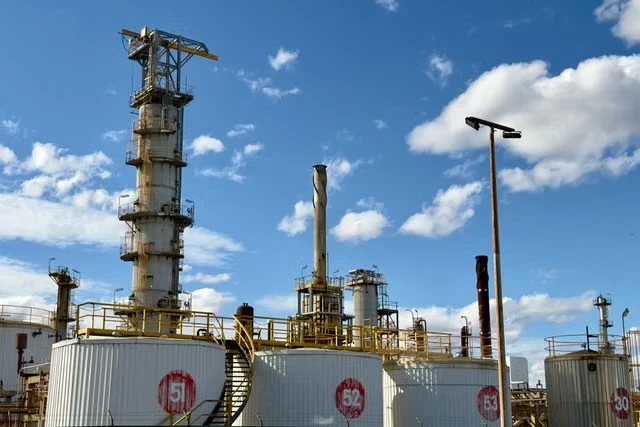
The August 17–18 window that was meant to deliver a U.S.–Iran settlement has instead delivered something far more consequential: a global repricing of risk. With the diplomatic deadline passing without a durable agreement, markets have shifted from cautious optimism to defensive positioning, particularly around the Strait of Hormuz—the world's most critical maritime chokepoint for crude oil and liquefied natural gas.
The failure of negotiations has revived the specter of supply disruption, and the ripple effects are now visible across equity indices, commodity futures, and currency pairs.
This is not merely another geopolitical headline to be absorbed and forgotten. The expiration of the negotiation window represents a structural inflection point for energy markets, forcing institutional investors to reassess their exposure to sectors that depend on stable hydrocarbon flows.
On This Page
- The Geopolitical Catalyst: What the Failed Negotiations Actually Mean
- Sector-Level Exposure: Separating Genuine Risk from Headline Noise
- Investment Implications: Positioning for a Repriced Risk Environment
- Navigating Uncertainty: A Framework for Decision-Making
- Conclusion: The New Reality of Geopolitical Risk Pricing
Airlines, petrochemical producers, shipping companies, and even utilities are now being revalued through a lens of heightened geopolitical risk. The question is no longer whether disruption will occur, but how markets should price the probability of it happening.
For the discerning investor, the challenge lies in distinguishing between sectors with genuine fundamental exposure to a Hormuz disruption and those that are merely trading on sensational headlines. This analysis dissects the real economic transmission channels, quantifies the actual risk exposure across industries, and provides a framework for navigating the repriced risk landscape that has emerged from the failed diplomacy.
TL;DR The expired U.S.–Iran negotiation window has triggered a significant repricing of global risk, particularly around the Strait of Hormuz. While headlines focus on oil prices, the real story is the differentiated impact across sectors—from airlines facing immediate fuel cost pressure to chemical manufacturers grappling with feedstock uncertainty. This analysis identifies which industries carry genuine fundamental exposure and which are merely reacting to sentiment, providing a data-driven framework for navigating the new risk environment.
The Geopolitical Catalyst: What the Failed Negotiations Actually Mean
The diplomatic breakdown between Washington and Tehran represents more than a political setback; it fundamentally alters the risk calculus for energy markets worldwide. The Strait of Hormuz, through which approximately 20 million barrels of oil pass daily, has become the focal point of renewed supply concerns. Market participants are now pricing in a meaningful probability of disruption that was previously considered remote.
The timing of the failed negotiations compounds the severity of the situation. With global inventories already drawn down and spare capacity concentrated in a handful of producers, the margin for error has never been thinner.
Any actual disruption to Hormuz traffic would trigger a supply shock of a magnitude not witnessed in decades, with cascading effects across every energy-dependent sector of the global economy.
The Strategic Importance of the Strait of Hormuz
The Strait of Hormuz is not merely a geographic feature; it is the circulatory system of global energy trade. Approximately one-fifth of global oil consumption transits this narrow waterway, alongside nearly a quarter of the world's LNG supply. The strategic concentration of this chokepoint means that even the threat of disruption carries outsized market consequences.
Iran's historical willingness to leverage this chokepoint as a geopolitical bargaining chip has been well documented. The Islamic Republic has repeatedly threatened to close the strait during periods of heightened tension, and the current diplomatic impasse has revived these threats with renewed credibility.
Market participants are now forced to take these warnings seriously, given the absence of a diplomatic safety net.
The physical geography of the strait compounds its strategic vulnerability. At its narrowest point, the waterway is only 21 miles wide, with shipping lanes that are barely two miles wide in each direction.
This constrained environment makes the strait exceptionally susceptible to disruption from mines, anti-ship missiles, or asymmetric naval tactics, all of which Iran has demonstrated capability in employing.
Alternative routes for energy transportation exist but carry significant limitations. The Saudi East-West Pipeline offers some redundancy, yet its capacity of approximately 5 million barrels per day falls far short of what would be needed to compensate for a full Hormuz closure. The UAE's Habshan-Fujairah pipeline provides additional relief but similarly cannot replace the volume that transits the strait.
Market Repricing Mechanisms: How Risk Transforms Into Price
The repricing of geopolitical risk follows a well-established pattern that begins with options markets and spreads outward. Implied volatility in crude oil options has surged, reflecting the market's assessment of increased uncertainty around future supply. This volatility premium then transmits to related derivatives, including refined product futures and shipping freight rates.
Term structure in the futures market provides a clear window into market sentiment. The backwardation observed in Brent and WTI curves indicates that traders expect immediate supply tightness rather than future abundance. This price structure incentivizes inventory drawdowns and discourages speculative storage, amplifying the physical market's response to the geopolitical catalyst.
Currency markets have also responded to the shifting risk landscape. Oil-importing nations with weak external balances, such as India and Turkey, have seen their currencies come under pressure as energy import costs rise.
Conversely, oil-exporting currencies, including the Norwegian krone and Canadian dollar, have strengthened, reflecting the improved terms of trade for producers.
Credit markets provide perhaps the most nuanced signal of repricing. Energy-dependent sectors are experiencing widening credit spreads, particularly in the airline and chemical industries. This credit repricing reflects not just current fuel costs but the market's assessment of sustained elevated input prices over the medium term, a consideration that fundamentally alters corporate valuation models.
Historical Precedents: Lessons from Previous Disruption Events
The 1973 oil embargo remains the most instructive historical parallel for understanding the potential magnitude of a Hormuz disruption. When Arab producers imposed their embargo, oil prices quadrupled within months, triggering stagflation across Western economies and permanently altering the global economic landscape. The current situation differs in scale but shares the fundamental characteristic of supply concentration.
The 1990 Gulf War provides a more recent example of how markets respond to actual supply disruption. When Iraqi forces invaded Kuwait, approximately 4.3 million barrels per day of supply were removed from the market.
Prices doubled within three months, and the recovery took nearly a year even after the conflict concluded, demonstrating the persistence of geopolitical risk premiums.
The 2019 attacks on Saudi Aramco's Abqaiq facility offer a more contemporary reference point. The temporary removal of 5.7 million barrels per day of supply caused the largest single-day price spike in decades, despite the restoration of production within weeks.
This episode revealed how thin the global safety margin has become and how quickly markets react to supply threats.
Each historical precedent underscores a common lesson: markets systematically underestimate the duration and magnitude of geopolitical supply disruptions. The current repricing, while significant, may still not fully reflect the tail risks inherent in a Hormuz closure scenario, suggesting that further price adjustment could be warranted if diplomatic efforts continue to falter.
Sector-Level Exposure: Separating Genuine Risk from Headline Noise
The market's repricing of geopolitical risk is not uniform across sectors. While some industries face direct and immediate consequences from a potential Hormuz disruption, others are experiencing collateral damage driven more by sentiment than fundamentals. Understanding this differentiation is essential for investors seeking to position their portfolios appropriately in the current environment.
The transmission channels through which a Hormuz disruption would affect different sectors vary considerably. Direct energy consumers face immediate input cost increases, while companies with pricing power may be able to pass through higher costs to customers.
Conversely, sectors with limited pricing flexibility or high energy intensity face margin compression that could persist well beyond the immediate disruption period.
Airlines: The Most Direct Casualty of Rising Fuel Costs
The airline industry operates on razor-thin margins that are exceptionally sensitive to fuel price movements. Jet fuel typically represents 25-35 percent of an airline's operating costs, making the sector the most directly exposed to any sustained increase in crude oil prices.
The repricing of Hormuz risk has already translated into higher fuel surcharges and weakened forward earnings estimates for carriers worldwide.
Long-haul carriers are particularly vulnerable given their disproportionate fuel consumption per revenue passenger mile. International routes that traverse regions with high fuel costs face the greatest margin pressure, while domestic carriers with shorter average stage lengths enjoy some relative insulation. This differentiation creates clear winners and losers within the sector that investors should carefully evaluate.
Hedging strategies provide some airlines with temporary protection against rising fuel costs, but the effectiveness of these hedges varies considerably across carriers. Airlines that locked in fuel prices at lower levels before the escalation will enjoy a competitive advantage over unhedged competitors.
However, as hedges roll off, the full impact of elevated fuel prices will gradually manifest across the industry.
The demand response to higher airfares adds another layer of complexity to the airline exposure analysis. Historically, air travel demand has demonstrated relatively inelastic characteristics in the short term, but sustained fare increases eventually suppress discretionary travel.
This demand destruction could compound the margin pressure from higher fuel costs, creating a double negative for airline profitability.
Chemicals and Petrochemicals: Feedstock Uncertainty and Margin Compression
The chemical industry's exposure to a Hormuz disruption operates through multiple channels, making it one of the most complex sectors to analyze. Naphtha and ethane, the primary feedstocks for petrochemical production, are directly tied to crude oil and natural gas prices. Any sustained increase in these input costs would compress margins for producers without corresponding pricing power.
Regional differentiation within the chemical sector is particularly pronounced. U.S. producers benefiting from abundant and inexpensive shale gas enjoy a structural cost advantage over European and Asian competitors reliant on imported feedstocks. This competitive asymmetry would be amplified by a Hormuz disruption, potentially reshaping global trade flows in petrochemical products.
The specialty chemicals segment exhibits greater resilience than commodity chemicals given its higher value-added nature and more favorable pricing dynamics. Companies producing proprietary formulations with limited substitutes can more effectively pass through input cost increases to customers. This differentiation within the sector argues for a selective approach to chemical industry exposure.
Inventory management strategies will play a critical role in determining which chemical companies weather the disruption most effectively. Producers with substantial feedstock inventories accumulated at lower prices will enjoy a temporary cost advantage over competitors operating on just-in-time inventory systems. This inventory buffer provides a meaningful hedge against immediate input cost escalation.
Shipping and Logistics: Freight Rate Dynamics and Route Repricing
The shipping industry's exposure to a Hormuz disruption is paradoxical, as higher freight rates can benefit carriers while simultaneously imposing costs on their customers. Tanker owners would experience a windfall from increased demand for alternative routing and elevated risk premiums, while container lines face the dual challenge of higher fuel costs and potential rerouting expenses.
War risk insurance premiums have already begun to rise for vessels transiting the Persian Gulf region, adding to the cost structure of shipping operations. These premiums, which can increase by multiples during periods of heightened tension, are ultimately passed through to cargo owners and reflected in higher freight rates. The magnitude of this pass-through depends on the competitive dynamics of each shipping segment.
Rerouting considerations introduce additional complexity to the shipping exposure analysis. Vessels that would normally transit the Strait of Hormuz may be forced to take alternative routes around the Arabian Peninsula, adding days to transit times and increasing fuel consumption.
This operational disruption affects not just the affected carriers but the entire global logistics chain that depends on predictable shipping schedules.
The dry bulk segment faces a different set of dynamics than tanker or container shipping. While dry bulk carriers are less directly exposed to Hormuz disruption, they are indirectly affected through changes in global trade patterns and commodity flows.
The repricing of risk in energy markets could alter demand for coal and other dry bulk commodities, creating both opportunities and challenges for this segment.
We Also Published
Investment Implications: Positioning for a Repriced Risk Environment
The repricing of geopolitical risk creates both challenges and opportunities for investors. While the immediate impulse may be to reduce exposure to energy-sensitive sectors, a more nuanced approach recognizes that the market's repricing is incomplete and uneven. Dislocations between fundamentally justified valuations and market prices create opportunities for selective positioning.
The duration of the elevated risk premium is a critical variable in investment decision-making. If diplomatic efforts resume and a settlement becomes achievable, the risk premium could deflate rapidly, rewarding contrarian positioning.
Conversely, if the geopolitical impasse persists, the elevated premium could become the new normal, requiring a fundamental reassessment of sector valuations.
Energy Producers: The Obvious Beneficiaries of Supply Risk
Integrated oil companies and exploration and production firms are the most direct beneficiaries of elevated crude prices resulting from Hormuz risk. Companies with production assets outside the Persian Gulf region enjoy a particular advantage, as their output becomes more valuable without corresponding geopolitical risk exposure. This geographic diversification premium is likely to persist as long as the threat of disruption remains credible.
U.S. shale producers represent a compelling investment proposition in this environment. The combination of abundant domestic resources, relatively low production costs, and insulation from Hormuz disruption makes this segment an attractive hedge against geopolitical risk.
The ability to rapidly adjust production in response to price signals adds an optionality value that is not fully captured in current valuations.
Oil services companies present a more nuanced opportunity. While they benefit from increased drilling activity driven by higher prices, their exposure to project delays and cancellations in geopolitically sensitive regions introduces offsetting risks.
The net impact on this segment depends on the balance between increased activity in safe jurisdictions and disruption in risky ones.
Refining companies face a complex set of dynamics that defy simple characterization. While higher crude prices generally compress refining margins, the specific configuration of each refinery determines its actual exposure.
Complex refineries capable of processing heavier, sour crudes may benefit from price dislocations, while simple refineries dependent on light sweet crude face margin pressure.
Defensive Positioning: Hedging Strategies for Institutional Investors
Institutional investors seeking to hedge against prolonged Hormuz disruption have a range of instruments at their disposal. Crude oil futures and options provide the most direct hedge, allowing investors to profit from rising energy prices while maintaining their core portfolio positions. The cost of these hedges has risen with implied volatility, reflecting the market's assessment of increased risk.
Currency hedging has become increasingly important as energy price movements transmit to exchange rates. Oil-importing nations' currencies face depreciation pressure, creating hedging opportunities for investors with exposure to these markets. Conversely, oil-exporting currencies may appreciate, offering a natural hedge for investors with long positions in these economies.
Equity options provide a more targeted approach to hedging sector-specific risk. Put options on airline and chemical stocks offer protection against downside scenarios while allowing investors to retain upside participation if the geopolitical situation resolves peacefully.
The cost of these options reflects the market's assessment of sector-specific risk, which may differ from the broader market's risk assessment.
Commodity-linked structured products offer an alternative hedging mechanism for investors seeking exposure to energy price movements without direct futures market participation. These products can be tailored to specific risk profiles and investment horizons, providing flexibility that standardized exchange-traded instruments may lack. However, the complexity and fee structures of these products warrant careful due diligence.
Long-Term Structural Shifts: The Energy Transition Acceleration
The geopolitical repricing of risk may accelerate structural shifts in the global energy system that were already underway. The vulnerability of fossil fuel supply chains exposed by the Hormuz situation strengthens the case for renewable energy investment and energy independence initiatives.
This dynamic could create sustained investment opportunities in clean energy technologies that extend well beyond the current geopolitical episode.
Energy storage technologies stand to benefit from the increased focus on supply security. The ability to store electricity generated from intermittent renewable sources becomes more valuable when fossil fuel supply is uncertain. Battery manufacturers and grid-scale storage operators are positioned to capture this increased demand for energy resilience.
Electric vehicle adoption may accelerate as consumers and businesses seek to reduce their exposure to volatile fuel prices. The total cost of ownership calculus for electric vehicles improves when gasoline and diesel prices rise, potentially driving faster adoption rates than previously projected. This dynamic creates investment opportunities across the electric vehicle supply chain.
Energy efficiency technologies represent another beneficiary of the repricing environment. Companies providing insulation, efficient HVAC systems, and industrial process optimization services become more valuable as energy costs rise. The payback periods for these investments shorten, improving the economic case for adoption and driving demand for these services.
Navigating Uncertainty: A Framework for Decision-Making
The repricing of geopolitical risk demands a disciplined approach to investment decision-making that acknowledges the inherent uncertainty of the situation. Rather than attempting to predict the outcome of U.S.–Iran negotiations, investors should focus on constructing portfolios that are resilient across a range of plausible scenarios. This scenario-based approach provides a more robust framework than point forecasting.
The key variables that will determine the ultimate market impact include the duration of the diplomatic impasse, the actual implementation of any disruption threats, and the response of other energy producers to any supply shortfall.
Each of these variables carries its own probability distribution, and the interaction between them creates a complex landscape of potential outcomes.
Scenario Analysis: Mapping the Range of Potential Outcomes
The benign scenario assumes a resumption of diplomatic engagement and a negotiated settlement that defuses the immediate crisis. Under this scenario, the geopolitical risk premium would deflate rapidly, and energy prices would retreat toward pre-crisis levels.
Sectors that were penalized for their energy exposure would recover, while the temporary beneficiaries of elevated prices would give back their gains.
The moderate disruption scenario envisions limited, symbolic actions that create temporary supply concerns without fundamentally altering the flow of energy through the Strait of Hormuz. This scenario would maintain an elevated risk premium but avoid the extreme outcomes associated with a full closure. Market volatility would remain elevated, but the fundamental economic damage would be contained.
The severe disruption scenario contemplates a sustained interruption of Hormuz traffic, potentially triggered by military action or successful asymmetric attacks on shipping. This scenario would cause a dramatic spike in energy prices, triggering a global economic slowdown and potentially a recession in energy-importing nations. The market impact would be severe and prolonged, with cascading effects across all sectors.
The tail risk scenario involves a complete and indefinite closure of the strait, an outcome that would represent an unprecedented shock to the global energy system. While the probability of this scenario is low, its consequences would be catastrophic, potentially triggering a global depression.
The market's pricing of this tail risk, while difficult to quantify, is a critical consideration for risk management.
Monitoring Indicators: What to Watch in the Coming Weeks
Diplomatic signals from Washington and Tehran will provide the most direct indication of the trajectory of the crisis. Statements from senior officials, the scheduling of negotiation rounds, and the involvement of third-party mediators all offer insights into the likelihood of a peaceful resolution. Investors should monitor these signals closely for any shift in tone or substance.
Physical market indicators offer a more objective measure of supply conditions than diplomatic pronouncements. The trajectory of crude oil inventories, the level of tanker utilization, and the pricing of freight routes through the Persian Gulf all provide real-time information about the actual state of energy supply. These indicators can confirm or contradict the narrative presented in diplomatic communications.
Financial market signals, including the term structure of futures prices and the level of implied volatility, reflect the collective assessment of market participants. Changes in these indicators can precede shifts in the underlying physical market, providing early warning of changing conditions. The relationship between financial and physical market signals is a rich source of information for investors.
Insurance market data, particularly war risk premiums for vessels transiting the region, offers a specialized perspective on the perceived threat level. These premiums are set by underwriters with deep expertise in geopolitical risk assessment and can provide a more nuanced view than broader market indicators. Significant movements in these premiums warrant careful attention.
Portfolio Construction: Building Resilience Across Scenarios
A resilient portfolio in the current environment balances exposure to the potential beneficiaries of geopolitical disruption with protection against its adverse consequences. This balance requires a deliberate allocation process that considers the full range of potential outcomes rather than focusing on a single base case.
The resulting portfolio may appear less concentrated than one optimized for a specific scenario, but it offers superior risk-adjusted returns across the probability distribution.
Energy sector exposure should be maintained but calibrated to the investor's risk tolerance and time horizon. While energy producers offer direct upside from elevated prices, their valuations already reflect a significant risk premium. Investors should consider whether the remaining upside justifies the concentration risk inherent in an overweight energy position.
Defensive sectors, including utilities and consumer staples, offer some protection against the economic slowdown scenarios associated with severe energy disruption. However, these sectors are not immune to the effects of higher energy costs, and their defensive characteristics may be partially offset by margin pressure. The net benefit of defensive positioning depends on the specific composition of each sector.
International diversification provides another layer of resilience, particularly through exposure to economies that are net energy exporters. The currencies and equity markets of these nations tend to appreciate during periods of energy price elevation, offering a natural hedge against the adverse effects of disruption on energy-importing economies. This geographic diversification complements sector-level positioning.
Conclusion: The New Reality of Geopolitical Risk Pricing
The expiration of the U.S.–Iran negotiation window has fundamentally altered the risk landscape for global investors. The repricing of geopolitical risk is not a temporary phenomenon but a structural adjustment to a new reality in which energy supply is no longer taken for granted. This adjustment will persist regardless of the specific outcome of the current diplomatic impasse.
The differentiation between sectors with genuine fundamental exposure and those trading on headlines is the key to successful navigation of this environment. Airlines and chemical producers face real margin pressure from elevated input costs, while the impact on other sectors is more nuanced and dependent on specific company characteristics. This differentiation rewards careful fundamental analysis over headline-driven trading.
The investment implications of the repriced risk environment extend beyond immediate sector positioning. The acceleration of the energy transition, the increased value of supply security, and the shifting competitive dynamics between energy producers and consumers all represent structural trends that will shape investment opportunities for years to come. Investors who recognize these trends early will be positioned to capture their benefits.
Ultimately, the failed negotiations have delivered a clear message to markets: geopolitical risk is not a temporary aberration but a permanent feature of the global energy landscape. The repricing that has occurred over the past days is the market's acknowledgment of this reality.
Investors who adapt their portfolios to this new reality will be better positioned to navigate the uncertainties that lie ahead.
From our network :
- Norbert’s Uncertain Path: Why Hawaii’s Storm Watch Demands Patience Over PanicTropical Storm Norbert strengthens in the Eastern Pacific with winds near 50 mph, forecast to reach Category 1 hurricane status by Friday. Long-range models disagree sharply on whether Hawaii faces any threat around September 19–23, making official guidance essential.
- Analyzing Hoya Corporation’s Midday Volume Shifts and Financial FundamentalsExamine Hoya Corporation’s midday trading volume contraction, technical moving averages, robust solvency ratios, and stellar quarterly earnings performance.
- Committed Mediterranean Precipitation Decline: Why Emissions Cuts Alone Cannot Restore Winter RainsNew NOAA research reveals that Mediterranean winter rains may decline irreversibly even with emissions cuts. Explore the science of committed climate change and regional impacts.
- The Hidden Cost of AI Convenience: Why Over-Permissioned Agents Are a Security Time BombDiscover why AI agents with excessive permissions create dangerous single points of failure, and learn how implementing least privilege principles can protect your organization from exploitation.
- Forbidden Matrix Patterns and Visible Lattice Points: A Geometric DictionaryExplore how multidimensional 0–1 matrices encode geometric truths, linking forbidden patterns to visible lattice points and hypergraph theory, with applications in combinatorics and computational geometry.
- The Final Descent: How ESA Retired the Legendary Cluster Constellation After 24 Years of Space Weather ScienceAfter 24 years mapping Earth’s magnetosphere, ESA’s Cluster mission concluded with a precisely controlled reentry over the South Pacific. This analysis explores the scientific legacy, engineering decisions, and debris mitigation principles behind one of space exploration’s most responsible retirements.
- CISA’s Ten-Advisory Wave: Why Generic Patching Fails in OT and How to Build Product-Specific PlaybooksCISA released ten ICS advisories in one week, exposing critical infrastructure risks. Generic patching fails in OT. Learn to build product-specific remediation playbooks.
- How AI Agents Will Change the Way We Manage Personal FinancesExplore how AI agents are transforming personal finance through automated budgeting, bill payment, and investment management, while examining the critical security protocols and governance frameworks required for safe deployment.
- Former Soap Stars Embark on Ambitious Writing Projects and Theatrical StagesDiscover how former soap opera actors are transitioning into independent scriptwriting and high-profile theatrical stage productions.
RESOURCES
- Iran war: Risk on, energy off - State Street Global Advisorsssga.comIran prolongs negotiations for months to extract concessions from the US (45%) ... Figure 3: Share of total energy consumption provided by Hormuz energy…
- Risk Politics and the US-Israeli War on Iran: Emotion Governance ...dohainstitute.orgApr 9, 2026 ... In the US-Israel war on Iran, decapitation strikes, Hormuz disruption, and hybrid warfare have transformed the conflict into a global ...
- The State of the Strait: The Role of Hormuz in the Middle East War ...crisisgroup.orgMay 29, 2026 ... The blockage of the Strait of Hormuz is a contentious element in negotiations to end the U.S.-Israeli war with Iran…
- Trump postpones strikes on Iran power plants amid talks to end warnbcnews.comMar 24, 2026 ... Before Trump postponed his threat to target Iran's energy infrastructure, the president of the National Iranian American Council said it…
- What a Fragile U.S.-Iran Ceasefire Means for Energy and Beyondcsis.orgJul 1, 2026 ... CSIS experts assess the implications of the U.S.-Iran ceasefire amid ongoing uncertainty in the Strait of Hormuz and global energy…
- What experts say about the risks of U.S. seizing Iran's Kharg Islandpbs.orgMar 31, 2026 ... If Trump wants to hobble Iran's oil industry for leverage in negotiations ... Iran also has largely closed the Strait…
- Trump says Iran wants to meet, U.S. launches more strikes - CNBCcnbc.comJul 15, 2026 ... Experts said the conflict risks becoming a drawn-out war. US President Donald Trump speaks during a meeting with Prime Minister…
- Frequently Asked Questions - Newly Addedofac.treasury.govAug 6, 2026 ... ... sectors of the Iranian economy risk exposure to U.S. correspondent account or payable-through account sanctions. OFAC expects to promulgate ...
- Hormuz blockade could deepen world's worst energy crisis - CNBCcnbc.comApr 13, 2026 ... The blockade risks drawing ire from countries buying Iranian oil, including China and India. Analysts said the blockade could be…
- Trump's warning to attack Iran's power plants is a threat to commit ...amnesty.orgMar 24, 2026 ... Responding to statements by United States President Donald Trump that the USA would postpone strikes on Iran's power plants and…
- Iran's Oil Sector Can Likely Weather Production Shut-ins, but Gas ...energypolicy.columbia.edu... US national security, Middle East geopolitics, and global energy markets. See all of our coverage here. The US blockade of Iran's ... risk…
- The Strait of Hormuz Already Faces a Tough Recovery. Now ...cfr.orgJul 8, 2026 ... The fragile U.S.-Iran cease-fire appeared to be in danger on Wednesday as the two sides exchanged fresh strikes and President…
- Live Updates: Iran and the Conflict in the Middle East | CGEP %energypolicy.columbia.eduThe escalation of the 2026 U.S.-Iran crisis has fundamentally shifted the risk profile for global energy and digital infrastructure. For the U.S. gas industry, ...
- Iran denies talks with US after Trump postpones strikes on power gridreuters.comMar 23, 2026 ... WASHINGTON/JERUSALEM/TEL AVIV, March 23 (Reuters) - Iran denied on Monday that it had engaged in negotiations with the United States, ...
- What the US military could do if Iran fails to meet Trump's ultimatumbbc.comApr 7, 2026 ... The clock is ticking on President Donald Trump's threat to wipe out much of Iran's civilian infrastructure if the country…
- 01
- 02
- 03
- 04
- 05
- 06
- 07
- 08
0 Comments