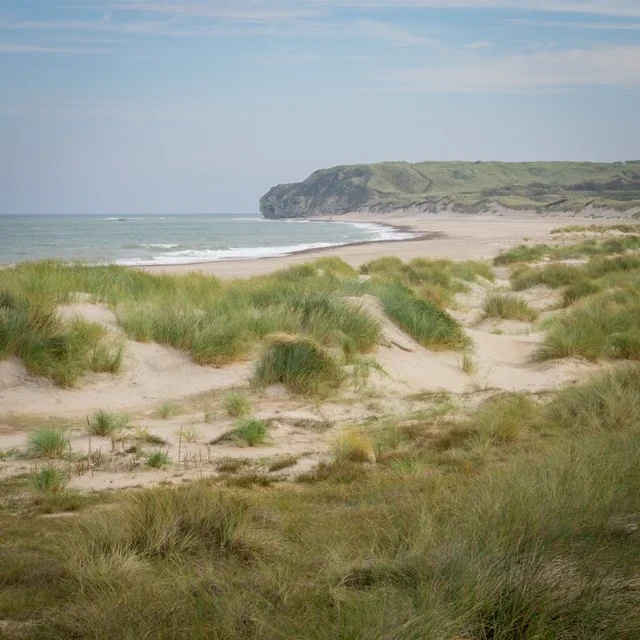
Lundy Island, a granite outcrop anchored roughly ten miles off the north Devon coast, has become an unlikely frontline in the quiet war between isolated communities and an increasingly erratic climate. The island's twenty-eight permanent residents have watched their reservoirs drain to perilous lows after a summer without meaningful rainfall since early May, forcing a cascade of restrictions that touch everything from holiday rentals to public toilets.
What makes Lundy's predicament so instructive is not merely its drama but its purity: this is a closed hydrological system, a microcosm where every drop is accounted for, and where the failure of rain becomes an immediate, existential arithmetic.
The island's water architecture is deceptively simple and brutally fragile. Rainwater captured in the south flows into a collection tank near the harbour, then is pumped uphill to storage tanks and a purification plant, supplemented by five boreholes drilled into ancient rock.
On This Page
When those tanks fell to thirteen percent capacity—barely a week's supply—the Landmark Trust, which manages the island on behalf of the National Trust, began ferrying water by boat in one-thousand-litre containers. Campsites closed, bath plugs vanished from holiday cottages, and visitors were politely asked to reconsider every unnecessary flush. It is crisis management at the scale of a village, executed with the precision of a space mission.
Yet the most revealing chapter came when necessity forced innovation. With reserves at their nadir, tests confirmed that Pondsbury, a freshwater pool normally left to the birds, could be safely tapped. Roughly twelve thousand litres a day were drawn from it, lifting capacity to 22.5 percent—until the pond itself began to dry.
A new three-hundred-thousand-litre tank has been ordered, and desalination has been floated as a solution, though the island manager concedes it would demand more energy than Lundy can generate. The lesson ripples far beyond Devon: resilience is not a slogan but a ledger, and every isolated community eventually confronts the same balance sheet.
TL;DR Lundy Island, a twenty-eight-resident outcrop off north Devon, has endured a water crisis since early May 2026, with no significant rainfall and storage tanks falling to thirteen percent capacity. Emergency measures included boat-delivered water, closed campsites, sealed pub toilets, and the emergency tapping of Pondsbury freshwater pool, which raised reserves to 22.5 percent before itself drying. A new 300,000-litre tank is on order, desalination remains prohibitively energy-intensive, and the island's survival now hinges on conservation, leak repair, and the mercy of autumn rain.
The Anatomy of an Island Water Crisis
Understanding Lundy's emergency requires appreciating the sheer isolation of its water infrastructure. There is no mainland pipe, no regional reservoir, no aquifer shared with a neighbouring county. Every litre consumed on the island originates as rain falling on its own three-and-a-half square miles, captured, stored, purified, and distributed through a system designed for a population that swells dramatically with seasonal visitors. When the rain stops, the clock starts ticking immediately, and there is no external grid to lean on.
The Rain Catchment and Borehole System
The island's primary catchment lies in its southern reaches, where rainfall channels into a collection tank near the harbour before being pumped to higher storage and a purification plant. Five boreholes provide supplementary groundwater, but these too depend on recharge from the same absent rains.
This dual-source design offers redundancy in normal years, yet a prolonged drought stresses both simultaneously, leaving operators with dwindling options and no margin for error.
Engineers who study small-island water systems note that such closed loops are exquisitely sensitive to precipitation variance. A deficit of even a few centimetres across a season can translate into catastrophic shortfalls by autumn, because storage capacity is finite and consumption is relentless.
Lundy's tanks, measured in thousands rather than millions of litres, offer perhaps weeks of buffer under normal demand—a figure that collapses when visitor numbers spike during summer months.
Emergency Measures and Their Human Cost
The restrictions imposed on Lundy read like a textbook of demand-side water management. Campsites closed entirely, eliminating a significant visitor cohort. Toilets at the Marisco Tavern, the island's only pub, were shut. Bath plugs were physically removed from holiday rentals to prevent wasteful bathing.
Visitors received gentle but firm requests to avoid unnecessary flushing, a small behavioural nudge with outsized aggregate effect when multiplied across hundreds of daily guests.
These measures carry a quieter cost that rarely appears in official statements. A community of twenty-eight year-round residents depends on tourism for income, and closing campsites and curtailing amenities directly erodes livelihoods. The island manager acknowledged that visitors have been generally understanding, a testament to the goodwill Lundy inspires, but goodwill does not refill tanks. Conservation, leak repair, and bucket-flushing became daily rituals, transforming a holiday destination into a lesson in collective restraint.
We Also Published
Pondsbury and the Ethics of Emergency Extraction
When Lundy's tanks bottomed out, attention turned to Pondsbury, a freshwater pool that had never been intended as a primary supply. Tests confirmed its water was suitable for human use, and roughly twelve thousand litres per day began flowing into the island's system, lifting capacity from thirteen to 22.5 percent. It was a genuine reprieve, purchased at an ecological price that conservationists will scrutinise for years to come.
Ecological Trade-offs of Tapping a Freshwater Pool
Freshwater pools on isolated islands are rarely mere puddles; they are micro-habitats supporting invertebrates, amphibians, and the birdlife that draws naturalists to Lundy in the first place. Drawing twelve thousand litres daily accelerates evaporation and lowers the water table, threatening species that have adapted to seasonal rhythms over millennia. The pool's subsequent drying suggests the extraction may have tipped a delicate balance, converting a buffer into a casualty.
This tension between immediate human need and long-term ecological integrity is the defining dilemma of climate adaptation. Island managers face an unenviable calculus: allow residents to run dry, or drain the very ecosystems that make the island worth inhabiting. There is no clean answer, only a hierarchy of harms. What Lundy reveals is that adaptation is not a technical problem awaiting a clever fix, but a moral negotiation conducted under duress.
Desalination and the Energy Constraint
Desalination appears, at first glance, as the obvious technological salvation. Remove the salt, and the surrounding Atlantic becomes an infinite reservoir. The island manager's assessment, however, was blunt: desalination would be expensive and would likely require more energy than Lundy can produce. This is the hidden arithmetic of small-island utilities, where every solution must be powered by the same constrained grid it seeks to supplement.
The energy intensity of reverse osmosis is well documented, typically demanding three to four kilowatt-hours per cubic metre of freshwater produced. For an island reliant on diesel generators and modest renewables, that load is formidable. A community of twenty-eight cannot amortise such infrastructure across a large rate base, and the seasonal visitor surge that funds island operations also coincides with peak water demand. Desalination remains a distant, expensive maybe.
Governance, Ownership, and the Trust Model
Lundy's unusual governance arrangement adds another layer of complexity to its water crisis. The island is owned by the National Trust, a conservation charity, and managed day-to-day by the Landmark Trust, which oversees its holiday rentals and visitor infrastructure.
This dual-trust model has preserved Lundy's character for decades, shielding it from commercial development, but it also means decisions about emergency infrastructure must navigate charitable mandates, limited capital reserves, and competing conservation priorities.
The National Trust and Landmark Trust Partnership
Charitable ownership confers enormous benefits: Lundy remains a haven for puffins, seals, and seabirds rather than a resort. Yet charities operate under fiduciary constraints that differ from private utilities or municipal governments. Emergency expenditures, such as a three-hundred-thousand-litre tank or a desalination study, must be justified against broader conservation goals and funded from donations or endowment income rather than ratepayer revenue or government grants.
The partnership's strength lies in its long-term perspective. Unlike a commercial operator seeking quarterly returns, the trusts can invest in resilience that pays off over decades. The weakness is speed and liquidity: when tanks hit thirteen percent, there is no emergency budget line to draw upon, only the goodwill of donors and the ingenuity of on-island staff. Lundy's crisis tests whether patient capital can respond to acute shocks.
Visitor Management as a Water Strategy
Limiting visitor numbers became an explicit water-management tool, a striking inversion of the usual tourism logic. Campsites closed, and day-trippers were discouraged, reducing demand at precisely the moment supply collapsed. This approach acknowledges an uncomfortable truth: on a closed island, every visitor is a water consumer, and hospitality is inseparable from hydrology. The island's economy and its ecology share the same finite tank.
Longer term, this raises questions about carrying capacity. How many visitors can Lundy sustainably host in a warming climate with more frequent droughts? The answer may require rethinking the island's entire business model, shifting from volume tourism toward lower-impact, higher-value experiences. Such a transition would be painful for a community dependent on seasonal income, but the alternative—repeated crises and possible evacuation—is worse.
Climate Context: Is This the New Normal?
Lundy's drought cannot be dismissed as a freak event. The United Kingdom has experienced increasingly erratic rainfall patterns, with wetter winters and drier summers becoming a recurring feature of climate projections. For small islands dependent on winter recharge, this shift is particularly menacing: the season that traditionally refills tanks is delivering less, while the season that drains them is growing longer and hotter.
Shifting Rainfall Patterns Across the British Isles
Meteorological records show a clear trend toward more intense but less frequent rainfall events across southern England. Total annual precipitation may remain stable, but its distribution matters enormously for catchment systems that rely on steady, gentle rain soaking into storage rather than torrential bursts that run off into the sea. Lundy's parched summer exemplifies this redistribution, where the rain that fell simply fell at the wrong times.
Climate models project further intensification, with drought risk rising across south-west England. For islands like Lundy, this transforms water security from a seasonal inconvenience into a structural vulnerability. The calculus of ##P(drought) \times V(vulnerability)## grows more alarming each decade, demanding adaptation strategies that assume the worst rather than hoping for the best. Reactive crisis management must give way to anticipatory planning.
Lessons for Other Isolated Communities
Lundy is not alone. From the Isles of Scilly to Scottish outposts and Mediterranean islands, small communities face identical arithmetic: finite storage, variable rainfall, and rising demand. The solutions pioneered under duress on Lundy—emergency extraction, boat-delivered water, aggressive conservation—offer a template, however imperfect, for others confronting similar emergencies. Each island's specifics differ, but the underlying equation is universal.
The deeper lesson concerns preparedness. Lundy's new three-hundred-thousand-litre tank represents exactly the kind of pre-emptive investment that prevents future crises, yet it was ordered only after tanks hit thirteen percent. The gap between knowing a risk exists and funding its mitigation is where disasters are born. Isolated communities everywhere would do well to close that gap before the rains fail again.
Engineering Resilience: Tanks, Leaks, and Conservation
The practical response to Lundy's crisis blends hard infrastructure with soft behavioural change. A new three-hundred-thousand-litre tank, once installed, will multiply the island's buffer capacity several times over, transforming a week's supply into a season's cushion. Yet tanks are useless without water to fill them, and so conservation, leak detection, and demand management remain the unglamorous backbone of any durable solution.
- 01
- 02
- 03
- 04
The Case for Expanded Storage Capacity
Storage is the cheapest insurance against rainfall variability. Every additional litre of tank capacity decouples consumption from the timing of rain, allowing the island to bank winter abundance against summer scarcity. Lundy's existing tanks, measured in tens of thousands of litres, were adequate for a stable climate but are dangerously thin for one characterised by prolonged dry spells and unpredictable recharge.
The ordered three-hundred-thousand-litre tank represents a step change, but sizing decisions matter. Too small, and it merely postpones crises; too large, and it becomes an expensive monument to over-engineering. Optimal capacity depends on expected drought duration, consumption rates, and the reliability of alternative sources. For Lundy, a tank of this magnitude buys roughly a month of normal demand—meaningful, but not infinite.
Conservation Culture and Leak Repair
On an island of twenty-eight, conservation is not an abstraction but a daily discipline. Staff use buckets to catch water for flushing, leaks are repaired the moment they are spotted, and every fixture is scrutinised for waste. This culture of vigilance, born of necessity, delivers savings that no mainland utility could match, because the feedback loop between consumption and consequence is immediate and visible.
Leak repair deserves particular emphasis. In water systems everywhere, losses from aging pipes can reach twenty to thirty percent of supply, a hidden tax on scarce resources. On Lundy, where every litre is precious, prompt maintenance is both economically rational and morally obligatory. The island's experience suggests that demand-side discipline and supply-side repair are complementary, not competing, strategies.
The Road Ahead: Evacuation, Adaptation, and Hope
Evacuation was discussed, and that discussion alone signals the gravity of Lundy's situation. For a community whose identity is bound to the island, the prospect of temporary or permanent departure is existentially wrenching. Yet the fact that residents stayed, adapted, and innovated speaks to a resilience that no spreadsheet captures. The island's future depends on whether that human capital can be matched by infrastructure and rainfall.
When Evacuation Becomes a Real Option
Evacuation planning is the darkest corner of climate adaptation, rarely discussed openly because it implies defeat. For Lundy, the calculus would hinge on whether water supply can be maintained through a full drought cycle without endangering health. If tanks, conservation, and emergency imports cannot bridge the gap, temporary relocation becomes the only responsible choice, however painful for a community that has endured for generations.
The threshold for evacuation is not a single bad summer but a pattern of them. If droughts recur with increasing frequency, each crisis eroding reserves of money, goodwill, and ecological capital, the island may reach a tipping point beyond which recovery is impossible. Avoiding that outcome requires treating this summer not as an anomaly to be survived but as a warning to be heeded.
Building a Water-Secure Future for Lundy
A water-secure Lundy would combine expanded storage, diversified sources, rigorous conservation, and realistic visitor management. The new tank is a start; rainwater harvesting from roofs, greywater recycling, and perhaps small-scale renewable-powered desalination could follow. None of these is cheap or simple, but together they could transform a fragile system into a resilient one capable of weathering the droughts ahead.
Ultimately, Lundy's story is a parable for a warming world. Isolated communities are the canaries in the coal mine, experiencing climate disruption first and most acutely because they have no hinterland to fall back on. What happens on this small Devon island—whether it adapts, struggles, or empties—will echo far beyond its shores, instructing every community that imagines itself insulated from the weather.
From our network :
- The Final Descent: How ESA Retired the Legendary Cluster Constellation After 24 Years of Space Weather ScienceAfter 24 years mapping Earth’s magnetosphere, ESA’s Cluster mission concluded with a precisely controlled reentry over the South Pacific. This analysis explores the scientific legacy, engineering decisions, and debris mitigation principles behind one of space exploration’s most responsible retirements.
- Live Online English Classes for Kids: Do They Actually Reduce Anxiety?A ten-week study reveals that synchronous online English classes can significantly reduce child language anxiety while improving listening and reading skills. Discover what makes these programs effective and how parents can select the right one.
- CISA’s Ten-Advisory Wave: Why Generic Patching Fails in OT and How to Build Product-Specific PlaybooksCISA released ten ICS advisories in one week, exposing critical infrastructure risks. Generic patching fails in OT. Learn to build product-specific remediation playbooks.
- Committed Mediterranean Precipitation Decline: Why Emissions Cuts Alone Cannot Restore Winter RainsNew NOAA research reveals that Mediterranean winter rains may decline irreversibly even with emissions cuts. Explore the science of committed climate change and regional impacts.
- Forbidden Matrix Patterns and Visible Lattice Points: A Geometric DictionaryExplore how multidimensional 0–1 matrices encode geometric truths, linking forbidden patterns to visible lattice points and hypergraph theory, with applications in combinatorics and computational geometry.
- Mobile Learning and VR in English: What Global Evidence Reveals About Effective Language TechnologyA systematic review across 14 countries reveals which language-learning technologies genuinely work. Mobile learning, AI, and VR show measurable benefits when pedagogically integrated. This evidence-based guide helps educators and learners select technology that delivers real return on investment.
- University Language Proficiency Exams: Why Institutional Tests Demand Different Preparation Than IELTS and TOEFLDiscover why university-specific language proficiency examinations differ fundamentally from IELTS and TOEFL, and learn strategic preparation approaches for institutional assessment success.
- How AI Agents Will Change the Way We Manage Personal FinancesExplore how AI agents are transforming personal finance through automated budgeting, bill payment, and investment management, while examining the critical security protocols and governance frameworks required for safe deployment.
- The Hidden Cost of AI Convenience: Why Over-Permissioned Agents Are a Security Time BombDiscover why AI agents with excessive permissions create dangerous single points of failure, and learn how implementing least privilege principles can protect your organization from exploitation.
RESOURCES
- Rapid showers and no flushing toilets: drought pushes Lundy island ...theguardian.com23 hours ago ... ... water shortage. Photograph: Jim Wileman/The Guardian. About 12,000 litres of water has been taken from there every day since…
- Puffin island on cusp of closure as it runs out of water - BBCbbc.com5 days ago ... Severe water shortages in Lundy are not new, with islanders and visitors previously resorting to bottled water. Derek Green smiling…
- Emergency repairs and water shortages - The Landmark Trustlandmarktrust.org.ukLundy is a spectacular island all year round but in summer there are some ... island has suffered an unprecedented drought over the summer…
- Puffin island Lundy on cusp of closure as it runs out of water - BBCbbc.co.uk5 days ago ... But the island is on the cusp of being evacuated as water levels drop to the lowest ever, forcing residents…
- A dry summer has left the Bristol Channel island critically short of ...facebook.com21 hours ago ... Rapid showers and no flushing toilets: drought pushes Lundy island ... Saltwater toilets, desperate wildlife: Water-starved Catalina Island ...
- Lundy Island faces critical water shortage as drought threatens its 28 ...instagram.com22 hours ago ... Lundy Island faces a critical water shortage after experiencing no significant rainfall since May, forcing restrictions on visitors, toilet use, ...
- An island off the Devon coast is running so desperately short of ...facebook.com20 hours ago ... ... lundy-island-devon-water -shortage-dry-summer. theguardian.com. Rapid showers and no flushing toilets: drought pushes Lundy island. 2h. Matt ...
- Drought raises concerns for wintering waterbirds as Lundy faces ...birdguides.com2 days ago ... ... water shortages have left the seabird island of Lundy facing the possibility of closure and evacuation. The British Trust…
- Severe drought has left Lundy Island on the brink of a total shutdown ...threads.com4 days ago ... Lundy Island may have to be evacuated after its water supplies dropped to their lowest ever level. UK island may…
- What's life like on this little island? : r/howislivingthere - Redditreddit.comAug 11, 2026 ... ... water supply so droughts like this are extremely hard for them. ... Lundy, a remote UK island, is running…
- St. Johns River Water Management declares Phase I shortage for ...news4jax.comFeb 25, 2026 ... The declaration follows below‑average rainfall, declining groundwater levels and ongoing extreme drought conditions across the region.
- Do you live in a state with a water crisis/shortage? How bad does it ...reddit.comJul 9, 2026 ... ... water to the places in drought would be obscene. Not just money ... Lundy, a remote UK island, is…
- Lundy Water Shortage Could Force Island Closure and Evacuationdeeparrival.com5 days ago ... Lundy Is Open but Rationing Water · Ferry Water Deliveries End With the Season · England's Drought Backs the Warning…
- Why Lundy Island may have to be evacuated: 'Last chance saloon'the-independent.com5 days ago ... The ongoing water crisis could lead to the unprecedented evacuation of Lundy's 28 permanent residents and farm livestock, alongside the ...
- 01
- 02
- 03
- 04
- 05
- 06
- 07
- 08
0 Comments