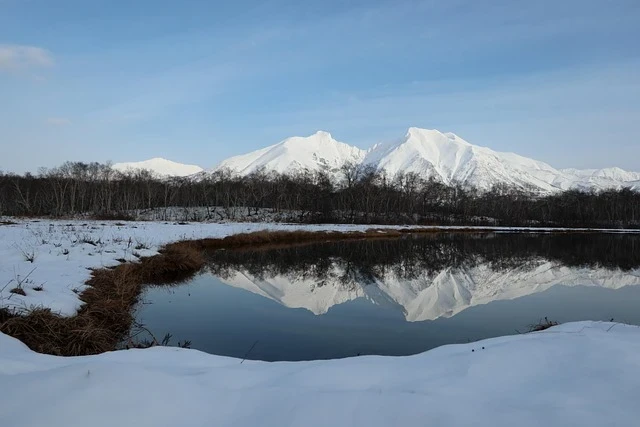
When the earth beneath the Kamchatka Peninsula shuddered with a magnitude 7 rupture on October 16, 2026, the event did more than rattle a remote Russian frontier. It reminded the world that our planet's most violent energies are stored quietly beneath thin crusts of habitability, waiting for the precise moment when tectonic stress overwhelms friction.
The European-Mediterranean Seismological Centre confirmed the strike, yet depth, rupture geometry, and damage assessments remained frustratingly opaque in the first hours.
Kamchatka occupies one of the most seismically volatile corridors on Earth, a jagged amphitheater where the Pacific Plate plunges beneath the Okhotsk microplate. This subduction machinery has produced some of the largest earthquakes ever instrumentally recorded, including the catastrophic 1952 Severo-Kurilsk event that generated a trans-Pacific tsunami.
On This Page
A magnitude 7 in this neighborhood is not an anomaly; it is the planet's routine punctuation, a reminder that geology operates on schedules indifferent to human convenience.
What follows is a rigorous examination of the Kamchatka earthquake's scientific context, its place within global seismic patterns, the mechanics of subduction-zone megathrusts, and the sobering realities of hazard preparedness in sparsely populated but strategically vital regions.
We will separate verified fact from speculation, explore the physics that governs such ruptures, and consider what this event signals about the broader architecture of planetary risk.
TL;DR A magnitude 7 earthquake struck Russia's Kamchatka Peninsula on October 16, 2026, as confirmed by the European-Mediterranean Seismological Centre. The region sits atop one of the world's most active subduction zones, where the Pacific Plate dives beneath the Okhotsk microplate. While no immediate casualties or major damage were reported, the event underscores the persistent seismic threat facing this remote but strategically significant territory. Depth and rupture details remained pending at the time of reporting, and authorities moved swiftly to assess infrastructure and tsunami potential.
The Tectonic Theater of Kamchatka
Kamchatka is a 1,250-kilometer peninsula dangling from Russia's Far East like a geological question mark, home to more than 300 volcanoes and a dense lattice of active faults. Its seismic pedigree is unmatched in the Northern Hemisphere, rivaling Japan, Chile, and Alaska for the frequency and ferocity of its earthquakes. Understanding why requires descending into the mechanics of plate tectonics.
The Pacific Plate's Relentless Descent
Beneath Kamchatka, the Pacific Plate slides westward and downward at roughly 8 centimeters per year, a velocity that sounds glacial but accumulates into catastrophic strain over centuries. This subduction interface, known as the Kuril-Kamchatka Trench, extends over 2,000 kilometers and has hosted some of the most powerful earthquakes in recorded history. The friction between descending oceanic crust and overriding continental rock stores elastic energy like a compressed spring.
When that spring releases, the resulting rupture can propagate hundreds of kilometers in seconds, displacing the seafloor and generating tsunamis capable of crossing entire oceans. The 1952 magnitude 9.0 Kamchatka earthquake exemplified this terrifying potential, sending waves that reached Hawaii and causing widespread destruction in the Kuril Islands. Every subsequent tremor, including the 2026 event, occurs within this inherited architecture of accumulated stress.
Seismologists classify such events by their depth, which determines surface shaking intensity and tsunami generation potential. Shallow ruptures, typically less than 70 kilometers deep, pose the greatest hazard because they displace the seafloor directly and transmit energy efficiently to nearby coastlines.
Intermediate and deep earthquakes, while often less destructive at the surface, still reveal the geometry of the subducting slab.
The Kamchatka region's complexity is compounded by the presence of the Emperor Seamount chain, a submerged mountain range riding atop the Pacific Plate into the trench. These seamounts act as asperities, rough patches that lock the fault and increase friction, potentially triggering larger and more irregular ruptures. Their influence on the 2026 event remains a subject of active investigation.
Historical Precedents and Recurrence Intervals
The Kamchatka seismic catalog reads like a chronicle of planetary violence, with magnitude 7 or greater events occurring roughly every few years. The 1952 magnitude 9.0 earthquake remains the benchmark, generating a tsunami that killed thousands and reshaped coastal communities across the Kuril chain. Subsequent events in 1958, 1963, and 2006 continued the pattern of periodic stress release.
Recurrence intervals along the Kuril-Kamchatka Trench vary by segment, with some sections rupturing every 100 to 150 years and others exhibiting longer quiescence. The 2026 event may represent the failure of a smaller asperity or a partial rupture of a larger locked zone, a distinction that matters enormously for forecasting future hazards. Precise depth and focal mechanism data will clarify which scenario applies.
Paleoseismic studies, which examine tsunami deposits and coastal uplift signatures, have extended the record of Kamchatka earthquakes back thousands of years. These investigations reveal that the region has experienced multiple magnitude 9 events in the Holocene, underscoring the inadequacy of short instrumental records for assessing long-term risk. The 2026 earthquake is a single data point in a much longer narrative.
Comparative analysis with other subduction zones, such as Japan's Nankai Trough or the Cascadia margin off North America, highlights both similarities and unique features of Kamchatka. Its relatively low population density reduces immediate human impact but complicates rapid assessment and emergency response. The region's isolation is both a buffer and a vulnerability.
Decoding the Magnitude 7 Event
Magnitude 7 on the moment magnitude scale represents an earthquake that releases approximately 32 times more energy than a magnitude 6 event and roughly 1,000 times more than a magnitude 5.
It is a threshold at which widespread damage becomes likely in populated areas, though the actual impact depends heavily on depth, distance, and local geology. The Kamchatka event's remote epicenter may have spared infrastructure the worst.
Energy Release and Ground Shaking
The energy released by a magnitude 7 earthquake is equivalent to approximately 476 kilotons of TNT, or roughly 30 times the yield of the Hiroshima bomb. This energy radiates outward as seismic waves, with primary waves compressing and dilating rock and secondary waves shearing it laterally. Surface waves, which travel along the crust, cause the most damage to buildings.
Ground shaking intensity, measured by the Modified Mercalli Intensity scale, depends on distance from the epicenter, local soil conditions, and the depth of the rupture. Soft sediments amplify shaking, while bedrock transmits it more efficiently but with less amplification. Kamchatka's volcanic soils and rugged terrain create a complex mosaic of shaking intensities across the peninsula.
The duration of shaking is another critical factor, with larger ruptures producing longer periods of ground motion that can resonate with buildings and cause progressive structural failure. A magnitude 7 event might shake for 10 to 30 seconds, depending on rupture velocity and fault geometry. This duration is often more damaging than peak acceleration alone.
Liquefaction, the process by which saturated soils lose strength and behave like liquids during shaking, poses a significant hazard in coastal and riverine areas. Kamchatka's many rivers and coastal lowlands are susceptible, potentially causing buildings to sink or tilt even when shaking is moderate. This secondary effect often surprises communities unprepared for seismic hazards.
Tsunami Potential and Coastal Risk
Subduction-zone earthquakes are the primary generators of destructive tsunamis, and Kamchatka's offshore ruptures are no exception. A magnitude 7 event can produce a localized tsunami if the rupture is shallow and involves significant vertical seafloor displacement. The 2026 earthquake's tsunami potential depends on these parameters, which were not immediately available.
The Pacific Tsunami Warning Center and regional authorities monitor such events closely, issuing advisories based on seismic data and pre-computed scenarios. For Kamchatka, the most vulnerable coastlines face the Pacific Ocean and the Kuril Islands, where wave amplification and resonance can increase run-up heights. Coastal communities maintain evacuation protocols, though their effectiveness varies with infrastructure and public awareness.
Tsunami waves travel at speeds exceeding 700 kilometers per hour in deep water, slowing and growing taller as they approach shore. The first wave is often not the largest, and multiple waves can arrive over several hours, complicating evacuation and rescue efforts. This temporal dimension makes tsunami hazard management uniquely challenging.
Historical tsunamis from Kamchatka have reached Japan, Hawaii, and even the West Coast of the United States, demonstrating the trans-oceanic reach of these events. The 1952 tsunami caused significant damage in Hawaii despite traveling over 5,000 kilometers. The 2026 event's tsunami potential, while likely lower given its magnitude, cannot be dismissed without detailed analysis.
Global Seismic Patterns and Comparative Analysis
The Kamchatka earthquake did not occur in isolation but as part of a global pattern of seismic activity that reflects the constant motion of tectonic plates. The Ring of Fire, a horseshoe-shaped belt encircling the Pacific Ocean, hosts approximately 90 percent of the world's earthquakes and 75 percent of its active volcanoes. Kamchatka sits prominently within this belt.
The Ring of Fire's Restless Architecture
The Ring of Fire traces the boundaries of several tectonic plates, including the Pacific, North American, Eurasian, and Philippine Sea plates. Subduction zones dominate this belt, where oceanic plates dive beneath continental or island-arc crust, generating earthquakes, volcanic eruptions, and mountain-building. Kamchatka's position at the northern terminus of the Kuril-Kamchatka arc makes it a critical monitoring site.
Recent decades have witnessed several major earthquakes along the Ring of Fire, including the 2011 Tohoku event in Japan, the 2010 Maule earthquake in Chile, and the 1964 Alaska earthquake. Each of these events provided lessons about rupture dynamics, tsunami generation, and community resilience that inform current preparedness efforts. The 2026 Kamchatka earthquake adds another chapter to this ongoing education.
Seismic tomography, which uses earthquake waves to image the interior of the Earth, has revealed the complex geometry of subducting slabs beneath Kamchatka. These images show the Pacific Plate descending at varying angles and depths, with tears and folds that influence where earthquakes nucleate. Understanding this three-dimensional structure is essential for accurate hazard assessment.
Global seismic networks, including those operated by the Comprehensive Nuclear-Test-Ban Treaty Organization and the Incorporated Research Institutions for Seismology, detected the Kamchatka event within minutes. This rapid detection enables tsunami warnings and scientific analysis, though the quality of initial estimates improves as more data arrive. The 2026 event will be studied for years to come.
Lessons from Tohoku and Beyond
The 2011 Tohoku earthquake in Japan, a magnitude 9.1 event, revolutionized understanding of subduction-zone hazards and exposed the limitations of preparedness assumptions. Its tsunami overwhelmed seawalls designed for smaller events, causing widespread devastation and nuclear crisis. Kamchatka's seismic community has incorporated these lessons into planning.
One key insight from Tohoku is that the largest earthquakes can occur on fault segments previously considered low-risk, challenging the concept of characteristic earthquakes. This has led to more probabilistic approaches to hazard assessment, acknowledging that any locked segment could rupture catastrophically. The 2026 Kamchatka event will be evaluated within this evolving framework.
Another lesson concerns the importance of real-time monitoring and rapid public communication. Japan's dense seismic network and tsunami warning system saved thousands of lives despite the scale of the disaster. Kamchatka's monitoring infrastructure, while less dense, benefits from international collaboration and satellite-based detection.
Post-Tohoku research has also advanced understanding of tsunami generation mechanisms, including the role of seafloor deformation and submarine landslides. These insights inform tsunami modeling for Kamchatka and other subduction zones, improving the accuracy of wave arrival and height forecasts. The 2026 event provides an opportunity to test these models.
Hazard Preparedness in Remote Regions
Kamchatka's sparse population, concentrated in a few coastal settlements and the regional capital of Petropavlovsk-Kamchatsky, presents unique challenges for earthquake preparedness and response. The region's isolation, harsh climate, and limited infrastructure complicate rapid assessment and relief efforts. Yet its residents possess generations of experience living with seismic risk.
Infrastructure Vulnerabilities
Buildings in Kamchatka range from Soviet-era concrete structures to modern construction, with varying degrees of seismic resilience. Older buildings, particularly those not retrofitted, pose the greatest risk during strong shaking. The 2026 earthquake's impact on infrastructure will depend on proximity to the epicenter and local ground conditions.
Critical facilities, including hospitals, power plants, and communication networks, are particularly vulnerable to disruption. The Kamchatka Peninsula hosts geothermal power plants and military installations, adding strategic dimensions to seismic risk. Damage to these facilities could have cascading effects on regional stability and response capacity.
Transportation infrastructure, including roads, bridges, and the region's airport, is essential for emergency response but susceptible to earthquake damage. Landslides and liquefaction can sever lifelines, isolating communities for days or weeks. Pre-positioning of supplies and equipment is a key preparedness strategy.
The region's volcanic terrain adds another layer of complexity, as earthquakes can trigger volcanic activity or destabilize slopes. The interaction between seismic and volcanic hazards is an active area of research, with implications for hazard zonation and land-use planning. The 2026 event may provide new data on these interactions.
Community Resilience and Indigenous Knowledge
The indigenous peoples of Kamchatka, including the Itelmen, Koryak, and Chukchi, have inhabited this seismic landscape for millennia, developing traditional knowledge about earthquake and tsunami hazards. Their oral histories contain accounts of past disasters and strategies for survival that complement modern scientific approaches. Integrating this knowledge into preparedness planning is increasingly recognized as valuable.
Community-based preparedness, emphasizing local networks, mutual aid, and culturally appropriate communication, can be more effective than top-down approaches in remote regions. Kamchatka's settlements, often isolated during winter, rely on self-reliance and neighborly cooperation. The 2026 earthquake will test these informal systems alongside formal response mechanisms.
Education and drills are essential for maintaining readiness, particularly in communities where earthquakes may occur infrequently enough to fade from collective memory. Schools, workplaces, and public institutions play key roles in disseminating preparedness information and practicing response protocols. The 2026 event may stimulate renewed attention to these efforts.
Mental health and psychosocial support are often overlooked aspects of disaster preparedness, yet they are critical for community recovery. The trauma of experiencing a major earthquake, particularly with aftershocks, can have lasting effects. Kamchatka's mental health infrastructure, like its physical infrastructure, faces challenges of distance and resources.
- 01
- 02
- 03
- 04
We Also Published
Scientific Frontiers and Future Monitoring
The 2026 Kamchatka earthquake will be scrutinized by scientists using an array of modern tools, from satellite radar interferometry to ocean-bottom seismometers. These technologies offer unprecedented insights into rupture processes, fault mechanics, and tsunami generation. The event is both a hazard and a natural laboratory.
Advanced Detection Technologies
Interferometric synthetic aperture radar (InSAR) can measure ground deformation caused by earthquakes with centimeter precision, revealing the location and extent of fault slip. Applied to Kamchatka, InSAR data will help constrain the rupture geometry and assess stress transfer to adjacent fault segments. This information is vital for aftershock forecasting.
Ocean-bottom seismometers, deployed temporarily after major events, record aftershocks and seismic waves that land-based networks miss. These instruments provide critical data on offshore fault structure and rupture dynamics, particularly for subduction zones where the largest earthquakes occur. Their deployment following the 2026 event will enhance understanding of the Kuril-Kamchatka Trench.
Machine learning algorithms are increasingly used to detect and characterize earthquakes, identifying patterns in seismic data that human analysts might miss. These tools can process vast datasets quickly, improving aftershock monitoring and early warning. The 2026 event will contribute to training datasets that refine these algorithms.
Global navigation satellite system (GNSS) stations on Kamchatka continuously measure ground motion, capturing both the slow accumulation of tectonic strain and the sudden displacements of earthquakes. These measurements help scientists understand the earthquake cycle and identify segments approaching failure. The 2026 event's GNSS signature will be analyzed for insights into rupture mechanics.
Forecasting and Early Warning
Earthquake prediction remains one of science's most elusive goals, with no reliable method for specifying the time, location, and magnitude of future events. Instead, scientists focus on probabilistic forecasting, estimating the likelihood of earthquakes over decades and identifying regions of elevated hazard. Kamchatka's high seismicity makes it a priority for such assessments.
Early warning systems, which detect the first seismic waves and issue alerts before stronger shaking arrives, can provide seconds to tens of seconds of warning. These systems are operational in Japan, Mexico, and California, and are being developed for other regions. Kamchatka's sparse population limits the benefits but does not eliminate them for critical infrastructure.
Aftershock forecasting is more tractable than mainshock prediction, using statistical models to estimate the probability and likely locations of subsequent earthquakes. Following the 2026 event, aftershock forecasts will guide emergency response and public communication. These forecasts are updated as new data arrive, refining the picture of ongoing hazard.
Long-term forecasting relies on paleoseismic records, geodetic measurements, and statistical models of earthquake recurrence. For Kamchatka, these approaches suggest continued high hazard, with the potential for future magnitude 8 or 9 events. The 2026 earthquake, while significant, does not reduce this long-term risk and may even increase stress on adjacent fault segments.
The Human Dimension of Seismic Risk
Beyond the physics and statistics, earthquakes are human events, affecting lives, livelihoods, and communities. The 2026 Kamchatka earthquake, even if it caused minimal damage, represents a moment of collective vulnerability and resilience. Understanding the human dimension is essential for effective risk management and compassionate response.
Economic and Strategic Implications
Kamchatka's economy, based on fishing, mining, tourism, and military installations, is vulnerable to earthquake disruption. Damage to infrastructure can halt economic activity, displace workers, and strain public finances. The region's strategic importance to Russia, including its Pacific Fleet and early warning radar, adds geopolitical dimensions to seismic risk.
Insurance and reinsurance markets assess seismic risk globally, pricing coverage based on probabilistic models of expected losses. The 2026 event will inform these models, potentially affecting premiums and coverage availability in the region. For residents and businesses, insurance is a critical tool for financial recovery after disasters.
International aid and cooperation can supplement local and national response capacities, particularly for large-scale disasters. Russia's relationships with neighboring countries and international organizations influence the speed and scale of assistance. The 2026 event's impact on these dynamics will depend on the severity of damage and the political context.
Long-term recovery and reconstruction require sustained investment and planning, often taking years or decades. Building back better, with enhanced resilience standards, is a guiding principle but faces challenges of cost, capacity, and political will. Kamchatka's recovery from the 2026 event, however modest, will reflect these broader dynamics.
Psychological and Social Impacts
The psychological impact of earthquakes extends beyond immediate trauma, affecting mental health, community cohesion, and risk perception. Aftershocks, even if minor, can prolong anxiety and disrupt sleep, work, and social life. Access to mental health services is often limited in remote regions like Kamchatka.
Social networks and community bonds are crucial for coping with disasters, providing emotional support, practical assistance, and shared meaning. Kamchatka's close-knit communities, forged by isolation and shared experience, may possess resilience that larger, more anonymous societies lack. The 2026 event will test and potentially strengthen these bonds.
Risk perception influences preparedness behavior, with those who have experienced earthquakes more likely to take protective actions. However, memory fades over time, and complacency can set in during quiet periods. The 2026 event may serve as a reminder that prompts renewed attention to preparedness, at least temporarily.
Media coverage of earthquakes shapes public understanding and response, sometimes amplifying fear or spreading misinformation. Responsible reporting, grounded in scientific evidence and avoiding sensationalism, is essential for maintaining public trust and promoting effective action. The 2026 Kamchatka event will be covered by global media, with varying degrees of accuracy.
Conclusion: Living with Planetary Forces
The magnitude 7 earthquake that struck Kamchatka on October 16, 2026, is a reminder that we inhabit a dynamic planet whose forces dwarf human agency. The Kamchatka Peninsula, perched atop one of Earth's most active subduction zones, will continue to experience earthquakes, tsunamis, and volcanic eruptions.
Our task is not to prevent these events but to understand them, prepare for them, and respond with wisdom and compassion.
Science has made remarkable progress in understanding earthquake physics, monitoring seismic activity, and forecasting hazards. Yet uncertainties remain, and the limits of prediction are real. The 2026 event will contribute to the ongoing scientific enterprise, adding data and insights that refine our models and improve our readiness. Each earthquake is both a tragedy and an opportunity to learn.
For the people of Kamchatka, the 2026 earthquake is a lived experience, a moment of fear and perhaps of loss, but also of resilience. Their ability to cope, recover, and adapt reflects the human capacity to endure in the face of planetary forces.
As the world watches and learns, we are reminded of our shared vulnerability and our shared responsibility to prepare for the inevitable.
The Kamchatka earthquake of 2026 will be remembered not only for its magnitude but for what it teaches us about the Earth, about risk, and about ourselves. In the end, living with earthquakes means living with uncertainty, and responding with knowledge, preparation, and solidarity. The planet will continue to move, and we must continue to adapt.
From our network :
- Mobile Learning and VR in English: What Global Evidence Reveals About Effective Language TechnologyA systematic review across 14 countries reveals which language-learning technologies genuinely work. Mobile learning, AI, and VR show measurable benefits when pedagogically integrated. This evidence-based guide helps educators and learners select technology that delivers real return on investment.
- How AI Agents Will Change the Way We Manage Personal FinancesExplore how AI agents are transforming personal finance through automated budgeting, bill payment, and investment management, while examining the critical security protocols and governance frameworks required for safe deployment.
- The Final Descent: How ESA Retired the Legendary Cluster Constellation After 24 Years of Space Weather ScienceAfter 24 years mapping Earth’s magnetosphere, ESA’s Cluster mission concluded with a precisely controlled reentry over the South Pacific. This analysis explores the scientific legacy, engineering decisions, and debris mitigation principles behind one of space exploration’s most responsible retirements.
- Forbidden Matrix Patterns and Visible Lattice Points: A Geometric DictionaryExplore how multidimensional 0–1 matrices encode geometric truths, linking forbidden patterns to visible lattice points and hypergraph theory, with applications in combinatorics and computational geometry.
- CISA’s Ten-Advisory Wave: Why Generic Patching Fails in OT and How to Build Product-Specific PlaybooksCISA released ten ICS advisories in one week, exposing critical infrastructure risks. Generic patching fails in OT. Learn to build product-specific remediation playbooks.
- Live Online English Classes for Kids: Do They Actually Reduce Anxiety?A ten-week study reveals that synchronous online English classes can significantly reduce child language anxiety while improving listening and reading skills. Discover what makes these programs effective and how parents can select the right one.
- Committed Mediterranean Precipitation Decline: Why Emissions Cuts Alone Cannot Restore Winter RainsNew NOAA research reveals that Mediterranean winter rains may decline irreversibly even with emissions cuts. Explore the science of committed climate change and regional impacts.
- The Hidden Cost of AI Convenience: Why Over-Permissioned Agents Are a Security Time BombDiscover why AI agents with excessive permissions create dangerous single points of failure, and learn how implementing least privilege principles can protect your organization from exploitation.
- University Language Proficiency Exams: Why Institutional Tests Demand Different Preparation Than IELTS and TOEFLDiscover why university-specific language proficiency examinations differ fundamentally from IELTS and TOEFL, and learn strategic preparation approaches for institutional assessment success.
RESOURCES
- Earthquake of magnitude 7 strikes Russia's Kamchatka Peninsula ...reuters.com7 hours ago ... A magnitude 7 earthquake struck the Kamchatka Peninsula region of Russia on Friday, the European-Mediterranean Seismological Centre ...
- Earthquake of Magnitude 7 Strikes Russia's Kamchatka Peninsula ...usnews.com7 hours ago ... ... Editing by Christian Schmollinger). Copyright 2026 Thomson Reuters. Join the Conversation. See Comments. Tags: earthquakes. Read More ...
- Powerful magnitude-7.8 earthquake shakes Russia's far east ... - ABC7abc7.comSep 18, 2025 ... A powerful 7.8 magnitude earthquake has struck near the east coast of Russia's Kamchatka region, the U.S. Geological Survey said.
- A Pacific warning system tested again: Tsunami alerts follow 7 June ...ioc.unesco.orgJun 7, 2026 ... 7 June 2026 - Less than a year after a magnitude 8.8 earthquake off Russia's Kamchatka Peninsula triggered Pacific-wide alerts…
- An earthquake of magnitude 7 struck Russia's Kamchatka Peninsula ...instagram.com6 hours ago ... 76 likes, 12 comments - hindustantimes on October 15, 2026: "An earthquake of magnitude 7 struck Russia's Kamchatka Peninsula region…
- Earthquake M5 Severo-Kuril'sk, Russia (Aug 7, 2026)sms-tsunami-warning.comAug 7, 2026 ... A magnitude 5 earthquake occurred near Severo-Kuril'sk, Russia (49km SE) on Aug 7, 2026 ... The February 3, 1923 M…
- Magnitude 7 Earthquake Strikes Russia's Kamchatka Peninsula A ...instagram.com3 hours ago ... 57 likes, 0 comments - igr_media on October 16, 2026: "#IGR: Magnitude 7 Earthquake Strikes Russia's Kamchatka Peninsula A powerful ...
- 8.8 magnitude earthquake latest: Volcano erupts in Russia, tsunami ...abcnews.comThe intense quake -- about 85 miles off the east coast of Russia's Kamchatka ... © 2026 ABC News.
- USGS releases aftershock forecast for M8.8 Russian Kamchatka ...usgs.govJul 31, 2025 ... On July 29, 2025, at 7:25pm EDT (July 30, 2025, 11:25am local time), a magnitude 8.8 earthquake struck offshore the…
- An earthquake of magnitude 7 struck the Kamchatka Peninsula ...facebook.com2 hours ago ... (Intl Update) Earthquake of Magnitude 7 Strikes Russia; Japan Mistakenly Issues 9.9 Warning Oct. 16, 2026 (Agencies): An earthquake of ...
- A NASA satellite caught a giant tsunami doing something no one ...sciencedaily.comJun 24, 2026 ... 17, 2025 — When a massive 8.8 magnitude earthquake struck off Russia's Kamchatka ... For the 2021 magnitude 7 Acapulco,…
- The complete Kamchatka, Russia earthquake report (up-to-date 2026).earthquakelist.orgWhen was the last earthquake in Kamchatka, Russia? A 4.6 magnitude earthquake hit near Kamchatka on the morning of October 10, 2026 at 09:19…
- No Tsunami Threat Valid at Friday, June 19 2026 at 5:25 PM ChST ...facebook.comJun 19, 2026 ... ... magnitude earthquake near Kamchatka, Russia. CURRENT CONDITIONS: • Minor sea-level fluctuations may continue over the next few hours ...
- Rapid Characterization of the 2025 Mw 8.8 Kamchatka, Russia ...pubs.geoscienceworld.orgJan 2, 2026 ... The 1952 Severo–Kurilsk earthquake occurred approximately 73 yr before the 2025 earthquake. Magnitude estimates for this event range from ...
- Massive 8.7 Earthquake Strikes Near Kamchatka Russia – Hawaii ...southpasadenan.comJul 29, 2025 ... A magnitude 8.7 earthquake struck off the coast of eastern Russia July 29, triggering global seismic monitoring systems and tsunami…
- 01
- 02
- 03
- 04
- 05
- 06
- 07
- 08
0 Comments