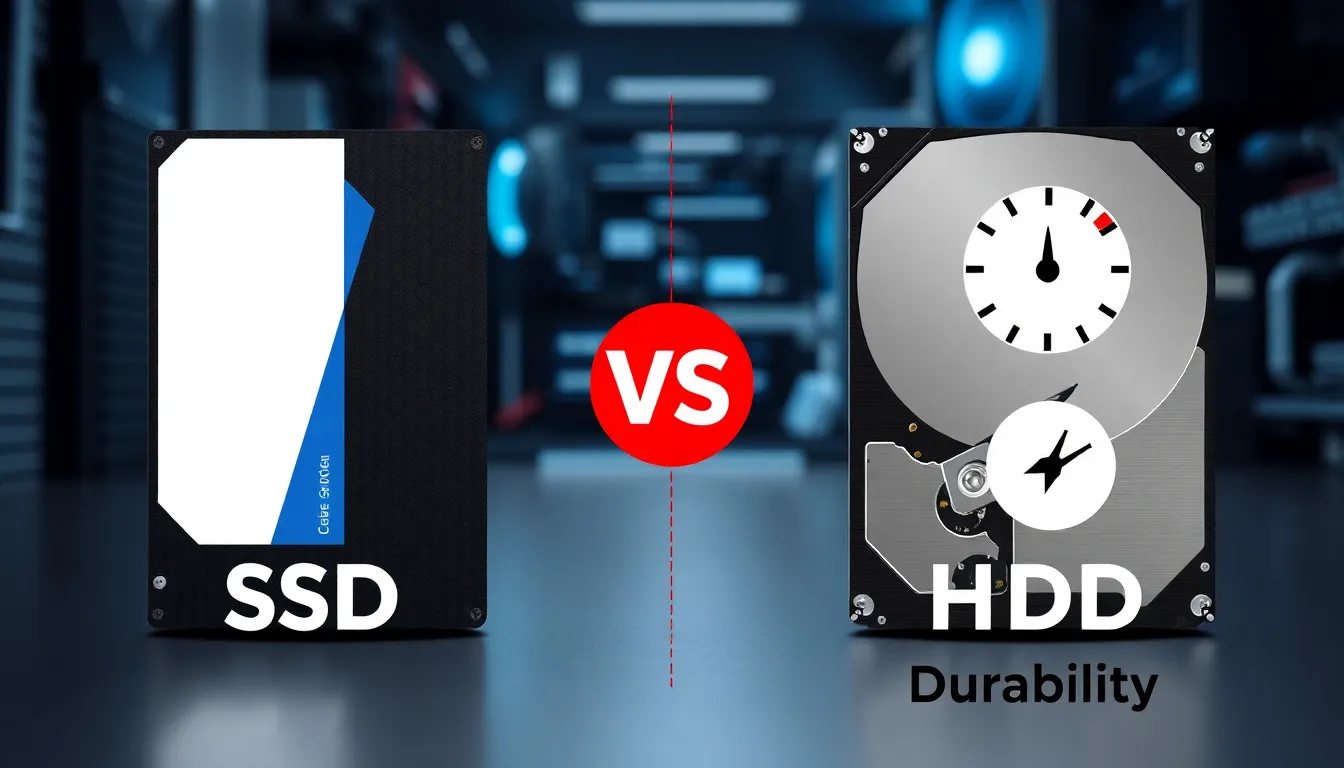
Solid State Drives (SSDs) are transforming how we store and access data, providing remarkable speed and reliability that outshine traditional hard disk drives. This shift is essential for anyone looking to enhance their computing experience with modern technology.
Solid State Drives (SSDs) have revolutionized data storage, offering lightning-fast performance and enhanced durability compared to traditional Hard Disk Drives (HDDs). This article delves into the core differences, advantages, and practical applications of SSDs, providing a comprehensive guide for tech enthusiasts and everyday users alike.
Understanding Solid State Drive Technology
SSDs leverage flash memory to store data without moving parts, resulting in quicker access times and greater reliability. This technology eliminates the mechanical limitations of HDDs, making SSDs ideal for high-performance computing.
How SSDs Store Data
Using NAND flash memory cells, SSDs write and read data electronically. Each cell can hold multiple bits, enabling high storage densities. This process is non-volatile, meaning data persists even without power, a key advantage over volatile memory types.
Speed and Performance Metrics
SSDs boast read/write speeds that can exceed 500 MB/s, significantly outpacing HDDs, which average around 100 MB/s. This speed boost translates to faster boot times, quicker file transfers, and smoother application performance, enhancing overall user experience.
Comparing SSDs and HDDs
The battle between SSDs and HDDs hinges on factors like cost, capacity, and longevity. While HDDs offer more storage for less money, SSDs provide superior speed and durability, making them a preferred choice for many applications.
Cost and Storage Capacity
HDDs are generally cheaper per gigabyte, with prices around $0.03 per GB for a 1TB drive, whereas SSDs cost approximately $0.10 per GB for the same capacity. However, SSD prices have been declining, narrowing the gap over time.
Durability and Lifespan
With no moving parts, SSDs are more resistant to physical shock and have a longer operational life, often rated for over 1.5 million hours mean time between failures (MTBF). HDDs, with mechanical components, are more prone to damage and have lower MTBF ratings.
Advantages of Using SSDs
SSDs offer numerous benefits, from energy efficiency to compact form factors, making them indispensable in modern devices. Their low power consumption and silent operation enhance portability and user comfort.
Energy Efficiency and Noise Levels
SSDs consume less power, typically around 2-3 watts during active use, compared to 6-7 watts for HDDs. This efficiency extends battery life in laptops and reduces heat generation. Additionally, SSDs operate silently, as they lack spinning disks.
Form Factors and Compatibility
Available in various sizes like 2.5-inch and M.2, SSDs fit seamlessly into desktops, laptops, and even ultra-thin devices. Their compatibility with SATA and NVMe interfaces ensures broad adoption across different systems.
- 01
- 02
- 03
- 04
Key Takeaways
SSDs represent a significant upgrade over HDDs, offering faster speeds, better durability, and lower power consumption. While HDDs remain relevant for bulk storage, SSDs are the go-to for performance-critical applications, shaping the future of data storage technology.
|
Aspect |
SSD |
HDD |
|
Speed |
Up to 550 MB/s |
Around 100 MB/s |
|
Durability |
High (no moving parts) |
Moderate (mechanical parts) |
|
Cost per GB |
Approx. $0.10 |
Approx. $0.03 |
|
Power Consumption |
2-3 watts |
6-7 watts |
|
Noise Level |
Silent |
Audible |
From our network :
- AI Training Data Exhausted: Elon Musk’s Synthetic Data Solution and the Future of AI
- Shell Script Quotes: When to Use Single Double or No Quotes
- Troubleshooting SQL Server Connection Errors: A Comprehensive Guide
- Liquid Organic Fertilizer
- CBSE Board Exams 2025: Navigating the Evolving Examination Landscape
- NASA’s Innovative Plans for the Mars Sample Return Mission
- 01
- 02
- 03
- 04
- 05
- 06
- 07
- 08
0 Comments