
On This Page
The Tactile Revolution in Adult Spaces
The Psychology of Physical Presence
The human desire for connection remains a powerful force in 2026. Despite the rise of digital avatars, the physical presence of others provides a unique sensory experience that virtual platforms simply cannot replicate accurately.
We see this trend manifesting in the adult entertainment sector quite clearly. Patrons are returning to brick-and-mortar venues to escape the isolation of digital screens and enjoy authentic, real-time human interaction with others.
The "Loneliness Epidemic" has shifted consumer priorities toward tangible experiences. People are now willing to pay a premium for environments where they can feel the energy of a crowd and the performers in person.
Physical venues offer a multi-sensory engagement that VR technology still lacks. From the scent of high-end perfumes to the vibrations of the music, these elements create a memorable and highly immersive atmosphere for everyone.
Successful operators are leveraging this psychological need by designing spaces that foster community. By focusing on the human element, they are building long-term loyalty and increasing the overall value of their premium adult brand.
Redefining Venue Aesthetics
Modern venues are moving away from the "dark room" stereotypes of the past. Instead, we are seeing the rise of high-concept lounges that blend traditional performance with fine dining and world-class mixology for guests.
The aesthetic shift focuses on luxury and comfort rather than pure utility. Designers are using high-quality materials, sophisticated lighting, and open layouts to create an inviting environment that feels both safe and incredibly exclusive.
These spaces often incorporate elements of tiki culture or retro-futurism to stand out. By creating a visually stunning environment, venues can attract a broader demographic, including couples and corporate groups looking for unique after-hours fun.
The goal is to create a "lifestyle destination" rather than just a performance space. This approach encourages longer stay times and higher spending per head as guests enjoy the overall ambiance of the curated venue.
Integration of art and technology also plays a key role in modern aesthetics. Interactive installations and digital art pieces complement the physical performances, creating a hybrid experience that feels modern, fresh, and highly engaging.

A wide-angle interior shot of a luxury adult lounge in 2026, featuring gold accents, velvet seating, a sophisticated circular bar, and soft, warm ambient lighting with a futuristic vibe.
The Social Synergy of Live Performance
Live performance provides an unpredictable energy that recorded digital content lacks. The interaction between the performer and the audience creates a unique feedback loop that enhances the overall excitement and enjoyment of the evening.
In 2026, physical venues are emphasizing this synergy by hosting specialized events. These shows often feature high-production values, including professional choreography and live music, to differentiate the experience from standard digital or virtual streams.
The social aspect of watching a performance with others cannot be overstated. Sharing the experience with friends or partners adds a layer of collective enjoyment that reinforces the value of attending a physical venue.
Performers also benefit from the immediate feedback of a live crowd. This dynamic allows for more creative and personalized performances, which in turn leads to higher levels of satisfaction and engagement for the patrons.
By positioning live performance as a premium social event, venues can justify higher entry fees. This strategy targets the elite clientele who value quality and authenticity over the mass-produced nature of digital content.
Hospitality as a Competitive Edge
High-touch hospitality is becoming the ultimate differentiator for physical venues. Personalized service, from dedicated hosts to expert mixologists, ensures that every guest feels valued and catered to throughout their entire visit to the club.
Elite venues are investing heavily in staff training to provide exceptional service. This focus on hospitality transforms a simple night out into a luxury experience that digital platforms simply cannot provide to their users.
Privacy and discretion are also central to the hospitality model in 2026. Venues that offer private booths, VIP entrances, and personalized security are seeing the highest levels of retention among high-net-worth adult entertainment consumers.
Technology is used behind the scenes to streamline the hospitality experience. From digital reservations to seamless payment systems, these tools allow the staff to focus more on providing a personal touch to every guest.
Ultimately, the goal is to create a sense of belonging for the patrons. When guests feel at home in a venue, they are more likely to return frequently and spend more on premium services.
Competing with the Algorithm
The Rise of Creator-Led Live Spaces
Online creators are now partnering with physical venues to host exclusive "IRL" events. This allow fans to move from the digital subscription model to a real-world experience, bridging the gap between the two worlds.
These events often sell out in minutes, proving that the human element is the ultimate USP. Fans crave the opportunity to meet their favorite creators in a safe, curated, and highly professional physical environment.
Venues benefit from the pre-existing audience of the creators, ensuring a high turnout. This partnership model is a win-win, providing creators with a physical platform and venues with a fresh stream of motivated customers.
The experience is often marketed as a "limited edition" event, creating a sense of urgency. This scarcity drives demand and allows venues to charge premium prices for access to these exclusive creator-led live performances.
By integrating digital influencers into physical spaces, the industry is evolving into a more cohesive ecosystem. This strategy effectively competes with the algorithm by offering something that cannot be downloaded or streamed online easily.
Privacy as a Luxury Amenity
In the era of mass surveillance and data leaks, physical venues are marketing themselves as "analog sanctuaries." This commitment to total anonymity is a major draw for the tech-weary consumer seeking a private escape.
Many high-end adult clubs in 2026 have implemented strict "no-phone" policies. By removing the risk of being recorded, these venues create a safe space where guests can relax and enjoy themselves without any fear.
We Also Published
Non-digital payment options are also becoming more popular in physical venues. Using privacy-focused cryptocurrency or pre-paid credits allows guests to maintain their financial anonymity while enjoying the premium services offered by the club.
The physical security of the venue is another key selling point. Professional security teams and advanced surveillance systems (used only for safety) ensure that guests feel protected throughout their entire stay at the venue.
This focus on privacy allows physical venues to target a more affluent and cautious demographic. For these individuals, the peace of mind offered by a secure, analog environment is worth a significant financial premium.
Digital Integration in Physical Spaces
While physical venues emphasize the tactile, they are not ignoring digital tools entirely. Smart integration of technology can enhance the guest experience without detracting from the physical nature of the venue or the performance.
For example, augmented reality (AR) can be used to provide interactive menus or show schedules. This adds a modern touch to the experience while keeping the focus on the physical environment and the live performers.
Loyalty programs are also being digitized to provide better rewards for frequent guests. By using secure, blockchain-based tokens, venues can offer personalized perks and discounts that are easy to manage and highly secure.
Digital tools are also used to manage venue capacity and flow. Real-time data allows operators to optimize their staffing and service levels, ensuring that every guest receives the highest level of attention at all times.
The key is to use technology as a facilitator rather than a replacement. When done correctly, digital integration enhances the physical experience, making it more convenient and enjoyable for the tech-savvy consumer of 2026.

A conceptual illustration showing a "No-Phone Zone" sign in a high-tech, elegant club setting, with blurred figures in the background enjoying a sophisticated, private social gathering.
Overcoming AI Content Fatigue
As AI-generated content becomes more prevalent, consumers are starting to experience "digital fatigue." The lack of true human soul in AI performances is driving a renewed appreciation for the flaws and beauty of humans.
Physical venues are the perfect antidote to this fatigue. They offer authentic, unscripted moments that AI simply cannot replicate, providing a sense of reality that is increasingly rare in the modern digital world today.
The value of the "human experience" is calculated using the formula: ##V = \frac{A \cdot C}{S}## where A is authenticity, C is connection, and S is synthetic saturation. As S increases, the value of authenticity rises.
Performers who embrace their unique personalities and styles are finding great success in physical venues. Guests are looking for something real, and the ability to connect with a live person is a powerful draw.
By highlighting the human element in their marketing, physical venues can position themselves as the superior choice. This strategy appeals to the growing segment of the population that values organic experiences over synthetic ones.
- 01
- 02
- 03
- 04
Strategic Diversification: The 2026 Playbook
The Hybrid Entertainment Model
For venue operators, the successful strategy in 2026 involves diversification. The days of a single-purpose adult venue are fading fast. Instead, the focus is on ticking multiple "entertainment" boxes on a single liquor license.
By including live music, DJ sets, and karaoke alongside traditional performances, venues can attract a much wider audience. This hybrid model allows the venue to function as a lounge, club, and theater all at once.
This approach also helps to normalize the adult entertainment experience. By blending it with other popular forms of entertainment, venues can reduce the stigma and attract guests who might not otherwise visit a club.
Multi-use environments stay open longer and capture different audience segments throughout the night. A venue might host a dinner show early in the evening and then transition into a high-energy dance club later on.
Data shows that venues offering a "comprehensive night out" are outperforming traditional clubs by nearly 40% in revenue. This diversification is essential for long-term survival and growth in a highly competitive entertainment market.
Technological Infrastructure for Modern Clubs
The backend of a modern venue must be as sophisticated as the front-end experience. Investing in robust technological infrastructure is crucial for managing operations, marketing, and guest relations effectively in the year 2026.
Advanced POS systems that handle multiple currencies and payment methods are a must. These systems should also integrate with inventory management and staff scheduling tools to ensure maximum efficiency and profitability for the owner.
High-quality sound and lighting systems are also essential for creating a premium atmosphere. These systems should be easily adaptable to different types of performances, from intimate acoustic sets to high-energy electronic dance music.
Energy efficiency is another important consideration for modern venue operators. Using LED lighting and smart climate control systems can significantly reduce overhead costs while also appealing to environmentally conscious consumers and local regulators.
Finally, a strong digital presence is necessary for marketing and reservations. While the experience is physical, the journey often starts online, making a professional website and active social media presence absolutely vital for success.
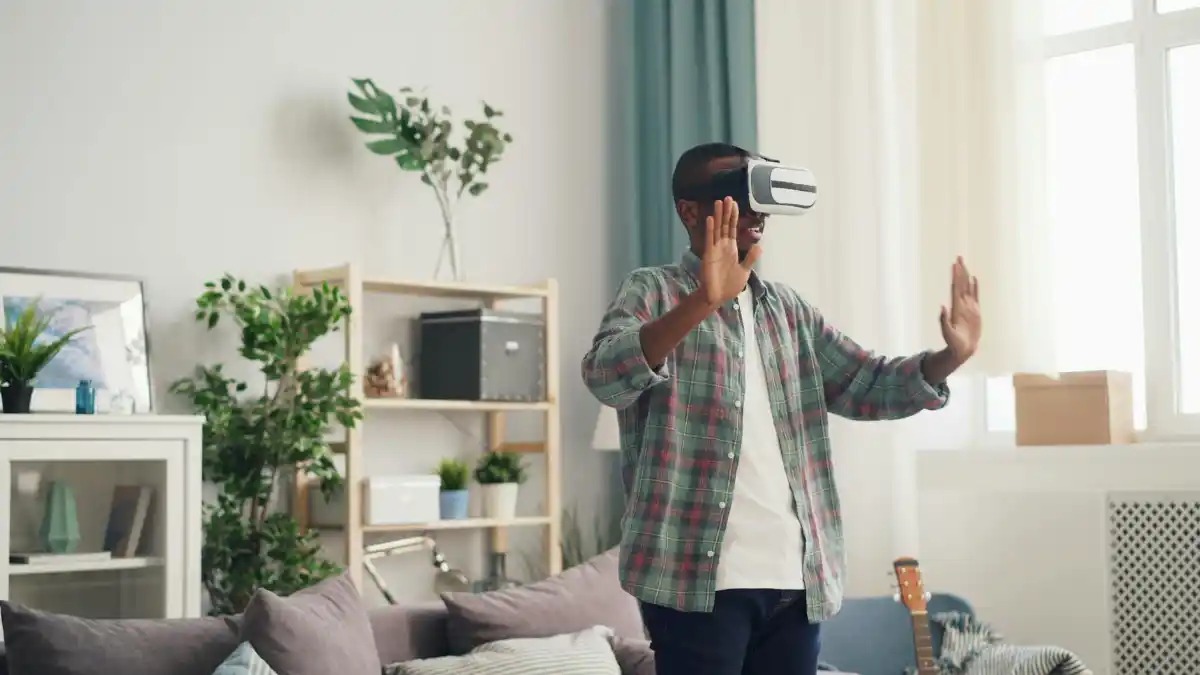
A split-screen illustration showing the contrast between a person wearing a VR headset in a dark room and a vibrant, crowded physical lounge with live music and dancing.
Marketing to the High-Net-Worth Demographic
The elite clientele of 2026 requires a different marketing approach. Traditional advertising is often ineffective for this group. Instead, venues must focus on building a reputation for exclusivity, quality, and total discretion for guests.
Partnerships with luxury brands and high-end concierge services can help to reach this demographic. Being recommended by a trusted source is far more powerful than a billboard or a digital ad for elite consumers.
Membership programs are another effective way to build loyalty among high-net-worth individuals. Offering exclusive access, private events, and personalized services creates a sense of community and prestige that encourages frequent visits and higher spending.
Content marketing should focus on the "experience" and the "lifestyle" associated with the venue. High-quality photography and video that highlight the sophisticated atmosphere and premium amenities will attract the right kind of attention.
Ultimately, the goal is to position the venue as a "must-visit" destination for the elite. By focusing on quality over quantity, venues can build a sustainable business model that thrives on high-margin, premium services.
Future-Proofing Through Licensing and Law
Navigating the legal landscape is more complex than ever in 2026. Successful venue operators must stay ahead of changing regulations regarding adult entertainment, alcohol licensing, and digital privacy laws to ensure their continued operation.
Diversifying entertainment licenses is a key strategy for future-proofing. Having the flexibility to host a variety of events allows the venue to adapt to changing market trends and regulatory environments without losing its core business.
Building strong relationships with local authorities and the community is also essential. Transparent operations and a commitment to safety and security help to build trust and reduce the risk of legal or regulatory challenges.
Staying informed about emerging technologies and their legal implications is also crucial. From facial recognition to digital payments, understanding the legal framework around these tools is necessary for responsible and successful implementation in venues.
By taking a proactive approach to licensing and law, venue operators can protect their investment and ensure long-term success. This strategic foresight is what separates the industry leaders from the rest of the pack.
From our network :
- Forbidden Matrix Patterns and Visible Lattice Points: A Geometric DictionaryExplore how multidimensional 0–1 matrices encode geometric truths, linking forbidden patterns to visible lattice points and hypergraph theory, with applications in combinatorics and computational geometry.
- Committed Mediterranean Precipitation Decline: Why Emissions Cuts Alone Cannot Restore Winter RainsNew NOAA research reveals that Mediterranean winter rains may decline irreversibly even with emissions cuts. Explore the science of committed climate change and regional impacts.
- The Final Descent: How ESA Retired the Legendary Cluster Constellation After 24 Years of Space Weather ScienceAfter 24 years mapping Earth’s magnetosphere, ESA’s Cluster mission concluded with a precisely controlled reentry over the South Pacific. This analysis explores the scientific legacy, engineering decisions, and debris mitigation principles behind one of space exploration’s most responsible retirements.
- The Hidden Cost of AI Convenience: Why Over-Permissioned Agents Are a Security Time BombDiscover why AI agents with excessive permissions create dangerous single points of failure, and learn how implementing least privilege principles can protect your organization from exploitation.
- Norbert’s Uncertain Path: Why Hawaii’s Storm Watch Demands Patience Over PanicTropical Storm Norbert strengthens in the Eastern Pacific with winds near 50 mph, forecast to reach Category 1 hurricane status by Friday. Long-range models disagree sharply on whether Hawaii faces any threat around September 19–23, making official guidance essential.
- Analyzing Hoya Corporation’s Midday Volume Shifts and Financial FundamentalsExamine Hoya Corporation’s midday trading volume contraction, technical moving averages, robust solvency ratios, and stellar quarterly earnings performance.
- Former Soap Stars Embark on Ambitious Writing Projects and Theatrical StagesDiscover how former soap opera actors are transitioning into independent scriptwriting and high-profile theatrical stage productions.
- CISA’s Ten-Advisory Wave: Why Generic Patching Fails in OT and How to Build Product-Specific PlaybooksCISA released ten ICS advisories in one week, exposing critical infrastructure risks. Generic patching fails in OT. Learn to build product-specific remediation playbooks.
- How AI Agents Will Change the Way We Manage Personal FinancesExplore how AI agents are transforming personal finance through automated budgeting, bill payment, and investment management, while examining the critical security protocols and governance frameworks required for safe deployment.
RESOURCES
- Top 5 Companies in Adult Entertainment Marketbusinessresearchinsights.comJan 28, 2026 ... Growth of Live Streaming and Interactive Adult Entertainment Experiences ... physical adult entertainment market through clubs and live venues.
- Adult Entertainment Market: Trends, Growth Outlookmaximizemarketresearch.com... physical venues, or personal devices. The higher digital consumption, growing sexual wellness awareness, and rapid innovation across online and offline ...
- Adult Entertainment Market Size, Trends | Industry Growth- 2034transparencymarketresearch.com... physical elements. Leading players are following the ... This lack of intermediaries has presented adult entertainers with direct generation of revenue.
- Gambling - World Health Organization (WHO)who.intDec 2, 2024 ... Industry analysts estimate global gambling revenue will reach US$ 700 billion by 2028 (1). Smartphone use in low- and middle-income…
- Adult Virtual Reality Global Revenue To Reach $19 Bn By 2026juniperresearch.comAug 23, 2021 ... ... adult content to this growing user base. Research author Scarlett ... Our complimentary whitepaper, Key Growth Opportunities for Physical ...
- CHAPTER 5.44 - ADULT-ORIENTED BUSINESSES | Lincoln, CAlibrary.municode.comMunicodeNEXT, the industry's leading search application with over 3300 codes and growing ... " "Live adult entertainment" means any physical human body activity ...
- 17.228.102 Adult entertainment business.codelibrary.amlegal.com... development, and operational standards and other requirements set forth in chapter 5.06. ... physical dimensions as the existing accessory structure. An expansion ...
- ARTICLE VI. | Code of Ordinances | Columbus, GA - Municode Librarylibrary.municode.comMunicodeNEXT, the industry's leading search application with over 3300 codes and growing ... - Adult entertainment establishments prohibited where designated.
- ENTERTAINMENT PERMIT - City of Claremont, CAclaremontca.govAny adult entertainment at an adult business that must comply and is ... venue shall permit or allow any dance activities characterized by violent…
- Sporting Goods industry trends 2025 - McKinseymckinsey.comMar 4, 2025 ... ... growth forecasts are compelling executives to focus equally on revenue growth and productivity improvements. ... increase their physical ...
- STATISTICAL COMMUNIQUÉ OF THE PEOPLE'S REPUBLIC OF ...stats.gov.cnFeb 29, 2024 ... ... entertainment, and social services with annual business revenue of 5 million and above. The growth rates of financial indicators…
- Publishing Industry Sales Saw Modest Gains in 2024publishersweekly.comAug 26, 2025 ... The largest discrepancy between dollar and unit growth came in the adult ... revenue increase of nearly 80 percent since…
- Global Revenue Statistics Database - OECDoecd.org... physical climate impacts. Development co-operation. Standards and ... Policies on gender equality a driver of economic growth, democracy and social cohesion.
- Family Entertainment Centers Market Size & Share, 2033marketdataforecast.comSep 5, 2025 ... The children's entertainment centers segment dominated the global market revenue with a prominent growth rate. ... physical LEGO models ...
- Music Market Focus: Japan [Latest Stats, Trends, & Analysis]soundcharts.comMar 9, 2026 ... Japan Music Industry Revenue Share by Segment, 2023 ... Majority of recording revenues in Japan are still generated by the…
- 01
- 02
- 03
- 04
- 05
- 06
- 07
- 08
0 Comments