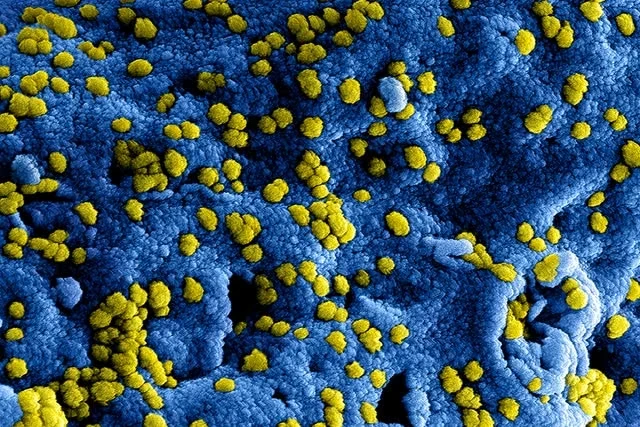
Global health diplomacy after the pandemic agreement is not a victory lap; it is a high-stakes negotiation still locked in the moment where cooperation meets leverage. The central battleground is pathogen access and benefit sharing—how fast countries share dangerous biological material, and how fairly they receive vaccines, diagnostics, data, and technology in return.
At the center of this is a brutally practical question: will the promised “equitable access” survive contact with real-world bargaining, contracts, capacity gaps, and political pressure? WHO negotiations have reportedly remained unresolved around the annex details, which is precisely where implementation either becomes operational—or stays ceremonial.
Pathogen sharing only works when the rulebook is trustworthy. If the incentive structure is unclear, countries may delay notification, reduce transparency, or insist on conditions that slow containment. That is why these annex elements matter as much as the headline agreement: they govern speed, scope, governance, and the distribution of benefits.
On This Page
Why the Pathogen Access–Benefit Sharing Link Is Still the Hard Part
The post-pandemic reality is that biosecurity and public health are inseparable, yet the economics of fairness are not automatic. Pathogens move faster than paperwork, but benefits move only through manufacturing, regulatory approval, and supply chains. If the agreement cannot coordinate those forces, the system will default to whoever has bargaining power.
Equity in principle is cheap; equity in annex details is expensive. The unresolved negotiations—especially around how access and benefit sharing should operate—determine whether low- and middle-income countries can reliably secure medical countermeasures after sharing pathogens. Without operational clarity, the “sharing” half becomes a one-way risk.
Sharing Speed vs. Contract Clarity
Rapid notification is essential for early warning and outbreak containment, but it must be paired with clear guarantees. When timelines, responsibilities, and benefit triggers are fuzzy, countries that contribute specimens may feel like they are financing others’ preparedness while waiting longer for relief.
In practice, the annex needs guardrails that prevent indefinite delays in access to countermeasures. That means defining when benefits start, what qualifies as a “benefit,” and how disputes are handled. Otherwise, the system becomes a negotiating process that outruns the next outbreak.
Capacity Gaps Turn Diplomacy into Risk Allocation
Health diplomacy is often framed as a moral project, but it is also a distribution mechanism. Countries with stronger lab networks and manufacturing capacity can monetize urgency, while others cannot. If the agreement does not compensate for unequal capability, fairness will erode the moment a crisis becomes profitable.
Benefit-sharing that ignores technology transfer, local readiness, and data usability will fail in the environments where outbreaks matter most. Annex detail is therefore not bureaucratic overreach; it is a method for translating intentions into measurable support.
Diplomacy Fails When Incentives Are Misaligned
Health diplomacy collapses when the incentives for sharing and the incentives for producing benefits point in opposite directions. If the agreement does not meaningfully reward transparency with timely countermeasures, nations will treat sharing as an optional gamble. And in outbreaks, optionality is the enemy of containment.
That is why unresolved annex negotiations are not mere legal drafting. They shape the bargaining ecosystem: who pays upfront, who receives priority, and who bears the risk of delayed access. The pandemic exposed how quickly “global solidarity” can devolve into national demand management.
Enforcement and Governance: Who Decides Under Pressure
Equity requires dispute pathways that function when emotions—and headlines—are high. If there is no credible mechanism to evaluate whether benefits were delivered as promised, then the annex becomes a set of aspirations. The moment benefits are late, trust is damaged, and future sharing is undermined.
A strong governance design clarifies responsibilities across institutions and states. It should reduce room for political bargaining over whether a benefit is “adequate.” In a credible system, decisions are auditable, timelines are enforceable, and exceptions are explicit.
Data and Technology: The Unsexy Backbone of Fair Access
Benefits are not only physical goods; they include data, know-how, and the ability to reproduce results. If pathogen-related data cannot be used—because of formats, access conditions, or restrictions—then “sharing” becomes symbolic. Diagnostics and vaccine design depend on technical usability, not just publication.
Technology transfer is often delayed by legal and commercial friction. But if the annex does not address how know-how moves—especially during outbreaks—equity will remain aspirational. Fair access means enabling local production and regulatory readiness, not merely shipping finished products.
We Also Published
What Must Be Resolved Next to Make the Agreement Credible
Credibility is earned when the next outbreak can move through the system without reinventing the terms. WHO and member states must treat the annex details as a functional operating manual. That means turning negotiated language into predictable processes: who shares, who benefits, and how long it takes.
The unresolved negotiating areas should be forced into clarity rather than stretched into future consensus. When negotiation becomes indefinite, stakeholders conclude that the system can be postponed until it becomes convenient. That lesson is precisely what the world cannot afford to repeat after the pandemic.
Design Benefits That Match How Outbreaks Actually Happen
Outbreak dynamics reward speed in surveillance and response, but manufacturing rewards scale and certainty. The annex should bridge that mismatch by ensuring that benefits activate early enough to influence containment decisions. If benefits arrive only after political cycles, the agreement will be strategically irrelevant.
Diagnostics must be available before mass manufacturing is possible, and vaccine plans must accommodate variant evolution. A credible structure connects data access to rapid technical development, not just to later procurement. Fair access depends on synchronizing the timeline of evidence and the timeline of medicines.
Fund Implementation: Equity Requires Resources, Not Only Rules
No annex can conjure cold-chain capacity, regulatory staffing, or distribution networks from thin air. Equity therefore requires financing mechanisms that anticipate delivery costs in recipient countries. Otherwise, benefits may technically exist while still failing to reach patients.
Investment in local readiness must be treated as part of the benefit-sharing bargain. If the agreement is only about transferring products, it will reproduce vulnerability. True fairness means strengthening the recipient side so that shared pathogens do not translate into permanent dependence.
TL;DR The pandemic agreement’s future hinges on whether pathogen access and benefit sharing become enforceable in annex detail, not just desirable in rhetoric. WHO negotiations have reportedly left critical annex questions unresolved, and that uncertainty undermines the incentives for rapid sharing and reliable access to vaccines and diagnostics. Equity will not survive vague delivery terms, weak governance, or underfunded implementation. To be credible, the annex must define timelines, dispute mechanisms, data usability, and readiness support so that fairness becomes a system—capable of acting before the next outbreak becomes a locked-in political bargain.
RESOURCES
- WHO Member States agree to extend negotiations on Pathogen ...who.intMay 1, 2026 ... WHO Member States agree to extend negotiations on Pathogen Access and Benefit Sharing annex ... Pandemic Agreement in Geneva, focused…
- Pandemic Agreement On Hold: Can Countries Bridge The Divide On ...healthpolicy-watch.newsJan 27, 2026 ... Only 12 more negotiating days remain until WHO member states hit the May 2026 deadline for an agreement on a…
- WHO Member States continue negotiations on the Pathogen Access ...who.intJul 20, 2026 ... ... Pandemic Agreement concluded last Friday ... Agreement, including drafting and negotiating the Pathogen Access and Benefit Sharing system.
- Fate Unknown: The Pandemic Agreement's Pathogen Access and ...thinkglobalhealth.orgMay 20, 2025 ... Fate Unknown: The Pandemic Agreement's Pathogen Access and Benefit Sharing · At this week's World Health Assembly (WHA), member states…
- Pathogen Access and Benefit-Sharing: Can the WHO Pandemic ...pmc.ncbi.nlm.nih.govJan 16, 2026 ... Consequently, World Health Organization (WHO) member states initiated negotiations for a legally binding Pandemic Agreement in December 2021.
- The PABS system under the pandemic agreement: Current status ...sciencedirect.comThe World Health Organization (WHO) Pathogen Access and Benefit-Sharing (PABS) system, established under Article 12 of the WHO Pandemic Agreement, ...
- The Future of Pathogen Access and Benefit Sharing under ...verfassungsblog.deMar 29, 2024 ... ... Pandemic Agreement negotiations. The recent discussions at the Intergovernmental Negotiating Body (INB) concerning draft Art. 12, which ...
- Pathogen sharing in the digital age: The unfinished agenda ... - PMCpmc.ncbi.nlm.nih.govSep 5, 2025 ... ... treaty negotiations. To avoid a collapse of the talks ... Fate unknown for the pandemic agreement's pathogen access and…
- The World Health Organization's Emerging Pathogen Access Systeminsideeulifesciences.comMay 23, 2026 ... What would be the key “benefit-sharing” obligations for Companies? Article 12 of the Pandemic Agreement and the draft PABS Annex…
- WHO Pandemic Agreement - World Health Organization (WHO)apps.who.intMay 20, 2025 ... Article 12 Pathogen Access and Benefit-Sharing System ... the transfer of technology as mutually agreed,13 with a view to increasing…
- 01
- 02
- 03
- 04
- 05
- 06
- 07
- 08
0 Comments