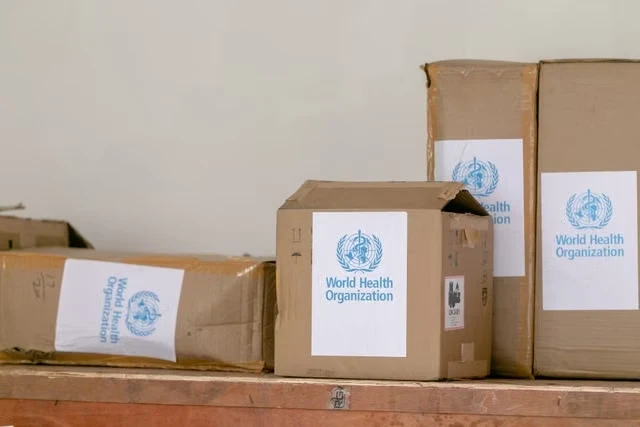
Midpoint reviews rarely look dramatic when they are announced—yet they become brutally clarifying once the numbers arrive. The global HIV response, heading toward its 2030 targets, is now entering that kind of checkpoint era: a time to separate genuine momentum from fragile momentum propped up by temporary funding and uneven implementation.
This discussion centers on progress and, just as importantly, on the financing pressure that could derail the strategy before 2030 even feels close. When the World Health Organization (WHO) evaluates HIV, viral hepatitis, and sexually transmitted infections (STIs) at their midpoint, it is not performing paperwork—it is stress-testing whether countries can keep reducing new infections, expanding treatment, and maintaining epidemic control.
The “where we are vs. what’s threatened” framing is the most responsible way to read the midpoint moment. Where response coverage is strong, the review helps protect gains from complacency. Where access and funding have faltered, it forces a hard question: will the next period be defined by delivery, or by delays that quietly become lost years?
On This Page
- 1) Midpoint to 2030: what “progress” must mean, not just what “progress” sounds like
- 2) Financing pressure: the threat hiding inside “almost on track”
- 3) What the midpoint review should demand from decision-makers—starting now
- 3.1 Convert findings into a funding-proof implementation plan
- 3.2 Keep the focus on people, not only performance targets
- What leadership must do after the review
- Progress can stall if financing misses the operational layer
- Midpoint accountability should measure unequal access
- Progress vs. threat should be presented together
TL;DR The midpoint to 2030 review is a governance and delivery reality-check for HIV (alongside viral hepatitis and STIs): it asks whether current progress is truly on track or if financing gaps will turn plans into promises that never reach people. WHO’s assessment at AIDS 2026 signals that the world is not only measuring health outcomes—it is also measuring whether health systems can afford to keep scaling care.
1) Midpoint to 2030: what “progress” must mean, not just what “progress” sounds like
Progress at a midpoint is not a slogan. It must be evidenced in case detection, prevention coverage, retention in care, and sustained viral suppression—not merely in policy updates. If a strategy is truly moving, the results should show up across the cascade, not only in reporting that flatters averages.
WHO’s mid-term assessment approach matters because it links HIV response planning to broader infection-control realities—viral hepatitis and STIs are not side quests. They often share care pathways, at-risk populations, and system constraints, so the review can expose where integration works and where silos still waste resources.
1.1 The “response” is a cascade: coverage, quality, and staying power
To judge whether the world is on track, you need to treat the HIV response like a cascade with failure points. Screening without linkage stalls at entry; treatment without adherence erodes outcomes; and retention gaps can undo progress even when services exist.
Midpoint reviews therefore become a truth serum: they reveal whether the last mile is being funded and staffed. It is easy to build programs; it is harder to maintain them—especially where supply chains, community health capacity, and data systems require constant reinforcement.
1.2 Integration with viral hepatitis and STIs is strategic, not ornamental
HIV control is strengthened when prevention and testing are synchronized with the wider sexual and reproductive health landscape. Viral hepatitis and STIs increase vulnerability, add clinical burden, and can divert attention in underfunded settings—so the midpoint check should measure whether integration is real.
A serious review asks whether integrated service delivery is increasing efficiency or simply adding complexity. If countries are forced to choose between programs because of budget constraints, the integration promise becomes a risk multiplier instead of a cost reducer.
2) Financing pressure: the threat hiding inside “almost on track”
The most dangerous word in a health strategy is “nearly.” Nearly funded programs can look successful until the moment they have to renew contracts, purchase diagnostics, or sustain community outreach. At that point, delays become disruptions, and disruptions become measurable increases in transmission.
That is why midpoint reviews are inherently about accountability to reality. If gaps in financing emerge during the review period, countries and partners must identify what gets squeezed first—staffing, commodities, service expansion, or data/reporting—because each squeeze changes outcomes in different ways.
2.1 Funding gaps don’t fall evenly: they hit the weakest links
When money tightens, the first casualties are usually the “support” layers: outreach teams, laboratory throughput, cold-chain reliability, and follow-up mechanisms. These are not glamorous line items, yet they decide whether prevention and treatment remain accessible and timely.
As a result, the midpoint threat is not just “less money.” It is money applied with the wrong emphasis: spending that sustains existing services while failing to reach underdiagnosed populations or address barriers that keep people from entering and staying in care.
2.2 The review must quantify risk, not just describe it
A midpoint assessment should be blunt: it should translate financing pressure into likely consequences across the cascade. If budgets do not cover essential scales—testing frequency, ART supply continuity, adherence support—then the strategy is not merely at risk; it is scheduled to regress.
WHO’s timing around AIDS 2026 underscores that the world is looking for actionable clarity. The goal is to move from conference summaries to operational decisions: reprioritize, reallocate, and close gaps before the 2030 runway shortens further.
We Also Published
3) What the midpoint review should demand from decision-makers—starting now
A midpoint assessment is only useful if it produces decisions that move money and attention quickly. If leaders treat the review as a narrative exercise, the system will keep drifting toward under-delivery while reports politely announce “progress.” This is not acceptable when millions depend on steady prevention and treatment access.
The strongest midpoint stance is operational: prioritize the cascade bottlenecks, protect supply continuity, fund community-facing delivery, and strengthen integrated services across HIV, hepatitis, and STIs. In plain terms, the review should decide what to scale, what to fix, and what to stop wasting on low-impact activity.
3.1 Convert findings into a funding-proof implementation plan
Decision-makers should translate midpoint evidence into a plan that survives budget turbulence. That means designing “minimum viable coverage” for essential services, forecasting commodity needs, and committing to continuity financing so people do not fall out of care when donor timelines slip.
It also means being honest about trade-offs. If budgets cannot cover everything, the response must protect the interventions with the highest public-health payoff, especially those preventing new infections and sustaining viral suppression.
3.2 Keep the focus on people, not only performance targets
Performance targets can mislead if they hide inequity. Midpoint reviews should interrogate who is being missed—geographies with weaker health access, communities facing stigma, and populations with higher risk exposure. Equity is not a moral ornament; it is a forecasting variable for whether 2030 goals are achievable.
Finally, transparency should be non-negotiable. If financing pressure exists, it should be stated plainly, with timelines and mitigation options. The credibility of the response depends on communicating trade-offs early—before the costs show up as avoidable infections and preventable deaths.
From our network :
- Committed Mediterranean Precipitation Decline: Why Emissions Cuts Alone Cannot Restore Winter RainsNew NOAA research reveals that Mediterranean winter rains may decline irreversibly even with emissions cuts. Explore the science of committed climate change and regional impacts.
- Former Soap Stars Embark on Ambitious Writing Projects and Theatrical StagesDiscover how former soap opera actors are transitioning into independent scriptwriting and high-profile theatrical stage productions.
- Forbidden Matrix Patterns and Visible Lattice Points: A Geometric DictionaryExplore how multidimensional 0–1 matrices encode geometric truths, linking forbidden patterns to visible lattice points and hypergraph theory, with applications in combinatorics and computational geometry.
- The Hidden Cost of AI Convenience: Why Over-Permissioned Agents Are a Security Time BombDiscover why AI agents with excessive permissions create dangerous single points of failure, and learn how implementing least privilege principles can protect your organization from exploitation.
- The Final Descent: How ESA Retired the Legendary Cluster Constellation After 24 Years of Space Weather ScienceAfter 24 years mapping Earth’s magnetosphere, ESA’s Cluster mission concluded with a precisely controlled reentry over the South Pacific. This analysis explores the scientific legacy, engineering decisions, and debris mitigation principles behind one of space exploration’s most responsible retirements.
- Norbert’s Uncertain Path: Why Hawaii’s Storm Watch Demands Patience Over PanicTropical Storm Norbert strengthens in the Eastern Pacific with winds near 50 mph, forecast to reach Category 1 hurricane status by Friday. Long-range models disagree sharply on whether Hawaii faces any threat around September 19–23, making official guidance essential.
- Analyzing Hoya Corporation’s Midday Volume Shifts and Financial FundamentalsExamine Hoya Corporation’s midday trading volume contraction, technical moving averages, robust solvency ratios, and stellar quarterly earnings performance.
- How AI Agents Will Change the Way We Manage Personal FinancesExplore how AI agents are transforming personal finance through automated budgeting, bill payment, and investment management, while examining the critical security protocols and governance frameworks required for safe deployment.
- CISA’s Ten-Advisory Wave: Why Generic Patching Fails in OT and How to Build Product-Specific PlaybooksCISA released ten ICS advisories in one week, exposing critical infrastructure risks. Generic patching fails in OT. Learn to build product-specific remediation playbooks.
RESOURCES
- Re-Imagining the Global HIV Responseiapac.orgJan 1, 2025 ... The IAPAC recommendations for 2025-2030 were published on World AIDS Day 2024 and seek to align the global HIV response…
- Global AIDS Brief - UNAIDSunaids.org2 Considerable progress has been achieved in the HIV response over the past four decades, with unprecedented scale-up of HIV treatment and understanding about ...
- US Fast-Track Cities 2025 Summitiapac.orgConvening at a strategic midpoint to the 2030 goal of reducing new HIV ... New Data Brief Signals Strain on US HIV Response as…
- World AIDS Day: Viet Nam celebrates achievements and focuses on ...who.intNov 27, 2025 ... ... HIV/AIDS. As the country reaches the midpoint of its strategy to end AIDS by 2030, it faces both celebration…
- Miles to Go: Global AIDS Updatepapuanewguinea.un.orgOct 16, 2018 ... This progress report has been issued at the midpoint of the Fast-Track phase of the global AIDS response ... If…
- Global health sector strategies on HIV, viral hepatitis and sexually ...iris.who.intJul 13, 2026 ... The Global AIDS Strategy for 2026–2031: United towards ending AIDS. ... AIDS : United to End AIDS by 2030 New…
- The Sustainable Development Goals Extended Report 2026unstats.un.orgBuilding on the new Global AIDS Strategy 2026-2031, we can end AIDS by 2030 and build a sustainable response. If countries scale up HIV…
- UNAIDS Special Report for the 26th International AIDS Conferenceunaids.orgJul 27, 2026 ... Achieving the 2030 global HIV ... focused agenda for ending AIDS by 2030 and sustaining multisectoral, inclusive national HIV responses…
- 2023_report.pdf - 2023 UNAIDS Global AIDS Updatethepath.unaids.orgMay 11, 2023 ... global HIV response is not yet on track to reduce new HIV infections to the ... sustainable AIDS response beyond…
- Equality in law for women and girls by 2030: A multistakeholder ...unwomen.orgMar 9, 2026 ... HIV and AIDS. How we work. 2030 Agenda for Sustainable Development ... In response to this challenge, UN Women and…
- 01
- 02
- 03
- 04
- 05
- 06
- 07
- 08
0 Comments