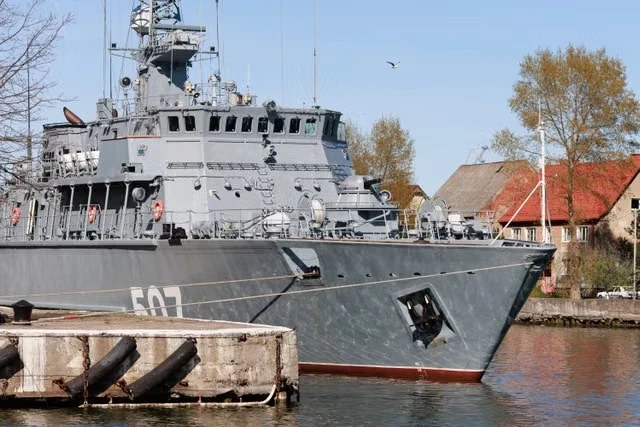
Sanctions are no longer best understood as a financial punishment aimed at officers, banks, or headline-grabbing transactions. They are increasingly designed as industrial leverage—an engineered attempt to choke, redirect, and slow the production pipeline that sustains a war machine. When sanctions explicitly target a nation’s military-industrial complex, the objective is not moral theater; it is capacity reduction.
That shift matters because “economic warfare” has matured into a systems strategy. Restricting imports is only one lever. The deeper plan is to constrain inputs—components, machine tools, dual-use technologies, specialized materials—and to limit the flows that finance procurement. Even when trade continues, it can be rerouted into higher-cost, lower-quality, or slower-to-scale channels.
This is why sanctions and defense production are now one story: defense output is not an abstract geopolitical concept, but an industrial process with dependencies. Energy revenue pressure, shipping constraints, compliance barriers, and export-control enforcement interact to disrupt timelines and expansion plans. The result is an intervention in industrial throughput—production capacity, not merely payments.
On This Page
Sanctions have graduated from punishment to production control
Modern sanctions targeting a military-industrial complex are built like an operations plan. Rather than focusing solely on who gets paid or who is legally blocked, they aim at the upstream mechanisms that determine how quickly a state can manufacture weapons, repair equipment, and scale output. This approach treats defense capability as an industrial capacity problem.
The most consequential policies are those that influence procurement, tooling, and component sourcing—because those determine production rate. If a target can still acquire finished goods, the industrial advantage may persist. But if it cannot reliably obtain critical inputs, then deliveries become slower, batches smaller, and replacement cycles longer, degrading operational readiness over time.
What “military-linked trade” really means in practice
When sanctions expand to military-linked trade, they effectively widen the net around the ecosystem that supports defense production. The enforcement challenge is intentional: intermediaries, front companies, and transshipment routes often exist to disguise end-use. By narrowing acceptable pathways, sanctions force higher transaction costs and greater verification friction.
In economic warfare, friction is not a side effect. It is the point. The target faces delays, compliance uncertainty, and the risk of financial loss from frozen assets or denied payments. Over months, that uncertainty cascades into procurement hesitancy and supply substitution, which can reduce reliability even if nominal demand remains.
Why defense production is a pipeline, not a switch
Defense output depends on a chain: component availability, manufacturing capacity, skilled labor, engineering capacity, and logistics throughput. Sanctions that merely limit “trade” in broad strokes miss the crucial nuance: the bottlenecks are specific. Blocking one or two choke points can distort the entire timeline more than broad restrictions on low-salience goods.
Energy revenue pressure adds a second-order effect. If the sanctioned state’s ability to fund imports and sustain industrial operations is weakened, then capacity constraints compound. The industrial system does not fail instantly; it degrades. Production schedules slip, maintenance backlogs grow, and expansion efforts slow as capital becomes harder to mobilize.
How sanctions reshape the production pipeline
To understand pipeline disruption, you must follow how industrial systems behave under constrained supply. When certain imports become unavailable—or legally risky—firms do not simply stop producing. They switch suppliers, substitute materials, and reconfigure production lines, but each adaptation consumes time, engineering effort, and working capital.
Defense production is particularly sensitive because tolerances, reliability requirements, and qualification processes are unforgiving. Substitution is rarely plug-and-play. Even if a component exists elsewhere, it may not meet the same specs, or it may require retooling, revalidation, and new testing cycles that slow output and raise defect rates.
Energy revenue pressure: funding the industrial clock
Energy-driven revenue is often the financial oxygen for import-heavy industrial systems. If sanctions reduce the ability to sell energy profitably or to route revenue through compliant channels, then industrial procurement budgets shrink. That can reduce the rate of parts replacement and limit purchases of scarce production inputs.
This is where “economic warfare” becomes brutally practical. If cash flow tightens, firms prioritize maintenance over expansion, and expansion over modernization. The consequence is not just lower production today, but reduced learning cycles and fewer opportunities to upgrade capacity for the future.
Trade restrictions: compliance friction becomes a weapon
Even when some trade remains possible, sanctions create compliance friction that changes behavior. Companies tighten due diligence, route through more complex intermediaries, and demand longer lead times. Those delays can be fatal for production schedules that rely on predictable replenishment rather than last-minute sourcing.
In a mature sanctions regime, enforcement credibility matters. Strong monitoring and penalties raise the perceived probability of seizure or denial, discouraging borderline transactions. Over time, the target state faces fewer willing partners and a shrinking pool of reliable suppliers for military-industrial functions.
We Also Published
- 01
- 02
- 03
- 04
What to measure: capacity outcomes, not headline claims
Sanctions analysis fails when it clings to slogans. The competent approach tracks capacity outcomes: procurement lead times, availability of specialized inputs, maintenance backlogs, repair-cycle performance, and evidence of retooling lag. In other words, treat sanctions as an industrial stress test with measurable indicators.
Because the industrial system adapts, you should expect a delayed curve. Early phases show rerouting and substitution; mid phases show rising costs and schedule slippage; late phases show degraded throughput and lower scalability. If you only watch trade volumes, you will miss the quality and speed deterioration that matters.
Measuring effectiveness: the metrics that matter
A credible measurement set links policy actions to operational consequences. Track the density of eligible suppliers, the average time to secure constrained components, and the frequency of production interruptions. When substitution forces requalification, you should see longer qualification windows and reduced product consistency.
You can also triangulate with compliance-related signals: payment denials, shipping disruptions, and increased due diligence refusal rates. None of these are perfect alone. Combined, they paint a reliable portrait of whether sanctions are constraining inputs and financing, or merely reshuffling flows.
Where sanctions can underperform—and why that’s predictable
Sanctions can underperform when targets can rapidly source equivalent inputs through non-restricted channels or when they already stockpile critical materials. Another failure mode is weak enforcement that allows intermediaries to reroute goods without meaningful end-use verification. If the system’s choke points are porous, output can remain resilient.
Yet even in those cases, the policy can still impose costs. Higher prices, complex compliance, and slower procurement reduce strategic freedom. Defense production becomes less agile, and the target must plan with greater uncertainty—an advantage for defenders who need predictability, timing, and sustained readiness.
RESOURCES
- Chinese Military Companies Sanctionsofac.treasury.govNon-SDN CHINESE MILITARY-INDUSTRIAL COMPLEX COMPANIES List (NS-CMIC LIST). NS-CMIC List Landing Page. Frequently Asked Questions. OFAC has compiled hundreds of ...
- Chinese Military-Industrial Complex Sanctions Regulationsfederalregister.govFeb 16, 2022 ... OFAC is adding regulations to implement a November 12, 2020 Executive order related to securities investments that finance Communist Chinese…
- 31 CFR Part 586 -- Chinese Military-Industrial Complex Sanctions ...ecfr.govThis part has been published in abbreviated form for the purpose of providing immediate guidance to the public.
- OFAC Issues Chinese Military-Industrial Complex Sanctions ...wiley.lawFeb 23, 2022 ... OFAC issued “abbreviated” regulations to implement President Biden's 2021 Executive Order (EO) barring certain investments in Chinese Military Industrial- ...
- Treasury Targets Global Sanctions Evasion Network Supporting ...home.treasury.govFeb 1, 2023 ... In addition, Igor Zimenkov has supported the Belarusian military-industrial complex by facilitating sanctioned Belarusian defense entity State ...
- Russia's war of aggression against Ukraine: new EU sanctions ...consilium.europa.euJun 15, 2026 ... The Council has adopted restrictive measures targeting Russia's military-industrial complex, energy revenues, propaganda efforts and human ...
- Sanctions to Disrupt Russia's Military Industrial Base and Sanctions ...2021-2025.state.govJan 15, 2025 ... TIMECHIPS supplies imported military and dual-use products to enterprises in the Russian military-industrial complex and aerospace industry ...
- Russia's war of aggression against Ukraine: 20th round of stern EU ...consilium.europa.euApr 23, 2026 ... Russia's war of aggression against Ukraine: 20th round of stern EU sanctions hits energy revenues, military-industrial complex, trade and ...
- Barr's Bill to Stop The Financing of China's Military-Industrial ...barr.house.govSep 20, 2023 ... Today, we advanced Congressman Barr's Chinese Military and Surveillance Company Sanctions ... military-industrial complex—with bipartisan support.
- 01
- 02
- 03
- 04
- 05
- 06
- 07
- 08
0 Comments