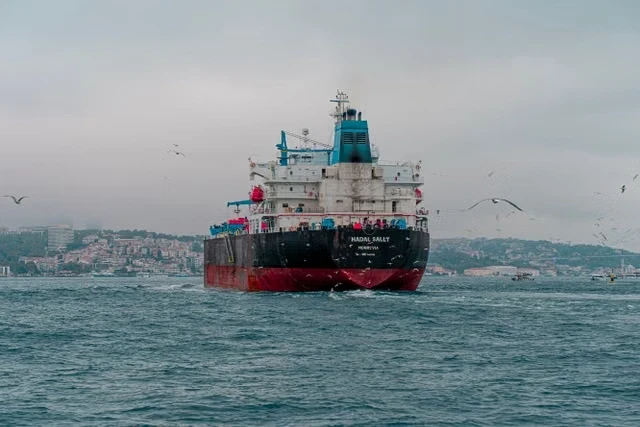
The Strait of Hormuz is not merely a line on a map; it is the world's most consequential maritime artery, a narrow passage through which roughly one-fifth of global petroleum consumption flows daily.
When tanker traffic through this waterway is disrupted—whether by military confrontation, sabotage, or diplomatic brinkmanship—the shockwaves travel far beyond the Persian Gulf. They ripple through global commodities markets, inflate shipping insurance premiums, and ultimately land squarely on the shoulders of everyday consumers filling their cars or heating their homes.
Understanding this chokepoint requires tracing the journey of a barrel of crude oil from the oil fields of Saudi Arabia, Iraq, and the United Arab Emirates to the refineries and gas stations that serve your community. Each stage of that journey carries costs, and when geopolitical risk rises, those costs multiply.
On This Page
- The Strategic Anatomy of the World's Most Critical Waterway
- The Journey of a Barrel: From Wellhead to Risk Premium
- How Risk Premiums Translate to Consumer Prices
- Maritime Insurance: The Hidden Cost Multiplier
- Global Economic Consequences Beyond the Pump
- Strategic Responses and Future Outlook
- Practical Implications for Consumers and Businesses
The result is a "risk premium" embedded in every gallon of gasoline, every barrel of heating oil, and every plastic product manufactured from petrochemicals.
This analysis unpacks the mechanics of that risk premium, explains why a narrow waterway commands such outsized influence over global energy prices, and offers a clear-eyed view of what consumers can expect when tensions flare in the region.
By understanding the forces at play, you gain the ability to interpret price movements at the pump with far greater clarity and foresight.
TL;DR The Strait of Hormuz is a 21-mile-wide maritime chokepoint through which approximately 20% of global oil consumption transits daily. Any disruption to tanker traffic through this waterway triggers an immediate "risk premium" in global oil prices, inflates maritime insurance rates, and cascades into higher consumer energy costs worldwide. This analysis traces the journey of a barrel from the Persian Gulf to your local pump, explaining how geopolitical tension in a narrow stretch of water translates into tangible financial impact for households, commuters, and small businesses. Understanding this mechanism empowers consumers to anticipate price movements and make informed energy decisions.
The Strategic Anatomy of the World's Most Critical Waterway
The Strait of Hormuz connects the Persian Gulf to the Gulf of Oman and the open ocean beyond. Its width narrows to approximately 21 miles at its most constricted point, with shipping lanes occupying just two miles in each direction.
This geographic reality transforms the strait into a natural funnel through which massive volumes of crude oil must pass.
According to the U.S. Energy Information Administration, an estimated 20 million barrels of oil transit the strait daily, representing roughly one-fifth of global petroleum consumption and about one-quarter of global liquefied natural gas trade.
The sheer concentration of energy traffic through this single passage creates a vulnerability that geopolitical actors have long recognized and exploited.
Iran, which borders the strait's northern shore, has repeatedly threatened to close the waterway in response to international pressure or sanctions. While a complete closure remains unlikely due to Iran's own economic dependence on the passage, even the credible threat of disruption is sufficient to move markets. Traders price in worst-case scenarios, and those prices cascade through the global supply chain.
The strait's strategic importance extends beyond oil alone. Liquefied natural gas shipments from Qatar, the world's largest LNG exporter, also traverse these waters. Any disruption would simultaneously impact both crude oil and natural gas markets, amplifying the economic consequences for energy-importing nations across Asia, Europe, and the Americas.
The Geography of Vulnerability
The strait's narrow shipping lanes leave little room for error or evasion. Tankers must navigate within designated corridors, making them vulnerable to mines, missile attacks, or harassment by fast-attack craft. This inherent vulnerability is baked into every risk assessment conducted by shipping companies and insurers.
Alternative pipeline routes exist but offer limited relief. The Saudi East-West Pipeline can carry approximately 5 million barrels per day, and the UAE's Habshan-Fujairah pipeline adds another 1.5 million barrels of capacity.
Together, these bypass routes cover only a fraction of the strait's daily throughput, leaving the vast majority of exports dependent on maritime passage.
Strategic stockpiles held by major consuming nations provide a buffer against short-term disruptions. The International Energy Agency requires member countries to hold oil reserves equivalent to 90 days of net imports. However, these reserves are designed to address supply interruptions, not to prevent price spikes, which occur immediately upon any threat perception.
The geography of the strait also complicates military responses. Any naval escort operation would require coordinating multiple nations' forces within confined waters, increasing the risk of miscalculation. This complexity further elevates the perceived risk premium that traders factor into their pricing models.
Historical Precedents of Disruption
The Iran-Iraq War of the 1980s, known as the Tanker War, saw both nations attack oil tankers transiting the strait. This conflict demonstrated how quickly maritime insurance rates could skyrocket and how global oil prices would respond to sustained threats against shipping lanes.
More recently, the 2019 attacks on tankers near the strait, attributed to Iranian forces by multiple governments, caused a sharp but temporary spike in oil prices. These incidents illustrated that even limited, non-escalatory attacks could trigger immediate market reactions, reinforcing the strait's status as a persistent source of geopolitical risk.
The 2023 Israel-Hamas conflict and subsequent Houthi attacks on Red Sea shipping further underscored the fragility of maritime energy routes. While these attacks occurred outside the Strait of Hormuz, they demonstrated how regional instability could rapidly expand to threaten multiple chokepoints simultaneously, compounding risk premiums across the board.
Each historical episode has contributed to a collective understanding among traders, insurers, and policymakers that the strait represents a permanent, structural risk to global energy security. This understanding is now embedded in the pricing mechanisms that determine what consumers pay at the pump.
We Also Published
The Journey of a Barrel: From Wellhead to Risk Premium
To understand how the Strait of Hormuz affects your fuel prices, one must trace the complete journey of a barrel of crude oil. Each stage of this journey carries distinct costs, and geopolitical risk adds a premium at every step. The accumulation of these premiums ultimately determines the final price consumers pay.
The journey begins at oil fields in Saudi Arabia, Iraq, Kuwait, and the UAE, where crude is extracted and transported via pipeline to export terminals along the Persian Gulf coast.
From these terminals, tankers load cargo and begin their passage through the strait, marking the point where geopolitical risk first enters the pricing equation.
Loading and Insurance Costs
When a tanker loads crude oil at a Persian Gulf terminal, the shipowner must secure hull and machinery insurance, as well as protection and indemnity coverage. These policies are priced based on the vessel's route, and transiting the Strait of Hormuz carries a significant risk premium compared to safer routes.
War risk insurance, a separate policy covering losses from hostile acts, becomes mandatory for vessels entering the strait during periods of elevated tension. Premiums for this coverage can increase by 500% or more during crises, with costs passed directly to cargo owners and ultimately to consumers.
Shipping rates themselves also respond to risk perceptions. Owners demand higher charter rates to compensate for the danger their crews and vessels face, and these increases are reflected in the delivered cost of crude oil.
The combination of higher insurance and freight costs adds several dollars per barrel during periods of heightened tension.
These costs are not theoretical abstractions. When war risk premiums spiked in 2019 following tanker attacks, the additional insurance costs alone added approximately $1 to $2 per barrel to the price of Middle Eastern crude.
For a country importing one million barrels daily, that translates to an additional $1 million to $2 million in daily costs.
Futures Markets and Speculative Pressure
Beyond physical shipping costs, the futures market plays a crucial role in transmitting geopolitical risk to consumer prices. Traders in London and New York continuously assess the probability of supply disruptions and adjust their positions accordingly, creating a "risk premium" in benchmark prices like Brent crude.
This premium reflects the market's collective judgment about the likelihood and severity of potential disruptions. When tensions rise, the premium expands; when tensions ease, it contracts. These fluctuations occur in real-time, long before any actual supply disruption materializes.
Speculative trading amplifies these movements. Hedge funds and institutional investors often increase their long positions in oil futures during geopolitical crises, betting on further price increases. This speculative pressure can push prices higher than fundamental supply-demand balances would justify, adding to the burden on consumers.
The futures market also influences pricing through the term structure of oil contracts. During crises, near-month contracts typically rise faster than longer-dated contracts, reflecting the market's expectation that disruptions will be temporary. This "backwardation" pattern signals that consumers face immediate price increases while producers plan for eventual normalization.
How Risk Premiums Translate to Consumer Prices
The risk premium embedded in crude oil prices does not remain confined to wholesale markets. It cascades through the entire energy supply chain, affecting refiners, distributors, and ultimately retail consumers. Understanding this transmission mechanism reveals why distant geopolitical events directly impact household budgets.
Refiners purchase crude oil at prices that include the risk premium, and they pass these costs through to the wholesale prices of refined products like gasoline, diesel, and jet fuel. The pass-through is typically rapid, with retail prices adjusting within days of significant movements in crude benchmarks.
The Refining and Distribution Chain
Refineries operate on thin margins, typically earning $10 to $20 per barrel of crude processed. When crude prices rise due to geopolitical risk, refiners must either absorb the increase or pass it to consumers. Given competitive pressures, most refiners pass through the full cost increase to wholesale customers.
Wholesale distributors then add their own margins, which include transportation costs, storage fees, and local market conditions. These margins are relatively stable, meaning the primary driver of retail price movements remains the underlying crude price. The risk premium thus flows through the chain with minimal attenuation.
Retail stations operate on even thinner margins, often earning just 10 to 20 cents per gallon. They adjust prices frequently to reflect wholesale cost changes, ensuring that crude price movements are quickly reflected at the pump. This rapid transmission means consumers feel the impact of Hormuz tensions within days, not weeks.
For heating oil and natural gas consumers, the transmission is similarly direct. Natural gas prices in Asia and Europe are particularly sensitive to Hormuz disruptions, given the region's reliance on Qatari LNG shipments. Households in these markets face immediate cost increases when the strait's security is threatened.
Regional Variations in Consumer Impact
The impact of Hormuz risk premiums varies significantly across regions. Asian economies like Japan, South Korea, and India, which import the majority of their crude from the Persian Gulf, face the most direct exposure. Their consumers bear the full brunt of any risk premium added to Middle Eastern crude.
European consumers face moderate exposure, as the region imports a smaller but still significant share of its oil from the Gulf. The United States, with its substantial domestic production and imports from Canada and Latin America, has the lowest direct exposure. However, global oil prices are set by the marginal barrel, meaning even American consumers are not immune.
Developing economies suffer disproportionately from energy price increases. Many lack the fiscal capacity to subsidize fuel costs, forcing consumers to absorb the full impact. This can trigger inflation, reduce discretionary spending, and slow economic growth, creating broader social and political consequences.
The differential impact also affects competitive dynamics among nations. Countries with diversified energy supplies gain a strategic advantage during Hormuz crises, while those dependent on Gulf imports face economic vulnerability. This reality shapes foreign policy decisions and energy security strategies worldwide.
Maritime Insurance: The Hidden Cost Multiplier
Maritime insurance represents one of the most direct and immediate channels through which Hormuz risk affects energy prices. The insurance industry's response to geopolitical threats is swift, precise, and costly, with premiums adjusting within hours of any escalation. These costs are ultimately borne by consumers through higher energy prices.
The insurance market for tankers operating in high-risk zones operates through a specialized mechanism known as the Joint War Committee. This London-based body designates "listed areas" where enhanced war risk premiums apply, and the Strait of Hormuz frequently appears on this list during periods of tension.
War Risk Premiums and Their Calculation
War risk premiums are calculated as a percentage of the vessel's insured value, typically ranging from 0.025% to 0.5% for transiting the strait during normal conditions. During crises, these rates can escalate to 1% or higher, representing a tenfold increase in insurance costs for shipowners.
For a modern Very Large Crude Carrier valued at $150 million, a 0.5% war risk premium adds $750,000 to the cost of a single voyage. When divided across the vessel's cargo of approximately 2 million barrels, this translates to an additional 37.5 cents per barrel in insurance costs alone.
Beyond war risk coverage, hull and machinery insurers also adjust their rates based on the vessel's trading routes. A tanker that regularly transits the Strait of Hormuz faces higher baseline premiums than one operating exclusively in safer waters. These structural cost differences are embedded in the long-term pricing of Middle Eastern crude.
Insurance costs also affect the broader shipping market by influencing vessel deployment decisions. Some shipowners may choose to avoid the strait entirely during crises, reducing available tonnage and driving up freight rates for those willing to take the risk. This supply reduction further amplifies the cost impact on consumers.
The Role of Reinsurance Markets
Behind primary insurers lies the reinsurance market, which provides coverage to insurers themselves. Reinsurers hold significant exposure to catastrophic events, including maritime conflicts, and their pricing decisions influence the entire insurance chain. When reinsurers raise rates, primary insurers must follow suit.
The reinsurance market's response to Hormuz tensions is typically rapid and disproportionate. Reinsurers maintain conservative risk models that assume worst-case scenarios, leading to sharp premium increases even when actual disruption probabilities remain low. This conservatism adds a further layer of cost to the system.
Reinsurance capacity also contracts during crises, as some reinsurers reduce their exposure to high-risk regions. This capacity reduction forces primary insurers to retain more risk themselves, increasing their capital requirements and prompting further rate increases. The cumulative effect is a significant escalation in total insurance costs.
The insurance industry's response to Hormuz risk demonstrates how financial mechanisms amplify geopolitical tensions. A single incident can trigger cascading premium increases across multiple layers of the insurance market, each adding to the final cost of energy delivered to consumers.
Global Economic Consequences Beyond the Pump
The impact of Hormuz risk premiums extends far beyond gasoline prices, affecting the broader economy through multiple channels. Inflation, trade balances, and economic growth all respond to energy price movements, creating consequences that touch every sector of the economy. Understanding these broader effects provides a complete picture of the strait's significance.
Energy price increases feed directly into inflation measures, as transportation costs affect virtually every good and service. When fuel prices rise, the cost of shipping goods increases, and these costs are passed through to consumers in the form of higher retail prices. This broad-based inflation erodes purchasing power and reduces living standards.
Inflation and Central Bank Responses
Central banks closely monitor energy prices as a key input to their inflation forecasts. Sustained increases in oil prices can prompt monetary tightening, as policymakers seek to prevent inflation expectations from becoming entrenched. Higher interest rates then affect borrowing costs across the economy, from mortgages to business loans.
The 2022 oil price surge, driven partly by Russia's invasion of Ukraine, demonstrated this dynamic clearly. Central banks worldwide embarked on aggressive rate-hiking campaigns to combat energy-driven inflation, triggering a global slowdown in economic activity. A similar dynamic could emerge from a sustained Hormuz crisis.
However, central banks face a difficult trade-off when responding to energy price shocks. Tightening monetary policy to combat inflation risks exacerbating economic slowdowns, while accommodative policy risks allowing inflation to become entrenched. This dilemma complicates policy responses and adds uncertainty to economic forecasts.
For emerging markets, the challenge is even more acute. Many developing countries import energy and face currency depreciation when oil prices rise, as their trade balances deteriorate. This combination of higher import costs and weaker currencies creates a vicious cycle of inflation and economic instability.
Trade Balances and Currency Movements
Energy-importing nations experience immediate deterioration in their trade balances when oil prices rise. The additional cost of energy imports must be financed either through reduced imports of other goods, increased exports, or external borrowing. Each option carries economic consequences that affect growth and employment.
Currency markets respond swiftly to changes in trade balances. Countries with significant energy import bills often see their currencies depreciate when oil prices rise, as demand for foreign currency to pay for imports increases. This depreciation further amplifies the cost of imported goods, creating inflationary pressure.
Conversely, energy-exporting nations benefit from higher prices, experiencing improved trade balances and currency appreciation. This divergence creates global imbalances that can persist for extended periods, reshaping competitive dynamics among nations and influencing investment flows.
The redistribution of wealth from energy importers to exporters also has geopolitical implications. Oil-exporting nations gain increased financial resources to pursue foreign policy objectives, while importers face reduced fiscal flexibility. This shift in economic power can alter regional dynamics and global alliances.
Strategic Responses and Future Outlook
Nations and corporations have developed various strategies to mitigate their exposure to Hormuz risk, ranging from strategic stockpiles to alternative supply routes. These responses shape the global energy landscape and influence how future disruptions will affect prices. Understanding these strategies provides insight into the market's resilience.
The International Energy Agency's coordinated emergency stock release mechanism represents one of the most significant collective responses to supply disruptions. Member countries can release strategic reserves to offset supply losses, helping to stabilize prices during crises. This mechanism was activated in 2022 following Russia's invasion of Ukraine.
Strategic Reserves and Supply Diversification
The United States Strategic Petroleum Reserve, with a capacity of approximately 700 million barrels, provides a substantial buffer against supply disruptions. Releases from this reserve can temporarily offset supply losses, though the reserve's effectiveness depends on the scale and duration of any disruption.
China's strategic petroleum reserve program has expanded significantly in recent years, though its exact size remains opaque. Other major importers, including Japan, South Korea, and India, maintain substantial reserves under IEA coordination. These stockpiles provide a collective safety net against short-term disruptions.
Supply diversification represents a longer-term strategy for reducing Hormuz dependence. The United States' shale revolution has transformed global energy flows, reducing its reliance on Gulf imports. Similarly, new pipeline projects and LNG export facilities in various regions offer alternatives to Gulf supplies.
However, diversification has limits. The marginal barrel that sets global prices still flows through the strait, meaning even diversified importers face price impacts from Hormuz disruptions. The global oil market is integrated, and no nation can fully insulate itself from chokepoint risk.
Technological and Policy Innovations
Technological advances in tanker design and navigation systems have improved the safety of strait transits, though they cannot eliminate geopolitical risk. Enhanced surveillance, improved communication systems, and better crew training all contribute to reducing accident risks, but deliberate attacks remain a persistent threat.
Policy innovations, including diplomatic efforts to de-escalate tensions, offer the most promising path to reducing risk premiums. The 2015 Iran nuclear deal temporarily reduced tensions and contributed to lower risk premiums, demonstrating the value of diplomatic engagement. However, the deal's collapse in 2018 reversed these gains.
International naval coalitions, such as the International Maritime Security Construct, provide a measure of protection for commercial shipping in the region. These coalitions deter opportunistic attacks and provide reassurance to insurers and shipowners, helping to moderate risk premiums during crises.
The future of Hormuz risk depends on the trajectory of regional geopolitics. Continued tensions between Iran and Western powers suggest that risk premiums will remain elevated for the foreseeable future. Consumers should expect energy prices to reflect this persistent geopolitical uncertainty.
Practical Implications for Consumers and Businesses
For everyday consumers and business owners, understanding Hormuz risk provides practical tools for managing energy costs. While individuals cannot control geopolitical events, they can make informed decisions that reduce their vulnerability to price fluctuations. This knowledge transforms abstract geopolitics into actionable personal strategy.
Energy efficiency represents the most direct and effective response to higher prices. Reducing energy consumption through improved insulation, efficient appliances, and smarter driving habits directly lowers exposure to price increases. These investments pay dividends regardless of geopolitical conditions.
Budgeting and Financial Planning
Households should incorporate energy price volatility into their budgeting processes. Maintaining a buffer for potential fuel cost increases provides financial resilience during periods of elevated geopolitical risk. This buffer can prevent energy price spikes from disrupting other financial commitments.
Businesses with significant energy exposure should consider hedging strategies to lock in predictable costs. Fuel contracts, forward purchases, and other financial instruments can provide price certainty, allowing businesses to plan with greater confidence. However, hedging requires expertise and carries its own costs.
For small businesses, energy costs often represent a significant portion of operating expenses. Delivery services, transportation companies, and manufacturing operations are particularly exposed. These businesses should monitor geopolitical developments and adjust pricing strategies accordingly.
Consumers can also reduce their exposure by choosing more fuel-efficient vehicles, using public transportation, and supporting policies that promote energy independence. These individual choices, aggregated across millions of consumers, can meaningfully reduce demand for Hormuz-transited oil.
Long-Term Energy Transition Considerations
The energy transition away from fossil fuels offers the ultimate solution to Hormuz vulnerability. Renewable energy sources, electric vehicles, and improved energy storage reduce dependence on oil and natural gas, insulating consumers from geopolitical risk. This transition is accelerating but remains incomplete.
Electric vehicle adoption reduces direct exposure to gasoline prices, though electricity generation still relies on fossil fuels in many regions. As grids decarbonize, the indirect exposure will diminish further. Consumers considering vehicle purchases should factor energy price volatility into their decisions.
Home heating represents another area where consumers can reduce fossil fuel dependence. Heat pumps, solar thermal systems, and improved insulation reduce natural gas and heating oil consumption, lowering exposure to price spikes. These investments offer both environmental and financial benefits.
The pace of the energy transition will determine how quickly the world reduces its dependence on the Strait of Hormuz. While complete independence remains decades away, each step toward cleaner energy reduces the strategic importance of this narrow waterway and its impact on consumer prices.
The Strait of Hormuz will remain a defining feature of global energy markets for decades to come. Its strategic importance is structural, embedded in the geography of oil production and the economics of global trade. Consumers who understand this reality are better positioned to navigate the price volatility it creates.
The journey from a narrow waterway to your local pump is complex, but its logic is clear. Geopolitical risk adds costs at every stage, and those costs ultimately reach consumers.
By understanding this transmission mechanism, you gain the ability to interpret price movements with greater insight and make informed decisions about your energy consumption.
Whether through energy efficiency, strategic budgeting, or supporting the transition to cleaner energy sources, individuals have agency in managing their exposure to Hormuz risk. The strait may set the stage, but consumers write their own scripts for managing the financial consequences.
From our network :
- The Final Descent: How ESA Retired the Legendary Cluster Constellation After 24 Years of Space Weather ScienceAfter 24 years mapping Earth’s magnetosphere, ESA’s Cluster mission concluded with a precisely controlled reentry over the South Pacific. This analysis explores the scientific legacy, engineering decisions, and debris mitigation principles behind one of space exploration’s most responsible retirements.
- Analyzing Hoya Corporation’s Midday Volume Shifts and Financial FundamentalsExamine Hoya Corporation’s midday trading volume contraction, technical moving averages, robust solvency ratios, and stellar quarterly earnings performance.
- How AI Agents Will Change the Way We Manage Personal FinancesExplore how AI agents are transforming personal finance through automated budgeting, bill payment, and investment management, while examining the critical security protocols and governance frameworks required for safe deployment.
- Forbidden Matrix Patterns and Visible Lattice Points: A Geometric DictionaryExplore how multidimensional 0–1 matrices encode geometric truths, linking forbidden patterns to visible lattice points and hypergraph theory, with applications in combinatorics and computational geometry.
- Committed Mediterranean Precipitation Decline: Why Emissions Cuts Alone Cannot Restore Winter RainsNew NOAA research reveals that Mediterranean winter rains may decline irreversibly even with emissions cuts. Explore the science of committed climate change and regional impacts.
- The Hidden Cost of AI Convenience: Why Over-Permissioned Agents Are a Security Time BombDiscover why AI agents with excessive permissions create dangerous single points of failure, and learn how implementing least privilege principles can protect your organization from exploitation.
- Norbert’s Uncertain Path: Why Hawaii’s Storm Watch Demands Patience Over PanicTropical Storm Norbert strengthens in the Eastern Pacific with winds near 50 mph, forecast to reach Category 1 hurricane status by Friday. Long-range models disagree sharply on whether Hawaii faces any threat around September 19–23, making official guidance essential.
- CISA’s Ten-Advisory Wave: Why Generic Patching Fails in OT and How to Build Product-Specific PlaybooksCISA released ten ICS advisories in one week, exposing critical infrastructure risks. Generic patching fails in OT. Learn to build product-specific remediation playbooks.
- Former Soap Stars Embark on Ambitious Writing Projects and Theatrical StagesDiscover how former soap opera actors are transitioning into independent scriptwriting and high-profile theatrical stage productions.
RESOURCES
- Amid regional conflict, the Strait of Hormuz remains critical oil ... - EIAeia.govJun 16, 2025 ... Amid regional conflict, the Strait of Hormuz remains critical oil chokepoint ... shipping costs, potentially increasing world energy prices.
- Strait of Hormuz disruptions: Implications for global trade ... - UNCTADunctad.orgMar 10, 2026 ... The Strait of Hormuz is one of the world's most critical maritime chokepoints, carrying around a quarter of global seaborne…
- From chokepoint to crisis: The Strait of Hormuz and global oil marketsbrookings.eduJun 8, 2026 ... Summary. The Strait of Hormuz, the only entrance to the Persian Gulf, has long been understood as the world's most…
- World Oil Transit Chokepoints - EIAeia.govU.S. Energy Information Administration - EIA - Independent Statistics and Analysis · world oil transit Chokepoints · Overview · Strait of Malacca · Strait…
- Strait of Hormuz: if the Iran conflict shuts world's most important oil ...theconversation.comMar 1, 2026 ... This makes the strait the most critical energy chokepoint. There ... oil prices closely as the markets open. After Israel…
- Strait of Hormuz - About - IEAiea.org... shipped in 2025, is one of the world's most critical oil transit chokepoints. With around 25% of the world's seaborne oil trade transiting…
- Chokepoint: How the War with Iran Threatens Global Food Securitycsis.orgMar 11, 2026 ... The war with Iran has effectively closed the Strait of Hormuz, a critical chokepoint in global oil, natural gas, and…
- The Strait of Hormuz: Security Developments and Impacts on Oil ...congress.govAug 7, 2026 ... ... choke point for oil and natural gas shipping. Markets have faced ... The futures prices represent the delivery month…
- Shutdown of Hormuz Strait raises fears of soaring oil pricesaljazeera.comMar 3, 2026 ... ... chokepoints, prompting a surge in oil prices. Shipping through the strait, which carries one-fifth of the oil consumed globally…
- The Strait of Hormuz in 8 Charts - CSIScsis.orgApr 22, 2026 ... Since the crisis began, natural gas prices in Europe and Asia have ... Share of global maritime trade transiting key…
- Iran war: What is the Strait of Hormuz and why does it matter? - BBCbbc.comJul 14, 2026 ... ... Strait of Hormuz, one of the world's busiest oil shipping channels ... Strait of Hormuz has been severely disrupted,…
- Analysts warn of supply risks as oil prices return to pre-war levelscnbc.comJun 29, 2026 ... ... Strait of Hormuz will continue to weigh on oil markets and shipping costs ... Hormuz energy chokepoint to push…
- Beyond oil: 9 commodities impacted by the Strait of Hormuz crisisweforum.orgApr 1, 2026 ... ... Strait, driving oil prices up, but what about the region's other exports? ... Global shipping chokepoints, sized by shipping…
- The Strait of Hormuz: A U.S.-Iran Maritime Flash Pointcfr.org... oil and gas prices worldwide ... The Strait of Hormuz Is a Major Oil Choke Point. Barrels per day of crude oil ...
- Iran has begun laying mines in the Strait of Hormuz, the world's most ...facebook.comMar 10, 2026 ... Iran has begun laying mines in the Strait of Hormuz, the world's most important energy chokepoint that carries about one-fifth…
- 01
- 02
- 03
- 04
- 05
- 06
- 07
- 08
0 Comments