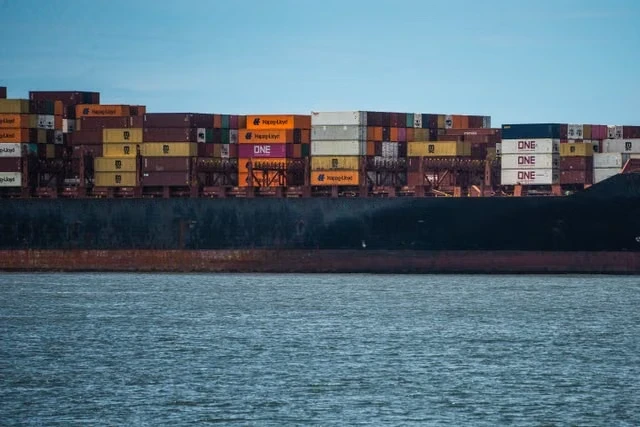
The Strait of Hormuz carries roughly one-fifth of global oil consumption and nearly a quarter of liquefied natural gas trade, making it the most consequential maritime chokepoint on Earth.
When tankers face harassment, drone attacks, or the credible threat of seizure, the physical passage may remain open while the commercial machinery that moves cargo quietly seizes up. Insurance underwriters respond to elevated risk by raising premiums, restricting coverage, and demanding additional declarations, and those costs cascade through every voyage contract tied to the region.
This is the hidden insurance crisis that rarely makes headlines: a strait can be legally navigable yet commercially closed. Shipowners, charterers, cargo interests, and insurers each carry distinct obligations, and when danger escalates, those obligations collide.
On This Page
- War-Risk Insurance and the Rising Price of Safe Passage
- Force Majeure and the Legal Battle Over Contractual Relief
- General Average and the Shared Cost of Maritime Peril
- Shipowner Obligations and the Duty of Care Under Threat
- Seaworthiness and Due Diligence Standards
- Liability Exposure and Insurance Implications
- Strategic Recommendations for Shipowners
- Maritime Risk Exposure Comparison
- War-Risk Premium Scenarios for VLCC Transit
- Contractual Clause Comparison
- General Average Contribution Example
- Stakeholder Obligations Under Threat
- Hormuz vs. Cape Route Comparison
War-risk clauses, force majeure provisions, and the ancient maritime doctrine of general average suddenly dominate boardroom discussions, often with billions of dollars in exposure hanging on a single contractual phrase.
Understanding these mechanisms matters far beyond the shipping industry. Global supply chains, energy prices, and consumer costs all respond to the perceived insurability of critical sea lanes. This analysis unpacks war-risk insurance, force majeure, general average, and shipowner duties in plain language, drawing on current events around Hormuz and the legal frameworks that govern maritime commerce under threat.
TL;DR The Strait of Hormuz faces a commercial closure risk even while physically open, driven by surging war-risk insurance premiums, restrictive policy terms, and contractual disputes. Shipowners, charterers, and cargo owners must navigate war-risk clauses, force majeure declarations, and general average contributions, each carrying distinct financial consequences. Understanding these maritime insurance mechanisms is essential for anyone exposed to global trade, energy logistics, or supply chain risk.
War-Risk Insurance and the Rising Price of Safe Passage
War-risk insurance exists because standard marine policies exclude losses caused by hostile acts, weapons, or political violence. When a vessel enters a designated high-risk zone, the owner must purchase separate coverage, often through a specialist market like Lloyd's of London. Premiums reflect the perceived threat level, and recent Hormuz incidents have pushed those premiums to multi-year highs.
The London insurance market maintains a list of hull war, piracy, terrorism, and related perils that trigger additional premiums. Underwriters assess each voyage based on vessel type, cargo, crew nationality, and recent attack patterns.
A single tanker transit through Hormuz can now cost hundreds of thousands of dollars in extra coverage, a figure that reshapes voyage economics overnight.
Charterers typically bear voyage-specific war-risk costs through contractual pass-through provisions, but disputes arise when parties disagree on whether a threat warrants invoking those clauses. Owners may refuse to sail without additional premiums, while charterers argue the risk is overstated. These disagreements frequently escalate to arbitration, delaying cargoes and freezing commercial activity.
Beyond hull coverage, crew members require personal accident and war-risk protection, and cargo owners need separate policies for goods in transit. Each layer adds cost and complexity, and insurers increasingly demand detailed voyage declarations, route deviations, and security protocols before binding coverage. The administrative burden alone can deter smaller operators from approaching the strait.
The Mechanics of War-Risk Premiums
War-risk premiums are quoted as a percentage of insured vessel value, typically ranging from 0.025 percent in calm periods to over 0.5 percent during active hostilities. For a modern VLCC valued at $100 million, that translates to $25,000 versus $500,000 per transit. The gap explains why owners aggressively negotiate route alternatives.
Underwriters also impose geographic limits, requiring notice and additional premium if a vessel deviates into listed dangerous zones. Hormuz currently sits on multiple advisory lists, and insurers may require 48-hour advance notification before a transit begins. Failure to comply can void coverage entirely, leaving owners fully exposed to catastrophic loss.
Insurers differentiate between risks based on vessel flag, ownership structure, and prior claims history. Vessels linked to sanctioned entities face automatic coverage denial, while those with strong security measures may negotiate discounts. The market operates on granular data, and transparency about crew movements and onboard security directly influences pricing.
Reinsurance markets amplify these dynamics, as primary insurers transfer portions of war-risk exposure to global reinsurers. When reinsurers tighten capacity, primary premiums rise sharply, and some vessels find coverage unavailable at any price. This capacity crunch effectively closes the strait to operators without deep financial reserves or long-term insurance relationships.
Contractual Pass-Through and Dispute Triggers
Standard voyage charter parties include war-risk clauses permitting owners to refuse transit through dangerous zones or demand additional premiums. The BIMCO CONWARTIME clause is the industry benchmark, granting owners broad discretion to assess danger. Charterers may challenge that assessment, but courts generally defer to the master's professional judgment.
Disputes frequently center on whether a specific incident constitutes a "war risk" versus ordinary piracy or criminal activity. Drone attacks by state-aligned forces blur these lines, and insurers may classify incidents differently than charterers expect.
Legal costs from such disputes often exceed the premium differential at stake, creating perverse incentives for early settlement.
Time charter parties impose different obligations, with owners responsible for insurance while charterers direct vessel employment. If a charterer orders a vessel into a war-risk zone, the owner may require additional premium payment before complying. Refusal to pay can constitute breach, but owners risk liability if they unreasonably withhold consent.
Force majeure clauses provide another escape route, excusing performance when extraordinary events beyond party control prevent contractual fulfillment. However, courts interpret force majeure narrowly, and mere danger does not automatically excuse performance. Parties must prove actual prevention, not just increased cost or inconvenience, a high legal bar in practice.
Practical Implications for Voyage Planning
Ship operators now model multiple scenarios before committing to Hormuz transits, comparing insurance costs, route deviations, and delay risks. The alternative route around Africa's Cape of Good Hope adds roughly 10-14 days and significant fuel costs, but may prove cheaper than war-risk premiums plus potential losses. These calculations shift weekly as threat assessments evolve.
Crew safety considerations increasingly override purely commercial calculations, with seafarers exercising refusal rights under maritime labor conventions. Unions have issued guidance supporting crew refusals to transit high-risk zones, and owners face reputational damage if they pressure crews. Crew retention and recruitment already suffer in regions perceived as dangerous.
Cargo owners must verify that their goods are covered under war-risk extensions, as standard marine cargo policies exclude hostile acts. Many shippers purchase open cover with automatic war-risk inclusion, but sub-limits and exclusions vary widely.
A single uninsured cargo loss can bankrupt a mid-sized trading company, making policy review essential before booking space.
Digital platforms now provide real-time threat intelligence, insurance quotations, and contract templates tailored to high-risk voyages. These tools reduce information asymmetry but cannot eliminate the fundamental uncertainty of geopolitical events. Prudent operators maintain contingency plans, alternative suppliers, and buffer inventory to absorb disruption.
We Also Published
Force Majeure and the Legal Battle Over Contractual Relief
Force majeure provisions excuse non-performance when extraordinary events make fulfillment impossible, illegal, or commercially impracticable. In shipping contracts, these clauses typically list war, blockade, sanctions, and government intervention as qualifying events.
However, the burden of proof rests on the party seeking relief, and courts demand clear causal links between the event and the failure to perform.
The COVID-19 pandemic generated extensive litigation over force majeure, establishing precedents that now apply to geopolitical crises. English courts, which govern most shipping contracts, require that the event be unforeseeable, beyond control, and directly causative. Increased cost alone rarely suffices, even when that cost is catastrophic.
Contractual drafting determines outcomes more than general legal principles, and parties who negotiate precise force majeure definitions gain significant advantage. Vague references to "acts of God" or "political events" invite dispute, while specific lists of qualifying incidents reduce ambiguity. Experienced shipping lawyers now draft these clauses with military precision.
Force majeure interacts with insurance coverage in complex ways, as insurers may deny claims if the insured party could have invoked contractual relief. This creates a coordination problem: invoking force majeure may preserve contractual rights but jeopardize insurance recovery. Legal and insurance advisors must work together to optimize outcomes.
Defining Qualifying Events in Modern Contracts
Modern force majeure clauses increasingly reference "state-sponsored attacks," "cyber operations," and "unexplained maritime incidents" to capture contemporary threats. Traditional language covering "war" and "blockade" may not extend to drone strikes or GPS jamming, leaving gaps in protection. Drafters must anticipate evolving threat vectors.
Sanctions clauses operate alongside force majeure, permitting parties to suspend performance when continued trade would violate applicable laws. The proliferation of secondary sanctions targeting Iran-related shipping has made these clauses essential. Compliance teams now screen counterparties, vessels, and cargo origins before finalizing any charter.
Blockade clauses specifically address situations where naval forces restrict access to ports or straits, even without formal declarations of war. The distinction between a blockade and mere harassment matters legally, as only the former triggers certain contractual rights. Insurers and lawyers debate this classification intensely during crises.
Frustration of purpose, a related doctrine, applies when an unforeseen event destroys the fundamental basis of a contract. Unlike force majeure, frustration automatically terminates the contract rather than suspending obligations. However, courts apply frustration sparingly, and parties cannot invoke it when the event was foreseeable or allocated by contract.
Judicial Interpretation and Dispute Resolution Trends
English courts have recently emphasized that force majeure clauses must be interpreted strictly, refusing to imply relief where contracts are silent. This textualist approach rewards precise drafting and punishes parties who rely on general principles. Arbitration awards in London and Singapore increasingly follow similar reasoning.
Disputes over Hormuz-related force majeure claims have reached arbitration within months of incidents, reflecting the commercial urgency. Emergency arbitrators can grant interim relief within days, allowing vessels to deviate or cargo to be discharged pending final resolution. These expedited procedures reduce but do not eliminate financial exposure.
Insurance policy language interacts with force majeure analysis, as insurers may argue that covered events are not "unforeseeable" if the insured had knowledge of risks. This circular reasoning creates litigation risk, and courts have split on whether foreseeable risks can trigger force majeure relief. The outcome often depends on the specific facts and contract language.
Alternative dispute resolution mechanisms, including mediation and expert determination, are gaining popularity for force majeure disputes. These processes preserve commercial relationships and reduce costs compared to arbitration. However, they require both parties to genuinely seek resolution rather than tactical advantage.
Practical Strategies for Contractual Protection
Shippers and charterers should audit existing contracts to identify gaps in force majeure and war-risk coverage before entering high-risk regions. This review should include insurance policies, charter parties, and sale contracts, as each layer may contain different provisions. Professional advice is essential given the technical complexity.
Negotiating force majeure clauses should address notification timelines, mitigation obligations, and consequences of prolonged suspension. Parties should agree on how long the clause can suspend performance before termination rights arise. Clear termination mechanics prevent disputes when crises persist for months.
Documentation is critical: parties must provide timely notice, maintain evidence of the qualifying event, and demonstrate mitigation efforts. Failure to comply with notice requirements can forfeit relief entirely, regardless of the underlying merits. Administrative discipline is as important as legal drafting.
Insurance brokers can structure coverage to align with force majeure rights, ensuring that contractual relief does not undermine recovery. This coordination requires sharing contract terms with insurers and obtaining written confirmation of coverage positions. Proactive communication prevents unpleasant surprises during claims.
General Average and the Shared Cost of Maritime Peril
General average is a maritime principle dating back centuries, requiring all parties to a voyage to share losses incurred to save the common venture. When a vessel faces peril, and the master sacrifices cargo or incurs extraordinary expenses to protect the ship and remaining cargo, those costs are proportionally allocated. This doctrine applies regardless of which party's property was sacrificed.
In Hormuz-related incidents, general average may arise when vessels take evasive action, jettison cargo, or incur salvage costs to escape attack. Even if no physical loss occurs, expenses for deviation, security escorts, or emergency repairs can qualify. The allocation process is governed by the York-Antwerp Rules, which provide a standardized framework.
General average creates significant financial exposure for cargo owners, who must provide security deposits before their goods are released. These deposits can amount to substantial percentages of cargo value, tying up working capital for months or years. The adjustment process, conducted by professional average adjusters, is notoriously slow and complex.
Insurance coverage for general average contributions is typically included in marine cargo policies, but sub-limits and exclusions apply. Underinsured cargo owners face personal liability for their share of general average, a risk often overlooked. Understanding these obligations is essential for anyone shipping goods through high-risk regions.
The York-Antwerp Rules and Allocation Mechanics
The York-Antwerp Rules, most recently updated in 2016, provide detailed guidance on which expenses qualify for general average and how to calculate contributions. The rules distinguish between sacrifices, expenditures, and indirect losses, with only the former two generally recoverable. This technical framework requires professional interpretation.
Contribution values are based on the net value of ship, cargo, and freight at the voyage's end, with each party bearing a proportional share. A cargo owner with goods valued at $1 million on a vessel with $100 million total value would contribute approximately 1 percent of allowable losses. This calculation seems simple but involves complex valuation disputes.
Average adjusters, typically independent professionals, investigate the incident, gather evidence, and prepare the adjustment statement. Their work can take years, especially when incidents involve multiple jurisdictions and insurers. The adjuster's fees are themselves included in the general average, adding to the total burden.
Disputes over general average frequently arise when cargo owners challenge whether the peril was genuine or whether the master acted reasonably. Insurers may also dispute the quantum of claimed expenses, leading to protracted negotiations. These disputes delay cargo release and increase overall costs for all parties.
Interaction with War-Risk and Force Majeure
General average interacts with war-risk insurance in complex ways, as war-risk policies may exclude general average contributions arising from hostile acts. This exclusion creates coverage gaps that cargo owners must address through separate war-risk extensions. The interplay between policies requires careful coordination.
Force majeure declarations can complicate general average, as parties may argue that the event was foreseeable and therefore not a "peril" justifying sacrifice. Courts have generally rejected this argument, holding that general average applies to any extraordinary peril, regardless of foreseeability. However, the issue remains contested.
Salvage operations in high-risk areas raise particular challenges, as salvors demand premium compensation for operating in dangerous conditions. These enhanced salvage awards are typically allowed in general average, increasing the burden on cargo interests. Negotiating salvage contracts before incidents occur can mitigate costs.
Insurers increasingly offer combined policies covering war-risk, general average, and force majeure-related losses under a single framework. These integrated products reduce coverage gaps but require sophisticated underwriting and pricing. Shippers should compare traditional separate policies against integrated alternatives.
Practical Guidance for Cargo Owners
Cargo owners should verify that their insurance policies explicitly cover general average contributions arising from war-risk events. Standard policies may exclude such contributions, requiring endorsement or separate coverage. This verification should occur before shipment, not after an incident occurs.
Maintaining accurate cargo valuations is essential, as undervaluation reduces recovery but also reduces contribution liability. Overvaluation increases premiums without corresponding benefit. Professional cargo insurance brokers can help calibrate appropriate declared values.
When notified of a general average event, cargo owners must respond promptly to security demands and provide required documentation. Delays can result in cargo detention, storage charges, and legal action. Designating a responsible person to handle general average matters is prudent.
Legal counsel with maritime expertise should review general average notices and security demands before payment. Errors in the adjustment process can be challenged, but only within strict time limits. Professional review protects cargo owners from overpayment and procedural prejudice.
Shipowner Obligations and the Duty of Care Under Threat
Shipowners bear fundamental obligations to provide seaworthy vessels, maintain adequate insurance, and exercise due diligence in voyage execution. These duties intensify when vessels transit high-risk areas, requiring enhanced security measures, crew training, and threat assessment. Failure to meet these obligations can void insurance coverage and expose owners to liability.
The International Safety Management Code requires shipowners to implement safety management systems addressing operational risks, including those from geopolitical threats. These systems must be documented, audited, and continuously improved. Regulatory compliance is a minimum standard, not a substitute for commercial judgment.
Owners must balance commercial pressure from charterers against safety obligations to crews and vessels. Refusing a voyage may breach charter obligations, but proceeding into manifest danger may constitute negligence. This tension requires careful legal analysis and clear communication with all stakeholders.
Insurance policies impose conditions requiring owners to disclose material facts, maintain specified security measures, and notify underwriters of increased risks. Breach of these conditions can void coverage entirely, leaving owners personally liable for catastrophic losses. Compliance is non-negotiable.
Seaworthiness and Due Diligence Standards
Seaworthiness extends beyond physical condition to include adequate crew, documentation, and security arrangements for the intended voyage. A vessel may be unseaworthy if it lacks appropriate protection against known threats. Courts assess seaworthiness based on what a prudent owner should have known at voyage commencement.
Due diligence requires owners to investigate threat intelligence, consult security advisors, and implement reasonable protective measures. This may include hiring armed guards, installing anti-drone systems, or routing through safer corridors. The standard is reasonableness, not perfection, but documented decision-making is essential.
Owners must also ensure that crews are trained to respond to attacks, including emergency procedures, communication protocols, and evacuation plans. Crew competence is a seaworthiness factor, and inadequate training can constitute unseaworthiness. Regular drills and certification are expected.
Cyber risks compound physical threats, as vessels increasingly rely on networked systems vulnerable to attack. Owners must implement cybersecurity measures to protect navigation, communication, and cargo systems. Cyber incidents can trigger insurance claims and contractual disputes under multiple frameworks.
Liability Exposure and Insurance Implications
Owners face liability to cargo interests, charterers, and third parties for losses arising from negligent voyage execution. This liability may exceed insurance coverage, particularly if owners breached policy conditions. Personal liability of owners and directors is possible in extreme cases.
Protection and indemnity (P&I) clubs provide liability coverage for crew injuries, cargo damage, pollution, and other third-party claims. However, P&I policies exclude war risks, requiring separate coverage. Owners must coordinate P&I and war-risk policies to ensure comprehensive protection.
Insurers may deny claims if owners fail to disclose material facts about voyage risks or security arrangements. The duty of utmost good faith in marine insurance requires full disclosure of all circumstances that might influence underwriting decisions. Non-disclosure, even innocent, can void coverage.
Owners should maintain detailed records of threat assessments, security measures, and decision-making processes. These records support insurance claims and defend against liability allegations. Documentation is the owner's primary protection in disputes.
Strategic Recommendations for Shipowners
Shipowners should establish formal risk assessment procedures for voyages through high-risk areas, documenting all decisions and rationales. These procedures should involve security consultants, insurance brokers, and legal counsel. Regular updates are essential as threat levels evolve.
Negotiating charter parties should include clear war-risk clauses, force majeure provisions, and cost allocation mechanisms. Owners should resist vague language that creates ambiguity. Professional legal review of all contracts is a worthwhile investment.
Maintaining strong relationships with underwriters and brokers facilitates coverage negotiations during crises. Owners with transparent risk management practices secure better terms than those perceived as high-risk. Reputation matters in the insurance market.
Finally, owners should plan for worst-case scenarios, including vessel seizure, crew detention, and total loss. Contingency plans should address communication, legal representation, and financial reserves. Preparedness distinguishes professional operators from those who fail when crises strike.
The hidden insurance crisis at Hormuz demonstrates that maritime chokepoints can close commercially even when physically open. War-risk premiums, force majeure disputes, and general average contributions collectively determine whether trade flows or freezes. Stakeholders who understand these mechanisms can navigate crises more effectively than those who react blindly.
Proactive risk management, precise contractual drafting, and comprehensive insurance coverage are not optional luxuries but operational necessities. The costs of preparation are modest compared to the potential losses from uninsured exposure. Every voyage through high-risk waters demands rigorous analysis and professional advice.
Global supply chains depend on the insurability of critical sea lanes, and that insurability is increasingly fragile. Geopolitical tensions, technological threats, and regulatory complexity compound traditional maritime risks. The industry must adapt its legal and financial frameworks to preserve the free flow of commerce.
Ultimately, the Strait of Hormuz crisis is a case study in how insurance markets shape geopolitical outcomes. When underwriters withdraw capacity, they effectively impose policy decisions that governments cannot or will not make. Understanding this dynamic is essential for policymakers, business leaders, and citizens alike.
From our network :
- Forbidden Matrix Patterns and Visible Lattice Points: A Geometric DictionaryExplore how multidimensional 0–1 matrices encode geometric truths, linking forbidden patterns to visible lattice points and hypergraph theory, with applications in combinatorics and computational geometry.
- CISA’s Ten-Advisory Wave: Why Generic Patching Fails in OT and How to Build Product-Specific PlaybooksCISA released ten ICS advisories in one week, exposing critical infrastructure risks. Generic patching fails in OT. Learn to build product-specific remediation playbooks.
- Former Soap Stars Embark on Ambitious Writing Projects and Theatrical StagesDiscover how former soap opera actors are transitioning into independent scriptwriting and high-profile theatrical stage productions.
- The Final Descent: How ESA Retired the Legendary Cluster Constellation After 24 Years of Space Weather ScienceAfter 24 years mapping Earth’s magnetosphere, ESA’s Cluster mission concluded with a precisely controlled reentry over the South Pacific. This analysis explores the scientific legacy, engineering decisions, and debris mitigation principles behind one of space exploration’s most responsible retirements.
- Norbert’s Uncertain Path: Why Hawaii’s Storm Watch Demands Patience Over PanicTropical Storm Norbert strengthens in the Eastern Pacific with winds near 50 mph, forecast to reach Category 1 hurricane status by Friday. Long-range models disagree sharply on whether Hawaii faces any threat around September 19–23, making official guidance essential.
- Committed Mediterranean Precipitation Decline: Why Emissions Cuts Alone Cannot Restore Winter RainsNew NOAA research reveals that Mediterranean winter rains may decline irreversibly even with emissions cuts. Explore the science of committed climate change and regional impacts.
- Analyzing Hoya Corporation’s Midday Volume Shifts and Financial FundamentalsExamine Hoya Corporation’s midday trading volume contraction, technical moving averages, robust solvency ratios, and stellar quarterly earnings performance.
- The Hidden Cost of AI Convenience: Why Over-Permissioned Agents Are a Security Time BombDiscover why AI agents with excessive permissions create dangerous single points of failure, and learn how implementing least privilege principles can protect your organization from exploitation.
- How AI Agents Will Change the Way We Manage Personal FinancesExplore how AI agents are transforming personal finance through automated budgeting, bill payment, and investment management, while examining the critical security protocols and governance frameworks required for safe deployment.
RESOURCES
- What stopping war-risk insurance in the Strait of Hormuz tells usweforum.orgApr 9, 2026 ... Accordingly, major maritime insurers have suspended or repriced war-risk coverage for ships travelling through the Strait of Hormuz and the ...
- Launch of new marine war risk consortium to support Strait ... - Lloyd'slloyds.comJun 19, 2026 ... ... war risk insurance capacity for vessels and cargo transiting the Strait of Hormuz ... war risk consortium to support…
- How shipping insurance rates are rising, as Hormuz, Bab al-Mandeb ...aljazeera.comJul 23, 2026 ... The report added that war-risk insurance costs in the waterway used to constitute between 1 and 3 percent of a…
- Escalating Hormuz tensions drive up Middle East war risk insurance ...reuters.comJun 23, 2025 ... Rates in the Red Sea area spiked to 1% in 2024 after Iran-backed Houthis launched attacks on commercial ships which…
- Maritime insurers cancel war risk cover in Gulf as Iran conflict ...theguardian.comMar 2, 2026 ... ... Hormuz as attacks and insurance cancellations make the area increasingly unsafe. “A substantial number of tankers are currently stranded…
- Hormuz shipping disruptions raise risks for energy, fertilizers and ...unctad.orgMar 10, 2026 ... Freight rates for oil tankers and war risk insurance premiums are surging, while marine fuel costs are also rising, increasing…
- Inside the Room Where War Insurance Is Bought and Soldnytimes.comMay 29, 2026 ... ... War Risks Insurance Association, one of the world's largest marine war risk insurers. Advertisement. SKIP ADVERTISEMENT. The main reason…
- Middle East shipping insurance costs rise on Hormuz risks: Marshspglobal.comJul 22, 2026 ... ... insurance brokerage Marsh. The sharp increase in war risk insurance costs threatens to further disrupt crude flows from the…
- Report: War-risk insurance braces for prolonged elevated premiums ...insurancebusinessmag.comJun 28, 2026 ... In the weeks prior to the conflict, an average of 178 ships transited the Strait of Hormuz each day. According…
- Marine war insurance for Hormuz dries up as Middle East war ...spglobal.comMar 3, 2026 ... The Strait of Hormuz shipping lane has been a focal point for marine ... risk forecasting at risk advisory firm…
- U.S. Government's Current Insurance Proposal May Be Insufficient ...dbrs.morningstar.comRising geopolitical tensions involving Iran have disrupted shipping through the Strait of Hormuz after marine insurers restricted war risk coverage or ...
- DFC Announces $20B Plan for Maritime Reinsurance in the Gulfdfc.govMar 6, 2026 ... ... Maritime Reinsurance, including war risk, in the Gulf region. In ... Hormuz and flowing again to the world,” said…
- Strait of Hormuz Shipping Falls After Insurance Pullback - Windwardwindward.aiMar 4, 2026 ... War risk insurance cancellations by P&I clubs and reinsurers lead to an 80% drop in Strait of Hormuz traffic as…
- Insurers Roll Out $400 Million War-Risk Facility for Hormuz Shippingoilprice.comJun 19, 2026 ... Lloyd's of London and Chubb have launched a $400 million marine war-risk insurance facility to help vessels and cargo safely…
- The new masters of war: Insurance companiesnews.umich.eduMar 6, 2026 ... This protection is offered through coverage like “war risk cover,” which charges a fee for transit based on the cost…
- 01
- 02
- 03
- 04
- 05
- 06
- 07
- 08
0 Comments