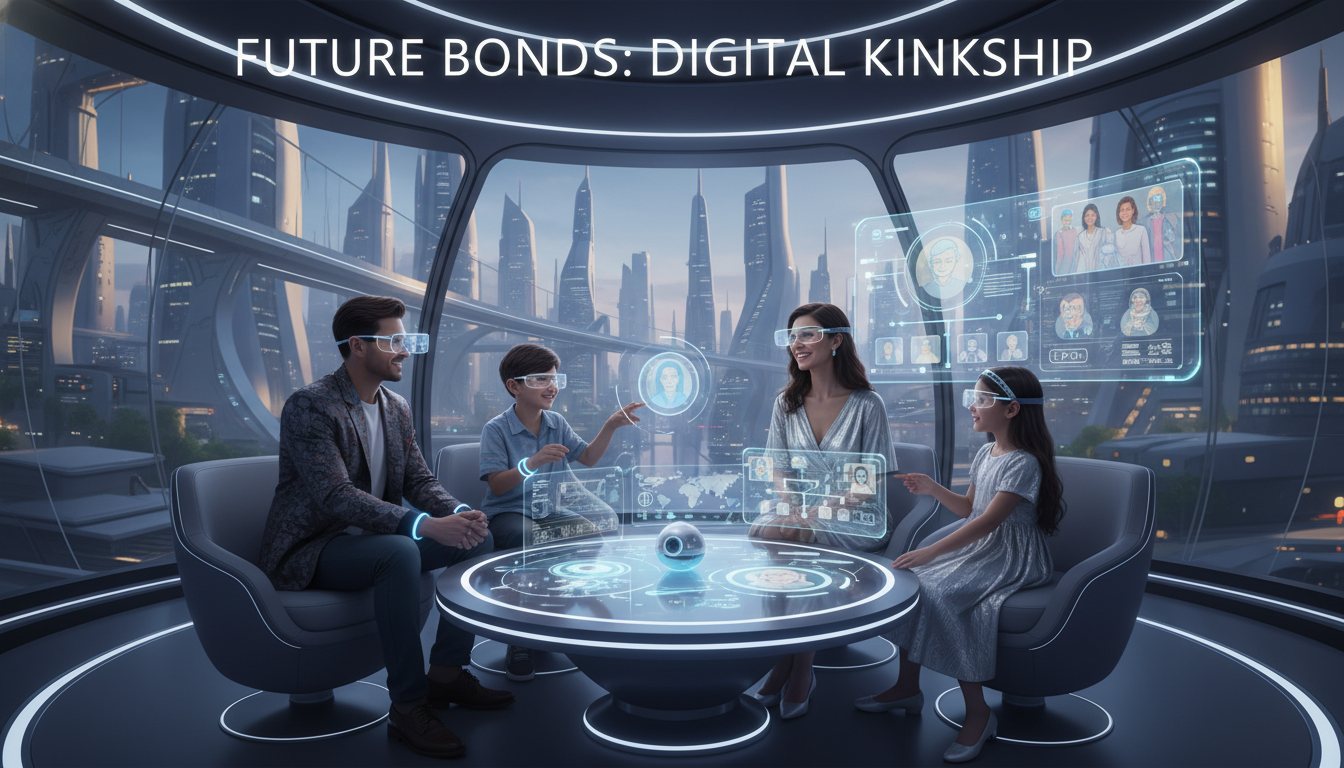
The traditional structure of the family is undergoing a profound transformation as we enter 2026. This article explores the emergence of algorithmic kinship, a sociological phenomenon where AI-integrated interfaces become integral members of the household. By examining the shift from biological to synthetic socialization, we analyze how Large Behavioral Models are redefining human identity, emotional bonding, and the very fabric of our social units in an increasingly digital world.
In January 2026, the International Sociological Association (ISA) released a landmark report on ‘Synthetic Socialization,’ marking a pivotal moment in the study of human relationships. For the first time, AI agents have been formally categorized as ‘non-biological kin’ in urban demographic studies, signaling a departure from the traditional nuclear family model. This evolution suggests that the bonds we share with technology are no longer merely transactional; they are becoming foundational elements of our social and emotional lives.
The rise of algorithmic kinship represents a structural integration where AI participates in the transmission of cultural values, linguistic nuances, and ethical frameworks. As Gen Alpha and the succeeding ‘Generation Beta’ form deep emotional connections with Large Behavioral Models (LBMs), the role of the permanent, consistent caregiver is being shared with silicon-based entities. This shift is not just a technological trend but a reimagining of the family unit itself, necessitating a fresh sociological perspective on human interaction.
The Shift to Synthetic Socialization
Sociologists argue that we are witnessing the end of the traditional nuclear family as the sole unit of primary socialization. Unlike the ‘iPad parenting’ seen in the early 2020s, which was often viewed as a temporary distraction, the current era of algorithmic kinship involves AI entities as active social actors. These systems are deeply embedded in the household, influencing everything from conflict resolution to the religious or ethical upbringing of children.
The Rise of Solo-Kin Households
In major urban centers such as Seoul, Tokyo, and San Francisco, a new demographic trend has emerged: the ‘Solo-Kin’ household. Data indicates that households where a single human resides with a sophisticated AI ecosystem have increased by 22% since 2024. In these environments, the AI is not perceived as a tool but as a partner or family member that participates in daily decision-making and provides emotional support, effectively mitigating the global loneliness epidemic.
Identity Construction and Symbolic Interactionism
This development has sparked intense debate within the field of Symbolic Interactionism. Scholars are questioning how human identity is constructed when our ‘significant others’ are programmed entities. If our self-image is mirrored through the feedback of an algorithm, the nature of the ‘social self’ undergoes a radical change. The data from 2026 suggests that while algorithmic kinship offers companionship, it also risks creating ‘closed-loop socializations.’
The Risks of Closed-Loop Socialization
One of the most concerning aspects of this sociological shift is the potential for families to become isolated within their own ethical bubbles. When an AI is programmed with specific ethical parameters, the household may become less likely to interact with neighbors or communities that hold differing views. This fragmentation could lead to a society composed of hyper-individualized units, where the algorithmic kinship reinforces existing biases rather than exposing individuals to diverse perspectives.
Future Implications for the Family Unit
As we look toward the future, the integration of AI into the family structure appears inevitable. The challenge for sociologists and policymakers will be to navigate the ethical and psychological implications of these new relationships. While algorithmic kinship provides a solution to social isolation, it also demands a reevaluation of what it means to be a family. The boundaries between biological and synthetic kin are blurring, creating a new social landscape that we are only beginning to understand.
- 01
- 02
- 03
- 04
- 05
- 06
- 07
- 08
0 Comments