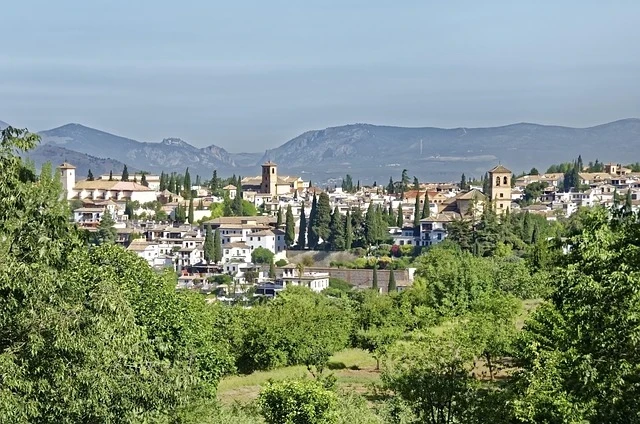
Cádiz stands as one of the most quietly astonishing cities on the European continent, a weathered peninsula of golden stone thrusting into the Atlantic like a stubborn fist that refuses to surrender to time.
Long before Rome planted its eagles on Iberian soil, Phoenician sailors from Tyre recognized the strategic genius of this narrow spit of land and founded a settlement they called Gadir around 1104 BCE.
That founding date, debated but widely accepted, makes Cádiz arguably the oldest continuously inhabited city in Western Europe, a living artifact whose streets have absorbed nearly three thousand years of footsteps, storms, and salt air.
On This Page
- The Phoenician Genesis of Gadir and the Dawn of Atlantic Commerce
- Islamic Rule, Reconquest, and the Golden Age of Atlantic Trade
- Modern Cádiz: Cultural Renaissance and Tourism Economy
- Geopolitical and Economic Lessons from a Three-Thousand-Year-Old Port
- NHK World's Role in Documenting Global Heritage Cities
- Conclusion: Why Cádiz Matters in the Twenty-First Century
What makes Cádiz genuinely remarkable is not merely its antiquity but its persistent relevance across every epoch that followed. The city served as a Phoenician trading hub, a Carthaginian naval base, a Roman port, a Moorish stronghold, and eventually the launching point for Spanish treasure fleets returning laden with silver from the Americas.
Each civilization layered its own architecture, commerce, and culture onto the same limestone promontory, creating an urban palimpsest where a Roman theater sits beneath a baroque quarter and Phoenician sarcophagi rest in a local museum.
This analysis examines Cádiz through the lens of maritime history, urban evolution, and cultural endurance, drawing on the reporting framework of NHK World, Japan's public broadcaster, whose documentary coverage brought renewed international attention to this Andalusian treasure.
The city's story illuminates how geography, trade, and human determination can sustain a community across millennia, offering lessons that resonate far beyond the Iberian Peninsula.
TL;DR Cádiz, located in Andalusia, southern Spain, is a historic port city whose origins trace back to Phoenician settlement around 1104 BCE, making it one of the oldest continuously inhabited cities in Western Europe. Its strategic Atlantic-Mediterranean position made it a pivotal hub for Phoenician, Carthaginian, Roman, Moorish, and Spanish imperial commerce. NHK World's documentary coverage highlights how Cádiz transformed from an ancient trading post into the departure point for Spanish treasure fleets and, today, a cultural tourism destination. The city's enduring relevance demonstrates how maritime geography shapes civilizational destiny across three millennia.
The Phoenician Genesis of Gadir and the Dawn of Atlantic Commerce
The story of Cádiz begins not with Spain but with the seafaring merchants of ancient Phoenicia, whose trading networks stretched across the entire Mediterranean world. Around the turn of the twelfth century BCE, colonists from the city of Tyre established a settlement on a small archipelago just beyond the Pillars of Hercules, naming it Gadir, meaning "walled enclosure" or "fortress" in their Semitic tongue.
This foundation predates Carthage by centuries and Rome by even longer, positioning Cádiz as a genuine pioneer of Western urbanization.
Geography dictated everything about this choice. The site offered sheltered harbors, access to Atlantic fishing grounds, and proximity to the mineral wealth of the Iberian interior, particularly the silver and tin routes that Phoenician traders coveted.
From Gadir, merchants could control the strait connecting the Mediterranean to the Atlantic, effectively monopolizing trade between two worlds that had previously remained largely separate spheres of economic activity.
Strategic Advantages of the Atlantic-Mediterranean Threshold
The Phoenicians understood that controlling a chokepoint generates wealth far exceeding the value of any single cargo. Gadir's position allowed its merchants to tax, monitor, and redirect the flow of metals, textiles, and luxury goods moving between the Atlantic seaboard and the civilized Mediterranean.
This geographic leverage transformed a modest colonial outpost into one of the wealthiest cities of the ancient western world.
Archaeological excavations have uncovered Phoenician sarcophagi of extraordinary craftsmanship, anthropoid coffins carved in the Egyptian manner that reveal the cosmopolitan sophistication of Gadir's elite. These burial artifacts, discovered in the twentieth century, confirm that the city maintained direct cultural and commercial ties with the eastern Mediterranean, importing not only goods but artistic traditions and religious practices from Tyre and Sidon.
The temple of Melqart, later identified by Greeks and Romans with Heracles, stood as Gadir's spiritual and economic heart. Pilgrims and merchants traveled from across the Mediterranean to consult its oracle and offer sacrifices, generating a steady stream of revenue and reinforcing the city's reputation as a sacred commercial gateway between continents and civilizations.
When Tyre fell to Babylonian armies in the sixth century BCE, Gadir inherited much of its parent city's maritime network, becoming the principal guardian of Phoenician commercial traditions in the western Mediterranean.
This transition marked the first of many reinventions that would define Cádiz's remarkable capacity for survival and adaptation across shifting geopolitical landscapes.
From Carthaginian Rivalry to Roman Gades
Carthage, itself a Phoenician colony founded centuries after Gadir, eventually eclipsed its elder sister in political and military power. During the Punic Wars, Gadir aligned with Carthage against Rome, a decision that carried enormous consequences when Roman legions finally prevailed in the second century BCE.
The city surrendered to Rome in 206 BCE and was subsequently renamed Gades, beginning a new chapter under Latin rule.
Under Roman administration, Gades flourished as never before, becoming one of the wealthiest cities in the empire and a favored retirement destination for patrician families. The geographer Strabo marveled at its population, its bustling harbors, and its reputation for dancing girls whose performances were celebrated throughout the Mediterranean world.
Roman Gades produced emperors, admirals, and poets, including the Latin poet Martial and the Stoic philosopher Seneca the Elder.
The Roman theater of Gades, rediscovered in 1980 beneath the El Pópulo quarter, ranks among the largest ever constructed in the Roman world, capable of seating approximately twenty thousand spectators.
Its excavation revealed the depth of Roman investment in the city and confirmed that Gades served as a cultural as well as commercial capital of the Iberian provinces, exporting not only goods but ideas and artistic traditions.
Roman engineering transformed the city's infrastructure, introducing aqueducts, paved roads, and monumental public buildings that reshaped the urban landscape. The prosperity generated during this era established patterns of wealth accumulation and cultural patronage that would persist, in various forms, through every subsequent period of Cádiz's long history.
Islamic Rule, Reconquest, and the Golden Age of Atlantic Trade
The collapse of Roman authority in Iberia gave way to Visigothic rule and then, in 711 CE, to the swift Islamic conquest that transformed the peninsula into Al-Andalus. Cádiz, renamed Qādis under Moorish administration, became part of a sophisticated Islamic civilization that introduced new agricultural techniques, architectural forms, and scholarly traditions to the region.
The city's port continued to function as a commercial gateway, now connecting the Islamic world with Christian Europe and North Africa.
For nearly five centuries, Qādis existed as a modest but strategically important settlement within the shifting political landscape of Islamic Iberia. The Moors fortified the city, improved its harbors, and integrated it into trade networks stretching from Baghdad to the Atlantic coast of Morocco.
This period left enduring marks on Cádiz's urban fabric, including narrow winding streets and courtyard houses that still define the historic center.
The Reconquest and the Rise of Spanish Cádiz
Christian forces under Alfonso X of Castile captured Cádiz in 1262, ending centuries of Islamic rule and initiating a gradual process of repopulation and re-Christianization. The city's fortunes waxed and waned over the following centuries, but its geographic advantages ensured that it never lost its importance as a naval and commercial center on the Atlantic frontier of Christian Spain.
The pivotal moment arrived in 1492, when Christopher Columbus sailed westward under the Spanish crown and inadvertently opened the Americas to European colonization. Cádiz, positioned perfectly to receive treasure fleets returning from the New World, soon became the wealthiest and most cosmopolitan city in Spain, a gateway through which silver, gold, sugar, and exotic goods flowed into European markets.
In 1717, the Spanish crown transferred the monopoly on American trade from Seville to Cádiz, a decision that transformed the city into the undisputed capital of Atlantic commerce. Merchant houses from across Europe established offices in Cádiz, creating a cosmopolitan society that blended Spanish, Genoese, Dutch, Irish, and French influences into a distinctive commercial culture.
The wealth generated by this trade financed the construction of grand baroque churches, elegant townhouses, and public buildings that still define Cádiz's architectural character. The city's population swelled, its cultural life flourished, and its merchants accumulated fortunes that rivaled those of any European capital, all built on the silver of Potosí and the sugar of the Caribbean.
Napoleonic Siege and the Birth of Spanish Constitutionalism
The nineteenth century brought dramatic reversals to Cádiz's fortunes, beginning with the Napoleonic invasion of Spain in 1808. French forces besieged the city for more than two years, but Cádiz resisted, sustained by British naval support and the determination of its citizens.
During this siege, the Spanish Cortes convened in the city and drafted the Constitution of 1812, a landmark document that established principles of popular sovereignty and constitutional monarchy.
The Constitution of 1812, known as La Pepa, represented a radical departure from absolute monarchy and influenced constitutional development throughout Europe and Latin America. Its proclamation from Cádiz underscored the city's role not merely as a commercial entrepôt but as a crucible of political ideas, a place where the modern Spanish nation began to define itself in opposition to imperial tyranny.
Despite this political triumph, Cádiz's commercial dominance declined steadily as Spain lost its American colonies and free trade reforms opened other ports to Atlantic commerce. By the mid-nineteenth century, the city had lost its monopoly and much of its wealth, entering a period of relative economic stagnation that would last for generations.
The loss of empire forced Cádiz to reinvent itself once again, this time as a naval base and regional administrative center rather than a global commercial hub. The city's grand architecture remained, a testament to former glory, but the bustling docks and crowded merchant exchanges gradually fell silent as trade shifted to Barcelona, Bilbao, and other rising industrial centers.
Modern Cádiz: Cultural Renaissance and Tourism Economy
The twentieth century brought new challenges and opportunities to Cádiz, as Spain endured civil war, dictatorship, and eventual democratic transition. The city's economy remained depressed for decades, reliant on naval employment and modest regional trade, while its historic center deteriorated from neglect.
Yet the same isolation that hindered economic development also preserved Cádiz's architectural heritage, leaving intact a remarkably complete eighteenth-century urban fabric.
Beginning in the 1980s, Spain's democratic consolidation and integration into the European Community opened new possibilities for Cádiz. Investment in infrastructure, restoration of historic buildings, and promotion of cultural tourism gradually transformed the city's prospects, attracting visitors eager to experience its unique atmosphere and architectural treasures.
Architectural Heritage and Urban Preservation
Cádiz's historic center ranks among the best-preserved in Spain, a dense labyrinth of narrow streets, hidden plazas, and towering churches that evoke the city's golden age. The Cádiz Cathedral, constructed between 1722 and 1838, combines baroque and neoclassical elements in a monumental structure whose golden dome dominates the skyline and whose crypt houses the tomb of composer Manuel de Falla.
The city's distinctive architectural character reflects its cosmopolitan history, blending Spanish, Italian, and Atlantic influences into a style that is recognizably Andalusian yet uniquely Cádiz. Tall townhouses with watchtowers, built by merchants who needed to spot returning ships, punctuate the skyline, while interior courtyards provide cool refuge from the summer heat.
Preservation efforts have intensified in recent decades, with UNESCO recognition and European Union funding supporting restoration projects throughout the historic center. The recovery of the Roman theater, the rehabilitation of the El Pópulo quarter, and the restoration of numerous churches and palaces have transformed Cádiz into a living museum that nonetheless remains a functioning city.
The tension between preservation and modernization continues to shape Cádiz's development, as residents balance the economic benefits of tourism against the risks of commodification and displacement. The city's future depends on maintaining this balance, ensuring that Cádiz remains a place where people live and work, not merely a backdrop for visitors.
Carnival, Culture, and Contemporary Identity
Cádiz's cultural identity finds its most exuberant expression in the annual Carnival, one of Spain's most celebrated festivals and a defining element of local character. For weeks each winter, the city erupts in satirical performances, elaborate costumes, and competitive musical groups known as chirigotas and comparsas, whose lyrics lampoon politicians, celebrities, and social conventions with biting wit.
The Carnival tradition reflects Cádiz's distinctive sense of humor, a sardonic outlook forged by centuries of commercial uncertainty and political upheaval. Gaditanos, as the city's residents are called, take pride in their ability to laugh at adversity, a trait that has sustained the community through sieges, economic collapse, and the loss of empire.
Beyond Carnival, Cádiz maintains a vibrant cultural scene anchored by its university, theaters, and museums. The city's gastronomy, featuring fresh seafood, sherry wines, and Andalusian tapas, attracts food enthusiasts from across Europe, while its beaches and mild climate draw visitors seeking respite from northern winters.
Contemporary Cádiz faces familiar challenges: balancing tourism development with resident needs, preserving heritage while enabling modernization, and creating economic opportunities that retain young people. Yet the city's history suggests that Cádiz possesses unusual reserves of resilience, a capacity for reinvention that has carried it through three millennia of change.
We Also Published
- 01
- 02
- 03
- 04
Geopolitical and Economic Lessons from a Three-Thousand-Year-Old Port
Cádiz's long history offers insights that extend far beyond its own shores, illuminating fundamental dynamics of maritime commerce, urban development, and civilizational endurance. The city demonstrates how geographic advantages, while powerful, are never permanent, and how communities that adapt to changing circumstances can survive even catastrophic disruptions to their economic foundations.
The Phoenician founders of Gadir understood that controlling a strategic chokepoint generates disproportionate wealth, a lesson that resonates in contemporary debates about maritime trade routes, port infrastructure, and geopolitical competition.
From the Strait of Gibraltar to the Strait of Malacca, the ability to monitor and tax the movement of goods remains a source of power and prosperity.
Resilience, Adaptation, and the Future of Historic Ports
Cádiz's trajectory from Phoenician colony to Roman metropolis to Islamic port to Spanish imperial hub to modern tourism destination illustrates the importance of adaptability. Each transition required the city to reinvent its economic base, leveraging new opportunities while accepting the loss of previous advantages. This capacity for reinvention, more than any single resource or geographic feature, explains Cádiz's extraordinary longevity.
For contemporary cities facing deindustrialization, climate change, or technological disruption, Cádiz's experience offers both inspiration and caution. The city survived the loss of its commercial empire, but only after decades of economic stagnation and social hardship.
Adaptation is possible, but it is rarely quick or painless, and it requires sustained investment in education, infrastructure, and cultural identity.
The NHK World documentary that brought renewed attention to Cádiz reflects broader interest in how historic cities navigate the tensions between preservation and development. As global tourism expands and heritage sites face mounting pressures, Cádiz's experience provides a case study in managing these competing demands while maintaining the authenticity that makes such places worth visiting.
Ultimately, Cádiz endures as a testament to human persistence, a reminder that cities are not merely collections of buildings but living communities whose identity is forged through generations of shared experience.
Its streets, worn smooth by millennia of footsteps, carry the memory of Phoenician sailors, Roman senators, Moorish scholars, and Spanish merchants, all contributing to a story that continues to unfold.
NHK World's Role in Documenting Global Heritage Cities
NHK World, the international broadcasting service of Japan's public broadcaster, has produced extensive documentary coverage of cities and cultures worldwide, bringing stories like Cádiz's to audiences across Asia and beyond.
The network's programming reflects a commitment to cultural documentation that transcends commercial imperatives, offering viewers substantive engagement with places they might never visit in person.
The documentary format employed by NHK World typically combines historical narrative, architectural analysis, and human interest storytelling, creating portraits that illuminate both the uniqueness of specific places and their connections to broader global patterns.
This approach has particular value for historic port cities like Cádiz, whose significance can only be understood through the lens of long-term historical development.
Public Broadcasting and Cultural Preservation
Public broadcasters like NHK occupy a distinctive position in the global media landscape, insulated from commercial pressures that often prioritize entertainment over education. This independence enables sustained investment in documentary production, cultural programming, and international coverage that commercial networks frequently neglect in favor of more profitable content categories.
NHK World's coverage of Cádiz exemplifies how public broadcasting can serve as a bridge between cultures, introducing Japanese audiences to Spanish history while also reaching global viewers through English-language distribution. Such programming contributes to cross-cultural understanding and supports heritage preservation by raising international awareness of endangered or underappreciated sites.
The network's documentary on Cádiz also highlights the role of media in shaping tourism patterns, as broadcast exposure can significantly increase visitor interest in featured destinations. This influence carries responsibilities, requiring broadcasters to balance promotional effects against the need to present accurate, nuanced portrayals that respect local communities and their concerns.
As digital media fragments audiences and challenges traditional broadcasting models, the case for public investment in cultural documentation grows stronger. NHK World's commitment to covering places like Cádiz ensures that stories of human achievement and endurance reach audiences who might otherwise remain unaware of the rich histories embedded in distant cities.
Conclusion: Why Cádiz Matters in the Twenty-First Century
Cádiz represents something increasingly rare in the contemporary world: a city whose identity has been forged through uninterrupted habitation across nearly three thousand years. Its streets carry the accumulated memory of Phoenician merchants, Roman senators, Moorish scholars, Spanish conquistadors, and modern European citizens, each generation contributing to a continuous story of human settlement and adaptation.
In an era of rapid urbanization, climate change, and cultural homogenization, Cádiz offers lessons about resilience, identity, and the value of place. The city demonstrates that communities can survive the loss of economic dominance, political upheaval, and natural disaster, provided they maintain the cultural cohesion and adaptive capacity to reinvent themselves.
Cádiz also reminds us that history is not merely a subject for academic study but a living presence that shapes contemporary life. The city's Roman theater, baroque cathedral, and carnival traditions are not relics but active elements of a vibrant culture that continues to evolve while honoring its past.
As NHK World's documentary coverage has shown, places like Cádiz deserve international attention not only for their beauty or historical significance but for what they teach us about human endurance and creativity.
In a world of fleeting trends and disposable culture, Cádiz stands as a testament to the enduring power of community, place, and memory.
From our network :
- The Final Descent: How ESA Retired the Legendary Cluster Constellation After 24 Years of Space Weather ScienceAfter 24 years mapping Earth’s magnetosphere, ESA’s Cluster mission concluded with a precisely controlled reentry over the South Pacific. This analysis explores the scientific legacy, engineering decisions, and debris mitigation principles behind one of space exploration’s most responsible retirements.
- Committed Mediterranean Precipitation Decline: Why Emissions Cuts Alone Cannot Restore Winter RainsNew NOAA research reveals that Mediterranean winter rains may decline irreversibly even with emissions cuts. Explore the science of committed climate change and regional impacts.
- Live Online English Classes for Kids: Do They Actually Reduce Anxiety?A ten-week study reveals that synchronous online English classes can significantly reduce child language anxiety while improving listening and reading skills. Discover what makes these programs effective and how parents can select the right one.
- CISA’s Ten-Advisory Wave: Why Generic Patching Fails in OT and How to Build Product-Specific PlaybooksCISA released ten ICS advisories in one week, exposing critical infrastructure risks. Generic patching fails in OT. Learn to build product-specific remediation playbooks.
- University Language Proficiency Exams: Why Institutional Tests Demand Different Preparation Than IELTS and TOEFLDiscover why university-specific language proficiency examinations differ fundamentally from IELTS and TOEFL, and learn strategic preparation approaches for institutional assessment success.
- The Hidden Cost of AI Convenience: Why Over-Permissioned Agents Are a Security Time BombDiscover why AI agents with excessive permissions create dangerous single points of failure, and learn how implementing least privilege principles can protect your organization from exploitation.
- Forbidden Matrix Patterns and Visible Lattice Points: A Geometric DictionaryExplore how multidimensional 0–1 matrices encode geometric truths, linking forbidden patterns to visible lattice points and hypergraph theory, with applications in combinatorics and computational geometry.
- How AI Agents Will Change the Way We Manage Personal FinancesExplore how AI agents are transforming personal finance through automated budgeting, bill payment, and investment management, while examining the critical security protocols and governance frameworks required for safe deployment.
- Mobile Learning and VR in English: What Global Evidence Reveals About Effective Language TechnologyA systematic review across 14 countries reveals which language-learning technologies genuinely work. Mobile learning, AI, and VR show measurable benefits when pedagogically integrated. This evidence-based guide helps educators and learners select technology that delivers real return on investment.
RESOURCES
- A couple of days ago we stopped in Cádiz, Spain while sailing on ...facebook.comSep 6, 2025 ... Cádiz is a historic port city in southwestern Spain, located in the Andalusia region. It sits on a narrow peninsula…
- Cádiz - Wikipediaen.wikipedia.orgIn the 18th century, the port in the Bay of Cádiz consolidated itself as the main harbour of mainland Spain during the Spanish Empire,…
- Cádiz is a historic port city in southwestern Spain, located in the ...facebook.comJun 10, 2025 ... The top landmarks to visit in Cadiz City include the Catedral de Cádiz, Roman Theatre, Torre Tavira, Mercado Central de…
- Cadiz, Spain Cruise Port & Excursions - 2026-27cruiseweb.comCadiz is a spectacular port city in the Andalusia region of Spain, located ... historic coastline of Andalusia, Spain. Top Things to Do in…
- Seville Cruise via Cadiz, Spainmsccruisesusa.comCádiz, an old Spanish settlement in Andalusia, is characterised by a multitude of historical watchtowers. The port city rewards its visitors with excellent ...
- Cadiz Shore Excursions | Genuine Andalusia | Spain Travel Advisorgenuineandalusia.comThe port city of Cadiz is located in Southernmost continental Spain and it ... history, landscapes, customs and traditional architecture of rural Andalusia.
- Cruises to Cadiz (Sevilla), Spain - MSC Cruisesmsccruises.comCádiz, an old Spanish settlement in Andalusia, is characterised by a multitude of historical watchtowers. The port city rewards its visitors with excellent ...
- Visit Cádiz Province - Andalusia - Expediaexpedia.com... cities in Spain. Cádiz is a historic port city with excellent beaches and fascinating architecture with a large Moorish influence. The city's colorful ...
- Cádiz is an ancient port city in the Andalucia region of southwestern ...instagram.comAug 26, 2021 ... Cádiz is an ancient port city in the Andalucia region of southwestern Spain. The home of the Spanish Navy, the…
- Cádiz, Spain Vacation Rentals - Homes & Villas by Marriott Bonvoyhomes-and-villas.marriott.comCádiz, a historic port city in southwestern Spain, enjoys a mild ... Cádiz, an ancient port city in the Andalusia region of southwestern Spain,…
- Cádiz, on Spain's south coast. This fascinating port c - Instagraminstagram.comJul 30, 2026 ... Originally founded by the Phoenicians, Cádiz is often billed as the oldest continuously inhabited city in Western Europe. Its historic…
- Cadiz, Spain | Article for senior small group tours - Odyssey Travellerodysseytraveller.comThe History of Cadiz Spain · Phoenician port, Tarifa, Cadiz Province, Spain. · Remains of the Roman Theatre of the ancient Gades in Hispania,…
- 10 Things You Can't Miss in Cádiz, Spainpetitesuitcase.comMay 4, 2024 ... Even though Cádiz is a smaller city, it is filled with remarkable history, preserved castles, charming plazas, beautiful parks and…
- Cádiz to Seville - Best Routes & Travel Advice | kimkimkimkim.comMar 14, 2023 ... This seven-day road trip starts along Andalusia's coast in the port city... Drive to famous landmarks and visit historic cities…
- 01
- 02
- 03
- 04
- 05
- 06
- 07
- 08
0 Comments