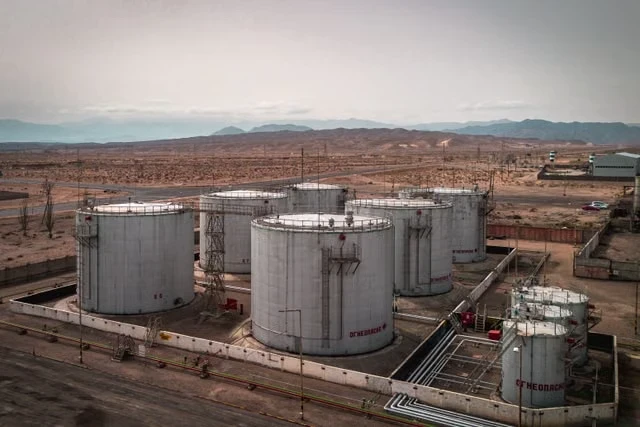
China’s refined-fuel export machinery has quietly transformed from a commercial afterthought into a decisive geopolitical lever. When Beijing loosened export quotas in July following the Hormuz disruption, Asian markets felt the ripple almost immediately.
This is no longer a simple story of supply and demand; it is a narrative about state power, refinery economics, and regional energy security.
The Strait of Hormuz remains the world’s most critical oil chokepoint, and any disruption there sends shockwaves through global logistics. Yet China’s response—accelerating refined-fuel exports precisely when regional shortages loomed—reveals a sophisticated strategy.
On This Page
Beijing is not merely reacting to market signals; it is actively shaping them, positioning itself as the swing supplier that can stabilize or destabilize Asian fuel prices at will.
Understanding this dynamic requires examining the intersection of Chinese refinery capacity, emergency stockpile policies, and export quota systems. The implications extend far beyond fuel prices, touching diplomatic leverage, regional alliances, and the broader architecture of Asian energy trade. This analysis unpacks those layers with precision.
TL;DR China’s refined-fuel exports have become a strategic geopolitical instrument, not merely a commercial activity. Following the Hormuz disruption, Beijing’s decision to ease export restrictions and boost July shipments positioned it as a swing factor in Asian energy markets. This analysis examines how export controls, refinery capacity, and emergency stockpiles enable China to influence regional fuel prices, with profound implications for energy security and diplomatic leverage across Asia.
The Mechanics of China’s Refined-Fuel Export Leverage
China’s export quota system functions as a precision instrument, calibrated to balance domestic consumption against international influence. The July surge followed a deliberate policy shift, signaling Beijing’s willingness to deploy energy exports as a strategic tool.
Understanding this mechanism requires examining the quota allocation process, refinery economics, and the strategic calculus behind each shipment.
Export Quota Allocation and Policy Signals
China’s export quotas are issued in tranches, typically three to four times annually, with volumes determined by the National Development and Reform Commission. The July increase represented a notable departure from earlier restrictions imposed after the Hormuz disruption. This recalibration sent a clear message to regional buyers about Beijing’s reliability as a supplier.
Independent refiners, known as teapots, receive a significant portion of these quotas, creating a competitive dynamic that influences pricing. Their participation ensures that export volumes respond to market conditions rather than purely state directives. However, the central government retains ultimate control over the aggregate volume, preserving its strategic flexibility.
The timing of quota releases is itself a geopolitical signal, often aligned with diplomatic negotiations or regional tensions. By accelerating exports during periods of scarcity, China demonstrates its capacity to mitigate or exacerbate supply pressures. This dual capability makes Beijing an unpredictable yet powerful actor in Asian energy markets.
Analysts tracking these quota announcements now treat them as leading indicators of Chinese foreign policy intentions. A sudden increase in export allowances can precede diplomatic overtures, while restrictions may signal displeasure with regional partners. The July decision, therefore, carries significance beyond mere commercial calculation.
Refinery Capacity and Operational Flexibility
China’s refining sector has expanded dramatically over the past decade, with new mega-refineries processing over 400,000 barrels per day each. This capacity growth has transformed the nation from a net importer of refined products to a significant exporter. The operational flexibility of these facilities allows rapid adjustments to export volumes based on policy directives.
State-owned enterprises like Sinopec and PetroChina dominate the sector, but private refiners have gained market share through quota allocations. This mixed ownership structure creates a responsive system capable of scaling production quickly when geopolitical conditions demand. The result is a supply chain that can pivot from domestic focus to export orientation within weeks.
Refinery utilization rates in China typically hover around 75-80 percent, leaving substantial spare capacity for export surges. This headroom provides Beijing with a strategic buffer, enabling it to increase shipments without compromising domestic fuel security. The operational readiness of these facilities is a critical component of China’s energy diplomacy.
Investment in advanced refining technologies has also enhanced China’s ability to produce specification-compliant fuels for international markets. This technical capability ensures that Chinese exports meet the quality standards required by demanding buyers in Japan, South Korea, and Southeast Asia. The combination of scale, flexibility, and quality makes Chinese refineries formidable competitors.
Emergency Stockpiles as Strategic Reserves
China’s strategic petroleum reserves, estimated at over 500 million barrels, provide a cushion against supply disruptions while enabling export flexibility. These stockpiles allow Beijing to maintain domestic stability while simultaneously increasing exports during regional crises. The dual-use nature of these reserves amplifies China’s geopolitical leverage.
The location of storage facilities, concentrated along the eastern coast, facilitates rapid distribution to export terminals. This logistical advantage reduces the lead time between policy decisions and actual shipments. When Beijing decides to deploy its reserves, the infrastructure supports swift execution.
Emergency stockpile levels are closely guarded state secrets, creating uncertainty among market participants about China’s true capacity. This opacity itself is a strategic asset, allowing Beijing to signal strength or restraint without revealing actual capabilities. The ambiguity surrounding reserve levels enhances China’s negotiating position in energy diplomacy.
International observers have noted that China’s stockpile policy appears coordinated with export quota decisions, suggesting a unified strategic approach. The integration of reserve management with export policy indicates sophisticated planning at the highest levels of government. This coordination distinguishes China from other major energy players.
We Also Published
Regional Market Impact and Price Dynamics
China’s export decisions directly influence fuel prices across Asia, where demand growth consistently outpaces refining capacity. The July surge provided immediate relief to markets facing supply constraints, but it also introduced new uncertainties. Regional buyers now must factor Chinese policy shifts into their procurement strategies, creating a more complex trading environment.
Asian Fuel Price Sensitivity to Chinese Exports
Asian benchmark prices for gasoline, diesel, and jet fuel respond sharply to changes in Chinese export volumes. A 10 percent increase in Chinese shipments can depress regional prices by 3-5 percent within weeks. This price sensitivity makes Beijing’s quota decisions a critical variable for traders and refiners across the continent.
Countries like Indonesia, Vietnam, and the Philippines rely heavily on imported refined products, making them particularly vulnerable to Chinese export policies. When Beijing restricts exports, these nations face immediate supply pressure and higher costs. Conversely, export surges provide welcome relief, stabilizing prices and ensuring supply security.
The price transmission mechanism operates through regional trading hubs in Singapore and Shanghai, where Chinese cargoes are actively traded. Market participants monitor Chinese export data as closely as OPEC production figures, adjusting their positions accordingly. This attention reflects the growing importance of Chinese supply in regional price formation.
Japanese and South Korean refiners, traditional suppliers to Asian markets, now compete directly with Chinese exporters for market share. This competition has intensified price pressure, benefiting consumers but squeezing refining margins. The competitive dynamics have reshaped regional trade flows, with Chinese products increasingly displacing traditional suppliers.
Geopolitical Leverage Through Energy Supply
China’s ability to modulate fuel exports provides diplomatic leverage in bilateral relationships across Asia. Nations dependent on Chinese fuel imports must consider Beijing’s interests in their foreign policy calculations. This dependency creates a subtle but persistent influence channel that extends beyond energy markets.
The Hormuz disruption demonstrated how China could position itself as a stabilizing force, supplying fuel to nations facing shortages. This role enhances Beijing’s reputation as a responsible regional actor while building goodwill among import-dependent countries. The diplomatic dividends of such actions compound over time, strengthening China’s influence network.
However, the same export mechanism can be deployed coercively, with quota reductions creating pressure on uncooperative partners. While China rarely uses energy exports explicitly as a weapon, the implicit threat shapes regional diplomacy. This ambiguity keeps other nations uncertain about Beijing’s intentions, enhancing its strategic position.
Regional observers note that China’s energy diplomacy operates alongside infrastructure investments and trade agreements, creating a comprehensive influence strategy. The combination of economic interdependence and energy leverage makes China an indispensable partner for many Asian nations. This multifaceted approach distinguishes Chinese diplomacy from more transactional energy politics.
Comparative Analysis with Other Exporters
China’s export behavior differs markedly from traditional suppliers like South Korea, Japan, and India. While these nations export refined products primarily for commercial reasons, China’s exports are more closely tied to strategic objectives. This distinction matters for market participants attempting to forecast supply patterns.
South Korean and Japanese refiners operate without significant government export controls, responding purely to market signals. Their export volumes fluctuate with refining margins and global demand, providing predictable supply patterns. Chinese exports, by contrast, can shift dramatically based on policy decisions, introducing volatility into regional markets.
India has emerged as a significant refined-fuel exporter, but its capacity remains smaller than China’s and its policy framework less coordinated. Indian exports respond to commercial opportunities rather than strategic imperatives, limiting their geopolitical significance. This difference positions China as the only Asian exporter with both scale and strategic intent.
The comparative analysis reveals that China’s export leverage is unique in the region, combining massive capacity with policy coordination. No other Asian nation can match this combination of scale, flexibility, and strategic purpose. This uniqueness underscores why Chinese export decisions now command such attention from market participants and policymakers alike.
Strategic Implications and Future Outlook
The evolution of China’s refined-fuel exports into a geopolitical variable carries profound implications for regional stability and global energy governance. As Beijing consolidates its position as the swing supplier in Asian markets, traditional assumptions about energy security require revision. The coming years will test whether China uses this leverage responsibly or deploys it more aggressively.
Energy Security Recalibration Across Asia
Import-dependent Asian nations must now incorporate Chinese export policy into their energy security planning. This new variable introduces uncertainty that complicates long-term procurement strategies and infrastructure investments. Countries that previously relied on diversified suppliers must now consider the implications of Chinese market dominance.
Strategic stockpiling has become more critical as nations seek to buffer against potential Chinese export restrictions. Several Asian countries have expanded their emergency fuel reserves, recognizing the need for greater self-sufficiency. These investments reflect a pragmatic response to the new geopolitical reality of Chinese energy leverage.
Regional energy cooperation frameworks are evolving to address the challenges posed by Chinese export dominance. Multilateral initiatives aimed at collective energy security have gained momentum, though their effectiveness remains uncertain. The tension between cooperation and competition will shape Asian energy governance for years to come.
The recalibration extends beyond government policy to private sector behavior, with companies diversifying supply chains and hedging against Chinese export volatility. This market-driven adaptation creates resilience but also increases costs, ultimately borne by consumers. The trade-off between security and efficiency will define Asian energy markets in the coming decade.
Diplomatic Ramifications and Alliance Dynamics
China’s energy leverage intersects with broader diplomatic relationships, particularly with US allies in the region. Nations like Japan, South Korea, and Australia must balance their security alliances with economic dependence on Chinese energy supplies. This tension creates diplomatic complexity that policymakers must navigate carefully.
The United States has expressed concern about Chinese energy dominance, viewing it as a potential instrument of coercion. Washington has encouraged allies to diversify energy sources and reduce dependence on Chinese supplies. However, the economic realities of regional trade make such diversification challenging and costly.
China’s energy diplomacy also extends to nations outside traditional alliance structures, including Pakistan, Myanmar, and various African countries. These relationships create a network of dependencies that enhance Chinese influence across multiple regions. The cumulative effect of these connections strengthens Beijing’s global position.
Regional powers like India and Japan are developing their own energy diplomacy strategies to counter Chinese influence. These efforts include infrastructure investments, bilateral supply agreements, and participation in multilateral energy initiatives. The resulting competition will shape the geopolitical landscape of Asian energy for decades.
Forecasting Chinese Export Policy Trajectory
Predicting future Chinese export behavior requires understanding the domestic political economy that shapes quota decisions. Environmental goals, refinery profitability, and energy security considerations all influence policy outcomes. The interplay of these factors creates a complex decision-making environment that resists simple forecasting.
China’s carbon neutrality commitments may eventually constrain refined-fuel exports, as domestic consumption shifts toward cleaner energy sources. However, the pace of this transition remains uncertain, with economic considerations potentially delaying aggressive decarbonization. The tension between environmental goals and export revenues will shape policy trajectories.
Refinery overcapacity, estimated at 30-40 percent above domestic demand, creates persistent pressure to export. This structural surplus ensures that China will remain a significant fuel exporter for the foreseeable future. The question is not whether China exports, but how policy decisions modulate those exports.
Geopolitical developments, particularly tensions with the United States and its allies, will influence Chinese export policy. Periods of heightened confrontation may lead to more restrictive export behavior, while cooperative phases could see more generous allocations. The strategic calculus behind quota decisions will remain opaque, keeping markets guessing.
China’s refined-fuel exports have evolved into a strategic instrument with far-reaching geopolitical consequences. The July surge following the Hormuz disruption demonstrated Beijing’s capacity to shape regional energy markets decisively. As Asian economies navigate this new reality, the interplay between Chinese policy, market dynamics, and diplomatic relationships will define the region’s energy future.
The implications extend beyond immediate price effects, touching fundamental questions of energy security and regional influence. Nations across Asia must now account for Chinese export behavior in their strategic planning, creating a more complex and uncertain environment.
The era of predictable fuel supply from diversified sources has given way to a new paradigm shaped by Chinese policy discretion.
Market participants, policymakers, and analysts must develop sophisticated frameworks for understanding Chinese export decisions. The opacity of Beijing’s decision-making process adds another layer of complexity, requiring careful monitoring of signals and patterns. Those who master this analysis will gain a significant advantage in navigating Asian energy markets.
The coming years will reveal whether China uses its energy leverage responsibly or deploys it more aggressively in pursuit of strategic objectives. The answer will shape not only regional energy markets but the broader geopolitical landscape of Asia.
For now, the world watches Beijing’s export quotas with unprecedented attention, recognizing that each decision carries weight far beyond commercial calculation.
From our network :
- Norbert’s Uncertain Path: Why Hawaii’s Storm Watch Demands Patience Over PanicTropical Storm Norbert strengthens in the Eastern Pacific with winds near 50 mph, forecast to reach Category 1 hurricane status by Friday. Long-range models disagree sharply on whether Hawaii faces any threat around September 19–23, making official guidance essential.
- Former Soap Stars Embark on Ambitious Writing Projects and Theatrical StagesDiscover how former soap opera actors are transitioning into independent scriptwriting and high-profile theatrical stage productions.
- Forbidden Matrix Patterns and Visible Lattice Points: A Geometric DictionaryExplore how multidimensional 0–1 matrices encode geometric truths, linking forbidden patterns to visible lattice points and hypergraph theory, with applications in combinatorics and computational geometry.
- The Hidden Cost of AI Convenience: Why Over-Permissioned Agents Are a Security Time BombDiscover why AI agents with excessive permissions create dangerous single points of failure, and learn how implementing least privilege principles can protect your organization from exploitation.
- The Final Descent: How ESA Retired the Legendary Cluster Constellation After 24 Years of Space Weather ScienceAfter 24 years mapping Earth’s magnetosphere, ESA’s Cluster mission concluded with a precisely controlled reentry over the South Pacific. This analysis explores the scientific legacy, engineering decisions, and debris mitigation principles behind one of space exploration’s most responsible retirements.
- Committed Mediterranean Precipitation Decline: Why Emissions Cuts Alone Cannot Restore Winter RainsNew NOAA research reveals that Mediterranean winter rains may decline irreversibly even with emissions cuts. Explore the science of committed climate change and regional impacts.
- How AI Agents Will Change the Way We Manage Personal FinancesExplore how AI agents are transforming personal finance through automated budgeting, bill payment, and investment management, while examining the critical security protocols and governance frameworks required for safe deployment.
- Analyzing Hoya Corporation’s Midday Volume Shifts and Financial FundamentalsExamine Hoya Corporation’s midday trading volume contraction, technical moving averages, robust solvency ratios, and stellar quarterly earnings performance.
- CISA’s Ten-Advisory Wave: Why Generic Patching Fails in OT and How to Build Product-Specific PlaybooksCISA released ten ICS advisories in one week, exposing critical infrastructure risks. Generic patching fails in OT. Learn to build product-specific remediation playbooks.
RESOURCES
- Geopolitical risk and the global supply of rare earth permanent ...sciencedirect.comThe quantity and amount of rare earth magnets exported from China are the two variables used as a proxy for REPM supply. For the…
- Must read : China's Suspension of Fuel Exports: A Global Shock and ...facebook.comMar 5, 2026 ... Global Impact • Energy volatility: Prices of oil and refined products are set to surge. • Geopolitical divides: China's stance…
- Resilience simulation and optimization of China's crude oil supply ...sciencedirect.comAug 6, 2026 ... ... refined oil product under geopolitical disruptions. ... When the geopolitical disruption variable is set to zero, the DSRs for…
- Strategy at the Geopolitical Crossroads: The Imperative for Secure ...catf.usJun 30, 2025 ... ... China substantial geopolitical and financial leverage in ... Russia possesses a well-documented history of employing fossil fuel exports ...
- What a Middle East oil and LNG crisis means for China and East Asiaatlanticcouncil.orgMar 5, 2026 ... ... exports. LNG outages in Qatar would hold significant geopolitical ramifications, as the fuel is only semi-fungible, meaning transportation ...
- The Middle East and Global Energy Markets – Topics - IEAiea.org6 days ago ... The Gulf region is a key source of exports of refined oil products to global markets, notably for middle distillates…
- Hormuz Crisis 2026: Energy Shock & Global Economic Falloutbehorizon.orgMar 20, 2026 ... ... geopolitical influence. Introduction: The Intersection of ... refined fuel exports. Tier 3: The Acute Risk (Taiwan & India): These ...
- China's Refiners Are Blinking First, and the Oil Market Is Starting to ...thedarksideoftheboom.substack.comJun 24, 2026 ... ... fuel demand and restricted product exports have turned the refining margin into a losing trade. That matters because China…
- Geopolitics of the Energy Transformation: The Hydrogen Factorirena.orgHydrogen diplomacy is becoming a standard fixture of economic diplomacy in several countries. · Fossil-fuel exporters consider clean hydrogen an attractive way ...
- Petrostates, electrostates, and the new geopolitics of energylatinoamerica21.comJun 21, 2026 ... ... exports nuclear technology. The world's leading fossil-fuel producers are seeking to preserve their influence in a world where energy…
- Financial performance of EU-27 fossil fuel companies and their ...rujec.orgJul 4, 2024 ... Robustness tests results (alternative exporting countries vs Russia). Variable, US vs Russia, UK, Qatar, Norway, India, China, UAE, ...
- How do China and America think about the energy transition?brookings.eduJan 13, 2025 ... The United States is a powerhouse of fossil fuel production: It is the world's largest producer of both oil and…
- How China Is Managing Lower Oil Imports | CGEP %energypolicy.columbia.edu5 days ago ... Analysts have identified explanatory variables including inventory drawdowns, reduced refinery runs, restrictions on refined product exports, ...
- Geopolitics and the geometry of global trade: 2026 update - McKinseymckinsey.comMar 19, 2026 ... Trade in 2025 did not retrench, despite dire predictions. Both US imports and Chinese exports reached new highs. Southeast Asia…
- A foresight study on the geopolitical vulnerabilities of the rare earth ...link.springer.comMar 24, 2026 ... ... China's REEs refining dominance. This reflects the broader energy ... geopolitical risk into a numerically traceable policy variable.
- 01
- 02
- 03
- 04
- 05
- 06
- 07
- 08
0 Comments