On This Page
The Framework for Peace
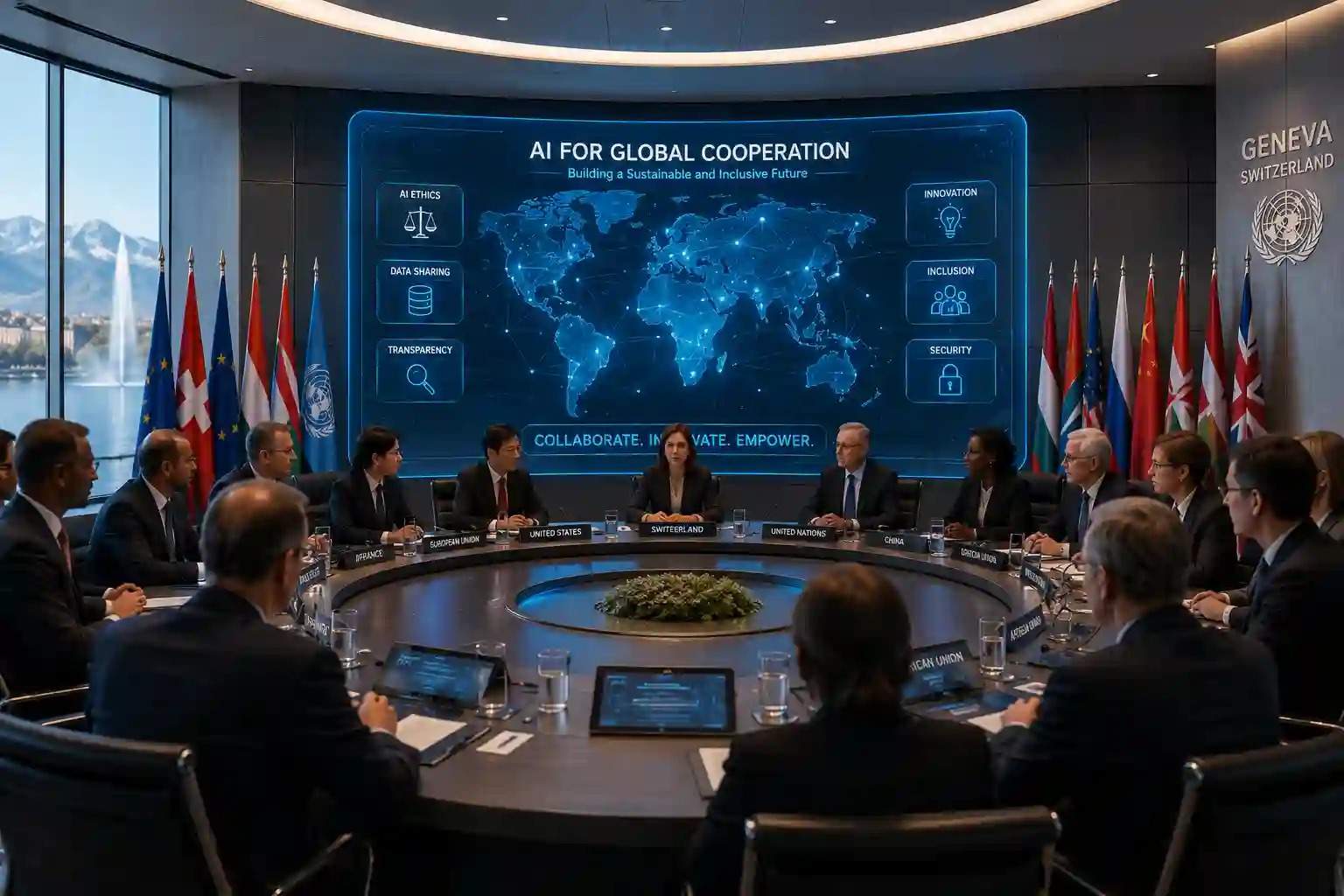
The Geneva Accord serves as the foundational architecture for international harmony in the digital age. By establishing clear boundaries for artificial intelligence, the treaty seeks to prevent the uncontrolled proliferation of dangerous algorithmic systems.
Diplomats and technologists collaborated to ensure that the framework addresses both current capabilities and future possibilities. This proactive approach is designed to mitigate risks before they manifest into unmanageable global crises or conflicts.
The agreement emphasizes the necessity of human oversight in all decision-making processes involving lethal force. This principle ensures that accountability remains a human responsibility, regardless of how advanced the underlying technology becomes over time.
Furthermore, the treaty promotes a culture of shared responsibility among signatory nations. By aligning national interests with global safety standards, the accord creates a unified front against the potential misuse of artificial intelligence.
Ultimately, the framework for peace is a testament to the power of multilateralism. It demonstrates that nations can come together to address complex, borderless challenges that threaten the stability of the entire international community.
Defining Red Lines for Autonomous Systems
The treaty explicitly defines "red lines" that no sovereign state or private entity should cross. These boundaries are primarily focused on the development and deployment of fully autonomous weapon systems without human intervention.
By categorizing certain AI applications as inherently dangerous, the accord provides a clear roadmap for developers. This clarity helps prevent accidental escalations that could arise from the opaque nature of complex machine learning models.
The definition of these red lines involved rigorous technical analysis and ethical deliberation. Experts from various fields contributed to a comprehensive list of prohibited activities, ensuring that the treaty is both robust and practical.
Signatory nations have agreed to dismantle any existing projects that violate these established boundaries. This commitment reflects a serious dedication to maintaining global security and upholding the ethical standards set forth in Geneva.
As technology evolves, the treaty includes provisions for periodic reviews of these red lines. This ensures that the framework remains relevant as new capabilities emerge in the rapidly advancing field of artificial intelligence.
Inspection Protocols for Data Centers
To ensure compliance, the Geneva Accord introduces unprecedented inspection protocols for high-compute data centers. These facilities are the engines of modern AI, and their oversight is crucial for maintaining international trust.
Inspectors will have the authority to verify the hardware configurations and energy consumption patterns of these centers. This data-driven approach allows for the detection of unauthorized large-scale model training without compromising proprietary software.
The treaty utilizes a specific mathematical threshold to define "high-compute" facilities. This threshold is calculated based on the total processing power available within a single logical network, often expressed through the following expression:
These inspections are designed to be non-intrusive yet effective in verifying that no nation is secretly developing prohibited systems. The transparency gained through this process is vital for regional and global stability.
Data center operators must now maintain detailed logs of their computational activities for review. This requirement encourages a culture of transparency and accountability within the private sector, aligning corporate goals with international safety.
Multilateralism in the Digital Age
The signing of this treaty marks a significant shift in how multilateralism functions in the twenty-first century. Traditional diplomacy is now evolving to include technical standards and algorithmic governance as core components.
Nations are recognizing that digital threats do not respect physical borders, necessitating a collaborative response. The Geneva Accord is the first major step toward a comprehensive global digital governance structure that works.
This new form of multilateralism involves not just diplomats, but also computer scientists, ethicists, and industry leaders. This multi-stakeholder approach ensures that the policies enacted are technically feasible and socially responsible for all.
By pivoting from trade-centric negotiations to existential risk management, the international community is prioritizing long-term survival. This strategic shift reflects a maturing understanding of the profound impact technology has on global power dynamics.
The success of the Geneva Accord will likely serve as a model for future international agreements. It proves that even in a polarized world, common ground can be found when facing shared technological risks.
Ethical Standards for High-Compute Models
The treaty establishes a set of ethical standards that all high-compute models must satisfy before deployment. These standards focus on fairness, transparency, and the reduction of algorithmic bias in critical decision-making systems.
Developers are now required to conduct thorough impact assessments for any model exceeding the defined compute threshold. These assessments must be shared with the inspection body to ensure that ethical risks are mitigated.
The ethical framework also addresses the environmental impact of large-scale AI training. Signatory nations are encouraged to transition their data centers to renewable energy sources to align with global sustainability goals.
By standardizing these ethical requirements, the treaty levels the playing field for global tech firms. Innovation is no longer a race to the bottom, but a competition to build the most responsible systems.
The integration of ethics into the core of AI development ensures that technology serves humanity. This alignment is essential for maintaining public trust and fostering the widespread adoption of beneficial artificial intelligence.
Global Security Shifts
The Global AI Treaty has triggered a fundamental shift in the landscape of international security. By prioritizing transparency, major powers are reducing the likelihood of accidental military escalations driven by algorithmic errors.
Security architectures are being redesigned to incorporate the treaty’s mandates on verifiable AI. This shift moves away from secretive arms races toward a more open and collaborative approach to technological defense.
The reduction in uncertainty regarding rival nations' AI capabilities fosters a more stable geopolitical environment. When nations can verify each other's compliance, the incentive for preemptive strikes or aggressive posturing significantly decreases.
This shift also influences how intelligence agencies operate, focusing more on technical verification than traditional espionage. The treaty provides a legal framework for sharing certain types of technical data to ensure mutual security.
Ultimately, the global security shift driven by the Geneva Accord promotes a "trust but verify" philosophy. This approach is essential for navigating the complexities of the digital age without falling into old patterns.
Transparency Protocols and Escalation Risk
Transparency is the cornerstone of the Geneva Accord’s strategy to reduce escalation risk. By requiring nations to disclose certain aspects of their AI research, the treaty minimizes the "black box" problem.
Escalation often occurs due to a lack of information about an adversary's true capabilities or intentions. The transparency protocols established in Geneva provide a steady stream of reliable information to all signatory nations.
These protocols include the notification of large-scale compute acquisitions and the sharing of safety research. Such measures ensure that no single actor can achieve a sudden, destabilizing technological advantage without others knowing.
The treaty also establishes a direct communication line between national AI safety centers. This "hotline" allows for the rapid clarification of technical anomalies, preventing them from being misinterpreted as hostile actions or threats.
By managing the risks associated with rapid technological change, the transparency protocols protect global peace. They provide the necessary friction to slow down impulsive reactions and encourage thoughtful, data-driven diplomatic responses.
Military AI Research and Development
The treaty places significant constraints on the direction of military artificial intelligence research and development. While it does not ban military AI entirely, it redirects efforts toward defensive and non-lethal applications.
Signatory nations have agreed to halt the development of autonomous systems capable of selecting and engaging targets independently. This shift represents a major victory for advocates of human-centric warfare and international law.
Research is now being channeled into areas such as logistics, medical support, and defensive cyber-operations. These applications leverage the power of AI to save lives rather than facilitate more efficient destruction.
We Also Published
The impact on defense budgets is already becoming apparent as funds are reallocated. Investments are moving away from kinetic autonomous weapons and toward advanced simulation and verification tools for treaty compliance.
This redirection of military R&D fosters a more stable global order by reducing the lethality of potential conflicts. It ensures that the most dangerous aspects of AI are kept under strict international supervision and control.
Collaborative Security Architectures
The Geneva Accord encourages the formation of collaborative security architectures that transcend traditional alliances. Nations are now working together to build shared tools for monitoring and verifying AI safety across the globe.
These architectures include joint research initiatives focused on making AI systems more interpretable and robust. By sharing technical breakthroughs, the international community can raise the safety bar for everyone, regardless of nationality.
Collaborative security also involves the creation of international standards for AI incident reporting. This ensures that when a system fails, the lessons learned are shared globally to prevent similar occurrences elsewhere.
The treaty facilitates the exchange of experts between nations to foster mutual understanding and technical cooperation. This human-to-human connection is vital for building the trust necessary to sustain long-term international agreements.
By building a collective defense against algorithmic risks, the global community is becoming more resilient. These collaborative structures provide a safety net that protects all nations from the unintended consequences of AI.
De-escalation Through Technical Verifiability
Technical verifiability is a key innovation of the Global AI Treaty, providing a scientific basis for de-escalation. When compliance can be mathematically proven, the need for aggressive posturing or suspicion is greatly reduced.
The treaty promotes the development of "verifiable AI," where the properties of a system can be formally checked. This allows nations to demonstrate that their models do not possess prohibited or dangerous capabilities.
Verifiability is achieved through a combination of hardware-level monitoring and advanced software analysis tools. These technical measures provide a high degree of confidence that the terms of the treaty are being honored.
In moments of international tension, the ability to provide technical proof of compliance is invaluable. It offers a clear, objective path to de-escalation that is independent of political rhetoric or shifting national sentiments.
The focus on verifiability represents a move toward a more rational and evidence-based form of international relations. It utilizes the tools of science to solve the problems created by the rapid advancement of technology.
- 01
- 02
- 03
- 04
Economic Repercussions and Market Stability
The economic impact of the Geneva Accord is profound, reshaping the global technology market. While compliance costs are expected to rise, the overall stability of the market is likely to improve significantly.
Investors are responding with cautious optimism to the new regulatory environment, as it provides a clearer long-term outlook. The reduction in existential risk makes the tech sector a more predictable and attractive investment.
The treaty also creates new markets for compliance tools and ethical AI auditing services. This burgeoning industry is expected to grow rapidly as firms scramble to align their operations with the Geneva standards.
Market stability is further enhanced by the standardization of innovation pathways across different jurisdictions. Companies can now develop products with the confidence that they will meet international requirements, reducing legal uncertainty.
While some smaller firms may struggle with the initial costs of compliance, the long-term benefits are clear. A stable, ethical, and well-regulated market fosters sustainable growth and protects the interests of all stakeholders.
Compliance Costs for Technology Giants
For the world’s largest technology companies, the Geneva Accord introduces significant new compliance costs. These firms must invest in sophisticated monitoring systems and hire dedicated teams to oversee their AI development.
The requirement to audit entire AI stacks for Geneva compliance is a massive undertaking for companies with complex architectures. Every layer of the stack, from hardware to the final model, must be verified.
Despite these costs, many tech giants are embracing the treaty as a way to avoid a fragmented regulatory landscape. A single global standard is often preferable to a patchwork of conflicting national laws and regulations.
The financial burden of compliance is also being viewed as a necessary investment in corporate reputation. Companies that can demonstrate a commitment to ethical AI are likely to gain a competitive advantage.
Over time, these compliance costs are expected to stabilize as the industry develops more efficient auditing tools. The initial investment will pave the way for a more responsible and sustainable technology sector.
Ethical Tech Investment Surges
The signing of the treaty has sparked a surge in investment toward ethical technology and responsible AI. Capital is flowing into companies that prioritize safety, transparency, and human-centric design in their products.
Venture capitalists are increasingly using the Geneva Accord as a benchmark for evaluating potential investments in the AI space. Startups that cannot demonstrate compliance are finding it much harder to secure necessary funding.
This shift in investment patterns is accelerating the development of beneficial AI applications in healthcare, education, and climate science. The focus is moving away from high-risk algorithms toward those that solve societal problems.
The surge in ethical tech investment is also driving innovation in the field of algorithmic fairness. New techniques are being developed to identify and mitigate bias, making AI systems more equitable for everyone.
By rewarding responsible innovation, the market is aligning itself with the goals of the Geneva Accord. This synergy between profit and ethics is essential for the long-term success of the global AI treaty.
Standardized Innovation Pathways
The Geneva Accord provides a standardized set of innovation pathways that help guide the development of new technologies. These pathways ensure that progress is made in a way that is consistent with global safety.
By defining what constitutes "safe" innovation, the treaty reduces the risk of companies wasting resources on prohibited technologies. This clarity allows for a more efficient allocation of research and development budgets worldwide.
Standardization also facilitates international collaboration on large-scale AI projects that require resources from multiple nations. When everyone follows the same rules, it is much easier to share data and technical expertise.
The treaty encourages the adoption of open-source safety tools and benchmarks to ensure a level playing field. This openness prevents a few dominant players from monopolizing the "safe" AI market and stifling competition.
Ultimately, standardized innovation pathways foster a more vibrant and diverse technological ecosystem. They ensure that the benefits of artificial intelligence are shared broadly across the global community, rather than concentrated.
Global Market Stability and Future Growth
In the long run, the Global AI Treaty is expected to contribute to significant market stability and future growth. By mitigating the risks of catastrophic AI failure, the accord protects the global economy.
The stability provided by the treaty allows businesses to plan for the future with greater confidence and certainty. This long-term perspective is essential for the sustained growth of the technology sector and beyond.
As the international community becomes more comfortable with the governance of AI, the pace of adoption will likely increase. Trusted technology is more likely to be integrated into critical infrastructure and essential public services.
The treaty also paves the way for new international trade agreements focused on digital goods and services. By establishing a baseline of trust, the Geneva Accord facilitates the free flow of ethical AI.
The future of the global economy is inextricably linked to the responsible development of artificial intelligence. The Geneva Accord provides the necessary foundation for a prosperous and secure digital future for all nations.
From our network :
- Former Soap Stars Embark on Ambitious Writing Projects and Theatrical StagesDiscover how former soap opera actors are transitioning into independent scriptwriting and high-profile theatrical stage productions.
- How AI Agents Will Change the Way We Manage Personal FinancesExplore how AI agents are transforming personal finance through automated budgeting, bill payment, and investment management, while examining the critical security protocols and governance frameworks required for safe deployment.
- Norbert’s Uncertain Path: Why Hawaii’s Storm Watch Demands Patience Over PanicTropical Storm Norbert strengthens in the Eastern Pacific with winds near 50 mph, forecast to reach Category 1 hurricane status by Friday. Long-range models disagree sharply on whether Hawaii faces any threat around September 19–23, making official guidance essential.
- Analyzing Hoya Corporation’s Midday Volume Shifts and Financial FundamentalsExamine Hoya Corporation’s midday trading volume contraction, technical moving averages, robust solvency ratios, and stellar quarterly earnings performance.
- The Hidden Cost of AI Convenience: Why Over-Permissioned Agents Are a Security Time BombDiscover why AI agents with excessive permissions create dangerous single points of failure, and learn how implementing least privilege principles can protect your organization from exploitation.
- CISA’s Ten-Advisory Wave: Why Generic Patching Fails in OT and How to Build Product-Specific PlaybooksCISA released ten ICS advisories in one week, exposing critical infrastructure risks. Generic patching fails in OT. Learn to build product-specific remediation playbooks.
- The Final Descent: How ESA Retired the Legendary Cluster Constellation After 24 Years of Space Weather ScienceAfter 24 years mapping Earth’s magnetosphere, ESA’s Cluster mission concluded with a precisely controlled reentry over the South Pacific. This analysis explores the scientific legacy, engineering decisions, and debris mitigation principles behind one of space exploration’s most responsible retirements.
- Committed Mediterranean Precipitation Decline: Why Emissions Cuts Alone Cannot Restore Winter RainsNew NOAA research reveals that Mediterranean winter rains may decline irreversibly even with emissions cuts. Explore the science of committed climate change and regional impacts.
- Forbidden Matrix Patterns and Visible Lattice Points: A Geometric DictionaryExplore how multidimensional 0–1 matrices encode geometric truths, linking forbidden patterns to visible lattice points and hypergraph theory, with applications in combinatorics and computational geometry.
RESOURCES
- The Framework Convention on Artificial Intelligencecoe.intIt aims to ensure that activities within the lifecycle of artificial intelligence systems are fully consistent with human rights, democracy and the rule of…
- Global Conference on AI, Security and Ethics 2026 - UNIDIRunidir.orgNon-Proliferation Treaty Review Conference ... The conference will be held consecutively to the 2026 informal exchanges on AI in the military domain in Geneva, ...
- Summit 26 - Unlock AI's potential to serve humanityaiforgood.itu.intAttending the AI for Good Global Summit in Geneva means immersing yourself in a city at the heart of international cooperation. The iconic Palexpo…
- Global Conference on AI, Security and Ethics 2025 - UNIDIRunidir.orgMar 28, 2025 ... The inaugural UNIDIR's Global Conference on AI, Security and Ethics (#AISE25) provided a unique forum for the diplomatic ecosystem in…
- Global Dialogue on AI Governance - the United Nationsun.orgMay 5, 2026 ... ... AI Governance will be held on 6 and 7 July 2026 in Geneva. A second session will follow in…
- What the UN Global Dialogue on AI Governance Reveals About ...csis.orgOct 7, 2025 ... Governments and other stakeholders will convene annually—starting at the 2026 AI for Good Global Summit in Geneva—to discuss the safe ...
- Artificial Intelligence (AI) - the United Nationsun.orgIt aims to establish an Independent International Scientific Panel on AI and foster a Global Dialogue on AI Governance. ... Geneva · Nairobi ·…
- United Nations AI Resolution: a Significant Global Policy Effort to ...executive.graduateinstitute.chMay 6, 2024 ... GENEVA GRADUATE INSTITUTE ... The Council of Europe (CoE), a 46-member human rights body, has also agreed on a draft…
- International AI Treaty - Center for AI and Digital Policycaidp.orgCouncil of Europe opens first ever global treaty on AI for signature (5 September 2024). The Council of Europe Framework Convention on artificial intelligence ...
- Child rights and AI: CRC adopts first global framework with partnersohchr.orgGENEVA – The UN Child Rights Committee (CRC) has joined force with UN ... Statements and speeches Treaty bodies. Child rights and AI: CRC…
- Biological Weapons Convention -Working Group on the ...meetings.unoda.org... Convention will take place from 8 to 12 December 2025 in Geneva, Switzerland. ... AI and Existential Risks), METO (Middle East Treaty Organization)…
- Negotiate more effectively with AI - GIZgiz.deAug 14, 2025 ... More than 160 countries were recently in negotiations in Geneva on a global plastics treaty. The treaty is important for…
- UN Global Dialogue on AI Governance in Geneva - LinkedInlinkedin.comMay 1, 2026 ... The UN's Global Dialogue on AI Governance opens its first session in Geneva this July, as the first universal forum…
- An international treaty to implement a global compute cap for ... - arXivarxiv.orgSep 28, 2025 ... Here we present a draft of an international treaty that would implement a global moratorium on dangerous AI development. ...…
- UAE and US Strengthen AI Partnership with $1.4 Trillion Investment ...linkedin.comApr 7, 2026 ... ... global AI treaty, a “Digital Geneva Convention”? ▶️ Why AI needs global rules AI systems today can: - influence…
- 01
- 02
- 03
- 04
- 05
- 06
- 07
- 08
0 Comments