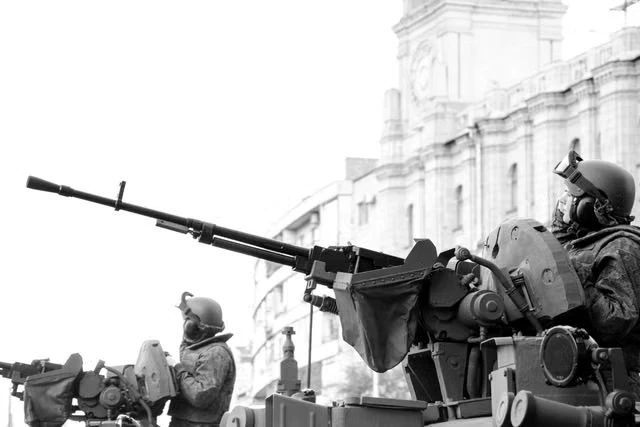
Iran’s declared pivot from a defensive military doctrine toward a “fully offensive” posture marks one of the most consequential strategic signals in the Middle East since the 2023 Gaza war.
A senior Iranian official told Reuters on August 17 that Tehran could shift to offensive operations if nuclear negotiations with Washington collapse, with the Strait of Hormuz explicitly named as a potential theater of escalation.
This is not diplomatic hyperbole; it is a calculated recalibration of threat perception designed to alter the risk calculus of every navy, insurer, and energy trader operating in the Persian Gulf.
On This Page
- Deconstructing Iran’s Strategic Doctrine Shift
- Economic and Geopolitical Shockwaves of Hormuz Escalation
- Strategic Scenarios and the Path Forward
- Scenario Analysis: From Diplomacy to Conflict
- Indicators to Monitor for Escalation or De-escalation
- Policy Recommendations for De-escalation
- Iranian Military Capability Assessment
- Hormuz Disruption Impact Matrix
- Escalation Indicator Dashboard
- Global Energy Transit Alternatives
- Historical Escalation Precedents
- Stakeholder Response Matrix
The distinction between defensive and offensive military doctrine is not semantic. Defensive postures signal restraint, deterrence, and a preference for territorial integrity, while offensive postures imply preemptive capability, power projection, and a willingness to strike beyond borders.
When a state publicly announces such a shift, it is simultaneously communicating with domestic audiences, regional adversaries, global markets, and its own military command structure. The announcement’s timing—mid-August, ahead of the US election cycle and during fragile nuclear talks—suggests a deliberate effort to maximize diplomatic leverage while preparing operational contingencies.
For analysts, the challenge lies in separating genuine military signaling from negotiating theater. A threat to close the Strait of Hormuz, through which roughly 20% of global oil consumption transits daily, carries immense economic weight.
Yet the credibility of that threat depends on Iran’s actual naval capabilities, its willingness to absorb retaliatory strikes, and its assessment of Chinese and Russian support. This analysis dissects the strategic logic, operational indicators, and market implications of Iran’s rhetorical escalation, providing a framework for interpreting what “fully offensive” actually means in practice.
TL;DR Iran’s threat to shift from defensive to offensive military posture, explicitly targeting the Strait of Hormuz, represents a strategic escalation designed to pressure the US in nuclear negotiations. The announcement blends genuine military signaling with diplomatic theater, creating significant uncertainty for global energy markets, regional navies, and commercial shipping. Analysts must distinguish between rhetorical posturing and verifiable operational indicators, including naval deployments, missile readiness, and drone capabilities. The economic stakes are enormous, with Hormuz transit accounting for roughly one-fifth of global oil consumption. Understanding Iran’s decision calculus requires examining its domestic political pressures, regional alliances, and the credibility of its military threats against the backdrop of failed diplomacy.
Deconstructing Iran’s Strategic Doctrine Shift
Iran’s military doctrine has historically emphasized asymmetric defense, leveraging missile systems, naval mines, and proxy forces to deter conventional invasion. The shift toward offensive posture signals a fundamental reassessment of that strategy, driven by perceived failures of defensive deterrence and the need for proactive leverage.
The Historical Context of Iranian Military Doctrine
Since the 1980-88 Iran-Iraq War, Tehran has prioritized territorial defense and strategic depth. The Revolutionary Guard Corps (IRGC) developed a doctrine of “forward defense,” projecting power through proxies in Lebanon, Syria, Iraq, and Yemen. This approach allowed Iran to fight beyond its borders without committing conventional forces.
The 2020 assassination of General Qassem Soleimani exposed the limits of defensive posturing. A purely reactive strategy left Iran vulnerable to precision strikes on its senior commanders and nuclear facilities. The shift toward offensive capability represents a doctrinal response to these vulnerabilities, emphasizing preemptive options rather than retaliation alone.
Iran’s ballistic missile program, now among the most advanced in the region, provides the backbone of any offensive capability. With systems like the Sejjil and Khorramshahr, Iran can strike targets across the Middle East, including US bases in Qatar, Bahrain, and the UAE. The credible threat of such strikes changes the strategic calculus for any potential aggressor.
Domestic political dynamics also drive this shift. Hardline factions within the IRGC view negotiations as a sign of weakness and advocate for a more assertive posture. The announcement serves domestic audiences, reinforcing the regime’s revolutionary credentials while distracting from economic hardship caused by sanctions.
What “Fully Offensive” Means in Operational Terms
An offensive posture does not necessarily mean immediate invasion or territorial expansion. For Iran, it likely translates into several concrete operational changes: increased naval patrols in the Strait of Hormuz, deployment of additional missile boats, and the activation of previously dormant drone capabilities.
The IRGC Navy operates a fleet of fast attack craft designed for swarm tactics, capable of overwhelming larger naval vessels through sheer numbers. These boats, armed with anti-ship missiles and torpedoes, could disrupt shipping lanes without requiring a formal blockade. The threat alone could spike insurance premiums and reroute tankers.
Iran’s mining capabilities represent another offensive tool. The IRGC has demonstrated the ability to lay naval mines covertly, a tactic that could close the Strait of Hormuz without a single shot fired. Mines are cheap, difficult to detect, and create disproportionate economic disruption, making them an attractive asymmetric option.
Cyber operations and drone attacks on Gulf infrastructure, including desalination plants and oil terminals, could extend Iran’s offensive reach beyond the maritime domain. These attacks offer plausible deniability while inflicting significant economic damage, complicating any US or allied response.
Negotiating Leverage Versus Genuine Military Intent
The timing of the announcement, coinciding with stalled nuclear talks, strongly suggests a negotiating strategy. By raising the specter of Hormuz closure, Iran seeks to increase the cost of diplomatic failure for the US and its allies, potentially forcing concessions on sanctions relief.
However, the threat carries genuine risk. A miscalculation could trigger a US military response, escalating into a conflict Iran cannot win. The regime’s survival depends on avoiding direct confrontation with US forces, creating a tension between rhetorical escalation and operational restraint.
Historical precedent offers mixed signals. In 2019, Iran shot down a US drone and attacked Saudi oil facilities at Abqaiq, demonstrating willingness to escalate. Yet Tehran carefully calibrated these actions to avoid triggering a full-scale war, suggesting a pattern of controlled escalation rather than reckless aggression.
Analysts should monitor specific indicators to distinguish bluff from intent: mobilization of reserve forces, relocation of missile batteries, increased IRGC naval exercises, and diplomatic messaging to China and Russia. Absent these operational signals, the offensive posture remains primarily a negotiating tool.
Economic and Geopolitical Shockwaves of Hormuz Escalation
The Strait of Hormuz is the world’s most critical energy chokepoint, carrying roughly 20 million barrels of oil per day, about one-fifth of global consumption. Any credible threat to this waterway immediately impacts oil prices, shipping insurance, and global supply chains, creating economic consequences that extend far beyond the region.
Energy Markets and the Price of Uncertainty
Oil markets react swiftly to geopolitical risk, and the Hormuz threat has already contributed to price volatility. Brent crude typically spikes 5-10% on credible threats to the strait, with sustained disruptions potentially pushing prices toward $120 per barrel or higher.
Insurance premiums for tankers transiting the strait would rise dramatically, potentially adding $1-2 per barrel to shipping costs. War risk premiums, already elevated in the region, could double or triple, making alternative supply routes more attractive despite their higher logistical costs.
Strategic petroleum reserves provide a buffer against short-term disruptions. The US Strategic Petroleum Reserve holds approximately 400 million barrels, while China and India maintain significant commercial reserves. These stockpiles could cover several months of reduced Hormuz flows, mitigating immediate supply shocks.
Long-term implications include accelerated investment in alternative energy sources and non-Gulf oil supplies. The US shale industry, Brazilian offshore fields, and Canadian oil sands become more competitive when Gulf supply is threatened, reshaping global energy investment patterns.
Regional Naval Dynamics and the Risk of Miscalculation
The US Fifth Fleet, based in Bahrain, maintains a significant presence in the Gulf, including aircraft carriers, destroyers, and submarines. Any Iranian offensive operation would face overwhelming US naval superiority, making direct confrontation a losing proposition for Tehran.
However, asymmetric tactics could complicate US responses. Swarm attacks, mines, and anti-ship missiles could inflict casualties and damage without achieving decisive victory, creating a political challenge for US leadership facing domestic pressure to avoid prolonged conflicts.
Regional navies, including Saudi Arabia, the UAE, and Israel, would likely coordinate with US forces in any response. The Gulf Cooperation Council states have invested heavily in naval capabilities, though their primary focus remains territorial defense rather than power projection.
China’s growing naval presence in the region adds another layer of complexity. Beijing maintains a naval base in Djibouti and conducts regular anti-piracy patrols, giving it a stake in Gulf stability. Chinese mediation efforts could provide a diplomatic off-ramp, though its alignment with Iran complicates any US-led response.
Commercial Shipping and Global Supply Chain Vulnerabilities
Beyond oil, the Strait of Hormuz carries liquefied natural gas, refined products, and containerized cargo. Qatar, the world’s largest LNG exporter, ships nearly all its production through the strait, making any disruption a direct threat to global gas supplies.
Shipping companies would face difficult decisions: reroute around the Cape of Good Hope, adding 10-14 days to transit times, or accept elevated risk and insurance costs. Rerouting increases fuel consumption, emissions, and delivery times, disrupting just-in-time supply chains across Asia and Europe.
The Suez Canal offers an alternative route for some cargo, though its capacity is limited and its own geopolitical vulnerabilities were exposed by the 2021 Ever Given blockage. Infrastructure investments in pipelines, including the Saudi East-West pipeline and the UAE’s Habshan-Fujairah line, provide partial redundancy but cannot fully replace Hormuz capacity.
Global supply chain resilience depends on maintaining multiple transit options. The threat to Hormuz accelerates investments in pipeline infrastructure, strategic storage, and alternative shipping routes, though these projects require years and billions in capital to complete.
We Also Published
Strategic Scenarios and the Path Forward
Iran’s offensive posture creates a spectrum of possible outcomes, ranging from diplomatic resolution to full-scale conflict. Understanding these scenarios helps policymakers, investors, and analysts prepare for contingencies while identifying opportunities for de-escalation.
Scenario Analysis: From Diplomacy to Conflict
The most likely scenario involves continued diplomatic engagement with periodic military signaling. Iran uses the offensive threat as leverage while avoiding actions that would trigger US retaliation, maintaining a delicate balance between pressure and restraint.
A moderate escalation scenario would involve limited Iranian actions: harassment of shipping, cyber attacks on Gulf infrastructure, or missile tests near US vessels. These actions raise tensions without crossing the threshold of open conflict, keeping negotiations alive while increasing pressure.
A severe escalation scenario, involving actual mining of the strait or attacks on US naval vessels, would likely trigger a US military response. The resulting conflict could involve strikes on Iranian nuclear facilities, naval assets, and command centers, with unpredictable regional consequences.
The least likely scenario is a full-scale Iranian offensive against US forces, which would be strategically irrational given the military imbalance. Iran’s leadership understands this reality, making such an outcome improbable absent a catastrophic miscalculation.
Indicators to Monitor for Escalation or De-escalation
Analysts should track several key indicators to assess the credibility of Iran’s offensive posture. IRGC naval deployments, particularly the positioning of fast attack craft and submarines, provide the most direct evidence of operational intent.
Missile readiness is another critical indicator. Relocation of ballistic missile batteries, increased testing activity, and activation of underground missile facilities suggest preparation for offensive operations. Satellite imagery and signals intelligence can detect these movements.
Diplomatic signals from China and Russia matter significantly. If Moscow and Beijing publicly support Iran’s position, Tehran gains confidence to escalate. Conversely, pressure from these allies to de-escalate could moderate Iranian behavior.
Economic indicators, including oil price volatility, shipping insurance rates, and tanker rerouting patterns, provide real-time market assessments of threat credibility. Sustained elevated risk premiums suggest markets take the threat seriously.
Policy Recommendations for De-escalation
De-escalation requires addressing Iran’s underlying security concerns while maintaining credible deterrence. The US should offer a clear diplomatic pathway, including sanctions relief tied to verifiable nuclear compliance, while signaling the consequences of offensive action.
Regional engagement through the Gulf Cooperation Council could provide a framework for confidence-building measures. Maritime security agreements, hotlines between naval commanders, and joint exercises could reduce the risk of accidental escalation.
Economic incentives, including investment in Iranian infrastructure and energy projects, could provide Tehran with tangible benefits for restraint. However, such incentives must be carefully structured to avoid legitimizing offensive behavior or undermining sanctions enforcement.
Ultimately, the path forward requires recognizing that Iran’s offensive posture is both a threat and an opportunity. The threat demands preparedness; the opportunity lies in addressing the security dilemmas that drive Iranian behavior, potentially achieving a more stable regional order.
From our network :
- Committed Mediterranean Precipitation Decline: Why Emissions Cuts Alone Cannot Restore Winter RainsNew NOAA research reveals that Mediterranean winter rains may decline irreversibly even with emissions cuts. Explore the science of committed climate change and regional impacts.
- Norbert’s Uncertain Path: Why Hawaii’s Storm Watch Demands Patience Over PanicTropical Storm Norbert strengthens in the Eastern Pacific with winds near 50 mph, forecast to reach Category 1 hurricane status by Friday. Long-range models disagree sharply on whether Hawaii faces any threat around September 19–23, making official guidance essential.
- The Final Descent: How ESA Retired the Legendary Cluster Constellation After 24 Years of Space Weather ScienceAfter 24 years mapping Earth’s magnetosphere, ESA’s Cluster mission concluded with a precisely controlled reentry over the South Pacific. This analysis explores the scientific legacy, engineering decisions, and debris mitigation principles behind one of space exploration’s most responsible retirements.
- CISA’s Ten-Advisory Wave: Why Generic Patching Fails in OT and How to Build Product-Specific PlaybooksCISA released ten ICS advisories in one week, exposing critical infrastructure risks. Generic patching fails in OT. Learn to build product-specific remediation playbooks.
- Former Soap Stars Embark on Ambitious Writing Projects and Theatrical StagesDiscover how former soap opera actors are transitioning into independent scriptwriting and high-profile theatrical stage productions.
- The Hidden Cost of AI Convenience: Why Over-Permissioned Agents Are a Security Time BombDiscover why AI agents with excessive permissions create dangerous single points of failure, and learn how implementing least privilege principles can protect your organization from exploitation.
- How AI Agents Will Change the Way We Manage Personal FinancesExplore how AI agents are transforming personal finance through automated budgeting, bill payment, and investment management, while examining the critical security protocols and governance frameworks required for safe deployment.
- Analyzing Hoya Corporation’s Midday Volume Shifts and Financial FundamentalsExamine Hoya Corporation’s midday trading volume contraction, technical moving averages, robust solvency ratios, and stellar quarterly earnings performance.
- Forbidden Matrix Patterns and Visible Lattice Points: A Geometric DictionaryExplore how multidimensional 0–1 matrices encode geometric truths, linking forbidden patterns to visible lattice points and hypergraph theory, with applications in combinatorics and computational geometry.
RESOURCES
- Iran threatens new offensive while US rules out extending ceasefire ...reuters.com1 day ago ... Iran will shift to a "fully offensive" military posture as peace talks have stalled, an Iranian official said.
- Iran signals readiness for 'US ground operations' as strategy shifts ...aljazeera.com1 day ago ... Iran's more offensive posture follows Trump's comment that the US would soon make the Strait of Hormuz its territory.
- Iran Rewrites Its War Strategycarnegieendowment.orgMar 30, 2026 ... ... strategic equation in which the threshold for attacking Iran has been raised. ... Hormuz, has improved its bargaining position.…
- How Iran Rewrote Its War Strategy - by Hamidreza Aziziirananalytica.orgMar 25, 2026 ... The Islamic Republic's military doctrine, he said, had shifted from a defensive posture to an offensive one. For decades, Iranian…
- Trump signals shift to economic pressure as Iran hardens Hormuz ...cnbc.comAug 10, 2026 ... ... Iran, backing away from a renewed military offensive. Iranian strikes in Hormuz and Houthi attacks in the Red Sea…
- US vows 'indefinite' blockade as Iran signals offensive postureiranintl.com5 days ago ... ... strategic victory against Washington over the Strait of Hormuz. ... His assertion of “total control” over Hormuz and threat…
- Iran has warned it could shift to a “fully offensive” military posture as ...instagram.com14 hours ago ... Iran's Foreign Ministry stated that the strategic Strait of Hormuz cannot be considered safe as long as hostile actions by…
- Iran will shift to a "fully offensive" military posture because efforts to ...facebook.com14 hours ago ... Outward progress towards peace talks and a resumption of oil tanker traffic through the strategic Strait of Hormuz has ground…
- Five Things to Know About Iranian Minelaying - Stimson Centerstimson.orgMar 23, 2026 ... ... Hormuz — the world's most important strategic ... The answer says less about Iran's military strength than it does…
- #FMTWorld Iran will shift to a “fully offensive” military ... - Instagraminstagram.com18 hours ago ... Progress towards peace talks and a resumption of oil tanker traffic through the strategic Strait of Hormuz has ground to…
- Trump says U.S. will help 'guide' stranded ships from Strait of ... - PBSpbs.orgMay 3, 2026 ... Iran denied an attack, the semiofficial Iranian ... Trump orders U.S. military to 'shoot and kill' Iranian small boats choking…
- Iran's War Strategy: Don't Calibrate—Escalate - CSIScsis.orgMar 16, 2026 ... Possibly in response to Iran's attempts to mine the Strait of Hormuz, the attack signals U.S. willingness to target the…
- Iran general warns of 'offensive' military posture, strategic surprises ...gulfnews.com2 days ago ... General Yadollah Javani warned that Iran's military posture could shift from defensive to offensive, telling state broadcaster IRIB that ...
- Iran's Strait of Hormuz Gambit and the Limits of U.S. Military Powercsis.orgApr 20, 2026 ... Strategy and Statecraft · Warfare, Irregular Threats, and Terrorism ... position. Divergences between U.S. and Israeli priorities further ...
- Trump continues to shift course on Strait of Hormuz strategy ... - PBSpbs.orgMar 22, 2026 ... "Trump has no plan to reopen the Strait of Hormuz, so he is threatening to attack Iran's civil power plants,"…
- 01
- 02
- 03
- 04
- 05
- 06
- 07
- 08
0 Comments