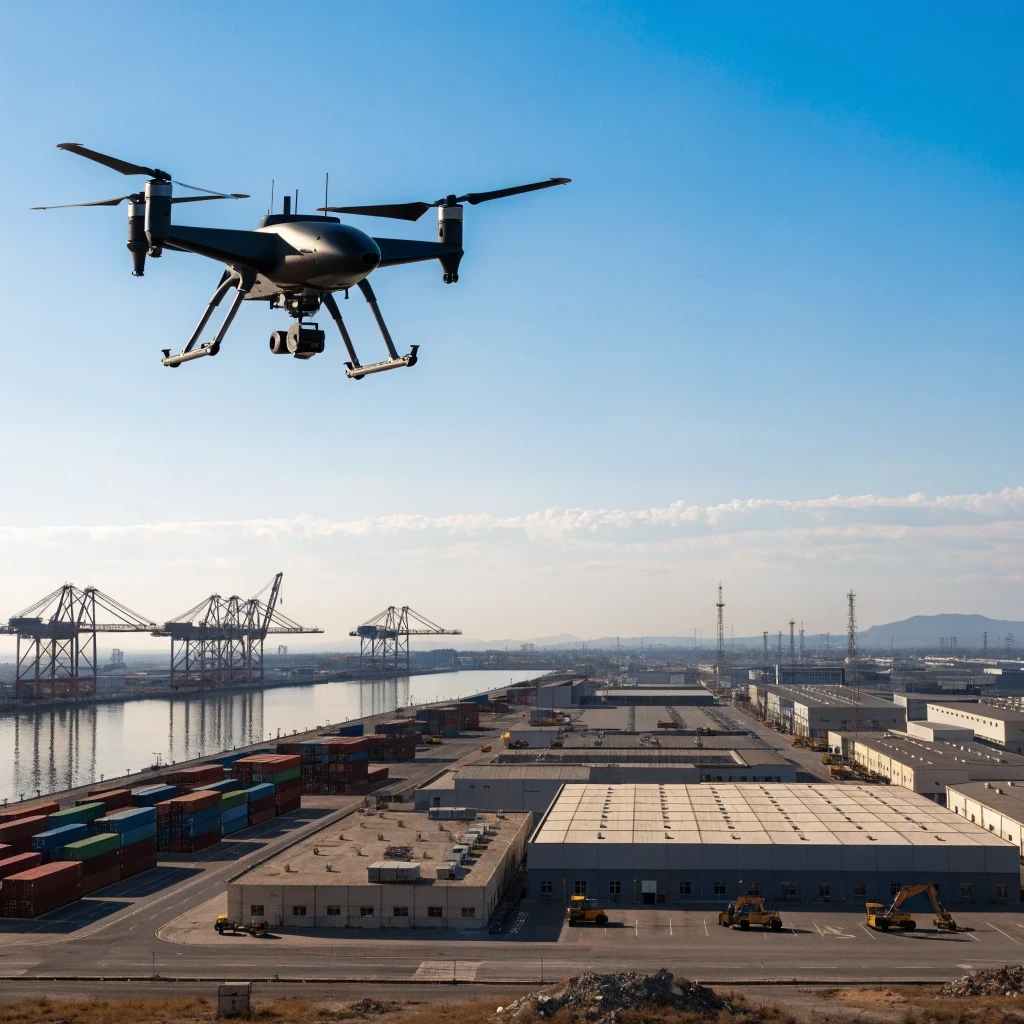
The drone has become the unlikely spearhead of a new economic cold war. When Washington slapped fresh import tariffs on Chinese unmanned aerial vehicles, Beijing did not hesitate. Within days, China retaliated with export restrictions and corporate blacklists, transforming a niche trade dispute into a defining moment for global technological order.
This is not merely about quadcopters or surveillance hardware. The escalating exchange signals that semiconductors, batteries, and advanced manufacturing have become the true currency of geopolitical power. Both superpowers now treat every component, every patent, and every supply chain link as strategic territory worth defending at any cost.
For businesses, investors, and policymakers, the message is unmistakable. The era of frictionless global trade has ended, replaced by a fragmented landscape where technology determines alliances and tariffs dictate industrial destiny. Understanding this drone divide means understanding the blueprint of tomorrow's world economy.
On This Page
TL;DR The US-China drone tariff conflict represents the sharpest escalation yet in technological decoupling. Washington's import duties on Chinese drones triggered immediate retaliation through export controls and blacklists, confirming that supply chain sovereignty now outweighs commercial pragmatism. This analysis dissects the strategic motivations, economic consequences, and future trajectory of a rivalry that will define global manufacturing, defense procurement, and innovation policy for decades.
The Strategic Calculus Behind the Drone Tariff Offensive
Washington's decision to impose steep tariffs on Chinese drone imports was never a purely economic calculation. The move reflects a broader national security doctrine that treats commercial technology as an extension of military capability. Chinese drones dominate global markets, holding over seventy percent share in civilian segments and an even stronger position in defense applications.
American manufacturers have struggled to compete on price and production scale, leaving the Pentagon and domestic enterprises dependent on Chinese components. Tariffs therefore serve a dual purpose: punishing Beijing's industrial subsidies while forcing a domestic supply chain renaissance. Yet the strategy carries substantial risk, as China controls critical rare earth minerals and advanced battery technologies essential for drone production.
The Economic Weight of Unmanned Systems
The global drone market now exceeds forty billion dollars annually, with projections suggesting it will double within five years. Commercial applications span agriculture, logistics, infrastructure inspection, and emergency response, making drones indispensable to modern economies. China's DJI alone commands roughly ninety percent of the consumer and enterprise drone market worldwide.
American firms such as Skydio and AeroVironment have gained ground in defense niches, but they remain dependent on Chinese motors, sensors, and camera components. Tariffs raise their input costs, undermining the very competitiveness Washington seeks to restore. This paradox exposes the deep entanglement that makes rapid decoupling both urgent and extraordinarily difficult.
Beijing understands this vulnerability intimately. By restricting exports of critical components and placing American drone companies on blacklists, China weaponizes its manufacturing dominance. The result is a stalemate where neither side can achieve complete self-sufficiency without incurring massive short-term economic damage.
Investors have begun pricing this uncertainty into supply chains, with defense contractors and technology firms diversifying suppliers across Vietnam, India, and Mexico. Yet these alternative manufacturing hubs lack the ecosystem maturity that made China the world's factory. Transition costs will be measured in years, not quarters.
Retaliatory Measures and the Blacklist Gambit
China's response went beyond conventional tariff countermeasures, targeting specific American companies with export bans and technology transfer restrictions. These blacklists prevent Chinese firms from supplying essential components, effectively strangling production lines that depend on Chinese inputs. The precision of these measures demonstrates sophisticated strategic planning rather than reflexive retaliation.
American drone manufacturers now face a stark choice: redesign their supply chains at enormous expense or seek government exemptions that undermine the tariff policy's credibility. Some firms have accelerated domestic fabrication investments, while others explore partnerships with allied nations like South Korea and Japan. Each path carries distinct risks and timelines.
The blacklist strategy also sends a chilling signal to third-country suppliers. Companies in Europe and Southeast Asia now hesitate to deepen ties with American drone firms, fearing secondary sanctions from Beijing. This diplomatic pressure amplifies the economic impact, creating a cascading effect that extends far beyond the drone sector itself.
Washington has countered by expanding export controls on advanced chips and manufacturing equipment, targeting the foundational technologies China needs for next-generation drones. This escalation spiral shows no signs of abating, as each retaliatory round justifies further action from the opposing side.
Military Modernization and the Defense Industrial Base
Drones have transformed modern warfare, as demonstrated in Ukraine and the Middle East, where inexpensive unmanned systems neutralize vastly more expensive assets. Both Washington and Beijing recognize that drone supremacy could determine the outcome of future conflicts. This military imperative elevates the tariff dispute from commercial squabble to existential strategic competition.
The Pentagon has launched multiple programs to secure domestic drone production, including the Replicator initiative aimed at fielding thousands of autonomous systems. However, these programs depend on a fragile industrial base that still imports critical components from China. Tariffs complicate procurement timelines and inflate costs, creating tension between immediate military needs and long-term industrial policy.
China, meanwhile, continues investing heavily in drone research, artificial intelligence integration, and swarm technologies. Its military-industrial complex operates without the same market constraints, allowing rapid iteration and deployment. This asymmetry gives Beijing a structural advantage in the race for autonomous warfare capabilities.
Allied nations watch this competition with growing alarm, as they must choose sides in a conflict that affects their own defense procurement. European countries, in particular, face pressure to reduce Chinese drone dependence while maintaining cost-effective military capabilities. Their decisions will shape the global balance of power in unmanned systems.
Supply Chain Sovereignty and the New Industrial Policy
The drone tariff dispute has accelerated a global reassessment of supply chain vulnerabilities. Governments worldwide now recognize that over-reliance on any single nation for critical technologies constitutes a strategic weakness. This realization drives unprecedented industrial policy interventions, from subsidies to export controls, reshaping the global manufacturing landscape.
Washington's CHIPS Act and Inflation Reduction Act represent ambitious attempts to rebuild domestic capacity in semiconductors and clean energy. Similar initiatives targeting drones and autonomous systems are emerging, though they face significant implementation challenges. Building a competitive drone industry requires not just capital but also skilled labor, specialized materials, and years of manufacturing experience.
Rare Earth Minerals and the Resource Bottleneck
China's dominance in rare earth processing gives it extraordinary leverage in the drone supply chain. These minerals are essential for permanent magnets, precision motors, and advanced sensors used in every modern drone. While rare earth deposits exist elsewhere, China controls roughly ninety percent of global processing capacity, a monopoly built over decades of strategic investment.
American and allied efforts to develop alternative processing facilities remain in early stages. Projects in Australia, Canada, and the United States face environmental reviews, technical hurdles, and financing gaps. Even optimistic timelines suggest it will take five to ten years to achieve meaningful processing capacity outside China.
This resource bottleneck constrains the effectiveness of tariff policies. Restricting Chinese drone imports without securing alternative component sources simply shifts the bottleneck rather than eliminating it. Washington's strategy therefore requires parallel investments across the entire supply chain, from mining to manufacturing to assembly.
Beijing, aware of this leverage, has occasionally restricted rare earth exports to signal displeasure with American policies. These moves demonstrate how resource dependencies can be weaponized, creating uncertainty that discourages long-term investment in affected industries.
Allied Coordination and the Free World's Response
The United States has sought to build a coalition of allied nations committed to reducing Chinese technological dependence. Initiatives like the Quad, AUKUS, and various bilateral agreements aim to coordinate export controls, share research, and develop alternative supply chains. These efforts recognize that no single nation can match China's manufacturing scale alone.
However, allied coordination faces significant obstacles. European nations maintain deep trade relationships with China and resist measures that harm their export-oriented economies. Japan and South Korea, while security-conscious, host major Chinese investments in their technology sectors. Balancing economic interests with strategic imperatives creates persistent tensions within the coalition.
The drone sector illustrates these challenges acutely. European drone manufacturers rely on Chinese components, while American firms seek European markets for expansion. Tariff policies that disrupt these flows create friction among allies, even as they target a common competitor. Diplomatic finesse becomes as important as industrial policy.
Despite these difficulties, the trajectory toward greater allied coordination appears irreversible. The security implications of technological dependence have become too apparent to ignore, particularly after Russia's invasion of Ukraine demonstrated the military consequences of supply chain vulnerabilities.
Corporate Adaptation and the Innovation Imperative
Companies caught in the crossfire of US-China trade tensions must navigate an increasingly complex regulatory environment. Drone manufacturers face conflicting requirements from different jurisdictions, forcing them to maintain parallel supply chains and compliance regimes. This duplication raises costs and slows innovation, particularly for smaller firms with limited resources.
Some companies have responded by relocating manufacturing to neutral countries like Vietnam or India, seeking to serve both markets without triggering sanctions. Others have developed dual-use technologies that comply with both American and Chinese regulations, though such products often compromise on performance or cost competitiveness.
The innovation imperative has never been stronger. Companies that develop proprietary technologies reducing dependence on Chinese components gain significant competitive advantages. This dynamic drives investment in alternative materials, novel manufacturing processes, and artificial intelligence capabilities that enhance drone autonomy and efficiency.
Startups and established firms alike are racing to secure intellectual property protection and strategic partnerships that insulate them from geopolitical shocks. The winners in this environment will be those who anticipate regulatory changes and build flexible, resilient business models.
We Also Published
- 01
- 02
- 03
- 04
The Geopolitical Future of Technological Decoupling
The drone divide represents more than a trade dispute; it embodies the fundamental restructuring of global power relations. Technology has become the primary arena where nations compete for influence, security, and economic prosperity. The outcome of this competition will determine the shape of the international order for generations.
Neither the United States nor China can achieve complete technological independence without incurring prohibitive costs. The interdependence built over decades of globalization cannot be unwound overnight. This reality suggests a future of managed competition, where both sides seek strategic advantages while maintaining necessary economic engagement.
Scenario Analysis: Cooperation, Competition, or Confrontation
Three plausible scenarios emerge from the current trajectory. The first envisions managed competition, where both nations maintain robust trade relationships while protecting critical technologies through targeted controls. This scenario preserves economic growth while managing security risks, though it requires sophisticated diplomatic coordination and mutual restraint.
The second scenario involves accelerated decoupling, where supply chains fragment into separate American and Chinese ecosystems. This path maximizes strategic autonomy but imposes significant economic costs through duplicated investments and lost efficiencies. Developing nations would face pressure to choose sides, potentially deepening global divisions.
The third scenario, confrontation, sees tensions escalate into broader economic warfare, including financial sanctions, technology embargoes, and potential military incidents. This outcome carries catastrophic risks for global stability, yet remains possible if diplomatic channels fail and domestic political pressures intensify.
Current indicators suggest the world is moving toward the second scenario, with elements of the first. Both governments continue negotiating while simultaneously building alternative capabilities. The drone dispute exemplifies this dual-track approach, combining punitive measures with ongoing diplomatic engagement.
Implications for Global Business and Investment Strategy
Multinational corporations must now incorporate geopolitical risk into their core strategic planning. Supply chain resilience has become as important as cost efficiency, driving investment in redundant manufacturing capacity and diversified supplier networks. Companies that fail to adapt face existential threats from regulatory changes and trade disruptions.
Investment strategies increasingly favor companies with strong intellectual property portfolios and flexible manufacturing footprints. Defense contractors, semiconductor firms, and advanced materials companies attract premium valuations due to their strategic importance. Conversely, companies heavily dependent on cross-border trade face heightened scrutiny and risk premiums.
Emerging markets present both opportunities and challenges in this environment. Nations like Vietnam, India, and Mexico benefit from supply chain diversification, attracting manufacturing investment previously destined for China. However, these countries lack the infrastructure and skilled workforce to fully replace Chinese capacity, limiting the pace of transition.
Financial markets have begun pricing in prolonged technological rivalry, with sector valuations reflecting expectations of sustained government intervention. Investors increasingly view technology policy as a critical factor in corporate performance, requiring sophisticated analysis of regulatory trends and geopolitical developments.
Strategic Recommendations for Policymakers and Industry Leaders
Policymakers must pursue a balanced approach that protects national security without sacrificing economic dynamism. Targeted export controls should focus on genuinely critical technologies while avoiding broad restrictions that harm allied industries. Investment in domestic manufacturing capacity must be paired with workforce development and research funding to ensure long-term competitiveness.
Industry leaders should prioritize supply chain transparency and redundancy, identifying single points of failure and developing contingency plans. Strategic stockpiles of critical components, diversified supplier relationships, and flexible manufacturing capabilities provide essential buffers against geopolitical shocks. Companies should also engage proactively with policymakers to shape regulations that balance security and commercial interests.
International cooperation remains essential despite competitive pressures. Multilateral frameworks for technology governance, export control coordination, and dispute resolution can prevent escalation and maintain stability. The G7, OECD, and regional organizations provide platforms for aligning policies and addressing shared challenges.
Ultimately, the drone divide teaches that technological leadership requires continuous innovation, strategic investment, and diplomatic skill. Nations and companies that master these elements will thrive in the new geopolitical landscape, while those that cling to outdated assumptions face obsolescence.
The drone divide is not an isolated incident but a harbinger of broader technological competition. Every advanced industry, from semiconductors to artificial intelligence to biotechnology, faces similar pressures. The frameworks established in response to drone tariffs will likely serve as templates for managing these other critical sectors.
Success in this new era demands strategic clarity, sustained investment, and diplomatic sophistication. Nations that combine technological innovation with effective governance and international cooperation will shape the future. Those that retreat into isolation or escalate conflicts risk marginalization and decline.
The choices made in the coming years will determine whether technological competition remains peaceful and productive or descends into destructive confrontation. The drone divide offers an early test of whether the international community can manage this transition responsibly.
From our network :
- Forbidden Matrix Patterns and Visible Lattice Points: A Geometric DictionaryExplore how multidimensional 0–1 matrices encode geometric truths, linking forbidden patterns to visible lattice points and hypergraph theory, with applications in combinatorics and computational geometry.
- How AI Agents Will Change the Way We Manage Personal FinancesExplore how AI agents are transforming personal finance through automated budgeting, bill payment, and investment management, while examining the critical security protocols and governance frameworks required for safe deployment.
- Committed Mediterranean Precipitation Decline: Why Emissions Cuts Alone Cannot Restore Winter RainsNew NOAA research reveals that Mediterranean winter rains may decline irreversibly even with emissions cuts. Explore the science of committed climate change and regional impacts.
- Former Soap Stars Embark on Ambitious Writing Projects and Theatrical StagesDiscover how former soap opera actors are transitioning into independent scriptwriting and high-profile theatrical stage productions.
- The Final Descent: How ESA Retired the Legendary Cluster Constellation After 24 Years of Space Weather ScienceAfter 24 years mapping Earth’s magnetosphere, ESA’s Cluster mission concluded with a precisely controlled reentry over the South Pacific. This analysis explores the scientific legacy, engineering decisions, and debris mitigation principles behind one of space exploration’s most responsible retirements.
- Analyzing Hoya Corporation’s Midday Volume Shifts and Financial FundamentalsExamine Hoya Corporation’s midday trading volume contraction, technical moving averages, robust solvency ratios, and stellar quarterly earnings performance.
- The Hidden Cost of AI Convenience: Why Over-Permissioned Agents Are a Security Time BombDiscover why AI agents with excessive permissions create dangerous single points of failure, and learn how implementing least privilege principles can protect your organization from exploitation.
- Norbert’s Uncertain Path: Why Hawaii’s Storm Watch Demands Patience Over PanicTropical Storm Norbert strengthens in the Eastern Pacific with winds near 50 mph, forecast to reach Category 1 hurricane status by Friday. Long-range models disagree sharply on whether Hawaii faces any threat around September 19–23, making official guidance essential.
- CISA’s Ten-Advisory Wave: Why Generic Patching Fails in OT and How to Build Product-Specific PlaybooksCISA released ten ICS advisories in one week, exposing critical infrastructure risks. Generic patching fails in OT. Learn to build product-specific remediation playbooks.
RESOURCES
- U.S.-China rivalry enters new phase of managed competitiongisreportsonline.comJul 20, 2026 ... ... trade war his first administration launched nearly a decade ago. ... Before the end of the summer, the U.S.…
- China-US Trade War and the Challenges for Developing Countriessitjournal.comMar 14, 2026 ... US-China Trade War Tariffs: An Up-to-Date Chart. The Peterson ... Geoeconomics of US-China tech rivalry and industrial policy. Asia ...
- US-China trade war: Latest News and Updatesscmp.comUS-China trade war news, including US-China trade talks, tariffs and impact on the China economy.
- China–United States trade war - Wikipediaen.wikipedia.orgAn economic conflict between China and the United States has been ongoing since January 2018, when US president Donald Trump began imposing tariffs and ...
- For China, Trump's new drone tariffs threaten to deepen trade rift ...amp.scmp.com2 days ago ... ... technology is increasingly taking centre stage in the countries' tech and trade rivalry. ... China trade Drones US-China trade…
- Beijing announced a swath of measures against the United States ...facebook.comAug 5, 2026 ... Trade and technology competition also fuel the confrontation. Trump's “America First” tariffs on over $500 billion worth of Chinese imports…
- U.S. President Donald Trump and Chinese President Xi Jinping are ...instagram.comMay 13, 2026 ... [Trump China tariffs, polysilicon trade war, US ... The moves add another layer to the growing U.S.-China trade war and…
- U.S.-China Technological “Decoupling”: A Strategy and Policy ...carnegieendowment.orgApr 25, 2022 ... Bown, “US-China Trade War Tariffs: An Up-to-Date Chart,” PIIE, March ... Are All Wars Now Drone Wars? Jon Bateman; Steve…
- US–China Trade Tensions : A Global Concern The rivalry between ...instagram.com4 days ago ... ... Technology Final Takeaway The US–China Trade War is more than a tariff dispute. It's a long-term competition for economic,…
- U.S. China–Trade War | Background, Tariffs, Trump, & Factsbritannica.comMay 12, 2025 ... ... U.S. has employed unilateral and aggressive strategies clearly aimed at undermining Chinese technological advancement. ... U.S.–China rivalry.
- South Korea's Challenge: Navigating Trump's Tariffs and US-China ...globalasia.orgJun 3, 2025 ... As a consequence, South Korea has nervously watched the US-China trade war unfold through various stages of escalation until reaching…
- China Gears Up for More Tech Confrontation With U.S. - WSJwsj.comOct 23, 2025 ... At the same time, China and the U.S. are engaged in a bitter trade war. President Trump has slapped stiff…
- US–China Trade Truce Redux: Risks Behind the Busan Dealgeopoliticalmonitor.comOct 31, 2025 ... ... tariffs to include export controls, investment bans, and limits on technology cooperation. ... Technological Rivalry. The United States continues ...
- The Rise and Fall of a New Cold War: The US–China Great Power ...tandfonline.comJan 7, 2026 ... ... trade war to address economic grievances and curtail China's technological advancement. Becoming the first US president to speak directly ...
- The Geoeconomics of US–China Rivalry and Its Implications for ...journalse.com(2025) “US and China slash tariffs as trade war cools”, Politico. 12.05 ... Zhang, K.H. (2024) “Geoeconomics of US-China tech rivalry and industrial policy”,…
- 01
- 02
- 03
- 04
- 05
- 06
- 07
- 08
0 Comments