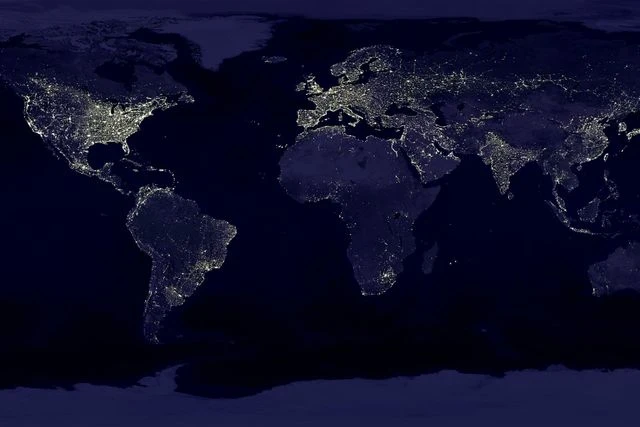
Contemporary civilization stands at the precipice of a profound historical transformation, where the infinite expanse of the cosmos ceases to remain an exclusive domain of pure scientific inquiry and transforms rapidly into the ultimate theater of terrestrial sovereign competition. As national governments and colossal private aerospace conglomerates marshal unprecedented capital toward lunar base establishment and extra-terrestrial resource acquisition, the traditional boundaries of international diplomacy are being redrawn across the vacuum of space.
This emerging cosmic race dictates the future architecture of global power dynamics, forcing policymakers, strategists, and economic titans to reconsider how planetary sovereignty, mineral extraction rights, and strategic military dominance will be enforced beyond Earth's atmosphere. Understanding this paradigm requires examining the convergence of advanced propulsion technologies, rare-earth mineral economics, and shifting legal frameworks governing celestial bodies.
On This Page
TL;DR Outer space has evolved from a collaborative scientific frontier into a fierce geopolitical battleground where nations and private enterprises compete aggressively for lunar resources, orbital dominance, and strategic supremacy, fundamentally rewriting the rules of international law and interplanetary economics.
The Escalating Scramble for Lunar Territory and Sovereign Dominance
The modern celestial landscape is characterized by an intensified scramble for permanent infrastructure footprints on the lunar surface, moving far beyond the symbolic flags of the twentieth century. National space agencies are no longer merely visiting celestial neighbors; they are actively staking claims on strategic real estate rich in volatile elements, structural metals, and potential military vantage points. This terrestrial expansion into the cosmos mirrors historical colonial epochs, yet it operates under the accelerating velocity of twenty-first-century technological advancement and hyper-competitive capitalist incentives.
Strategic positioning on the Moon, particularly near the permanently shadowed craters of the lunar poles, offers unparalleled tactical and economic advantages due to the suspected presence of vast water ice reserves. Water is not merely a life-support necessity for future astronauts; it is the fundamental raw material required to manufacture rocket propellant through in-situ resource utilization, turning the Moon into a vital refueling station for deep-space missions toward Mars and beyond. Consequently, controlling these strategic lunar oases translates directly to controlling the gateway of interplanetary commerce and strategic mobility.
The establishment of sustainable outposts requires sophisticated logistical networks that transcend single-launch capabilities, driving nations to forge industrial consortia. Space agencies must collaborate with heavy manufacturing and autonomous robotics firms to ensure continuous resource extraction without immediate human intervention. This industrialization of the lunar regolith establishes an entirely new asset class, untethered from traditional terrestrial monetary policies yet heavily reliant on state-backed defense infrastructure to protect commercial mining sites from foreign encroachment or espionage.
Sovereignty and the Fragile Balance of Power
The projection of national power into cislunar space introduces unprecedented vectors for conflict, moving past theoretical deterrence into active orbital posturing. As superpowers deploy specialized inspection satellites and high-capacity communication arrays, the boundary between defensive surveillance and offensive capability becomes dangerously blurred.
International frameworks designed during the mid-twentieth century prove inadequate for regulating contemporary corporate actors and aggressive national ambitions in deep space. The absence of enforceable property rights creates a legal vacuum where first-mover advantages threaten to crystallize into permanent geopolitical monopolies over celestial bodies.
The Architecture of Interplanetary Confrontation
Diplomatic channels are increasingly strained as competing coalitions present diametrically opposed interpretations of international space law, specifically regarding resource extraction and safety zone demarcations. These friction points generate intense security dilemmas, where precautionary defensive maneuvers by one spacefaring nation are interpreted as aggressive encirclement by another.
The militarization of cislunar orbits transforms standard satellite operations into high-stakes strategic chess matches, where the protection of vital navigational and communication nodes demands constant vigilance. Ground-based tracking stations and deep-space radar networks now play central roles in national defense budgets, emphasizing the inextricable link between cosmic presence and terrestrial sovereignty.
Commercial Space Enterprises and the Privatization of the Cosmos
The democratization of spaceflight through commercial innovation has irrevocably altered the geopolitical landscape, introducing agile private entities that operate with vastly different incentives than traditional state bureaucracies. Venture capital and corporate profitability now drive technological advancements that once relied entirely on multi-decade government budgets. This commercial surge democratizes access to orbit while simultaneously complicating traditional notions of national jurisdiction and international liability during orbital mishaps.
Private aerospace titans function as de facto geopolitical actors, wielding influence that rivals medium-sized sovereign nations through their control of critical satellite constellations and launch infrastructure. When corporate networks sustain global communications, intelligence gathering, and logistical supply chains, the traditional division between public statecraft and private enterprise dissolves completely. Governments find themselves dependent on commercial contractors not just for hardware production, but for maintaining strategic advantage in an increasingly contested orbital domain.
This shift toward commercialized exploration also introduces complex ethical and regulatory questions regarding planetary protection and the exploitation of pristine celestial environments. Without cohesive global oversight, corporate entities may prioritize short-term extraction yields over long-term environmental sustainability on the Moon or near-Earth asteroids. Establishing robust legal safeguards is essential to prevent celestial gold rushes from degrading scientific treasures and creating irreversible ecological damage beyond our home planet.
Economic Incentives and Asteroid Mining Realities
The long-term economic viability of the new cosmic race relies heavily on unlocking the immense mineral wealth contained within near-Earth asteroids, which harbor trillions of dollars in platinum-group metals. Extracting these resources could fundamentally disrupt terrestrial commodity markets, shifting global wealth paradigms toward entities capable of harvesting space-borne assets.
Despite the staggering potential returns, the capital expenditure required to initiate viable extra-terrestrial mining operations remains an immense barrier to entry for smaller firms. Only deeply capitalized conglomerates or sovereign-backed syndicates possess the financial resilience to absorb early-stage launch failures and prolonged development timelines inherent in deep-space commerce.
Regulatory Frameworks and Corporate Sovereignty
Domestic legislation passed by pioneering spacefaring nations attempts to grant property rights over extracted space resources, creating friction with international treaties that declare celestial bodies the common heritage of mankind. This legal divergence sets the stage for protracted jurisdictional disputes over who holds ultimate authority over lunar mining operations.
As corporate entities establish permanent facilities outside Earth's sovereign boundaries, questions of law enforcement, labor rights, and taxation in deep space remain entirely unresolved. Crafting sustainable legal frameworks that balance corporate profit incentives with global stability is the defining regulatory challenge of the twenty-first century.
We Also Published
- 01
- 02
- 03
- 04
The Legal Quagmire of Celestial Resource Ownership
The foundational treaty governing international behavior in space, the 1967 Outer Space Treaty, explicitly prohibits nations from claiming sovereignty over celestial bodies through appropriation, use, or occupation. However, as technological capabilities outpace legal evolution, ambitious governments and commercial ventures are reinterpreting these decades-old provisions to permit the extraction and commercial sale of space resources. This tension between non-appropriation principles and resource exploitation rights creates a fractured global legal order filled with conflicting interpretations and strategic loopholes.
Bilateral agreements and multilateral frameworks like the Artemis Accords attempt to establish codes of conduct and safety zones around lunar operations without formally violating the prohibition against national sovereignty claims. These legal instruments create de facto spheres of influence, rewarding early adopters with protected operational zones while marginalizing non-signatory nations. Consequently, international space law is transforming from a universal cooperative framework into a competitive arena where legal precedence is dictated by technical capability and economic might.
Disputes over orbital crowding and radio frequency allocation further compound this regulatory quagmire, as constellations of thousands of low-Earth orbit satellites restrict astronomical observation and increase collision risks. The lack of binding international mechanisms to manage orbital traffic density threatens catastrophic cascading debris events, known as the Kessler Syndrome, which could render entire orbital regimes unusable for generations. Establishing cooperative monitoring and accountability standards is no longer optional; it is an existential requirement for the preservation of space infrastructure.
Mathematical modeling of orbital decay and collision probability underpins the urgency for strict traffic management protocols ##P_{collision} = 1 - e^{-BACKSLASH_29FCMlambda t}##, where the density of active and defunct assets dictates the catastrophic risk threshold across heavily trafficked cislunar pathways. Without predictable enforcement models, the economic losses from orbital collisions will eclipse the initial investments made in space asset deployment.
This advanced calculus of orbital mechanics and spatial resource distribution ensures that policy decisions made today will permanently dictate the balance of power between spacefaring coalitions for centuries to come.
Treaty Ambiguity and Sovereign Interpretation
The intentional ambiguity built into twentieth-century space agreements allows modern spacefaring powers to justify aggressive commercial and strategic initiatives under the guise of scientific exploration. This interpretive flexibility exacerbates geopolitical distrust, as rival blocs accuse each other of undermining the spirit of cooperative international law.
Without consensus-driven updates to global treaties, unilateral declarations of resource ownership and orbital safety zones will continue to fracture international cooperation, replacing multilateral diplomacy with competitive power politics in the final frontier.
Orbital Debris and the Tragedy of the Commons
The unchecked deployment of mega-constellations without mandatory end-of-life disposal protocols exemplifies the classic tragedy of the commons, where individual commercial gains outweigh collective planetary preservation efforts. Debris accumulation threatens critical meteorological, communication, and reconnaissance satellites vital to modern civilization.
Developing enforceable remediation technologies and universal de-orbit standards is imperative to prevent the permanent foreclosure of humanity's access to space due to self-inflicted orbital congestion and high-velocity debris hazards.
Strategic Implications for Terrestrial Geopolitics and Future Alliances
The competition for lunar resources and orbital supremacy is not isolated to the vacuum of space; it directly shapes diplomatic alignments, economic sanctions, and security pacts here on Earth. Nations that secure dominant positions in cislunar logistics and extra-terrestrial resource supply chains will possess decisive leverage over terrestrial economies dependent on high-tech manufacturing and advanced energy sectors. Consequently, terrestrial geopolitical rivalries are expanding upward, making outer space the ultimate barometer of global hegemony.
Emerging space coalitions are actively redrawing diplomatic maps, creating technological blocs that share telemetry standards, navigation networks, and defense pacts tailored for cislunar security. This technological bifurcation risks creating incompatible orbital infrastructures, isolating rival nations and increasing the likelihood of miscalculation during crises. Maintaining open diplomatic channels and transparent operational protocols between competing space powers remains the single most critical safeguard against interplanetary conflict.
Ultimately, the trajectory of humanity's expansion into the cosmos will define whether our future mirrors the cooperative ideals of scientific discovery or the destructive tribalism of terrestrial history. As lunar bases transition from blueprints to physical realities, the choices made by world leaders today will establish the enduring rules of interstellar civilization. The new cosmic race has begun, and its outcome will rewrite the geopolitical destiny of humankind.
Technological Bifurcation and Diplomatic Blocs
The emergence of rival space coalitions utilizing incompatible hardware standards and communication protocols ensures that technological isolationism will characterize future deep-space endeavors, fracturing global scientific collaboration into hermetically sealed ideological blocs.
Bridging these technological divides requires proactive multilateral diplomacy and institutional modernization to ensure that space remains a domain of shared human achievement rather than an extension of terrestrial warfare.
The Interstellar Horizon and Human Destiny
As humanity takes its first permanent steps beyond Earth, the imperative to establish equitable, transparent, and sustainable governance structures has never been more urgent, ensuring that our reach into the cosmos elevates our civilization rather than replicating our terrestrial flaws.
The ultimate success of the new cosmic race will be measured not by flags planted or resources extracted, but by our collective capacity to govern the infinite expanse with wisdom, equity, and enduring foresight.
RESOURCES
- To the far side of the Moon: the battle for lunar resourcesengelsbergideas.comOct 1, 2024 ... The Moon and its surrounding space have become an arena for Earth's geopolitical rivalries, as nations compete for strategic advantages,…
- Foundations of International Space Law Sixty years ago, at a time ...instagram.comApr 16, 2026 ... Today, the system is being tested in new ways—from NASA's Artemis program to China's expanding lunar ambitions and the rise…
- From the Moon to Mars Humans are preparing to mine resources ...facebook.comJan 6, 2026 ... Space law doesn't protect historical sites, mining operations or moon bases—a lawyer describes a framework that could. 0 reactions.
- The New Space Race | Power & Politics in 21st Centuryrmg.co.uk... Moon Bases the USA and China/Russia intend to build. Using the Moon as a launch pad for going to Mars is one goal…
- Everyone wants a piece of space. But with more activity ... - Instagraminstagram.comOct 9, 2025 ... Dive deeper with a stunning new interactive web feature from the UN, The Race to Save Space! bit.ly/racetosavespace (& link…
- The Outer Space Treaty - UNOOSAunoosa.orgTreaty on Principles Governing the Activities of States in the Exploration and Use of Outer Space, including the Moon and Other Celestial Bodies.
- Decolonizing Final Frontier Expansionism? A space Criminological ...research.vu.nlISS,19 and Roscosmos declared that a race for lunar resources is already underway. ... late space resource extraction for sustainable exploration of the Moon…
- Mining in Space Is Coming - Milken Institute Reviewmilkenreview.orgApr 26, 2021 ... Commercial developments in the space industry may be on the cusp of starting the largest resource rush in history: mining…
- The Apollo Program - NASAnasa.govAchieving preeminence in space for the United States. Carrying out a program of scientific exploration of the Moon. Developing human capability to work in…
- Space Exploration Cartoons and Comics - CartoonStockcartoonstock.comFrom clever single-panel gags about cosmic mishaps to satirical comic strips poking fun at ambitious missions, each piece brings the final frontier down to ...
- 01
- 02
- 03
- 04
- 05
- 06
- 07
- 08
0 Comments