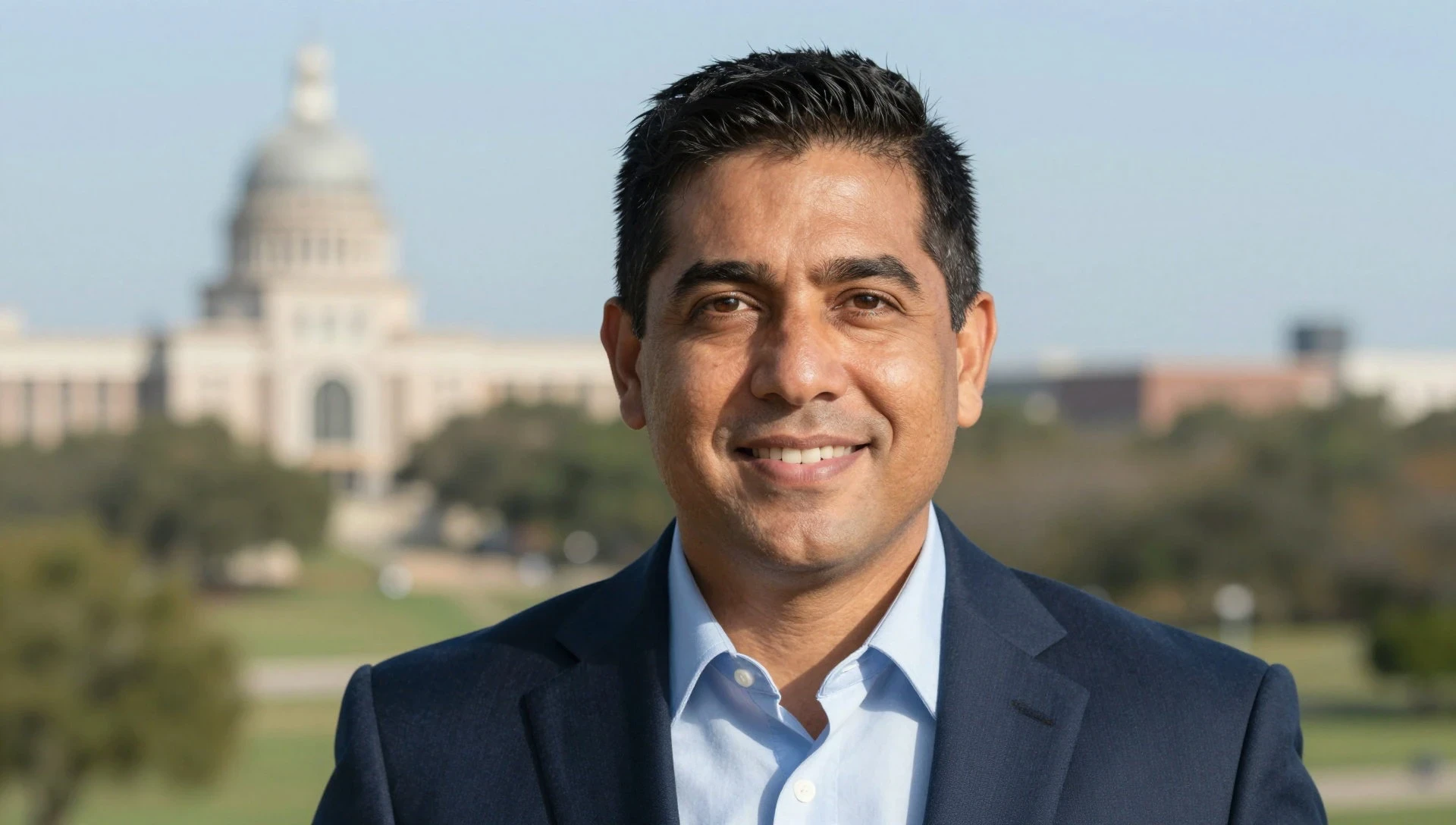
The emergence of a Tejano and regional Mexican music icon as a Democratic congressional candidate in Texas constitutes a notable case study in the evolving relationship between cultural celebrity, demographic change, and electoral geography.
Bobby Pulido, whose three-decade performance career across South Texas has generated substantial name recognition, is contesting Texas's 15th Congressional District against Republican incumbent Monica De La Cruz. The district spans rural counties east of San Antonio and extends southward toward the Rio Grande Valley, a territory whose political identity has shifted markedly across recent electoral cycles.
Analytically, the candidacy raises substantive questions about whether cultural capital accumulated within a specific regional music tradition can be converted into durable electoral capital within a district where approximately eighty percent of voters are Latino yet where a majority backed Republican candidates and Donald Trump in 2024.
On This Page
- Electoral Context and the Political Geography of Texas's 15th District
- The Candidate: Cultural Capital and Political Translation
- Latino Political Behaviour and the Limits of Demographic Determinism
- National Implications: House Control and the Texas Delegation
- Methodological Caveats and the Interpretation of Evidence
- Synthesis: Cultural Identity, Electoral Strategy, and Democratic Prospects
Pulido's stated campaign doctrine emphasises direct voter contact over partisan framing, an approach that implicitly acknowledges the diminished salience of traditional party identification in parts of the district. His acknowledged weakness in northern counties, where Democratic organisational infrastructure is sparse or absent, illustrates the structural asymmetries that constrain insurgent candidacies.
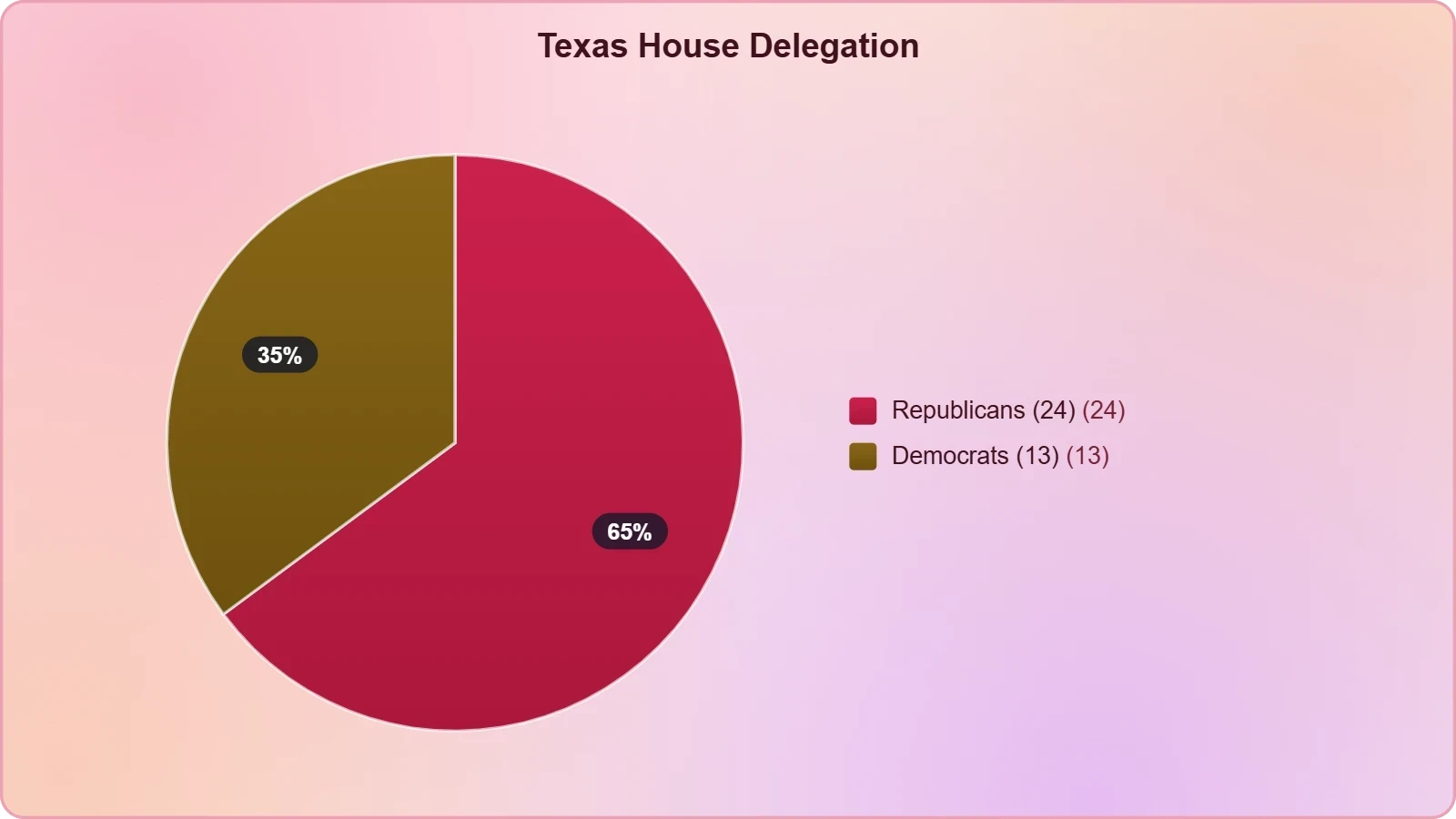
The contest also intersects with broader questions of redistricting, partisan control of the United States House of Representatives, and the competitiveness of Texas midterm elections. Republicans currently hold twenty-four of the state's thirty-eight House seats, and the 15th District was recently redrawn to strengthen Republican advantage.
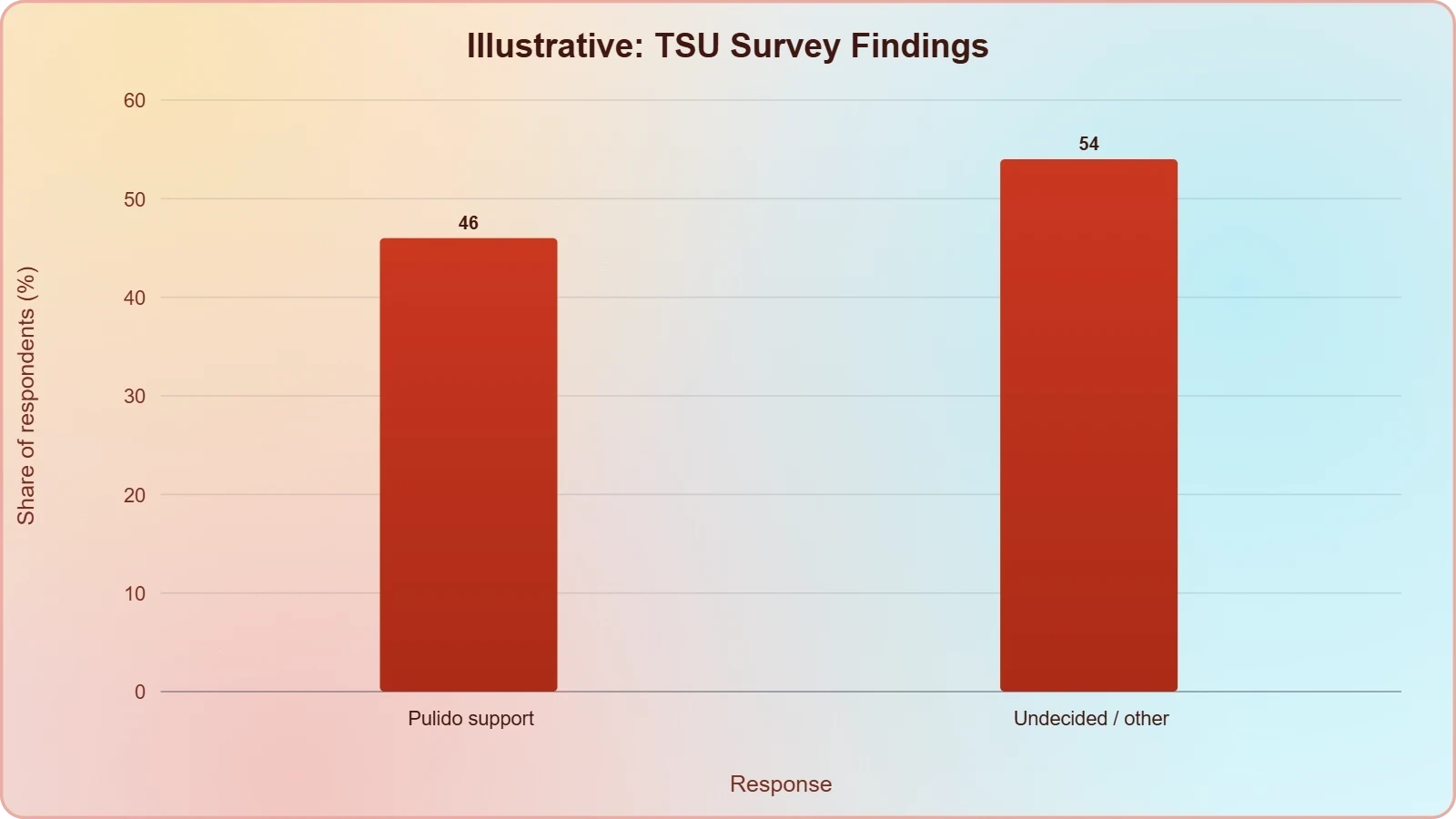
Late polling, including survey work conducted by Texas Southern University's Barbara Jordan Research and Public Policy Survey Center for EL PAÍS, suggests Pulido holds a comfortable lead, a finding that warrants cautious interpretation given the volatility of district-level polling.
TL;DR Bobby Pulido, a Tejano and regional Mexican music star with thirty-one years of performance history in South Texas, is running as the Democratic candidate in Texas's 15th Congressional District against Republican incumbent Monica De La Cruz. The district, roughly eighty percent Latino, backed Republicans and Donald Trump in 2024, yet a Texas Southern University poll for EL PAÍS places Pulido comfortably ahead. His campaign emphasises direct voter contact over partisan branding, while conceding weak organisational presence in northern counties. The race carries implications for redistricting, Latino political realignment, and Democratic prospects for reclaiming the House.
Electoral Context and the Political Geography of Texas's 15th District
The 15th Congressional District of Texas presents an electoral landscape whose demographic composition and partisan behaviour diverge in ways that complicate conventional assumptions about Latino voting. Stretching from rural counties east of San Antonio toward the Rio Grande Valley, the district encompasses communities with distinct economic bases, histories of party organisation, and patterns of turnout.
Understanding Pulido's candidacy requires situating it within this differentiated geography rather than treating the district as a homogeneous unit.
Demographic Composition and Partisan Realignment
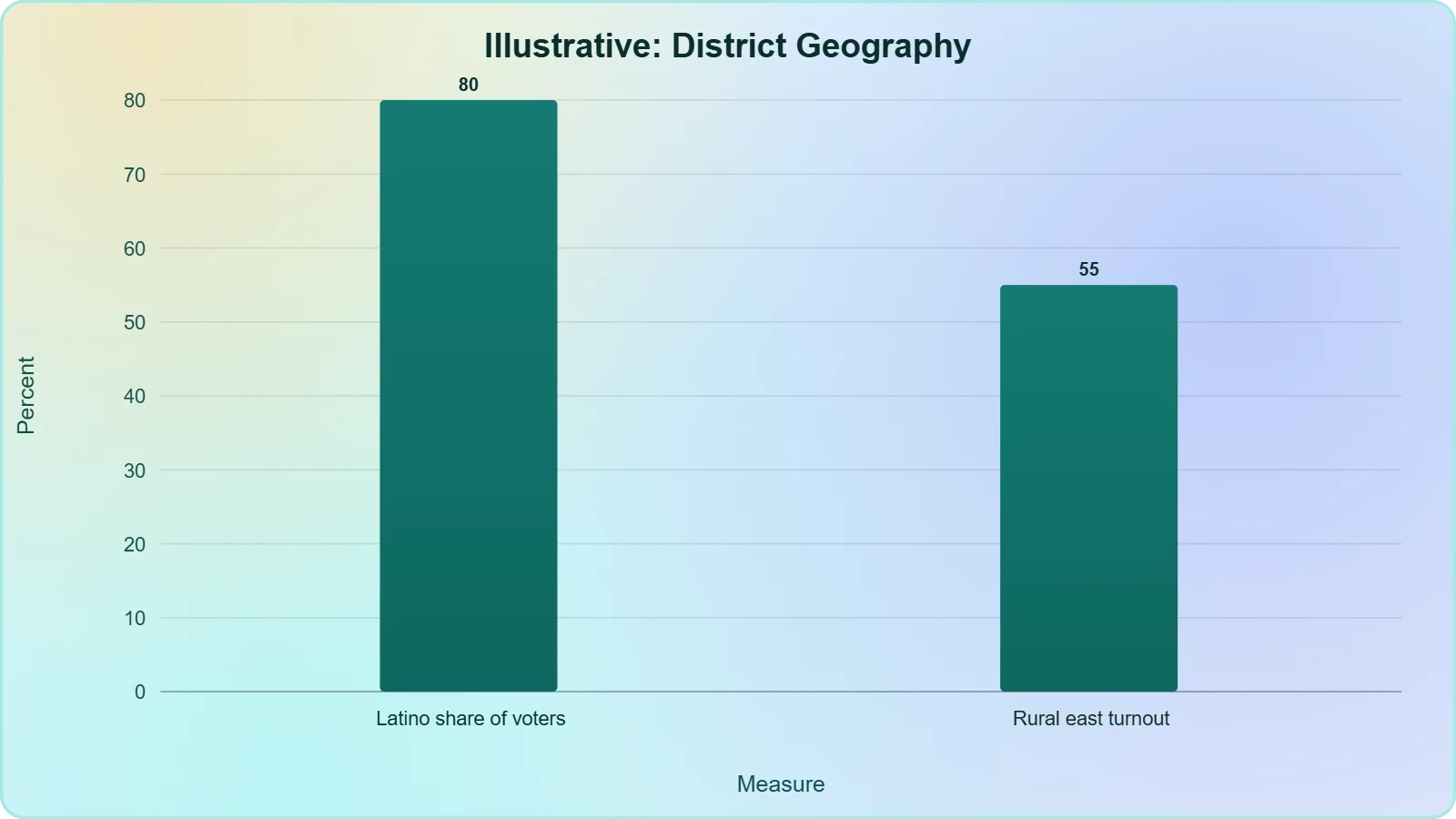
Approximately eighty percent of district voters are Latino, a proportion that historically correlated with Democratic advantage but which has become considerably less predictive. The 2024 results, in which most district voters backed Republican candidates and Donald Trump, indicate a realignment that scholars continue to debate. Competing explanations emphasise economic messaging, cultural conservatism, and declining trust in Democratic institutions among Hispanic voters.
The district's Latino population is not monolithic. Mexican-American communities with long settlement histories coexist with more recent arrivals, and generational differences in partisan attachment appear substantial. Pulido's campaign appears calibrated to this heterogeneity, avoiding assumptions that shared ethnicity translates automatically into shared partisanship.
Such calibration reflects an emerging recognition that ethnic identity operates alongside, rather than instead of, other political determinants.
Turnout dynamics further complicate the picture. Rural counties east of San Antonio exhibit lower participation rates than metropolitan areas, and Democratic organisational presence in these counties is uneven. Pulido has acknowledged that some residents told him they had not seen a Democrat in roughly a decade, a statement that illuminates the infrastructural deficit his campaign must address within a compressed electoral timeframe.
Redistricting adds another layer of complexity. The district was recently redrawn by Republicans to strengthen their position, a manoeuvre consistent with broader state-level strategies. The interaction between redistricting and demographic change produces uncertainty about the district's true partisan lean, and analysts should treat any single poll as provisional rather than definitive evidence of electoral outcomes.
Redistricting and Structural Advantage
Republican redistricting of the 15th District constitutes a deliberate attempt to consolidate partisan advantage in a territory whose demographic trajectory might otherwise favour Democrats. Such cartographic interventions are not unique to Texas, but their interaction with rapidly changing Latino voting behaviour produces outcomes that resist straightforward prediction. The district's boundaries now aggregate communities with divergent political histories.
Analysts should note that redistricting does not determine outcomes; it establishes structural parameters within which candidate quality, national mood, and turnout operate. Pulido's candidacy tests whether candidate-specific appeal can overcome cartographic disadvantage.
The available evidence, including polling, suggests such appeal may be substantial, though the reliability of district-level surveys remains a persistent methodological concern.
Competitiveness and Statewide Implications
Texas hosts more competitive congressional races in these midterms than in recent electoral cycles, a shift that reflects both demographic change and national partisan volatility. Late polling reportedly gives Democrats an advantage that could permit them to reclaim the House.
The 15th District therefore functions as one component within a broader national calculus rather than an isolated local contest.
Should Pulido prevail, the result would mark a notable change in a state where Republicans hold twenty-four House seats and Democrats hold thirteen. The symbolic weight of such an outcome would extend beyond the district, potentially influencing recruitment and resource allocation in subsequent cycles. However, observers should resist overstating the predictive value of a single race within a complex federal system.
Polling Evidence and Its Limitations
The Texas Southern University survey, conducted by the Barbara Jordan Research and Public Policy Survey Center for EL PAÍS, reports Pulido with a comfortable lead over De La Cruz. Such findings warrant qualified interpretation.
District-level polling frequently suffers from small sample sizes, uncertain likely-voter models, and the difficulty of capturing turnout among low-propensity populations characteristic of rural counties.
Polling conducted well before election day also cannot account for late shifts in candidate messaging, national events, or mobilisation efforts. The reported lead should therefore be understood as a snapshot of sentiment at a particular moment rather than a forecast. Comparative analysis across multiple surveys would strengthen confidence in any directional claim about the race.
We Also Published
The Candidate: Cultural Capital and Political Translation
Bobby Pulido's candidacy exemplifies a distinctive pathway into electoral politics, one grounded in three decades of cultural production rather than prior officeholding. His thirty-one years performing in South Texas, both solo and alongside his father, the musician Roberto Pulido, have generated a form of recognition that differs qualitatively from the name identification produced by conventional political careers. The analytical question concerns whether such cultural capital translates into electoral capital.
Biographical Foundations and Family Precedent
Pulido cites a family history in public service, including a great-grandfather who served as mayor in Nuevo León, Mexico, and relatives who held positions as a county judge and a prosecutor. This lineage provides a narrative of civic engagement that partially compensates for the absence of personal legislative experience. Such narratives can reassure voters sceptical of celebrity candidacies.
His formal preparation includes several years studying political science at a university in San Antonio, though the source material does not indicate completion of a degree. This detail is relevant to assessments of his policy fluency, though academic credentials correlate imperfectly with legislative effectiveness. Many successful legislators enter office without extensive formal training in political science.
Campaign Doctrine and Partisan Framing
Pulido has stated that he does not frame his campaign around party colours but around issues that matter to people, a rhetorical strategy with identifiable precedents in swing-district politics. Such framing seeks to lower partisan barriers among voters who have recently supported Republican candidates while retaining support among habitual Democrats. Its effectiveness depends on whether issue positions align with district preferences.
The campaign is described as self-directed, with an emphasis on direct contact with voters. This approach reflects both resource constraints and a strategic judgment that personal interaction can substitute for organisational infrastructure. Whether such a strategy can scale across a geographically extensive district remains an open empirical question requiring systematic evaluation.
Constituency Engagement and Organisational Gaps
Pulido reports visiting communities in the district's northern counties where residents indicated they had not encountered a Democrat in approximately a decade. This observation points to a documented pattern of organisational atrophy in rural areas, where county party structures have weakened. Such gaps create both opportunity and risk for insurgent campaigns.
He has acknowledged that he is unlikely to win in the northern part of the district, where some counties possess little or no Democratic Party organisation, and that campaigning there since the previous year has proven insufficient.
This concession is analytically significant, as it suggests a resource-allocation strategy prioritising winnable areas over uniform statewide presence.
Rhetorical Appeals and Mobilisation Warnings
At a rally in McAllen, Pulido told supporters he needs every vote and warned that the race could be lost if people do not vote and encourage others to do so. Such warnings reflect recognition that polling leads do not automatically convert into electoral margins. Mobilisation rhetoric of this kind is standard among candidates facing turnout uncertainty.
The emphasis on peer-to-peer encouragement indicates a decentralised mobilisation model, one that relies on social networks rather than formal party machinery. This approach may prove effective in communities where personal relationships carry substantial persuasive weight. Its scalability, however, depends on the density and reach of those networks across the district.
Latino Political Behaviour and the Limits of Demographic Determinism
The 15th District's electoral dynamics invite careful examination of assumptions regarding Latino political behaviour, assumptions that have undergone significant revision following recent national elections. The proposition that demographic composition reliably predicts partisan outcomes has encountered substantial empirical challenge. Pulido's candidacy operates within this revised analytical landscape, where ethnic identity functions as one variable among several.
Reassessing the Latino Vote
Post-election analyses have documented meaningful Republican gains among Hispanic voters, particularly among men and among communities with longer settlement histories in the United States. Explanations remain contested, with economic messaging, cultural conservatism, and generational change all receiving scholarly attention. The 15th District's 2024 results exemplify these broader patterns.
Demographic determinism, the assumption that growing Latino populations necessarily advantage Democrats, has consequently lost analytical credibility. Contemporary research emphasises heterogeneity within Latino communities, including variation by national origin, religion, income, and length of residence. Pulido's campaign appears implicitly attentive to this heterogeneity, avoiding appeals premised on ethnic solidarity alone.
Cultural Representation and Electoral Persuasion
Celebrity candidacies raise questions about the relationship between cultural representation and policy representation. Pulido's prominence within Tejano and regional Mexican music provides a form of symbolic representation that may resonate with voters who feel culturally affirmed by his candidacy. Whether such affirmation translates into support for specific policy positions remains uncertain.
Scholarship on celebrity politics suggests that name recognition lowers informational barriers to candidate evaluation, particularly in low-information elections. However, recognition alone does not determine vote choice, and candidates must still address substantive concerns.
The available evidence does not permit firm conclusions about the relative weight of cultural versus policy considerations in this contest.
Organisational Infrastructure and Rural Outreach
The uneven distribution of Democratic Party organisation across the district's counties constitutes a structural constraint on any Democratic candidacy. Pulido's acknowledgment that some counties possess little or no party organisation indicates the scale of the infrastructural deficit. Campaigns can partially compensate through volunteer networks, but such substitutes are imperfect.
Rural outreach presents particular challenges given geographic dispersion and limited media markets. Direct contact strategies, while potentially effective, impose substantial logistical demands. The sustainability of such approaches across an extended campaign cycle warrants empirical scrutiny, and the source material does not provide sufficient detail to assess their operational adequacy.
Turnout Dynamics and Representational Consequences
Turnout among low-propensity voters remains a decisive variable in competitive districts. Pulido's mobilisation warnings reflect awareness that differential turnout can reverse polling advantages. Historical patterns indicate that midterm electorates differ systematically from presidential-year electorates, with consequences for district-level outcomes.
The representational implications extend beyond individual races. If candidates with cultural prominence can mobilise constituencies that conventional politicians cannot reach, the composition of the electorate itself may shift. Such shifts, should they occur, would carry consequences for subsequent cycles and for the strategic calculations of both major parties.
- 01
- 02
- 03
- 04
National Implications: House Control and the Texas Delegation
The 15th District contest carries significance extending well beyond its boundaries, given its position within the broader struggle for control of the United States House of Representatives. Late polling reportedly affords Democrats an advantage sufficient to contemplate reclaiming the chamber. Individual district outcomes aggregate into national results, and competitive races in Texas contribute to that aggregation.
Arithmetic of House Control
Control of the House depends on the cumulative outcome of dozens of competitive districts, each with distinct demographic and institutional characteristics. The 15th District represents one such contest, and its result will contribute marginally to the national total. Analysts should therefore avoid attributing excessive causal weight to any single race.
Nevertheless, the district's symbolic significance may exceed its numerical contribution. A Democratic victory in a recently redrawn, majority-Latino district that backed Trump in 2024 would signal the persistence of competitive politics in territory Republicans had sought to secure. Such signals influence subsequent strategic calculations.
Texas Delegation Composition
Texas currently sends twenty-four Republicans and thirteen Democrats to the House, a composition that reflects both the state's overall partisan lean and the effects of redistricting. A Pulido victory would alter this composition by one seat while potentially influencing the broader narrative about Texas's political trajectory. The state's size ensures that even marginal shifts carry national consequence.
The delegation's composition also affects committee assignments, legislative priorities, and the representation of regional interests. South Texas communities have distinctive concerns regarding border policy, trade, and economic development. The identity of their representatives shapes how those concerns are articulated in national legislative processes.
Midterm Dynamics and Competitive Races
Texas hosts more competitive races in these midterms than in recent elections, a development that reflects both redistricting and shifting national sentiment. Midterm elections historically favour the party out of power, though this pattern admits exceptions.
The current cycle's competitiveness in Texas suggests that the state's electoral landscape is more fluid than aggregate partisan indices imply.
Competitive races impose demands on party resources, requiring allocation decisions among multiple contests. Candidates who can self-fund or generate organic enthusiasm, as celebrity candidates sometimes can, relieve some of this pressure. Pulido's self-directed campaign may therefore have implications for resource allocation beyond his own race.
Precedents and Comparative Cases
Celebrity candidacies have produced mixed electoral results, with some notable successes and numerous failures. Comparative analysis suggests that success depends on the alignment between the candidate's public identity and district preferences, as well as on the quality of campaign operations. Pulido's case exhibits favourable alignment but uncertain operational capacity.
Musical and entertainment figures have occasionally transitioned into politics, though systematic evidence on their legislative effectiveness remains limited. The relevant question for voters concerns governance capacity rather than performance credentials. Campaigns that emphasise cultural connection must ultimately address this question to sustain support through election day.
Methodological Caveats and the Interpretation of Evidence
Responsible analysis of the Pulido candidacy requires explicit attention to the limitations of available evidence. The source material derives from a single journalistic account, supplemented by polling conducted for that outlet. Claims about electoral prospects, campaign effectiveness, and voter sentiment should therefore be qualified in accordance with the evidentiary base.
Reliability of District-Level Polling
District-level polling in the United States frequently encounters methodological difficulties, including small samples, uncertain likely-voter definitions, and coverage gaps in rapidly changing areas. A single survey reporting a comfortable lead cannot establish the probability of electoral success. Confidence intervals, where reported, would materially assist interpretation.
The timing of polling also matters. Surveys conducted weeks before an election may fail to capture late developments, including candidate missteps, external shocks, or shifts in mobilisation. Analysts should therefore treat the reported lead as indicative of sentiment at a particular moment rather than as a forecast of outcome.
Single-Source Constraints
Reliance on a single journalistic source imposes constraints on verification. Details regarding campaign operations, family history, and educational background derive from interview reporting and have not been independently corroborated within the available material. Such constraints are common in contemporary political reporting and should be acknowledged rather than obscured.
Triangulation through multiple sources would strengthen confidence in factual claims. Where corroboration is unavailable, analytical statements should be framed conditionally. This approach preserves intellectual integrity while still permitting substantive analysis of the candidacy's significance and the broader political dynamics it illuminates.
Forecasting Limits and Conditional Reasoning
Electoral forecasting is inherently probabilistic, and any statement about likely outcomes should be expressed in conditional terms. The proposition that Pulido could flip the district is plausible given polling evidence, but plausibility does not constitute certainty. Analysts should distinguish between possibility, probability, and inevitability with precision.
Conditional reasoning also assists in identifying the variables that would alter outcomes. Turnout differentials, late campaign developments, and national trends all function as conditioning factors. Specifying these conditions renders analysis more useful than offering unqualified predictions that cannot be evaluated against evidence.
Ethical and Representational Considerations
Analysis of ethnic voting behaviour requires care to avoid reductive characterisations. Communities are internally diverse, and aggregate statistics obscure substantial variation. Scholarly and journalistic accounts should represent this diversity accurately rather than treating demographic categories as explanatory variables in themselves.
Similarly, celebrity candidacies invite dismissive commentary that may undervalue the substantive capacities candidates bring to electoral competition. Balanced assessment recognises both the advantages and limitations of non-traditional political pathways. Such balance serves public understanding better than either uncritical enthusiasm or reflexive scepticism.
Synthesis: Cultural Identity, Electoral Strategy, and Democratic Prospects
The Pulido candidacy synthesises several strands of contemporary American electoral politics: the entry of cultural figures into partisan competition, the contested partisan identity of Latino communities, the structural effects of redistricting, and the national stakes of individual district contests.
Each strand merits analytical attention, and their interaction produces a case whose significance exceeds its immediate electoral context.
Convergence of Cultural and Political Representation
Pulido's three-decade presence in Tejano and regional Mexican music establishes a form of cultural representation that precedes his political candidacy. Voters encountering his name may draw on accumulated associations formed through musical performance rather than political activity. Such pre-existing associations can lower barriers to consideration while also raising questions about substantive preparation.
The convergence of cultural and political representation is not unprecedented, but its contemporary manifestations occur within a media environment that amplifies both recognition and scrutiny. Candidates must therefore navigate heightened visibility while demonstrating governing competence. The available evidence does not permit assessment of how effectively Pulido has managed this dual demand.
Strategic Ambiguity and Partisan Branding
The decision not to frame the campaign around party colours constitutes a strategic choice with identifiable risks and benefits. It may attract voters alienated from both parties, but it may also complicate mobilisation of habitual partisans. The balance between these effects depends on district-specific conditions that polling can only partially illuminate.
Strategic ambiguity of this kind is common in competitive districts, where candidates seek to assemble coalitions crossing partisan lines. Its effectiveness depends on the credibility of issue positions and the absence of polarising national developments. Should national politics intrude forcefully, the space for ambiguity may contract, forcing clearer partisan positioning.
Implications for Democratic Coalition Building
Should Pulido succeed, his campaign would offer a model for Democratic engagement with Latino communities that emphasises cultural connection and direct contact rather than partisan messaging alone. Whether such a model is replicable remains uncertain, given its dependence on individual prominence and regional specificity. Generalisation from a single case requires caution.
Conversely, failure would invite reassessment of celebrity candidacies as vehicles for coalition expansion. The analytical value of the case lies less in its outcome than in the evidence it generates about voter response to non-traditional candidacies. Such evidence accumulates gradually across multiple cases rather than emerging from any single contest.
Broader Trajectories in American Electoral Politics
The contest illuminates broader trajectories, including the continuing realignment of Latino voters, the strategic use of redistricting, and the nationalisation of local races. These trajectories interact in ways that resist simple summary. Careful analysis therefore requires attention to specific mechanisms rather than broad generalisations about demographic or partisan trends.
Whatever the outcome, the 15th District contest will contribute data to ongoing scholarly and journalistic debates about representation, mobilisation, and partisan change. Its significance lies in what it reveals about the conditions under which cultural prominence can be converted into political authority, and about the limits of such conversion within complex electoral environments.
From our network :
- University Language Proficiency Exams: Why Institutional Tests Demand Different Preparation Than IELTS and TOEFLDiscover why university-specific language proficiency examinations differ fundamentally from IELTS and TOEFL, and learn strategic preparation approaches for institutional assessment success.
- The Hidden Cost of AI Convenience: Why Over-Permissioned Agents Are a Security Time BombDiscover why AI agents with excessive permissions create dangerous single points of failure, and learn how implementing least privilege principles can protect your organization from exploitation.
- CISA’s Ten-Advisory Wave: Why Generic Patching Fails in OT and How to Build Product-Specific PlaybooksCISA released ten ICS advisories in one week, exposing critical infrastructure risks. Generic patching fails in OT. Learn to build product-specific remediation playbooks.
- Committed Mediterranean Precipitation Decline: Why Emissions Cuts Alone Cannot Restore Winter RainsNew NOAA research reveals that Mediterranean winter rains may decline irreversibly even with emissions cuts. Explore the science of committed climate change and regional impacts.
- Mobile Learning and VR in English: What Global Evidence Reveals About Effective Language TechnologyA systematic review across 14 countries reveals which language-learning technologies genuinely work. Mobile learning, AI, and VR show measurable benefits when pedagogically integrated. This evidence-based guide helps educators and learners select technology that delivers real return on investment.
- How AI Agents Will Change the Way We Manage Personal FinancesExplore how AI agents are transforming personal finance through automated budgeting, bill payment, and investment management, while examining the critical security protocols and governance frameworks required for safe deployment.
- Live Online English Classes for Kids: Do They Actually Reduce Anxiety?A ten-week study reveals that synchronous online English classes can significantly reduce child language anxiety while improving listening and reading skills. Discover what makes these programs effective and how parents can select the right one.
- The Final Descent: How ESA Retired the Legendary Cluster Constellation After 24 Years of Space Weather ScienceAfter 24 years mapping Earth’s magnetosphere, ESA’s Cluster mission concluded with a precisely controlled reentry over the South Pacific. This analysis explores the scientific legacy, engineering decisions, and debris mitigation principles behind one of space exploration’s most responsible retirements.
- Forbidden Matrix Patterns and Visible Lattice Points: A Geometric DictionaryExplore how multidimensional 0–1 matrices encode geometric truths, linking forbidden patterns to visible lattice points and hypergraph theory, with applications in combinatorics and computational geometry.
RESOURCES
- Bobby Pulido's challenge to Monica De La Cruz tests Republicans ...tpr.orgOct 11, 2026 ... Democratic candidate for Texas Congressional District 15 Bobby Pulido performing in Alice, Texas. David Martin Davies. /. TPR. Democratic ...
- Latin Grammy winner Bobby Pulido wins Democratic primary ... - ABC7abc7.comMar 4, 2026 ... Tejano singer Bobby Pulido will win the Democratic primary for Texas' 15th Congressional District, defeating emergency room physician Ada ...
- It was great to join my friend Bobby Pulido at his campaign kickoff for ...facebook.comDec 17, 2025 ... Bobby Pulido emerges as Democratic candidate in transformed Texas Congressional District 15. RGV Politics. 13w · Public · Texas Congressional ...
- Tejano star Bobby Pulido wins Democratic primary in Texas' 15th ...borderreport.comMar 4, 2026 ... The Tejano singer and songwriter, who was nominated for a Grammy this year, won the Democratic nomination in a South…
- Bobby Pulido thanks Rep. Monica De La Cruz for campaign advicetexastribune.orgSep 25, 2026 ... Texas Tribune reporter Berenice Garcia speaks with Democratic candidate for Texas' 15th Congressional District Bobby Pulido and Cameron ...
- New poll shows Tejano star Bobby Pulido is poised to flip TX-15 in ...texasstandard.org6 days ago ... Democratic candidate for the 15th Congressional District in Texas Bobby Pulido performs at his final concert "La Ultima Desvelada" in ...
- Bobby Pulido faces scrutiny over ex-bandmate in bid for Congresstexastribune.orgJul 6, 2026 ... Tejano singer and candidate for Texas's 15th congressional district Bobby Pulido performs during the Texas Democratic Convention in Corpus ...
- HMP Poll: Bobby Pulido Leads Monica De La Cruz in TX-15thehousemajoritypac.comAug 4, 2026 ... ... District, conducted by Normington Petts from July 23-27, finds Democratic candidate Bobby Pulido leading Republican Rep. Monica De La…
- Bobby Pulido for Congressbobbypulidofortexas.comSupport Bobby's campaign for Texas 15th District! ... If you've saved your payment information with ActBlue Express, your donation will go through immediately.
- Tejano music star Bobby Pulido wins Democratic primary in Texas ...cbsnews.comMar 3, 2026 ... CBS News projects Bobby Pulido wins Texas' 15th Congressional District, setting up battle against Republican incumbent Rep.
- Texas' 15th Congressional District election, 2026 (March 3 ...ballotpedia.orgBobby Pulido advanced from the Democratic primary for U.S. House Texas District 15. Candidate filing deadline, Primary election, General election. December 8 ...
- South Texas races could determine control of Congressspectrumlocalnews.comOct 6, 2026 ... Democrat Bobby Pulido (left) and Republican Monica De La Cruz (right) are both running to represent Congressional District 15 in…
- Texas' 15th Congressional District - Ballotpediaballotpedia.orgDemocratic primary for U.S. House Texas District 15 ; Candidate ; ✓. Image of Bobby Pulido. Bobby Pulido · Candidate Connection ; Image of…
- Tejano star Bobby Pulido and Dr. Ada Cuellar face off in Texas 15 ...fox7austin.comMar 3, 2026 ... ... Texas' 15th congressional district for the Democratic Party's nomination ... Ultimately, Pulido won out over Cuellar for the Democratic…
- 01
- 02
- 03
- 04
- 05
- 06
- 07
- 08
0 Comments