On This Page
The Macroeconomic Vision and Structural Realities
The national ambition to achieve a ten trillion dollar economy is a bold vision that captures the imagination of the global financial community. It signals a readiness to compete at the highest levels.
Leadership directives often focus on the long-term potential of the marketplace rather than immediate hurdles. This forward-looking stance is designed to attract foreign direct investment and boost domestic investor confidence across sectors.
However, the distance between current nominal GDP and the ten trillion mark is substantial and daunting. Bridging this gap requires more than just policy rhetoric; it demands consistent, high-velocity growth across every vertical.
Strategic alignment between the public and private sectors is essential for reaching such a monumental financial milestone. Without this synergy, the target remains a theoretical construct rather than a tangible reality for citizens.
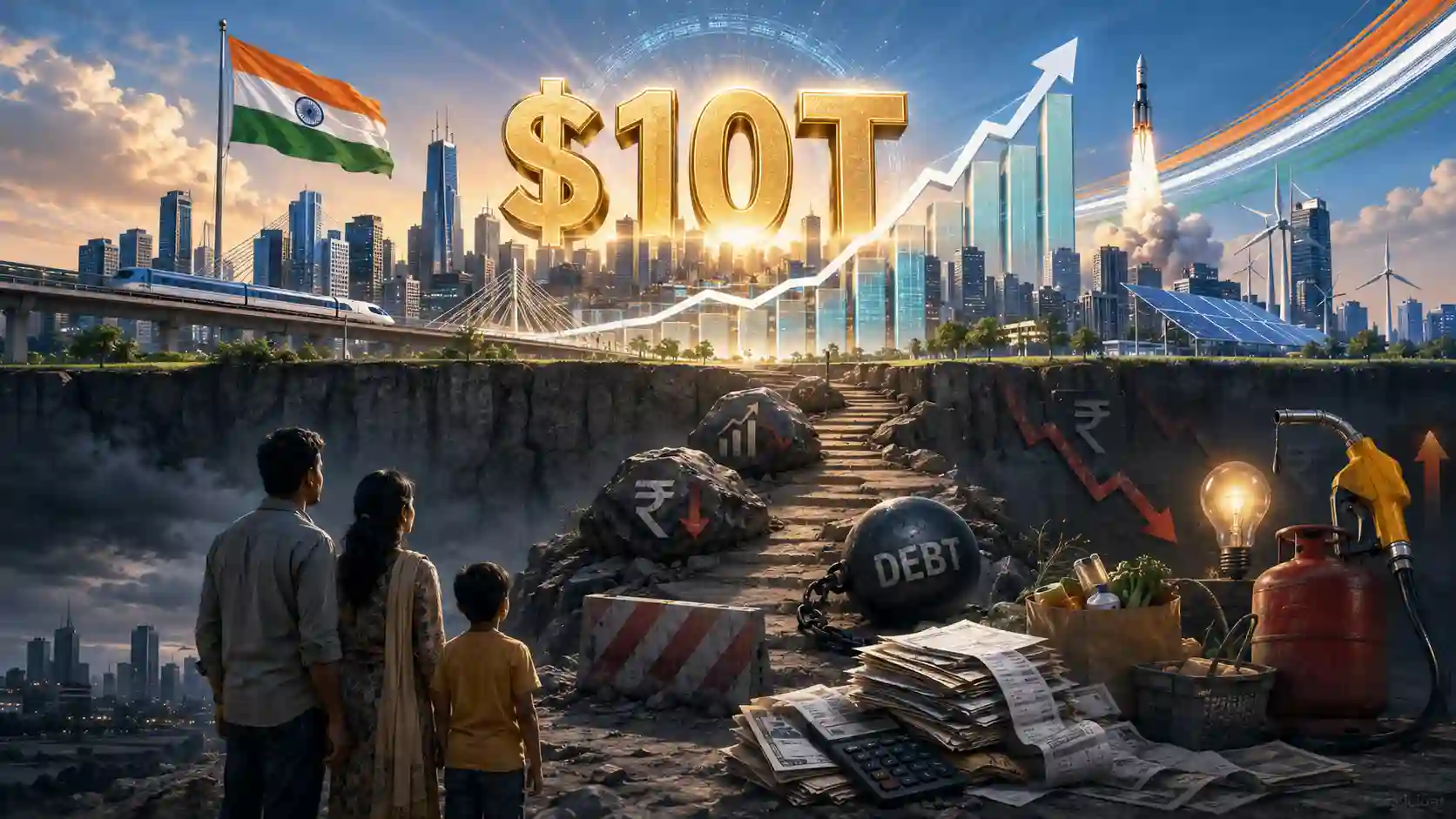
This analysis explores the friction between these overarching macroeconomic goals and the microeconomic stressors currently affecting households. Understanding this tension is vital for assessing the long-term sustainability of the current growth trajectory.
The $10 Trillion Aspiration
The ten trillion dollar target serves as a North Star for national economic policy and legislative frameworks. It provides a unified objective for diverse government departments to coordinate their developmental and fiscal efforts.
Achieving this status would place the nation among the elite global economies, fundamentally altering its geopolitical influence. It represents a transition from a developing market to a mature, high-income economic powerhouse globally.
Such an aspiration requires the optimization of industrial output and the modernization of infrastructure. The scale of transformation needed is unprecedented, involving massive shifts in technology adoption and labor force productivity improvements.
Public discourse often highlights this target to foster a sense of national pride and collective purpose. It creates a narrative of inevitable progress that can drive entrepreneurial spirit and long-term capital investment.
Despite the optimism, the path to this milestone is fraught with structural complexities that must be addressed. Aspirational targets must eventually reconcile with the ground-level economic realities faced by the average domestic consumer.
Mathematical Feasibility of Growth

To reach a ten trillion dollar valuation, the economy must maintain a rigorous growth schedule over the coming decade. This involves achieving specific compounded annual growth rates that far exceed historical global averages.
The mathematical relationship between real growth and nominal targets is defined by the following expression:
. Here, ##g## represents the necessary nominal growth rate over ##n## years.
Factoring in inflation and currency fluctuations is critical when calculating these long-term projections. Nominal growth must remain in the double digits to compensate for the natural depreciation of currency and price level changes.
Historically, very few nations have sustained such high growth rates without experiencing significant internal economic overheating. Balancing rapid expansion with price stability is one of the greatest challenges for modern central banking authorities.
The feasibility of these numbers depends heavily on the performance of the private final consumption expenditure. If the primary engine of GDP slows down, the mathematical path to ten trillion becomes increasingly narrow.
The Role of Nominal vs. Real GDP
Distinguishing between nominal and real GDP is essential for understanding the true health of the economy. Nominal figures can sometimes mask the underlying erosion of purchasing power caused by persistent domestic price inflation.
Real GDP growth reflects the actual increase in goods and services produced, stripped of inflationary noise. It is the more accurate measure of a nation's standard of living and productive capacity expansion.
Policy targets are frequently stated in nominal terms because they are easier to communicate and visualize. However, achieving a nominal ten trillion dollar economy while inflation remains high might not improve citizen welfare.
The interplay between these two metrics determines the actual wealth creation experienced by the population. Sustainable progress requires that real growth remains robust enough to outpace the rising costs of living and production.
Investors and analysts closely monitor the gap between nominal and real figures to gauge economic stability. A widening gap suggests that growth is being driven more by rising prices than by productivity gains.
Global Positioning and Policy Optimism
India's pursuit of this economic milestone is a key component of its strategy to attract global capital. High growth targets signal a market with immense potential for returns, encouraging multinational corporations to invest.
Policy optimism acts as a catalyst for economic activity by reducing the perceived risks associated with long-term projects. It encourages businesses to expand their operations and hire more workers in anticipation of growth.
However, optimism must be grounded in realistic assessments of the current global economic environment. External shocks, such as geopolitical tensions or supply chain disruptions, can easily derail even the most well-laid national plans.
The government's role in facilitating this growth involves creating a business-friendly environment through deregulation and tax incentives. These measures are intended to lower the barriers to entry for new and innovative enterprises.
Ultimately, global positioning is a reflection of internal strength and the resilience of the domestic market. A strong macroeconomic narrative is only as effective as the microeconomic foundation upon which it is built.
The Macroeconomic Hurdles: Currency, Inflation, and Trade
The journey toward the ten trillion dollar milestone is not a straight path but a challenging hurdle race. Several macroeconomic factors act as barriers that slow down the momentum of national economic progress.
Currency volatility, energy costs, and trade imbalances form a triad of obstacles that require constant management. These factors are often interconnected, meaning a failure in one area can exacerbate problems in the others.
Macroeconomic stability is the prerequisite for sustained growth, yet it is currently under pressure from external forces. Managing these pressures requires a delicate balance of monetary policy and strategic fiscal interventions by leadership.
The ability of the economy to clear these hurdles determines the speed at which it can approach its targets. Persistent failures to address these issues can lead to structural stagnation and reduced international competitiveness.
This section examines how these specific hurdles impact the overall growth trajectory and the health of the financial system. Understanding these mechanics is crucial for any comprehensive analysis of the nation's future economic path.
Exchange Rate Volatility and the Rupee Downfall
The ongoing depreciation of the Rupee against the Dollar represents a significant immediate hurdle for the economy. A weaker currency increases the cost of imports, particularly essential commodities like crude oil and electronics.
Currency fluctuations are often driven by global interest rate differentials and the flow of foreign portfolio investment. When the domestic currency loses value, it puts additional pressure on the central bank to intervene effectively.
A falling Rupee also makes servicing external debt more expensive for both the government and private corporations. This can lead to a reduction in capital expenditure as more revenue is diverted to debt repayment.
While a weaker currency can technically benefit exporters, the high import content of many domestic products often offsets this advantage. The net result is frequently a widening of the trade deficit and higher inflation.
Maintaining exchange rate stability is vital for ensuring a predictable environment for international trade and investment. Without a stable currency, the path to a ten trillion dollar economy becomes increasingly volatile and uncertain.
Energy Inflation and the Fuel Price Barrier
High fuel prices act as a systemic tax on the entire economy, inflating the cost of logistics and manufacturing. Since energy is a fundamental input for almost every industry, its price affects everything significantly.
Domestic fuel prices are influenced by global crude oil trends and high levels of government taxation. These taxes are often used to fund infrastructure projects, but they simultaneously squeeze the disposable income of households.
The transmission of fuel price hikes into the broader economy is rapid and often leads to higher food inflation. Transport costs for agricultural products increase, which directly impacts the cost of living for the population.
Energy inflation is particularly regressive, as it disproportionately affects lower-income segments who spend a larger share of their earnings. This reduces the overall consumption capacity of the domestic market, slowing down economic growth.
We Also Published
Transitioning to renewable energy sources is a long-term solution, but the immediate reliance on fossil fuels remains high. Clearing the fuel price hurdle is essential for maintaining the momentum of the national growth engine.
Structural Import Dependence and Trade Imbalances
The nation's heavy reliance on imported energy, raw materials, and high-tech components creates a structural trade deficit. This imbalance drains foreign exchange reserves and makes the economy vulnerable to global supply chain shocks.
Rising imports often outpace export growth, leading to a persistent current account deficit that must be financed. This reliance on external capital can lead to increased financial instability during periods of global market volatility.
Efforts to boost domestic manufacturing through initiatives like "Make in India" aim to reduce this structural dependence significantly. However, building a competitive domestic manufacturing base takes time and requires massive investments in industrial infrastructure.
Trade imbalances also reflect a lack of diversification in the export basket, which remains concentrated in a few sectors. Expanding the range of high-value exports is necessary to balance the national trade account effectively.
Addressing the import hurdle is a long-term strategic necessity for achieving the ten trillion dollar economic target. A more self-reliant and export-oriented economy would be much better equipped to sustain high growth rates.
Imported Inflation and the Transmission Mechanism
Imported inflation occurs when the rising cost of foreign goods translates into higher prices within the domestic market. This is particularly evident in economies with high import dependencies for essential commodities and industrial inputs.
The transmission mechanism for imported inflation is complex, involving various stages of the supply chain and manufacturing process. As input costs rise, producers are eventually forced to pass these expenses on to the final consumers.
Central banks often face a dilemma when dealing with imported inflation, as traditional interest rate hikes may not be effective. If inflation is driven by supply-side shocks, raising rates could inadvertently slow down economic activity further.
Persistent imported inflation erodes the purchasing power of the population and can lead to a wage-price spiral. This destabilizes the macroeconomic environment and makes long-term planning difficult for businesses and individual households alike.
Managing the impact of imported inflation is crucial for maintaining social stability and protecting the growth narrative. It requires a combination of strategic trade policies and effective monetary management to mitigate the adverse effects.
- 01
- 02
- 03
- 04
The Microeconomic Core: Household Debt and Systemic Friction
At the heart of the economy lies the household sector, which serves as the primary driver of consumption. However, this sector is currently facing significant microeconomic distress that could impede the broader national ambition.
The accumulation of household debt has reached levels that raise concerns about the long-term financial health of citizens. This debt acts as a deadweight that slows down the consumer's ability to participate in growth.
Systemic friction arises when the costs of clearing macroeconomic hurdles are disproportionately shifted onto the individual household sector. This creates an imbalance where headline growth figures may not reflect the actual lived experience.
A healthy and vibrant household sector is essential for a sustainable ten trillion dollar economy in the future. If consumers are over-leveraged and under-resourced, the primary engine of national GDP growth will inevitably begin to falter.
This final section analyzes the dynamics of household debt and its impact on savings, wages, and consumption. We explore the growth paradox where macroeconomic success might be built on a foundation of microeconomic vulnerability.
The Escalating Burden of Household Debt
Household debt in India has seen a rapid increase as consumers turn to credit to sustain their lifestyles. This trend is visible across various categories, including housing loans, vehicle finance, and unsecured personal credit.
The debt-to-income ratio is a critical metric for assessing the sustainability of this trend for the average family. When debt servicing costs rise faster than income, households are left with less disposable money for consumption.
Rising debt levels often correlate with high inflation, as people borrow to cover the increasing costs of essential goods. This creates a cycle of dependency on credit that can lead to long-term financial instability for families.
Financial institutions have expanded their retail lending portfolios, making credit more accessible than ever before to the masses. While this can stimulate short-term spending, it also increases the systemic risk of widespread defaults during downturns.
Addressing the burden of household debt is essential for ensuring that the benefits of economic growth are sustainable. A consumer base that is drowning in debt cannot provide the long-term demand needed for expansion.
Declining Net Financial Savings
The surge in household borrowing has been accompanied by a historical decline in net household financial savings. Savings are being diverted to service existing debt rather than being invested in productive financial assets.
Net financial savings as a percentage of GDP have reached multi-decade lows, raising red flags for economic planners. Savings are the primary source of domestic capital for investment in infrastructure and industrial growth projects.
A decline in savings also reduces the financial cushion available to households for dealing with unexpected economic shocks. This makes the entire population more vulnerable to job losses or sudden spikes in the cost of living.
The shift from a saving-oriented culture to a debt-driven consumption model represents a fundamental change in the economy. While this can boost GDP in the short run, it may compromise long-term financial stability and growth.
Restoring healthy levels of household savings is vital for providing the capital necessary to reach the ten trillion mark. Policy measures must encourage saving and investment while discouraging excessive and unproductive consumer borrowing and debt.
Stagnant Real Wages and the Consumption Squeeze
Real wages, which are adjusted for inflation, have remained stagnant for large segments of the working population recently. This means that even as nominal incomes rise, the actual purchasing power of workers has not improved.
The squeeze on disposable income is exacerbated by high fuel prices and the rising costs of healthcare and education. Households are forced to make difficult choices about their spending, often prioritizing essentials over discretionary items.
Consumption growth is the backbone of the Indian economy, accounting for a significant portion of the total GDP. A squeeze on consumption directly impacts the revenue of businesses and their ability to invest in new capacity.
The gap between the wealthy and the lower-to-middle-income segments continues to widen, creating a K-shaped recovery pattern. This unequal distribution of growth benefits can lead to social tensions and reduced overall economic efficiency and productivity.
Ensuring that real wage growth keeps pace with national productivity is essential for a healthy and balanced economy. Without broad-based income growth, the ambition of a ten trillion dollar economy may remain out of reach.
The Growth Paradox and Policy Realignment
The growth paradox occurs when macroeconomic indicators show progress while microeconomic indicators suggest widespread distress among the population. This disconnect can lead to flawed policy decisions that fail to address the root causes.
Sustainable GDP growth must be bottom-up, driven by a healthy, productive, and financially stable household sector throughout. Relying on debt-fueled consumption to meet macroeconomic targets is a risky strategy that can lead to stagnation.
Policy realignment is necessary to ensure that the costs of economic hurdles are shared more equitably across society. This might involve revisiting taxation on essential goods and providing more support for wage growth and savings.
The ultimate success of the ten trillion dollar vision will be measured by its impact on the average citizen. If growth does not translate into better living standards and financial security, the target loses its meaning.
Balancing macroeconomic ambition with microeconomic reality is the defining challenge for the nation's leadership in the coming years. Achieving this balance is the only way to ensure a prosperous and stable future for all.
From our network :
- The Final Descent: How ESA Retired the Legendary Cluster Constellation After 24 Years of Space Weather ScienceAfter 24 years mapping Earth’s magnetosphere, ESA’s Cluster mission concluded with a precisely controlled reentry over the South Pacific. This analysis explores the scientific legacy, engineering decisions, and debris mitigation principles behind one of space exploration’s most responsible retirements.
- Committed Mediterranean Precipitation Decline: Why Emissions Cuts Alone Cannot Restore Winter RainsNew NOAA research reveals that Mediterranean winter rains may decline irreversibly even with emissions cuts. Explore the science of committed climate change and regional impacts.
- The Hidden Cost of AI Convenience: Why Over-Permissioned Agents Are a Security Time BombDiscover why AI agents with excessive permissions create dangerous single points of failure, and learn how implementing least privilege principles can protect your organization from exploitation.
- How AI Agents Will Change the Way We Manage Personal FinancesExplore how AI agents are transforming personal finance through automated budgeting, bill payment, and investment management, while examining the critical security protocols and governance frameworks required for safe deployment.
- Former Soap Stars Embark on Ambitious Writing Projects and Theatrical StagesDiscover how former soap opera actors are transitioning into independent scriptwriting and high-profile theatrical stage productions.
- Forbidden Matrix Patterns and Visible Lattice Points: A Geometric DictionaryExplore how multidimensional 0–1 matrices encode geometric truths, linking forbidden patterns to visible lattice points and hypergraph theory, with applications in combinatorics and computational geometry.
- Analyzing Hoya Corporation’s Midday Volume Shifts and Financial FundamentalsExamine Hoya Corporation’s midday trading volume contraction, technical moving averages, robust solvency ratios, and stellar quarterly earnings performance.
- Norbert’s Uncertain Path: Why Hawaii’s Storm Watch Demands Patience Over PanicTropical Storm Norbert strengthens in the Eastern Pacific with winds near 50 mph, forecast to reach Category 1 hurricane status by Friday. Long-range models disagree sharply on whether Hawaii faces any threat around September 19–23, making official guidance essential.
- CISA’s Ten-Advisory Wave: Why Generic Patching Fails in OT and How to Build Product-Specific PlaybooksCISA released ten ICS advisories in one week, exposing critical infrastructure risks. Generic patching fails in OT. Learn to build product-specific remediation playbooks.
RESOURCES
- Ajay Goel's Post - LinkedInlinkedin.comMay 22, 2026 ... India's path to a $10 trillion economy may depend less on demand and more on the cost of capital. A…
- What Will Define India's Next Decade of Growth?london.eduApr 28, 2026 ... ... India Conclave in Mumbai recently to explore India's path to a $10 trillion economy. Organised by LBS's India Club,…
- India's $10 Trillion Journey Runs on Batteries - Singularity Onesingularityone.inIndia's path to a $10 trillion economy depends on one thing most people never think about: Batteries. With nearly 80% of its oil &…
- India's $10 Trillion Aspiration: Scaling Institutions for Sustainable ...linkedin.comDec 24, 2025 ... ... $10 trillion economy, I focused on growth, scale, and ... The $10 Trillion India: How 2030 Is Achievable India's…
- India's growing strides towards 10 trillion-dollar economyinvestindia.gov.inJan 11, 2023 ... According to the report of the Centre for Economics and Business Research (CEBR), India will become a $ ten trillion…
- Global Business Summit to discuss India's path to a $10-trillion ...m.economictimes.comJan 30, 2026 ... Policymakers and business leaders will discuss India's ambition to become a $10 trillion economy by 2047. The summit will focus…
- India's path to a $10 trillion economy | India has made G3 a factindiatoday.inMar 22, 2024 ... World Economic Forum president Børge Brende on India's path to growing its economy to $10 trillion in the years to…
- Seven ways India plans to become a $10 trillion economy by 2032qz.comIndia wants to be a $10 trillion economy by 2032. Another way of putting that: In 16 years, it aims to be where China…
- India at Davos 2023: Here are 5 key highlights from the Annual ...weforum.orgJan 20, 2023 ... On a panel discussing 'India's Road to a $10 Trillion Economy', Ashwini Vaishnaw, the minister overseeing Railways, Communications, and ...
- UNESCAP Panel discussion on Making India a $10 trillion Economy ...unescap.orgDec 28, 2022 ... THE INDIAN ECONOMIC ASSOCIATION. 105th Annual Conference. UNESCAP Panel discussion on. Making India a $10 trillion Economy by 2030 and ...
- India's $10 trillion target - Forbes Indiaforbesindia.comMay 10, 2019 ... “I am sure that if India suddenly became a big successful manufacturing economy, it would make it (the path to…
- Working With a Rising India | Council on Foreign Relationscfr.orgNov 9, 2015 ... ... path to becoming another $10 trillion economy,” notes the Task Force. With Indian Prime Minister Narendra Modi's prioritization of…
- Why India Needs $10 Trillion By 2070: Financing The Path To Net ...bostoninstituteofanalytics.orgAs the world's third-largest emitter of greenhouse gases, it carries a responsibility to balance rapid economic development with environmental sustainability.
- ASSOCHAM on Instagram: "On World Thalassaemia Day, we pause ...instagram.comMay 7, 2025 ... ASSOCHAM ASSOCHAM VOICE PODCAST Leading the Conversation on India's Growth India Is Building Its Way to a $10 Trillion Economy…
- Reports & Industry Insights | Hiring Trends, GCC & Workforce Datazyoin.comBuilding India's $10 Trillion Economy Through Distributed Excellence. India's path to a $10T economy ... India's 2026 FinTech hiring report: key talent ...
- 01
- 02
- 03
- 04
- 05
- 06
- 07
- 08
0 Comments