
On This Page
Financial Sovereignty and the Mastercard BitLicense
The acquisition of the New York BitLicense by Mastercard represents a monumental shift in the financial landscape. It signals that traditional giants are finally ready to embrace the high-risk revolution with open arms and technology.
This move effectively bridges the gap between legacy banking systems and the emerging digital asset economy. By securing this license, Mastercard can now facilitate regulated cryptocurrency transactions directly within its massive global payment network.
For years, high-risk industries have struggled with inconsistent banking support and sudden account closures. This new regulatory milestone provides a stable foundation, ensuring that businesses can operate without the constant fear of financial deplatforming.
The integration of blockchain technology into Mastercard's core services suggests a future where fiat and digital assets coexist seamlessly. This hybrid approach allows for greater flexibility, security, and speed in every single transaction processed.
Ultimately, this development is about providing financial sovereignty to those who need it most. It empowers creators and businesses to take control of their earnings using institutional-grade tools that were previously unavailable to them.
The New York Regulatory Milestone
The New York BitLicense is widely regarded as one of the most stringent regulatory frameworks in the world. Mastercard’s successful application demonstrates a commitment to compliance that should reassure both consumers and institutional investors.
By meeting these high standards, Mastercard sets a precedent for other major financial institutions to follow. It proves that digital assets can be handled safely and transparently within the bounds of existing legal structures.
This milestone is particularly significant for the state of New York, which remains a global hub for finance. It reinforces the city's position as a leader in both traditional banking and innovative fintech solutions.
The license allows Mastercard to offer a variety of digital asset services, including custody and exchange. This means that the infrastructure for a truly global blockchain banking system is now being built by experts.
As we move toward 2026, the impact of this regulatory approval will be felt across the entire economy. It marks the beginning of a new chapter where blockchain is no longer a niche technology.
Overcoming Systematic Deplatforming
Systematic deplatforming has been a major hurdle for creators in the adult industry for decades. Traditional banks often view these businesses as high-risk, leading to arbitrary service denials and frozen accounts without warning.
Mastercard’s BitLicense provides a much-needed alternative to this exclusionary practice. By utilizing blockchain rails, platforms can bypass the moralistic gatekeeping that has historically plagued the high-risk sector and its hard-working digital entrepreneurs.
This shift ensures that legal businesses are not unfairly targeted by traditional financial institutions. It creates a more inclusive environment where merit and legality, rather than social stigma, determine access to essential banking services.
The use of stablecoins like USDC further mitigates the risk of deplatforming. Since these assets are programmable and decentralized, they offer a level of resilience that traditional fiat currencies simply cannot match today.
Creators can now look forward to a future where their income is secure and accessible. This newfound stability allows them to focus on their craft rather than worrying about their next bank statement.
The Convergence of Fiat and Crypto
The convergence of fiat and cryptocurrency is no longer a distant dream but a present reality. Mastercard is leading this charge by allowing users to spend their digital assets as easily as cash.
This seamless integration is made possible through advanced payment gateways that convert crypto to fiat in real-time. It provides the convenience of traditional cards with the efficiency and transparency of modern blockchain technology.
For merchants, this means they can accept payments in the form their customers prefer. Whether it is a standard credit card or a digital wallet, the transaction remains fast, secure, and highly reliable.
This convergence also helps to stabilize the volatile nature of the cryptocurrency market. By focusing on payment-grade stablecoins, Mastercard ensures that the value of transactions remains consistent and predictable for all parties.
As more people become comfortable with digital assets, the line between fiat and crypto will continue to blur. This evolution is essential for the long-term growth and adoption of blockchain technology worldwide.
Enhancing Global Transaction Transparency
Transparency is one of the core benefits of blockchain technology, and Mastercard is leveraging it to the fullest. Every transaction on the blockchain is recorded on a public ledger, making it easily auditable.
This level of transparency helps to reduce fraud and money laundering, which are common concerns in high-risk industries. It provides a clear trail of funds that can be verified by regulators and financial institutions.
Enhanced transparency also builds trust between platforms and their users. When customers know that their payments are being handled securely and openly, they are more likely to engage with the platform regularly.
For creators, this means they can track their earnings with pinpoint accuracy. There is no more guessing about where their money is or why a particular payment was delayed or rejected by banks.
The global nature of blockchain also simplifies cross-border transactions. Mastercard can now facilitate payments between different countries without the need for complex and expensive intermediary banking relationships that slow down growth.

A detailed digital art piece showing a glowing blockchain ledger with transparent blocks, each containing a Mastercard logo and a dollar sign, connected by beams of light across a global map.
The Genius Act and Stablecoin Legitimacy
The 'Genius Act' serves as the federal backbone for the revolution we are seeing in blockchain banking. It provides the legal clarity necessary for stablecoins to be recognized as legitimate forms of payment.
Without this legislation, many financial institutions would remain hesitant to engage with digital assets. The act defines what constitutes a 'payment-grade' stablecoin, ensuring that only the most secure assets are used for commerce.
This federal framework encourages innovation by providing a clear set of rules for developers and businesses. It removes the regulatory uncertainty that has often stifled growth in the American blockchain and fintech sectors.
The Genius Act also emphasizes consumer protection, ensuring that users are shielded from the risks associated with speculative assets. It mandates that stablecoins must be fully backed by safe and liquid reserves at all times.
By establishing these standards, the United States is positioning itself as a leader in the digital economy. The act is a vital component of the broader strategy to modernize the nation's financial infrastructure.
Federal Frameworks for Digital Assets
Federal frameworks are essential for the widespread adoption of digital assets in the United States. The Genius Act provides a comprehensive approach to regulating stablecoins, balancing the needs for innovation and security.
This legislation ensures that the US remains competitive in the global financial market. By creating a clear regulatory environment, the government is attracting investment and talent from all over the world to our shores.
The act also facilitates cooperation between different regulatory bodies, such as the SEC and the CFTC. This unified approach reduces confusion and ensures that all digital asset activities are properly overseen and managed.
For businesses, federal clarity means they can plan for the long term with confidence. They no longer have to worry about sudden changes in policy that could jeopardize their operations or their investments.
Ultimately, these frameworks are about building a more resilient and efficient financial system. They represent a significant step forward in the integration of technology and law for the benefit of all citizens.
Hybrid Solutions for High-Risk Sectors
Hybrid payment solutions are emerging as the preferred choice for high-risk sectors like the adult industry. These systems combine the familiarity of credit cards with the back-end efficiency of blockchain and stablecoin settlements.
Platforms like NexaPay are leading the way by offering these innovative services to creators. Customers can pay using their preferred method, while the platform settles the transaction in USDC to avoid banking issues.
This approach effectively shields creators from the risks of traditional banking bans. It ensures that their income is processed through secure, blockchain-based rails that are not subject to the same moralistic restrictions.
Hybrid solutions also simplify the user experience, as customers do not need to understand blockchain to make a purchase. They simply enter their card details as they would on any other website or platform.
The success of these solutions demonstrates the versatility of blockchain technology. It shows that it can be used to solve real-world problems while maintaining a high level of convenience for everyone involved.
Mitigating Friendly Fraud with Blockchain
Friendly fraud, or chargeback fraud, has long been a plague for high-risk merchants. Traditional credit card systems make it far too easy for customers to dispute legitimate charges, leading to significant losses.
Blockchain technology offers a robust solution to this problem through its immutable and transparent nature. Once a transaction is recorded on the blockchain, it cannot be easily reversed or altered by the user.
This finality of settlement is a game-changer for creators and platforms. It provides them with the certainty that the money they earn will stay in their accounts, rather than being clawed back.
By reducing the incidence of friendly fraud, blockchain helps to lower the overall cost of doing business. This, in turn, allows platforms to offer better rates and services to their creators and customers.
The shift toward blockchain-based payments is a proactive step in protecting the livelihoods of digital entrepreneurs. It ensures that they are fairly compensated for the work they do without fear of theft.
Smart Contracts and Escrow Reliability
Smart contracts are revolutionizing the way payments are handled in the digital age. These self-executing contracts with the terms of the agreement directly written into code offer a new level of reliability.
In the context of payments, smart contracts can act as automated escrow agents. They hold funds securely and release them only when specific, pre-defined conditions have been met by both parties involved.
We Also Published
This reduces the need for manual intervention and lowers the risk of disputes. It ensures that both the buyer and the seller are protected throughout the entire duration of the transaction process.
Smart contracts also enable more complex payment structures, such as automated royalty splits. This is particularly useful for creators who collaborate with others and need to distribute earnings fairly and efficiently.
The reliability of smart contracts builds confidence in the digital economy. As more businesses adopt this technology, we can expect to see a significant reduction in the costs associated with contract management.

A professional infographic showing a smart contract script on a screen, with digital gears turning to release USDC coins into a creator's wallet, symbolizing automation and trust.
- 01
- 02
- 03
- 04
Economic Empowerment for US Creators
The economic empowerment of US creators is at the heart of Mastercard’s blockchain initiative. By providing better financial tools, the industry is helping creators to build sustainable and profitable businesses for themselves.
This empowerment comes in many forms, from lower fees to faster access to funds. It allows creators to take full advantage of the opportunities offered by the digital economy without being held back.
The shift toward blockchain banking is also opening up new markets for creators. They can now easily accept payments from fans all over the world, regardless of their local banking infrastructure or currency.
As the industry continues to evolve, we can expect to see even more innovative financial products designed specifically for creators. This includes everything from specialized insurance to blockchain-based lending and investment options.
Mastercard’s involvement is a clear signal that the creator economy is being taken seriously by the financial establishment. It is a validation of the hard work and dedication of millions of digital entrepreneurs.
Real-Time Payouts and Liquidity
Liquidity is crucial for any business, and digital creators are no exception. Traditional payment processors often take weeks to settle funds, leaving creators in a difficult position when it comes to managing cash flow.
Blockchain technology enables real-time payouts, meaning that creators can access their earnings almost as soon as they are made. This near-instant settlement is a massive improvement over the status quo.
The ability to access funds quickly allows creators to reinvest in their business immediately. Whether it's buying new equipment or launching a marketing campaign, liquidity provides the flexibility needed to grow and succeed.
Real-time payouts also reduce the risk associated with holding large balances on a platform. Creators can move their money to their own secure wallets, ensuring that it is always under their direct control.
This shift toward instant liquidity is a major milestone in the evolution of the creator economy. It provides the financial agility that is necessary for success in today’s fast-paced digital world.
The End of Punitive Rolling Reserves
Rolling reserves have long been a source of frustration for high-risk merchants. Processors typically hold a percentage of earnings for months to cover potential chargebacks, which can severely impact a creator's income.
With the advent of blockchain-settled transactions, these punitive reserves are becoming a thing of the past. The reduced risk of fraud and the finality of settlement make such large reserves unnecessary for processors.
The elimination of rolling reserves means that creators can keep more of their hard-earned money. This direct increase in available income can be life-changing for many digital entrepreneurs working in the industry.
It also simplifies the accounting process, as creators no longer have to track funds that are being held in reserve. They have a much clearer picture of their financial health at any given time.
The end of rolling reserves is a clear sign that the financial industry is becoming more efficient and fair. It is a victory for creators who have long been unfairly penalized by outdated banking practices.
Maximizing Net Income through Fee Reduction
Transaction fees can eat away at a creator's profits, especially in high-risk sectors where rates are traditionally much higher. Mastercard’s blockchain initiative is set to change this by significantly reducing these costs.
By bypassing many of the intermediaries involved in traditional payment processing, blockchain technology allows for much lower fees. This translates directly into higher net income for creators across the entire industry.
To understand the impact, consider the following expression: ## Net\_Income = Gross\_Revenue - (Processing\_Fee + Chargeback\_Cost) ##. As the processing fee drops, the net income naturally increases for the individual creator.
Early estimates suggest that creators could see their net income increase by up to 15% by 2027. This is a substantial boost that can help them to achieve their financial goals much faster than before.
Lower fees also make it easier for new creators to enter the market. By reducing the barriers to entry, the industry is fostering a more diverse and vibrant community of digital entrepreneurs.
Preparing for Institutional USDC Adoption
Institutional adoption of USDC is a key part of the future of blockchain banking. As more major players like Mastercard embrace stablecoins, they will become the standard for digital payouts and settlements.
Creators should begin preparing for this shift now by setting up institutional-grade USDC wallets. This ensures that they are ready to receive payments as platforms transition to these new, more efficient rails.
Using USDC offers many benefits, including price stability and ease of use. It is a digital asset that is pegged to the US dollar, making it a reliable store of value for creators.
As the ecosystem grows, we can expect to see more services that support USDC, from debit cards to high-yield savings accounts. This will further integrate stablecoins into the daily lives of digital entrepreneurs.
By staying ahead of the curve, creators can position themselves for success in the new financial landscape. The future of banking is here, and it is built on the foundation of blockchain and stablecoins.
The Future of High-Risk Payment Rails
The future of high-risk payment rails is bright, thanks to the innovation and leadership of companies like Mastercard. We are moving toward a more inclusive and efficient financial system for everyone involved.
This evolution is driven by a combination of technology, regulation, and a changing social landscape. It reflects a growing recognition of the value and legitimacy of the creator economy in the United States.
As blockchain technology continues to mature, we can expect to see even more improvements in speed, security, and cost. The possibilities for innovation are virtually limitless in this rapidly expanding and evolving field.
Mastercard’s BitLicense is just the beginning of a much larger transformation. It sets the stage for a world where financial services are accessible to all, regardless of the industry they operate in.
We invite you to join us on this journey as we explore the exciting world of blockchain banking. The revolution is underway, and it is changing the way we think about money and value.
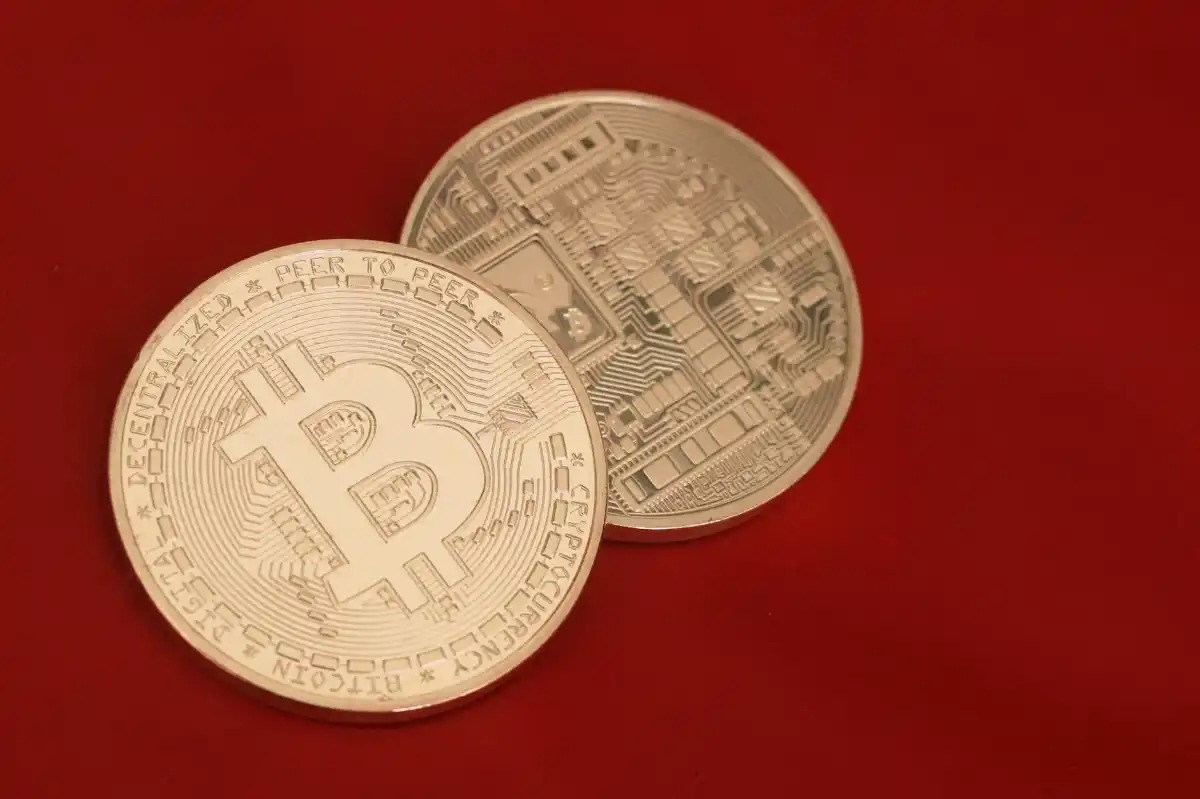
A futuristic bank vault door opening to reveal a digital landscape of floating USDC coins and credit card symbols, with a bright light shining from within, symbolizing a new era of financial access.
From our network :
- The Final Descent: How ESA Retired the Legendary Cluster Constellation After 24 Years of Space Weather ScienceAfter 24 years mapping Earth’s magnetosphere, ESA’s Cluster mission concluded with a precisely controlled reentry over the South Pacific. This analysis explores the scientific legacy, engineering decisions, and debris mitigation principles behind one of space exploration’s most responsible retirements.
- Committed Mediterranean Precipitation Decline: Why Emissions Cuts Alone Cannot Restore Winter RainsNew NOAA research reveals that Mediterranean winter rains may decline irreversibly even with emissions cuts. Explore the science of committed climate change and regional impacts.
- Norbert’s Uncertain Path: Why Hawaii’s Storm Watch Demands Patience Over PanicTropical Storm Norbert strengthens in the Eastern Pacific with winds near 50 mph, forecast to reach Category 1 hurricane status by Friday. Long-range models disagree sharply on whether Hawaii faces any threat around September 19–23, making official guidance essential.
- Analyzing Hoya Corporation’s Midday Volume Shifts and Financial FundamentalsExamine Hoya Corporation’s midday trading volume contraction, technical moving averages, robust solvency ratios, and stellar quarterly earnings performance.
- The Hidden Cost of AI Convenience: Why Over-Permissioned Agents Are a Security Time BombDiscover why AI agents with excessive permissions create dangerous single points of failure, and learn how implementing least privilege principles can protect your organization from exploitation.
- How AI Agents Will Change the Way We Manage Personal FinancesExplore how AI agents are transforming personal finance through automated budgeting, bill payment, and investment management, while examining the critical security protocols and governance frameworks required for safe deployment.
- CISA’s Ten-Advisory Wave: Why Generic Patching Fails in OT and How to Build Product-Specific PlaybooksCISA released ten ICS advisories in one week, exposing critical infrastructure risks. Generic patching fails in OT. Learn to build product-specific remediation playbooks.
- Forbidden Matrix Patterns and Visible Lattice Points: A Geometric DictionaryExplore how multidimensional 0–1 matrices encode geometric truths, linking forbidden patterns to visible lattice points and hypergraph theory, with applications in combinatorics and computational geometry.
- Former Soap Stars Embark on Ambitious Writing Projects and Theatrical StagesDiscover how former soap opera actors are transitioning into independent scriptwriting and high-profile theatrical stage productions.
RESOURCES
- Mastercard Granted New York State Department of Financial ...investor.mastercard.com1 day ago ... ... BitLicense framework is widely recognized for establishing ... © 1994-2026 Mastercard. Privacy · Terms · Site map · United…
- Mastercard granted New York State Department of Financial ...mastercard.comPress Release. May 27, 2026 | Purchase, NY ... Mastercard Transaction Services (U.S.) LLC (MTS US) has been granted a BitLicense by the New…
- Mastercard secures New York BitLicense to support stablecoin and ...coindesk.com1 day ago ... Mastercard said the BitLicense approval supports its strategy ... © 2026 CoinDesk, Inc. Disclosure & Polices: CoinDesk is an award ...
- Mastercard secures New York State Bitlicense as it continues to ...theblock.co1 day ago ... New York has now officially granted three Virtual Currency Business Activity Licenses (aka BitLicenses) in 2026.
- Mastercard granted New York State Department of Financial ...x.com1 day ago ... Mastercard (@Mastercard). 69 replies. Breaking news! Mastercard has been granted a BitLicense by the New York State Department of Financial ...
- Mastercard Secures New York BitLicense To Advance Digital Asset ...bitcoinmagazine.comThe announcement came on May 27, 2026, and positions Mastercard to deepen its involvement in stablecoin infrastructure and blockchain-based payment systems.
- NY Department of Financial Services grants BitLicense to Mastercardfxnewsgroup.com1 day ago ... Mastercard Transaction Services (U.S.) LLC has been granted a BitLicense by the New York State Department of Financial Services (NYDFS).
- Mastercard lands New York BitLicense for blockchain paymentsfintechfutures.comMastercard lands New York BitLicense for blockchain payments. The global ... Webinar | 9 June 2026 | Value first, technology second: Why most process ...
- Mastercard wins New York BitLicense from NYDFS | MA Stock Newsstocktitan.net1 day ago ... BitLicense lets Mastercard operate under New York rules, backing its strategy to support stablecoins and tokenized deposits within payments.
- Mastercard Granted New York State Department of Financial ...globalfintechseries.comMastercard Granted New York State Department of Financial Services BitLicense. by Business Wire May 28, 2026 0. Mastercard Granted ...
- Mastercard Incorporated First Quarter 2026 Financial Results ...businesswire.comApr 30, 2026 ... --(BUSINESS WIRE)--Mastercard Transaction Services (U.S.) LLC (MTS US) has been granted a BitLicense by the New York State Department of ...
- Mastercard Secures New York BitLicense in Stablecoin ... - Blockheadblockhead.co12 hours ago ... Mastercard Transaction Services (U.S.) LLC received the license from the New York State Department of Financial Services (NYDFS) on May…
- Mastercard BitLicense Approval Opens New Chapter In Digital ...finance.yahoo.com8 hours ago ... Mastercard (NYSE:MA) has received a BitLicense from New York State. The approval allows the company to engage in regulated digital…
- Mastercard Incorporated (MA) latest stock news and headlinesnz.finance.yahoo.comIs SoFi's Mixed Q1 2026 Signals Altering The Investment Case For SoFi Technologies (SOFI)?. Simply Wall St. • 4 days ago. SOFI.
- Mastercard Secures New York BitLicense - Yahoo Financefinance.yahoo.comCryptoProwl. Wed, May 27, 2026 at 6:49 AM PDT 1 MINUTES_READ. MA · GLXY · Explore stocks on Coinbase Trading disclosure. Credit card giant…
- 01
- 02
- 03
- 04
- 05
- 06
- 07
- 08
0 Comments