
Arrest in a mass shooting case is never merely a police headline; it is the first visible consequence of a far more demanding legal and evidentiary process. In the Coney Island Fourth of July shooting, the NYPD’s announcement signals that investigators believe they have crossed the threshold from chaotic incident response to a prosecutable case. That transition matters because the law does not punish suspicion. It punishes proof. Before a suspect can be arraigned on attempted murder counts, police and prosecutors must assemble a disciplined record showing identity, intent, causation, and the linkage between the accused and each alleged victim.
The core message is straightforward and severe: mass violence produces multiple legal questions, not a single charge. Every injured person, every bullet trajectory, every statement, and every fragment of video can generate a separate count or support a broader theory of criminal liability. In New York City, where shootings are investigated under intense public pressure, the legal standard remains unchanged. A rapid arrest may reassure the public, but the case only becomes durable when investigators can convert urgency into evidence that survives courtroom scrutiny, defense challenges, and the unforgiving precision of criminal procedure.
This is why the event deserves analysis beyond the surface drama of an arrest. It illustrates how modern urban policing operates at the intersection of forensic science, witness management, surveillance review, and charging strategy. It also reveals how prosecutors translate one episode of gunfire into a structured indictment. The story is not just about who was arrested. It is about what must be proven, how attempted murder is distinguished from lesser offenses, and why the path from shooting scene to arraignment is a test of institutional competence.
On This Page
The arrest as a legal milestone, not a conclusion
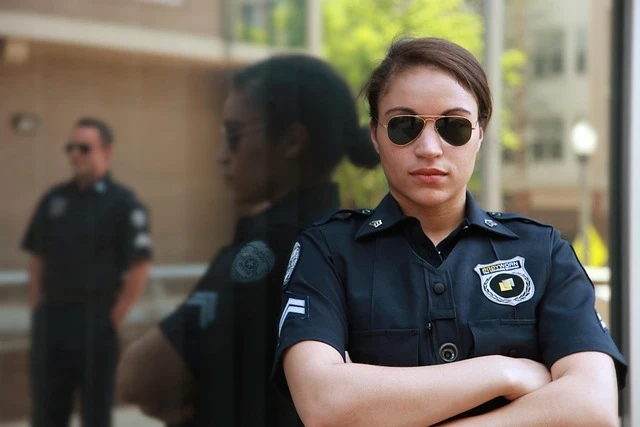
In a shooting investigation, arrest is the start of the legal climb, not the summit. The NYPD’s announcement indicates that detectives believed they had enough information to take custody of a suspect tied to the July 4 Coney Island incident. Yet an arrest is only a law-enforcement judgment; conviction requires proof beyond a reasonable doubt. That distinction matters, because high-profile shootings attract pressure for speed, while courts demand accuracy. The work between those two poles consists of identifying the shooter, preserving the scene, securing shell casings and video, and ensuring that witness accounts can be tested against physical evidence.
In practical terms, investigators must build a chain of facts that connects the suspect to the firearm discharge and to the victims named in the charging instrument. In New York, attempted murder requires proof of intent to cause death plus conduct tending toward that result. That is a serious threshold. A prosecutor cannot simply say gunfire occurred and therefore attempted murder exists. The state must show that the shooting was not accidental, not merely reckless, and not merely a public disturbance. It must demonstrate that the accused acted with the deliberate mental state associated with lethal purpose.
What detectives must lock down first
The first priority is identity. Investigators need dependable evidence placing the suspect at or near the scene, ideally through video, witness corroboration, phone records, ballistic evidence, or admissions. In modern urban cases, surveillance footage can be decisive, but only if it is authenticated and contextualized. A blurry image alone is weak; a timestamped sequence tied to other evidence becomes powerful. Detectives also look for firearm recovery, casings matching a specific weapon, and patterns indicating where shots were fired. Every item must be documented carefully, because defense attorneys will attack breaks in the chain of custody.
Next comes intent. A mass shooting does not automatically equal attempted murder, though prosecutors often pursue that charge when facts justify it. The distinction is procedural and moral: reckless endangerment punishes dangerous conduct, but attempted murder punishes a purposeful effort to kill. To prove that, the state may rely on the number of shots, the direction of fire, the distance to victims, or statements before and after the incident. If the evidence shows a targeted or deliberate barrage, the charge becomes sturdier. If the evidence suggests panic or indiscriminate firing without lethal purpose, the case may be harder to sustain.
Finally, investigators must connect each alleged victim to a specific legal theory. Multiple victims do not produce a single charge; they produce multiple counts, each demanding its own factual basis. That structure explains why mass shooting indictments can grow quickly. The criminal case becomes a matrix of conduct, intent, and consequences. One discharge may support several attempted-murder counts, assault charges, weapons offenses, and reckless endangerment allegations. The charging architecture is not decorative. It is the legal skeleton of the prosecution, and every bone must be correctly placed or the case weakens in court.
from dataclasses import dataclass
from typing import List, Dict

@dataclass(frozen=True)
class IncidentEvidence:
    item_id: str
    evidence_type: str
    relevance: str
    chain_of_custody: bool

def evaluate_probable_cause(items: List[IncidentEvidence]) -> Dict[str, int]:
    score = 0
    for item in items:
        if item.chain_of_custody:
            score += 2
        if item.evidence_type in {"video", "ballistics", "witness", "admission"}:
            score += 3
        if "identity" in item.relevance.lower() or "intent" in item.relevance.lower():
            score += 4
    return {"probable_cause_score": score}

evidence = [
    IncidentEvidence("V-01", "video", "identity linkage to suspect", True),
    IncidentEvidence("B-02", "ballistics", "weapon-to-scene correlation", True),
    IncidentEvidence("W-03", "witness", "intent and sequence of shots", True),
]
print(evaluate_probable_cause(evidence))
How attempted murder is built from a single burst of gunfire
Attempted murder is a legal instrument designed to capture conduct that falls short of death but not of murderous purpose. In a mass shooting, that doctrine expands rapidly because each endangered person can produce a separate count. Prosecutors will examine whether the suspect fired directly at people, whether victims were within the zone of danger, and whether the number and placement of shots support an inference of intent. The law does not require the state to prove a death occurred; it requires proof that the defendant meant to kill and took a substantial step toward that end.
That is why the wording of the charge matters so much. A charging document that names attempted murder communicates that the state believes the facts point beyond recklessness or fear-driven disorder. It tells the court that investigators see a lethal objective, not just a broad public safety threat. In practice, prosecutors often pair those counts with weapons offenses because the firearm itself becomes both the instrument of violence and an independent statutory violation. The case then acquires layers: the act, the intent, the means, and the injury.
Why every victim can create a separate count
Criminal law treats each person endangered or harmed as a distinct legal interest. If one shooter fires into a crowd, the same act may support multiple charges because the conduct created individualized risk to multiple named victims. That is why a single shooting can produce a dense charging sheet. It is not overreach when done properly; it is the law recognizing that one violent episode can generate many attempted homicides. The prosecution must still prove each count with precision, but the structure allows the court to measure the full scope of the harm rather than compress it into a generic offense.
Defense counsel, predictably, will challenge whether the evidence proves a specific intent to kill each victim or merely a generalized disregard for human life. That challenge is serious. The state may rely on trajectory analysis, distances, line of sight, witness descriptions, and video to show the defendant deliberately fired at people rather than into the air or across an empty space. Even where intent is inferred, the inference must be rational. This is where professional investigation matters. A sloppy file collapses under scrutiny; a coherent evidentiary narrative can carry the counts through arraignment, pretrial hearings, and trial.
New York’s criminal procedure also shapes the outcome. Once charges are filed, the case moves through arraignment, bail considerations, discovery obligations, and potentially grand jury review, depending on case posture and prosecutorial strategy. Each stage places pressure on the prosecution to refine its theory. A fast arrest may satisfy public urgency, but the courtroom demands structure. The law rewards the side that can explain not only what happened, but how each fact supports the charge. In a mass shooting case, that explanatory burden is heavy by design.
from collections import defaultdict
from typing import List, Tuple

def build_counts(victims: List[str], charge: str) -> List[Tuple[str, str]]:
    return [(victim, charge) for victim in victims]

victims = ["Victim_A", "Victim_B", "Victim_C"]
counts = build_counts(victims, "Attempted Murder")
for victim, count in counts:
print(f"{victim}: {count}")Why the NYPD response carries broader institutional weight
A swift arrest after a holiday shooting is not only operationally important; it is institutionally revealing. It tells the public that the police department can move from emergency response to case building quickly enough to preserve credibility. In dense urban environments, delay can dissolve evidence, sour witnesses, and invite speculation. Speed, however, must not outrun discipline. The NYPD’s credibility in cases like this depends on whether the arrest can withstand later review. If the facts are thin, the arrest becomes symbolic. If the facts are solid, it becomes the foundation for a durable prosecution and a meaningful public record.
The broader point is that policing in mass shooting cases is part forensics, part administration, and part legal theater. Detectives must coordinate with prosecutors, medical personnel, crime scene technicians, and sometimes federal partners. They must also handle public messaging carefully, because premature certainty can damage both the case and public trust. The legal system performs best when urgency is matched by accuracy. That balance is difficult under crisis conditions, which is why experienced investigators treat every statement, photograph, and report as if it will be examined in a courtroom months later.
The public record versus the courtroom record
News reports summarize a case; courts adjudicate it. Those are not the same universe. A press release may say a suspect was arrested in connection with a shooting, but that phrasing is descriptive, not determinative. The courtroom record requires sworn testimony, admissible exhibits, and a charging theory that can survive defense objections. This divide is crucial because the public often mistakes arrest for proof. In reality, arrest means probable cause, a lower standard. Prosecutors must later transform that probable cause into a legally coherent story supported by admissible evidence.
That transformation is where institutional rigor becomes visible. Surveillance footage must be authenticated. Witness statements must be preserved consistently. Ballistics must be linked to a recovered firearm or a firing pattern. Medical records may help show the scale of the attack and the victims’ injuries. If the evidence is strong, the case can proceed through arraignment and beyond with momentum. If it is weak, the prosecution risks reduction, dismissal, or plea bargaining from a position of weakness. The legal system is not impressed by outrage alone; it responds to structure.
For communities affected by gun violence, this process matters because accountability must be more than rhetorical. It must be measurable, documented, and enforceable. The arrest in Coney Island signals that the machinery has started moving, but public confidence ultimately depends on whether the case is handled with precision. That means the right charges, the right evidence, and the right sequence of procedure. When mass violence produces multiple attempted-murder counts, the state must prove each one. The law tolerates no shortcuts where life and liberty are both on the line.
def courtroom_readiness(probable_cause: bool, evidence_integrity: bool, witness_support: bool) -> str:
    score = sum([probable_cause, evidence_integrity, witness_support])
    if score == 3:
        return "Ready for sustained prosecution"
    if score == 2:
        return "Proceed, but expect challenges"
    return "Case requires reinforcement"

print(courtroom_readiness(True, True, False))- 01
- 02
- 03
- 04
The broader meaning of accountability after gun violence
The real significance of the Coney Island arrest lies in accountability that can be explained, not merely announced. Gun violence cases test whether institutions can convert urgency into justice without sacrificing standards. When that happens properly, an arrest is more than an arrest: it becomes the first formal acknowledgment that evidence has crossed the line from suspicion to prosecution. The public sees the visible edge of a much larger system, one that depends on disciplined investigation, legal precision, and procedural integrity. In that sense, the case is a lesson in how criminal law handles mass harm.
It also reminds observers that justice is sequential. First comes the emergency response. Then the forensic recovery. Then the charging decision. Then arraignment. Then the slow and unforgiving scrutiny of the courts. Each stage is a filter, and only strong cases survive all of them intact. That is the sober reality behind any headline about a shooting arrest. The outcome that matters is not just whether someone was taken into custody, but whether the state can prove each count, justify each allegation, and translate a violent moment into lawful accountability.
Why procedure is the hidden safeguard
Procedure is often mocked as bureaucratic, but in violent crime cases it is the safeguard that prevents errors from hardening into injustice. Arrest without proof is dangerous. Proof without procedure is fragile. In a case like this, the legal process protects both the public and the accused by forcing the state to verify every claim. That discipline is not weakness. It is the architecture of legitimacy. Without it, the criminal-justice system would collapse into impulse, and impulse is exactly what a serious shooting has already imposed on the community.
For that reason, the Coney Island case should be read as a test of institutional seriousness. Did detectives identify the right suspect? Did they preserve the evidence correctly? Did prosecutors choose charges that match the facts? Can each count be defended line by line? These are the questions that matter once the cameras move on. A robust case does not merely punish a suspect; it demonstrates that the system can respond to violence with method rather than noise. That is the deepest meaning of the arrest.
When public attention fades, the legal record remains. And if the record is built well, it becomes the basis for accountability that is both credible and durable. That is the standard. Not outrage. Not haste. Not theater. Evidence, procedure, and proof.
def prosecution_strength(evidence_score: int, witness_quality: int, legal_fit: int) -> float:
    return round((0.45 * evidence_score) + (0.35 * witness_quality) + (0.20 * legal_fit), 2)

print(prosecution_strength(9, 8, 10))We Also Published
From our network :
- Committed Mediterranean Precipitation Decline: Why Emissions Cuts Alone Cannot Restore Winter RainsNew NOAA research reveals that Mediterranean winter rains may decline irreversibly even with emissions cuts. Explore the science of committed climate change and regional impacts.
- Former Soap Stars Embark on Ambitious Writing Projects and Theatrical StagesDiscover how former soap opera actors are transitioning into independent scriptwriting and high-profile theatrical stage productions.
- The Hidden Cost of AI Convenience: Why Over-Permissioned Agents Are a Security Time BombDiscover why AI agents with excessive permissions create dangerous single points of failure, and learn how implementing least privilege principles can protect your organization from exploitation.
- Forbidden Matrix Patterns and Visible Lattice Points: A Geometric DictionaryExplore how multidimensional 0–1 matrices encode geometric truths, linking forbidden patterns to visible lattice points and hypergraph theory, with applications in combinatorics and computational geometry.
- Norbert’s Uncertain Path: Why Hawaii’s Storm Watch Demands Patience Over PanicTropical Storm Norbert strengthens in the Eastern Pacific with winds near 50 mph, forecast to reach Category 1 hurricane status by Friday. Long-range models disagree sharply on whether Hawaii faces any threat around September 19–23, making official guidance essential.
- CISA’s Ten-Advisory Wave: Why Generic Patching Fails in OT and How to Build Product-Specific PlaybooksCISA released ten ICS advisories in one week, exposing critical infrastructure risks. Generic patching fails in OT. Learn to build product-specific remediation playbooks.
- The Final Descent: How ESA Retired the Legendary Cluster Constellation After 24 Years of Space Weather ScienceAfter 24 years mapping Earth’s magnetosphere, ESA’s Cluster mission concluded with a precisely controlled reentry over the South Pacific. This analysis explores the scientific legacy, engineering decisions, and debris mitigation principles behind one of space exploration’s most responsible retirements.
- How AI Agents Will Change the Way We Manage Personal FinancesExplore how AI agents are transforming personal finance through automated budgeting, bill payment, and investment management, while examining the critical security protocols and governance frameworks required for safe deployment.
- Analyzing Hoya Corporation’s Midday Volume Shifts and Financial FundamentalsExamine Hoya Corporation’s midday trading volume contraction, technical moving averages, robust solvency ratios, and stellar quarterly earnings performance.
RESOURCES
- Robert Smith arrested after 8 people shot during July 4th barbecueabc7ny.com4 days ago ... The NYPD arrested and charged Robert Smith with multiple counts of attempted murder after eight people were shot in Coney…
- At least eight shot, including four children, in New York's Coney Islandtheguardian.com7 days ago ... The non-partisan resource defines mass shootings as cases in which four or more victims are wounded or killed. There had…
- Fifteen Alleged Members of Coney Island-Based Gangs Charged ...brooklynda.orgMay 11, 2026 ... Brooklyn District Attorney Eric Gonzalez, together with New York City Police Commissioner Jessica S. Tisch, today announced that 15 alleged ...
- Robert Smith has been charged with multiple counts of attempted ...facebook.com4 days ago ... Man arrested for July 4 shooting on Coney Island, charged with. 1d ... Career criminal busted in stray bullet NYC…
- Eight wounded, including four children, in Brooklyn shooting - NY1ny1.com6 days ago ... A family Fourth of July barbecue in Coney Island turned into a mass shooting Saturday night, leaving eight people wounded,…
- Police arrest Brooklyn man involved with July 4 mass shooting in ...amny.com4 days ago ... Shooting Suspect Robert Smith, 44, was charged with shooting eight people at West 30 Street and Surf Avenue in Coney…
- Coney Island July 4 cookout shooting suspect arrested, police saynbcnewyork.com4 days ago ... Police have arrested the alleged gunman behind a mass shooting in Coney Island ... charges, according to police. Robert Smith…
- Masked suspect sought in shooting that left 8 people, including 4 ...abcnews.comEight people, including four children, were shot during a Fourth of July family barbecue in Brooklyn's Coney Island.
- Arrest Made In Coney Island Mass Shooting That Injured 4 Childrenbrooklyn.news12.com4 days ago ... Brooklyn man facing hate crime charges after assaulting a child in a Manhattan playground ... An arrest has been made…
- Suspect arrested in Coney Island shooting that injured 8, including 4 ...abcnews.com4 days ago ... The suspect -- identified as 44-year-old Robert Smith -- is being charged with multiple counts of attempted murder, according to…
- 01
- 02
- 03
- 04
- 05
- 06
- 07
- 08
0 Comments