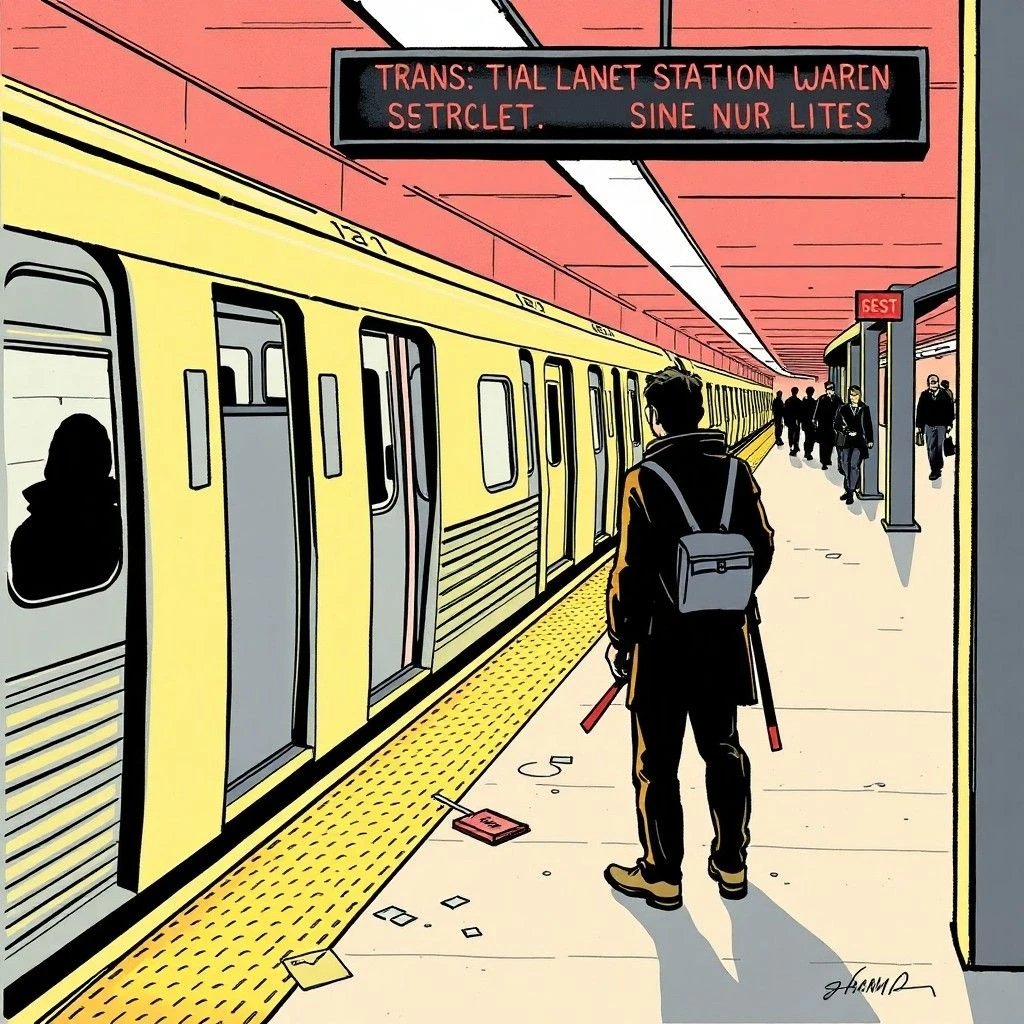
A homicide investigation at a Long Island Rail Road station is not merely a police matter; it is a blunt indicator of how vulnerable transit corridors can become when the night thins out foot traffic, supervision, and visibility. Station platforms, access paths, parking areas, and adjacent streets form a single security ecosystem. If one part fails, the whole environment weakens. The core message is severe and unmistakable: public transit safety cannot be treated as an afterthought, especially after dark, when isolation and delay magnify risk.
The incident draws attention to a recurring urban problem: crime in transit settings often emerges where deterrence is inconsistent, monitoring is fragmented, and the built environment offers concealment rather than control. Security is not only a question of police presence. It is also a matter of design, process, and rapid intervention. Lighting, cameras, visibility lines, emergency communications, and platform staffing all shape whether a station functions as a protected public asset or an exposed corridor of opportunity.
Long Island commuters, transit planners, and local communities should read this event as a warning rather than a headline that fades with the news cycle. Investigations into station-area violence can expose operational gaps that are otherwise ignored until tragedy forces the issue. The real task is to convert grief into policy discipline: stronger surveillance coverage, better night-time routing, smarter environmental design, and coordinated safety protocols that respect the realities of late travel.
On This Page
What the incident reveals about transit vulnerability
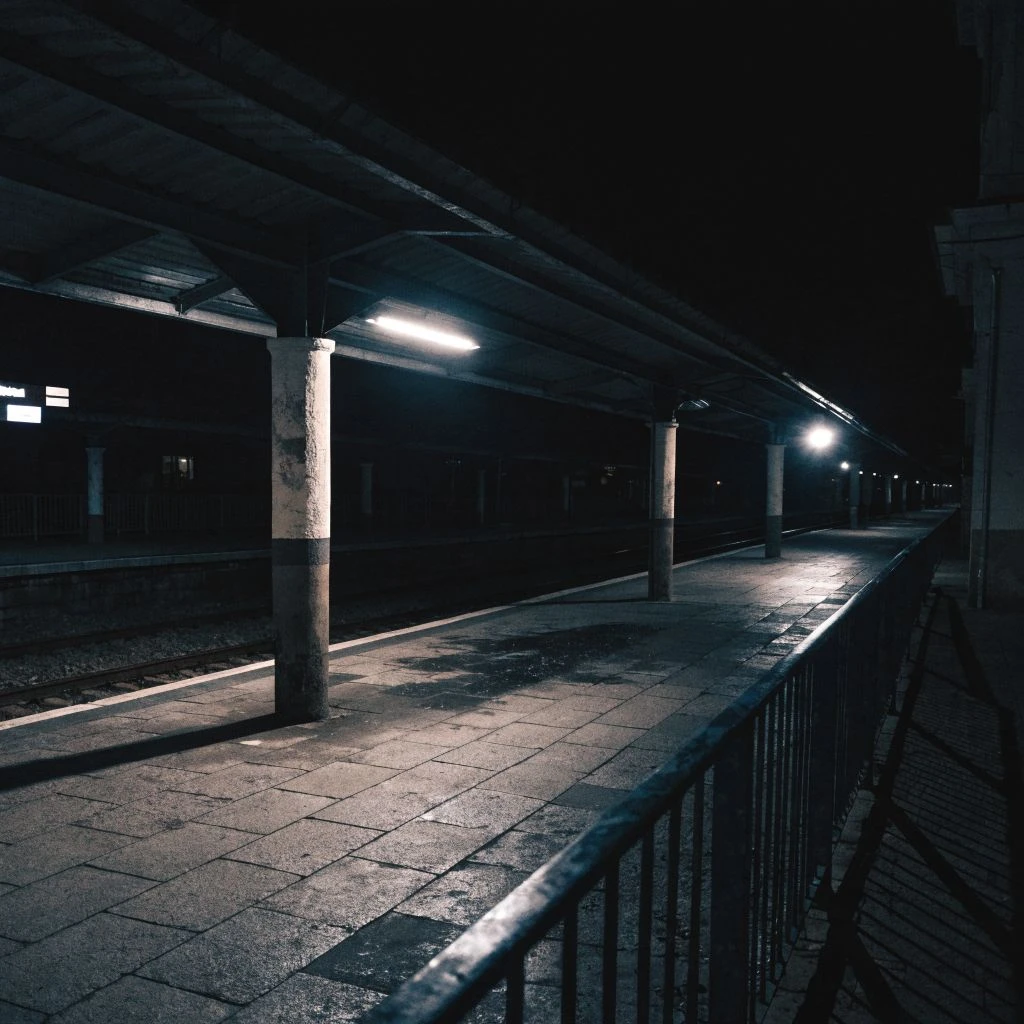
Homicides near rail stations are rarely random in their consequences, even when the sequence of events remains under investigation. Stations attract movement, but at night they can also produce pockets of concealment, delay, and limited witness density. That combination matters. A transit setting is supposed to compress time between arrival and departure; when safety systems lag behind, the station becomes a corridor where danger can unfold before help arrives. The public consequence is larger than the individual crime itself: it weakens trust in the transit network.
Security professionals treat such locations as layered environments. The platform is only the visible layer. Beneath it sits the design of access routes, parking lots, side exits, signage, emergency intercoms, and camera coverage. A weak link anywhere can create an opening. Transit systems that rely only on passive infrastructure tend to underestimate how quickly late-night vulnerability escalates. For that reason, homicide investigations around stations usually trigger a wider review of operating hours, patrol timing, and the technical reliability of surveillance systems.
Surveillance, visibility, and the burden of proof
Camera systems in transit environments serve two roles: deterrence and reconstruction. The first role is preventive; the second is investigative. If cameras are poorly positioned, obstructed, or insufficiently monitored, they lose both value streams. In a homicide investigation, evidence quality matters enormously because timelines, movement patterns, and suspect identification often depend on video records. The lesson is clear and non-negotiable: a camera that does not clearly observe entrances, exits, platforms, and nearby pedestrian routes is decorative hardware, not security infrastructure.
Visibility also operates beyond technology. Sight lines, trimming of landscaping, placement of lighting poles, and design of stairwells all affect how quickly danger can be seen and reported. Transit agencies that audit only equipment inventories miss the broader point. The built environment should expose activity, not hide it. That principle is central to crime prevention through environmental design, which treats space as an active variable in public safety. A station can either support oversight or quietly sabotage it.
Public confidence declines when passengers feel they must navigate a system that is technically open yet practically unprotected. A station is supposed to distribute access; it must not distribute fear. That is why surveillance policy should be judged by coverage quality, retention reliability, real-time monitoring, and coordination with local law enforcement. Anything less creates a theater of safety—impressive on paper, fragile in practice.
Lighting, staffing, and rapid response discipline
Lighting is one of the oldest and most effective safety controls, and one of the easiest to neglect. Bright, even illumination discourages concealment and helps both passengers and staff detect unusual behavior earlier. But light alone is insufficient if no one is present to observe, communicate, and intervene. Night staffing levels matter because response time can determine whether an incident is interrupted or allowed to escalate. Transit safety is therefore a matter of tempo as much as technology.
When station staffing is thin, agencies should compensate with patrol scheduling, emergency call access, and clearly posted instructions. A visible human presence changes behavior. It also reduces the psychological distance between passengers and help. In practical terms, the goal is not merely to record a crime after it happens, but to build conditions under which threats are less likely to develop. That requires discipline, investment, and an unwillingness to accept nighttime vulnerability as normal.

Why this matters for community trust and public policy
Transit stations are more than infrastructure; they are social promises. They tell residents that movement through the city will remain orderly, predictable, and safe enough to trust. When a homicide occurs in that setting, the emotional damage reaches beyond the immediate victim and investigators. It forces commuters to question whether the system is alert, whether the platform is watched, and whether night travel has been adequately planned. Public safety in transit is therefore not a narrow technical issue. It is a trust contract between agencies and the people they serve.
Policy must respond with urgency, but urgency without precision is wasteful. The correct response is evidence-led: map incident patterns, review reporting times, identify weak points in station design, and separate isolated anomalies from structural risk. This is where transit safety becomes a governance issue. Officials should not wait for another tragedy to justify a review of lighting, platform visibility, emergency communications, and interagency coordination. The standard should be continuous assessment, not reactive concern.
Community messaging without panic
Authorities must communicate with precision. Overstated reassurance is counterproductive, but so is fear-driven messaging that paints every station as a crime scene. The responsible path is sober clarity: describe what is known, what is under review, and what changes will follow. Communities do not need theatrical language; they need competence. Trust improves when officials demonstrate that they understand the mechanics of risk and are willing to adjust operations accordingly. Silence, ambiguity, and delay create more anxiety than direct communication ever will.
Public messaging should also empower riders with practical habits. Reporting suspicious activity, using well-lit paths, avoiding isolated waiting areas, and staying aware of exits are modest behaviors with real value. Yet individual caution must never substitute for institutional responsibility. The burden belongs first to agencies, not to commuters. A safe transit system is one that makes prudent behavior easy and dangerous behavior difficult.
Homicide at or near a station is an indictment of the environment, not just the event. It suggests that oversight may have been too loose, lighting too poor, and evening security too thin. Those findings should not be buried under routine administrative language. They belong at the center of policy review.
Data, pattern recognition, and prevention strategy
Modern transit safety depends on pattern recognition. Agencies should track time-of-day incident clusters, repeat locations, camera coverage gaps, and environmental conditions that correlate with reported crimes. This is a classic use case for operational analytics: one incident is tragic, but a series of incidents can reveal a system failure. Smart prevention begins with disciplined classification and ends with targeted intervention. Without that, agencies remain reactive, always arriving after the fact.
In technical terms, prevention improves when the system reduces ambiguity. If a station has predictable blind spots, those spots should be removed. If late-night service concentrates passengers into fewer arrival windows, staffing should be matched to those windows. If incident response repeatedly depends on off-site units, on-site escalation must be strengthened. The principle is simple: reduce uncertainty, shorten reaction time, and expand visibility. That is how transit safety becomes real rather than ceremonial.
- 01
- 02
- 03
- 04
We Also Published
How investigation and prevention work together
An active homicide investigation and a long-term prevention strategy are not separate worlds. They are successive phases of the same public safety duty. Investigators establish facts, reconstruct timelines, and identify accountability. Transit planners then use those findings to prevent recurrence. This is the proper order of operations: truth first, correction second. When agencies treat these stages as disconnected, lessons evaporate and the same vulnerabilities survive intact. A serious transit system learns from the worst night it has ever experienced.
That learning should be institutional. It must survive staffing changes, political cycles, and media attention. A disciplined agency stores findings in policy, not memory. If a station-area homicide exposes weak lighting, staff shortages, or inadequate monitoring, those defects should be corrected systemically across the network. One location is the warning; the whole system is the responsibility. This is how isolated violence becomes a catalyst for durable reform rather than a temporary crisis report.
from dataclasses import dataclass
from typing import List

@dataclass
class StationRisk:
    name: str
    lighting_score: int
    camera_coverage: int
    night_staffing: int
    foot_traffic: int

    def risk_index(self) -> float:
        exposure = (100 - self.lighting_score) + (100 - self.camera_coverage)
        isolation = 100 - self.foot_traffic
        staffing_gap = 100 - self.night_staffing
        return round((exposure * 0.4) + (isolation * 0.35) + (staffing_gap * 0.25), 2)

stations: List[StationRisk] = [
    StationRisk("Bay Shore", 62, 71, 58, 44),
    StationRisk("Central Hub", 88, 93, 81, 76),
]

for station in stations:
    print(station.name, station.risk_index())
From incident review to corrective action
Corrective action begins with a structured incident review. Analysts should ask where visibility failed, where communication slowed, and where system design created opportunity. The answer is often uncomfortable because it reveals that risk was not mysterious; it was engineered by neglect. Once the review is complete, the corrective plan should contain deadlines, responsible units, and performance checks. Without those elements, “improvement” becomes an empty promise.
Security planning works best when it behaves like engineering. Inputs are measured, constraints are identified, and outputs are tested against reality. If a camera array leaves platform edges uncovered, move it. If a late-night patrol arrives too slowly, reroute it. If a particular access path becomes a recurring concern, redesign it. The objective is not perfection, which is unrealistic, but controlled exposure. A mature transit system does not wait for catastrophe to reveal what should already have been obvious.
That is the governing lesson of the Bay Shore homicide investigation: public safety cannot depend on luck, and transit stations cannot be left to govern themselves after midnight. Surveillance, lighting, staffing, and response coordination must operate together, continuously and visibly.
Operational checklist for safer stations
A practical checklist must be plain, enforceable, and audited. First, verify that all key areas are visible from live or rapidly reviewed camera feeds. Second, test lighting at the exact hours when commuter traffic falls and isolation rises. Third, ensure emergency communication devices are easy to find and functioning. Fourth, coordinate local police and transit staff on late-night escalation rules. Fifth, inspect routes leading to and from the station, not just the platform itself. Safety is never confined to a single point.
Finally, agencies should remember that every security measure is judged by how it performs under stress. A station that looks safe in daylight can fail at night if policies are not built for darkness, delay, and uncertainty. That is why the incident should be treated as both a criminal investigation and an operational audit. The public deserves both justice and correction, not one without the other.
In transit safety, as in all serious infrastructure governance, the standard must be higher than average and the response faster than complacency. Anything less is negligence by another name.
def normalize_score(value: float, minimum: float = 0.0, maximum: float = 100.0) -> float:
    if maximum <= minimum:
        raise ValueError("maximum must be greater than minimum")
    clipped = max(minimum, min(maximum, value))
    return (clipped - minimum) / (maximum - minimum)

scores = [62, 71, 88, 93]
normalized = [round(normalize_score(s), 3) for s in scores]
print(normalized)
#!/usr/bin/env bash
set -euo pipefail
STATION="Bay Shore"
LOG_DIR="./incident-review"
mkdir -p "$LOG_DIR"
echo "Reviewing transit safety inputs for $STATION"
printf "lighting, cameras, staffing, access-routes\n" > "$LOG_DIR/${STATION}_audit.csv"
cat "$LOG_DIR/${STATION}_audit.csv"<section aria-labelledby="safety-audit">
<h2 id="safety-audit">Station Safety Audit</h2>
<ul>
<li>Validate platform lighting</li>
<li>Check camera angles and retention</li>
<li>Confirm emergency call boxes work</li>
</ul>
</section>def incident_to_action(incident: str) -> dict:
return {
"incident": incident,
"review_steps": [
"timeline reconstruction",
"coverage gap analysis",
"response-time audit",
"policy revision"
]
}
print(incident_to_action("station-area homicide")).safety-panel {
background: #0a1128;
color: #f0f9ff;
border: 1px solid #1e293b;
padding: 16px;
border-radius: 8px;
}
.safety-panel h2 {
color: #38bdf8;
margin-top: 0;
}const stationAudit = {
lighting: true,
cameras: true,
patrolCoverage: false,
emergencyPhones: true
};
const readiness = Object.values(stationAudit).filter(Boolean).length / Object.keys(stationAudit).length;
console.log(`Readiness: ${Math.round(readiness * 100)}%`);def patrol_schedule(hours: int, peak_window: int = 6) -> list[str]:
return [f"Hour {h}: assign visibility patrol" for h in range(1, hours + 1) if h <= peak_window]
print("\n".join(patrol_schedule(8)))SELECT station_name,
incident_time,
lighting_status,
camera_status
FROM transit_audits
WHERE incident_type = 'homicide'
ORDER BY incident_time DESC;class SafetyRule:
def __init__(self, name: str, enabled: bool) -> None:
self.name = name
self.enabled = enabled
rules = [
SafetyRule("live_monitoring", True),
SafetyRule("night_patrols", True),
SafetyRule("blind_spot_mapping", True),
]
print({r.name: r.enabled for r in rules})From our network :
- The Final Descent: How ESA Retired the Legendary Cluster Constellation After 24 Years of Space Weather ScienceAfter 24 years mapping Earth’s magnetosphere, ESA’s Cluster mission concluded with a precisely controlled reentry over the South Pacific. This analysis explores the scientific legacy, engineering decisions, and debris mitigation principles behind one of space exploration’s most responsible retirements.
- Former Soap Stars Embark on Ambitious Writing Projects and Theatrical StagesDiscover how former soap opera actors are transitioning into independent scriptwriting and high-profile theatrical stage productions.
- Forbidden Matrix Patterns and Visible Lattice Points: A Geometric DictionaryExplore how multidimensional 0–1 matrices encode geometric truths, linking forbidden patterns to visible lattice points and hypergraph theory, with applications in combinatorics and computational geometry.
- Analyzing Hoya Corporation’s Midday Volume Shifts and Financial FundamentalsExamine Hoya Corporation’s midday trading volume contraction, technical moving averages, robust solvency ratios, and stellar quarterly earnings performance.
- How AI Agents Will Change the Way We Manage Personal FinancesExplore how AI agents are transforming personal finance through automated budgeting, bill payment, and investment management, while examining the critical security protocols and governance frameworks required for safe deployment.
- Norbert’s Uncertain Path: Why Hawaii’s Storm Watch Demands Patience Over PanicTropical Storm Norbert strengthens in the Eastern Pacific with winds near 50 mph, forecast to reach Category 1 hurricane status by Friday. Long-range models disagree sharply on whether Hawaii faces any threat around September 19–23, making official guidance essential.
- The Hidden Cost of AI Convenience: Why Over-Permissioned Agents Are a Security Time BombDiscover why AI agents with excessive permissions create dangerous single points of failure, and learn how implementing least privilege principles can protect your organization from exploitation.
- CISA’s Ten-Advisory Wave: Why Generic Patching Fails in OT and How to Build Product-Specific PlaybooksCISA released ten ICS advisories in one week, exposing critical infrastructure risks. Generic patching fails in OT. Learn to build product-specific remediation playbooks.
- Committed Mediterranean Precipitation Decline: Why Emissions Cuts Alone Cannot Restore Winter RainsNew NOAA research reveals that Mediterranean winter rains may decline irreversibly even with emissions cuts. Explore the science of committed climate change and regional impacts.
RESOURCES
- Governor Hochul Slams Federal Cuts to Counterterrorism Funding ...governor.ny.govOct 9, 2025 ... New York State and NYPD's Investments In Subway Safety Continue; Transit Crime Down 30 Percent in September ... Long Island…
- Keeping New Yorkers safe is my top priority, and we're making real ...facebook.com6 days ago ... You mean crime is UP in NY, prosecution is down. You can sway the stats pretty well when you reduce…
- Governor Hochul Announces MTA to Install Security Cameras in ...governor.ny.govSep 20, 2022 ... ... Long Island Rail Road trains are equipped with security cameras. ... transit system by better deterring crime and increasing…
- Safety and security - MTAmta.infoSafety and Security · Careers. Agencies. Back; New York City Transit · Bridges & Tunnels · Long Island Rail Road · Metro-North Railroad ·…
- New York Police Department - NYC.govnyc.govCrime Prevention & Safety Tips · Domestic Violence Discipline Policy. go. Apply: Police Officer, NYPD Cadet Corps · Traffic Enforcement Agent · School Safety ...
- Long Island Rail Road - MTAmta.infoThe Long Island Rail Road is the busiest commuter railroad in North America. LIRR carries an average of 301000 customers each weekday on 735…
- 114 Precinct - NYPD - NYC.govnyc.govThe 114th Precinct is located in the northwestern portion of Queens, and covers Astoria, Long Island City, Woodside, and Jackson Heights.
- NYC Transit demonstrates ultraviolet tech killing COVID-19 on subwayabc7ny.comJun 12, 2020 ... The pilot is another step the MTA has taken in its disinfecting effort to keep employees and customers safe by…
- Long Island Man Sentenced to Nine Years in Prison for Attempted ...brooklynda.orgAug 15, 2025 ... Long Island Man Sentenced to Nine Years in Prison for Attempted Murder for Deliberately Hitting Woman with His Car, Attempting…
- Long Island is a paradise compared to the rest of the country - Redditreddit.comJul 31, 2024 ... Then I asked it to rank all 51 states in the order of safest to least safe. It pulled in…
- 01
- 02
- 03
- 04
- 05
- 06
- 07
- 08
0 Comments