On This Page
The $10.6 Billion Boom: Decoding Reliance Retail's Luxury Performance
Reliance Retail has fundamentally reshaped the luxury landscape in India through aggressive expansion and strategic international partnerships. The fiscal year 2026 reports highlight a massive revenue jump, indicating a structural shift in consumption. This growth is driven by a new class of affluent consumers seeking global standards in their local markets.
The company’s ability to scale high-end offerings across diverse geographies has been pivotal to its recent success. By integrating global brands into a cohesive retail ecosystem, Reliance has lowered the barriers for international entry. This strategy has effectively captured the burgeoning appetite for premium lifestyle products among India’s growing upper-middle class.
Data suggests that the "premiumization" trend is no longer limited to the traditional elite circles of Mumbai and Delhi. Instead, it has become a nationwide movement influencing purchasing decisions across various product categories. Reliance’s dominance in this sector reflects a deep understanding of the evolving Indian consumer’s psychological and social aspirations.
Furthermore, the narrowing of operational losses indicates that the initial heavy investments in infrastructure are finally yielding returns. The company has optimized its supply chain to handle the delicate requirements of luxury logistics efficiently. This operational maturity is essential for sustaining high growth rates in a competitive and volatile global economy.
As Reliance continues to consolidate its position, the focus is shifting toward long-term brand equity rather than just sales. By curating a portfolio that spans from accessible luxury to ultra-high-end labels, they are covering all bases. This comprehensive approach ensures that they remain the primary destination for luxury shoppers in the subcontinent.
The Rise of Tier 2 Luxury Hubs
Tier 2 cities like Chandigarh, Ahmedabad, and Pune are emerging as significant contributors to the luxury bottom line. These regions possess substantial untapped wealth and a growing desire for status-driven consumption among their residents. Reliance has successfully localized the luxury experience to cater to these vibrant and wealthy urban centers effectively.
The infrastructure development in these cities has paved the way for high-end malls that house international labels. Local consumers no longer feel the need to travel abroad or to major metros for their shopping. This convenience has triggered a localized spending boom that was previously underestimated by many global market analysts.
Moreover, digital connectivity has played a crucial role in educating these consumers about global fashion trends and heritage. Social media platforms provide a window into the luxury lifestyle, creating immediate demand for the latest collections. Reliance’s physical presence in these cities allows them to convert this digital interest into tangible retail sales.
The spending patterns in Tier 2 cities often mirror the enthusiasm of early adopters in larger metropolitan areas. However, there is a distinct preference for brands that offer a balance of global prestige and local relevance. Strategic marketing efforts have successfully bridged this gap, making international luxury feel accessible and culturally appropriate.
Looking ahead, the continued growth of these secondary hubs will be vital for the sustained expansion of the market. Brands that can navigate the cultural nuances of different Indian regions will likely see the most success. Reliance’s extensive network provides them with a unique advantage in executing this localized retail strategy.
International Partnerships and Portfolio Diversification
Reliance’s portfolio now includes a diverse array of global powerhouses, ranging from high-fashion icons to contemporary lifestyle brands. Partnerships with names like Burberry and Diesel have allowed them to offer a varied shopping experience. This diversification ensures that they can cater to different age groups and varying aesthetic preferences seamlessly.
The synergy between these international brands and Reliance’s local expertise creates a powerful market presence that is hard to replicate. By providing a stable platform for global labels, Reliance has become the preferred partner for luxury. This trust allows them to negotiate better terms and secure exclusive collections for the Indian market.
Portfolio diversification also acts as a hedge against shifting fashion trends and economic fluctuations in specific luxury segments. When one brand faces a seasonal slowdown, others often pick up the slack, maintaining overall revenue stability. This balanced approach is critical for managing a multi-brand retail empire in a dynamic environment.
Furthermore, the inclusion of contemporary brands allows for a "ladder" of consumption within the Reliance ecosystem. Younger shoppers might start with accessible brands and gradually move toward ultra-luxury labels as their purchasing power increases. This lifecycle management of the customer journey is a hallmark of sophisticated luxury retail planning.
The strategic acquisition of stakes in global designers further solidifies Reliance’s influence on the international fashion stage. They are no longer just distributors but active participants in the global luxury narrative and brand development. This evolution marks a significant milestone for Indian corporate influence in the worldwide fashion industry.
Narrowing Losses and Operational Efficiency
The financial health of Reliance’s luxury division has seen a marked improvement as operational efficiencies begin to take hold. Narrowing losses from ₹279 crore to ₹137 crore is a testament to disciplined fiscal management and scaling. This trajectory suggests that the business model is moving toward a sustainable and profitable future.
Efficiency in inventory management and markdown strategies has played a significant role in improving the overall gross margins. By using advanced analytics, the company can predict demand more accurately and reduce the burden of unsold stock. This data-driven approach is essential for maintaining the exclusivity and value of luxury products.
We can analyze the growth trajectory using the following expression for revenue increase percentage in the fiscal year 2026:
This formula highlights the aggressive pace at which the sector is currently expanding.
Furthermore, the consolidation of back-end operations across multiple brands has led to significant cost savings in logistics and administration. Sharing resources like warehousing and distribution networks allows for better utilization of assets and reduced overhead. These savings are directly contributing to the improved bottom line seen in recent reports.
As the business scales further, the fixed costs are spread over a larger revenue base, enhancing profitability through leverage. This is a classic example of how market leadership can lead to superior financial performance over time. Reliance is now reaping the rewards of its long-term vision and persistent capital investment.
Premium Beauty as a Monetization Engine
Premium beauty has emerged as a consistent and high-frequency monetization engine for the luxury retail sector in 2026. Unlike high-fashion couture, beauty products have a lower entry price point, making them accessible to a broader audience. This sector provides the steady cash flow necessary to support more capital-intensive fashion ventures.
The "lipstick index" remains relevant as consumers continue to spend on small luxuries even during periods of economic uncertainty. High-end skincare and fragrances have become essential components of the daily self-care routines for many Indian consumers. This habitual consumption ensures a recurring revenue stream that is less susceptible to seasonal fashion cycles.
Reliance has capitalized on this trend by launching dedicated beauty platforms and bringing global cult brands to India. These stores offer an immersive experience that combines professional consultation with high-end product discovery and trial. This experiential retail model is highly effective in building brand loyalty and driving repeat purchases.
The integration of beauty into the broader luxury ecosystem allows for cross-promotion and enhanced customer data collection. By understanding a customer's beauty preferences, the brand can better predict their fashion interests and lifestyle needs. This holistic view of the consumer is a powerful tool for personalized marketing and sales.
Ultimately, the beauty segment serves as the "entry-level" luxury experience that builds an emotional connection with the brand. Once a consumer trusts a luxury brand for their skincare, they are more likely to explore its fashion. This strategic funneling is essential for growing the total addressable market for high-end luxury products.
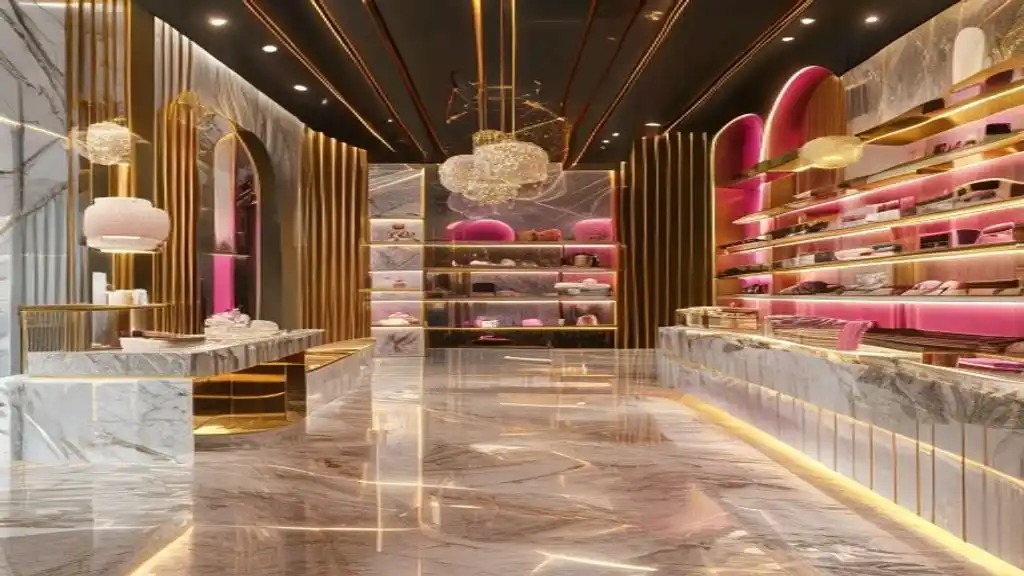
A luxurious beauty boutique interior featuring sleek marble counters, golden accents, and vibrant displays of high-end perfumes and cosmetics, with a blurred background of a modern Indian cityscape through large windows.
The Paradox of Indian Designer Labels: Scaling Challenges
While international brands thrive under corporate umbrellas, independent Indian designer labels face a unique set of profitability challenges. Despite reporting significant revenue growth, many top-tier designers remain in the red due to rising operational costs. This "Designer Paradox" highlights the difficulties of scaling artisanal businesses in a modern retail environment.
The struggle stems from the inherent tension between the bespoke nature of Indian couture and the requirements of scale. Each garment often requires hundreds of hours of manual labor, making mass production nearly impossible without losing quality. This reliance on artisanal skills limits the speed at which these brands can expand their market share.
Furthermore, the cost of maintaining high-profile retail spaces in prestigious locations adds a heavy burden to the balance sheet. Designers must balance the need for a physical presence that reflects their brand's luxury status with financial reality. This often leads to a situation where high sales are offset by even higher operational expenses.
The supply chain for Indian couture is also incredibly complex, involving various clusters of specialized craftsmen across the country. Managing this fragmented network requires significant time and resources, often distracting designers from their creative core. Without corporate-level logistical support, these labels struggle to maintain consistent production timelines and quality standards.
To survive, many Indian labels are now looking for strategic investors or corporate partners to help professionalize their operations. They need the capital and expertise to transition from founder-led boutiques to professionally managed luxury houses. This shift is necessary to achieve the efficiency required for long-term profitability in a globalized market.
Artisanal Labor and Supply Chain Complexity
The soul of Indian luxury lies in its intricate craftsmanship and the dedication of its highly skilled artisanal workforce. However, the scarcity of these specialized skills is becoming a significant bottleneck for brands looking to scale their operations. As younger generations move away from traditional crafts, the cost of artisanal labor continues to rise sharply.
Managing a supply chain that relies on decentralized village clusters presents immense logistical and quality control challenges for designers. Each step of the process, from weaving to embroidery, often happens in different locations with varying levels of infrastructure. This fragmentation makes it difficult to implement the standardized processes required for large-scale retail expansion.
Brands must invest heavily in training and social welfare for their artisans to ensure a stable and ethical workforce. While this is necessary for brand integrity, it adds another layer of cost to an already expensive production process. Balancing ethical sourcing with competitive pricing remains a constant struggle for many independent Indian couture labels.
The lead times for artisanal products are significantly longer than those for machine-made goods, affecting inventory turnover and cash flow. In a fast-paced retail world, these delays can result in missed opportunities and lost sales during peak seasons. Designers must find ways to optimize these traditional processes without compromising the "handmade" essence of their brand.
Technology is beginning to play a role in streamlining the back-end of the artisanal supply chain through better tracking. However, the core production remains a slow, human-intensive endeavor that defies the traditional logic of industrial scaling and efficiency. This unique characteristic is both the greatest strength and the biggest financial hurdle for Indian luxury.
The Wedding-Centric Revenue Model Trap
For decades, the Indian luxury fashion industry has been almost entirely dependent on the multi-billion dollar wedding market for revenue. While this provides a massive seasonal boost, it creates a "boom and bust" cycle that is difficult to manage. Labels often struggle to maintain consistent sales during the non-wedding months of the year.
This heavy reliance on occasion-wear limits the brand's relevance in the daily lives of its consumers and high-net-worth individuals. When luxury is only associated with weddings, it becomes a functional purchase rather than a lifestyle choice for the consumer. This narrow focus prevents brands from capturing the growing demand for luxury ready-to-wear and accessories.
We Also Published
Furthermore, the competitive landscape in the wedding segment is incredibly crowded, leading to aggressive pricing and high marketing costs. Designers must constantly outdo themselves with more elaborate and expensive collections to stay relevant in the eyes of brides. This constant pressure to innovate at a high cost further erodes the profit margins for these labels.
Transitioning away from a wedding-centric model requires a complete overhaul of the brand's product development and marketing strategy. It involves creating versatile pieces that can be worn across different social settings and everyday luxury scenarios for modern consumers. This shift is difficult for brands that have built their entire identity around bridal grandeur.
Successful brands are those that are diversifying their offerings to include handbags, footwear, and casual luxury lines for everyday use. By becoming a part of the customer's daily wardrobe, they can build more frequent touchpoints and consistent revenue. Breaking the wedding trap is essential for the financial health of the Indian couture industry.
Modernizing Heritage for Gen Z
The modern Indian luxury consumer, particularly Gen Z, has a very different relationship with heritage than previous generations of shoppers. They value tradition but demand that it be presented in a way that is relevant to their contemporary lifestyle. Designers must modernize their aesthetic without losing the cultural soul that defines their brand's unique identity.
This generation prioritizes versatility, comfort, and self-expression over rigid traditional norms and heavy, uncomfortable garments for special occasions. They are looking for pieces that can be styled in multiple ways and integrated into a global wardrobe seamlessly. Brands that fail to adapt to this "fusion" mindset risk becoming obsolete in a rapidly changing market.
Digital storytelling is the primary way this demographic discovers and interacts with luxury brands and their creative heritage stories. Designers must master social media, influencer collaborations, and immersive digital experiences to capture the attention of these young consumers. The narrative must shift from "royalty" to "relevance" to resonate with their values and aspirations.
Gen Z also demands transparency regarding the environmental and social impact of their purchases and the brands they support. They are more likely to support a label that can prove its commitment to sustainability and fair labor practices. Modernizing heritage thus includes adopting modern ethical standards alongside contemporary design sensibilities for a holistic brand image.
The challenge lies in maintaining the exclusivity of luxury while being accessible and relatable through modern digital communication channels. Designers who can strike this balance will be the ones who define the next decade of Indian luxury fashion. Modernization is not about abandoning the past but about reinterpreting it for the future.
Sustainable Business Models in Couture
To achieve long-term profitability, Indian couture labels must move toward more sustainable and resilient business models and operational structures. This involves moving beyond the creative genius of the founder to build a professionalized corporate architecture for the brand. Separating the creative direction from business management is a critical step for many growing labels.
Investing in proprietary retail networks rather than relying solely on multi-brand boutiques can significantly improve margins and brand control. Owning the customer experience allows for better data collection and more effective implementation of loyalty programs for repeat shoppers. Direct-to-consumer (DTC) channels also provide a platform for testing new product lines with lower financial risk.
We can model the relationship between artisanal cost and scale using a basic efficiency ratio ##E = \frac{S}{C \times L}##.
Where ##S## is scale, ##C## is complexity, and ##L## is labor cost. As complexity and labor costs rise, maintaining efficiency requires a proportional increase in scale or technological intervention.
Strategic partnerships with corporate entities can provide the necessary capital for international expansion and digital transformation for these brands. These collaborations often bring in professional CEOs and COOs who can optimize the supply chain and financial planning processes. This professionalization is the key to unlocking the true value of Indian designer labels.
Sustainability also refers to environmental practices, which are becoming a prerequisite for luxury status in the global market today. Brands that integrate circular fashion principles and waste reduction into their production will be better positioned for future growth. Ethical luxury is no longer an option but a core requirement for modern brand building.
- 01
- 02
- 03
- 04
Connoisseurship Over Consumerism: The Next Frontier
As the Indian luxury market matures, the focus is shifting from mass consumerism toward deep-rooted and authentic connoisseurship. High-net-worth individuals are no longer satisfied with just owning a famous logo; they want to understand the story behind it. This shift marks the transition from "status seeking" to "knowledge seeking" among the elite.
This new era is defined by a demand for provenance, where the history and origin of a product are paramount. Consumers are increasingly interested in the techniques used, the materials sourced, and the individuals who crafted their luxury items. This trend favors brands that have a genuine heritage and a commitment to preserving traditional craftsmanship.
Exclusivity is being redefined not by price alone but by the rarity and uniqueness of the experience offered. Limited-edition collections and bespoke services are seeing higher demand as consumers seek to differentiate themselves from the mass market. The goal is to own something that is not just expensive but also intellectually and culturally significant.
Brands must pivot their marketing from aggressive advertising to community-led engagement and high-touch personal relationships with their clients. Building a sense of belonging among a select group of connoisseurs is more effective than broad retail visibility. This "inner circle" approach creates a powerful brand aura that transcends traditional marketing methods.
The winners in this new landscape will be those who can offer "meaning" alongside their products and services. Luxury is becoming a tool for self-actualization and the expression of personal values rather than just a display of wealth. This evolution represents the ultimate maturation of the Indian luxury consumer and the market.
Breaking the 'Logo Culture' Barrier
The era of "loud" luxury, characterized by prominent logos and flashy branding, is gradually giving way to a more subtle aesthetic. Discerning consumers are moving toward "quiet luxury," where the quality of the fabric and the cut of the garment speak for themselves. This shift reflects a more confident and sophisticated approach to personal style and status.
In a world where logos can be easily replicated, true luxury is found in the details that only an expert eye can appreciate. This "stealth wealth" trend is particularly prevalent among established wealthy families and successful entrepreneurs who value discretion. They prefer brands that signal their status only to those who are equally knowledgeable about high-end fashion.
Breaking the logo barrier requires brands to invest more in product innovation and material excellence rather than just marketing. The focus shifts to the tactile experience of the product—the way a silk feels or the weight of a watch. These sensory details become the primary indicators of luxury and value for the connoisseur.
This trend also opens up opportunities for niche brands that lack global name recognition but offer superior craftsmanship and design. Indian designers who focus on exquisite detailing and unique silhouettes are well-positioned to capture this segment of the market. Authenticity becomes the most valuable currency in a world tired of mass-produced status symbols.
However, the transition is gradual, as the aspirational middle class still finds comfort and validation in recognizable global logos. Brands must manage this duality by offering both logo-centric entry-level products and more discreet high-end collections for seasoned shoppers. Navigating this spectrum is the key to maintaining broad market appeal while preserving luxury prestige.
Stealth Wealth and Quiet Luxury Trends
Quiet luxury is more than just a fashion trend; it is a lifestyle philosophy that emphasizes quality, longevity, and timelessness. It rejects the "fast fashion" mentality of the luxury world, favoring pieces that can be worn for decades. This approach aligns perfectly with the growing global movement toward sustainable and conscious consumption patterns.
The "stealth wealth" aesthetic is characterized by neutral palettes, impeccable tailoring, and a lack of overt branding on the exterior. It is an "if you know, you know" (IYKYK) culture that thrives on exclusivity and shared knowledge among peers. This creates a powerful sense of community among those who appreciate the finer points of luxury.
For Indian designers, this trend is an opportunity to showcase the incredible depth of local textiles and hand-weaving techniques. By focusing on the structural beauty of Indian fabrics like Khadi or Jamdani, they can create modern, quiet luxury pieces. This elevates traditional crafts from "ethnic wear" to the pinnacle of global high-fashion sophistication.
Retailers are also adapting by creating more intimate and private shopping environments for their high-spending clients and regular patrons. The focus is on providing a personalized service that respects the client's privacy and offers a curated selection of products. These "by appointment only" experiences are becoming the standard for the ultra-luxury segment.
Ultimately, quiet luxury is about the confidence of the wearer and their lack of need for external validation from others. It is a form of luxury that is enjoyed for one's own pleasure rather than for the gaze of the public. This shift in mindset is a significant indicator of the deepening maturity of India's elite.
Digital Discovery and Exclusive Communities
In 2026, the discovery of luxury has moved almost entirely to digital platforms, yet the transaction remains deeply personal. Social media and high-end fashion apps serve as the primary research tools for the modern connoisseur. However, the final purchase is often facilitated through exclusive digital communities or personalized concierge services.
Brands are using data to create "walled gardens" for their most loyal customers, offering them early access to collections. These digital inner circles provide a space for like-minded individuals to interact and share their passion for the brand. This community-led approach builds a level of brand advocacy that traditional advertising simply cannot achieve.
The role of the "influencer" is also evolving from a mass-market promoter to a specialized curator and expert voice. Connoisseurs look for guidance from individuals who have a deep understanding of the craft and the history of luxury. These "micro-experts" hold significant sway over the purchasing decisions of the high-net-worth individual today.
Virtual reality and augmented reality are being used to offer immersive brand experiences that transcend geographical boundaries for global shoppers. A customer in Bangalore can "visit" a Parisian atelier or see the intricate process of a loom in Varanasi. This digital transparency builds trust and deepens the emotional connection between the consumer and the brand.
Despite the digital focus, the human element remains irreplaceable in the luxury world for high-ticket items and experiences. Digital tools are used to enhance the relationship between the client and their personal shopper, not to replace it entirely. The future of luxury retail is a seamless blend of high-tech discovery and high-touch service.
Future Outlook: Consolidation and Ethics
The future of the Indian luxury market will likely be characterized by significant consolidation as corporate giants acquire independent labels. This will provide the necessary capital and operational expertise to help Indian couture compete on a truly global scale. We can expect to see the emergence of "Indian Luxury Houses" similar to LVMH or Kering.
Ethics and sustainability will move from the periphery to the very center of the luxury brand narrative and strategy. Consumers will demand to know the environmental footprint of their luxury lifestyle and the social impact of their purchases. Brands that cannot provide transparent and ethical answers will struggle to maintain their prestige and market share.
The definition of luxury will continue to expand to include experiences like wellness, travel, and exclusive access to cultural events. High-net-worth individuals are increasingly spending their wealth on "living well" rather than just "owning well" in the modern world. This shift will require luxury brands to become lifestyle partners rather than just product providers.
Technological advancements in materials science will also lead to the creation of new, sustainable luxury fabrics and production methods. Innovation will be as important as tradition in defining what constitutes a luxury product in the coming years. The industry must embrace the future while staying rooted in the artisanal excellence of the past.
In conclusion, the Indian luxury market is at a pivotal crossroads of growth, transformation, and cultural evolution. While challenges remain for independent designers, the overall trajectory is one of sustained growth and increasing sophistication for all players. The next decade will belong to those who can master the art of luxury beyond the logo.
From our network :
- The Hidden Cost of AI Convenience: Why Over-Permissioned Agents Are a Security Time BombDiscover why AI agents with excessive permissions create dangerous single points of failure, and learn how implementing least privilege principles can protect your organization from exploitation.
- Forbidden Matrix Patterns and Visible Lattice Points: A Geometric DictionaryExplore how multidimensional 0–1 matrices encode geometric truths, linking forbidden patterns to visible lattice points and hypergraph theory, with applications in combinatorics and computational geometry.
- Analyzing Hoya Corporation’s Midday Volume Shifts and Financial FundamentalsExamine Hoya Corporation’s midday trading volume contraction, technical moving averages, robust solvency ratios, and stellar quarterly earnings performance.
- Norbert’s Uncertain Path: Why Hawaii’s Storm Watch Demands Patience Over PanicTropical Storm Norbert strengthens in the Eastern Pacific with winds near 50 mph, forecast to reach Category 1 hurricane status by Friday. Long-range models disagree sharply on whether Hawaii faces any threat around September 19–23, making official guidance essential.
- CISA’s Ten-Advisory Wave: Why Generic Patching Fails in OT and How to Build Product-Specific PlaybooksCISA released ten ICS advisories in one week, exposing critical infrastructure risks. Generic patching fails in OT. Learn to build product-specific remediation playbooks.
- Former Soap Stars Embark on Ambitious Writing Projects and Theatrical StagesDiscover how former soap opera actors are transitioning into independent scriptwriting and high-profile theatrical stage productions.
- The Final Descent: How ESA Retired the Legendary Cluster Constellation After 24 Years of Space Weather ScienceAfter 24 years mapping Earth’s magnetosphere, ESA’s Cluster mission concluded with a precisely controlled reentry over the South Pacific. This analysis explores the scientific legacy, engineering decisions, and debris mitigation principles behind one of space exploration’s most responsible retirements.
- How AI Agents Will Change the Way We Manage Personal FinancesExplore how AI agents are transforming personal finance through automated budgeting, bill payment, and investment management, while examining the critical security protocols and governance frameworks required for safe deployment.
- Committed Mediterranean Precipitation Decline: Why Emissions Cuts Alone Cannot Restore Winter RainsNew NOAA research reveals that Mediterranean winter rains may decline irreversibly even with emissions cuts. Explore the science of committed climate change and regional impacts.
RESOURCES
- 2026 luxury goods sector outlook - BNP Paribas CIBcib.bnpparibasJan 14, 2026 ... BNP Paribas Equity Research explores where the luxury goods sector is heading and what will drive its future in the…
- The State of Fashion 2026: When the rules change | McKinseymckinsey.comNov 17, 2025 ... ... industry. Brands are again investing in the US luxury market: Retail square footage rose 65 percent in the first…
- Finding a New Longevity for Luxury | Bain & Companybain.comIn 2026, the personal luxury goods market is expected to return to moderate expansion, with the most plausible scenario pointing to growth of 3%…
- Global Powers of Luxury 2026 - Deloittedeloitte.comJan 23, 2026 ... Discover key trends shaping the luxury market in 2026, including brand performance, consumer shifts, and growth opportunities in the global ...
- China's personal luxury market contracts 3%–5% in 2025 but shows ...bain.comJan 29, 2026 ... SHANGHAI—January 29, 2026—The mainland China personal luxury goods market contracted by 3%–5% in 2025, a significant moderation compared ...
- Global luxury: earning relevance in a normalizing market - Kearneykearney.comMar 11, 2026 ... Kearney's 2026 Global Luxury Industry Outlook finds the luxury industry entering a state of normalization rather than structural decline or ...
- Florida luxury market surges to start 2026, led by record condo gainsfloridarealtors.org7 days ago ... Florida's luxury housing market gained momentum in early 2026, with multimillion-dollar home and condo sales rising sharply statewide, ...
- Luxury Market Outlook | J.P. Morgan Global Researchjpmorgan.comOct 27, 2025 ... Looking ahead to 2026, the outlook for China's luxury market remains subdued. “Given the ongoing trends volatility and no material…
- Luxury Market Report - Institute for Luxury Home Marketingluxuryhomemarketing.comThe Institute's Luxury Market Report is your guide to luxury real estate data and trends for North America. Produced monthly, this report provides an…
- The luxury market set to enter phase of strategic normalisation in 2026ww.fashionnetwork.comApr 15, 2026 ... The global luxury goods market is poised to enter a phase of normalisation after a period of intense operational and…
- January 2026 Luxury Housing Report: Old vs. New—Comparing ...realtor.comFeb 11, 2026 ... Heber, UT, tops the list with a median build year of 2024 for its luxury homes, followed by Boise City,…
- Global Luxury Retail Trends 2026 - BSPKbspk.comJan 6, 2026 ... By 2026, Millennials and Gen Z are expected to make up around 75% of luxury goods buyers, redefining what luxury…
- Is Luxury Ready To Win Over Gen Z? - Forbesforbes.comMar 25, 2026 ... ... Luxury Goods Worldwide Market Study published last November. The ... © 2026 Forbes Media LLC. All Rights Reserved. AdChoices…
- China luxury market forecast to rebound in 2026, Bain says | Reutersreuters.comJan 28, 2026 ... Looking ahead, it expects "modest" expansion in 2026, supported by a growing middle class, rising consumer confidence and policy measures…
- Key Theme Driving the Future Luxury Market - CXGcxg.comA report about the luxury market in 2026, ultra-wealthy and aspirational consumers, reshaping demand, price tiers, and digital experiences.
- 01
- 02
- 03
- 04
- 05
- 06
- 07
- 08
0 Comments