
On This Page
The Strategic Intersection of Ultra-Fast Fashion and Radical Transparency
The fashion world recently witnessed a monumental shift as Shein acquired Everlane for one hundred million dollars. This merger brings together two polar opposites of the retail spectrum into one single corporate entity right now.
Shein represents the pinnacle of ultra-fast production cycles and massive volume. Conversely, Everlane built its reputation on the concept of radical transparency and ethical manufacturing processes within the modern global apparel supply chain today.
Critics and supporters alike are debating the long-term implications of this surprising union. The central question remains whether Shein can truly adopt ethical standards or if Everlane will lose its unique core brand identity.
This strategic move reflects a broader trend of consolidation within the competitive global fashion industry. Large players are increasingly looking to acquire niche brands to bolster their corporate social responsibility profiles and market reach globally.
As we examine this partnership, we must consider the logistical challenges of integrating such diverse business models. The outcome will likely define the future of retail ethics and consumer expectations for many years to come.
Analyzing Shein's Acquisition Motives
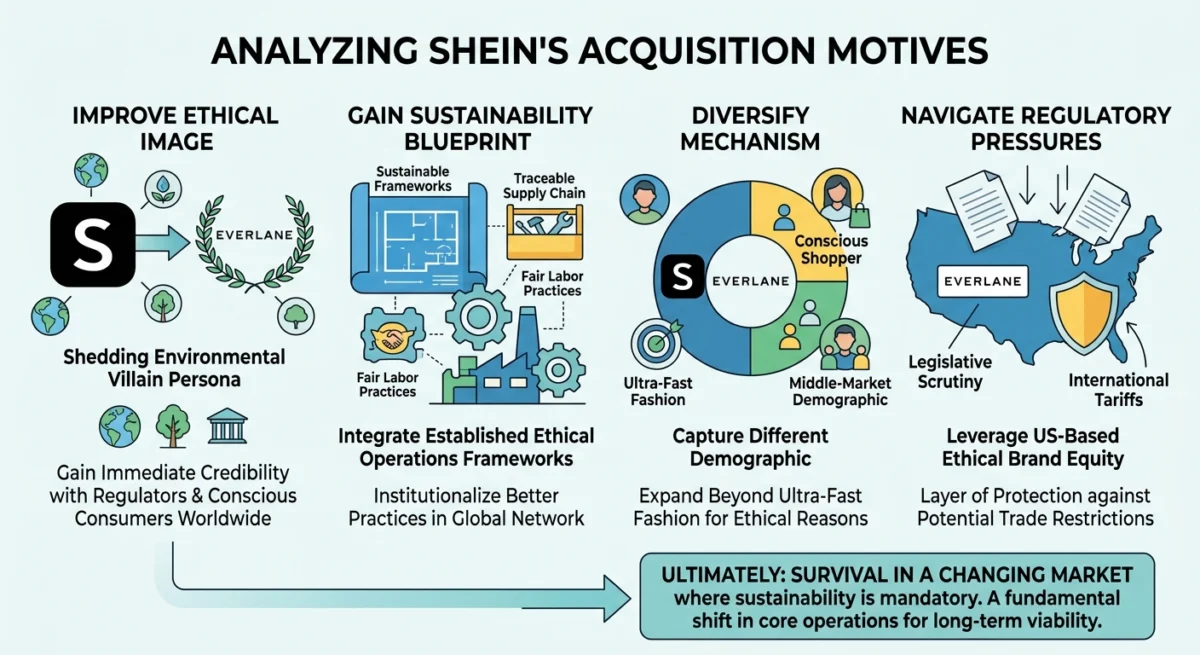
Shein aims to shed its image as an environmental villain through this strategic acquisition. By owning a brand synonymous with ethics, they hope to gain immediate credibility with skeptical regulators and modern conscious consumers worldwide.
The acquisition provides Shein with a blueprint for sustainable operations that they currently lack. Integrating Everlane’s established frameworks could allow Shein to institutionalize better practices across their vast and complex global manufacturing network today.
Financial diversification also plays a significant role in this high-stakes business decision. Expanding into the middle-market segment allows Shein to capture a different demographic that typically avoids ultra-fast fashion for ethical and social reasons.
Furthermore, Shein is looking to leverage Everlane’s brand equity to navigate potential trade restrictions. Having a US-based ethical brand in their portfolio offers a layer of protection against increasing legislative scrutiny and international tariffs.
Ultimately, this move is about survival in a changing market where sustainability is mandatory. Shein recognizes that their current model is unsustainable in the long term without a fundamental shift in their core operations.
The Legacy of Everlane's Radical Transparency
Everlane built its entire brand around the concept of radical transparency in every step. They shared the exact cost of materials, labor, and transportation for every garment they sold to their loyal customer base.
This level of openness was revolutionary when the company first launched in the competitive market. It allowed consumers to feel empowered and informed about the true impact of their purchasing decisions and clothing choices daily.
Transparency is often calculated using a simple formula for consumer clarity: ##Price = Cost + Markup##. By showing these variables, Everlane established a deep level of trust that few other retailers could ever hope to match.
However, maintaining these high standards becomes increasingly difficult as a company grows in size. Everlane faced several challenges regarding labor relations and internal culture that tested the strength of its public ethical commitments recently.
Despite these hurdles, the brand remained a symbol of hope for those seeking better fashion. Its integration into Shein’s massive ecosystem creates a fascinating paradox that the industry is now forced to analyze carefully.
Cultural Clashes in Business Philosophies
The merger faces significant cultural hurdles as two very different corporate mindsets attempt to align. Shein’s culture is rooted in speed, data, and efficiency, while Everlane prioritizes deliberate growth and ethical storytelling above all.
Employees from both organizations may struggle to find common ground during the integration process. Merging a high-pressure, volume-driven environment with a mission-driven brand requires exceptional leadership and a clear vision for the future.
There is also the risk of talent attrition if Everlane’s core team feels disconnected from the new ownership. Maintaining the human capital that built the brand’s reputation is essential for the merger’s long-term success.
Communication will be the most critical tool in bridging this cultural divide between the two companies. Leaders must clearly articulate how the strengths of each entity will be utilized to create a better organization.
The world is watching to see if these two disparate cultures can coexist harmoniously. The failure to integrate successfully could lead to the destruction of the very value that Shein sought to acquire.
Navigating Regulatory Pressure and ESG Goals
Regulators in the United States and Europe are increasing their scrutiny of fast fashion’s environmental impact. This merger is a proactive response to the growing pressure for companies to improve their ESG performance immediately.
By adopting Everlane’s standards, Shein hopes to stay ahead of upcoming legislation regarding supply chain transparency. Being seen as a leader in ethics could provide a significant competitive advantage in a highly regulated market.
However, regulators will likely be skeptical of any claims made by the new entity without proof. Verifiable data and independent audits will be necessary to convince authorities that the changes are genuine and lasting.
The merger also provides an opportunity for Shein to set new industry standards for ESG reporting. If they can successfully implement transparent practices at scale, they could influence the behavior of other major retailers.
Navigating this complex regulatory landscape requires a dedicated team of legal and ethical experts. The success of the Shein Everlane deal depends on their ability to translate corporate promises into real and measurable actions.

A conceptual 3D render of a balance scale. On one side, a high-speed digital clock representing Shein's speed. On the other side, a magnifying glass and a green leaf representing Everlane's transparency. The background is a clean, corporate office.
Operational Synergy or Ethical Dilution?
The operational success of this merger depends on whether Shein can scale Everlane’s ethical practices effectively. Applying these standards to a high-volume supply chain is a logistical challenge that has never been attempted before.
There is a fine line between operational synergy and the dilution of the brand’s core values. If the pursuit of efficiency leads to a compromise in ethics, the merger will be seen as a failure.
Shein’s advanced logistics network could potentially make sustainable fashion more accessible and affordable for everyone. By optimizing the supply chain, they can reduce costs without necessarily sacrificing the quality or ethics of the products.
However, the pressure to maintain low prices may eventually lead to shortcuts in the manufacturing process. The company must remain vigilant to ensure that their commitment to ethics remains a top priority at all.
The balance between speed and transparency will be the ultimate test for the new management team. Their ability to manage this tension will determine the future of the brand and the wider fashion industry.
Scaling Sustainable Sourcing at Speed
Scaling sustainable sourcing requires a fundamental shift in how raw materials are procured globally. Shein must now find ways to source organic cotton and recycled fabrics at a scale that matches their massive output.
This logistical challenge is unprecedented in the history of the modern global garment industry. No company has ever attempted to combine ultra-fast production speeds with the rigorous standards of truly sustainable material procurement today.
The integration of Everlane’s supply chain expertise could provide the necessary tools for this. By utilizing established relationships with ethical factories, Shein might begin to transform its own controversial and opaque production methods eventually.
However, the sheer volume of Shein’s operations may overwhelm even the most robust sustainable systems. The demand for low prices often conflicts with the higher costs associated with ethical labor and eco-friendly materials daily.
Investors are watching closely to see if this hybrid model can actually generate sustainable profits. The success of this endeavor will likely influence how other major retailers approach their own environmental and social goals.
AI-Driven Demand and Waste Reduction
Artificial intelligence plays a crucial role in Shein’s ability to predict consumer trends accurately. By applying these algorithms to Everlane’s product lines, the company hopes to minimize waste and optimize their inventory levels effectively.
Reducing overproduction is one of the most effective ways to lower the environmental impact. If Shein can produce only what is needed, they can significantly decrease the amount of clothing that ends up in landfills.
We Also Published
This data-driven approach allows for a more responsive supply chain that reacts to real-time demand. It eliminates the need for massive seasonal clearances and reduces the overall carbon footprint of the entire retail operation today.
However, the reliance on AI also raises concerns about data privacy and algorithmic bias. The industry must ensure that these technological advancements do not come at the expense of human rights or ethical standards.
The synergy between Shein’s technology and Everlane’s ethics could create a powerful new retail model. This evolution represents a significant step toward a more efficient and responsible future for the global fashion market overall.
The Risks of Greenwashing by Association
The risk of greenwashing remains a significant concern for industry experts and conscious consumers. Many fear that Shein will use the Everlane brand as a marketing shield to hide their ongoing environmental and social failings.
Authenticity is the cornerstone of brand loyalty in the modern ethical fashion segment today. If consumers perceive the merger as a mere public relations stunt, they may quickly abandon the brand for better alternatives.
Transparency must be more than just a buzzword used in corporate press releases and ads. It requires a genuine commitment to disclosing the realities of production, even when those realities are difficult or unfavorable globally.
Regulators are also becoming more vigilant about misleading environmental claims in the retail sector. Companies that fail to back up their green assertions with verifiable data could face significant legal and financial penalties very soon.
To build lasting trust, the new entity must demonstrate consistent progress toward its stated goals. Only through measurable actions and open communication can they overcome the skepticism surrounding this controversial and unexpected business merger.
Supply Chain Auditing in the New Era
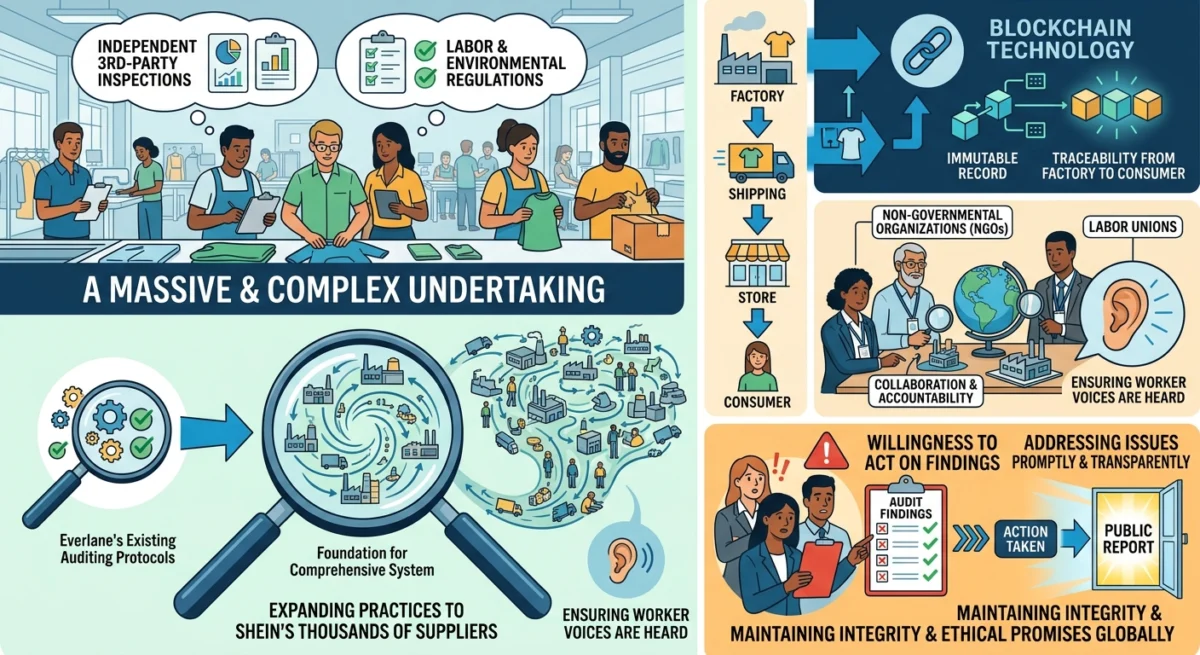
Rigorous auditing is essential to ensure that ethical standards are maintained across the entire supply chain. The new corporate structure must implement independent third-party inspections to verify compliance with labor and environmental regulations today.
Everlane’s existing auditing protocols could serve as a foundation for a more comprehensive system. Expanding these practices to include Shein’s thousands of suppliers will be a massive and highly complex undertaking for the team.
Technology like blockchain can provide an immutable record of a garment’s journey from factory to consumer. This level of traceability is becoming increasingly important for brands that claim to operate ethically and transparently now.
Collaboration with non-governmental organizations and labor unions can also enhance the credibility of auditing. Engaging with external stakeholders provides an additional layer of accountability and ensures that worker voices are heard and respected properly.
Ultimately, the effectiveness of auditing depends on the company’s willingness to act on the findings. Addressing issues promptly and transparently is crucial for maintaining the integrity of the brand and its ethical promises globally.
- 01
- 02
- 03
- 04
The Future Landscape of Global Retail
The Shein Everlane deal is a harbinger of things to come in the global fashion industry. We are entering an era where the lines between fast and slow fashion are becoming increasingly blurred for consumers.
Large corporations will continue to acquire niche ethical brands to bolster their sustainability credentials. This consolidation will change the competitive landscape and force independent brands to find new ways to differentiate themselves from others.
The success or failure of this merger will serve as a case study for future acquisitions. Other retail giants will be watching closely to see if Shein can successfully integrate ethics into a high-speed model.
Consumers will also play a crucial role in shaping the future of the industry. Their purchasing decisions will determine which business models thrive and which ones are forced to adapt or disappear from the market.
This is a pivotal moment for the fashion world as it grapples with the challenges of sustainability. The decisions made today will have a lasting impact on the planet and the people who inhabit it.
Impact on Independent Ethical Labels
Independent ethical labels face a new set of challenges in the wake of this merger. As large corporations adopt the language of sustainability, it becomes harder for smaller brands to stand out in the marketplace.
These smaller entities must now innovate beyond simple transparency to offer unique and artisanal value. They must focus on building deep connections with their customers and highlighting the unique aspects of their production processes.
The barrier to entry for truly independent ethical brands may become steeper as competition increases. However, there is also an opportunity for these brands to capture consumers who are disillusioned by corporate sustainability efforts today.
Collaboration between independent brands could also provide a way to compete with larger entities. By sharing resources and knowledge, they can build a more resilient and impactful alternative to the mainstream fashion industry.
The future of ethical fashion depends on the continued growth and success of these independent voices. They are the ones who will continue to push the boundaries of what is possible in sustainable retail.
Consumer Sentiment and Brand Loyalty Shifts
Consumer sentiment toward the Shein Everlane deal is mixed and often skeptical. Many loyal Everlane customers feel betrayed by the acquisition and are looking for new brands that align better with their personal values.
Brand loyalty is no longer guaranteed in an era where consumers have access to so much information. Companies must work harder than ever to earn and maintain the trust of their customers through consistent action.
Social media will play a major role in shaping public perception of the merger. Influencers and activists will be quick to point out any perceived hypocrisy or failure to live up to ethical promises.
The new entity must engage in open and honest dialogue with its customers to address their concerns. Listening to feedback and making changes based on consumer input is essential for building a loyal community.
Ultimately, the success of the brand depends on its ability to deliver on its promises. If they can prove that they are genuinely committed to ethics, they may eventually win over even the skeptics.
Blockchain and Third-Party Verification Trends
Blockchain technology is set to become the gold standard for supply chain verification in the fashion industry. It provides a transparent and unchangeable record of every step in the production process for everyone to see.
Third-party certifications are also becoming increasingly important for brands that want to prove their ethical claims. Organizations like B Corp and Fair Trade provide independent verification that a company is meeting high standards today.
The formula for trust in the future will be: ##Trust = Verifiable Data + Independent Certification##. Consumers will no longer take a brand’s word for it; they will demand proof of their ethical claims.
This trend toward verification will force all brands to be more transparent about their operations. Those that fail to adopt these technologies and certifications will find it increasingly difficult to compete in the market.
The integration of blockchain and third-party verification will create a more accountable and responsible fashion industry. This is a positive development for both consumers and the planet in the long term for everyone.
Predictions for the 2026 Fashion Market
By 2026, the fashion market will likely be dominated by a few large conglomerates with diverse portfolios. These companies will attempt to offer everything from ultra-fast fashion to high-end ethical luxury under one roof.
Sustainability will no longer be a niche market; it will be a standard requirement for all brands. Companies that fail to integrate ESG principles into their core operations will struggle to survive in this environment.
Technology will continue to transform the way clothes are designed, produced, and sold to consumers. AI and automation will make the industry more efficient, while blockchain will ensure that it remains transparent and accountable.
Consumer demand for ethical and sustainable products will continue to grow as awareness of the industry’s impact increases. This will drive further innovation and investment in sustainable materials and manufacturing processes across the globe.
The Shein Everlane deal is just the beginning of a major transformation in the fashion industry. The next few years will be a period of rapid change and evolution for retailers and consumers alike.

A wide-angle view of a modern city street in 2026. People are wearing stylish, sustainable clothing. Digital billboards show transparent supply chain data for the clothes being sold in nearby boutiques.
From our network :
- Former Soap Stars Embark on Ambitious Writing Projects and Theatrical StagesDiscover how former soap opera actors are transitioning into independent scriptwriting and high-profile theatrical stage productions.
- The Final Descent: How ESA Retired the Legendary Cluster Constellation After 24 Years of Space Weather ScienceAfter 24 years mapping Earth’s magnetosphere, ESA’s Cluster mission concluded with a precisely controlled reentry over the South Pacific. This analysis explores the scientific legacy, engineering decisions, and debris mitigation principles behind one of space exploration’s most responsible retirements.
- CISA’s Ten-Advisory Wave: Why Generic Patching Fails in OT and How to Build Product-Specific PlaybooksCISA released ten ICS advisories in one week, exposing critical infrastructure risks. Generic patching fails in OT. Learn to build product-specific remediation playbooks.
- Forbidden Matrix Patterns and Visible Lattice Points: A Geometric DictionaryExplore how multidimensional 0–1 matrices encode geometric truths, linking forbidden patterns to visible lattice points and hypergraph theory, with applications in combinatorics and computational geometry.
- Analyzing Hoya Corporation’s Midday Volume Shifts and Financial FundamentalsExamine Hoya Corporation’s midday trading volume contraction, technical moving averages, robust solvency ratios, and stellar quarterly earnings performance.
- How AI Agents Will Change the Way We Manage Personal FinancesExplore how AI agents are transforming personal finance through automated budgeting, bill payment, and investment management, while examining the critical security protocols and governance frameworks required for safe deployment.
- Committed Mediterranean Precipitation Decline: Why Emissions Cuts Alone Cannot Restore Winter RainsNew NOAA research reveals that Mediterranean winter rains may decline irreversibly even with emissions cuts. Explore the science of committed climate change and regional impacts.
- Norbert’s Uncertain Path: Why Hawaii’s Storm Watch Demands Patience Over PanicTropical Storm Norbert strengthens in the Eastern Pacific with winds near 50 mph, forecast to reach Category 1 hurricane status by Friday. Long-range models disagree sharply on whether Hawaii faces any threat around September 19–23, making official guidance essential.
- The Hidden Cost of AI Convenience: Why Over-Permissioned Agents Are a Security Time BombDiscover why AI agents with excessive permissions create dangerous single points of failure, and learn how implementing least privilege principles can protect your organization from exploitation.
RESOURCES
- Everlane Is Selling Out… to Shein - Puckpuck.newsMay 17, 2026 ... The deal, which values the company at $100 million, was approved by the board on Saturday, according to a person…
- Everlane Finalizes Sale to Shein, the Fast Fashion Giantnytimes.com6 days ago ... Shein, the online retailer that has become the de facto face of ultra fast fashion, has acquired Everlane, a U.S.…
- Shein To Reportedly Acquire Everlane For $100 Million - Forbesforbes.comMay 18, 2026 ... Online fast-fashion retailer Shein is said to be acquiring Everlane, the apparel brand known for its sustainability ethos, in a…
- Meg Gold's Post - LinkedInlinkedin.com7 days ago ... I posted about the SHEIN x Everlane deal earlier this week and clearly we all have feelings. So I went…
- Shein's purchase of sustainable fashion brand Everlane sparks outcrypbs.org6 days ago ... A deal between two seemingly incompatible clothing brands is causing a lot of consternation among customers and raising questions about ...
- Meg Gold's Post - LinkedInlinkedin.com7 days ago ... I posted about the SHEIN x Everlane deal earlier this week & clearly we all have feelings. So I went…
- Shein, Everlane and the Power of Owning Your Supply Chain - Voguevogue.comMay 20, 2026 ... The Shein-Everlane deal points to a new fashion power structure – one where value lies less in branding and more…
- Shein buys Everlane, a union of ultrafast fashion and 'affordable ...npr.org6 days ago ... "Affordable luxury" brand Everlane has been bought by the ultrafast-fashion giant Shein.
- Shein's Everlane Acquisition, Explained - The Business of Fashionbusinessoffashion.com6 days ago ... The financial terms of the transaction were not disclosed, but reports in Puck and The Information said the deal valued…
- Shein buys US-based apparel retailer Everlane, Puck News reportsreuters.comMay 17, 2026 ... Online fast-fashion platform Shein is acquiring Everlane from majority owner L Catterton in a deal valuing the U.S.-based apparel retailer ...
- Shein to acquire Everlane in $100m deal amid debt crisis – reportfinance.yahoo.comMay 18, 2026 ... Chinese fashion retailer Shein is set to take over US direct-to-consumer label Everlane in a transaction worth around $100m, following…
- Bummed about SHEIN acquiring Everlane : r/BehindTheClosetDoorreddit.comMay 20, 2026 ... Everlane was millions in debt. And SHEIN gave them an offer they couldn't refuse. It's sad indeed.
- Shein strikes deal to acquire US clothing retailer Everlanefinance.yahoo.com3 days ago ... The company has since relocated its headquarters to Singapore. Retail Insight Network has contacted Everlane for comment. "Shein strikes deal…
- Shein Buying Everlane Marks the End of Millennial Fashionpurewow.com6 days ago ... Shein's reported acquisition of Everlane feels bigger than a fashion business deal. It marks the collapse of the millennial buy…
- From the Slow Lane to the Shein Lane - Shivam Gusain - Substacksgdecypher.substack.comMay 17, 2026 ... The reported sale of Everlane to Shein in a deal valuing the company at $100 million, first reported by Puck…
- 01
- 02
- 03
- 04
- 05
- 06
- 07
- 08
0 Comments