On This Page
Evidence-Based Sustainability Standards
Shifting Consumer Expectations
Modern consumers possess a heightened sense of awareness regarding the environmental footprint of their intimate apparel. They no longer accept generic labels like eco-friendly at face value, preferring instead to investigate the actual composition.
The transition from broad, aspirational messaging to granular, evidence-based communication marks a pivotal change in the industry. Shoppers actively seek out brands that provide clear documentation concerning their specific sourcing and manufacturing processes.
This demographic shift forces companies to reevaluate how they present their products to the public. Transparency has become a currency of trust, allowing brands to differentiate themselves from competitors who rely on vagueness.
As the market evolves, the ability to provide verifiable proof of sustainability will define the winners. Companies failing to adapt to these rigorous standards risk losing relevance among an increasingly informed global audience.
Ultimately, the consumer holds the power to demand better practices. By aligning product messaging with actual performance data, brands can satisfy the curiosity of buyers who care deeply about their environmental impact.
The Demand for Material Data
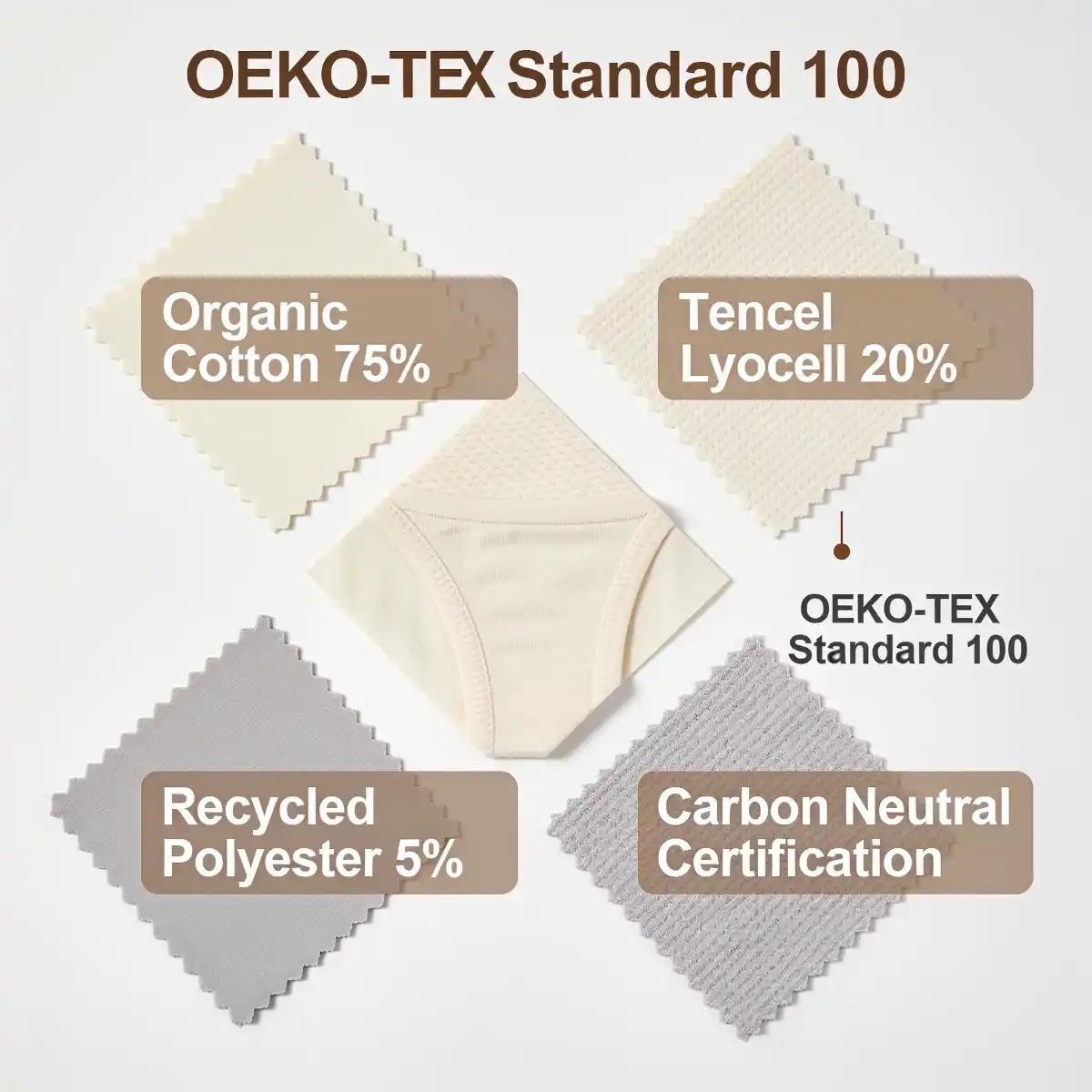
Identifying the exact chemical and physical properties of fabrics used in lingerie production is now standard practice. Customers want to see certifications for recycled nylon, organic cotton, and other innovative, sustainable materials.
Providing a percentage breakdown of recycled content allows shoppers to understand the true environmental benefit of their purchase. This level of detail transforms a simple product page into an informative, educational resource.
Brands that publish material composition data demonstrate a commitment to honesty that resonates with skeptical buyers. When a product contains eighty percent recycled fibers, that number acts as a powerful marketing tool.
Without such data, claims of sustainability remain hollow and susceptible to accusations of greenwashing. Consequently, the industry is moving toward a model where technical specifications accompany every single item listed for sale.
Strategic communication regarding material origins builds a foundation of credibility. By sharing the technical journey of a garment from fiber to finished piece, brands foster a deeper connection with their audience.
Supply Chain Transparency Requirements
Visibility into the manufacturing process is essential for brands aiming to establish long-term trust. Shoppers are increasingly interested in the working conditions and environmental standards maintained at every stage of production.
Publishing the names and locations of manufacturing facilities provides the necessary evidence to support ethical claims. This openness protects the brand and empowers consumers to make choices that align with values.
Companies that maintain rigorous oversight of their supply chain are better positioned to handle inquiries about ethics. Showing the factory floor through documentation creates a narrative of accountability and professional integrity.
The complexity of global supply chains often presents challenges, yet transparency remains the most effective mitigation strategy. When brands openly disclose their partners, they invite scrutiny that ultimately reinforces their public reputation.
Proactive disclosure regarding supply chain management serves as a competitive advantage. In a market where trust is hard to earn, being the first to reveal your sources builds lasting customer loyalty.
Quantifying Product Durability
Longevity serves as a critical pillar of sustainable fashion, yet it is rarely measured effectively. Brands should provide guidance on the expected lifespan of intimate apparel based on controlled testing environments.
When a garment is designed to withstand fifty wash cycles without losing elasticity, that fact should be highlighted. This specific durability metric provides consumers with clear expectations about their long-term investment.
Educating customers on how to maintain the integrity of delicate fabrics is an extension of sustainable practice. Providing detailed care instructions reduces waste by ensuring that garments last significantly longer than average.
Durability testing results can be presented in simplified formats to help shoppers compare quality across different categories. This approach elevates the conversation from mere aesthetics to a discussion of true value.
By focusing on the lifecycle of the product, brands demonstrate a genuine concern for the environment. Encouraging consumers to care for their items better is a tangible way to practice sustainability.
Establishing Trust Through Strategic Communication
Effective Product Page Design
Product pages serve as the primary interface for sustainability communication. Incorporating small, clear callouts regarding specific certifications ensures that vital information reaches the customer without cluttering the aesthetic of the site.
Using icons or simplified data tables allows users to quickly scan for the information they prioritize. This design choice honors the customer's time while delivering high-quality, verifiable information about the product.
Links to deeper transparency pages should be strategically placed to encourage further exploration. These pages should house the granular details that satisfy the curiosity of the most dedicated and conscious shoppers.
Balancing visual appeal with detailed technical information is the hallmark of a successful e-commerce strategy. Brands that master this balance are seeing improved conversion rates among environmentally conscious consumer segments today.
Consistency across all product pages ensures that the brand voice remains coherent and reliable. When every page tells the same story of proof, the overall brand image becomes significantly more robust.
| Metric Type | Common Claim | Verified Proof |
|---|---|---|
| Material | Eco-friendly fabric | GRS Certified Nylon |
| Ethics | Fair wages paid | Third-party audit report |
| Longevity | High quality | 100+ wash test cycle |
The Role of Certifications
Third-party certifications provide the objective validation that modern consumers seek. Displaying logos from recognized bodies like the Global Recycled Standard helps establish immediate credibility without requiring lengthy explanations from the brand.
These badges function as a shorthand for complex ethical and environmental standards. When a shopper sees a recognized certification, they feel more confident in the authenticity of the brand's sustainability claims.
Brands should actively pursue partnerships with reputable organizations that align with their specific product focus. This collaboration validates the internal efforts of the company and provides a layer of external assurance.
However, certifications should complement, not replace, direct brand communication. They serve as a starting point for a conversation about quality and ethics, rather than the final word on the matter.
Maintaining these certifications requires continuous effort and compliance, which in itself is a testament to the brand's dedication. Sharing the journey toward these certifications builds a narrative of ongoing improvement.
Factual Tone in Copywriting
Marketing language must shift away from flowery, emotional descriptors toward factual, precise statements. Using clear, direct language helps avoid the common pitfalls of greenwashing and provides consumers with actionable product knowledge.
Instead of claiming to save the planet, brands should focus on specific reductions in water or energy usage. This shift toward measurable impact is far more persuasive to the modern, educated buyer.
Professional communication style builds trust by treating the customer as an intelligent partner. When brands avoid jargon, they make their sustainability efforts accessible to a wider range of potential new clients.
Consistency in tone across all channels, including social media and email, is crucial for maintaining brand authority. Every touchpoint should reinforce the commitment to transparency and evidence-based fashion production practices.
By prioritizing facts, brands reduce the risk of being misunderstood or accused of deceptive marketing. A factual approach is the safest and most effective way to navigate the evolving regulatory landscape.
Integrating Sustainability into Core Offerings
Sustainability should never be treated as a side project or a niche collection. Integrating responsible materials into bestsellers ensures that the brand's primary revenue drivers align with its stated environmental values.
When a core product line utilizes sustainable components, the message becomes inherent to the brand identity. This scalability allows for a broader impact than limited editions or exclusive, high-priced capsule collections.
Consumers notice when a brand makes a sincere effort to improve its main offerings. This approach signals that sustainability is a fundamental part of the business strategy rather than a gimmick.
Hero products that combine performance with sustainability are the most effective tools for growth. They prove that responsible manufacturing does not require a sacrifice in quality, comfort, or style for shoppers.
Brands that successfully bake sustainability into their DNA create a competitive moat that is difficult for others to replicate. This long-term commitment is what truly resonates with the modern global audience.
Future-Proofing Through Transparency
Leveraging Lifecycle Assessments
Lifecycle assessments provide the gold standard for measuring the true impact of a garment. Brands that conduct and share these assessments demonstrate a deep commitment to understanding their own environmental footprint.
Sharing the results of these assessments in a simplified format helps consumers grasp the complexity of fashion production. It turns data into a narrative of responsibility that customers can easily appreciate.
These assessments also help brands identify areas where they can improve their processes. By pinpointing high-impact stages, companies can make targeted changes that lead to significant, measurable improvements in sustainability performance.
The use of ##LCA## metrics allows for a standardized comparison between different product lines. This objective data helps internal teams make informed decisions about future design and material sourcing strategies moving forward.
Transparency regarding these assessments builds a level of trust that is virtually impossible to achieve with marketing alone. It shows a willingness to be vulnerable and accountable for the entire lifecycle.
- 01
- 02
- 03
- 04
We Also Published
Addressing Repair and Maintenance
Encouraging repair services or providing DIY guides for minor fixes extends the life of lingerie significantly. This practice aligns with the circular economy and positions the brand as a partner in longevity.
Offering a repair program can be a powerful differentiator in a market dominated by fast fashion. It shows that the brand cares about the product long after the initial sale is completed.
Providing clear, instructional content on how to properly wash and store delicate items reduces premature degradation. This education helps customers get the most out of their purchase, increasing overall user satisfaction.
Brands that prioritize maintenance are actively fighting the culture of disposability. By teaching customers how to care for their items, they foster a deeper sense of value and respect for craftsmanship.
Maintenance advice can be integrated into digital newsletters or post-purchase emails to keep the brand top-of-mind. This strategy builds a recurring relationship with the customer based on helpful, practical shared values.
Advanced Data Visualization Tactics
Using interactive charts to display sourcing data can make complex information engaging and accessible. When users can click to see the origin of their lace or silk, they feel personally connected.
Visualizing the supply chain map helps humanize the production process. Seeing photos of the actual facilities and the people working there creates an emotional connection that builds brand loyalty and trust.
Data visualization should be integrated directly into the shopping experience to minimize friction. A simple, clickable icon on the product page can lead to a detailed, interactive map of the supply chain.
This approach leverages modern web technology to convey transparency. It is a proactive way to answer common questions without forcing the user to search through dense, text-heavy pages for the answers.
As technology advances, these visualization tools will become even more sophisticated. Brands that invest in these capabilities now will lead the industry in how they communicate their sustainability stories to customers.
| Feature | Impact on Trust | Consumer Value |
|---|---|---|
| Interactive Maps | High | Geographic Transparency |
| Video Tours | Very High | Visual Proof |
| Impact Reports | Moderate | Data Verification |
Preparing for Regulatory Changes
Global regulations concerning environmental claims are becoming stricter every year. Brands that proactively adopt transparent reporting standards are better prepared for future legal requirements regarding consumer protection and truthful advertising practices.
Documenting every claim with internal audits provides a necessary safety net. Should regulators investigate, the brand will have a comprehensive record of the evidence used to justify their public sustainability statements.
Compliance is no longer just a legal necessity but a strategic advantage. Brands that lead in reporting standards set the benchmark for the rest of the industry, influencing the regulatory conversation.
Investing in compliance infrastructure today prevents costly and embarrassing legal issues tomorrow. It is a fundamental part of responsible business management in the modern, highly regulated global fashion industry landscape today.
Staying ahead of the regulatory curve requires constant vigilance and adaptation. By treating transparency as a core business requirement, brands ensure they remain resilient against shifts in law and public opinion.
From our network :
- Committed Mediterranean Precipitation Decline: Why Emissions Cuts Alone Cannot Restore Winter RainsNew NOAA research reveals that Mediterranean winter rains may decline irreversibly even with emissions cuts. Explore the science of committed climate change and regional impacts.
- The Final Descent: How ESA Retired the Legendary Cluster Constellation After 24 Years of Space Weather ScienceAfter 24 years mapping Earth’s magnetosphere, ESA’s Cluster mission concluded with a precisely controlled reentry over the South Pacific. This analysis explores the scientific legacy, engineering decisions, and debris mitigation principles behind one of space exploration’s most responsible retirements.
- How AI Agents Will Change the Way We Manage Personal FinancesExplore how AI agents are transforming personal finance through automated budgeting, bill payment, and investment management, while examining the critical security protocols and governance frameworks required for safe deployment.
- The Hidden Cost of AI Convenience: Why Over-Permissioned Agents Are a Security Time BombDiscover why AI agents with excessive permissions create dangerous single points of failure, and learn how implementing least privilege principles can protect your organization from exploitation.
- CISA’s Ten-Advisory Wave: Why Generic Patching Fails in OT and How to Build Product-Specific PlaybooksCISA released ten ICS advisories in one week, exposing critical infrastructure risks. Generic patching fails in OT. Learn to build product-specific remediation playbooks.
- Analyzing Hoya Corporation’s Midday Volume Shifts and Financial FundamentalsExamine Hoya Corporation’s midday trading volume contraction, technical moving averages, robust solvency ratios, and stellar quarterly earnings performance.
- Forbidden Matrix Patterns and Visible Lattice Points: A Geometric DictionaryExplore how multidimensional 0–1 matrices encode geometric truths, linking forbidden patterns to visible lattice points and hypergraph theory, with applications in combinatorics and computational geometry.
- Former Soap Stars Embark on Ambitious Writing Projects and Theatrical StagesDiscover how former soap opera actors are transitioning into independent scriptwriting and high-profile theatrical stage productions.
- Norbert’s Uncertain Path: Why Hawaii’s Storm Watch Demands Patience Over PanicTropical Storm Norbert strengthens in the Eastern Pacific with winds near 50 mph, forecast to reach Category 1 hurricane status by Friday. Long-range models disagree sharply on whether Hawaii faces any threat around September 19–23, making official guidance essential.
RESOURCES
- Woman-Owned or Otherwise Ethical Lingerie Brands? - Redditreddit.comOct 3, 2021 ... Molke!! Molke is women owned, ethically made in Scotland! They make supportive but wireless bralettes. They're very size inclusive, their ...
- Toru & Naoko: 1 Ethical and Sustainable Lingerie brandtoruandnaoko.comEthically made designer lingerie. 100% Carbon neutral underwear. Your one stop lingerie shop for thongs, bralettes, babydolls, bodysuits, bras, knickers, ...
- Finding Sustainable Lingerie: Discover Our Favorite Brandsnokillmag.comOnly Hearts is a lingerie brand in New York that is made from local, deadstock, recycled, and certified green textiles like GOTS (Global Organic…
- 10 Best Sustainable Underwear Brands (2026 Review)thegoodtrade.comJun 1, 2026 ... 10 Best Sustainable Underwear Brands (2026 Review) · 1. Pact · 2. Organic Basics · 3. Quince · 4. MATE…
- Sustainable Lingerie - Forty Winksshopfortywinks.comThey use premium grade fabrics, organic cotton, and Oeko-Tex certified materials. All pieces are packaged using minimal materials that are recyclable and, in ...
- Sexy and Sustainable Lingerie Brands That Are Good for Sensitive ...ecocult.comJan 11, 2023 ... What we love: Eco Intimates creates ethical, natural and organic cotton lingerie and sleepwear. It uses natural fibers, such as…
- Sustainable Lingerie in 2025: What to Look For (and Avoid)shoplikeyougiveadamn.comJun 20, 2025 ... Confused by greenwashing in ethical underwear? Discover the best sustainable lingerie materials, brands, and how to make your lingerie last.
- 10 Best Sustainable and Ethical Lingerie Brands | Hypebaehypebae.comApr 14, 2025 ... 10 Sustainable Lingerie Brands That Keep Your Intimates Drawer Chic and Eco-Friendly: From Insta-cool label Fruity Booty, ...
- Ethical Promise | Blush Lingerieblushlingerie.comBlush makes sure that each and every product in made in a safe, humane environment. learn more about our ethical practices and our various…
- Ethical & sustainable lingerie, underwear & swimwear - ColieCocoliecolingerie.comEthical lingerie, underwear & swimwear made to order in Portugal from eco-friendly, sustainable materials. Free shipping worldwide.
- 01
- 02
- 03
- 04
- 05
- 06
- 07
- 08
0 Comments