On This Page
The Regulatory Shift: EU AI Act and Global Impact
Understanding the AI Omnibus
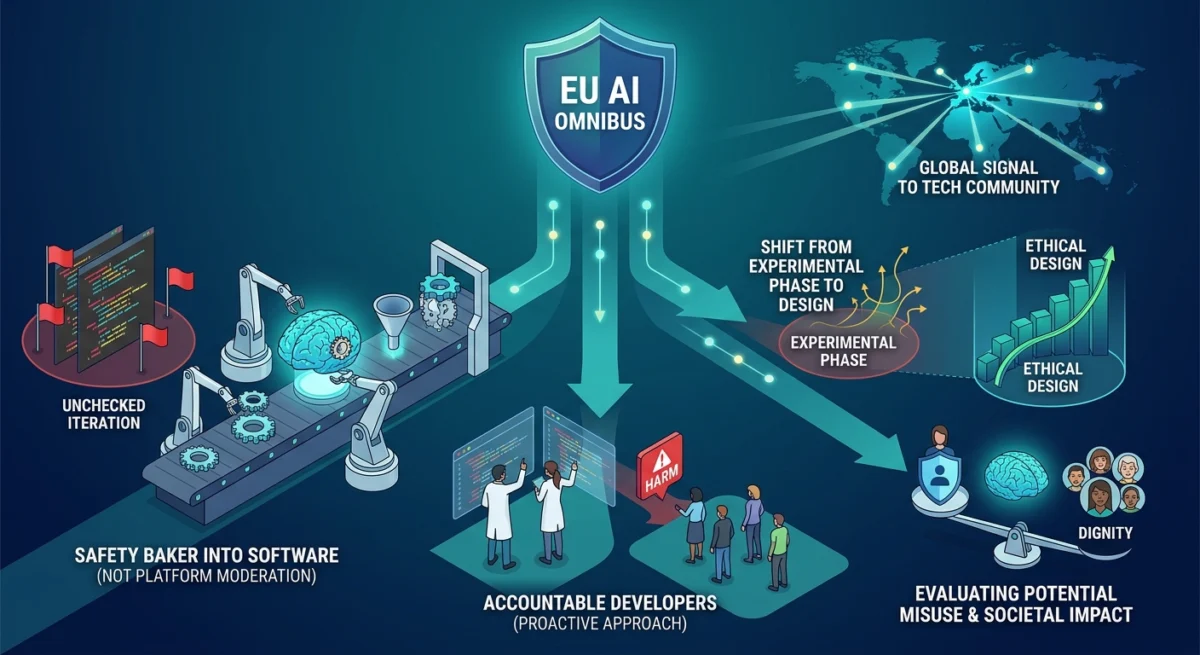
The EU AI Omnibus represents a landmark achievement in digital governance, specifically targeting the darker corners of generative technology. It establishes a comprehensive framework designed to mitigate the risks associated with synthetic media and non-consensual imagery. This legislation is not merely a local directive but a clear signal to the global tech community.
By focusing on the architectural level of AI development, the Omnibus ensures that safety is baked into the software. It moves beyond simple platform moderation to hold the original developers accountable for their creations. This proactive approach aims to prevent harm before it can manifest in the digital public square.
The timing of this agreement is crucial as generative tools become increasingly sophisticated and accessible to the general public. Regulators recognized that existing laws were insufficient to handle the unique challenges posed by hyper-realistic synthetic content. Consequently, the Omnibus fills a critical gap in the current international legal framework.
For developers, this means a shift from rapid, unchecked iteration to a more deliberate and ethical design process. Every new feature must now be evaluated through the lens of potential misuse and societal impact. This ensures that innovation does not come at the expense of individual privacy or dignity.
Ultimately, the Omnibus seeks to foster a digital environment where trust is the foundational element of every interaction. By setting clear boundaries, the EU hopes to encourage the development of AI that benefits society. This regulation marks the end of the experimental phase for many generative AI startups.
The Brussels Effect on US Tech
The 'Brussels Effect' is a well-documented phenomenon where European regulations become the de facto global standard for international corporations. Because the EU market is so significant, US tech firms often find it easier to adopt one high standard. This ensures they can operate seamlessly across all major geographic regions without friction.
In the context of the AI Omnibus, American companies are already recalibrating their development pipelines to meet European requirements. The cost of maintaining two different versions of a software product is often prohibitively expensive for most startups. Therefore, the EU’s strict ethical guidelines are quickly becoming the baseline for US-based generative AI.
Venture capital firms in Silicon Valley are also paying close attention to these regulatory developments when evaluating new investments. They are increasingly wary of backing platforms that might be banned in the European Union due to non-compliance. This financial pressure is accelerating the adoption of ethical AI frameworks across the entire industry.
Furthermore, the legal risks associated with non-consensual imagery have reached a point where compliance is the only viable path. US companies realize that ignoring these standards could lead to massive fines and reputational damage that transcends borders. The global nature of the internet makes localized non-compliance a dangerous strategy.
As a result, we are seeing a convergence of technical standards between the United States and the European Union. While the legislative processes differ, the ultimate goal of protecting users remains a shared priority for both regions. This alignment is creating a more stable and predictable environment for global tech.
Prohibiting 'Nudifier' Applications
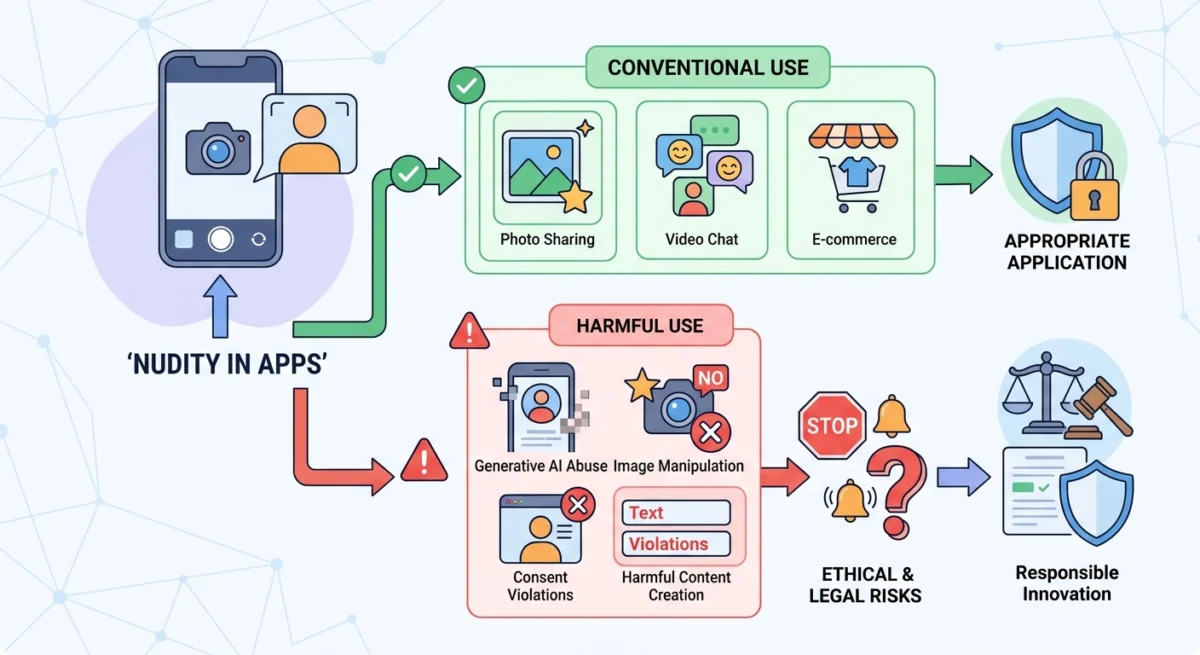
The specific ban on 'nudifier' applications is perhaps the most talked-about aspect of the new Article 5 amendments. These tools, which use AI to remove clothing from images, have long been a source of significant ethical concern. The EU has now classified these systems as fundamentally incompatible with modern human rights.
This prohibition extends to any AI system where the creation of non-consensual intimate imagery is a reasonably foreseeable outcome. This broad definition forces developers to implement robust safeguards at the very core of their generative models. It is no longer enough to simply hope that users will act responsibly.
The impact of this ban was felt almost immediately across open-source communities and specialized development forums. Many developers have begun to scrub their repositories of code that could be interpreted as violating these new rules. The fear of being targeted by EU enforcement agencies is a powerful deterrent for independent creators.
By targeting the tools themselves, the EU is cutting off the supply of technology used to generate harmful content. This is a significant shift from traditional laws that only penalized the distribution of such imagery. It recognizes that the technology itself can be a weapon if not properly regulated.
This move is widely supported by civil rights advocates and victim support groups who have seen the devastation caused by these tools. The ban provides a legal basis for holding creators accountable for the harm their software enables. It is a major victory for digital safety and personal privacy.
High-Risk Classification Standards
Under the new framework, generative AI tools capable of creating realistic human depictions are often classified as 'high-risk.' This designation brings with it a suite of mandatory obligations, including rigorous testing and documentation. Developers must demonstrate that their systems are not prone to generating harmful or biased outputs.
The high-risk classification ensures that these powerful tools are subject to the highest level of scrutiny before reaching consumers. This includes independent audits and continuous monitoring of the AI’s performance in real-world scenarios. It is a far cry from the 'move fast and break things' mentality of the past.
To quantify the risk, developers often use probabilistic models to assess the likelihood of a system generating prohibited content. For example, a risk score ##R## could be defined based on the frequency of boundary violations during stress testing. This mathematical approach provides a standardized way to evaluate compliance.
In this expression,
represents the probability of a specific failure mode, and
represents the severity of that failure. High-risk systems must maintain a score below a certain threshold to remain legally compliant. This objective metric helps regulators and developers speak the same language.

Technical Compliance and Ethical Frameworks
Mandatory Watermarking Protocols
Article 50 of the AI Omnibus introduces a revolutionary requirement for mandatory watermarking of all AI-generated content. This means that every image, video, or audio clip produced by AI must contain a machine-readable identifier. These watermarks are designed to be persistent and difficult to remove through traditional editing.
The goal of this protocol is to ensure that synthetic content can always be distinguished from authentic human media. This transparency is essential for maintaining trust in digital communications and preventing the spread of misinformation. It allows platforms and users to make informed decisions about the content they consume.
Technical implementation of these watermarks often involves embedding cryptographic signatures directly into the file's metadata or pixel data. This ensures that the provenance of the image remains intact even if it is compressed or resized. It is a sophisticated solution to a complex problem of digital authenticity.
For creators, this requirement means adopting new tools that automatically apply these disclosures during the generation process. While some fear this might stifle creativity, others see it as a necessary step for professionalizing the industry. It provides a clear distinction between ethical creators and those operating in the shadows.
As we move toward 2026, these watermarking standards will become a standard feature of all major generative AI platforms. The industry is moving away from anonymity and toward a model of accountability and transparency. This is a fundamental change in how digital content is produced and shared.
Provenance Metadata Integration
Provenance metadata goes a step beyond simple watermarking by providing a detailed history of how a piece of content was created. This includes information about the model used, the training data involved, and the identity of the creator. It serves as a digital 'birth certificate' for every synthetic asset.
This metadata is crucial for proving that a model was trained on licensed and consensual datasets. In an era where data scraping has become a major legal battleground, provenance provides a way to verify ethical sourcing. It protects both the developers and the performers whose likenesses might be used.
By integrating provenance metadata, platforms can automatically filter out content that does not meet their ethical standards. This creates a self-regulating ecosystem where only verified content is allowed to circulate on major social networks. It is a powerful tool for cleaning up the digital environment.
The technical challenge lies in making this metadata unalterable and universally recognizable across different platforms. Organizations like the C2PA are working to establish these open standards to ensure interoperability. This collaborative effort is essential for the success of the global transparency initiative.
Ultimately, provenance metadata empowers consumers to support ethical AI and avoid content that exploits others. It brings a level of consumer choice to the synthetic media market that was previously impossible. This is a significant step toward a more mature and responsible digital economy.
We Also Published
The Decline of Open-Source Anarchy
For several years, the open-source community has been a hotbed for experimental and sometimes controversial AI models. However, the new EU regulations are bringing an end to this period of 'unregulated freedom.' Developers can no longer release powerful tools without considering the legal implications of their use.
The threat of massive penalties is forcing many open-source projects to implement stricter controls or geoblock certain regions. This shift is controversial within the developer community, where many value the open exchange of ideas. Yet, the reality of legal liability is impossible to ignore in the current climate.
We are seeing a move toward 'curated' open-source, where models are pre-vetted for safety before being released. This ensures that the community can still innovate while minimizing the risk of creating harmful applications. It is a more sustainable model for the long-term health of the open-source ecosystem.
The decline of anarchy does not mean the end of innovation, but rather a change in its direction. Developers are now focusing on creating tools that are both powerful and safe, which is a much harder engineering challenge. This focus on safety is driving new breakthroughs in AI alignment and control.
As the 'wild west' era fades, the industry is becoming more professional and structured. This transition is necessary for AI to be integrated into broader society in a way that is acceptable to the public. The EU AI Omnibus is the catalyst for this much-needed evolution.
Protecting Content Creator Rights
One of the primary beneficiaries of the new regulations is the community of human content creators. By mandating transparency, the law helps protect the value of authentic human performances. It prevents synthetic media from being passed off as real, which could otherwise devalue traditional creative work.
Creators now have more tools to protect their likeness and intellectual property from being used without consent. The requirement for consensual training data ensures that performers are fairly compensated and have a say in how their image is used. This is a major win for labor rights in the digital age.
The law also encourages the development of platforms that prioritize creator consent and revenue sharing. These 'Ethical AI' platforms are becoming increasingly popular as creators look for safe ways to leverage synthetic technology. It creates a new market for licensed digital twins and AI-assisted content.
Furthermore, the mandatory disclosures make it easier for creators to monitor the internet for unauthorized uses of their likeness. They can use the embedded metadata to prove ownership and take legal action against infringers. This provides a level of security that was previously lacking in the digital space.
In the long run, these protections will help ensure that the creative industry remains vibrant and diverse. By balancing the power of AI with the rights of humans, the EU is creating a sustainable future for all creators. This is the essence of synthetic ethics in practice.
- 01
- 02
- 03
- 04
The Future of Synthetic Media Markets
Investing in Safe-Tech Solutions
The shift toward regulation is creating a massive new market for 'Safe-Tech' solutions. These are technologies specifically designed to help companies comply with the EU AI Omnibus and similar laws. Investors are pouring billions into startups that focus on watermarking, provenance, and safety auditing.
This is a significant pivot from the early days of generative AI, where the focus was purely on model capability. Now, the ability to prove a model is safe and compliant is just as valuable as its creative output. Safety is no longer an afterthought; it is a core product feature.
Companies that can provide verifiable proof of ethical data sourcing will have a significant competitive advantage. They will be the preferred partners for major brands and platforms that cannot afford the risk of regulatory non-compliance. This is creating a 'flight to quality' in the AI investment landscape.
We are also seeing the emergence of specialized legal and compliance services for the AI industry. These firms help developers navigate the complex web of global regulations and ensure their products are ready for market. The intersection of law and technology is becoming a lucrative field for experts.
As the market matures, we can expect to see even more innovative solutions for digital safety. The push for regulation is acting as a powerful incentive for technical innovation. The future of AI is not just about what it can create, but how responsibly it can do so.
Performer-Led AI Avatars
One of the most exciting developments in the wake of the Omnibus is the rise of performer-led AI avatars. These are high-fidelity digital twins created with the full consent and participation of the original performer. They allow creators to scale their presence without the physical demands of traditional production.
Because these avatars are built on a foundation of consent, they are fully compliant with the new ethical standards. They carry all the necessary metadata to prove their origin and the performer’s involvement. This makes them a safe and attractive option for brands and media companies.
This model also provides a new revenue stream for performers, who can license their digital twins for various projects. It allows for a level of hyper-personalization that was previously impossible. Fans can interact with their favorite creators in new and immersive ways, all while knowing it is a legitimate production.
The technology behind these avatars is becoming increasingly sophisticated, making them almost indistinguishable from the real person. However, the mandatory watermarking ensures that the audience is always aware when they are viewing a synthetic performance. This honesty is key to maintaining a healthy relationship with the audience.
Performer-led AI represents the perfect synthesis of human creativity and machine efficiency. It shows that AI doesn't have to replace humans; it can empower them to reach new heights. This is the model for the future of the entertainment and adult industries.

A professional studio setting where a human performer interacts with their own high-fidelity AI twin, highlighting the era of consensual synthetic avatars.
Global Enforcement and Penalties
The effectiveness of the AI Omnibus relies heavily on its enforcement mechanisms. The EU has established significant penalties for companies that fail to comply with the new rules. These fines can reach up to 7% of a company’s global annual turnover, a figure that demands attention from even the largest tech giants.
Enforcement will be handled by a combination of national authorities and a centralized EU AI Office. This dual approach ensures that the law is applied consistently across all member states. It also provides a clear point of contact for international companies seeking guidance on compliance.
We are likely to see several high-profile enforcement actions in the coming years as the authorities set the tone for the new era. These cases will serve as a warning to those who continue to ignore the ethical and legal boundaries. The era of 'asking for forgiveness rather than permission' is over.
The global nature of the industry means that enforcement will often require international cooperation. The EU is already working with other jurisdictions to harmonize standards and share information about non-compliant actors. This creates a global net that makes it harder for unethical developers to hide.
For US companies, this means that their European operations are subject to intense scrutiny. They must ensure that their global practices align with the high standards required by the EU. The risk of being shut out of one of the world’s largest markets is a powerful motivator for compliance.
Towards a Transparent Digital Ecosystem
The ultimate goal of the EU AI Omnibus is to create a transparent and trustworthy digital ecosystem. By mandating disclosures and banning harmful tools, the law seeks to protect the integrity of our shared digital space. It is a bold vision for a future where technology serves humanity, not the other way around.
This transparency will have a ripple effect across all sectors of society, from politics to entertainment. It will make it harder for bad actors to use AI for deception or exploitation. It provides a framework for navigating the complex challenges of the 21st century.
As we look toward the future, the lessons learned from the implementation of the Omnibus will be invaluable. Other nations are already looking to the EU as a model for their own AI regulations. We are seeing the beginning of a global consensus on the importance of synthetic ethics.
The transition to this new era will not be without its challenges, but the benefits are clear. A more transparent digital world is a safer and more equitable one for everyone. The 'Wild West' of AI is finally being tamed by the rule of law.
In conclusion, the EU AI Omnibus is a transformative piece of legislation that is reshaping the global tech landscape. By prioritizing ethics and transparency, it is setting the stage for a new generation of responsible AI. The war on 'nudifiers' is just the beginning of a much larger movement toward digital integrity.
From our network :
- Former Soap Stars Embark on Ambitious Writing Projects and Theatrical StagesDiscover how former soap opera actors are transitioning into independent scriptwriting and high-profile theatrical stage productions.
- Committed Mediterranean Precipitation Decline: Why Emissions Cuts Alone Cannot Restore Winter RainsNew NOAA research reveals that Mediterranean winter rains may decline irreversibly even with emissions cuts. Explore the science of committed climate change and regional impacts.
- Norbert’s Uncertain Path: Why Hawaii’s Storm Watch Demands Patience Over PanicTropical Storm Norbert strengthens in the Eastern Pacific with winds near 50 mph, forecast to reach Category 1 hurricane status by Friday. Long-range models disagree sharply on whether Hawaii faces any threat around September 19–23, making official guidance essential.
- How AI Agents Will Change the Way We Manage Personal FinancesExplore how AI agents are transforming personal finance through automated budgeting, bill payment, and investment management, while examining the critical security protocols and governance frameworks required for safe deployment.
- The Final Descent: How ESA Retired the Legendary Cluster Constellation After 24 Years of Space Weather ScienceAfter 24 years mapping Earth’s magnetosphere, ESA’s Cluster mission concluded with a precisely controlled reentry over the South Pacific. This analysis explores the scientific legacy, engineering decisions, and debris mitigation principles behind one of space exploration’s most responsible retirements.
- Analyzing Hoya Corporation’s Midday Volume Shifts and Financial FundamentalsExamine Hoya Corporation’s midday trading volume contraction, technical moving averages, robust solvency ratios, and stellar quarterly earnings performance.
- The Hidden Cost of AI Convenience: Why Over-Permissioned Agents Are a Security Time BombDiscover why AI agents with excessive permissions create dangerous single points of failure, and learn how implementing least privilege principles can protect your organization from exploitation.
- Forbidden Matrix Patterns and Visible Lattice Points: A Geometric DictionaryExplore how multidimensional 0–1 matrices encode geometric truths, linking forbidden patterns to visible lattice points and hypergraph theory, with applications in combinatorics and computational geometry.
- CISA’s Ten-Advisory Wave: Why Generic Patching Fails in OT and How to Build Product-Specific PlaybooksCISA released ten ICS advisories in one week, exposing critical infrastructure risks. Generic patching fails in OT. Learn to build product-specific remediation playbooks.
RESOURCES
- AI Omnibus deal puts an end to “nudifiers” - Renew Europereneweuropegroup.euMay 7, 2026 ... Last night, MEPs and representatives of the member states, have reached a deal on the “AI Omnibus”, amending EU rules…
- AI Act: deal on simplification measures, ban on “nudifier” apps | Newseuroparl.europa.euMay 7, 2026 ... ... EU's Artificial Intelligence Act as part of the digital omnibus package. New deadlines. The law postpones the application of…
- EU AI Act Omnibus Agreement — Postponed High-Risk Deadlines ...gibsondunn.com2 days ago ... A new prohibition on AI-generated non-consensual intimate imagery (“nudifiers”) and child sexual abuse material is introduced into Article 5 of ...
- Artificial Intelligence Act: delayed application, ban on nudifier appseuroparl.europa.euMar 26, 2026 ... ... AI “nudifier” systems. On Thursday, the European Parliament adopted its position on a simplification (“omnibus”) proposal amending the ...
- AI 'nudifier ban' will protect women and children in EU - Greens/EFAgreens-efa.euMar 26, 2026 ... Today, the European Parliament is expected to adopt its position on the updated Artificial Intelligence Act, the AI Omnibus, in…
- AI trilogue: Deal to ban AI nudifier tools by the end of 2026greens-efa.euMay 7, 2026 ... In a late-night deal on the AI Omnibus, lawmakers agreed to ban AI-driven nudifier tools in Europe by the end…
- The EU AI Act Newsletter #98: Parliament, Council and the Omnibus ...artificialintelligenceact.substack.comMar 24, 2026 ... In addition, MEPs favour shorter watermarking compliance extensions until 2 November 2026. Separately, they introduce a ban on “nudifier” ...
- Ban on 'nudifier' tools at risk after AI rules talks collapseeuperspectives.euEU lawmakers failed to reach a deal on the AI Omnibus, exposing divisions over industry obligations and AI safety.
- What the EU AI Omnibus Deal Changes for the AI Act and What Lies ...techpolicy.pressMay 8, 2026 ... ... AI literacy courses. Among the more substantial changes, the AI Omnibus introduces a new ban on "nudifier tools." This…
- my proposal to ban nudifier apps has been included into the AI ...instagram.comMay 7, 2026 ... ... nudifier apps has been included into the AI Omnibus Deal. Now let's hope the ban officially enters into force…
- EU agrees ban on 'nudifier' AI's | Euractiveuractiv.comMay 7, 2026 ... Aside from the consensus of needing to tackle sexualised deepfakes, the AI omnibus faced calls from some quarters to cut…
- EU agrees Digital Omnibus deal to simplify AI ruleswhitecase.comMay 14, 2026 ... ... AI Act: deal on simplification measures, ban on "nudifier" apps, here; and the Commission's press release, "EU agrees to…
- EU's Digital Omnibus on AI: 7 Key Changes You Need to Know - Orrickorrick.comMay 7, 2026 ... ... nudifier” applications – and child sexual abuse material (CSAM). ... The AI Omnibus strengthens central EU-level enforcement by giving…
- AI Omnibus: Trilogue Underway…What to Expect as Negotiations ...ropesgray.comApr 24, 2026 ... The AI Omnibus package, first introduced by the European Commission ... nudifier” apps demonstrate a clear willingness to intervene ...
- 01
- 02
- 03
- 04
- 05
- 06
- 07
- 08
0 Comments