On This Page
Closing the Funding Gap
Addressing Loss and Damage
The Berlin Summit facilitated a historic agreement to address the long-standing concerns regarding loss and damage in developing nations. By acknowledging the historical responsibility of industrialized states, the G7 has committed to a structured financial compensation framework for climate impacts.
This commitment represents a fundamental shift in diplomatic relations between the Global North and the Global South. It moves beyond mere rhetoric, establishing a concrete timeline for capital disbursement to nations most vulnerable to environmental shifts and extreme weather events.
The financial architecture of this agreement is designed to be transparent and inclusive. It ensures that funds are accessible to local governments and non-governmental organizations, facilitating immediate relief and long-term adaptation strategies for communities facing ecological displacement and resource scarcity.
Critics have long argued that previous climate pledges lacked the necessary scale to effect real change. However, this $1 trillion package provides the substantial liquidity required to stabilize economies that are currently struggling under the weight of climate-induced financial pressures.
Ultimately, addressing loss and damage is seen as a prerequisite for global stability. By providing this financial cushion, the G7 aims to prevent mass migrations and regional conflicts that often stem from environmental degradation and the collapse of local agricultural systems.
Renewable Infrastructure Targets
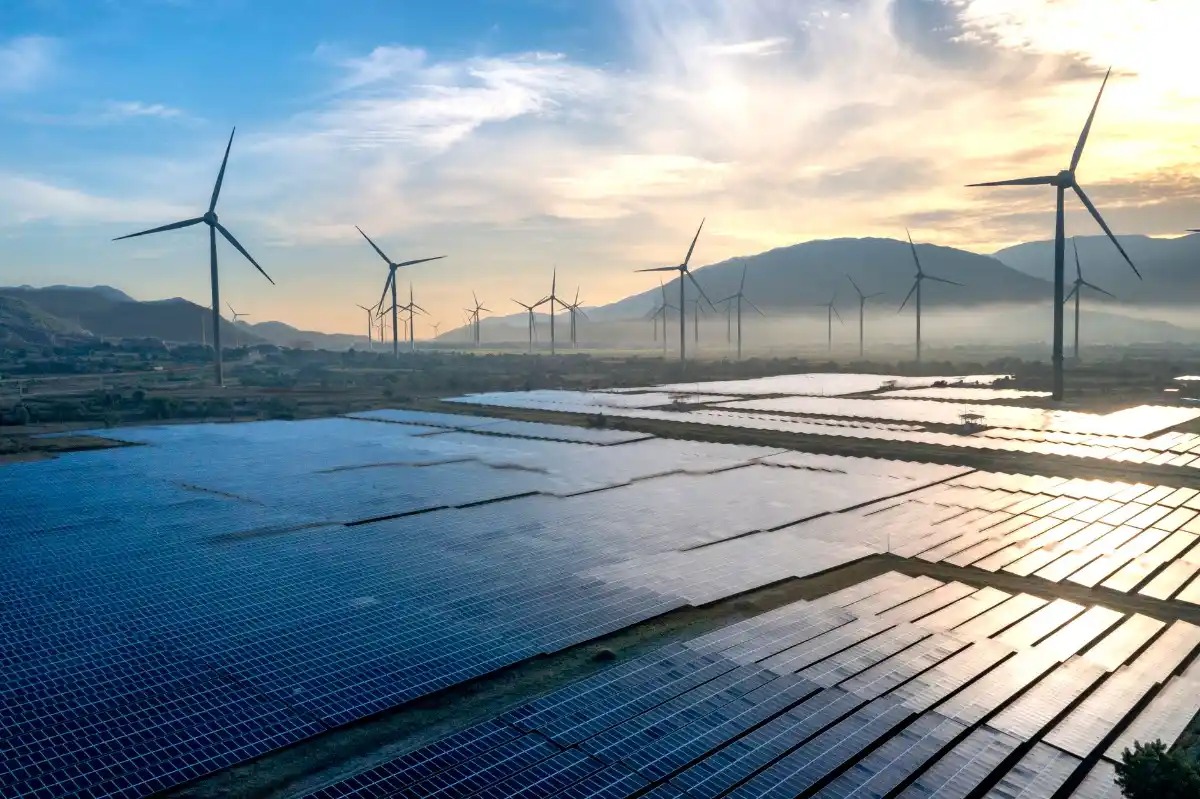
A primary objective of the G7 breakthrough is the rapid expansion of renewable infrastructure across diverse geographical regions. This involves deploying large-scale solar arrays, wind farms, and geothermal plants to replace aging and carbon-intensive energy production facilities globally.
The initiative emphasizes the modernization of national power grids to accommodate decentralized energy sources. By upgrading transmission lines and storage capacity, the G7 intends to create resilient energy networks capable of meeting the growing demands of rapidly industrializing nations.
Investment targets are specifically tailored to the unique environmental profiles of recipient countries. For instance, coastal regions may see increased funding for offshore wind projects, while arid zones will benefit from advanced photovoltaic technologies designed for high-temperature efficiency and long-term durability.
Technological transfer is a critical component of these infrastructure targets. The G7 will facilitate the sharing of intellectual property and engineering expertise, ensuring that local workforces are equipped to maintain and innovate within their new renewable energy sectors effectively.
The scale of these projects is expected to generate significant economies of scale. As renewable technologies are deployed more widely, the cost per megawatt-hour is projected to decrease, making green energy the most economically viable option for developing nations.
Funding Distribution Mechanisms
To ensure the efficient allocation of the $1 trillion package, the G7 has established rigorous distribution mechanisms. These frameworks prioritize projects based on their potential for carbon reduction and their alignment with the Sustainable Development Goals set by the United Nations.
Multi-lateral development banks will play a central role in managing these funds. By leveraging existing financial institutions, the G7 can utilize established vetting processes to identify high-impact projects while minimizing the administrative overhead associated with creating entirely new funding entities.
Accountability is maintained through a series of performance-based milestones. Funding is released in stages, contingent upon the successful completion of specific project phases, which ensures that capital is utilized effectively and that projects remain on their intended developmental trajectories.
Digital tracking systems will be employed to monitor the flow of capital in real-time. This level of transparency is intended to build trust among stakeholders and prevent the misappropriation of funds, which has historically hindered large-scale international aid initiatives.
The distribution strategy also includes provisions for small-scale community projects. By allocating a portion of the funds to localized initiatives, the G7 ensures that the benefits of the energy transition reach rural and underserved populations, fostering broad-based economic growth.
Impact on the Global South
The influx of climate finance is poised to catalyze a major economic transformation across the Global South. By reducing reliance on imported fossil fuels, these nations can improve their trade balances and redirect capital toward education, healthcare, and digital innovation.
Energy independence is perhaps the most significant long-term benefit for these regions. Access to reliable and affordable renewable energy allows local industries to expand, creating millions of new jobs and stimulating domestic manufacturing sectors that were previously constrained by energy shortages.
Environmental benefits are equally profound, as the shift toward green energy reduces local air and water pollution. This leads to improved public health outcomes, lowering the burden on national healthcare systems and increasing the overall productivity of the workforce.
The G7 package also strengthens the political agency of Global South nations. By participating as equal partners in the energy transition, these countries can exert greater influence in international forums and shape the future of global climate policy and governance.
Social equity is a core focus of the impact assessment. The initiative aims to ensure that the transition to a green economy does not exacerbate existing inequalities, but rather provides new opportunities for marginalized groups to participate in the modern economy.
Geopolitical Leverage and Strategic Security
Energy Security as National Security
The G7 has formally recognized that energy security is now synonymous with national security in an increasingly volatile world. This perspective shifts the focus from purely environmental goals to the strategic necessity of maintaining stable and independent energy supplies.
By diversifying energy sources away from centralized fossil fuel markets, nations can mitigate the risks associated with geopolitical blackmail and supply chain disruptions. This autonomy is crucial for maintaining economic stability during periods of international tension or localized conflict.
The transition to renewables also reduces the strategic importance of traditional energy chokepoints. This shift alters the global maritime security landscape, as the protection of oil tankers becomes less critical than the security of underwater cables and rare earth mineral mines.
National defense strategies are increasingly incorporating climate resilience into their planning. Military installations are being equipped with microgrids and renewable energy systems to ensure operational continuity in the event of traditional power grid failures or targeted cyber-attacks on infrastructure.
The G7's approach reflects a broader understanding that environmental instability can lead to state failure and regional unrest. Investing in global climate finance is therefore viewed as a proactive security measure that promotes long-term peace and stability across the international community.
Countering Competing Global Initiatives
This climate finance breakthrough is strategically positioned as a counter-strategy to other global infrastructure initiatives. The G7 aims to provide a transparent and sustainable alternative to financing models that often lead to high levels of sovereign debt and political dependency.
By offering competitive terms and emphasizing environmental standards, the G7 seeks to attract emerging economies into a Western-aligned financial orbit. This competition fosters a race to the top, where nations can choose between different developmental models based on their long-term interests.
The initiative also serves to secure supply chains for critical minerals required for the green transition. By partnering with resource-rich nations in the Global South, the G7 can ensure a steady supply of lithium, cobalt, and nickel for domestic industries.
We Also Published
Strategic communication plays a vital role in this geopolitical maneuvering. The G7 highlights the benefits of its partnership model, which emphasizes local capacity building and environmental stewardship, contrasting it with models that focus primarily on resource extraction and infrastructure for export.
The success of this counter-strategy depends on the consistent delivery of promised funds. If the G7 can demonstrate that its climate finance model leads to tangible economic improvements, it will significantly enhance its soft power and influence in the developing world.
Strengthening Western Ties with Emerging Markets
The $1 trillion package serves as a powerful diplomatic tool for strengthening ties between Western nations and emerging markets. These partnerships are built on mutual economic interests and a shared commitment to addressing the global challenge of climate change effectively.
Bilateral trade agreements are often integrated into these climate finance deals. This creates a virtuous cycle where renewable energy projects facilitate broader economic cooperation, leading to increased investment in technology, agriculture, and service sectors between the G7 and its partners.
Diplomatic engagement is enhanced through regular summits and technical exchanges. These interactions foster a deeper understanding of regional challenges and allow G7 nations to tailor their support to the specific needs and aspirations of emerging market governments and their citizens.
The focus on sustainability aligns with the values of a new generation of leaders in the Global South. These leaders are often more concerned with long-term ecological health and social equity than their predecessors, making them natural allies in the G7's environmental mission.
Ultimately, these strengthened ties create a more cohesive international community. By working together on climate finance, nations can build the trust necessary to cooperate on other critical issues, such as global health, cybersecurity, and international trade regulation and reform.
Regional Focus: Africa and Southeast Asia
Africa and Southeast Asia have been identified as the primary regions for G7 climate investment. These areas possess immense renewable energy potential but currently face significant barriers to capital and technology, making them ideal candidates for the new finance package.
In Africa, the focus is on harnessing solar and wind power to provide electricity to the hundreds of millions who currently lack access. This energy expansion is seen as the foundation for the continent's projected industrial boom and future economic prosperity.
Southeast Asia presents a different set of challenges and opportunities, with a heavy emphasis on transitioning away from coal-fired power plants. The G7 aims to fund the early retirement of these plants while simultaneously scaling up regional renewable energy capacity and grid integration.
Regional cooperation is encouraged through the funding of cross-border energy projects. By creating integrated regional power pools, the G7 helps these nations share energy resources more efficiently, reducing costs and improving the overall reliability of their respective national energy systems.
The success of these regional initiatives will serve as a blueprint for other parts of the world. By demonstrating that large-scale green transitions are possible in diverse economic contexts, the G7 aims to inspire a global movement toward sustainable and resilient development.
- 01
- 02
- 03
- 04
Private Sector Integration and Financial Markets
Public-Private Partnerships Framework
Public-private partnerships (PPPs) are the cornerstone of the G7's strategy to mobilize the necessary capital for the energy transition. By combining government oversight with private sector efficiency, these frameworks can deliver complex infrastructure projects more effectively than either sector alone.
The G7 provides the initial seed capital and regulatory framework to attract private developers. This government involvement reduces the perceived risk of large-scale projects in emerging markets, encouraging companies to commit their resources and expertise to long-term sustainability initiatives globally.
Private partners bring innovation and technical proficiency to the table. Their involvement ensures that projects are designed and executed using the latest technologies and best practices, maximizing the environmental and economic impact of every dollar invested through these collaborative structures.
Risk-sharing is a fundamental component of the PPP model. Governments may provide guarantees against political instability or currency fluctuations, while private partners take on the operational and construction risks, creating a balanced and sustainable investment environment for all parties involved.
The G7 also encourages the participation of local businesses in these partnerships. By integrating domestic firms into the supply chain, the initiative fosters local entrepreneurship and ensures that a significant portion of the economic benefits remain within the recipient country's borders.
De-risking Institutional Investments
Institutional investors, such as pension funds and insurance companies, hold trillions of dollars in assets but have traditionally been hesitant to invest in emerging market infrastructure. The G7's de-risking mechanisms are specifically designed to address these concerns and unlock this capital.
One primary de-risking tool is the use of "blended finance." This involves using public funds to take on the "first-loss" position in an investment, which significantly improves the credit rating of the project and makes it more attractive to conservative institutional investors.
The G7 is also working to standardize the legal and regulatory environments in recipient countries. By promoting transparent procurement processes and strong property rights, the initiative reduces the legal risks that often deter international investors from committing capital to new markets.
Political risk insurance is another critical tool in the de-risking toolkit. By providing coverage against expropriation, breach of contract, or civil unrest, the G7 allows institutional investors to focus on the underlying economic potential of renewable energy projects without fear of political interference.
The mathematical model for risk assessment in these projects can be expressed as ## R_{total} = R_{market} + R_{political} - G_{guarantee} ##, where the total risk is mitigated by the government-provided guarantee, making the investment profile acceptable for large-scale institutional portfolios.
Green Bond Market Proliferation
The G7 breakthrough is expected to spark a massive expansion in the green bond market. These financial instruments are specifically earmarked for environmental projects, providing a transparent and efficient way for investors to support the global transition to a low-carbon economy.
As more G7-backed projects reach the operational phase, they can be refinanced through the issuance of green bonds. This provides an exit strategy for early-stage investors and creates a steady supply of high-quality, sustainable assets for the broader financial markets to absorb.
Regulatory support is crucial for the growth of this market. The G7 is working to harmonize green bond standards, ensuring that investors can easily compare the environmental impact of different offerings and reducing the risk of "greenwashing" in the financial sector.
The demand for green bonds is currently outstripping supply, as more investors integrate environmental, social, and governance (ESG) criteria into their decision-making processes. This high demand leads to lower borrowing costs for green projects, further accelerating the transition away from fossil fuels.
Green bonds also provide a mechanism for individual retail investors to participate in the climate finance breakthrough. By purchasing these bonds through mutual funds or exchange-traded funds, individuals can contribute to global sustainability while earning a competitive return on their savings.
Investment Strategies for ESG Funds
The G7's $1 trillion package provides a wealth of opportunities for ESG funds to diversify their portfolios and achieve significant impact. Analysts suggest that investors should look toward emerging market ESG funds that are positioned to benefit from these infrastructure projects.
Active management is often preferred in this space, as it allows fund managers to conduct deep due diligence on individual projects and local partners. This hands-on approach is essential for navigating the complexities of emerging markets and ensuring that investments align with ESG principles.
The strategic insight for investors is that energy security is now a fundamental driver of market value. Companies that provide the technologies and services required for the green transition are likely to see sustained growth as the G7's financial commitments are realized.
Diversification across different renewable technologies and geographical regions is also recommended. This strategy mitigates the risks associated with any single project or country, providing a more stable return profile for investors who are committed to long-term sustainable growth and environmental stewardship.
Finally, investors should monitor the policy developments within the G7 nations closely. The ongoing evolution of climate finance regulations and international agreements will continue to shape the investment landscape, creating new opportunities for those who are well-informed and proactive in their strategies.
From our network :
- How AI Agents Will Change the Way We Manage Personal FinancesExplore how AI agents are transforming personal finance through automated budgeting, bill payment, and investment management, while examining the critical security protocols and governance frameworks required for safe deployment.
- The Hidden Cost of AI Convenience: Why Over-Permissioned Agents Are a Security Time BombDiscover why AI agents with excessive permissions create dangerous single points of failure, and learn how implementing least privilege principles can protect your organization from exploitation.
- Forbidden Matrix Patterns and Visible Lattice Points: A Geometric DictionaryExplore how multidimensional 0–1 matrices encode geometric truths, linking forbidden patterns to visible lattice points and hypergraph theory, with applications in combinatorics and computational geometry.
- CISA’s Ten-Advisory Wave: Why Generic Patching Fails in OT and How to Build Product-Specific PlaybooksCISA released ten ICS advisories in one week, exposing critical infrastructure risks. Generic patching fails in OT. Learn to build product-specific remediation playbooks.
- The Final Descent: How ESA Retired the Legendary Cluster Constellation After 24 Years of Space Weather ScienceAfter 24 years mapping Earth’s magnetosphere, ESA’s Cluster mission concluded with a precisely controlled reentry over the South Pacific. This analysis explores the scientific legacy, engineering decisions, and debris mitigation principles behind one of space exploration’s most responsible retirements.
- Committed Mediterranean Precipitation Decline: Why Emissions Cuts Alone Cannot Restore Winter RainsNew NOAA research reveals that Mediterranean winter rains may decline irreversibly even with emissions cuts. Explore the science of committed climate change and regional impacts.
- Former Soap Stars Embark on Ambitious Writing Projects and Theatrical StagesDiscover how former soap opera actors are transitioning into independent scriptwriting and high-profile theatrical stage productions.
- Norbert’s Uncertain Path: Why Hawaii’s Storm Watch Demands Patience Over PanicTropical Storm Norbert strengthens in the Eastern Pacific with winds near 50 mph, forecast to reach Category 1 hurricane status by Friday. Long-range models disagree sharply on whether Hawaii faces any threat around September 19–23, making official guidance essential.
- Analyzing Hoya Corporation’s Midday Volume Shifts and Financial FundamentalsExamine Hoya Corporation’s midday trading volume contraction, technical moving averages, robust solvency ratios, and stellar quarterly earnings performance.
RESOURCES
- COP27 Reaches Breakthrough Agreement on New “Loss and ...unfccc.intNov 20, 2022 ... – The United Nations Climate Change Conference COP27 closed today with a breakthrough ... The G7 and the V20 ('the…
- 5 breakthroughs on climate and health at COP28 - and what comes ...climahealth.infoJan 15, 2024 ... This is expected to translate in continued prominence of climate change in global health fora, including at the 2024 G7…
- Italy's G7 presidency can be a breakthrough for the 'West' and the ...atlanticcouncil.orgJan 31, 2024 ... As a result, shared issues—ranging from climate change and public health crises to economic inequalities—tend to end up on the…
- Secretary-General's remarks at the Leaders' Dialogue on the Africa ...un.orgApr 6, 2021 ... In that context, it is clear that we need a breakthrough ... I have asked all G7 nations to double…
- G7 Climate, Energy and Environment Ministers' Communiquég7.utoronto.caApr 3, 2025 ... ... G7 in order to address climate change, biodiversity loss and pollution. ... We welcome overarching initiatives such as, the…
- Climate, Energy and Environment Ministers' Meeting Communiquég7italy.itApr 29, 2024 ... change towards circular economies and that the G7 should lead this shift. Textile and apparel production from primary resources causes ...
- Amy Hepburn on Mobilizing Institutional Investors for Climate Impactrockefellerfoundation.orgSep 25, 2023 ... What breakthroughs need to happen for us to both avoid the worst impacts of climate change and prepare communities to…
- What happened at COP27 and other climate change newsweforum.orgNov 21, 2022 ... COP27 climate change environment stories historic climate fund G7 Global Shield insurance fund ... COP27 delivers climate fund breakthrough ...
- We'll always have Paris: How to adapt multilateral climate ...ecfr.euOct 31, 2022 ... EU and G7 members should also increase their contributions to the industrial decarbonisation fund within the World Bank's Climate Investment ...
- G7 climate club - European Parliamenteuroparl.europa.euindustrial decarbonisation agenda, the hydrogen action pact and the breakthrough agenda. ... In October 2022, in its conclusions on climate finance ahead of the ...
- Breakthrough Agenda Report 2022 – Analysis - IEAiea.orgSep 19, 2022 ... ... G7, China and India. The report is designed to inform policy ... Climate Change Conference COP27 in Sharm El-Sheikh,…
- Buildings Breakthrough | GlobalABCglobalabc.orgG7 Climate, Energy and Environment Ministers', where the importance of decarbonizing buildings' lifecycles in combatting climate change was noted; the ...
- Climate Advisers: Homeclimateadvisers.org... , carbon markets, and climate finance and risks.We specialize in breakthrough ideas and creative strategies that are informed.
- Steel Initiatives - Breakthrough Agendabreakthroughagenda.orgClimate Investment Funds Industry Decarbonization Program (CIF Industry); First Movers Coalition; G7 Industrial Decarbonisation Agenda*; IEA – Industrial Energy ...
- TAKING THE TEMPERATURE - Science Based Targets Initiativefiles.sciencebasedtargets.orgto unlock breakthrough climate mitigation action through science-based targets. ... 1 G7 Climate and Environment Ministers' Meeting, May 2021: Communiqué ...
- 01
- 02
- 03
- 04
- 05
- 06
- 07
- 08
0 Comments