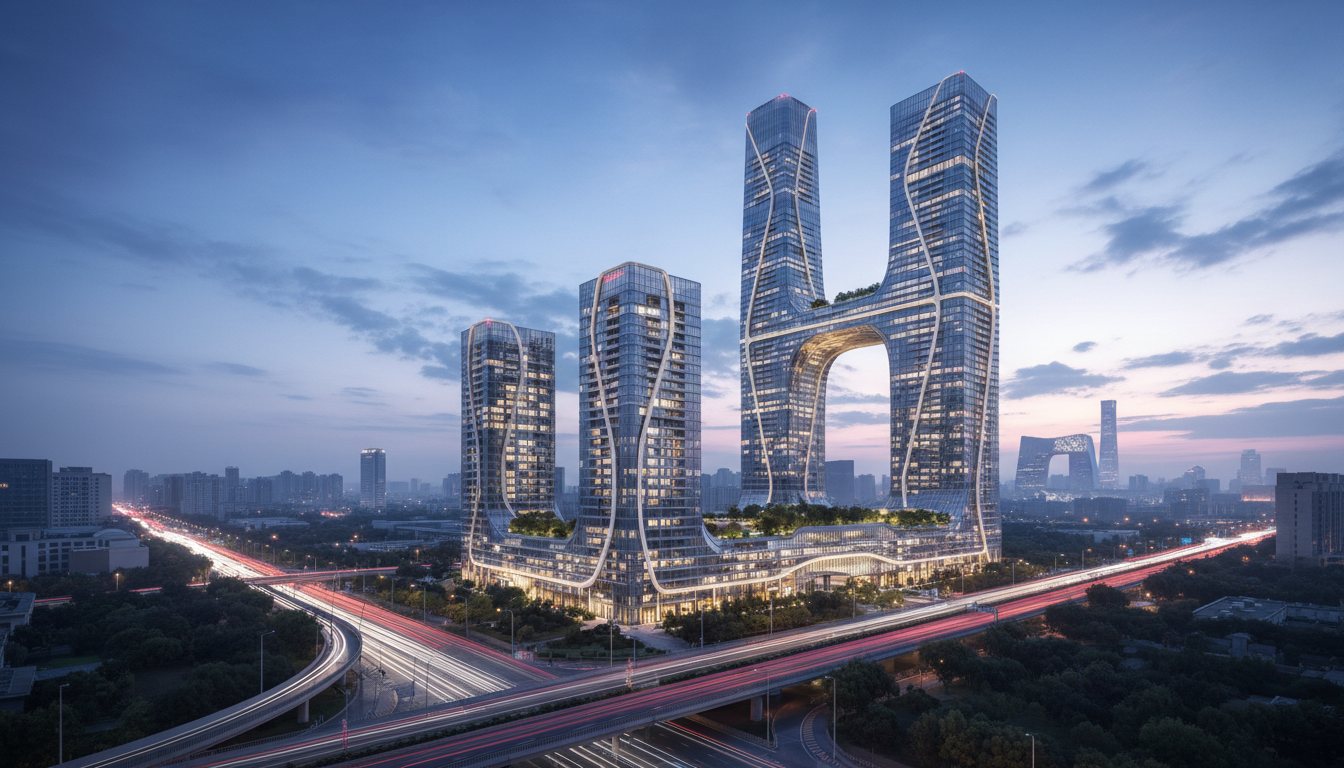
The landscape of the global economy is shifting as the China property stimulus and VAT exemption impact on real estate 2026 begins to manifest across international markets. Beijing’s latest aggressive intervention, launched in early January 2026, represents a decisive pivot from supporting struggling developers to directly empowering the consumer through massive tax relief and direct subsidies. This strategic realignment aims to stabilize a sector that has historically accounted for nearly a quarter of the nation’s GDP but has suffered from a prolonged liquidity crunch and waning buyer confidence over the last four years.
By implementing a nationwide waiver on Value-Added Tax (VAT) for residential properties held for more than two years, the central government is effectively lowering the barrier to entry for the secondary market. This move, coupled with reports of a trillion-yuan mortgage subsidy package, suggests that the China property stimulus and VAT exemption impact on real estate 2026 will be the defining economic theme of the year. Market participants are watching closely to see if these demand-side measures can successfully reignite the “Silver Economy” and help the nation meet its ambitious growth targets while navigating a complex demographic transition.
How Does the New China Property Stimulus Reshape the Real Estate Market?
The “Great Property Pivot” of 2026 is not merely a reactive measure to falling home prices; it is a fundamental restructuring of the Chinese economic social contract. For decades, the real estate market was driven by supply-side expansion and land-sale revenues for local governments. However, as of January 2, 2026, the focus has shifted toward the “demand side.” This means the state is now prioritizing the financial health of the household over the solvency of the developer. By removing the VAT burden on older homes, the Ministry of Finance of the People’s Republic of China is encouraging a “filtering” effect where middle-class families can upgrade their living standards, thereby freeing up entry-level units for younger buyers.
Analysts suggest that this policy is a direct response to the “Wait-and-See” attitude that has paralyzed the market since 2022. When consumers expect prices to fall, they delay purchases, creating a deflationary spiral. The 2026 stimulus package breaks this cycle by offering immediate, tangible financial incentives. For example, the waiver of a 5.3% VAT on a 5-million-yuan apartment saves a family 265,000 yuan—a significant sum that can be diverted into consumption or other investments. This influx of liquidity is expected to stabilize property valuations and provide a much-needed psychological “floor” for the market.
| Feature | Pre-2026 Policy | New 2026 Policy |
|---|---|---|
| VAT on Secondary Sales | Approx. 5.3% (City-dependent) | 0% (Held > 2 Years) |
| Mortgage Support | Rate cuts for developers | Monthly subsidies for households |
| Urban Renewal Focus | New-build expansion | Renovation of existing stock |
Understanding the Mechanisms of VAT Exemptions on Residential Property Sales
The technical implementation of the VAT exemption is a masterstroke in regulatory precision. By specifically targeting properties held for more than two years, the government is discouraging short-term speculation while rewarding long-term residency and asset accumulation. In many Tier-1 cities like Shanghai and Beijing, the cost of transaction has often been a deterrent for families looking to downsize or move closer to employment hubs. With the removal of this tax, the “friction” of the secondary market is reduced, allowing for a more efficient allocation of housing resources across the urban population.
From a mathematical perspective, the impact on a seller’s net proceeds can be modeled through the following relationship between gross sale price and tax liability. In the previous regime, the net value ##V_{net}## was calculated as:
Where ##\tau_{vat}## represents the applicable VAT rate and ##C_{other}## represents other transaction costs. Under the new 2026 rules, ##\tau_{vat}## becomes zero for eligible properties, significantly increasing the seller’s liquidity and their ability to reinvest in a new asset or spend in the broader economy.
Strategic Shifts in Secondary Market Liquidity
The primary goal of the VAT exemption is to unblock the secondary market, which has been stagnant due to high entry costs and low sentiment. When the secondary market is frozen, the entire real estate ecosystem suffers because homeowners cannot sell their current properties to buy new ones from developers. By removing the 5.3% tax barrier, Beijing is creating a “bridge” that allows capital to flow once again. This liquidity is essential for price discovery, as a high volume of transactions provides clearer data on what properties are actually worth in a post-bubble environment.
Furthermore, the increased liquidity in the secondary market acts as a stabilizer for the banking sector. As homes change hands, old mortgages are settled and new ones are issued, often at more sustainable rates and with higher down payments. This “refreshing” of the mortgage book reduces the risk of long-term defaults associated with negative equity. For the first time in years, the China property stimulus and VAT exemption impact on real estate 2026 is creating a scenario where the market can find its natural equilibrium without the constant threat of a systemic collapse.
Investment patterns are also shifting. Previously, investors sought high capital gains in the primary market. Now, the focus is shifting toward “yield” and “utility” in the secondary market. Buyers are looking for established neighborhoods with existing infrastructure rather than speculative new builds in the outskirts. The VAT exemption makes these established assets significantly more attractive, potentially leading to a revival of older city centers. This trend aligns with the government’s broader “Urban Renewal” objectives, which favor the optimization of existing urban footprints over endless suburban sprawl.
Finally, the psychological impact on consumers cannot be overstated. For the Chinese middle class, the home is the primary store of wealth. Seeing the government actively reduce the cost of selling and buying sends a strong signal that the state is committed to protecting property values. This “policy floor” encourages families to resume normal economic activities, such as home renovations and furniture purchases, which have a multiplier effect on the economy. As liquidity returns, the fear of “catching a falling knife” is gradually replaced by the fear of missing out on a once-in-a-decade tax holiday.
Long-Term Implications for Middle-Class Asset Trading
The 2026 VAT rules represent a “New Normal” for middle-class asset trading in China. For years, the rapid appreciation of property prices meant that transaction taxes were easily absorbed by the profit margins. In a era of “high-quality growth” where price appreciation is expected to be more modest, high transaction taxes can consume a disproportionate share of a family’s equity. By waiving these taxes, the government is acknowledging that the role of housing has changed from a speculative vehicle to a stable, tradable asset that provides social security and lifestyle flexibility.
Middle-class families are now using this opportunity to “rationalize” their portfolios. Many families who owned multiple properties in different cities are taking advantage of the tax waiver to consolidate their holdings into single, higher-quality units in better locations. This movement is creating a more sophisticated market where quality of life and proximity to services drive value more than sheer floor area. The China property stimulus and VAT exemption impact on real estate 2026 is thus fostering a more mature property culture focused on long-term sustainability rather than short-term gains.
Moreover, the integration of these tax rules with the “Silver Economy” is a strategic masterstroke. As the population ages, many elderly couples find themselves living in large, multi-story units that are difficult to maintain. The VAT exemption allows them to sell these properties tax-free and move into smaller, more accessible “Silver Living” apartments. This frees up larger family homes for younger couples, effectively solving two demographic problems at once. The government is essentially using the tax code to lubricate the gears of social transition in an aging society.
From a global perspective, this shift in asset trading behavior is being watched as a potential model for other nations facing property bubbles and aging populations. By focusing on the secondary market and the consumer, China is attempting to avoid the “lost decades” that plagued Japan. The ability of the middle class to trade assets without being penalized by the state is a key component of maintaining social stability and economic dynamism. If successful, this could pave the way for a more resilient Chinese economy that is less dependent on debt-fueled construction and more on the efficient circulation of existing wealth.
- 01
- 02
- 03
- 04
The Trillion-Yuan Mortgage Subsidy and Urban Renewal Transformation
While the VAT exemption addresses the “cost” of trading, the leaked “Urban Renewal” and mortgage subsidy plan addresses the “ability” to pay. Reports suggest that the Ministry of Finance is preparing a massive trillion-yuan package designed to provide direct relief to households. Unlike previous bailouts that funneled money to developers like Evergrande or Country Garden, this new plan puts cash directly into the hands of the people. This is a fundamental shift toward “demand-side” support, recognizing that without a confident consumer, no amount of supply-side liquidity can save the sector.
def calculate_mortgage_savings(principal, annual_rate, subsidy_monthly, years):
    # Monthly interest rate
    monthly_rate = annual_rate / 12 / 100
    num_payments = years * 12

    # Standard EMI formula
    emi = (principal * monthly_rate * (1 + monthly_rate)**num_payments) / \
          ((1 + monthly_rate)**num_payments - 1)

    # Impact of 500 RMB monthly subsidy
    net_emi = emi - subsidy_monthly
    total_savings = subsidy_monthly * num_payments

    return emi, net_emi, total_savings

# Example for a 2 million RMB mortgage at 3.5% for 30 years
original, discounted, total = calculate_mortgage_savings(2000000, 3.5, 500, 30)
print(f"Original EMI: {original:.2f}")
print(f"Subsidized EMI: {discounted:.2f}")
print(f"Total Life-of-Loan Savings: {total:.2f}")
The proposed 500 yuan monthly subsidy for first-time homebuyers might seem small relative to total mortgage costs, but in the context of China’s lower-tier cities, it can cover up to 15-20% of a monthly payment. More importantly, the psychological effect of a “government co-payment” acts as a powerful incentive for young people to enter the market. When combined with income tax rebates for existing mortgage holders, the policy creates a comprehensive safety net that prevents forced liquidations and supports the “around 5%” GDP growth target for 2026.
| Recipient Category | Primary Benefit | Estimated Economic Impact |
|---|---|---|
| First-Time Buyers | 500 RMB/Month Subsidy | Direct stimulation of entry-level market |
| Existing Mortgage Holders | Income Tax Rebates | Increased disposable income for consumption |
| Multi-generational Units | Preferential interest rates | Support for the aging “Silver Economy” |
Integrating the Silver Economy into Modern Property Rescue Efforts
A unique aspect of the 2026 property rescue is its explicit link to China’s “Silver Economy.” As highlighted in the President’s New Year address, the aging population is no longer viewed solely as a challenge but as a significant economic opportunity. New incentives have been introduced for “multi-generational living” units, which allow families to live together while maintaining privacy. These units often feature advanced healthcare monitoring and accessibility features, catering to the needs of the elderly while keeping them integrated into the family unit.
The China property stimulus and VAT exemption impact on real estate 2026 includes specialized grants for developers who pivot from building standard luxury condos to “Smart Aging” communities. These projects are eligible for lower land-acquisition costs and fast-tracked approvals. By encouraging the renovation of older urban neighborhoods into age-friendly districts, Beijing is effectively repurposing its vast real estate stock to meet the demographic realities of the 21st century. This not only supports property values but also reduces the long-term fiscal burden on the national healthcare system.
Mathematically, the integration of elderly care into property value can be viewed through the lens of a “utility premium.” If a property includes integrated care services, its valuation ##V## can be expressed as:
Where ##S_i## represents the value of healthcare and support services provided over time, and ##r## is the discount rate. By subsidizing these services through property-linked incentives, the government is creating a new class of high-value real estate that remains resilient even as traditional speculative demand fades. This ensures that the wealth stored in property by the elderly remains liquid and productive.
Why Market Analysts Remain Cautiously Optimistic About the Social Contract
Despite the aggressive nature of these interventions, market analysts maintain a stance of “cautious optimism.” The primary concern is whether these measures are enough to rebuild the social contract between the state and the middle class. For decades, the unspoken agreement was that the state would ensure rising property prices in exchange for social stability. Now that the era of explosive growth has ended, the state must convince the public that property is still a safe and worthwhile investment, even if the returns are more modest.
The early market reaction has been positive, with property stocks in Hong Kong and Shanghai surging by 10% following the announcement. This reflects a market that is desperate for a “bottom.” However, the long-term success of the China property stimulus and VAT exemption impact on real estate 2026 depends on the government’s ability to maintain a delicate balance. If the stimulus is too weak, it will fail to revive demand; if it is too strong, it risks reigniting the very debt-fueled bubble that the authorities have spent years trying to deflate.
Furthermore, the shift toward “high-quality growth” means that the government is less likely to return to the old-school infrastructure spending of the 2008 era. Instead, they are betting that a more surgical approach—targeting VAT, subsidies, and the Silver Economy—will produce a more sustainable recovery. If these measures fail to stimulate the GDP target, Beijing may be forced to choose between its economic ideals and the necessity of preventing a deeper recession. For now, the focus remains on empowering the consumer and ensuring that the real estate sector transitions from a source of systemic risk to a pillar of social stability.
Ultimately, the 2026 property pivot is about more than just numbers; it’s about trust. The government is signaling that it understands the anxieties of the middle class and is willing to sacrifice tax revenue (like the VAT) to protect household wealth. If the public buys into this new vision, we could see a stabilized, more mature Chinese property market that contributes to global economic stability. If not, the “Great Property Pivot” may be remembered as the final, desperate attempt to hold back an inevitable correction. The next twelve months will be critical in determining which of these paths the nation takes.
- 01
- 02
- 03
- 04
- 05
- 06
- 07
- 08
0 Comments