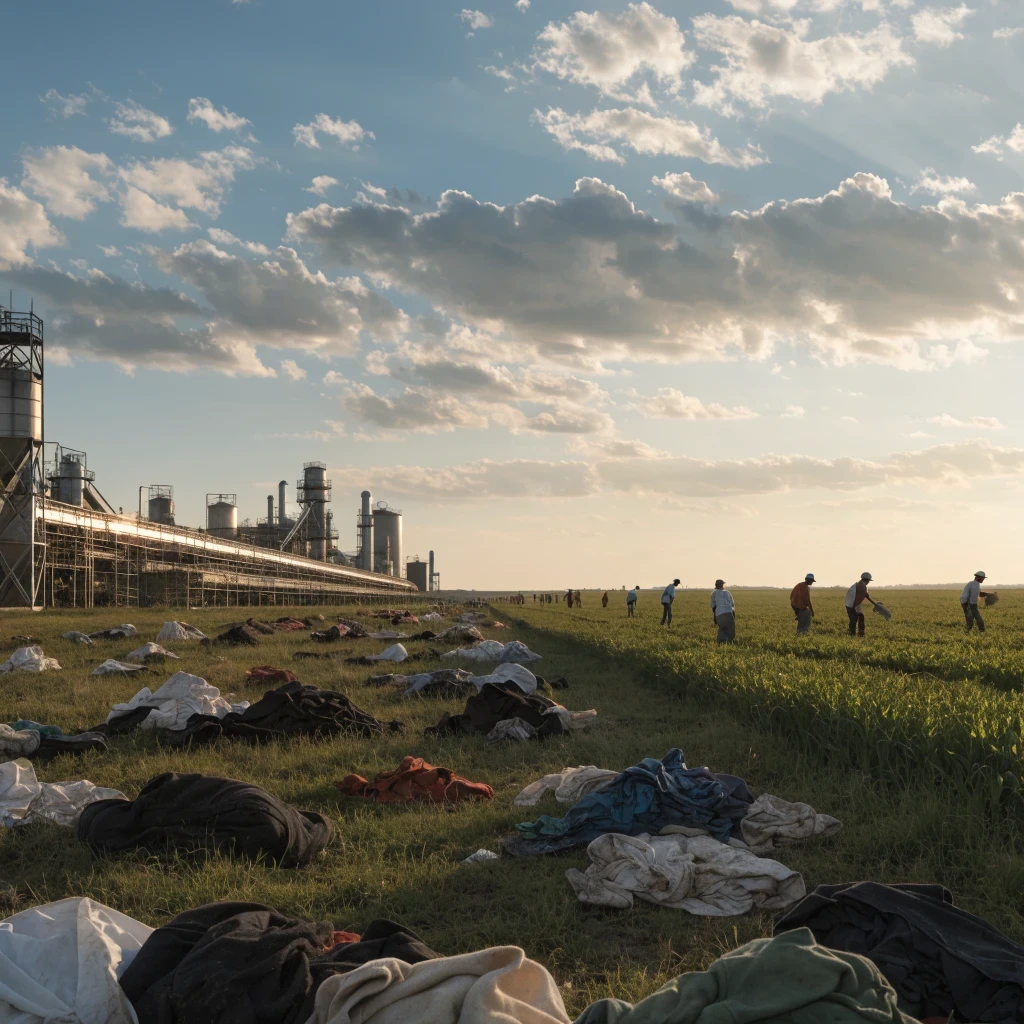
The United States has just detonated a legislative bomb in the heart of global commerce, and the shockwaves are still rippling through every major trading corridor on Earth. By invoking Sections 122, 201, and 301 of the Trade Act, Washington has targeted no fewer than 59 partner nations with a sweeping array of tariffs ostensibly justified by "forced labor" concerns. This is not a surgical strike; it is a broad-spectrum weapon deployed against the very architecture of international supply chains.
What makes this moment genuinely unprecedented is the fusion of moral rhetoric with economic coercion at a scale never before attempted. Previous administrations wielded tariffs as precision tools for specific disputes, but this new framework treats labor practices as a universal tariff trigger, effectively weaponizing humanitarian concern as a trade barrier.
The immediate fallout has been predictable: state governments filing lawsuits, trading partners preparing retaliatory measures, and economists warning that we are witnessing the opening salvo of a fragmentation spiral that could redraw the map of global manufacturing.
On This Page
The deeper significance lies in what this signals about the future of commerce itself. When the world's largest economy declares that labor standards are now a legitimate basis for border taxes, every nation with export-dependent industries must recalibrate its compliance infrastructure, diplomatic posture, and supply chain strategy.
This analysis dissects the mechanics of these new tariffs, their geopolitical consequences, and the strategic calculus facing businesses and governments navigating this volatile new landscape.
TL;DR The United States has launched an unprecedented trade offensive using Sections 122, 201, and 301 to impose tariffs on 59 partner nations under the banner of combating forced labor. This marks a fundamental shift from targeted trade remedies to systemic protectionism, triggering state lawsuits, international retaliation, and accelerating global trade fragmentation. The measures threaten critical export supply chains, raise compliance costs for multinational corporations, and could permanently reshape the architecture of international commerce. Businesses must now navigate a bifurcated trading system where labor standards, geopolitical alignment, and tariff exposure determine market access.
The Legislative Arsenal: Deconstructing Sections 122, 201, and 301
Understanding this trade offensive requires examining the distinct legal instruments Washington has deployed, each carrying its own procedural history and strategic purpose. Section 122 addresses balance-of-payments emergencies, Section 201 provides safeguard relief for domestic industries injured by imports, and Section 301 targets foreign trade practices deemed unfair or discriminatory. Together, they form a formidable legal triad that grants the executive branch extraordinary latitude in reshaping trade policy.
The novelty here is not the existence of these statutes but their simultaneous activation across such a vast array of trading partners. Historically, Section 301 was reserved for specific disputes with individual nations, while Section 201 was invoked sparingly for particular industries.
The current administration has collapsed these distinctions, creating a unified tariff framework that treats labor practices as a systemic trade issue rather than an isolated concern.
The Balance-of-Payments Justification Under Section 122
Section 122 has traditionally been the quietest tool in the trade arsenal, designed for temporary import surcharges during currency crises or balance-of-payments emergencies. Its invocation now suggests the administration views the US trade deficit itself as a national security emergency requiring extraordinary remedies. This framing transforms a routine economic metric into a justification for sweeping tariff authority.
The legal community has responded with alarm, noting that Section 122 carries specific procedural requirements and time limits that may not support permanent tariff regimes. State attorneys general have already filed suit, arguing that the administration has exceeded its statutory authority by conflating labor policy with balance-of-payments concerns. These legal challenges could ultimately reach the Supreme Court, creating a constitutional showdown over executive trade power.
Economic analysts point out that the balance-of-payments rationale is particularly strained given the dollar's status as the world's reserve currency. The United States can finance its deficits through capital inflows, making the emergency justification legally and economically dubious. Critics argue this is a pretext designed to circumvent the more rigorous evidentiary standards required under other trade statutes.
The practical effect of Section 122's invocation is immediate tariff imposition without the lengthy investigation periods required by other provisions. This speed is both its strategic advantage and its legal vulnerability, as affected nations have little time to prepare defenses or negotiate exemptions before duties take effect.
Section 201: Safeguard Measures and Domestic Industry Protection
Section 201 represents the classic safeguard mechanism, permitting temporary tariffs when increased imports cause serious injury to domestic industries. The administration has expanded this provision beyond its traditional scope, applying it to sectors where injury is asserted rather than rigorously demonstrated. This reinterpretation effectively converts a remedial tool into a permanent protective shield for politically influential industries.
The safeguard rationale carries particular weight in the forced labor narrative, as domestic producers argue they cannot compete with goods manufactured under labor conditions that suppress production costs. This argument has proven politically potent, even though economists note that labor cost differentials are only one factor among many driving global production decisions.
Industries ranging from textiles to electronics have filed petitions seeking Section 201 relief, creating a pipeline of potential tariff actions that could extend far beyond the initial 59 nations. The administrative machinery is now processing these requests with unprecedented speed, suggesting that the current wave of tariffs may be merely the opening phase of a much larger protectionist program.
International trade lawyers have warned that the aggressive use of Section 201 violates the spirit of World Trade Organization safeguard agreements, which require compensation or retaliation rights for affected trading partners. This legal vulnerability provides ammunition for the countermeasures already being prepared by major economies.
Section 301: The Unfair Trade Practices Hammer
Section 301 remains the most powerful and controversial instrument in this legislative arsenal, permitting tariffs against nations engaged in practices the US deems unfair, unreasonable, or discriminatory. The forced labor designation now serves as the primary trigger for Section 301 actions, effectively making labor standards a central pillar of US trade enforcement policy.
This represents a dramatic expansion of Section 301's traditional focus on intellectual property theft, technology transfer requirements, and market access barriers. By adding labor practices to the unfair trade category, the administration has created a mechanism for imposing tariffs on virtually any trading partner whose labor standards differ from US expectations.
The strategic implications are profound, as Section 301 actions carry no automatic time limits and can be maintained indefinitely. Trading partners face the prospect of permanent tariff penalties unless they fundamentally restructure their labor practices to satisfy US standards, a demand that many developing nations view as economic imperialism.
China, Vietnam, Bangladesh, and several other manufacturing powerhouses have already signaled they will challenge these actions through WTO dispute mechanisms, setting the stage for a legal battle that could take years to resolve. Meanwhile, the tariffs remain in effect, reshaping trade flows and investment decisions in real time.
Global Countermeasures and the Fragmentation Spiral
The international response to these tariffs has been swift, coordinated, and increasingly hostile, confirming the administration's worst fears about retaliatory escalation. Major economies including China, the European Union, India, and Brazil have announced or implemented counter-tariffs targeting US exports ranging from agricultural products to advanced technology components. This retaliatory cycle threatens to spiral into a full-scale trade war that could contract global GDP by trillions of dollars.
What distinguishes this confrontation from previous trade disputes is its systemic nature. Rather than isolated tariff battles over specific products, we are witnessing the emergence of rival trading blocs organized around geopolitical alignment and labor standards. Nations are being forced to choose sides, with their trade relationships increasingly determined by their willingness to adopt US labor standards or their commitment to alternative economic alliances.
China's Strategic Response and Supply Chain Realignment
China has emerged as the primary counterweight to US trade aggression, deploying a sophisticated response strategy that combines retaliatory tariffs with supply chain diversification. Beijing has accelerated its "dual circulation" economic model, reducing dependence on US markets while strengthening trade relationships with the Global South and European partners. This strategic pivot is reshaping global manufacturing geography.
The Chinese response extends beyond simple tariff retaliation to include currency management, export controls on critical minerals, and aggressive investment in alternative trade infrastructure. The Belt and Road Initiative has been repositioned as a counterpoint to US-led trade frameworks, offering developing nations an alternative path to economic integration that does not require adopting Western labor standards.
Multinational corporations are now facing an impossible choice between maintaining access to US markets and preserving their Chinese manufacturing operations. Many are pursuing "China plus one" strategies, establishing parallel production facilities in Vietnam, Mexico, and India to hedge against the fragmentation of global supply chains. This diversification comes at enormous cost, ultimately borne by consumers through higher prices.
The technology sector has become the epicenter of this confrontation, with semiconductor supply chains particularly vulnerable to disruption. US restrictions on advanced chip exports to China have triggered massive state investment in Chinese semiconductor self-sufficiency, creating a parallel technology ecosystem that could permanently bifurcate global innovation.
European Union: Reluctant Participant or Strategic Mediator?
The European Union occupies an extraordinarily difficult position in this trade war, simultaneously sharing US concerns about labor standards while suffering significant economic damage from tariff disruptions. Brussels has attempted to position itself as a mediator, advocating for multilateral solutions through the WTO while quietly preparing its own defensive measures against both US and Chinese trade practices.
European manufacturers face a particular dilemma, as their supply chains are deeply integrated with both US and Chinese markets. The EU's response has been characterized by strategic ambiguity, maintaining diplomatic engagement with Washington while strengthening trade relationships with Beijing and other Asian economies. This balancing act reflects the continent's economic interdependence with both superpowers.
The EU's Carbon Border Adjustment Mechanism represents a parallel approach to using trade policy for non-economic objectives, though Brussels insists its carbon tariffs are WTO-compliant and non-discriminatory. This creates an interesting precedent for how labor standards might eventually be incorporated into legitimate multilateral trade frameworks, potentially offering a path beyond the current confrontation.
European leaders have also expressed concern that US tariffs on Chinese goods will redirect massive volumes of cheap Chinese products toward European markets, flooding the continent with goods that can no longer enter the United States. This trade diversion effect threatens European manufacturing and could trigger additional protectionist responses within the EU.
Developing Nations: Caught in the Crossfire
Developing nations face the most severe consequences of this trade war, as their export-dependent economies are uniquely vulnerable to tariff shocks and supply chain disruptions. Countries like Vietnam, Bangladesh, and Indonesia have built their economic development strategies around manufacturing exports, and the forced labor tariff framework directly threatens this model. These nations lack the economic heft to retaliate effectively against US actions.
The forced labor narrative carries particular weight in South and Southeast Asia, where labor-intensive industries have driven remarkable poverty reduction over the past three decades. US tariffs threaten to reverse these gains, pushing millions of workers back into informal employment and undermining the very labor standards Washington claims to champion. This irony is not lost on developing world leaders.
International development organizations have warned that the tariffs will disproportionately harm women workers, who constitute the majority of the workforce in textiles, electronics assembly, and other targeted industries. The humanitarian justification for these tariffs may ultimately produce humanitarian catastrophe, as factory closures and job losses ripple through vulnerable communities.
Several developing nations are now seeking alternative trade partnerships with China, India, and other emerging economies, accelerating the fragmentation of global commerce into rival blocs. This realignment has profound implications for global governance, as the institutions designed to manage international trade are increasingly sidelined by great power competition.
We Also Published
Corporate Strategy and Compliance in the New Trade Environment
Multinational corporations are confronting an unprecedented compliance challenge as they navigate the intersection of US forced labor tariffs, supply chain transparency requirements, and divergent international standards. The new trade environment demands that companies verify labor practices across their entire supplier networks, a task of staggering complexity given the opacity of many global supply chains. Failure to comply carries existential financial risk.
The compliance burden falls disproportionately on companies with extensive operations in developing nations, where labor standards may not align with US expectations. These firms must now implement robust due diligence systems capable of documenting labor conditions throughout their supply chains, from raw material extraction to final assembly. The cost of this compliance infrastructure is substantial and ultimately passed through to consumers.
Supply Chain Transparency and the New Due Diligence Imperative
The forced labor tariff framework has effectively made supply chain transparency a legal requirement for accessing US markets, transforming corporate social responsibility from voluntary initiative to mandatory compliance. Companies must now maintain detailed documentation of labor practices at every tier of their supplier networks, including subcontractors and raw material providers. This represents a fundamental shift in how global supply chains are managed.
Technology is emerging as a critical enabler of supply chain transparency, with blockchain, artificial intelligence, and satellite monitoring being deployed to verify labor conditions. These tools offer the promise of real-time visibility into supplier operations, though their effectiveness depends on the willingness of suppliers to participate in monitoring programs. Many suppliers in developing nations view these requirements as intrusive and costly.
The legal exposure for non-compliance is severe, with companies facing not only tariff penalties but also potential criminal liability under US laws prohibiting the importation of goods made with forced labor. Corporate legal teams are now developing comprehensive compliance programs that would withstand government scrutiny, including regular audits, supplier certifications, and remediation protocols for identified violations.
Industry associations are developing standardized compliance frameworks to reduce the burden on individual companies, though these efforts face significant coordination challenges. The lack of a unified international standard for labor verification creates confusion and allows for regulatory arbitrage, as companies may shift sourcing to nations with less rigorous enforcement.
Tariff Mitigation Strategies and Supply Chain Redesign
Companies are pursuing a range of tariff mitigation strategies, from seeking product exemptions to restructuring their supply chains around tariff-free jurisdictions. The most sophisticated firms are using tariff engineering, modifying product specifications to qualify for different tariff classifications or rules of origin. These strategies require deep expertise in customs law and international trade regulations.
Supply chain redesign has emerged as the most durable response to the new tariff environment, with companies relocating production to nations not targeted by US tariffs. Vietnam, India, Mexico, and several Eastern European countries are attracting significant manufacturing investment as companies seek tariff-free alternatives to China and other targeted nations. This relocation process is costly and time-consuming, requiring years to complete.
Nearshoring has gained particular momentum, with US companies moving production closer to home to reduce supply chain risk and tariff exposure. Mexico has emerged as the primary beneficiary of this trend, with its proximity to US markets and existing trade agreements making it an attractive manufacturing destination. However, Mexico's capacity to absorb massive new manufacturing investment is limited by infrastructure constraints.
The strategic calculus for multinational corporations now involves modeling multiple tariff scenarios and developing contingency plans for each. Companies are maintaining parallel supply chains capable of serving different markets, a costly but necessary hedge against continued trade fragmentation. This redundancy reduces efficiency but provides resilience in an increasingly uncertain trade environment.
- 01
- 02
- 03
- 04
Legal Challenges and the Future of Trade Authority
The state lawsuits challenging these tariffs represent a significant constitutional confrontation over the scope of executive trade authority. Twenty-three states have joined litigation arguing that the administration has exceeded its statutory mandate by imposing tariffs without adequate justification or procedural compliance. The legal arguments center on whether forced labor concerns constitute a legitimate basis for sweeping tariff actions under existing trade statutes.
The Supreme Court's eventual ruling on these cases could fundamentally reshape the balance of power between the executive and legislative branches on trade policy. A ruling against the administration would constrain future presidents' ability to impose unilateral tariffs, potentially requiring congressional approval for major trade actions. Such a decision would represent a significant victory for free trade advocates and internationalist economic policy.
Conversely, a ruling upholding the administration's authority would cement the president's power to use tariffs as a primary instrument of foreign policy, including labor standards enforcement. This outcome would likely accelerate global trade fragmentation, as trading partners conclude that US trade policy is unpredictable and politically driven. The uncertainty itself is damaging to global investment and economic growth.
International legal challenges through the WTO face their own obstacles, as the organization's dispute resolution system has been effectively paralyzed by US blockage of appellate body appointments. This institutional failure means that WTO rulings against US tariffs may lack enforcement mechanisms, leaving affected nations with no multilateral recourse. The resulting legal vacuum favors the strongest economic powers.
The Geopolitical Endgame: Trade as Strategic Weapon
The forced labor tariff framework represents a fundamental transformation of trade policy from economic instrument to strategic weapon in great power competition. The United States is effectively using market access as leverage to compel trading partners to adopt its labor standards and, by extension, its broader geopolitical alignment. This approach treats trade not as mutually beneficial exchange but as a tool for projecting power and reshaping global norms.
The long-term consequences of this strategic shift are profound and potentially irreversible. If trade becomes permanently weaponized, the post-World War II consensus that open markets promote peace and prosperity will be replaced by a zero-sum competition where economic relationships are contingent on political alignment. This transformation would represent a historic regression in international economic governance.
The Emerging Bipolar Trade Order
The world is rapidly dividing into two competing trade blocs, one centered on the United States and its allies, the other on China and the Global South. This division is not merely economic but encompasses technology standards, financial infrastructure, and even labor rights frameworks. Nations are being compelled to choose sides, with significant economic consequences for those caught in between.
The US bloc is characterized by high labor standards, environmental regulations, and democratic governance requirements, while the Chinese bloc offers infrastructure investment, development financing, and non-interference in domestic affairs. Developing nations face an increasingly stark choice between these competing models, with their economic futures hanging in the balance. This choice is reshaping diplomatic alignments across Africa, Asia, and Latin America.
The forced labor tariff framework serves as the enforcement mechanism for the US bloc, compelling compliance through economic coercion. Nations that refuse to adopt US labor standards face exclusion from American markets, while those that comply gain preferential access. This creates a powerful incentive structure that is reshaping global supply chains and investment flows.
The sustainability of this bipolar order remains uncertain, as both blocs face internal contradictions and external challenges. The US model requires sustained economic growth to maintain its appeal, while the Chinese model faces questions about debt sustainability and governance legitimacy. The eventual resolution of these contradictions will determine the shape of the global economy for decades to come.
Implications for Global Governance and Multilateralism
The forced labor tariff offensive has dealt a potentially fatal blow to the multilateral trading system that has governed global commerce since 1947. The WTO's inability to constrain US actions has exposed the fundamental weakness of international institutions in the face of great power unilateralism. This institutional failure undermines the rule of law in international trade and encourages other nations to pursue their own unilateral measures.
The erosion of multilateral governance creates a vacuum that will likely be filled by regional trade agreements and bilateral arrangements, each reflecting the power dynamics of their participants. These fragmented arrangements lack the coherence and dispute resolution mechanisms of the multilateral system, creating a patchwork of inconsistent rules and standards. The resulting complexity imposes significant costs on businesses and governments alike.
International institutions are attempting to adapt, with the WTO exploring reforms to its dispute resolution system and the IMF developing new lending facilities for nations affected by trade disruption. However, these reforms face formidable political obstacles, as the major powers are unwilling to cede sovereignty to international bodies. The prospects for meaningful multilateral reform appear dim in the current geopolitical climate.
The long-term consequence of this institutional erosion is likely to be a more volatile and unpredictable global economy, characterized by frequent trade disputes and sudden policy shifts. Businesses will face persistent uncertainty, requiring them to maintain expensive hedges against trade disruption. This uncertainty premium will ultimately be borne by consumers through higher prices and reduced economic growth.
Strategic Recommendations for Navigating the New Trade Landscape
Governments and businesses must develop comprehensive strategies for navigating this fragmented trade environment, recognizing that the old assumptions of open markets and predictable rules no longer apply. The first priority is building resilience through supply chain diversification, reducing dependence on any single market or production location. This diversification comes at a cost but provides essential protection against trade disruption.
Companies should invest heavily in trade compliance capabilities, including legal expertise, supply chain monitoring technology, and government relations functions. The ability to navigate complex and rapidly changing trade regulations will become a source of competitive advantage. Firms that master this complexity will be better positioned to exploit opportunities created by the new trade landscape.
Governments should pursue a dual strategy of maintaining engagement with both major trade blocs while building alternative partnerships that reduce dependence on either. This hedging strategy requires careful diplomatic management and significant investment in trade infrastructure. Nations that successfully navigate this balancing act will be best positioned to benefit from the new trade order.
The most important strategic imperative is maintaining flexibility and adaptability in the face of ongoing uncertainty. The trade environment will continue to evolve rapidly, with new tariffs, exemptions, and agreements emerging on a regular basis. Organizations that can quickly adapt to changing circumstances will thrive, while those locked into rigid strategies will struggle to survive.
From our network :
- How AI Agents Will Change the Way We Manage Personal FinancesExplore how AI agents are transforming personal finance through automated budgeting, bill payment, and investment management, while examining the critical security protocols and governance frameworks required for safe deployment.
- The Final Descent: How ESA Retired the Legendary Cluster Constellation After 24 Years of Space Weather ScienceAfter 24 years mapping Earth’s magnetosphere, ESA’s Cluster mission concluded with a precisely controlled reentry over the South Pacific. This analysis explores the scientific legacy, engineering decisions, and debris mitigation principles behind one of space exploration’s most responsible retirements.
- Former Soap Stars Embark on Ambitious Writing Projects and Theatrical StagesDiscover how former soap opera actors are transitioning into independent scriptwriting and high-profile theatrical stage productions.
- Analyzing Hoya Corporation’s Midday Volume Shifts and Financial FundamentalsExamine Hoya Corporation’s midday trading volume contraction, technical moving averages, robust solvency ratios, and stellar quarterly earnings performance.
- Norbert’s Uncertain Path: Why Hawaii’s Storm Watch Demands Patience Over PanicTropical Storm Norbert strengthens in the Eastern Pacific with winds near 50 mph, forecast to reach Category 1 hurricane status by Friday. Long-range models disagree sharply on whether Hawaii faces any threat around September 19–23, making official guidance essential.
- Forbidden Matrix Patterns and Visible Lattice Points: A Geometric DictionaryExplore how multidimensional 0–1 matrices encode geometric truths, linking forbidden patterns to visible lattice points and hypergraph theory, with applications in combinatorics and computational geometry.
- CISA’s Ten-Advisory Wave: Why Generic Patching Fails in OT and How to Build Product-Specific PlaybooksCISA released ten ICS advisories in one week, exposing critical infrastructure risks. Generic patching fails in OT. Learn to build product-specific remediation playbooks.
- The Hidden Cost of AI Convenience: Why Over-Permissioned Agents Are a Security Time BombDiscover why AI agents with excessive permissions create dangerous single points of failure, and learn how implementing least privilege principles can protect your organization from exploitation.
- Committed Mediterranean Precipitation Decline: Why Emissions Cuts Alone Cannot Restore Winter RainsNew NOAA research reveals that Mediterranean winter rains may decline irreversibly even with emissions cuts. Explore the science of committed climate change and regional impacts.
RESOURCES
- Trump's trade war has a new target: forced labor. The case behind it ...cnbc.comJun 9, 2026 ... Ending forced labor is a goal most countries around the world have but few actually have success, including the U.S.…
- The forced labor case against Brazil is not about forced labor | PIIEpiie.comJul 23, 2026 ... The latest rationale to justify President Donald Trump's tariffs is the charge that US trading ... trade war in which…
- U.S. says it plans extra tariffs of 10% or more for most trading ... - PBSpbs.orgJun 3, 2026 ... ... Share on Twitter. U.S. says it plans extra tariffs of 10% or more for most trading partners after forced…
- Trump Aims New Tariffs at 59 Countries and the European Unionnytimes.comJun 3, 2026 ... Trading partners targeted with the “forced labor” tariff. 10% tariff ... “Nevertheless with a forced labor import prohibition, the United…
- USTR Takes Action in Forced Labor Section 301 Investigationsustr.govJul 23, 2026 ... On June 2, 2026, the U.S. Trade Representative determined under Section 301 of the Trade Act that the acts, policies,…
- US imposes tariffs over forced labor before global duty endssupplychaindive.comJul 23, 2026 ... Imports from 60 trading partners will be subject to either a 10% or 12.5% tariff, effective Friday, the same day…
- USTR Makes Findings and Proposes Action in 60 Section 301 ...ustr.govJun 2, 2026 ... ... trade does not perversely encourage and entrench forced labor globally. ... On March 12, 2026, the U.S. Trade Representative…
- Trump imposes new global tariffs, drawing protests from trading ...reuters.comJul 24, 2026 ... Greer previously pledged that for countries with trade deals with Washington capping U.S. tariff rates, the new forced labor duties…
- How the World Is Reacting to Trump's 'Forced Labor' Tariffs - TIMEtime.comJul 24, 2026 ... ... U.S. Trade Representative Jamieson Greer said in a statement. ... “Tariff wars and trade wars do not serve any…
- Trade war 3.0: A new, lasting tariff wall - Allianz.comallianz.comJul 22, 2026 ... ... tariff rate on top of the announced forced labor one. We assume ... US Supreme Court to strike down…
- US cites forced labour concerns as grounds for new tariffs - Al Jazeeraaljazeera.comJun 3, 2026 ... USTR's proposal comes from a Section 301 unfair trade practices investigation designed to help rebuild Trump's tariffs.
- U.S. tariff hikes dismay and anger trading partners - Spectrum Newsspectrumlocalnews.comJul 24, 2026 ... U.S. tariff hikes linked to claims of foreign forced labor dismay and anger trading partners ... "Tariff wars and trade…
- New Tariffs Coming 'Soon' On Dozens Of Countries, Trump's Trade ...forbes.comJul 21, 2026 ... New Tariffs On Other Countries Coming 'Soon'—As Punishment For Forced Labor, Trump Trade Rep Says ... The forced-labor tariffs would…
- US Tariffs Won't End Forced Labor, But They Can Change the ...thediplomat.comJul 6, 2026 ... The Section 301 proposal seeks to address trade distortions, but it remains an incomplete solution. If the goal is a…
- US says it plans extra tariffs of 10% or more for most trading partners ...abc7ny.comtariff. US says it plans extra tariffs of 10% or more for most trading partners after forced labor probe. AP logo. Wednesday, June 3,…
- 01
- 02
- 03
- 04
- 05
- 06
- 07
- 08
0 Comments