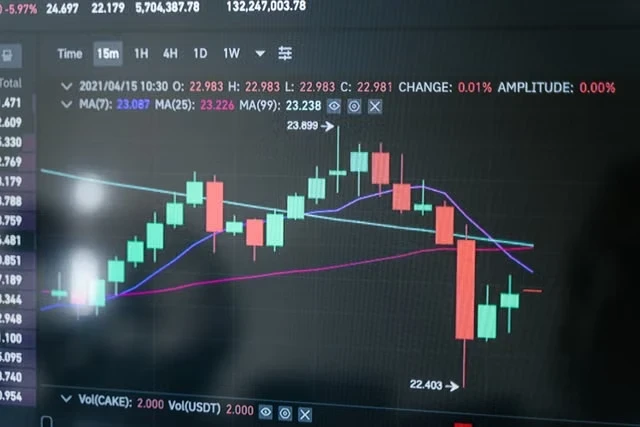
Currency intervention rumors are not “just FX gossip.” They behave like a match in dry grass—suddenly, liquidity thins, positioning flips, and what began with the yen becomes a cross-asset event that hits bonds, equities, and commodities in the same breath.
When traders suspect policy action—whether by Japan, the U.S., or any major counterparty—they reprice risk fast. The result is a volatility cascade: spreads widen, correlations rise, and instruments that normally “move independently” start shadowing one another like synchronized dancers forced onto one stage.
This post frames the central idea with a firm, step-by-step logic: a yen-related shock travels through the global transmission network. We examine how exchange-rate expectations reshape yields, how funding stress migrates into risk assets, and how sentiment accelerates the damage when headlines arrive.
On This Page
Why intervention rumors trigger cross-asset volatility (and why markets hate uncertainty)
Intervention rumors matter because they instantly attack the one thing markets can’t tolerate: a stable, predictable path for exchange rates. Even without confirmation, the mere possibility changes hedging behavior, forcing dealers and asset managers to re-balance quickly across mandates and geographies.
In cross-asset systems, currency moves are rarely isolated. The yen influences global trade competitiveness, the cost of imports and exports, and—crucially—expectations for inflation and policy reactions. Once expectations shift, bond pricing and equity risk premia follow, often with minimal delay.
1) The first shock: expectations reprice the yen and USD funding conditions
Rumors tend to move the FX market before any fundamental data would. That early repricing has a secondary effect: it alters funding stress. If hedging costs jump or implied volatility rises, institutions reduce leverage, and that de-risking spills into everything liquid and correlated.
The market’s reaction is also mechanical. Futures and options reprice implied volatility; margin requirements tighten; and systematic strategies—especially those targeting volatility or risk parity—may cut exposure when their risk signals trigger. This is why “one currency” can become “many assets” in minutes.
2) The second shock: yields and equity discount rates don’t wait for clarity
FX turbulence often transmits into government bond markets through expectations for inflation, growth, and central bank credibility. If intervention is suspected, traders may anticipate policy normalization—or the opposite—creating whiplash in yield curves and term premia.
Equities then react through discount rates and earnings uncertainty. Rising volatility compresses risk appetite; investors demand higher compensation for holding risky cash flows. The story becomes self-reinforcing: when equities fall, risk budgets shrink further, feeding volatility back into FX and credit.
What the “yen shock” actually does: the mechanics behind equity, bond, and commodity reactions
To understand the fragility, stop treating markets as separate worlds. Investors price a single global risk condition, then translate it into multiple instruments. Intervention talk breaks the translation pipeline—FX volatility leaks into rates volatility and then into equity volatility.
Asian-currency weakness adds fuel because it can signal broad discomfort with trade balances, carry dynamics, and regional growth expectations. When several currencies weaken at once, investors interpret it as a systemic problem, not a localized adjustment.
3) Equity selloffs: risk premia rise as correlations converge
Equities tend to drop quickly when volatility rises because the market’s “risk math” changes. Portfolio managers reduce exposure; systematic strategies rebalance; and liquidity providers widen bid-ask spreads, making selling more expensive and therefore more aggressive.
That speed is the warning: it suggests the move is at least partly positioning-driven. In other words, the market is responding not only to what might happen next, but to what it must do now to survive intraday drawdowns and margin pressures.
4) Bonds and rates: intervention risk reshapes term premia and hedging demand
Rates markets react through two channels: changing expectations for inflation/growth and changing hedging demand. If traders buy protection and shift duration exposure, yields can jump even without a strong macro impulse.
Moreover, the bond market becomes a hub of cross-asset signaling. When yields move sharply, investors update discount rates for equities and adjust risk assessments for credit. That’s how a rumor in FX can become a re-pricing event across “interest-rate sensitive” sectors.
We Also Published
How to interpret fragility: a disciplined framework for investors, not a headline chase
Fragility doesn’t mean “the market is irrational.” It means the system is highly coupled under stress. In those conditions, small shocks—especially policy-adjacent rumors—cause disproportionate moves as participants adjust risk simultaneously.
So the correct response is not panic. It is structure: identify whether you’re seeing liquidity problems, positioning effects, or genuine fundamental repricing. Then align your horizon, instrument choice, and risk tolerance accordingly.
5) Separate rumor risk from policy risk using measurable behavior
Rumor-driven moves often fade when markets learn there was no sustained policy action. Policy-driven risk tends to persist because expectations shift in a durable way—captured in sustained rates repricing, not just intraday volatility.
Practically, investors can track whether the volatility spike is “one-off” or “sticky.” If implied volatility compresses quickly while spot FX stabilizes, the event likely reflects short-term positioning. If it remains elevated across several sessions, treat it as a regime adjustment.
6) Build hedging logic for cross-asset contagion, not for single-factor bets
Most losses in these episodes come from concentration in the wrong way: exposure that appears diversified but is secretly correlated under stress. A disciplined portfolio asks: which risks rise together when volatility jumps, and how will you reduce that coupling?
That may mean scaling down leverage, rebalancing across duration and equity beta, or using hedges that explicitly target volatility and funding stress. The goal is simple: survive the cascade, so you can re-enter when the market’s nervous system calms.
TL;DR Intervention rumors linked to yen weakness are dangerous because they force rapid re-pricing across FX, rates, and equities. Markets don’t wait for confirmation—positioning, hedging, and risk-limit rules react immediately, creating cross-asset volatility and correlation spikes. Treat the episode as a transmission problem, not a single-country headline. Build a framework that checks whether volatility is temporary (position unwinds) or sticky (regime shift via rates and discount-rate changes), then hedge for contagion and liquidity stress accordingly.
From our network :
- Former Soap Stars Embark on Ambitious Writing Projects and Theatrical StagesDiscover how former soap opera actors are transitioning into independent scriptwriting and high-profile theatrical stage productions.
- Analyzing Hoya Corporation’s Midday Volume Shifts and Financial FundamentalsExamine Hoya Corporation’s midday trading volume contraction, technical moving averages, robust solvency ratios, and stellar quarterly earnings performance.
- The Hidden Cost of AI Convenience: Why Over-Permissioned Agents Are a Security Time BombDiscover why AI agents with excessive permissions create dangerous single points of failure, and learn how implementing least privilege principles can protect your organization from exploitation.
- The Final Descent: How ESA Retired the Legendary Cluster Constellation After 24 Years of Space Weather ScienceAfter 24 years mapping Earth’s magnetosphere, ESA’s Cluster mission concluded with a precisely controlled reentry over the South Pacific. This analysis explores the scientific legacy, engineering decisions, and debris mitigation principles behind one of space exploration’s most responsible retirements.
- How AI Agents Will Change the Way We Manage Personal FinancesExplore how AI agents are transforming personal finance through automated budgeting, bill payment, and investment management, while examining the critical security protocols and governance frameworks required for safe deployment.
- Norbert’s Uncertain Path: Why Hawaii’s Storm Watch Demands Patience Over PanicTropical Storm Norbert strengthens in the Eastern Pacific with winds near 50 mph, forecast to reach Category 1 hurricane status by Friday. Long-range models disagree sharply on whether Hawaii faces any threat around September 19–23, making official guidance essential.
- Forbidden Matrix Patterns and Visible Lattice Points: A Geometric DictionaryExplore how multidimensional 0–1 matrices encode geometric truths, linking forbidden patterns to visible lattice points and hypergraph theory, with applications in combinatorics and computational geometry.
- Committed Mediterranean Precipitation Decline: Why Emissions Cuts Alone Cannot Restore Winter RainsNew NOAA research reveals that Mediterranean winter rains may decline irreversibly even with emissions cuts. Explore the science of committed climate change and regional impacts.
- CISA’s Ten-Advisory Wave: Why Generic Patching Fails in OT and How to Build Product-Specific PlaybooksCISA released ten ICS advisories in one week, exposing critical infrastructure risks. Generic patching fails in OT. Learn to build product-specific remediation playbooks.
RESOURCES
- Comparative Trends in Percutaneous Coronary Intervention in ...pubmed.ncbi.nlm.nih.govSep 15, 2020 ... Japanese Association of Cardiovascular Intervention and Therapeutics, Tokyo, Japan. Electronic address: sk@keio.jp. 3 Saint Luke's Mid America ...
- Japan's 'Mr Yen' keeps market guessing on currency interventionft.comJun 30, 2026 ... Traders believe Japanese authorities have changed tactics after yen hit 40-year low against dollar.
- Prevention of type 2 diabetes by lifestyle intervention - PubMedpubmed.ncbi.nlm.nih.govToranomon Hospital, 2-2-2 Toranomon, Minato-ku, Tokyo 105-8470, Japan. PMID ... intervention group (control group) and intensive intervention group (intervention ...
- Japan yen intervention: why the U.S. stepped in - CNBCcnbc.com2 days ago ... The coordinated intervention was the first U.S.-Japan joint operation to buy yen since 1998, and the first coordinated intervention involving ...
- Japan‐Multimodal Intervention Trial for the Prevention of Dementia ...alz-journals.onlinelibrary.wiley.comApr 22, 2024 ... The J-MINT is the first trial to examine the efficacy of a multidomain intervention for over 18 months in preventing…
- Japan shifts to ambush intervention tactics against yen short sellers ...reuters.comJul 3, 2026 ... Japanese officials are abandoning their habit of telegraphing intervention risks, instead signalling a more targeted campaign to squeeze ...
- What is foreign exchange intervention? Who decides and conducts ...boj.or.jpIn Japan, foreign exchange intervention is to be carried out under the authority of the Minister of Finance. As stipulated in the Act on…
- Japan ready to take decisive currency action as yen hits 40-year lowreuters.comJul 22, 2026 ... Markets are on the look-out for clues on whether Tokyo will intervene in the currency market to prop up the…
- Japan Intervened to Support Yen Together With U.S. Treasury - WSJwsj.com2 days ago ... U.S., Japan Intervene to Boost Yen for First Time Since 1998 · Intervention comes after the yen touched a 40-year…
- Japan and US confirm rare joint intervention to prop up yenaljazeera.com2 days ago ... Japan and the United States have confirmed a rare, coordinated yen-buying intervention to halt the Japanese currency's slide to 40-year…
- 01
- 02
- 03
- 04
- 05
- 06
- 07
- 08
0 Comments