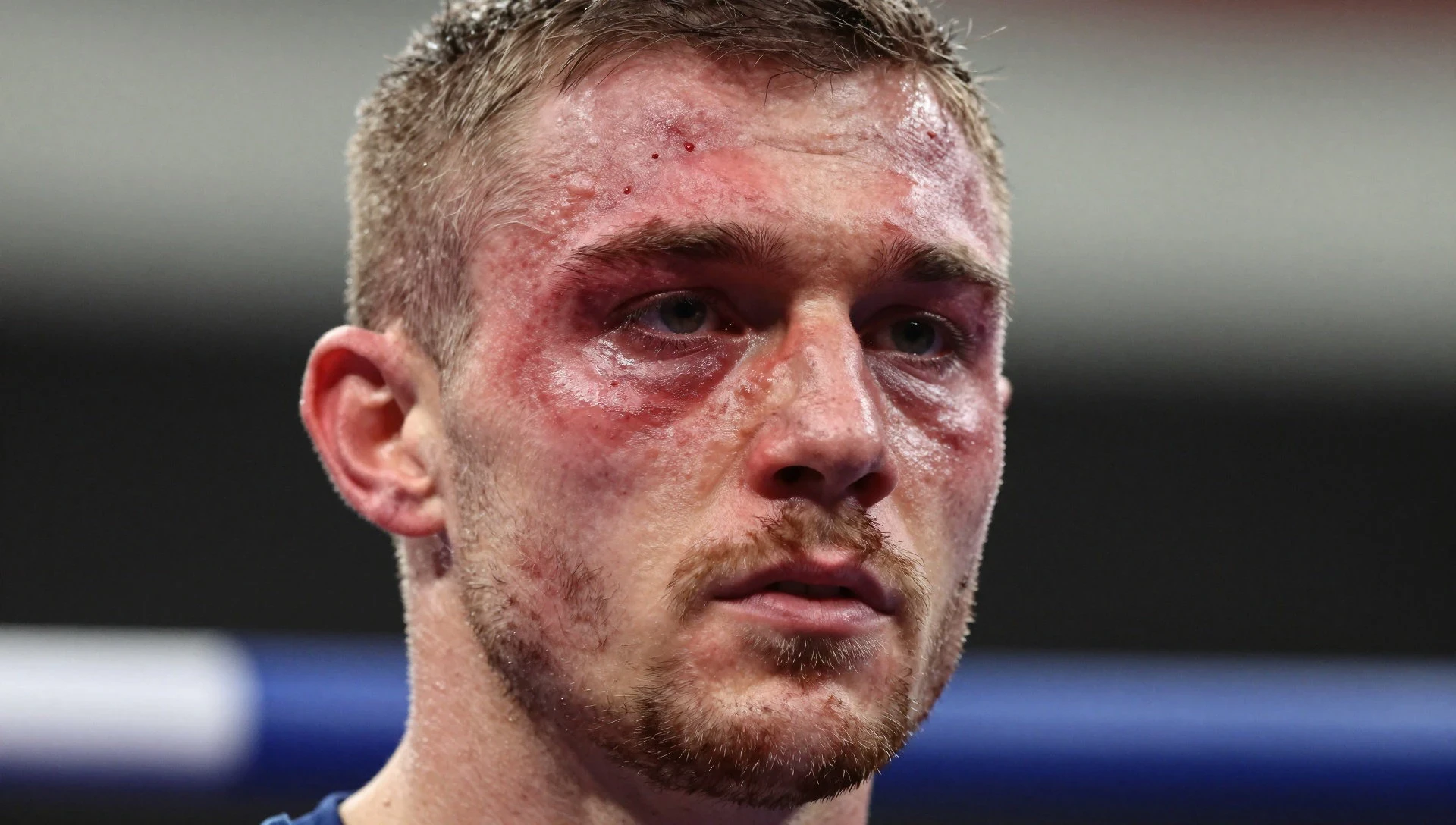
When a fighter steps between the ropes, the physical stakes are understood by everyone in the arena, yet the specific medical realities of combat sports rarely receive the scrutiny they deserve. The case of boxer Zak Miller, who publicly described a severe swelling of the head following a fight, brings one of boxing's most visceral and least-discussed injuries into open conversation. His account, shared in an interview with The New York Times, carries weight precisely because of its restraint: a fighter acknowledging that what happened to him was unlike anything he had previously encountered inside a ring.
What makes this disclosure significant is not merely the spectacle of a swollen head, but the clinical machinery humming beneath it. Severe post-fight cranial swelling typically points toward hematoma formation, the accumulation of blood or fluid in tissue spaces created by blunt trauma. Understanding such injuries requires familiarity with the anatomy of the scalp, the mechanics of concussive and rotational force, and the regulatory frameworks that govern when a fighter may safely compete again. This analysis examines the Miller episode through those lenses, separating what is documented from what remains unknown.
The reporting itself is deliberately spare. No cause was specified, no medical diagnosis was confirmed, and no update on Miller's current condition was provided. That absence of detail is itself instructive, because it mirrors how combat sports frequently handle injury information: quietly, protectively, and often incompletely. The discussion that follows therefore treats the Miller case as a starting point for broader inquiry rather than a closed medical file, exploring the physiology, the sport's safety architecture, and the media dynamics that shape public understanding of fighter welfare.
On This Page
- The Anatomy and Physiology of Severe Head Swelling in Boxing
- Reading the Miller Disclosure: What Was Said and What Was Withheld
- Safety Protocols and the Regulatory Architecture of Boxing
- Media Framing, Privacy, and the Public's Right to Know
- Long-Term Neurological Risk and the Cumulative Burden of Combat
- Reform Pathways and the Future of Fighter Welfare
- Conclusion: What the Miller Case Teaches About Risk and Responsibility
TL;DR Boxer Zak Miller disclosed a severe swelling of his head after a fight, telling The New York Times he had never experienced anything comparable. The report offered no cause, diagnosis, or update on his condition, leaving the clinical picture unresolved. This analysis situates the disclosure within the physiology of combat-sport head trauma, particularly hematoma formation and scalp swelling, and examines the safety protocols, regulatory oversight, and media practices that determine how such injuries are disclosed, treated, and prevented. The central takeaway is that fighter welfare depends on transparent medical reporting, disciplined suspension rules, and a culture that treats head injury as a structural risk of the sport rather than an unfortunate anomaly.
The Anatomy and Physiology of Severe Head Swelling in Boxing
Swelling of the head after a fight is rarely a single phenomenon. It can arise from bleeding beneath the skin, from fluid accumulation in the loose connective tissue of the scalp, or from deeper vascular injury that produces a contained collection of blood. The scalp is unusually vascular, supplied by a dense network of arteries and veins, which means even modest blunt force can generate dramatic visible enlargement. Clinicians distinguish between superficial swelling, which is often painful but self-limiting, and deeper hematomas that may compress tissue or signal intracranial involvement requiring urgent imaging.
Boxing produces these injuries through two distinct mechanisms. Direct impact delivers localized force to the skull and facial structures, while rotational force twists the head and shears tissue planes, sometimes causing bleeding far from the point of contact. A fighter's headgear, glove padding, and the angle of a punch all modulate the transfer of energy. The result is that two athletes absorbing apparently similar blows can present with radically different swelling, which complicates both ringside assessment and any attempt to generalize about risk from a single case like Miller's.
Hematoma Formation and the Scalp's Vascular Architecture
A hematoma is a localized collection of blood outside the blood vessels, and in the scalp it can develop rapidly after a ruptured vessel leaks into surrounding tissue. Because the scalp's layers are tightly bound in some regions and loosely attached in others, blood may spread widely, producing the pronounced swelling that fighters sometimes describe as a ballooning of the head. Subgaleal hematomas, which form beneath the fibrous sheet covering the skull, are particularly concerning because they can expand substantially and, in rare cases, contribute to blood loss significant enough to affect circulation.
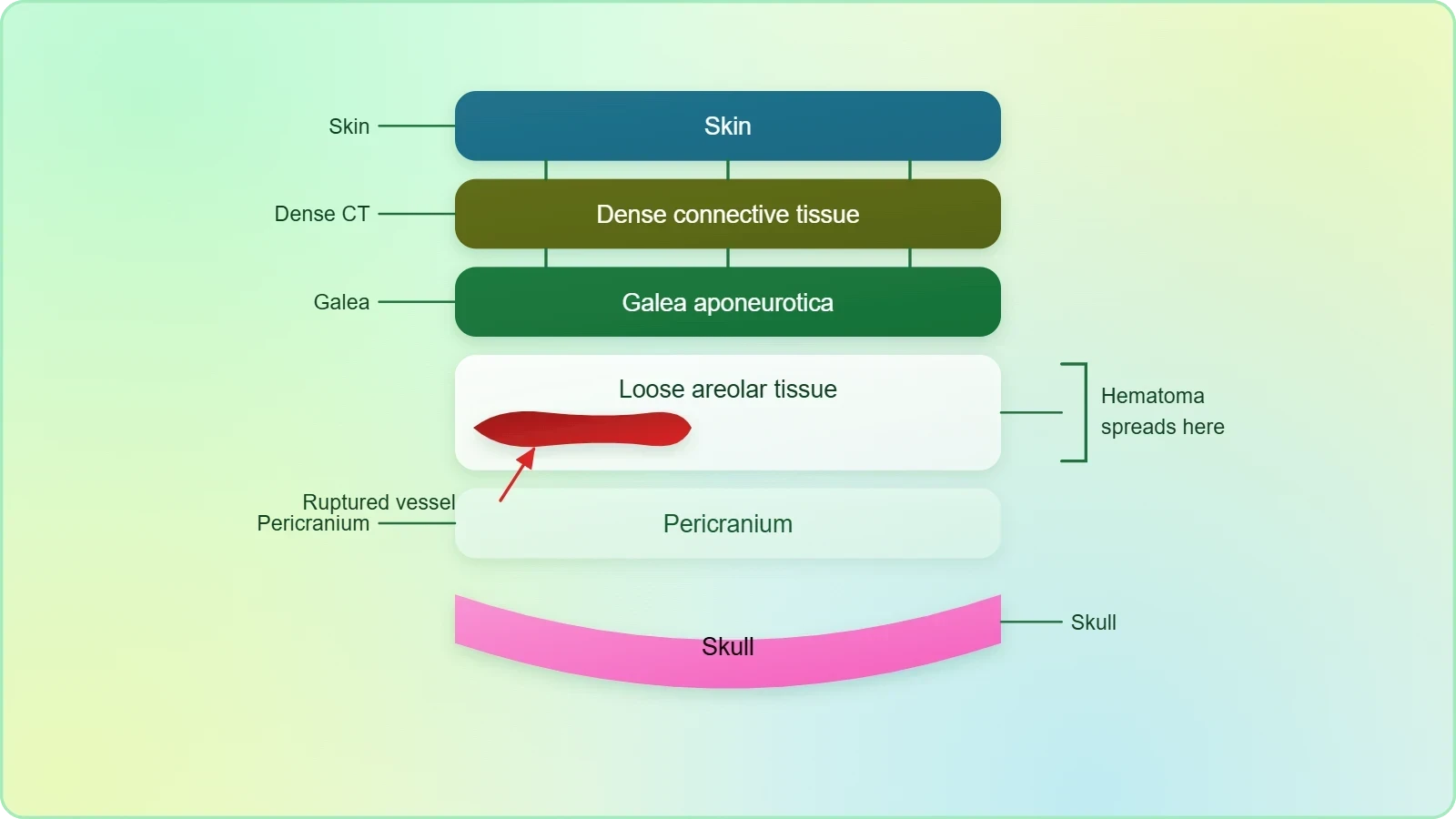
Recognizing a hematoma early matters because management differs from that of simple bruising. Ringside physicians look for rapid enlargement, firmness, asymmetry, and any neurological warning signs such as confusion, vomiting, or unequal pupils. Imaging, typically a CT scan, becomes necessary when intracranial bleeding cannot be excluded. For Miller, the public record stops at the description of severe swelling, so the precise anatomical category of his injury remains unknown, a gap that underscores how much clinical nuance is lost when injury reports are reduced to a single sentence.
Concussion, Rotational Force, and the Limits of Visible Injury
Visible swelling is only the most legible marker of head trauma. Concussion, by contrast, frequently leaves no external sign at all, arising from functional disturbance rather than structural damage detectable on standard scans. Rotational acceleration is thought to play a central role, stretching and shearing neural pathways as the brain moves within the skull. A fighter can therefore emerge from a bout with a dramatically swollen head and no concussion, or with a clear concussion and an unmarked face, which is precisely why visual inspection alone is an inadequate safety standard.
This distinction carries practical consequences for how the Miller case should be read. The severity of his swelling says little about whether he sustained a concussive injury, and the absence of reported neurological symptoms says little about his long-term risk. Combat sports medicine increasingly emphasizes multimodal assessment, combining symptom checklists, balance testing, cognitive screening, and video review of the bout. Without those details, any inference about Miller's neurological status is speculative, and responsible commentary should acknowledge that boundary rather than fill it with assumption.
We Also Published
Reading the Miller Disclosure: What Was Said and What Was Withheld
The New York Times report on Zak Miller is notable for its economy. It records that the boxer spoke about a serious head injury involving severe swelling, that he told the newspaper he had never seen anything like it, and that no further details on cause, diagnosis, or current condition were provided. Every additional inference, whether about the punch that caused it, the round in which it occurred, or the treatment he received, lies outside the documented record. A disciplined reading must respect that boundary while still extracting the signal the disclosure carries.
That signal is twofold. First, a professional fighter choosing to speak publicly about a frightening injury represents a meaningful shift in combat-sport culture, where stoicism has long been treated as a professional virtue. Second, the thinness of the reporting illustrates a structural gap: injury information in boxing is often controlled by promoters, commissions, and medical privacy conventions, producing public accounts that are vivid in description but sparse in clinical substance. Miller's words reach the public, but the medical context that would make them fully intelligible does not.
The Evidentiary Value of a First-Person Account
First-person testimony from an injured athlete has real value, even when it lacks diagnostic precision. It captures the subjective experience of trauma, the surprise of a body behaving in an unfamiliar way, and the psychological weight of realizing that a routine occupational hazard has produced something extraordinary. Miller's statement that he had never seen anything like it communicates more than a symptom report; it signals that the injury exceeded his internal model of what a fight could do to him, which is precisely the kind of information that formal medical records tend to flatten.
At the same time, such accounts cannot substitute for clinical data. A fighter's description of swelling does not establish whether the collection was subgaleal, subdural, or something else, nor does it indicate whether imaging was performed. Researchers studying combat-sport injuries rely on standardized medical reporting, not media interviews, to estimate incidence and severity. The Miller disclosure is therefore best understood as a prompt for inquiry, a public signal that something serious occurred, rather than as evidence from which epidemiological conclusions can be drawn.
Why Injury Details Often Stay Behind the Medical Curtain
Boxing operates within a patchwork of regulatory jurisdictions, and each commission sets its own rules on medical disclosure. Fighters have legitimate privacy interests, and revealing a specific diagnosis can affect licensing, future purses, and insurability. Promoters, meanwhile, have commercial incentives to frame injuries as minor and recovery as swift. These pressures combine to produce a default posture of minimal disclosure, in which the public learns that a fighter was hurt but rarely learns precisely how, a pattern visible in the Miller report's silence on cause and condition.
This opacity is not unique to boxing, but it carries particular risk in a sport whose central activity is repeated head impact. Transparency advocates argue that anonymized medical data, published systematically, would allow researchers to identify patterns without compromising individual privacy. Commissions in several jurisdictions have moved toward mandatory reporting of knockouts and suspensions, yet standardization remains incomplete. Until disclosure norms tighten, cases like Miller's will continue to arrive as fragments, leaving the public to infer severity from adjectives rather than from data.
Safety Protocols and the Regulatory Architecture of Boxing
Professional boxing's safety framework is decentralized, with state and national commissions applying varying standards for pre-fight medical clearance, ringside physician staffing, post-fight examination, and suspension periods. Most jurisdictions require brain imaging as part of licensing, and many mandate suspension after a knockout or technical knockout, but the thresholds differ. A fighter cleared to compete in one jurisdiction may face stricter scrutiny in another, creating inconsistency that complicates any effort to assess cumulative risk across a career.
Within this architecture, the ringside physician holds decisive authority. That clinician can stop a bout, order transport to a hospital, and recommend suspension, but the quality of assessment depends on available equipment, time pressure, and the physician's familiarity with combat injuries. Severe swelling observed after a fight should trigger a structured neurological examination and, where indicated, imaging. Whether such steps were taken in Miller's case is not part of the public record, which limits any evaluation of how the protocol functioned in practice.
Pre-Fight Screening and Post-Fight Suspension Rules
Pre-fight screening is the first line of defense. Licensing bodies typically review an athlete's medical history, require periodic neurological evaluation, and in some jurisdictions mandate MRI or CT imaging at defined intervals. These measures aim to detect conditions that would make further impact dangerous, such as prior hemorrhage or structural abnormality. Their effectiveness depends on honest disclosure by fighters, who may fear that reporting symptoms will cost them a purse or a license, an incentive problem that no screening protocol fully resolves.
Post-fight suspension rules form the second line. Mandatory rest periods after knockouts, graduated return-to-competition timelines, and repeat-imaging requirements are designed to prevent a fighter from absorbing new trauma while the brain remains vulnerable. Evidence from other contact sports suggests that inadequate recovery windows raise the risk of prolonged symptoms and cumulative damage. Boxing's challenge is enforcement: suspensions issued in one jurisdiction can be circumvented by fighting elsewhere, which is why reciprocal recognition among commissions has become a persistent reform demand.
Ringside Medicine and the Decision to Stop a Fight
The decision to halt a bout is among the most consequential judgments in sport. Referees and ringside physicians weigh visible damage, defensive deterioration, and neurological warning signs against the fighter's desire to continue and the crowd's expectation of spectacle. Severe swelling can obscure vision, impair balance, and signal deeper injury, yet it is not automatically disqualifying. Protocols that emphasize objective criteria, such as the ability to track movement or respond coherently, reduce reliance on subjective impressions and help officials act before catastrophic harm occurs.
Critically, the post-fight window matters as much as the bout itself. Swelling may progress after the final bell as bleeding continues, and symptoms can emerge hours later. Best practice calls for observation, clear instructions on warning signs, and accessible follow-up care. For a fighter like Miller, whose swelling was severe enough to warrant public comment, the adequacy of post-fight monitoring is a legitimate question even in the absence of disclosed clinical details, because the system's quality is measured precisely in such cases.
Media Framing, Privacy, and the Public's Right to Know
Reporting on athlete injuries sits at the intersection of public interest and personal privacy. A professional fighter's health is not purely private, because it affects licensing decisions, opponent safety, and the integrity of competition. Yet a fighter is also a patient, entitled to confidentiality and to control over how intimate medical details are shared. The New York Times report on Miller navigates this tension by quoting his own account while declining to speculate beyond it, a restraint that protects privacy but leaves readers without the context needed to evaluate severity.
Media framing shapes public perception in subtler ways as well. Headlines emphasizing dramatic swelling attract attention, but they can also normalize serious injury as spectacle, reinforcing a culture in which fighters are expected to absorb punishment without complaint. Balanced coverage pairs vivid description with clinical context, explaining what swelling may indicate and what questions remain unanswered. The most useful reporting treats injury disclosure as an opportunity for public education about risk, not merely as a vivid anecdote to be consumed and forgotten.
From Spectacle to Substance in Sports Journalism
Sports journalism has gradually improved its treatment of head trauma, moving from dismissal of concussion concerns toward serious coverage of long-term neurological risk. That shift reflects both scientific advances and changing audience expectations. Coverage that explains mechanisms, cites medical expertise, and distinguishes confirmed findings from speculation serves readers better than coverage that trades in shock. In the Miller case, the report's brevity is honest, but a follow-up that contextualized the injury within boxing's broader safety debate would add genuine public value.
There is also a commercial dimension. Promoters and broadcasters shape the information environment around fights, and their interest in maintaining excitement can discourage coverage that dwells on harm. Independent journalism acts as a counterweight, but it depends on access, which fighters and their representatives control. When an athlete like Miller chooses to speak, that access becomes a public good, and responsible outlets should treat the resulting disclosure as a starting point for rigorous reporting rather than a complete story.
Privacy Boundaries and the Ethics of Disclosure
Ethical reporting on injury requires consent, accuracy, and proportionality. Quoting a fighter's own description respects consent; inventing a diagnosis does not. Proportionality means matching the prominence of coverage to the public significance of the information, avoiding sensationalism while still informing readers. These principles are not obstacles to good journalism but its foundation, and they matter most when the subject is a person in a vulnerable moment, recovering from an injury that may affect the rest of his career.
For Miller specifically, the ethical path forward is straightforward: report what he chooses to share, seek independent medical context where possible, and avoid filling gaps with conjecture. Readers deserve to understand that severe head swelling in boxing is a recognized hazard with defined clinical categories, even when the specific case remains opaque. That combination of candor about the unknown and clarity about the general produces coverage that respects the fighter and serves the public simultaneously.
- 01
- 02
- 03
- 04
Long-Term Neurological Risk and the Cumulative Burden of Combat
Repeated head trauma in boxing carries consequences that extend well beyond any single fight. Chronic traumatic encephalopathy, a neurodegenerative condition associated with repetitive impact, has been identified in the brains of numerous former fighters, and research continues to refine understanding of dose, timing, and individual susceptibility. The relationship between exposure and outcome is not linear, and genetic, behavioral, and environmental factors modulate risk. What is clear is that cumulative exposure, not isolated incidents, drives the most serious long-term outcomes.
This framing matters for interpreting the Miller case. A single episode of severe swelling is concerning in itself, but its significance for long-term health depends on his total career exposure, his recovery trajectory, and whether the injury reflects a pattern of vulnerability. Without that information, the appropriate response is neither alarm nor dismissal but a recognition that each serious injury is a data point in a career-long risk profile that deserves systematic attention from medical and regulatory authorities alike.
What the Evidence Says About Repetitive Impact
Epidemiological research on former fighters has documented elevated rates of cognitive impairment, mood disturbance, and neurodegenerative disease compared with the general population. Studies of boxing mortality have reported associations between career length and neurological outcomes, though methodological challenges, including selection bias and retrospective diagnosis, complicate causal inference. The emerging consensus is that reducing cumulative blows, extending recovery periods, and improving early detection of impairment are the most promising levers for harm reduction available to the sport.
Biomarkers offer a complementary avenue. Advances in neuroimaging, including diffusion tensor imaging, and in fluid biomarkers that reflect neuronal injury have improved the ability to detect subtle changes before clinical symptoms emerge. These tools remain research-grade in many settings, but their trajectory suggests a future in which fighters receive periodic monitoring that informs licensing decisions. Such a system would require data sharing across commissions, a governance challenge as much as a scientific one, but the potential payoff in prevented harm is substantial.
Recovery, Return to Competition, and Career Stewardship
Recovery from a significant head injury is not a fixed interval but a process shaped by symptom resolution, imaging findings, and graded return to exertion. Premature return to sparring or competition risks compounding injury during a period of heightened vulnerability. Best practice involves stepwise progression, with medical clearance at each stage and a low threshold for extending timelines when symptoms persist. Fighters, coaches, and managers all have roles in resisting the pressure to accelerate, which is often intense given financial stakes and career windows.
Career stewardship extends beyond any single recovery. Decisions about fight frequency, opponent selection, and retirement timing collectively determine cumulative exposure. A fighter who sustains severe swelling may benefit from a period of reflection about workload and long-term goals, ideally supported by independent medical advice rather than solely by the interests of a promotional team. The sport's challenge is to build structures that make such reflection normal rather than exceptional, embedding long-term welfare into the everyday calculus of a fighting career.
Reform Pathways and the Future of Fighter Welfare
Meaningful reform in boxing requires coordination across fragmented authorities. A unified medical registry, reciprocal suspension recognition, and minimum standards for ringside equipment and physician training would address the most glaring gaps. Several national federations and medical associations have proposed model rules, but adoption remains uneven. The persistence of these gaps is not a failure of knowledge; the clinical evidence is reasonably clear. It is a failure of governance, driven by jurisdictional competition and commercial incentives that reward permissive regulation.
Fighters themselves are increasingly part of the reform conversation. Athlete associations and unions in several countries have pushed for independent medical oversight, guaranteed post-career healthcare, and transparent injury reporting. Their leverage is limited by the sport's fragmented labor market, but collective action has produced tangible gains in some jurisdictions. The Miller disclosure, by giving a human face to a serious injury, adds momentum to these efforts, illustrating why abstract regulatory debates matter to the people absorbing the punches.
Standardizing Medical Data Across Jurisdictions
A shared medical data infrastructure would transform the sport's ability to protect fighters. If commissions recorded injuries, suspensions, and imaging results in a common format, researchers could identify high-risk patterns and regulators could flag fighters approaching dangerous exposure thresholds. Privacy-preserving designs, using anonymized identifiers and secure access controls, can reconcile data utility with confidentiality. The technical obstacles are modest; the political ones, involving sovereignty, cost, and institutional turf, are considerably larger and require sustained advocacy to overcome.
Standardization also improves fairness. A fighter suspended in one state should not be able to compete elsewhere without medical clearance, yet loopholes persist. Reciprocal recognition of suspensions, backed by a shared registry, would close this gap and reduce the incentive for permissive jurisdictions to attract bouts by lowering standards. Such reforms are incremental but cumulative, and their combined effect would be a sport in which medical judgment travels with the athlete rather than being reset at each border.
Building a Culture That Prioritizes Recovery
Rules alone cannot change behavior; culture must shift alongside them. A sport that celebrates fighting through injury and stigmatizes withdrawal creates incentives for concealment that no protocol can fully counteract. Coaches, managers, and promoters shape these norms as much as athletes do, and their messaging matters. When a fighter reports symptoms and is supported rather than sidelined, the calculus changes for everyone in the gym. Public figures who speak candidly about injury, as Miller did, contribute to that shift by modeling honesty.
Recovery culture also requires practical support. Access to neurologists, imaging, and rehabilitation varies widely by country and by a fighter's financial position, creating inequities in care. Post-career healthcare funds, insurance requirements, and subsidized assessment programs can narrow these gaps. The goal is a system in which a fighter's ability to recover does not depend on the size of his purse, and in which seeking help is treated as professional discipline rather than weakness.
Conclusion: What the Miller Case Teaches About Risk and Responsibility
The Zak Miller episode is, in the public record, a brief and incomplete story: a boxer describing severe head swelling after a fight, an admission that he had never seen anything like it, and a report that stops short of diagnosis or prognosis. Its value lies less in what it resolves than in what it exposes. It shows how combat-sport injuries arrive in public discourse as fragments, stripped of the clinical context that would allow readers to understand severity, and it demonstrates why that fragmentation is a problem for fighter welfare rather than merely a gap in a news story.
Understanding the physiology of hematoma formation, the mechanics of rotational force, and the regulatory architecture that governs return to competition transforms a vivid anecdote into a case study in risk management. The lessons are consistent across the sport's history: visible injury is an unreliable guide to neurological harm, cumulative exposure drives long-term outcomes, and fragmented governance leaves gaps that individual courage cannot close. Miller's willingness to speak is commendable, but candor from athletes must be matched by transparency from institutions and rigor from the journalists who report on them.
The path forward is neither dramatic nor mysterious. Shared medical data, reciprocal suspensions, standardized ringside protocols, and a culture that treats recovery as professional discipline would meaningfully reduce harm. None of these reforms requires scientific breakthroughs; they require coordination and will. The Miller case, by putting a name and a voice to a serious injury, adds a human argument to a structural debate. That argument deserves to be heard not as a cautionary tale about one fighter, but as a prompt for the sport to treat every such injury as a signal worth acting upon.
From our network :
- The Final Descent: How ESA Retired the Legendary Cluster Constellation After 24 Years of Space Weather ScienceAfter 24 years mapping Earth’s magnetosphere, ESA’s Cluster mission concluded with a precisely controlled reentry over the South Pacific. This analysis explores the scientific legacy, engineering decisions, and debris mitigation principles behind one of space exploration’s most responsible retirements.
- The Hidden Cost of AI Convenience: Why Over-Permissioned Agents Are a Security Time BombDiscover why AI agents with excessive permissions create dangerous single points of failure, and learn how implementing least privilege principles can protect your organization from exploitation.
- Live Online English Classes for Kids: Do They Actually Reduce Anxiety?A ten-week study reveals that synchronous online English classes can significantly reduce child language anxiety while improving listening and reading skills. Discover what makes these programs effective and how parents can select the right one.
- Committed Mediterranean Precipitation Decline: Why Emissions Cuts Alone Cannot Restore Winter RainsNew NOAA research reveals that Mediterranean winter rains may decline irreversibly even with emissions cuts. Explore the science of committed climate change and regional impacts.
- University Language Proficiency Exams: Why Institutional Tests Demand Different Preparation Than IELTS and TOEFLDiscover why university-specific language proficiency examinations differ fundamentally from IELTS and TOEFL, and learn strategic preparation approaches for institutional assessment success.
- Forbidden Matrix Patterns and Visible Lattice Points: A Geometric DictionaryExplore how multidimensional 0–1 matrices encode geometric truths, linking forbidden patterns to visible lattice points and hypergraph theory, with applications in combinatorics and computational geometry.
- How AI Agents Will Change the Way We Manage Personal FinancesExplore how AI agents are transforming personal finance through automated budgeting, bill payment, and investment management, while examining the critical security protocols and governance frameworks required for safe deployment.
- CISA’s Ten-Advisory Wave: Why Generic Patching Fails in OT and How to Build Product-Specific PlaybooksCISA released ten ICS advisories in one week, exposing critical infrastructure risks. Generic patching fails in OT. Learn to build product-specific remediation playbooks.
- Mobile Learning and VR in English: What Global Evidence Reveals About Effective Language TechnologyA systematic review across 14 countries reveals which language-learning technologies genuinely work. Mobile learning, AI, and VR show measurable benefits when pedagogically integrated. This evidence-based guide helps educators and learners select technology that delivers real return on investment.
RESOURCES
- Zak Miller, the boxer whose head blew up: 'I've never seen anything ...nytimes.com11 hours ago ... Hematomas such as Miller's are not unheard of. Russia's Denis Lebedev, who suffered severe facial swelling during his WBA cruiserweight ...
- ZAK MILLER UPDATE Zak is out of Hospital As you ... - Instagraminstagram.com22 hours ago ... Zak suffered severe swelling to his head. What a warrior. Really good bloke. Salt of the earth. #fightclub247 #boxing #fighter…
- Proof you DON'T play boxing Zak Miller's fight had to be stopped ...facebook.com2 days ago ... The video is genuine, but the injury was primarily caused by a head clash, not just punches. |If the fight…
- By a distance one of the worst facial injuries ever seen in a British ...instagram.com2 days ago ... Zak Miller's fight was stopped early because of severe swelling ... This is how British boxer Zak Miller looks after…
- Head injury of undercard fighter caused by accidental head clash.reddit.com4 days ago ... 89 votes, 25 comments. update from his team: he is doing well. Update on Zak Miller We're really pleased to…
- British boxer Zak Miller rushed to hospital after head clash caused ...nzherald.co.nz18 hours ago ... ... injury left his head bulging before his fight was ... British boxer Zak Miller rushed to hospital after head…
- Zak Miller health update after British boxer's fight was called off over ...thesun.co.uk3 days ago ... BRITISH boxer Zak Miller is recovering well after being rushed to hospital following a horror head injury that forced his…
- Zak Miller: Fans Blast Officials Who Let Boxer Fight With Horror Injurygivemesport.com3 days ago ... During the contest, Powar clashed heads with Miller, who quickly suffered extreme swelling in his head, causing a gruesome hematoma.…
- Boxing world stunned by 'worst injury ever seen' as British fighter, 29 ...dailymail.com3 days ago ... The fight has been STOPPED due to severe swelling on Zak Miller's face! ... A third said: 'An absolutely disgusting…
- British Boxer Zak Miller's Horrific Head Injury Sparks Controversychosun.com24 hours ago ... Miller experienced grotesque and severe swelling during his bout against Gully Pawar on Saturday night.” The incident occurred during a…
- UK boxing match halted for most revolting injury ever as medical ...sportbible.com3 days ago ... Zak Miller's featherweight title fight against Gully Powar on the Zuffa Boxing ... "An absolutely disgusting amount of swelling on…
- The fight has been STOPPED due to severe swelling on Zak Miller's ...youtube.com4 days ago ... more. Subscribe. Comments. 19. Comment... 7:57 · Go to channel DAZN Boxing · HIGHLIGHTS | Zak Miller vs. Gully Powar.…
- Medical expert explains how long it'll take for Zak Miller's swelling ...sportbible.com1 day ago ... A medical expert has provided an update on Zac Miller after the boxer suffered a vile injury that left former…
- Doctor Stops Title Fight as Boxer 'Looks Like Elephant Man'worldboxingnews.com3 days ago ... Zak Miller suffered facial swelling during his British title fight with Gully Powar, prompting a medical stoppage and Elephant Man ...
- Zak Miller Fight Stopped After Severe Facial Swelling - TikToktiktok.com4 days ago ... Do not attempt. 59 Comments. INNKED . head injuries like this shouldn't be a win. definitely a rematch and a…
- 01
- 02
- 03
- 04
- 05
- 06
- 07
- 08
0 Comments