
The global race to construct artificial intelligence infrastructure has triggered an unprecedented expansion in capital expenditure, reshaping how corporate balance sheets absorb long-term physical liabilities. Hyperscale technology corporations are actively deploying hundreds of billions of dollars into high-density computing complexes, custom silicon arrays, and dedicated power grids. However, the true magnitude of this financial mobilization remains largely obscured from standard corporate filings. Instead of issuing conventional corporate bonds that visibly increase debt-to-equity metrics, major technology sponsors increasingly rely on structured commitments, synthetic capacity agreements, and complex project-finance mechanisms to secure mission-critical computing capacity without formal balance sheet recognition.
policymakers have begun highlighting the systemic implications of these unrecorded liabilities, which have accumulated beyond three trillion dollars across the enterprise landscape. By utilizing structured power purchase obligations, uncommenced data center leasebacks, and build-to-suit capacity contracts, technology companies insulate their headline leverage statistics while passing immediate capital burdens onto secondary developers and private credit syndicates. This financial engineering allows dominant tech platforms to protect enterprise valuations and equity credit ratings, even as the fixed carrying costs of compute infrastructure mount. Consequently, capital markets now face an opaque web of counterparty dependencies linked directly to artificial intelligence revenue assumptions.
Understanding this shadow leverage requires a granular examination of corporate accounting standards, power procurement structures, and the broader macroprudential risks facing institutional investors. While hyperscalers present their cash reserves as impenetrable fortresses, the contractual guarantees underpinning their compute pipelines expose them to prolonged contractual cash outflows regardless of future commercial software margins. As central banking authorities scrutinize the structural fault lines between technology infrastructure and utility financing, debt markets must evaluate whether projected software revenues can support the massive debt apparatus sustaining artificial intelligence expansion.
TL;DR Technology hyperscalers have accumulated over $3 trillion in undiscounted off-balance-sheet commitments, deploying structured leases and take-or-pay energy agreements to build out artificial intelligence infrastructure. This synthetic leverage protects corporate credit metrics while shifting default risks onto utilities, private credit lenders, and infrastructure developers if commercial software revenues underperform long-term capital assumptions.
On This Page
- The Architecture of Undiscounted Corporate Commitments
- The Energy Nexus: Take-or-Pay Power Procurement
- Project Finance and Special Purpose Vehicle Structuring
- Macroprudential Risks and the Federal Reserve’s Warning
- Valuation Disconnects: Software Multiples vs. Capital Intensity
- Strategic Scenarios and Capital Market Repricing
The Architecture of Undiscounted Corporate Commitments
Corporate accounting rules provide substantial latitude for enterprises contracting future physical capacity, enabling hyperscalers to engineer massive development programs without registering corporate borrowing. Under modern international and domestic reporting frameworks, commitments that have not yet reached operational commencement avoid recognition as formal balance sheet liabilities. Hyperscalers leverage this regulatory threshold by structuring multi-year procurement pipelines as executory contracts, masking the total volume of future financial obligations required to construct, energize, and operate advanced artificial intelligence server farms across key global markets.
Regulatory Boundaries of Uncommenced Operating Leases
Financial accounting standard codifications dictate that lease obligations appear on corporate balance sheets only after the underlying real property or asset is placed into direct operational service. For mega-scale artificial intelligence facilities, the development cycle between site acquisition, structural engineering, electrical substation installation, and operational commissioning routinely spans three to five years. During this prolonged gestation window, tech conglomerates document contractual build-to-suit commitments exclusively within the qualitative footnotes of quarterly filings, leaving their primary debt ratios unblemished by the immense underlying capital outlays.
This accounting bifurcation grants technology giants a distinct competitive advantage over capital-intensive industrial peers by preserving exceptional returns on invested capital. Debt rating agencies evaluate reported leverage figures when assigning pristine credit grades, allowing hyperscalers to secure ultra-low corporate borrowing rates for unrelated enterprise operations. Nevertheless, these uncommenced obligations represent irrevocable cash promises, requiring enterprise treasuries to allocate significant operating cash flows toward long-term real estate liabilities long before revenue-generating computational workloads run on the underlying hardware clusters.
Executory Contract Mechanics and Valuation Shields
By categorizing forward capacity and hardware integration agreements as executory contracts, enterprise leadership legally avoids immediate liability capitalization. An executory contract remains off the primary financial ledger on the basis that neither contracting party has fully performed its side of the agreement. For hyperscalers, this means promising billions to purchase advanced computing capacity over fifteen years requires zero day-one balance sheet entries, despite binding the corporate treasury to non-cancellable payment schedules that function identically to amortizing corporate debt covenants over the contract lifecycle.
This structural shielding enables public technology companies to maintain high price-to-earnings multiples and present strong return on invested capital figures to retail and institutional shareholders alike. Institutional valuation models heavily penalize expanding enterprise debt loads, incentivizing financial officers to substitute bond issuances with these synthetic leasing structures. The financial shield remains robust as long as enterprise free cash flow outpaces development horizons; however, if monetization decelerates, these legally binding commitments cannot be adjusted downward without incurring severe contract termination damages.
The Energy Nexus: Take-or-Pay Power Procurement
High-density artificial intelligence compute clusters demand extraordinary quantities of continuous baseload electricity, requiring hyperscalers to secure massive generation pipelines directly from utility providers and independent power producers. Power generation projects require significant advance capital outlays, compelling utility developers to demand unconditional, long-term revenue commitments before breaking ground on generation or transmission capacity. To satisfy these institutional infrastructure developers, technology giants enter into structured take-or-pay agreements that guarantee continuous payments regardless of actual computational utilization, creating massive synthetic leverage across the entire energy supply chain.
Fixed Utility Guarantees and Baseline Revenue Minimums
Under standard take-or-pay energy power purchase agreements, the corporate purchaser guarantees payment for a specified megawatt volume over terms exceeding twenty years. Whether an enterprise operates its neural training clusters at peak load or experiences a significant contraction in consumer demand, the financial liability to the energy utility remains fixed. This arrangement shifts the commercial volume risk entirely away from regional power generators, transforming tech platforms into de facto guarantors of extensive electrical infrastructure, grid interconnections, and renewable generation plants.
The sheer scale of these baseline power commitments introduces an intractable fixed-cost element into corporate operating ledgers. Unlike discretionary marketing budgets or research headcounts that enterprise executives can contract during macro downturns, utility take-or-pay arrangements function as irrevocable contractual obligations. If enterprise compute demand falters, hyperscalers face ongoing financial drains to pay for idle electricity generation, undermining operating cash flow margins and redirecting corporate capital away from software engineering and core product development initiatives.
Direct Grid Modernization and Transmission Capitalization

Beyond raw generation capacity, the geographic concentration of artificial intelligence clusters requires wholesale expansion of regional electrical transmission infrastructure. Regulated transmission operators cannot deploy multi-billion-dollar high-voltage lines solely on speculative tech growth; they require formal backstop capital agreements from enterprise corporate sponsors. Tech companies subsequently enter into transmission interconnection agreements, promising to reimburse regional utilities if downstream compute clusters fail to generate expected billing revenues over the subsequent multi-decade lifecycle.
These grid reimbursement agreements are seldom modeled as conventional debt within analyst consensus estimates. However, credit rating specialists increasingly observe that when utility developers construct regional interconnects exclusively for hyperscale hubs, the tech client bears ultimate credit liability. In economic substance, these transmission agreements represent collateralized debt obligations where the corporate entity indemnifies municipal and regulated utility entities against construction overruns, environmental compliance expenses, and asset stranding risks across suburban and rural infrastructure nodes.
Project Finance and Special Purpose Vehicle Structuring
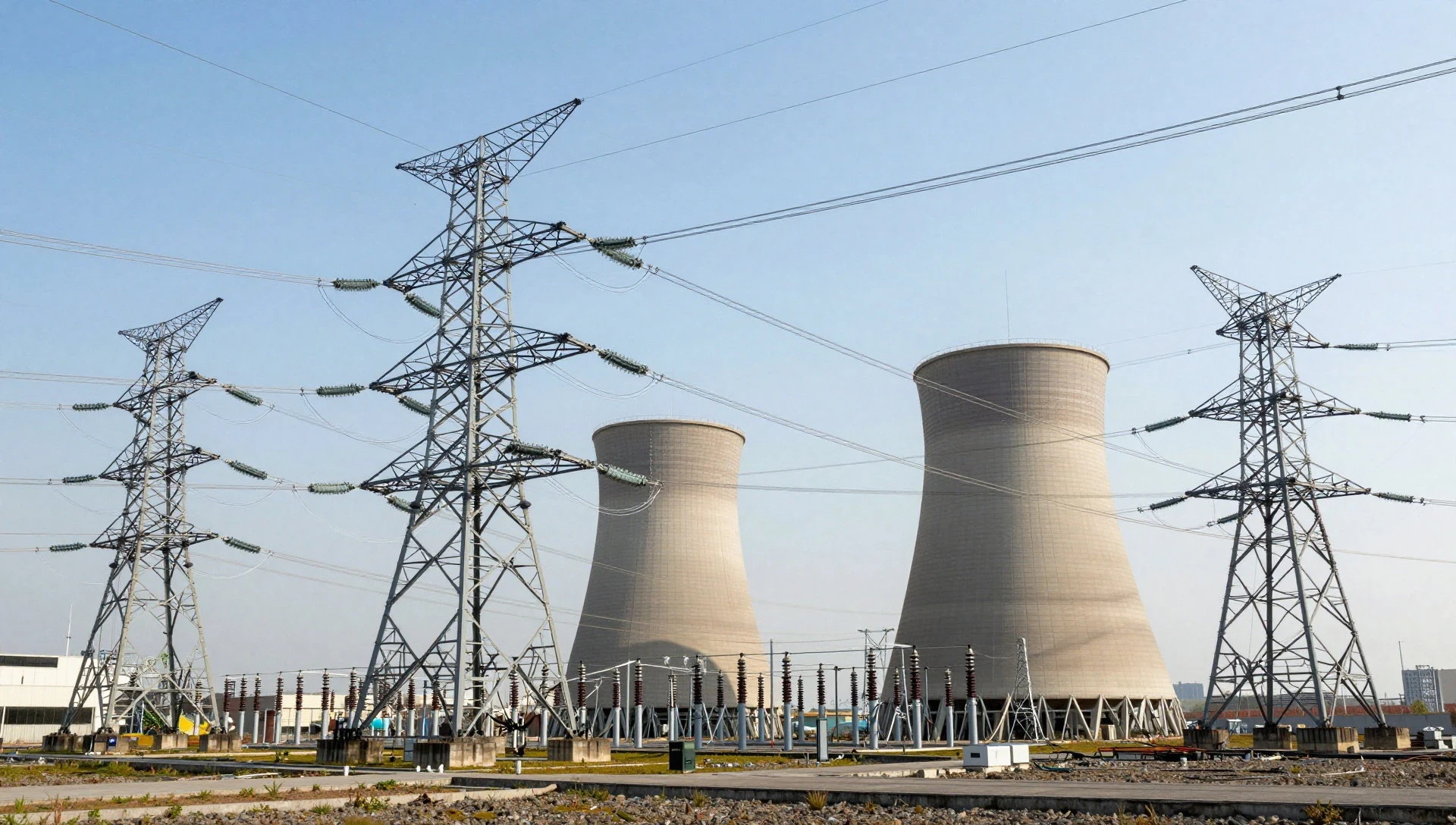
To accelerate physical deployment without triggering consolidated leverage warnings, enterprise technology companies have adapted advanced project-finance structures originally developed in maritime shipping and oil exploration. Rather than acquiring real estate and custom cooling plants directly, corporations establish collaborative joint ventures or contract with dedicated third-party development sponsors. These operating arrangements place physical assets and corresponding bank debt inside Special Purpose Vehicles (SPVs), establishing synthetic bankruptcy remoteness while routing guaranteed capacity payments back to institutional asset managers and private credit funds.
Special Purpose Vehicle Isolation and Non-Recourse Debt
Special Purpose Vehicles serve as financial isolation chambers, shielding the corporate sponsor's primary legal entity from direct debt acceleration during operational defaults. An SPV issues debt instruments secured entirely by the underlying land, structural shells, mechanical generators, and the anchor tech tenant's long-term master capacity lease. Because the debt remains non-recourse to the tech parent under bankruptcy statutes, corporate accountants avoid consolidating the SPV’s multi-billion-dollar liabilities into the enterprise parent's primary consolidated balance sheet disclosures.
This off-balance-sheet isolation operates smoothly until secondary development variables experience stress. While the corporate sponsor escapes direct legal liability for SPV bank loans, it remains bound by the overarching master service agreement. If the SPV faces financial distress or higher borrowing spreads due to macro rate volatility, the tech parent faces an unpalatable dilemma: either inject direct corporate liquidity into the struggling vehicle or surrender essential computing infrastructure to mezzanine debt holders and alternative infrastructure operators.
The Role of Private Credit Syndication
The massive expansion of institutional private credit over the past five years has acted as the primary financial catalyst enabling shadow computing debt. Private credit managers, operating outside the supervisory restrictions placed upon federally regulated commercial banks, have eagerly underwritten tens of billions in bespoke infrastructure loans. These institutions pool capital from pension systems, endowments, and sovereign wealth entities, deploying funds directly into non-rated data center construction vehicles secured primarily by the perceived creditworthiness of the hyperscale corporate anchor.
This direct lending framework effectively bypasses public debt underwriting, creating a bilateral shadow financing marketplace that limits external price transparency. Because these private loans trade rarely on secondary exchange desks, credit yields remain shielded from broader macroeconomic interest-rate fluctuations. If enterprise capacity demand softens, these private debt portfolios will bear the immediate losses. However, the systemic interconnectivity between institutional pension commitments and tech infrastructure lending guarantees that defaults within isolated private credit funds will cascade through broader financial markets.
We Also Published
- 01
- 02
- 03
- 04
Macroprudential Risks and the Federal Reserve’s Warning
The Federal Reserve Board of Governors has expressed concern regarding unrecorded enterprise liabilities, cautioning that rapid credit concentration creates systemic financial instability. When central bankers analyze the structural risks within modern corporate debt markets, they assess the financial system's ability to withstand sharp shifts in demand fundamentals. The rapid expansion of artificial intelligence infrastructure represents a massive, highly synchronized capital expenditure wave funded through parallel commitments across utilities, developers, and regional supply networks, creating macro vulnerabilities reminiscent of past corporate investment cycles.
Counterparty Contagion Across Regulated Banking Networks
While hyperscale technology platforms avoid placing development borrowing on their central balance sheets, the third parties constructing these facilities rely heavily on credit from traditional commercial banking systems. Real estate investment trusts, mechanical contractors, and regional electric utilities frequently secure bank credit lines to finance data center construction prior to lease inception. As a result, regulated commercial banks hold substantial credit exposure to data center construction projects whose ultimate financial solvency depends on sustained enterprise demand.
If commercial artificial intelligence adoption falls short of optimistic industry projections, corporate tenants may seek to terminate uncommenced commitments or negotiate downward revisions on variable colocation leases. Under such circumstances, third-party developers face severe cash-flow deficits, compromising their ability to service senior construction debt extended by regulated commercial lenders. The Federal Reserve's supervisory concern focuses directly on this transmission channel: the systemic vulnerability of the regulated financial sector to off-balance-sheet tech enterprise obligations.
Regulatory Capital Requirements and Stress Testing
In response to these compounding structural risks, supervisory agencies are considering revising capital reserve mandates to incorporate unrecorded commitments. Current stress testing frameworks calculate bank resilience primarily against on-balance-sheet enterprise borrowing, largely overlooking the contingent liabilities embedded in executory energy guarantees and uncommenced real estate pipelines. If regulatory bodies mandate that financial institutions incorporate off-balance-sheet commitments into corporate credit risk weightings, borrowing costs across the enterprise tech spectrum will experience an abrupt upward repricing.
Such regulatory tightening would compel technology corporations to re-evaluate their capital deployment trajectories. If credit rating agencies follow the Federal Reserve’s guidance and synthesize off-balance commitments directly into headline debt calculations, hyperscalers could face immediate rating adjustments. Lower credit ratings would raise bond yields across existing corporate debt instruments, constraining enterprise free cash flows and restricting the unrestricted capital spending environment that has powered rapid technological advancements over the past decade.
Valuation Disconnects: Software Multiples vs. Capital Intensity
Public equity markets continue to price leading artificial intelligence companies using the historic valuation frameworks of asset-light software organizations. Throughout the preceding two decades, enterprise software firms traded at premium valuation multiples on the basis that code replication incurs near-zero marginal production costs. However, the operational economics of large-scale artificial intelligence models reflect the physics of heavy industry, governed by real thermodynamic and mechanical limitations rather than the unlimited operational scalability characteristic of legacy cloud SaaS platforms.
The Shift from Marginal Cost Economics to Fixed Amortization
Deploying generative models requires vast arrays of expensive silicon hardware that suffer rapid technological obsolescence and operational depreciation over three- to four-year time horizons. When combined with long-term take-or-pay energy commitments, software platforms face structural fixed operating hurdles previously seen only in manufacturing, semiconductor fabrication, and heavy transport. Every artificial intelligence query consumes a quantifiable unit of electrical power, mechanical water cooling, and specialized processor life, permanently establishing a finite marginal floor beneath operational software margins.
Despite these physical constraints, equity valuations remain detached from operational realities. Financial analysts routinely forecast expanding operating leverage without fully adjusting terminal valuations for the continuous replacement capital outlays demanded by rapid hardware degradation. When an enterprise replaces high-cost compute hardware while remaining bound to multi-decade structural leases, true free cash flow generation declines rapidly, undermining the high valuation multiples currently assigned to major enterprise tech leaders.
Quantifying Synthetic Leverage Through Mathematical Modeling
Evaluating true enterprise leverage requires analysts to convert qualitative footnote commitments into adjusted balance sheet entries. Economists quantify this debt burden by calculating the present value of all uncommenced lease obligations and take-or-pay energy contracts using an estimated enterprise incremental borrowing rate ##r## across contractual duration ##T##. The discounted present value of shadow debt ##D_{shadow}## can be modeled using the continuous stream of future commitments ##C(t)##:
When institutional analysts recalculate adjusted leverage ratios by integrating ##D_{shadow}## directly into total debt, the enterprise Debt-to-EBITDA multiples for leading tech platforms rise substantially. A company displaying a conservative 1.2x on-balance leverage ratio can jump to an adjusted leverage profile exceeding 3.8x once undiscounted commitments are incorporated. This structural shift highlights how synthetic leverage disguises the true fixed capital burdens bearing down on corporate balance sheets.
Strategic Scenarios and Capital Market Repricing
The long-term stability of the artificial intelligence infrastructure ecosystem depends on how rapidly enterprise software monetization scales to match fixed physical expenses. If end-user software revenues accelerate along an exponential path, corporate cash flows will absorb these forward commitments, validating the aggressive capital deployment strategies of hyperscale operators. However, if enterprise adoption slows or model commoditization erodes software pricing power, capital markets will experience a systemic repricing across equity, corporate credit, and public utility sectors.
The Monetization Deficit and Capacity Retraction
The core vulnerability across modern tech infrastructure is the widening gap between aggregate infrastructure expenditure and actual commercial software revenues. Enterprise software buyers currently scrutinize return on investment metrics for generative productivity tools, leading to measured enterprise-wide deployments rather than broad adoption. If software revenues plateau while multi-billion-dollar power and lease commitments come due, corporate managers will be forced to renegotiate build-to-suit commitments or cancel downstream expansion phases, passing development losses back onto third-party infrastructure owners.
Developers caught with specialized, high-density server shells face challenging repurposing economics if hyperscalers abandon initial leases. Converting high-density liquid-cooled artificial intelligence clusters back to legacy cloud hosting facilities requires costly mechanical modifications, often yielding sub-optimal power usage effectiveness. As a result, private credit syndicates and infrastructure debt holders who funded these facilities on assumed continuous tenancies face deep credit impairment, resulting in debt restructuring, loan sales at heavy discounts, and heightened volatility across collateralized debt markets.
Institutional Investor Diligence and Balance Sheet Restatement
To protect institutional capital against emerging credit risks, asset allocators and equity research analysts must adopt rigorous auditing protocols that look beyond headline accounting metrics. Modern financial analysis requires modeling tech companies with synthetic lease liabilities treated as capitalized debt obligations, adjusting enterprise valuations accordingly. The following analytical script illustrates how quantitative analysts systematically parse unstructured financial footnotes to aggregate uncommenced obligations and recompute debt multiples across reporting cycles:
def calculate_adjusted_debt(reported_debt: float, uncommenced_leases: list,
                            energy_commitments: list, discount_rate: float) -> dict:
    """
    Computes true enterprise debt exposure by integrating undiscounted
    off-balance commitments back onto the balance sheet.
    """
    capitalized_leases = sum(cf / ((1.0 + discount_rate) ** t)
                             for t, cf in enumerate(uncommenced_leases, start=1))
    capitalized_energy = sum(cf / ((1.0 + discount_rate) ** t)
                             for t, cf in enumerate(energy_commitments, start=1))

    total_shadow_debt = capitalized_leases + capitalized_energy
    effective_debt = reported_debt + total_shadow_debt

    return {
        "reported_debt": reported_debt,
        "shadow_debt_pv": total_shadow_debt,
        "effective_adjusted_debt": effective_debt,
        "shadow_debt_ratio": total_shadow_debt / effective_debt
    }
Market participants who fail to incorporate these structural accounting realisms risk substantial capital drawdowns if macroeconomic volatility triggers an industry-wide credit repricing. The era of evaluating major technology enterprises solely as asset-light software aggregators has ended. As the artificial intelligence infrastructure boom progresses, enterprise investors must treat these corporations as capital-intensive industrial platforms carrying substantial off-balance-sheet financial commitments that fundamentally alter risk profiles across both public equity and global credit markets.
From our network :
- Mobile Learning and VR in English: What Global Evidence Reveals About Effective Language TechnologyA systematic review across 14 countries reveals which language-learning technologies genuinely work. Mobile learning, AI, and VR show measurable benefits when pedagogically integrated. This evidence-based guide helps educators and learners select technology that delivers real return on investment.
- The Hidden Cost of AI Convenience: Why Over-Permissioned Agents Are a Security Time BombDiscover why AI agents with excessive permissions create dangerous single points of failure, and learn how implementing least privilege principles can protect your organization from exploitation.
- Forbidden Matrix Patterns and Visible Lattice Points: A Geometric DictionaryExplore how multidimensional 0–1 matrices encode geometric truths, linking forbidden patterns to visible lattice points and hypergraph theory, with applications in combinatorics and computational geometry.
- CISA’s Ten-Advisory Wave: Why Generic Patching Fails in OT and How to Build Product-Specific PlaybooksCISA released ten ICS advisories in one week, exposing critical infrastructure risks. Generic patching fails in OT. Learn to build product-specific remediation playbooks.
- How AI Agents Will Change the Way We Manage Personal FinancesExplore how AI agents are transforming personal finance through automated budgeting, bill payment, and investment management, while examining the critical security protocols and governance frameworks required for safe deployment.
- Committed Mediterranean Precipitation Decline: Why Emissions Cuts Alone Cannot Restore Winter RainsNew NOAA research reveals that Mediterranean winter rains may decline irreversibly even with emissions cuts. Explore the science of committed climate change and regional impacts.
- Live Online English Classes for Kids: Do They Actually Reduce Anxiety?A ten-week study reveals that synchronous online English classes can significantly reduce child language anxiety while improving listening and reading skills. Discover what makes these programs effective and how parents can select the right one.
- The Final Descent: How ESA Retired the Legendary Cluster Constellation After 24 Years of Space Weather ScienceAfter 24 years mapping Earth’s magnetosphere, ESA’s Cluster mission concluded with a precisely controlled reentry over the South Pacific. This analysis explores the scientific legacy, engineering decisions, and debris mitigation principles behind one of space exploration’s most responsible retirements.
- University Language Proficiency Exams: Why Institutional Tests Demand Different Preparation Than IELTS and TOEFLDiscover why university-specific language proficiency examinations differ fundamentally from IELTS and TOEFL, and learn strategic preparation approaches for institutional assessment success.
RESOURCES
- Financing the AI infrastructure boom: on- and off-balance sheet ...bis.orgMar 16, 2026 ... The debt is serviced by lease cash flows and is held by private credit funds and other institutional investors, sometimes…
- Financing the AI buildout before the risks go off balance sheet - CEPRcepr.orgOct 10, 2026 ... But more investment is being financed through leases, joint ventures, project debt, private credit, securitisation, and special-purpose vehicles ...
- The debt financing of AI and its implications for financial stabilityecb.europa.euNov 10, 2026 ... ... off-balance-sheet structures to fund the AI infrastructure buildout. Public debt issuance by US big tech firms has surged within…
- Why Big Tech's AI Spending Is $3 Trillion Higher Than It Seems - WSJwsj.comAug 16, 2026 ... Nine top tech companies had some $3 trillion of off-balance-sheet commitments mostly related to AI, according to a Wall Street…
- Alphabet, Meta, and Microsoft Are Hiding $3 Trillion in Debt On the ...finance.yahoo.comAug 22, 2026 ... Nine tech giants carry $3 trillion in off-balance-sheet AI obligations, a figure triple their reported debt and nearly double a…
- The Half-Trillion-Dollar Silicon Gamble: Inside The AI Debt Boomforbes.comOct 22, 2026 ... By late 2026, the artificial intelligence infrastructure buildout accumulated over $500 billion in debt, spanning public bonds, ...
- An AI debt wave meets uneven balance-sheet risk | IESE Insightiese.eduJun 30, 2026 ... Alongside on-balance-sheet bonds, hyperscalers have layered roughly $65 billion of off-balance-sheet financing — most visibly Meta's $27 billion ...
- Big Tech is hiding $1.65tn in off-balance-sheet AI debt - Redditreddit.comJul 22, 2026 ... They hid these amounts through tricky accounting, circular financing, and just by staying private. Now they are trying to prevent…
- Big Tech uses guarantees to keep $300bn of AI exposure off ...ft.comSep 20, 2026 ... Bankers describe the guarantees as “balance-sheet efficient”. They typically backstop debt that is issued not by the tech companies themselves ...
- Off-Balance Sheet AI: How SPVs Are Financing the Data Center ...ernestchiang.comOct 20, 2025 ... Meta completed nearly $300 billion in financing through SPV structure. Building the Hyperion data center in Louisiana, setting a record…
- Fed's first close look at AI buildout finds $3 trillion of commitments off ...fortune.com6 days ago ... The first time the Federal Reserve took a close look at how the AI buildout is being financed, it found…
- The Sharp End of AI Debt Market Evidence on Where the Off ... - SSRNpapers.ssrn.comOct 6, 2026 ... The Sharp End of AI Debt Market Evidence on Where the Off-Balance-Sheet Risk of the AI Build-Out Sits, 2016-2026 ·…
- Big Tech AI Spree Revives Accounting Devices That Toppled Enronnews.bloombergtax.comJul 21, 2026 ... exploited US accounting rules to hide from investors and lenders hundreds of millions in debt it had bundled into off-balance…
- $3.5 Trillion in Shadow Financing: The Hidden Financial ...en.macromicro.meSep 9, 2026 ... Big Tech's Off-Balance-Sheet Commitments Have Swelled to US$3.5 Trillion, Unpacking the Financialization of AI. Big Tech's business model is ...
- AI Runs on Power, Silicon… and Credit - TCWtcw.comMar 13, 2026 ... Hyperscalers are deploying their own free cash flow and balance sheets to support third‑party AI models. ... off balance sheet.…
- 01
- 02
- 03
- 04
- 05
- 06
- 07
- 08
0 Comments