Sunglasses occupy a curious position in the world of personal accessories: they are simultaneously a fashion statement and a medical device, and most shoppers treat them almost exclusively as the former. The result is a global market flooded with tinted lenses that darken the world beautifully while offering almost no defence against the ultraviolet radiation that quietly damages the cornea, the lens, and the retina over decades. Understanding what actually protects your eyes requires moving past the aesthetics of frame shape and lens colour and into the technical language printed on tiny labels and swing tags — UV400 ratings, filter categories, polarisation, transmittance percentages — terms that most buyers skim past without realising they encode the difference between genuine protection and decorative plastic.
The stakes are higher than casual consumers assume. Cumulative UV exposure is implicated in photokeratitis, commonly called snow blindness, in the accelerated formation of cataracts, in pterygium growth across the white of the eye, and in several forms of ocular surface disease. Worse, a dark lens without adequate UV filtering can be more harmful than wearing nothing at all, because the pupil dilates behind the tint and admits a wider cone of unfiltered radiation. This guide walks through the standards, the labelling conventions, and the fit considerations that determine whether a pair of sunglasses genuinely shields your eyes, so that the next purchase rests on evidence rather than on how the frames look in a shop mirror.
What follows is a practical, standards-aware framework rather than a brand recommendation. It explains how European and international filter categories map onto real-world light conditions, why the UV400 claim matters more than the darkness of the tint, how polarisation differs from UV protection, and why frame geometry and coverage can matter as much as the lens itself. Each section translates technical specifications into decisions a shopper can actually make in a store or on a product page, closing the gap between the marketing language of eyewear retail and the optical science that should govern the choice.
On This Page
- The Physiology of UV Damage and Why Tinted Lenses Can Betray You
- Decoding UV Ratings and the Standards Behind the Label
- Polarisation, Lens Colour, and the Optics of Visual Comfort
- Frame Fit, Coverage, and the Geometry of Stray Light
- Reading a Product Page Like an Optician
- Seasonal, Occupational, and Environmental Considerations
- Building a Protective Eyewear Habit That Lasts
TL;DR Effective sunglasses are defined by verified UV protection, not by how dark they look. Look for a UV400 or 100% UV400 label, confirm the filter category suits your light environment, and understand that polarisation reduces glare but does not itself block ultraviolet radiation. Frame fit, lens coverage, and optical quality determine how much stray light reaches the eye from the sides and above. Dark lenses without proper UV filtering can be worse than no sunglasses at all, because a dilated pupil admits more harmful radiation. Buy from sellers who publish standards compliance, and treat price as a weak proxy for protection.
The Physiology of UV Damage and Why Tinted Lenses Can Betray You
Ultraviolet radiation reaches the eye in two principal bands that matter for ocular health: UVB, which is largely absorbed by the cornea and is responsible for acute photokeratitis, and UVA, which penetrates more deeply and contributes to cataractogenesis and retinal stress over a lifetime. The eye has remarkably few pain receptors on the retina, so damage accumulates silently across decades of beach holidays, commutes, and winter ski trips. Because the consequences surface long after the exposure, the protective decision must be made prospectively, at the point of purchase, using the specifications on the label rather than any immediate sensory feedback from wearing the glasses.
The counterintuitive hazard is the dark lens without UV filtration. When visible light is reduced, the iris opens to compensate, enlarging the pupil and admitting a broader beam of whatever radiation the lens fails to block. A cheap tinted lens that transmits visible light at twenty percent but lets through most UVA therefore delivers a concentrated dose to structures that would otherwise have been partly shielded by the natural constriction of the pupil in bright conditions. This is why regulatory bodies treat UV transmission as the defining safety parameter and why a lightly tinted, fully UV-blocking lens is medically superior to a deeply tinted, unfiltered one.
How the Eye Absorbs Different Wavelengths
The cornea absorbs the bulk of UVB below roughly 300 nanometres, which is why snow blindness presents as a surface injury with intense pain and tearing. UVA in the 315 to 400 nanometre range passes through the cornea and is absorbed partly by the crystalline lens, where cumulative exposure drives the protein cross-linking that produces cataracts. A small fraction reaches the retina, and short-wavelength blue light in the visible spectrum adds a separate oxidative burden. A protective lens must therefore attenuate the entire UV band rather than merely the visible brightness that the wearer perceives.
This layered absorption explains why ophthalmologists speak of a lifetime dose rather than a single exposure threshold. Outdoor workers, sailors, skiers, and residents of high-altitude or equatorial regions accumulate dose far faster than indoor city dwellers, and the World Health Organization notes that UV intensity rises roughly ten percent for every thousand metres of altitude. Children are especially vulnerable because their crystalline lenses transmit more UV than adult lenses and because their outdoor playtime is greater, which is why paediatric eyewear deserves the same specification scrutiny as adult eyewear.
The Pupil Dilation Trap
Behind a dark lens the pupil can dilate from roughly two millimetres in bright sun to five or six millimetres in shade, increasing the area admitting light by a factor of six or more. If the lens blocks visible light but transmits ultraviolet, the eye receives a substantially larger UV dose than it would unprotected. This mechanism is well documented in occupational health literature and is the single strongest argument against unlabelled street-market sunglasses, whose tint may be cosmetic rather than protective.
The practical implication is straightforward: never assume that darkness equals protection. A grey or brown lens at category two with a verified UV400 rating is safer than a near-opaque black lens with no stated UV specification. When a product page lists only the tint and the frame colour, treat the absence of a UV claim as a red flag rather than an oversight, and prefer retailers who publish the underlying standard, whether EN ISO 12312-1, ANSI Z80.3, or an equivalent national specification.
Decoding UV Ratings and the Standards Behind the Label
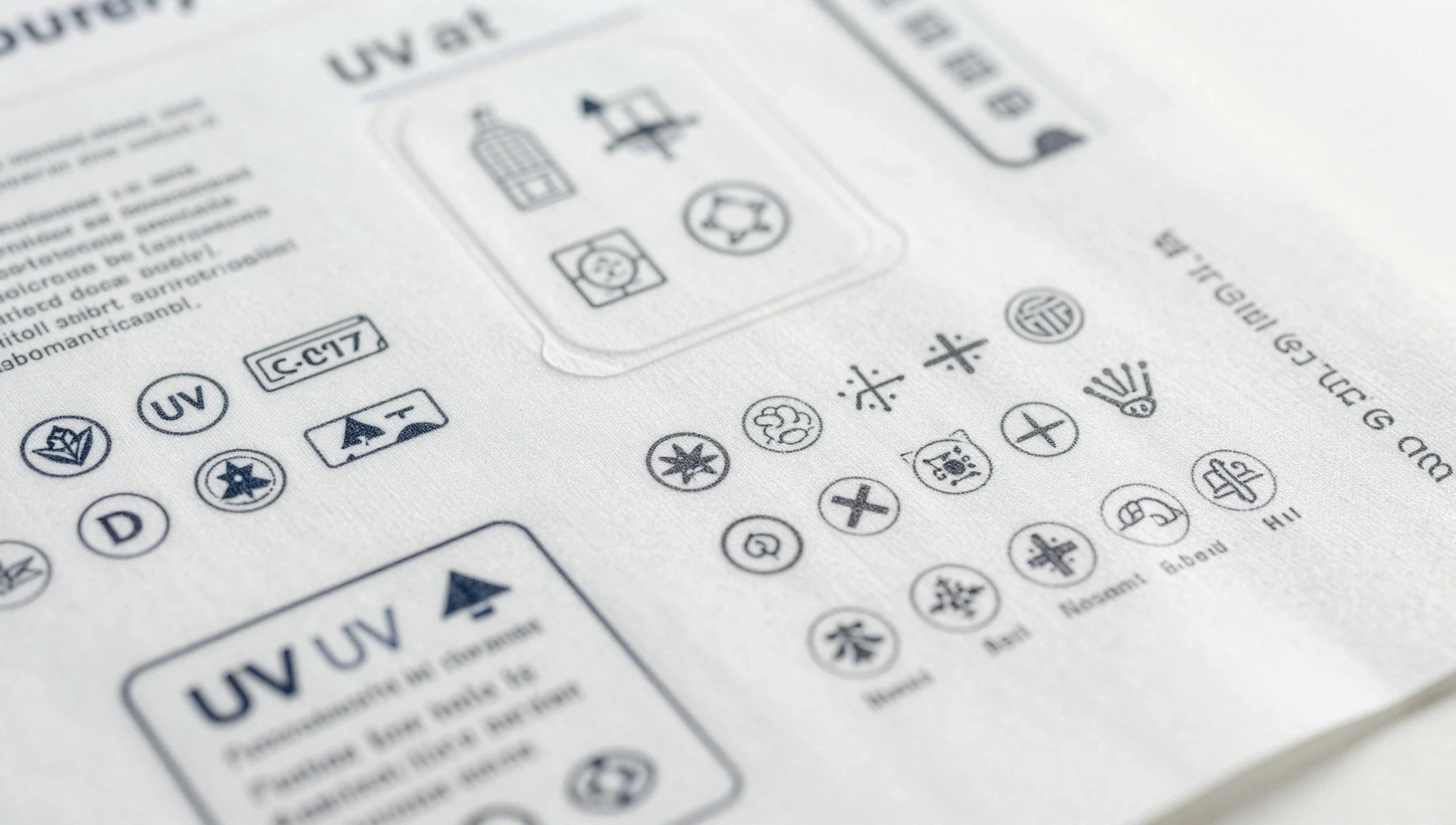
The phrase UV400 is the single most useful marker on a sunglasses label, and it means precisely what it says: the lens blocks wavelengths up to 400 nanometres, which covers the entire UVA and UVB spectrum as defined for ocular protection. A lens marked 100% UV protection should, in principle, make the same claim, but the wording is less precise and varies by jurisdiction. The gold standard is a stated compliance with a recognised standard such as EN ISO 12312-1 in Europe, ANSI Z80.3 in the United States, or AS/NZS 1067 in Australia and New Zealand, each of which sets test methods for transmittance across the ultraviolet and visible ranges.
Regulators have tightened enforcement considerably in recent years. The European Commission's safety gate alerts regularly flag inexpensive sunglasses that claim UV400 protection while transmitting far more ultraviolet than the standard permits, and consumer testing organisations in Germany, the United Kingdom, and Australia have repeatedly found failures among budget online sellers. The lesson is not that inexpensive eyewear is inherently unsafe, but that the claim must be verifiable. A reputable seller publishes the standard, the filter category, and often the measured transmittance; a marketplace listing that shows only lifestyle photography and a price deserves scepticism.
What UV400 Actually Certifies
UV400 certification indicates that the lens transmits less than one percent of radiation at wavelengths between 280 and 400 nanometres, which is the practical definition of full ocular UV protection. It says nothing about optical clarity, impact resistance, or the durability of the coating, so a UV400 label should be read as a necessary but not sufficient condition. Two lenses can both carry the mark while differing enormously in distortion, scratch resistance, and how faithfully they render colour, and those qualities determine whether the glasses are worn consistently enough to deliver their protective benefit.
It is also worth distinguishing between UV absorption built into the lens material and UV blocking applied as a surface coating. Polycarbonate and certain high-index plastics absorb UV intrinsically, which means the protection cannot wear off, whereas coated lenses depend on the integrity of a thin film that can degrade with abrasion. For children's eyewear and for anyone who treats sunglasses roughly, an inherently absorbing lens material is the more durable engineering choice, and it is one of the few specification details that genuinely justifies a higher price.
Standards, Labelling, and Enforcement Gaps
EN ISO 12312-1 classifies lenses into five filter categories numbered zero to four, with category four reserved for extreme high-altitude and glacier use and explicitly unsuitable for driving. The standard also sets requirements for transmittance uniformity, optical power tolerance, and robustness, and it requires the manufacturer to declare the category on the product. ANSI Z80.3 performs a comparable function in the United States, adding requirements for impact resistance and labelling of cosmetic versus special-purpose lenses, while the Australian standard is widely regarded as among the strictest in its testing regime.
Enforcement, however, is uneven. Sunglasses sold through informal channels, tourist markets, and unvetted online storefronts frequently bypass conformity assessment entirely, and the burden of verification falls on the buyer. Practical defences include buying from established optical retailers, checking that the category and standard appear on the frame or its accompanying documentation, and being wary of products that advertise only a tint percentage. Where a seller cannot state the standard to which the lens was tested, the prudent assumption is that no meaningful testing occurred.
Polarisation, Lens Colour, and the Optics of Visual Comfort
Polarisation is the most misunderstood feature in eyewear retail. A polarised lens contains a filter that absorbs light oscillating in a particular plane, which suppresses the horizontally polarised glare reflected from water, wet roads, snow, and car bonnets. The result is a visibly calmer, higher-contrast view that many wearers find dramatically more comfortable. What polarisation does not do, by itself, is block ultraviolet radiation; the two properties are independent, and a lens can be polarised without being UV400, or UV400 without being polarised. Buyers should therefore treat polarisation as a comfort and clarity feature and verify UV protection separately.
Lens colour, meanwhile, shapes the perceptual experience without changing the UV equation. Grey lenses preserve colour fidelity and are the safest general-purpose choice; brown and amber lenses enhance contrast and depth perception, which is why they are popular with anglers and skiers; green lenses offer a balanced compromise; and yellow lenses improve contrast in low light but should never be used for driving at night or in bright conditions. Mirrored coatings reduce the amount of light entering the eye and add a layer of reflection, but the underlying lens still determines UV performance, so a mirror finish is no substitute for a UV400 specification.
Polarised Versus UV-Protective: A Necessary Distinction
The practical test is simple: read the label for both properties. A product described as polarised but silent on UV should be treated as incomplete, and a product described as UV400 but not polarised is perfectly adequate for most daily use. Drivers, sailors, and anglers benefit most from the combination, because glare reduction on reflective surfaces improves both comfort and safety, but the UV claim remains the non-negotiable element. Retailers who conflate the two in their marketing are either careless or deliberately obscuring the distinction, and either way the buyer should look elsewhere.
There is also a technical caveat for pilots and for users of certain instrument panels and LCD screens, where polarised lenses can interact with the display and produce dark bands or blank patches. For these users, a high-quality non-polarised UV400 lens is often the better choice. The general principle holds: match the optical feature to the task, and never let a comfort feature displace the protective specification as the primary selection criterion.
Optical Quality, Distortion, and the Cost of Cheap Lenses
Beyond UV, lens quality determines whether the glasses are optically safe. Poorly manufactured lenses can introduce prismatic distortion, wave-like irregularities, and inconsistent thickness that force the eye to work harder, producing headaches and fatigue during prolonged wear. A simple shop test involves holding the glasses at arm's length against a straight edge such as a door frame and slowly moving them; if the line wavers or bends, the lens has optical defects. This is a crude check, but it reliably exposes the worst offenders among unlabelled budget products.
Impact resistance is the other underappreciated variable. Polycarbonate lenses, standard in sports and children's eyewear, resist shattering far better than glass or standard CR-39 plastic, which matters for anyone cycling, running, or playing racket sports. The American National Standards Institute's Z87.1 rating denotes eyewear tested for occupational impact protection, and for active users it is a more meaningful specification than any fashion claim. Protection, in other words, extends beyond radiation to the physical risks of the activities during which the glasses are worn.
Frame Fit, Coverage, and the Geometry of Stray Light
A lens can be flawless and still leave the eye exposed if the frame admits light from the sides, above, or below. Up to a third of ocular UV exposure arrives from peripheral angles rather than straight ahead, which is why wrap-around styles and close-fitting frames outperform flat, narrow designs in real-world protection. The relevant measurements are the frame's base curve, the temple width, and the vertical depth of the lens; a shallow lens lets light in over the top, and a loose temple leaves a gap at the side that no lens coating can compensate for.
Fit also determines whether the glasses are worn at all. A frame that slips down the nose, pinches behind the ears, or sits too far from the face will be pushed up, taken off, or left at home, and the protective benefit of an unworn pair is precisely zero. The practical test is to shake the head gently and look down; if the glasses move, the fit is wrong. Opticians can adjust temple arms and nose pads, and for children a strap or a smaller frame is often the difference between consistent wear and constant loss.
Coverage, Base Curve, and Peripheral Exposure
Base curve describes the curvature of the lens front, and higher values produce a more wrapped shape that follows the contour of the face. A base curve of eight or above, typical of sports and glacier glasses, closes the peripheral gap that flat frames leave open. The trade-off is optical: strongly curved lenses require careful design to avoid distortion, which is why cheap wrap-around styles can be optically poor even when their UV rating is sound. Buyers should look for wrap styles from established optical manufacturers rather than fashion brands borrowing the silhouette.
Side shields and removable glare guards, common in occupational and mountaineering eyewear, address the same problem more directly by physically blocking lateral light. For high-exposure environments such as sailing, glacier travel, or desert work, these accessories are not cosmetic add-ons but functional necessities. The general principle is that protection is a three-dimensional property of the whole eyewear system, not a single number printed on the lens, and the frame's geometry deserves as much attention as its UV specification.
Fit for Children and Prescription Wearers
Children present a specific challenge because their faces are smaller, their lenses transmit more UV, and their wear is often intermittent. Frames should sit close to the brow, wrap slightly at the temples, and use flexible materials that survive being stuffed into a school bag. Clip-on and over-glasses designs serve prescription wearers well, but they must be verified for UV400 performance in their own right, since the combination of a prescription lens and a tinted clip does not automatically produce full protection. Prescription sunglasses ground with UV-absorbing material remain the most reliable option for those who need corrective lenses outdoors.
For adults with prescriptions, photochromic lenses offer convenience but vary in how quickly they darken and how completely they block UV behind a car windscreen, which filters much of the activating radiation. Dedicated prescription sunglasses remain superior for driving and prolonged outdoor exposure. The decision should rest on the actual use pattern rather than on the appeal of a single pair doing everything, and a frank conversation with an optician about lifestyle usually produces a better outcome than any online comparison.
- 01
- 02
- 03
- 04
Reading a Product Page Like an Optician
Translating all of this into a purchase decision requires a short, disciplined checklist. First, locate the UV claim and confirm it specifies UV400 or 100% UV protection up to 400 nanometres. Second, identify the filter category and match it to the intended use, remembering that category four is unsuitable for driving. Third, check whether the seller names the standard to which the lens was tested. Fourth, consider whether polarisation is needed for the activity. Fifth, examine the frame geometry for coverage. A product that satisfies the first three criteria is already in a small minority of what is sold online.
The checklist also helps calibrate price expectations. Genuine UV400 protection is inexpensive to manufacture, so a modestly priced pair from a reputable optical retailer can be entirely adequate, while an expensive fashion frame may carry no meaningful specification at all. Price correlates with brand, materials, and design far more than with UV performance. The rational buyer therefore anchors on the specification and treats the aesthetics as a secondary filter, which inverts the way most sunglasses are actually marketed and sold.
A Practical Buying Checklist
In the store, hold the lenses against a straight edge to check for distortion, confirm the category marking on the temple, and ask the assistant to state the standard. Online, look for a specification table rather than lifestyle copy, check the returns policy in case the fit is wrong, and be sceptical of listings that show only photographs. For children, prioritise wrap frames with polycarbonate lenses and a secure fit. For sport, add impact resistance and polarisation. For driving, choose category two or three with polarisation and confirm the lens does not interfere with the dashboard display.
Finally, treat sunglasses as consumables that degrade. Scratched coatings, loose hinges, and stretched temples all reduce protection and comfort, and a pair worn daily in harsh conditions rarely lasts more than a few seasons. Replacing them when the coating fails is part of the protective discipline, not an indulgence. The cumulative nature of UV damage means that consistency over decades matters far more than the specification of any single pair, and consistency depends on comfort, fit, and the habit of actually wearing them.
Common Myths Worth Discarding
Several persistent myths distort purchasing behaviour. The first is that darker lenses protect better, which confuses visible-light transmission with UV filtration. The second is that cheap sunglasses are always dangerous, when in fact inexpensive UV400 lenses from reputable sellers are perfectly safe. The third is that clouds eliminate the need for protection, although up to eighty percent of UV passes through overcast skies. The fourth is that polarisation equals UV protection, which it does not. The fifth is that children do not need sunglasses, when their ocular lenses are more transparent to UV than adults'.
Each myth survives because it offers a simple heuristic in place of a technical specification, and each is corrected by the same discipline: read the label, verify the standard, and match the lens to the environment. Once that habit is established, the choice of sunglasses becomes straightforward, and the fashion dimension can be enjoyed without compromising the medical one. The two are not in conflict; they simply operate on different criteria, and the informed buyer satisfies both.
We Also Published
Seasonal, Occupational, and Environmental Considerations
Exposure varies enormously with context, and the same pair of sunglasses is rarely optimal across all of them. At the beach, reflected light from sand and water can nearly double the effective UV dose, making polarisation and a category three lens valuable. On the ski slope, altitude and snow reflection combine to produce some of the highest ocular UV exposure on earth, which is why glacier glasses with side shields and category four lenses exist. In the city, a category two lens with UV400 protection is sufficient for most commuters, though drivers benefit from polarisation to manage road glare.
Occupational exposure deserves particular attention. Outdoor workers in construction, agriculture, maritime, and landscaping trades accumulate dose at a rate that indoor workers never approach, and the World Health Organization classifies solar ultraviolet radiation as a Group 1 carcinogen with respect to ocular surface cancers. Employers in many jurisdictions are required to provide suitable eye protection, and sunglasses meeting the relevant occupational standard should be part of that provision. For these users, durability, impact resistance, and secure fit matter as much as the UV rating itself.
Altitude, Snow, and Water: The High-Reflectance Environments
Fresh snow reflects up to eighty percent of incident ultraviolet radiation, and water reflects roughly ten to thirty percent depending on the angle of the sun, which is why sailors and anglers experience glare and UV exposure simultaneously. At altitude, the thinner atmosphere absorbs less UV before it reaches the ground, compounding the effect. The combination of altitude, snow, and strong sun produces conditions in which unprotected eyes can develop photokeratitis within hours, and in which category four lenses with side coverage are not an affectation but a safety requirement.
For these environments, the specification hierarchy shifts: coverage and category come first, UV400 remains mandatory, and polarisation becomes highly desirable for glare management. The frame should be secure enough to survive wind and movement, and the lens material should resist impact from ice, rock, or equipment. This is the context in which the difference between a fashion frame and a technical one becomes most visible, and where the cost of inadequate protection is measured in acute injury rather than slow accumulation.
Driving, Screens, and Everyday Use
Driving imposes its own constraints. Category four lenses are illegal for road use in most jurisdictions because they reduce visible light below the level needed to perceive hazards, and strongly polarised lenses can interact with LCD instrument panels and head-up displays. A category two or three lens with polarisation and UV400 protection is the sensible compromise for most drivers, and photochromic lenses are a poor substitute behind a windscreen because the glass filters much of the activating UV. For screen-heavy indoor work, sunglasses are unnecessary, and the relevant concern is blue-light exposure rather than UV.
Everyday urban use is the least demanding context and the one in which most purchases occur. A well-fitting category two UV400 frame with grey or brown lenses covers commuting, shopping, and weekend walks comfortably. The risk in this context is not the environment but the purchasing habit: buying on appearance alone, from a seller who publishes no specification, and then wearing the glasses consistently enough to accumulate protection without actually receiving it. The remedy is the checklist, applied once, and then trusted.
Building a Protective Eyewear Habit That Lasts
The final and most important variable is behaviour. A perfectly specified pair of sunglasses left in a drawer protects no one, and the epidemiological evidence on cataract and pterygium risk is built on cumulative exposure over decades rather than on any single outing. The goal is therefore to make protection automatic: a pair by the front door, a pair in the car, a pair in the sports bag, and a spare for the children. Convenience drives consistency, and consistency is what converts a specification into a health outcome.
Maintenance belongs to the same habit. Lenses should be cleaned with a microfibre cloth rather than a shirt tail, stored in a case rather than loose in a bag, and inspected periodically for scratches and coating failure. When the coating degrades, the UV performance may degrade with it, particularly on coated rather than inherently absorbing lenses. Replacing a worn pair is a maintenance decision, not a luxury, and the cost is trivial against the lifetime risk it mitigates.
Maintenance, Storage, and Replacement Cycles
Coated lenses are vulnerable to abrasion, and the thin UV-blocking film can be compromised by repeated cleaning with harsh materials or by exposure to salt water and sunscreen. Inherently absorbing materials such as polycarbonate are more forgiving, which is one reason they dominate sports and children's eyewear. A simple inspection against a light source reveals scratches and crazing, and any lens that shows visible surface damage should be retired rather than trusted. Storage in a rigid case protects both the coating and the frame geometry that provides coverage.
Replacement cycles vary with use. A daily-worn pair in a coastal or high-altitude environment may need replacing every two to three years, while an occasional-use pair can last far longer. The trigger for replacement should be optical condition rather than fashion, and the decision should be made with the same specification discipline as the original purchase. Keeping a record of the standard and category of a favoured model makes reordering straightforward and avoids the risk of substituting an unverified lookalike.
What to Ask an Optician
Opticians are an underused resource in this process. A short conversation can establish the appropriate filter category for a patient's lifestyle, confirm whether prescription sunglasses are warranted, and verify the UV performance of a chosen frame. For patients with existing ocular conditions, or with a family history of cataract or macular disease, professional advice is more valuable than any general guide. The questions worth asking are specific: what standard does this lens meet, what category is it, does it block to 400 nanometres, and does the frame provide adequate coverage for the intended use.
Those four questions, asked consistently, will filter out the great majority of inadequate products and identify the small number that genuinely protect. The answers are short and factual, and a retailer who cannot supply them is telling the buyer something important. Sunglasses are a medical device worn for aesthetics, and the informed buyer simply reverses the priority: protection first, appearance second, and the pleasure of a well-chosen frame intact within that order.
From our network :
- CISA’s Ten-Advisory Wave: Why Generic Patching Fails in OT and How to Build Product-Specific PlaybooksCISA released ten ICS advisories in one week, exposing critical infrastructure risks. Generic patching fails in OT. Learn to build product-specific remediation playbooks.
- Mobile Learning and VR in English: What Global Evidence Reveals About Effective Language TechnologyA systematic review across 14 countries reveals which language-learning technologies genuinely work. Mobile learning, AI, and VR show measurable benefits when pedagogically integrated. This evidence-based guide helps educators and learners select technology that delivers real return on investment.
- How AI Agents Will Change the Way We Manage Personal FinancesExplore how AI agents are transforming personal finance through automated budgeting, bill payment, and investment management, while examining the critical security protocols and governance frameworks required for safe deployment.
- Forbidden Matrix Patterns and Visible Lattice Points: A Geometric DictionaryExplore how multidimensional 0–1 matrices encode geometric truths, linking forbidden patterns to visible lattice points and hypergraph theory, with applications in combinatorics and computational geometry.
- Committed Mediterranean Precipitation Decline: Why Emissions Cuts Alone Cannot Restore Winter RainsNew NOAA research reveals that Mediterranean winter rains may decline irreversibly even with emissions cuts. Explore the science of committed climate change and regional impacts.
- The Final Descent: How ESA Retired the Legendary Cluster Constellation After 24 Years of Space Weather ScienceAfter 24 years mapping Earth’s magnetosphere, ESA’s Cluster mission concluded with a precisely controlled reentry over the South Pacific. This analysis explores the scientific legacy, engineering decisions, and debris mitigation principles behind one of space exploration’s most responsible retirements.
- The Hidden Cost of AI Convenience: Why Over-Permissioned Agents Are a Security Time BombDiscover why AI agents with excessive permissions create dangerous single points of failure, and learn how implementing least privilege principles can protect your organization from exploitation.
- Live Online English Classes for Kids: Do They Actually Reduce Anxiety?A ten-week study reveals that synchronous online English classes can significantly reduce child language anxiety while improving listening and reading skills. Discover what makes these programs effective and how parents can select the right one.
- University Language Proficiency Exams: Why Institutional Tests Demand Different Preparation Than IELTS and TOEFLDiscover why university-specific language proficiency examinations differ fundamentally from IELTS and TOEFL, and learn strategic preparation approaches for institutional assessment success.
RESOURCES
- Uv Blocking Sunglasses - Amazon.comamazon.comDiscover sunglasses with UV400 protection blocking harmful UVA and UVB rays in stylish designs.
- What are some of the best UV protection sunglasses? - Redditreddit.comDec 7, 2022 ... Any sunglasses with Polycarbonate lenses will be the best. You can buy some for 10USD at a gas station or…
- Polarized Sunglasses for Women & Men - QUAYquay.comCut glare on roads, water, and sun-soaked days. QUAY polarized sunglasses pair anti-glare lenses with trend-led frames and 100% UV protection.
- I used to ignore UV protection on sunglasses…That was a mistakereddit.comMar 10, 2026 ... 2nd this - polarized and UV blocking are not the same. Polarized lenses reduce glare from reflective surfaces. UV blocking…
- Sunglasses with UV protection - A.Kjærbedeakjaerbede.comMany A.Kjærbedes sunglasses work with UV protection (often UV400), which typically means high filtration of UVA and UVB rays. The actual UV specification can ...
- Sun exposure to the eyes: predicted UV protection effectiveness of ...pmc.ncbi.nlm.nih.govOct 31, 2018 ... All tested sunglass lenses fully blocked UVR. Sunglasses' protection effectiveness is strongly influenced by geometry, wearing position, head ...
- UV Protection Sunglasses: What 100% UV Really Meanswarbyparker.comApr 27, 2026 ... “100% UV” or “UV400” – typically indicates that both UVA and UVB are covered up to 400 nanometers, as described…
- Ultraviolet (UV) protection - American Optometric Association (AOA)aoa.org... sunglasses that offer UV protection. To provide adequate protection for your eyes, sunglasses should: Block out 100% of both UV-A and UV-B radiation.…
- How to Tell If Your Sunglasses Are Really Protecting Your Eyeshealthcare.utah.eduJun 21, 2023 ... In particular, older sunglasses may not be as effective as you think. Most sunglasses today have UV protection embedded in…
- Polarized Sunglasses | Ray-Ban® USAray-ban.comPolarized lenses block glare for improved clarity and contrast, while also offering 100% UVA and UVB protection to shield your eyes from the sun's…
- SunStoggles - UV-Protective Stylish Sunglassesstoggles.comBuilt with high-quality tinted lenses, they reduce glare and deliver reliable UV protection to keep your eyes comfortable during long days outdoors. Lightweight ...
- UV Protection 101: What You Should Know About Sunglassesvsp.comThe first rule of thumb is to choose sunglasses that provide 100% UVA/UVB protection. But don't be fooled; darker lenses don't automatically offer more ...
- UV Protect Sunglasses - Carrera® USus.carreraworld.comCarrera UV Protect lenses offer essential daily defense against UV rays and scratches with durable, high-performance clarity.
- Why UV Protection Is Essential for Your Outdoor Adventures UScostadelmar.comCosta's Commitment to Eye Safety ... At Costa, we take eye protection very seriously. Our sunglasses absorb 100% of UV light. Many of our…
- How to Choose the Best Sunglasses to Avoid Sun Damageaao.orgJul 20, 2026 ... Sunglasses protect your eyes from ultraviolet (UV) rays, the radiation energy produced by the sun. These UV rays—including UV-A and…
- 01
- 02
- 03
- 04
- 05
- 06
- 07
- 08
0 Comments