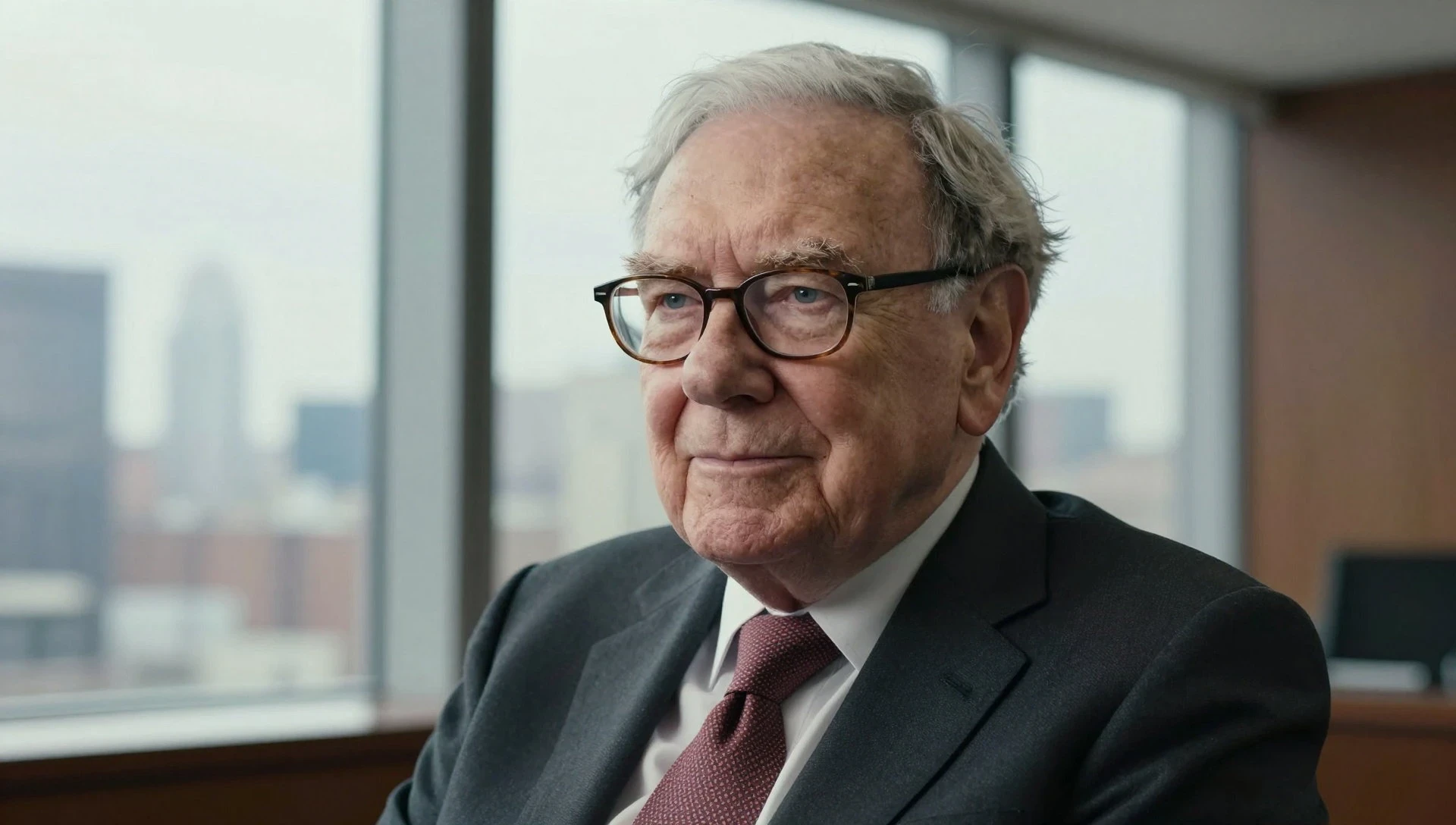
Warren Buffett's counsel to investors confronting the prospect of a market crash is deceptively simple, yet it carries the weight of six decades of disciplined capital allocation. When volatility spikes and headlines scream of collapse, the instinct to act—to sell, to hedge, to flee—becomes almost overwhelming. Buffett's counterintuitive prescription is restraint: remain calm, resist impulsive decisions driven by short-term price movements, and hold fast to a long-term perspective. This is not passive resignation but an active philosophical stance, one that treats market downturns as temporary dislocations rather than permanent verdicts on a portfolio's worth.
The Globe and Mail report captures the essence of this guidance without embellishment: Buffett's reputation for value investing rests precisely on his willingness to weather storms that unnerve others. His advice, however, is not a blanket instruction to ignore risk. It is a reminder that panic is expensive, that selling into a decline crystallizes losses that might otherwise remain paper losses, and that the investor who acts out of fear often locks in the worst possible outcome. The counsel carries an implicit caveat—investors must weigh their own financial circumstances and, where appropriate, consult professionals before making consequential decisions.
What makes this guidance enduring is its psychological realism. Buffett understands that markets are not merely mechanisms for price discovery but arenas of human emotion, where fear and greed alternate in dominance. The smartest move, in his framing, is not a clever trade or a market-timing maneuver but a temperamental discipline: the capacity to think in years rather than days, to distinguish noise from signal, and to recognize that the investor's greatest enemy is often their own reactive impulse. This analysis unpacks that philosophy, examines its practical implications, and situates it within the broader architecture of value investing.
On This Page
- The Psychology of Panic and the Discipline of Restraint
- Value Investing as a Framework for Crisis Navigation
- Historical Precedents: How Buffett Has Weathered Crashes
- Practical Guidance for the Individual Investor
- The Limits of Advice and the Responsibility of Judgment
- Conclusion: The Smartest Move Is a Prepared Mind
TL;DR Warren Buffett's advice to investors facing a possible market crash centers on calm, long-term thinking, and the avoidance of panic-driven selling. His value-investing philosophy treats downturns as temporary dislocations rather than permanent losses, urging investors to resist impulsive decisions based on short-term price movements. The guidance is not a license to ignore risk; investors must assess their own financial situations and seek professional counsel where needed. Ultimately, Buffett's counsel is a temperamental discipline—thinking in years, not days—that has weathered decades of volatility and remains a cornerstone of rational investing.
The Psychology of Panic and the Discipline of Restraint
Market crashes are rarely purely financial events; they are psychological contagions that spread faster than any fundamental deterioration. When indices fall sharply, the human brain's threat-response system activates, flooding investors with cortisol and compelling action—any action—to relieve the discomfort of uncertainty. Buffett's advice directly targets this neurological reflex, arguing that the investor who can sit still through the storm possesses an edge that no spreadsheet can replicate. The discipline of restraint is not innate for most people; it must be cultivated deliberately, often through pre-commitment strategies and a written investment policy that governs behavior when emotions run high.
Why Selling Into a Decline Destroys Value
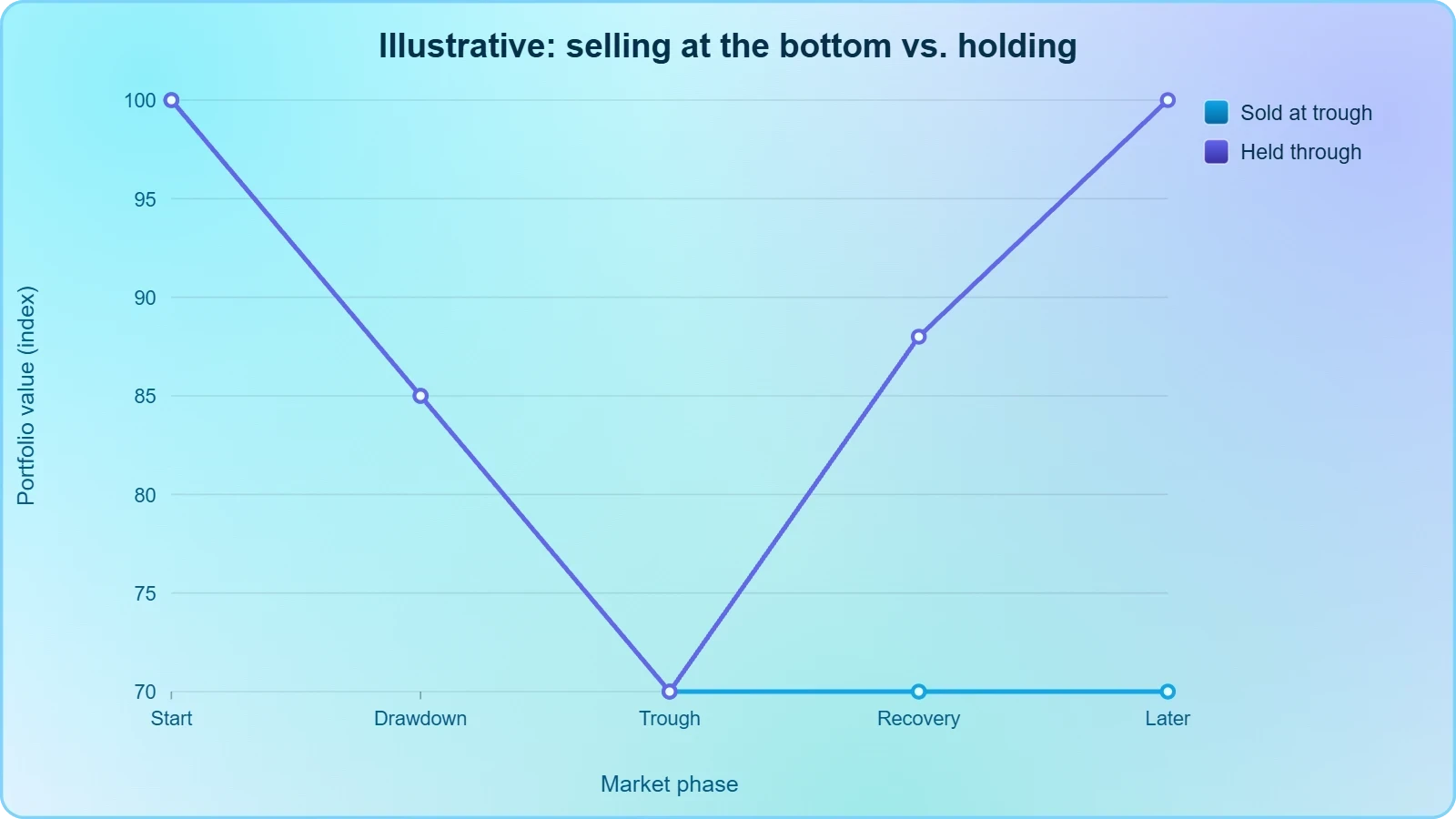
The arithmetic of panic-selling is unforgiving. An investor who liquidates a diversified portfolio during a 30% drawdown converts a temporary mark-to-market loss into a permanent capital impairment, forfeiting the subsequent recovery that historically follows most major declines. Buffett's long record demonstrates that equity markets have rewarded patience across every major crisis of the past century, from 1973 through 2008 and beyond. The investor who sells at the bottom must then solve a second, harder problem: when to re-enter, a timing decision that compounds the original error and frequently results in missing the strongest rebound days.
Behavioral finance research reinforces this point with uncomfortable clarity. Studies of investor returns consistently show that individual investors underperform the very funds they hold, largely because of poorly timed purchases and sales. The gap between fund returns and investor returns—often called the behavior gap—can exceed two percentage points annually, a drag that compounds devastatingly over decades. Buffett's counsel to avoid impulsive decisions is, in effect, an instruction to close that gap by refusing to participate in the behavior that creates it.
The Temperament Advantage in Volatility
Buffett has long insisted that investing success depends less on intelligence than on temperament. The capacity to remain unruffled when others are panicking is a competitive advantage because it allows the disciplined investor to act rationally when prices are most distorted. Volatility, in this framing, is not a threat but an opportunity—a point Buffett has made repeatedly by noting that a declining market is the friend of the long-term buyer, since it allows continued accumulation at lower prices. The investor who fears volatility is, by extension, fearing the very condition that makes future returns possible.
This temperamental edge is difficult to teach but possible to practice. It requires constructing a portfolio that can withstand drawdowns without forcing liquidation, maintaining adequate liquidity for near-term needs, and cultivating an intellectual framework that treats price declines as information rather than verdicts. Buffett's own approach—concentrated positions in businesses he understands, held for decades—reflects a temperament that views market quotations as opportunities to be exploited rather than oracles to be obeyed.
Value Investing as a Framework for Crisis Navigation
Buffett's advice cannot be separated from the value-investing tradition that shaped it. Value investing, rooted in Benjamin Graham's teachings, treats stocks as fractional ownership in businesses rather than as ticker symbols to be traded. When a market crash occurs, the value investor's first question is not "how do I protect my portfolio?" but "has the intrinsic worth of the businesses I own actually changed?" In most crashes, the answer is no—or at least not nearly as much as the price decline suggests. This distinction between price and value is the intellectual bedrock on which Buffett's calm rests, and it explains why he can view a crash with equanimity rather than dread.
Price Versus Value: The Central Distinction
Graham's famous observation that in the short run the market is a voting machine but in the long run a weighing machine captures the essence of the value approach. Crashes are moments when voting dominates—when sentiment, fear, and forced selling overwhelm fundamentals. The value investor who has done the work of estimating intrinsic value can treat such moments as opportunities, because the gap between price and value widens precisely when panic is most acute. Buffett's counsel to stay calm is thus not merely psychological advice but an operational instruction: maintain the analytical discipline to distinguish temporary price movements from permanent value destruction.
This distinction has practical consequences for portfolio construction. An investor who owns businesses with durable competitive advantages, conservative balance sheets, and predictable cash flows can weather downturns with confidence because the underlying economics remain intact. Conversely, an investor who owns speculative positions with no earnings and no moat has genuine reason to worry when liquidity tightens. Buffett's advice implicitly assumes a portfolio built on sound foundations; for those whose holdings lack such foundations, calm alone will not suffice.
The Margin of Safety in Practice
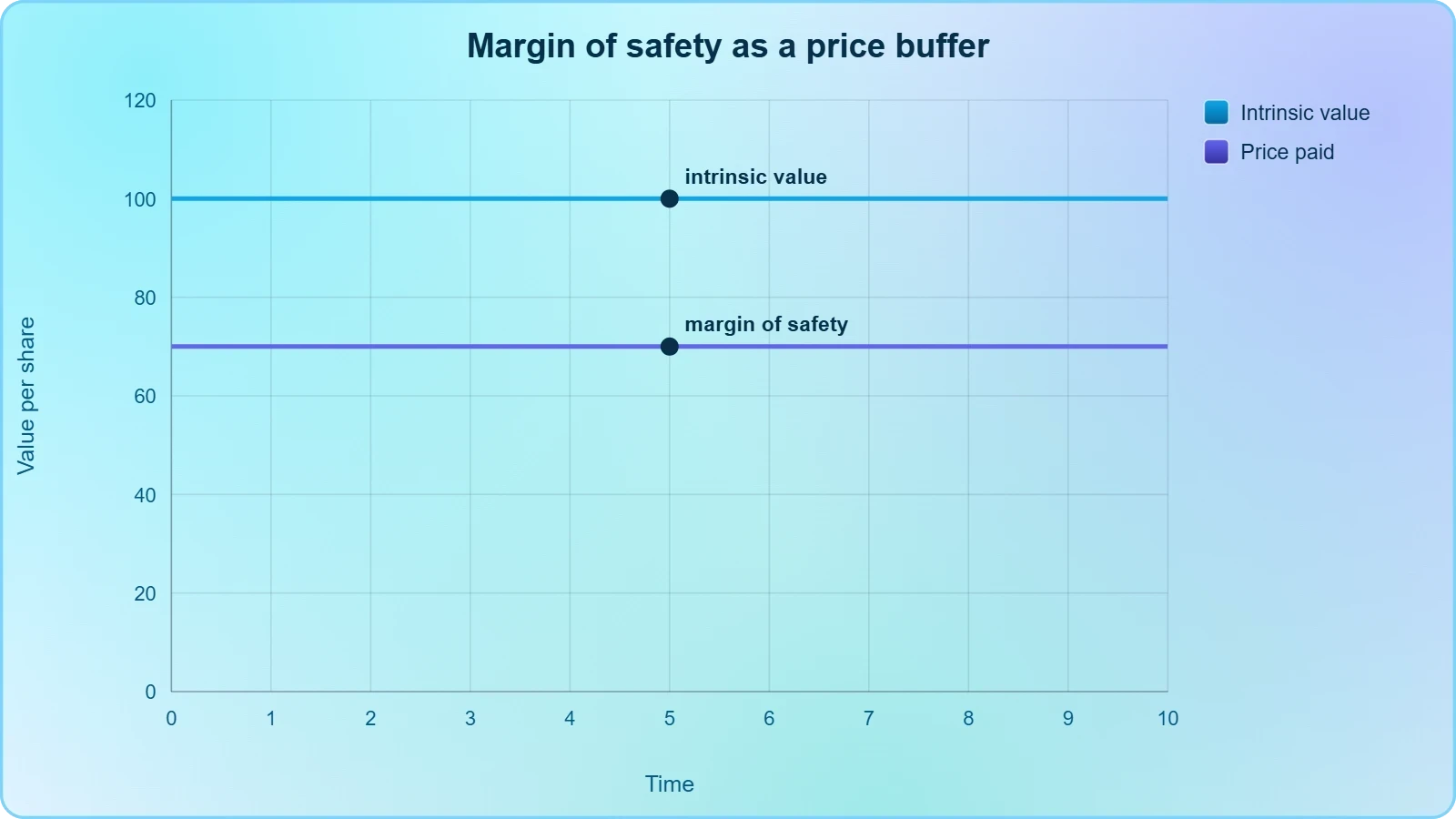
The margin of safety—Graham's other great contribution—is the buffer between price paid and intrinsic value estimated. A sufficient margin protects the investor against error, misfortune, and the inevitable surprises that accompany any long-term investment. During a crash, the margin of safety for new purchases widens dramatically, which is why Buffett has historically deployed capital most aggressively when others are most fearful. His advice to remain calm is therefore paired with an implicit call to action: the prepared investor with liquidity and conviction should view a crash as an opportunity to acquire assets at prices that offer exceptional margins of safety.
For the investor without such preparation, the margin of safety operates defensively. Adequate cash reserves, appropriate diversification, and a realistic assessment of risk tolerance all serve as buffers against the psychological pressure to sell at the wrong moment. Buffett's guidance is thus adaptable: the calm investor with a sound portfolio holds; the calm investor with liquidity buys; and the investor who lacks either should have addressed those deficiencies before the crash arrived, not during it.
Historical Precedents: How Buffett Has Weathered Crashes
Buffett's advice carries authority because he has lived it. Across more than half a century of market history, he has navigated crashes that destroyed fortunes and tested convictions. The 1973–74 bear market, which saw the Dow fall nearly 45%, arrived when Buffett was already managing substantial capital; he used the dislocation to acquire positions that would compound for decades. The 1987 crash, when the Dow fell 22.6% in a single day, prompted no panic selling from Omaha; Buffett later noted that he had been a buyer. These precedents matter because they demonstrate that his counsel is not theoretical but tested under fire.
The 2008 Financial Crisis and Crisis Opportunism
The 2008 financial crisis provided the most dramatic modern demonstration of Buffett's philosophy. As credit markets froze and equities collapsed, he deployed capital into Goldman Sachs, General Electric, and other institutions on terms that were extraordinarily favorable—preferred shares with generous dividends and equity warrants. His famous op-ed, "Buy American. I Am.," published in October 2008, urged investors to purchase equities even as the financial system teetered. The advice was not reckless optimism but a calculated assessment that American businesses would recover, and history vindicated the judgment as markets embarked on a decade-long bull run.
The lesson from 2008 is not that every crash offers such opportunities, but that the investor who has prepared—with liquidity, conviction, and analytical discipline—can act decisively when others cannot. Buffett's calm during that period was not the calm of indifference but the calm of readiness. He had spent years building the financial and psychological capacity to act when opportunity arrived, and the crisis merely provided the occasion. For ordinary investors, the parallel is clear: preparation before the storm determines the options available during it.
Lessons From the Dot-Com Collapse
The dot-com collapse of 2000–2002 tested a different dimension of Buffett's philosophy. During the late 1990s, he was widely criticized for refusing to participate in the technology bubble, with commentators declaring his approach obsolete. When the bubble burst and technology stocks lost trillions in value, his discipline was vindicated. The episode illustrates that Buffett's calm is not merely about holding through declines but about avoiding the euphoria that precedes them—a discipline that requires resisting the social pressure to participate in manias, which is often harder than resisting the fear of crashes.
This dual discipline—resisting both panic and euphoria—is the complete expression of Buffett's advice. The investor who stays calm during a crash is often the same investor who stayed disciplined during the preceding boom, refusing to overpay for assets whose valuations had detached from fundamentals. The two behaviors are linked by a common temperament: an insistence on independent judgment, a willingness to be unpopular, and a focus on long-term outcomes rather than short-term validation.
- 01
- 02
- 03
- 04
We Also Published
Practical Guidance for the Individual Investor
Buffett's advice, while rooted in institutional-scale investing, translates into actionable guidance for individuals. The first step is honest self-assessment: what is the time horizon, what are the liquidity needs, and what drawdown can be tolerated without forced selling? An investor who will need capital within two years should not hold it in equities, regardless of Buffett's counsel, because the risk of a poorly timed decline is too great. Conversely, an investor with a decades-long horizon and stable income can afford to view crashes with equanimity, provided the portfolio is constructed to survive them.
Building a Portfolio That Can Withstand a Crash
Portfolio construction is the practical expression of Buffett's philosophy. Adequate diversification across sectors and geographies reduces the risk of permanent loss from any single failure. A cash reserve sufficient to cover near-term expenses eliminates the need to sell into weakness. An appropriate allocation to high-quality fixed income provides ballast during equity declines. And a focus on businesses with durable competitive advantages—rather than speculative positions—ensures that the portfolio's underlying economics remain sound even when prices fall. These are not exotic strategies but foundational disciplines that many investors neglect during bull markets.
The behavioral dimension of construction is equally important. An investor who has written an investment policy statement, specifying in advance how they will respond to various market conditions, is far less likely to make impulsive decisions during a crisis. The policy statement serves as a pre-commitment device, a way of binding one's future self to rational behavior when emotions run high. Buffett's own discipline is supported by a similar structure: a clear investment philosophy, a defined circle of competence, and a long time horizon that insulates him from short-term pressure.
When to Seek Professional Counsel
The Globe and Mail report appropriately notes that investors should consider their own financial situations and consult professionals before making decisions. This caveat is not a hedge but a recognition that Buffett's advice assumes a level of financial literacy and emotional discipline that not all investors possess. A qualified financial adviser can help translate general principles into a personalized plan, assess risk tolerance accurately, and provide a steadying influence during periods of stress. For investors with complex situations—concentrated positions, tax considerations, estate planning needs—professional guidance is not optional but essential.
The role of the adviser extends beyond technical advice to behavioral coaching. Research in behavioral finance has documented that advisers add value primarily by preventing clients from making destructive decisions during market stress. The adviser who talks a client out of panic-selling at the bottom may contribute more to long-term returns than any stock selection. Buffett's advice and the adviser's role are thus complementary: the principle provides the direction, and the professional relationship provides the accountability and support needed to follow it.
The Limits of Advice and the Responsibility of Judgment
Buffett's guidance, however authoritative, is not a substitute for individual judgment. The investor who reads that the smartest move is to stay calm and then applies that advice mechanically, without regard to their own circumstances, has misunderstood it. Calm is appropriate for the investor with a sound portfolio and a long horizon; it is not appropriate for the investor who has taken excessive risk, who needs capital imminently, or who has concentrated exposure to a single sector. The wisdom of the advice lies in its underlying philosophy, not in a one-size-fits-all prescription.
Distinguishing Principle From Prescription
The distinction between principle and prescription is crucial. The principle—that panic-driven decisions destroy value and that long-term thinking outperforms short-term reaction—is broadly applicable. The prescription—that every investor should hold through every decline—is not. Buffett himself has sold positions when fundamentals deteriorated, and he has emphasized that the investor must understand the businesses they own. The principle guides behavior; the prescription must be adapted to circumstances. Investors who conflate the two may find themselves holding deteriorating assets under the mistaken belief that calm is always the answer.
This nuance is often lost in popular accounts of Buffett's advice, which tend to emphasize the calm and omit the analysis. The complete picture is that Buffett's equanimity rests on rigorous fundamental work: he knows what he owns, why he owns it, and what would cause him to change his mind. The calm is the visible surface of a deep analytical process. Investors who seek to emulate the calm without the process are imitating the form without the substance, and they may find that their composure is not matched by their results.
Adapting Timeless Principles to Modern Markets
Modern markets present conditions that Buffett's original framework did not fully anticipate: algorithmic trading that amplifies volatility, passive funds that mechanically sell during index rebalancing, social media that accelerates information and panic, and derivatives that create hidden leverage. These developments do not invalidate the core principles, but they do require adaptation. The investor who understands how these mechanisms work can better distinguish genuine value dislocations from technical selling, and can respond with greater precision when opportunities arise.
The enduring relevance of Buffett's advice lies in its focus on what the investor can control: their own behavior, their analytical discipline, and their time horizon. Markets will always be unpredictable in the short run, and crashes will always occur. What the investor can control is whether they respond with panic or with purpose. Buffett's counsel, distilled to its essence, is an invitation to choose purpose—to prepare before the storm, to think in years rather than days, and to recognize that the greatest risk in a crash is often the investor's own reaction to it.
Conclusion: The Smartest Move Is a Prepared Mind
Warren Buffett's advice to investors facing a possible market crash ultimately reduces to a single insight: the smartest move is not a trade but a temperament. The investor who can remain calm, think in years rather than days, and resist the impulse to act on short-term price movements possesses an advantage that no market-timing strategy can replicate. This temperament is not innate for most people, but it can be cultivated through preparation, discipline, and the deliberate construction of a portfolio that can withstand stress without forcing liquidation.
The advice is not a guarantee against loss, nor a license to ignore risk. It is a framework for responding to uncertainty with purpose rather than panic. Investors who internalize the underlying principles—price versus value, margin of safety, circle of competence, and the discipline to resist both euphoria and fear—will find themselves better equipped to navigate whatever volatility the future brings. Buffett's record suggests that this approach, applied consistently over decades, is among the most reliable paths to long-term financial success.
From our network :
- Mobile Learning and VR in English: What Global Evidence Reveals About Effective Language TechnologyA systematic review across 14 countries reveals which language-learning technologies genuinely work. Mobile learning, AI, and VR show measurable benefits when pedagogically integrated. This evidence-based guide helps educators and learners select technology that delivers real return on investment.
- The Final Descent: How ESA Retired the Legendary Cluster Constellation After 24 Years of Space Weather ScienceAfter 24 years mapping Earth’s magnetosphere, ESA’s Cluster mission concluded with a precisely controlled reentry over the South Pacific. This analysis explores the scientific legacy, engineering decisions, and debris mitigation principles behind one of space exploration’s most responsible retirements.
- Committed Mediterranean Precipitation Decline: Why Emissions Cuts Alone Cannot Restore Winter RainsNew NOAA research reveals that Mediterranean winter rains may decline irreversibly even with emissions cuts. Explore the science of committed climate change and regional impacts.
- Forbidden Matrix Patterns and Visible Lattice Points: A Geometric DictionaryExplore how multidimensional 0–1 matrices encode geometric truths, linking forbidden patterns to visible lattice points and hypergraph theory, with applications in combinatorics and computational geometry.
- The Hidden Cost of AI Convenience: Why Over-Permissioned Agents Are a Security Time BombDiscover why AI agents with excessive permissions create dangerous single points of failure, and learn how implementing least privilege principles can protect your organization from exploitation.
- CISA’s Ten-Advisory Wave: Why Generic Patching Fails in OT and How to Build Product-Specific PlaybooksCISA released ten ICS advisories in one week, exposing critical infrastructure risks. Generic patching fails in OT. Learn to build product-specific remediation playbooks.
- How AI Agents Will Change the Way We Manage Personal FinancesExplore how AI agents are transforming personal finance through automated budgeting, bill payment, and investment management, while examining the critical security protocols and governance frameworks required for safe deployment.
- Live Online English Classes for Kids: Do They Actually Reduce Anxiety?A ten-week study reveals that synchronous online English classes can significantly reduce child language anxiety while improving listening and reading skills. Discover what makes these programs effective and how parents can select the right one.
- University Language Proficiency Exams: Why Institutional Tests Demand Different Preparation Than IELTS and TOEFLDiscover why university-specific language proficiency examinations differ fundamentally from IELTS and TOEFL, and learn strategic preparation approaches for institutional assessment success.
RESOURCES
- Resources will be updated soon.
- 01
- 02
- 03
- 04
- 05
- 06
- 07
- 08
0 Comments