On This Page
The Fight for a Circular Economy Tax Break
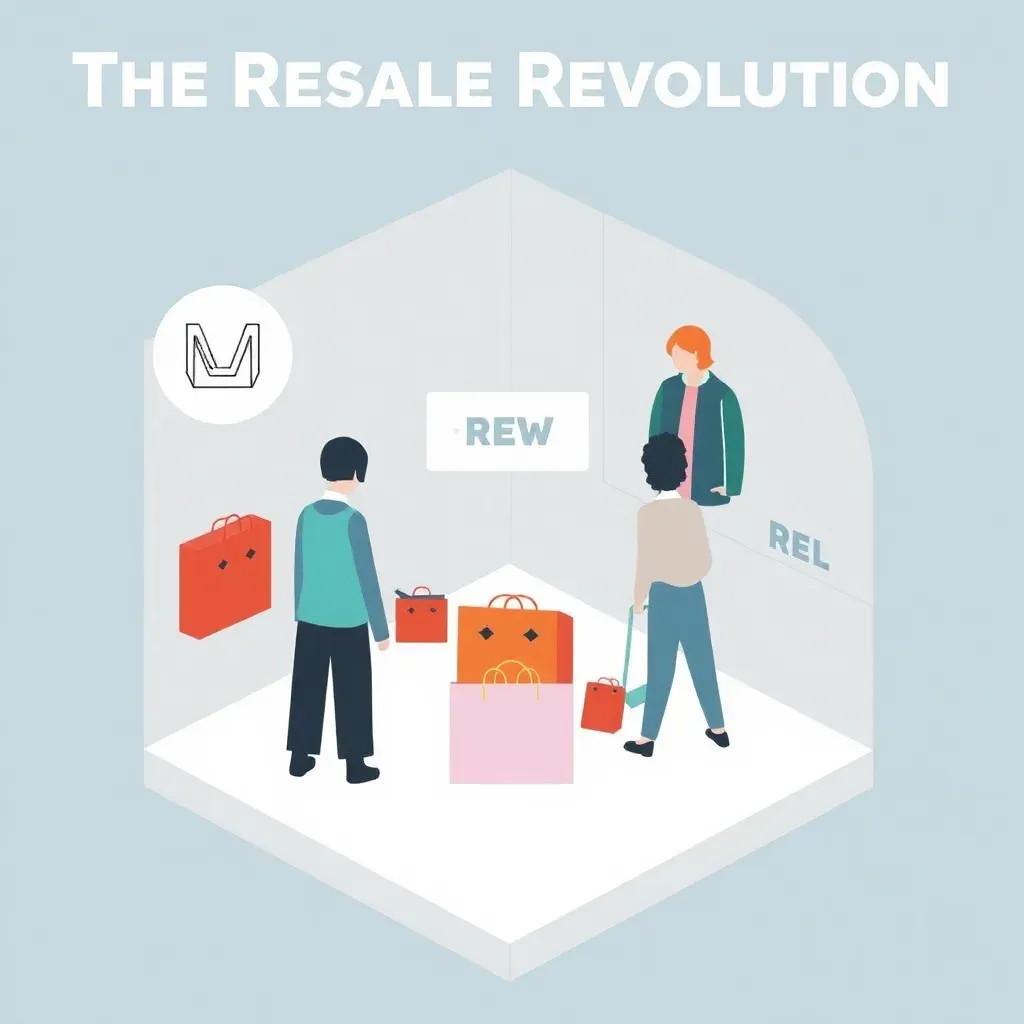
The fashion world is witnessing a historic shift as seventy major brands unite for significant legislative change. They are demanding that the United States government eliminate sales tax on all resold clothing items and textile products immediately.
This coalition includes industry titans like H&M Group and Lacoste who want to revolutionize modern retail. By removing financial barriers, they hope to make the circular economy a standard practice for every modern American consumer today.
The current tax system treats resold goods the same as brand-new products, which many argue is unfair. These brands believe that taxing an item twice limits the growth of sustainable markets and keeps prices unnecessarily high.
According to recent statements, the goal is to reach a net-positive environmental impact by the year 2050. This requires a total rethink of how taxes influence our buying habits and the lifecycle of our favorite clothes.
The movement is gaining momentum as more companies realize that the linear 'take-make-waste' model is no longer viable. We are seeing a powerful push for policies that reward longevity and reuse over constant new production.
Why Labor Costs are the Biggest Hurdle
One of the most significant challenges in the circular economy is the high cost of skilled labor. Repairing a garment often requires more manual work than manufacturing a new one in a large automated factory.
Current labor taxes make it difficult for brands to offer affordable repair services to their loyal customers. When the cost of a repair exceeds the price of a new shirt, most people simply choose disposal.
The coalition is specifically asking for labor tax credits to offset these high operational expenses for repair. This would allow professional tailors and seamstresses to compete with the low prices of mass-produced fast fashion items.
Imagine being able to fix your favorite luxury coat for a fraction of the current market price. This policy shift would make professional garment maintenance accessible to everyone, regardless of their personal income or social status.
By reducing the tax burden on labor, brands can hire more artisans and expand their circular service departments. This creates new jobs while ensuring that high-quality clothing stays in circulation for many more years.
Transitioning from Consumption to Stewardship
We are moving away from a culture of pure consumption toward one of responsible product stewardship. Brands are starting to take responsibility for their items long after they leave the initial retail store shelves.
This shift means that companies are viewing their products as long-term assets rather than one-time sales opportunities. They want to help you maintain, repair, and eventually resell your purchases through their own official platforms.
Stewardship requires a robust infrastructure for cleaning, refurbishing, and verifying the authenticity of used goods. Without tax incentives, building this massive logistics network is incredibly expensive and risky for even the largest global corporations.
The brands involved in this lobby believe that government support is essential for this transition to succeed. They are asking for a partnership that aligns economic growth with the urgent needs of our planet.
When you buy a piece of clothing, you are becoming a temporary guardian of those materials and resources. This new mindset encourages us to value quality and durability over the fleeting trends of the season.
The Impact of Legislative Advocacy
Legislative advocacy is the most powerful tool these brands have to change the global fashion landscape. By speaking with one voice, they can influence policy in a way that individual companies simply cannot.
The Ellen MacArthur Foundation has been instrumental in organizing this collective action across the entire textile industry. Their research shows that policy intervention is the only way to scale circular business models effectively.
Lawmakers are starting to listen because these brands represent billions of dollars in annual economic activity. When major employers demand change, it becomes a mainstream economic priority rather than just a niche environmentalist request.
The proposed reforms would create a more level playing field for companies that prioritize sustainability and ethics. It would finally penalize the wasteful practices that have dominated the fashion industry for several decades now.
We should expect to see more intense lobbying efforts as this proposal moves through the halls of power. The future of fashion depends on our ability to turn these ambitious ideas into binding national laws.
Redefining the Value of Garments
How much is an old jacket really worth if it can be repaired and sold again? This initiative asks us to redefine our understanding of value and what makes a product truly worth owning.
In a circular world, a garment's value is not lost the moment you walk out of the boutique. Instead, it maintains a significant portion of its worth because it can be easily traded or refurbished.
Zero sales tax on resale would immediately boost the residual value of every high-quality item in your closet. This makes buying better clothes a smarter financial investment for the average person over the long term.
We are seeing a return to the days when clothing was passed down through generations as an heirloom. High-quality materials and expert craftsmanship are becoming the most important features for modern shoppers who care.
The revolution is not just about taxes; it is about changing our emotional connection to the things we wear. We are learning to love our clothes longer and treat them with the respect they deserve.
Making Second-Hand More Affordable than New
The primary goal of removing the resale sales tax is to make second-hand shopping the most logical choice. Currently, the price gap between used luxury and new fast fashion is often too narrow for consumers.
If the proposed tax reforms are passed, the cost of second-hand luxury items could drop by ten percent. This makes high-end, durable clothing competitive with the low prices of disposable items from online retailers.
Lower prices will attract a much wider range of shoppers who were previously priced out of the market. This democratization of quality is a key pillar of the brands' strategy for long-term sustainable growth.
We are looking at a future where the thrift store or resale app is the first stop. When sustainable options are the cheapest options, the entire market will shift toward circularity almost overnight.
This economic incentive is the missing piece of the puzzle for the widespread adoption of circular fashion. It turns environmental responsibility into a savvy financial decision for every household across the entire United Kingdom.
The Burden of Double Taxation
Double taxation occurs when the government collects sales tax on the same physical item multiple times. This happens every time a used piece of clothing is sold through a formal business or platform.
Consider a designer bag that was originally sold for ##P_{orig}## with a standard sales tax applied. When that bag is resold, the buyer pays tax again, even though the item hasn't changed.
The coalition argues that this practice creates an unfair barrier to entry for the growing resale market. It essentially penalizes consumers for choosing a more sustainable path instead of buying something brand new.
By eliminating this second tax, the government can encourage more people to participate in the circular economy. It is a simple change that would have a massive impact on the affordability of used goods.
The math is clear: removing the tax burden makes the resale model much more efficient for everyone. It allows platforms to lower their fees while still providing a great experience for buyers and sellers.
We Also Published
Competitive Pricing Against Fast Fashion
Fast fashion has dominated the market because it is incredibly cheap and easy to access for most people. To beat it, the resale market must offer a similar level of convenience and even better pricing.
Tax breaks for repairs and resale will allow premium brands to compete directly with low-cost, disposable clothing. A refurbished high-end sweater could soon cost the same as a brand-new, low-quality synthetic one.
This price parity is essential for changing the habits of millions of shoppers who prioritize their budgets. When the better choice is also the cheaper choice, the battle for sustainability is halfway won.
Brands are also looking at how they can use these tax savings to improve their logistics and shipping. This would make the experience of buying used clothing just as seamless as buying something new online.
We are entering an era where quality is no longer a luxury reserved for the wealthy elite. Tax reform is the key to making durable, beautiful clothing accessible to every person in our society.
Infrastructure for the Urban Mine
The 'urban mine' refers to the billions of garments that are already sitting in our closets and warehouses. To tap into this resource, we need a massive infrastructure for sorting, cleaning, and redistribution.
Tax credits for circular services would provide the capital needed for brands to build these complex facilities. They need specialized technology to identify fabrics and automated systems to handle high volumes of used items.
Without government support, the cost of setting up these systems is a major deterrent for most retail companies. They need to know that their investment in circularity will be supported by favorable tax policies.
The logistics of resale are much more complicated than traditional retail because every item is unique and used. This requires a new kind of supply chain that is focused on recovery rather than just distribution.
Building this infrastructure will create thousands of new jobs in the green economy and reduce our reliance. It is an investment in our future that will pay dividends for both the environment and the economy.
Consumer Behavior and Economic Incentives
Most people want to do the right thing for the planet, but their wallets often dictate their choices. Economic incentives are the most effective way to align personal interests with the greater good of society.
When a consumer sees a 'tax-free' label on a resold item, it sends a powerful psychological signal. It tells them that this purchase is supported by the government and is a smart financial move.
Inflation has made many people more conscious of their spending, making this the perfect time for tax reform. Shoppers are looking for ways to save money without sacrificing the style or quality they love.
We have seen similar incentives work in other industries, such as the tax credits for electric vehicles. Applying this logic to fashion could trigger a massive wave of adoption for circular and sustainable shopping habits.
The brands in this coalition understand that they need to make sustainability easy and affordable for everyone. By lobbying for these changes, they are clearing the path for a new generation of conscious consumers.
- 01
- 02
- 03
- 04
The Road Ahead for Fashion Policy
The next twenty-four months will be a defining period for the relationship between the fashion industry and government. We are at the beginning of a long journey toward a fully circular and sustainable economy.
While the coalition is strong, there are still many political hurdles to overcome before these laws are passed. State and federal governments must figure out how to balance their budgets while losing sales tax revenue.
However, the environmental cost of inaction is far higher than the temporary loss of a few tax dollars. The reduction in landfill waste and carbon emissions will save the government billions in the long run.
Brands are already auditing their repair and resale logistics to be ready for the potential policy changes ahead. They want to hit the ground running as soon as the first tax credits become available.
This is an exciting time for anyone who cares about the future of fashion and our beautiful planet. We are watching the birth of a new economic system that values people and the earth.
Balancing Revenue and Sustainability
Governments rely on sales tax to fund essential public services like schools, roads, and emergency response teams. Any proposal to eliminate a tax must include a plan for how that revenue will be replaced.
The coalition argues that the growth of the circular economy will create new taxable income through job creation. The economic activity generated by repair and resale will eventually offset the loss of initial sales taxes.
There is also the potential for a 'waste tax' on companies that continue to use non-recyclable materials. This would create a new revenue stream while further incentivizing brands to move toward more sustainable practices.
Policymakers are carefully weighing these options as they look for ways to meet their ambitious climate goals. They know that they cannot reach net-zero emissions without a major transformation of the massive textile industry.
The discussion is moving from 'if' we should change the tax code to 'how' we should do it. This shift in the conversation is a major victory for the brands and environmental advocates involved.
The Power of Industry Coalitions
When seventy competitors come together to fight for the same cause, the world takes notice of their unity. This coalition proves that some issues are more important than individual profit margins or market share battles.
By working together, these brands can share the costs of research and lobbying, making their voice much louder. They are presenting a united front that is very difficult for politicians and lawmakers to ignore.
This level of collaboration is rare in the cutthroat world of retail, where brands usually guard their secrets. It shows a growing realization that the climate crisis is a threat to the entire industry's future.
We can expect to see more of these partnerships as brands tackle other big challenges like supply chains. Unity is the new competitive advantage for companies that want to lead in the twenty-first-century economy.
The success of this lobby could serve as a blueprint for other industries that need to become circular. From electronics to furniture, the 'Resale Revolution' is just the beginning of a much larger global movement.
Future-Proofing Retail Business Models
Smart retailers are not waiting for the law to change before they start evolving their current business models. They are already testing resale programs and repair services to see what works best for their customers.
Future-proofing means being ready for a world where selling new products is no longer the primary revenue stream. Brands that can master the art of 'servicing' their products will be the ones that thrive.
This transition requires a total overhaul of the traditional retail calendar and how marketing campaigns are designed. Instead of just pushing the 'new' collection, brands will celebrate the 'evergreen' nature of their items.
If you are a retailer, now is the time to audit your logistics and find partners for circularity. Being an early adopter of these practices will put you in a great position when tax credits arrive.
The revolution is coming, and it will favor the bold companies that are willing to reinvent themselves today. Let's embrace this change and build a fashion industry that we can all be proud of.
Global Implications of US Tax Reform
What happens in the United States often sets the tone for economic policy in many other parts. If the US eliminates resale sales tax, it will likely trigger similar movements across Europe and Asia.
A global standard for circular fashion taxes would make it much easier for international brands to operate sustainably. It would create a consistent set of rules that encourage investment in circularity on a global scale.
We are seeing a race to the top as different regions compete to become leaders in the green economy. The country that creates the most favorable environment for circularity will attract the best talent and innovation.
This is a chance for the United States to lead the world in a positive and meaningful way. By reforming our tax code, we can show that economic prosperity and environmental protection go hand in hand.
The Resale Revolution is a global story that is being written right now in our own backyard. Let's support the brands that are fighting for a better, cleaner, and more affordable future for us all.
From our network :
- The Final Descent: How ESA Retired the Legendary Cluster Constellation After 24 Years of Space Weather ScienceAfter 24 years mapping Earth’s magnetosphere, ESA’s Cluster mission concluded with a precisely controlled reentry over the South Pacific. This analysis explores the scientific legacy, engineering decisions, and debris mitigation principles behind one of space exploration’s most responsible retirements.
- Forbidden Matrix Patterns and Visible Lattice Points: A Geometric DictionaryExplore how multidimensional 0–1 matrices encode geometric truths, linking forbidden patterns to visible lattice points and hypergraph theory, with applications in combinatorics and computational geometry.
- Committed Mediterranean Precipitation Decline: Why Emissions Cuts Alone Cannot Restore Winter RainsNew NOAA research reveals that Mediterranean winter rains may decline irreversibly even with emissions cuts. Explore the science of committed climate change and regional impacts.
- How AI Agents Will Change the Way We Manage Personal FinancesExplore how AI agents are transforming personal finance through automated budgeting, bill payment, and investment management, while examining the critical security protocols and governance frameworks required for safe deployment.
- Former Soap Stars Embark on Ambitious Writing Projects and Theatrical StagesDiscover how former soap opera actors are transitioning into independent scriptwriting and high-profile theatrical stage productions.
- CISA’s Ten-Advisory Wave: Why Generic Patching Fails in OT and How to Build Product-Specific PlaybooksCISA released ten ICS advisories in one week, exposing critical infrastructure risks. Generic patching fails in OT. Learn to build product-specific remediation playbooks.
- Analyzing Hoya Corporation’s Midday Volume Shifts and Financial FundamentalsExamine Hoya Corporation’s midday trading volume contraction, technical moving averages, robust solvency ratios, and stellar quarterly earnings performance.
- The Hidden Cost of AI Convenience: Why Over-Permissioned Agents Are a Security Time BombDiscover why AI agents with excessive permissions create dangerous single points of failure, and learn how implementing least privilege principles can protect your organization from exploitation.
- Norbert’s Uncertain Path: Why Hawaii’s Storm Watch Demands Patience Over PanicTropical Storm Norbert strengthens in the Eastern Pacific with winds near 50 mph, forecast to reach Category 1 hurricane status by Friday. Long-range models disagree sharply on whether Hawaii faces any threat around September 19–23, making official guidance essential.
RESOURCES
- Annual Resale Certificate for Sales Tax - Florida Dept. of Revenuefloridarevenue.comThe certificate allows business owners, or their representatives, to buy or rent property or services tax free when the property or service is resold…
- 01-339 Sales and Use Tax Resale Certificate / Exemption Certificationcomptroller.texas.govTexas Sales and Use Tax Resale Certificate. Name of purchaser, firm or agency as shown on permit. Phone (Area code and number). Address (Street…
- Resale Certificates - California Tax Service Center - CA.govtaxes.ca.govA resale certificate indicates the item was in good faith that the purchaser would resell the item and report tax on the final sale.
- Texas Sales and Use Tax Frequently Asked Questionscomptroller.texas.govA taxable item that is purchased for resale is exempt from sales or use tax if the seller accepts a properly completed Form 01-339,…
- Certificate of Resale - Illinois Department of Revenuetax.illinois.govIllinois businesses may purchase items tax free to resell. Sales tax is then collected and paid when the items are sold at retail. To…
- Form ST-120 Resale Certificate Revised 1/26tax.ny.govI make these statements and issue this exemption certificate with the knowledge that this document provides evidence that state and local sales or use…
- Form ST-101 Sales Tax Resale or Exemption Certificatetax.idaho.govSales Tax Resale or Exemption Certificate. (Contractors improving real property, use Form ST-103C). Page 2. EIN00064. 02-27-2025. Page 1 of 3.
- Sales Tax Resale Certificate - NJ.govnj.govNew Jersey Division of Taxation. Sales Tax. Resale Certificate. Check applicable box: Single-Purchase Certificate. Blanket Certificate. The seller must collect ...
- Resale Certificate - Louisiana Department of Revenuerevenue.louisiana.govResale certificates are now valid for one year. The Louisiana Department of Revenue changed the resale certificate renewal period from three years to one…
- Sales for Resale (Publication 103) - CDTFA - CA.govcdtfa.ca.govIf a purchaser paid sales tax to its supplier for items it purchased for business or personal use, but resold the items before any…
- Resale Certificate - TN.govtn.govThe resale certificate allows retailers to obtain inventory they plan to resell without paying sales or use tax by providing a copy to their…
- California Resale Certificate - CDTFAcdtfa.ca.gov... sale in the regular course of ... Additionally, a person misusing a resale certificate for personal gain or to evade the payment of…
- What is a resale certificate and who can use one? - Sales Tax Institutesalestaxinstitute.comA resale certificate is a signed document that indicates that the purchaser intends to resell the goods. It is usually provided by a retailer…
- Reseller permits | Washington Department of Revenuedor.wa.govWhen you resell those items to consumers, you must collect Washington state and local sales tax and then submit that tax to the Department.…
- Form ST-4 Sales Tax Resale Certificate - Mass.govmass.govSales Tax Resale Certificate. Name of purchaser. Account ID number or Federal ID number. Address. City/Town. State. Zip. Type of business in which purchaser…
- 01
- 02
- 03
- 04
- 05
- 06
- 07
- 08
0 Comments