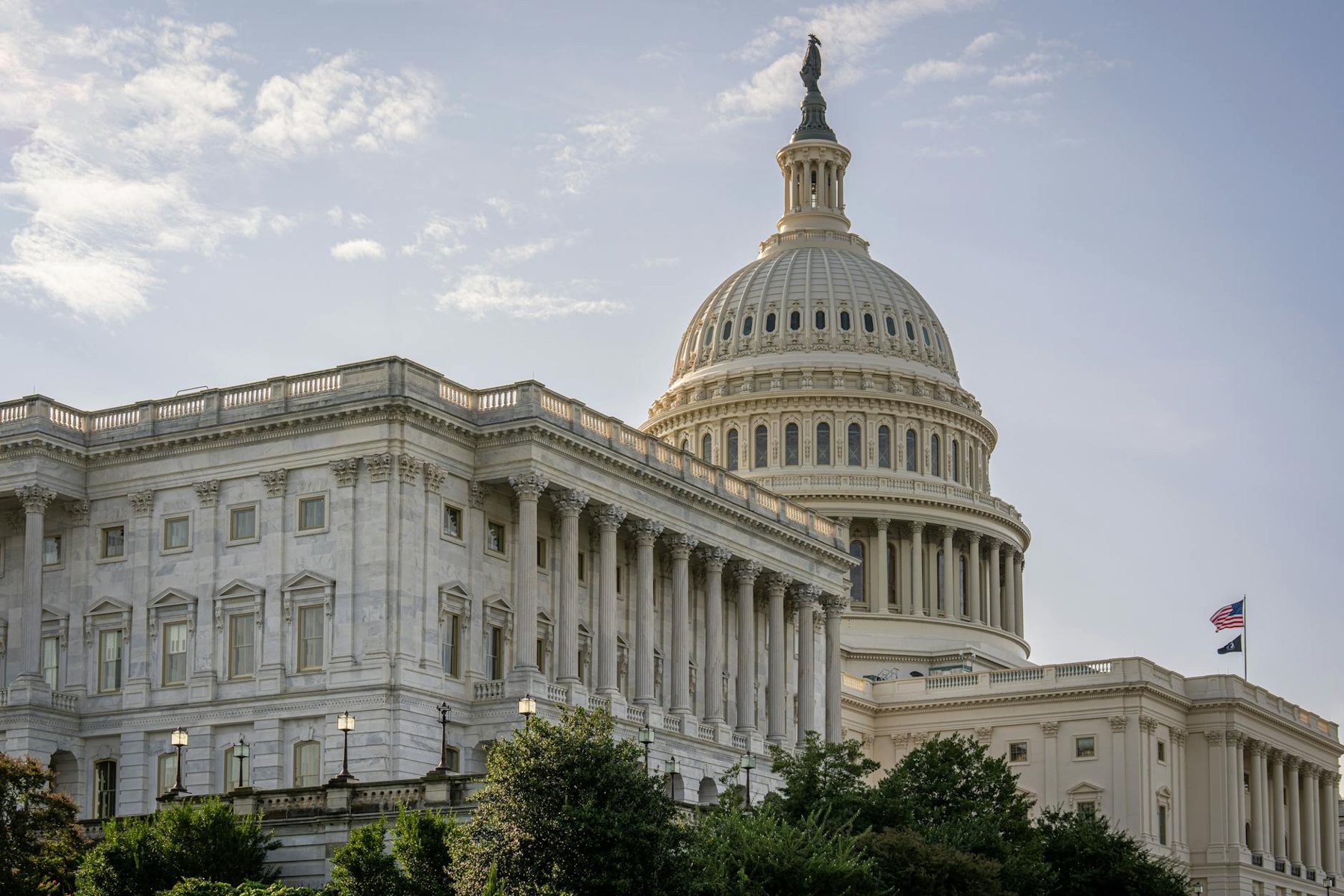
1) Why assassination attempts become a democratic stress test
Assassination attempts against prominent political figures reverberate far beyond physical security. They destabilize governance by injecting fear into ordinary politics and by forcing institutions to respond under intense scrutiny. The immediate question is safety, but the longer question is legitimacy.
The public rarely evaluates such events in a vacuum. People interpret them through partisan identity, preexisting distrust, and the stories they already believe about “who started it” and “who benefits.” That interpretive battle can outlast the incident itself.
In polarized environments, even basic facts become contested. This matters because uncertainty expands room for conspiracy, and conspiracy is a powerful accelerant for mobilization. The more ambiguous an event feels, the easier it is to weaponize emotionally.
Democracies also face a strategic dilemma: tightening security can protect leaders, but it can also widen symbolic distance between leaders and citizens. If the public reads security measures as elitism or fear, trust can erode at the moment it is most needed.
A professional approach begins by separating moral clarity from analytical clarity. Condemning political violence is non-negotiable, but understanding its enabling conditions is equally essential. Prevention depends less on outrage and more on sober institutional learning.
1.1 Polarization, identity, and “permission structures”
Most individuals do not escalate to violence simply because they hold strong views. Escalation becomes more likely when identity fuses with politics—when losing an election feels like losing status, safety, or recognition. That fusion turns compromise into humiliation.
In such climates, “permission structures” emerge: cues that imply extraordinary measures are justified. These cues can come from public figures, influencers, or peer groups. Often, they are not explicit calls to violence but repeated insinuations that normal politics is illegitimate.
Social psychology helps explain why this is dangerous. When out-groups are depicted as existential threats, moral restraints weaken and aggression becomes easier to rationalize. The mechanism is not ideology alone; it is the perceived collapse of shared citizenship.
Importantly, permission structures do not require centralized coordination. They can form through decentralized repetition across channels, with each participant adding intensity. Over time, what once sounded fringe can begin to feel like a mainstream interpretation.
For risk reduction, the goal is not enforced uniformity of opinion. It is preserving a baseline norm: opponents are rivals, not enemies, and elections are contests, not coups. That norm can be defended while still permitting hard criticism and vigorous debate.
1.2 The attention economy and threat amplification
Modern media ecosystems reward intensity. Outrage travels faster than nuance, and the most extreme interpretations often gain the most visibility. This can convert isolated threats into perceived movements, and perceived movements into copycat incentives.
Assassination attempts are particularly susceptible to amplification because they combine suspense, symbolism, and high stakes. Continuous coverage can inadvertently provide a template: it tells unstable individuals that a single act can dominate national attention.
Professional journalism typically works to avoid glorifying perpetrators, yet the incentive structure of digital distribution can still elevate sensational fragments. A small number of viral clips can outperform careful reporting, shaping public understanding in minutes.
Platform design matters here. Recommendation systems can push users toward increasingly extreme content, especially when the user engages with grievance narratives. The result is an informational tunnel where violence appears more common, more justified, or more “inevitable” than it is.
Reducing amplification does not mean hiding news. It means disciplined editorial choices, friction for virality, and consistent context: rarity, consequences, and moral clarity. Public safety and press freedom can coexist when attention is handled responsibly.
1.3 Conspiracy narratives, mistrust, and “the fog of meaning”
After major incidents, the public rushes to interpret. When trust in institutions is low, official statements can be viewed as propaganda, and gaps in early information can become proof of wrongdoing. This is the “fog of meaning,” distinct from the fog of war.
Conspiratorial explanations thrive because they offer psychological closure. They turn randomness into design and uncertainty into certainty. For many people, that certainty feels safer than waiting for an investigation to conclude.
But conspiracy narratives do more than misinform; they can mobilize. If citizens are persuaded that violence is staged, or that legal accountability is impossible, then extralegal action can begin to feel like civic duty rather than criminality.
Institutions often respond with more assertions and fewer explanations. That can backfire. A better approach is transparent process: what is known, what is not, what steps are underway, and when updates will occur—paired with visible independence.
Over time, trust is rebuilt less by perfect messaging and more by consistent performance: lawful investigations, credible oversight, and accountable corrections. In political violence contexts, credibility is a security asset, not a public-relations luxury.
1.4 Security posture vs. open politics
Protecting political leaders is not simply about bodyguards and barricades. It is also about preserving the rituals of democracy—rallies, town halls, and proximity to voters—without normalizing a fortress model of governance.
As threats rise, security teams logically expand perimeters and limit spontaneity. Yet those visible measures can change the public’s sense of access and equality. If leaders appear unreachable, the perception of responsive government can weaken.
There is also a fairness issue. Not all candidates receive the same level of protection, and uneven security can be interpreted as bias. Even if decisions are risk-based, they should be communicated through clear, professional criteria where possible.
The best security posture is layered and mostly invisible: intelligence-led threat detection, venue screening, and rapid response—combined with careful event design. The goal is to reduce risk without turning public events into military spectacles.
Ultimately, security is part of democratic continuity planning. The question is not whether to secure politics, but how to do so in ways that signal confidence rather than fear. Visible calm can be as stabilizing as physical protection.
2) What drives political violence—and what does not
Political violence is often discussed as if it has a single cause: ideology, mental illness, online radicalization, or economic stress. In practice, it is typically multi-causal, involving personal instability, social reinforcement, and triggering events that narrow perceived options.
A useful analytic distinction is between “grievance” and “capability.” Many people experience grievance, but far fewer acquire the means, planning, and opportunity to act violently. Prevention is frequently about disrupting the pathway from grievance to action.
Another key distinction is between “expressive” and “instrumental” violence. Some acts aim to send a message or achieve notoriety; others aim to change policy outcomes. Both can exist in political contexts, but their prevention profiles differ.
Risk assessment benefits from focusing on behaviors rather than labels. Fixation, leakage (communicating intent), weapon acquisition, surveillance, and rehearsal are stronger indicators than broad political identity. Institutions tend to err when they profile instead of evaluate conduct.
Finally, political violence is contagious in the way attention is contagious. When society treats violent episodes as political theater, it can unintentionally increase the payoff of violence. Lowering that payoff—socially and operationally—is a central prevention lever.
2.1 The pathway model: from grievance to action
Many threat professionals use pathway models: a person develops a grievance, adopts an ideology or narrative that interprets it, then moves toward planning and preparation. The path is not linear, but it is often observable in retrospect—and sometimes in time to intervene.
Leakage is especially important. Individuals contemplating violence frequently signal distress or intent to peers, online communities, or family members. Encouraging reporting channels that are safe, credible, and non-punitive can surface concerns earlier.
Trigger events can accelerate movement along the pathway. These can be political events, personal setbacks, or perceived humiliations. When an individual sees a narrow window for action, their planning compresses, making time-sensitive detection crucial.
Interventions do not always require criminal prosecution. Sometimes they involve mental health support, removal of access to weapons in acute crises where lawful, or structured monitoring. The most effective systems coordinate across legal, clinical, and community resources.
For public conversation, the takeaway is not to diagnose strangers. It is to understand that violence is often preceded by patterns and opportunities for disruption. Prevention is possible when systems are designed to notice behavior, not just rhetoric.
2.2 Rhetoric, humor, and the normalization of harm
Rhetoric influences risk primarily when it changes what audiences perceive as acceptable. Dehumanizing language, insinuations of treason, and fantasies of retribution can slowly reframe violence as understandable—even if speakers maintain plausible deniability.
Humor can play a role because it lowers defenses. When violent imagery is repeated as jokes or memes, it becomes familiar, and familiarity can reduce moral shock. This does not mean humor causes violence, but it can contribute to normalization.
Public figures have asymmetric impact. A single statement from a leader can be amplified, reinterpreted, and used as justification by individuals seeking validation. The ethical standard for leaders should therefore be higher than for private citizens.
At the same time, analysis should avoid simplistic “words equal violence” claims. Most people exposed to heated rhetoric do not act violently. The risk concentrates among those already on a pathway, where rhetoric becomes a reinforcing cue rather than the origin.
Professional restraint is not self-censorship; it is stewardship. Democracies can tolerate harsh criticism and satire while also drawing a bright line against language that frames political opponents as subhuman or legitimately killable.
- 01
- 02
- 03
- 04
2.3 Online ecosystems and the “micro-recruitment” effect
Online radicalization is often imagined as a single pipeline. More often it is “micro-recruitment”: repeated exposure to small claims that push users toward distrust, then contempt, then fantasies of cleansing or retaliation. Each step feels incremental to the user.
Communities that celebrate transgression can also reward violent talk as a marker of authenticity. Even when participants claim it is “just posting,” those spaces can socialize individuals into seeing violent intent as admirable and socially rewarded.
Platform enforcement is difficult because context matters. Yet certain patterns—credible threats, doxxing, target lists, and explicit incitement—are identifiable and should be addressed quickly. Timely moderation can reduce the sense that intimidation is tolerated.
Algorithmic distribution adds complexity. Users can be pulled deeper into extreme content without actively searching for it. Introducing friction, diversifying recommendations, and limiting the reach of high-risk content can reduce the speed of escalation.
Media literacy is a long-term defense. Citizens who recognize manipulation tactics—selective clips, false dilemmas, fabricated “leaks”—are less likely to be recruited into grievance spirals. A healthier information environment is a security intervention.
2.4 Mental health, firearms access, and the limits of single-factor explanations
Public discussions often default to mental health after assassination attempts. Mental distress can be a factor, but most people with mental illness are not violent, and focusing exclusively on diagnosis can stigmatize while missing key behavioral indicators.
Access to lethal means, however, is consistently relevant to outcomes. Where firearms are readily available, the lethality of impulsive actions rises. This does not resolve political conflict, but it changes the probability that conflict turns fatal.
Responsible policy conversation separates capability controls from viewpoint controls. Measures such as secure storage, temporary removal in acute risk contexts where due process exists, and improved background-check systems can reduce harm without policing ideology.
Threat management also benefits from better “off-ramps.” Individuals in crisis often encounter systems that are fragmented, expensive, or adversarial. Easier access to crisis care and community intervention can reduce the pool of people moving toward violence.
The crucial point is humility: no single reform can “solve” political violence. Effective prevention is layered—health, law enforcement, platforms, civil society—and it works best when it is nonpartisan, predictable, and rights-respecting.
3) What responsible actors can do now: guardrails, norms, and practical steps
When political violence enters the national imagination, the temptation is to seek grand fixes or sweeping blame. But durable improvement often comes from small, repeatable practices: disciplined rhetoric, credible investigations, better threat reporting, and resilient civic norms.
Responsibility is distributed. Politicians shape incentives; media shapes attention; platforms shape reach; institutions shape trust; and citizens shape demand. The healthiest environments are those where each actor accepts a share of the burden rather than outsourcing it.
De-escalation does not require political agreement on policy. It requires agreement on process and legitimacy: elections are binding, courts are authoritative within their remit, and violence is disqualifying. Those principles can coexist with intense disagreement.
Any agenda must also protect civil liberties. Overbroad surveillance, viewpoint-based policing, or vague “extremism” definitions can backfire by validating persecution narratives. The goal is targeted prevention based on behavior and credible threats.
In practice, the best strategy is a resilient-democracy approach: reduce the rewards of violent spectacle, increase the certainty of lawful consequences, and rebuild trust through transparent competence. This is slow work, but it is the only sustainable kind.
3.1 For political leaders: disciplined language and fast condemnation
Leaders should treat condemnation of political violence as immediate and unconditional, without hedging or insinuating justification. Delayed condemnation or “but what about” framing signals that violence can be weighed against partisan advantage.
Discipline also means avoiding dehumanizing labels and avoiding rhetoric that suggests opponents are inherently illegitimate participants in the polity. Leaders can argue that policies are dangerous without suggesting that fellow citizens are enemies of the state.
When incidents occur, leaders can reduce conspiracy spread by urging patience for verified facts and by publicly supporting independent investigations. This is especially important when their own supporters may be primed to distrust official accounts.
Campaigns should adopt internal standards for surrogate messaging and event conduct. If supporters engage in threats or intimidation, campaigns should distance quickly and clearly. Ambiguity invites escalation by those seeking signals of acceptance.
Finally, leaders can model civic pluralism: acknowledging lawful outcomes, conceding procedural defeats, and reducing personal vilification. These gestures may seem symbolic, but symbols are powerful in environments where identity drives perceived legitimacy.
3.2 For media: avoid spectacle, protect facts, and reduce copycat incentives
Media organizations can reduce risk by limiting gratuitous repetition of violent imagery, minimizing perpetrator glorification, and emphasizing consequences for victims and society. This aligns with established best practices for reporting on mass violence.
Speed should not outrun verification. Early errors are not just reputational problems; they become raw material for conspiracies. When corrections are necessary, they should be prominent and specific to prevent misinformation from fossilizing.
Context matters: how rare incidents are, how investigations work, and what is known about threats in general. Context helps audiences avoid catastrophizing and helps prevent the assumption that violence is a normal political tool.
Opinion content carries special responsibility because it can shape interpretive frames. Writers can be forceful without romanticizing retaliation or portraying violence as historically necessary. There is a difference between moral urgency and moral permission.
Local journalism and beat expertise also help. Specialized reporting on courts, security, and political institutions reduces reliance on rumor. When citizens can see how systems function, conspiracies lose some of their persuasive power.
3.3 For institutions and platforms: transparent enforcement and credible oversight
Institutions responsible for protection and investigation should communicate process as much as conclusions. Timelines, jurisdiction, evidence handling, and oversight mechanisms can be explained without compromising operational security. Transparency reduces the vacuum where rumors grow.
Threat-reporting systems should be easy to use and should protect reporters from retaliation. Clear triage protocols help ensure that credible threats receive attention without overwhelming responders. This is a capacity issue, not just a policy issue.
Platforms should enforce rules consistently against credible threats, targeted harassment, and doxxing. Inconsistent enforcement breeds claims of favoritism, which can inflame grievances. Consistency does not eliminate controversy, but it improves legitimacy.
Independent audits and appeals processes can strengthen trust in moderation decisions. When users can see that enforcement is rules-based and reviewable, compliance increases. Governance structures should be designed for accountability, not public relations.
Cross-sector coordination is also vital. Law enforcement, mental health services, schools, and community groups need lawful, privacy-respecting ways to share high-risk indicators. The aim is early intervention, not broad surveillance of dissent.
3.4 For citizens: civic hygiene, reporting channels, and community resilience
Citizens reduce risk when they refuse to spread unverified claims, especially in the first hours after an incident. “Wait for facts” is not passive; it is protective. Misinformation can create secondary harms, including harassment and retaliatory threats.
Community members should take credible threats seriously. If someone expresses intent, displays fixation, or discusses acquiring means, reporting can be lifesaving. Many tragedies are preceded by signals that others noticed but dismissed as venting.
Civic hygiene also includes refusing to reward violent talk with attention. Sharing clips “to criticize them” can still amplify. The safest approach is to avoid circulating incendiary content and to link to reputable summaries when discussion is necessary.
In everyday conversation, people can lower temperature by separating policy disagreement from moral annihilation. You can argue forcefully while still recognizing the other side’s voters as fellow citizens. That recognition reduces social permission for harm.
Resilience is built locally: schools teaching media literacy, religious and civic groups hosting cross-partisan dialogue, and workplaces maintaining respectful norms. These may seem small, but they rebuild the social fabric that violence tries to tear.
- 01
- 02
- 03
- 04
- 05
- 06
- 07
- 08
0 Comments