On This Page
The Resurgence of the Count: Breaking a Century of Silence
The 2026 Census represents a significant departure from previous decades of data collection strategies. By including caste metrics, the Indian government seeks to address long-standing grievances regarding the distribution of social and economic welfare benefits.
For over a century, the Indian state maintained a policy of caste-blindness in its decadal counts. This was intended to foster a unified national identity that transcended traditional social divisions inherited from the past.
However, the reality on the ground suggested that social identity remained a primary determinant of success. The 2026 exercise acknowledges this by providing the first comprehensive data set on caste since the colonial era ended.
Sociologists view this move as a necessary evolution of the administrative state. It transitions from theoretical equality to a more practical, data-informed approach that recognizes the specific needs of various marginalized and underserved communities.
As millions of enumerators fan out across the country, the atmosphere is one of cautious anticipation. Every household record becomes a building block for a new national narrative centered on transparency and social equity.
Historical Context of the Decadal Census
To understand the gravity of the 2026 Census, one must look back at the colonial precedents. The British used the census to categorize and control the Indian population through rigid and often arbitrary classifications.
Post-independence leaders, including Nehru, feared that continuing caste counts would solidify divisions. They hoped that industrialization and education would eventually render these ancient social hierarchies irrelevant in a modern, democratic, and secular republic.
Despite these hopes, the political landscape became increasingly defined by caste-based mobilization. The lack of accurate data led to frequent legal challenges regarding the fairness and efficacy of various state-sponsored affirmative action programs.
The 2026 Census finally addresses this data vacuum, ending a hundred-year hiatus of silence. It represents a bold attempt to look the complexity of Indian society directly in the eye without any administrative filters.
This historical pivot is not just about numbers; it is about acknowledging the lived experiences of millions. It marks the end of an era where policy was guided by outdated and often inaccurate colonial-era statistics.
The Shift from Identity-Blind to Data-Driven
The transition toward data-driven governance is a global trend, but in India, it takes a unique form. The state is now using quantification to solve problems that were previously addressed through broad, ideological strokes.
Identity-blind policies often failed to reach the most vulnerable sub-castes within larger groups. Without granular data, the benefits of reservation and welfare were frequently monopolized by the more influential and politically organized social segments.
By counting every sub-caste, the 2026 Census aims to identify these "invisible" disparities. This allows for a more surgical application of welfare, ensuring that resources are directed toward those who need them the most.
This shift reflects a broader sociological pivot where the "sociology of quantification" becomes a tool for justice. Numbers are no longer just cold statistics; they are instruments for demanding accountability from the governing elite.
The conversational tone of the current policy discourse emphasizes "knowing the citizen." This personalized approach to governance is made possible by the massive digital infrastructure built over the last decade of technological growth.
Logistical Magnitude of the 2026 Exercise
Conducting a census in the world's most populous nation is a logistical feat of unparalleled proportions. It involves training millions of government employees to act as enumerators in diverse and often difficult terrains.
The 2026 Census utilizes advanced digital tools to ensure real-time data entry and validation. This reduces the margin of error and speeds up the process of analyzing complex social and economic variables across regions.
From the high-altitude villages of the Himalayas to the dense urban slums of Mumbai, every individual must be accounted for. The scale of this operation demonstrates the state's capacity to reach its furthest citizens.
Security and privacy are paramount concerns during this exercise, given the sensitive nature of caste data. The government has implemented rigorous protocols to protect the information and prevent misuse during the collection phase.
The sheer volume of data generated will require years of processing by expert analysts. However, the initial findings are expected to provide immediate insights into the shifting demographic patterns and social needs of India.
Societal Reactions and Community Mobilization
The announcement of the caste count has triggered a massive wave of community self-organization. Various social groups are holding meetings and awareness campaigns to ensure their members are accurately recorded during the census.
There is a palpable sense of urgency among communities that feel they have been underrepresented in the past. They see the 2026 Census as a once-in-a-generation opportunity to claim their rightful share of resources.
Conversely, some sections of society express concern that the count will further polarize the nation. They worry that highlighting differences will lead to increased social tension and hinder the process of national integration.
Despite these concerns, the general mood is one of engagement rather than withdrawal. Citizens are increasingly aware that being "counted" is the first step toward being "heard" in the halls of political power.
This mobilization is reshaping the grassroots political landscape, as local leaders become intermediaries between the state and the people. The census has effectively turned sociology into a participatory exercise for the entire nation.
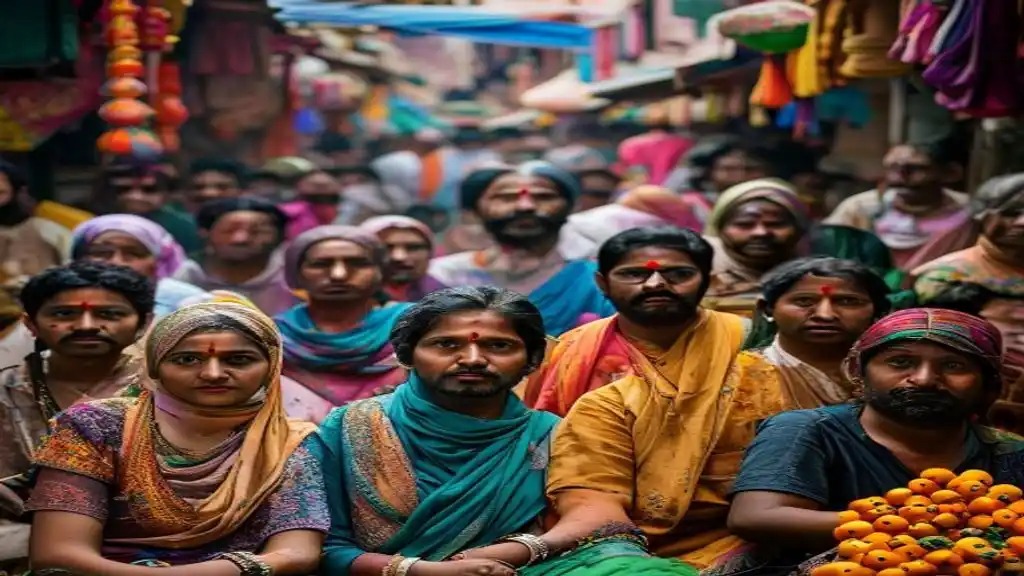
A professional, high-quality photograph of a diverse group of Indian citizens in a vibrant marketplace, with a subtle digital overlay of data charts and demographic icons representing the 2026 Census.
The Sociology of Quantification and Political Mobilization
The "sociology of quantification" refers to how numbers shape our understanding of social reality. In 2026, India is witnessing how the act of counting can redefine the very categories it seeks to measure.
When the state asks for a caste identity, it reinforces that identity in the mind of the citizen. This process can lead to the "solidification" of categories that were previously fluid or secondary in nature.
Political mobilization is now being driven by these hard numbers rather than just emotional appeals. Data becomes the new language of political negotiation, allowing groups to present empirical evidence for their demands and grievances.
This shift is particularly evident in the way political parties are restructuring their outreach strategies. They are moving away from broad "vote banks" to more specific, data-backed targeting of niche sub-caste groups and communities.
The census data will likely act as a catalyst for a new type of electoral engineering. Politicians will use the demographic insights to craft policies that appeal to specific socioeconomic clusters identified by the count.
Redefining Backwardness through Real-Time Data
The concept of "backwardness" in India has long been a subject of intense legal and social debate. The 2026 Census provides the empirical evidence needed to settle these arguments with objective and verifiable data.
By mapping caste against indicators like income, housing, and education, the state can identify which groups are truly lagging. This multidimensional approach moves beyond the simplistic "caste-only" definitions of the past decades.
The data might reveal that some groups currently classified as "backward" have made significant progress. Conversely, it may highlight others that have remained stagnant despite decades of state intervention and support programs.
This redefinition is crucial for maintaining the legitimacy of affirmative action programs. It ensures that the "creamy layer" does not corner all the benefits, leaving the most marginalized members of society behind.
Ultimately, the goal is to create a more dynamic and responsive system of social justice. One that can adapt to the changing realities of a rapidly developing and urbanizing Indian economy and society.
Challenges to Social Cohesion and National Unity
While the census promises equity, it also poses risks to the delicate social fabric of the nation. The emphasis on caste identity could inadvertently lead to a resurgence of sectarianism and social fragmentation.
Critics argue that by institutionalizing caste in the census, the state is undoing years of progress toward a post-caste society. They fear that this will lead to a "siloed" nation where identity precedes citizenship.
There is also the risk of data manipulation or misreporting by individuals seeking to qualify for benefits. Ensuring the integrity of the data is a major challenge for the administrative machinery of the state.
The tension between individual privacy and the state's need for data is another point of contention. Citizens may be hesitant to share sensitive information that could be used for political or social profiling.
Balancing these challenges requires a transparent and inclusive approach to data management. The government must demonstrate that the census is a tool for empowerment rather than a mechanism for surveillance or social control.
We Also Published
The Intersection of Caste and Economic Status
One of the most anticipated outcomes of the 2026 Census is the clarity it will provide on the intersection of caste and class. This relationship has been a central theme in Indian sociological research.
Preliminary observations suggest that while economic growth has reached many, its distribution remains heavily influenced by social background. The census will quantify exactly how much "caste capital" still matters in the modern economy.
The data will show whether certain castes are concentrated in specific sectors, such as the informal economy or high-tech services. This insight is vital for crafting targeted vocational training and employment generation programs.
Understanding this intersection also helps in addressing the "wealth gap" between different social groups. It allows for the design of policies that promote entrepreneurship and asset ownership among historically disadvantaged and marginalized communities.
Let ##W_c## represent the average wealth of a caste group and ##N_c## its population. The census aims to minimize the variance in the welfare index ##V## across all groups:
This mathematical approach to equity highlights the state's commitment to using science and data to achieve social harmony and economic balance across the diverse and complex population of India.
- 01
- 02
- 03
- 04
Urban vs. Rural Dynamics in Enumeration
The 2026 Census is the first to fully capture the impact of mass urbanization on social identity. In cities, caste often manifests differently than in rural areas, where traditional hierarchies are more visible.
Migration to urban centers can sometimes dilute caste ties as people adopt more cosmopolitan lifestyles. However, the census may reveal that caste persists in urban housing patterns and social networks in subtle ways.
The data will help urban planners understand the specific needs of different communities in megacities. It can inform decisions on everything from the location of schools to the provision of basic municipal services.
In rural areas, the census will document how changing agrarian relations are affecting social structures. The decline of traditional occupations and the rise of rural non-farm employment are shifting the power dynamics between castes.
Comparing urban and rural data sets will provide a comprehensive picture of India's social transformation. It will show whether the "urban promise" of a casteless society is becoming a reality or remains an elusive goal.
Future Implications for the Indian Social Fabric
The results of the 2026 Census will reverberate through Indian society for the next decade. They will provide the empirical foundation for a new social contract between the citizen and the state.
We can expect a period of intense debate as the data is released and analyzed. Different groups will use the findings to bolster their claims for a greater share of the national pie.
The census will also influence the academic discourse in India and abroad. It will provide a treasure trove of data for researchers studying social stratification, economic development, and the functioning of democracy.
Long-term, the census could lead to a more nuanced understanding of Indian identity. It may show that people are not just members of a caste, but individuals with complex, overlapping identities and aspirations.
The ultimate success of the 2026 Census will be measured by its ability to foster a more inclusive and just society. It is a bold experiment in using the power of numbers to achieve human dignity.
The Imminent Rights Revolution and Legal Battles
As the data reveals the true extent of social disparities, a "Rights Revolution" is likely to follow. Marginalized groups will use the census figures to demand legal changes to existing reservation policies.
The current 50% cap on reservations, established by the Supreme Court, will almost certainly be challenged. Groups will argue that the cap is arbitrary and does not reflect the actual demographic reality of the country.
These legal battles will force the judiciary to grapple with complex questions of equity and merit. The courts will have to decide how to balance the rights of different groups in a changing social landscape.
The census data will be the primary evidence in these cases, making its accuracy and reliability more important than ever. Any perceived bias in the data collection could lead to prolonged legal disputes.
This period of litigation will likely result in a more refined legal framework for social justice. It will move the conversation from abstract principles to concrete, data-backed arguments about rights and representation.
Reforming Affirmative Action and Reservations
The 2026 Census provides a unique opportunity to reform and modernize India's affirmative action system. The data will allow for the identification of "extremely backward" sub-castes that have been overlooked.
Policy analysts suggest that reservations could become more targeted, focusing on those who face multiple forms of disadvantage. This "intersectional" approach would consider caste alongside factors like gender, geography, and economic status.
There may also be a push for "sub-categorization" within existing reservation quotas. This would ensure that the benefits are distributed more equitably among the various groups that make up a larger category.
The census data will also help in identifying groups that no longer require reservation support. This "graduation" process is essential for keeping the system fair and ensuring that benefits are not permanent entitlements.
Reforming such a sensitive system requires political courage and social consensus. The 2026 Census provides the necessary evidence to build this consensus and move toward a more effective and just reservation policy.
Impact on Electoral Engineering and Politics
The political implications of the 2026 Census are profound and far-reaching. Every political party will be poring over the data to refine their electoral strategies and appeal to specific voter segments.
We may see the rise of new political movements based on the demographic insights provided by the count. Small but numerically significant sub-castes may find a new voice and influence in the political arena.
Electoral engineering will become increasingly sophisticated, with parties using micro-targeting to reach specific social and economic clusters. This could lead to a more fragmented but also more representative political landscape.
The census data will also influence the delimitation process, which involves redrawing the boundaries of electoral constituencies. Accurate population data is essential for ensuring that every vote has equal weight in a democracy.
Ultimately, the census will force political parties to be more accountable to the diverse needs of the population. They can no longer rely on broad generalizations and must address the specific concerns of every community.
Long-term Sociological Consequences for Modern India
In the long run, the 2026 Census may lead to a fundamental restructuring of Indian sociology. It will provide a more detailed and accurate map of how social identity interacts with modernity.
The "quantification of identity" may paradoxically lead to its dilution over time. As people see their identities as data points in a larger system, they may begin to view them more objectively.
The census will also highlight the commonalities between different groups, showing that many share the same economic and social challenges. this could pave the way for new forms of cross-caste solidarity and cooperation.
As India continues to grow and urbanize, the insights from the 2026 Census will guide its path toward a more equitable future. It is a testament to the nation's commitment to self-improvement and justice.
The 2026 Census is not just a count of people; it is a count of aspirations. It is a reflection of a nation that is brave enough to face its complexities and build a better future for all.
RESOURCES
- History's biggest census: Why India's new population count is ...aljazeera.comApr 1, 2026 ... The population count, which was delayed by five years, will include caste enumeration for the first time in a century.
- 2027 census of India - Wikipediaen.wikipedia.org... India, and was subsequently rescheduled for 2026–27. This 16th census includes caste enumeration for the first time since 1931. In certain Himalayan and ...
- Census 2027: India's First Digital Enumeration Exercise - PIBstatic.pib.gov.inApr 25, 2026 ... and Housing Census phase in January 2026. Page 4. The ... Caste enumeration has emerged as a major feature of…
- Enumeration Without Exit: Caste Census, Occupational Limitations ...papers.ssrn.comApr 20, 2026 ... Ayousha Tiwari. University of Birmingham. Date Written: March 08, 2026. Abstract. India's April 2025 decision to enumerate caste in its…
- Caste census: The case for and against counting castes in India - BBCbbc.comNov 12, 2025 ... They held six caste censuses between 1871 and 1931 - the last full caste enumeration in India. ... Copyright 2026…
- More than just a headcount: Why the 2026 census is India's new ...developmentaid.orgApr 28, 2026 ... Learn how the first caste enumeration since 1931 aims to make invisible populations visible. Understand why millions of urban migrants…
- The Indian Census: Data, Democracy & Power India has ... - Instagraminstagram.comApr 17, 2026 ... India Census 2026 informational Instagram carousel ... INDIA'S FIRST DIGITAL CENSUS 16 MAY 2026 | INDIAN EXPRESS Caste enumeration ...
- Self-Enumeration (SE) - Census 2027se.census.gov.in... Caste/ Scheduled Tribe list provided by Census of India? Only those castes or tribes officially notified by Government of India for your State/UT…
- Press Conference Regarding 1st Phase of Census 2027 ... - Facebookfacebook.comMar 25, 2026 ... India Census 2026: Digital Houselisting from April 1, Caste Data & Self-Enumeration Included India's 16th Census will kick off with…
- India to begin next Census in April 2026: Caste data to be included ...timesofindia.indiatimes.comJun 4, 2025 ... NEW DELHI: The government on Wednesday announced that the next nationwide population census to start from April 1, 2026 and…
- Census 2027: self enumeration from 1st May 2026 to 15th May 2026facebook.comApr 30, 2026 ... India Census 2026: Digital Houselisting from April 1, Caste Data & Self-Enumeration Included India's 16th Census will kick off with…
- Home | Government of India - Census of Indiacensusindia.gov.in... 2026) (iii) ORGI Gazette Notification:Census 2027 (iv) Filling Post of ... Watch on YouTube Mascot Release, Press briefings and self-enumeration guides ...
- Cabinet approves Caste enumeration in the upcoming Censuspmindia.gov.inApr 30, 2025 ... Chief Minister of Tamil Nadu meets PM 27 May, 2026. PM urges citizens to take precautions amid soaring temperatures across…
- Some Christians Risk Persecution if They're Honest in India's Censuschristianitytoday.comApr 20, 2026 ... For the first time since India's independence in 1947, the census will record caste along with religion. ... 2026 census…
- 01
- 02
- 03
- 04
- 05
- 06
- 07
- 08
0 Comments