On This Page
The Vascular Blueprint: Why Erection Health Reflects Cardiac Integrity
The human circulatory system operates as a unified network of vessels, where the heart serves as the central pump. Any disruption in this system eventually manifests in the periphery, affecting various physiological functions across the body.
Erectile function is fundamentally a hydraulic process dependent on the rapid influx and retention of blood. When the vascular lining becomes compromised, the ability to maintain this pressure diminishes, signaling deeper issues within the arteries.
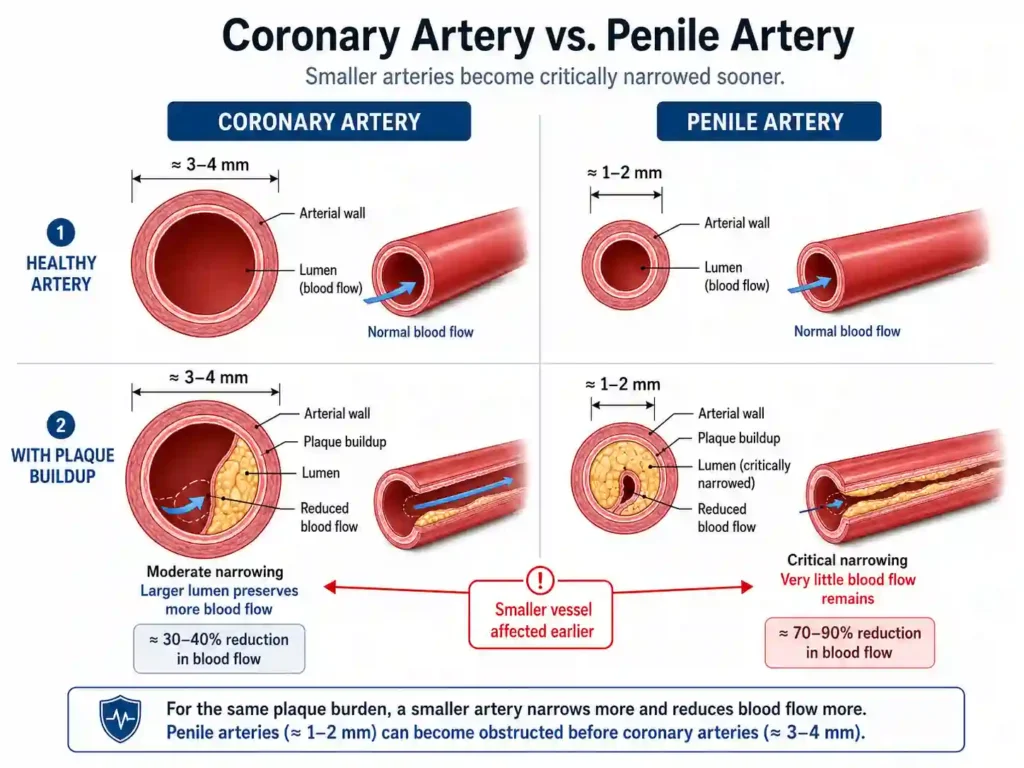
Medical professionals increasingly view erectile quality as a "check engine light" for the male body. Because the penile arteries are significantly smaller than coronary arteries, they often clog or stiffen long before a heart attack occurs.
Ignoring these early signs can lead to missed opportunities for preventative care. By recognizing the connection between the heart and sexual performance, men can take charge of their health before serious complications arise.
This section explores the physiological mechanisms that link these two seemingly disparate areas. We will examine how blood vessel diameter and endothelial health play a decisive role in maintaining both life and vitality.
The Canary in the Coal Mine
The term "canary in the coal mine" perfectly describes how erectile dysfunction precedes more severe cardiovascular events. Since the penile arteries are only 1-2 mm in diameter, they are highly sensitive to initial plaque.
In contrast, the major coronary arteries feeding the heart are approximately 3-4 mm wide. This size difference means that atherosclerotic buildup will restrict blood flow to the penis years before it restricts flow to the heart.
Research suggests that men experiencing vascular-related erection problems may face a higher risk of cardiac events within five years. This window provides a critical opportunity for lifestyle interventions that can reverse or slow the damage.
Clinicians now use these symptoms to screen for silent heart disease. When a patient presents with new-onset difficulties, a thorough cardiovascular workup is often the first and most important step in the diagnostic process.
By reframing the issue as a vascular warning, we remove the stigma of personal failure. This perspective encourages men to seek medical advice for their long-term survival rather than just for immediate performance concerns.
Understanding Endothelial Function
The endothelium is a thin layer of cells lining every blood vessel in the body. It plays a crucial role in regulating blood pressure by releasing nitric oxide, a molecule that signals muscles to relax.
When the endothelium is healthy, blood vessels can dilate easily to accommodate increased flow. However, chronic inflammation, high cholesterol, and smoking damage this delicate lining, leading to what doctors call "endothelial dysfunction."
Endothelial dysfunction is the common denominator between heart disease and erectile problems. If the endothelium cannot produce enough nitric oxide, the vessels remain constricted, preventing the necessary blood volume from reaching the target tissues.
This systemic failure affects the entire body, but the impact is most noticeable where high-pressure blood flow is required instantly. The penis serves as a visible indicator of how well the endothelium is functioning.
Improving endothelial health is the cornerstone of both cardiac and sexual wellness. Strategies that boost nitric oxide production, such as specific diets and exercise, have a profound effect on the elasticity of the entire vascular tree.
The Diameter Dilemma: Small Vessels First
The physics of blood flow is governed by the radius of the vessel. According to Poiseuille's Law, the flow rate is proportional to the fourth power of the radius, making small changes highly impactful.
In this expression, ##r## represents the radius of the vessel. Even a microscopic decrease in the radius due to plaque significantly reduces the total volume of blood ##Q## that can pass through.
Because the penile arteries are so narrow, they reach a critical point of restriction much faster than larger vessels. A 50% blockage in a small vessel is catastrophic for function, whereas it might be asymptomatic elsewhere.
This "diameter dilemma" explains why sexual symptoms often appear 36 to 48 months before a major cardiac event. It is a mathematical certainty that small pipes will clog before large pipes under the same conditions.
Understanding this relationship allows for early detection and targeted therapy. It shifts the focus from "fixing a symptom" to "improving the diameter and health" of the entire arterial system through systemic health measures.
Reframing ED as a Health Metric
Reframing erectile dysfunction as a health metric changes the conversation from shame to science. It allows men to view their bodies objectively and respond to physiological data with rational, health-focused actions.
Instead of feeling inadequate, a man can recognize that his vascular system is requesting maintenance. This shift in mindset is essential for reducing the psychological stress that often exacerbates the physical symptoms.
When viewed as a metric, every improvement in diet or exercise can be tracked through performance. This provides a tangible feedback loop that motivates men to stick with heart-healthy habits over the long term.
A health metric approach also facilitates better communication with healthcare providers. It moves the discussion toward blood pressure, lipid profiles, and glucose levels, which are the actual drivers of vascular health.
Ultimately, this proactive stance empowers men to protect their longevity. By listening to the early warnings of the body, they can ensure that both their heart and their sexual health remain robust for decades.
Lifestyle Interventions for Systemic Blood Flow
Lifestyle choices are the most powerful tools available for managing vascular health. While medication can provide temporary relief, systemic changes address the underlying causes of arterial stiffness and poor circulation across the body.
The goal of these interventions is to restore the natural elasticity of the blood vessels. This involves reducing inflammatory triggers while providing the body with the raw materials needed for cellular repair and maintenance.
Consistency is key when implementing these changes, as the vascular system requires time to heal. Most men notice significant improvements in both cardiac markers and sexual function within a few months of dedicated effort.
These habits do not just prevent disease; they actively enhance vitality and energy levels. By optimizing blood flow, every organ in the body receives better oxygenation and nutrient delivery, leading to improved overall wellness.
In this section, we will detail specific strategies for cardio, nutrition, stress management, and sleep. Each of these pillars supports the delicate balance required for a high-functioning cardiovascular and reproductive system.
Cardio Training and Nitric Oxide Production
Regular cardiovascular exercise is perhaps the most effective way to boost nitric oxide production. Physical activity creates "shear stress" on the vessel walls, which triggers the endothelium to release more dilating molecules.
Aerobic exercises like running, swimming, or cycling improve the heart's stroke volume. A stronger heart can pump more blood with less effort, reducing the chronic strain on the smaller peripheral arteries.
Interval training has been shown to be particularly effective for vascular health. By alternating between high and low intensities, the body learns to adapt quickly to changing circulatory demands, mirroring the requirements of arousal.
Resistance training also plays a role by improving insulin sensitivity. Lowering blood sugar levels prevents the "caramelization" of the blood vessels, a process known as glycation that makes arteries brittle and unresponsive.
Aim for at least 150 minutes of moderate-intensity exercise per week to see results. This investment in the gym translates directly to better blood flow in the bedroom and a much lower risk of heart disease.
Nutritional Foundations for Arterial Elasticity
Dietary choices serve as the building blocks for vascular integrity. A diet rich in nitrates, found in leafy greens and beets, provides the precursors the body needs to manufacture nitric oxide naturally.
Healthy fats, such as those found in olive oil and walnuts, help maintain the flexibility of cell membranes. These fats also assist in managing cholesterol levels, preventing the formation of new atherosclerotic plaques.
Reducing processed sugars is vital for protecting the endothelium. High glucose levels cause oxidative stress, which "rusts" the internal lining of the arteries and impairs their ability to dilate when needed.
We Also Published
Antioxidant-rich foods like berries and dark chocolate protect the nitric oxide molecules from being destroyed by free radicals. This ensures that the signals for vasodilation remain strong and effective throughout the day.
Hydration is often overlooked but is essential for blood viscosity. Drinking enough water ensures that the blood remains thin enough to flow easily through the smallest capillaries without requiring excessive pressure.
The Impact of Chronic Stress on Vasoconstriction
Stress is a major physiological enemy of blood flow. When the body is in a "fight or flight" state, it releases adrenaline and cortisol, which cause systemic vasoconstriction to redirect blood to muscles.
Chronic stress keeps the body in this constricted state indefinitely. Over time, this leads to high blood pressure and a persistent inability for the blood vessels to relax, even during moments of intimacy.
The psychological component of stress can also create a self-fulfilling prophecy. Anxiety about performance triggers more stress hormones, which further restricts blood flow, leading to a cycle that is difficult to break without intervention.
Practicing mindfulness, deep breathing, or meditation can help lower the baseline level of stress hormones. These techniques activate the parasympathetic nervous system, which is the "rest and digest" state necessary for arousal.
Managing stress is not just about mental health; it is a physical requirement for vascular dilation. By calming the mind, you are literally opening up your arteries and allowing for better systemic circulation.
Sleep Hygiene and Hormonal Regulation
Sleep is the time when the body undergoes intense vascular and hormonal repair. During deep sleep cycles, the body regulates testosterone production, which is essential for maintaining both libido and muscle mass.
Poor sleep hygiene leads to increased inflammation and higher levels of stress hormones. Men who consistently sleep less than six hours a night often show significantly lower levels of circulating nitric oxide.
Sleep apnea, a common condition among men, is particularly damaging to the heart and sexual health. The repeated drops in oxygen levels during the night cause massive spikes in blood pressure and arterial damage.
Establishing a regular sleep schedule and optimizing the bedroom environment can yield immediate benefits. Better sleep quality leads to improved morning testosterone peaks, which are a natural indicator of healthy hormonal and vascular function.
Treating sleep as a non-negotiable part of a health regimen is essential. It provides the foundation upon which diet and exercise can actually work, ensuring the body has the resources to recover and thrive.

A split-screen illustration: one side shows a stressed man in a dark office with constricted red vessels, and the other side shows a relaxed man in nature with wide, glowing blue vessels.
- 01
- 02
- 03
- 04
Proactive Strategies for Long-Term Vitality
Taking a proactive approach means moving beyond reactive treatments and focusing on long-term systemic health. It involves a combination of medical oversight, smart supplementation, and a deep understanding of the mind-body connection.
Long-term vitality is built on the cumulative effect of daily choices. By focusing on the "big picture" of cardiovascular health, men can ensure they are not just living longer, but living with higher quality.
Modern medicine offers numerous tools to help monitor and improve these metrics. From advanced blood panels to wearable technology, the ability to track vascular health has never been more accessible or accurate.
This final section provides a roadmap for sustaining these improvements over a lifetime. We will cover the importance of medical screenings, evidence-based support, and the psychological integration necessary for a fulfilling life.
Wellness is a journey, not a destination. By remaining vigilant and informed, men can navigate the challenges of aging while maintaining the vigor and health that define a high-functioning cardiovascular system.
Routine Screenings and Medical Consultations
Regular checkups are essential for catching vascular issues before they become symptomatic. Blood pressure, cholesterol levels, and blood sugar should be monitored at least once a year to establish a baseline.
Discussing erectile function with a doctor should be treated with the same clinical objectivity as discussing a sore throat. It provides the physician with vital data regarding the patient's overall cardiovascular risk profile.
Advanced tests, such as a Calcium Score or a carotid ultrasound, can provide a direct look at the state of the arteries. These screenings can reveal plaque buildup long before it causes a heart attack.
If a man is prescribed medication for blood pressure or cholesterol, it is important to follow the regimen closely. Controlling these factors is the most effective way to preserve the health of the penile vessels.
A collaborative relationship with a healthcare provider ensures that all aspects of health are being addressed. It moves the focus from "emergency care" to "preventative maintenance," which is the key to longevity.
Supplementation and Evidence-Based Support
While a healthy diet is the priority, certain supplements can support vascular health. L-arginine and L-citrulline are amino acids that the body uses to produce nitric oxide, potentially improving arterial dilation.
Omega-3 fatty acids, typically found in fish oil, are well-documented for their ability to reduce inflammation and improve lipid profiles. These are foundational for maintaining the elasticity of the vascular lining.
Vitamin D also plays a role in endothelial health. Many men are deficient in this vitamin, and correcting the deficiency has been linked to improved cardiovascular outcomes and better erectile function.
It is important to approach supplements with a critical eye and consult a professional. Not all products are created equal, and they should be used to complement, not replace, a healthy lifestyle and medical care.
Evidence-based support means relying on peer-reviewed research rather than marketing hype. Focus on supplements that have a proven track record of improving blood flow and reducing systemic inflammation for the best results.
Psychological Barriers and Mind-Body Sync
The brain is the most important sex organ, and its connection to the vascular system is profound. Psychological factors like performance anxiety or depression can override even the healthiest physical system.
When the mind perceives a threat or feels inadequate, it triggers a sympathetic nervous system response. This response shuts down blood flow to "non-essential" organs, making an erection physically impossible regardless of heart health.
Integrating mental health care into a physical wellness routine is crucial. Addressing underlying anxieties or relationship issues can remove the mental "block" that prevents the body from responding to its own signals.
Cognitive-behavioral techniques can help men reframe their thoughts around performance. By reducing the pressure to "perform" and focusing on "connection," the body is allowed to stay in a relaxed, parasympathetic state.
The mind-body sync is a two-way street. Physical health improves mental confidence, and mental clarity allows the physical systems to function without interference, creating a virtuous cycle of wellness and performance.
A Practical Checklist for Heart-Penis Health
To maintain both heart and sexual health, follow a practical daily and weekly checklist. Start with 30 minutes of movement every day, focusing on getting the heart rate into a moderate zone.
Fill your plate with colorful vegetables, lean proteins, and healthy fats while minimizing refined sugars and excessive alcohol. This provides the chemical environment necessary for a healthy, responsive vascular system.
Prioritize 7-9 hours of quality sleep and practice stress-reduction techniques like deep breathing or meditation for at least 10 minutes daily. These habits protect the endothelium from hormonal and oxidative damage.
Schedule annual medical screenings and be honest with your doctor about any changes in performance. Early detection of vascular stiffness can save your life and preserve your quality of life for the future.
Finally, view your body as an integrated system. What is good for the heart is invariably good for the "hard on," and taking care of one ensures the continued health and vitality of the other.
From our network :
- CISA’s Ten-Advisory Wave: Why Generic Patching Fails in OT and How to Build Product-Specific PlaybooksCISA released ten ICS advisories in one week, exposing critical infrastructure risks. Generic patching fails in OT. Learn to build product-specific remediation playbooks.
- Forbidden Matrix Patterns and Visible Lattice Points: A Geometric DictionaryExplore how multidimensional 0–1 matrices encode geometric truths, linking forbidden patterns to visible lattice points and hypergraph theory, with applications in combinatorics and computational geometry.
- How AI Agents Will Change the Way We Manage Personal FinancesExplore how AI agents are transforming personal finance through automated budgeting, bill payment, and investment management, while examining the critical security protocols and governance frameworks required for safe deployment.
- The Hidden Cost of AI Convenience: Why Over-Permissioned Agents Are a Security Time BombDiscover why AI agents with excessive permissions create dangerous single points of failure, and learn how implementing least privilege principles can protect your organization from exploitation.
- The Final Descent: How ESA Retired the Legendary Cluster Constellation After 24 Years of Space Weather ScienceAfter 24 years mapping Earth’s magnetosphere, ESA’s Cluster mission concluded with a precisely controlled reentry over the South Pacific. This analysis explores the scientific legacy, engineering decisions, and debris mitigation principles behind one of space exploration’s most responsible retirements.
- Analyzing Hoya Corporation’s Midday Volume Shifts and Financial FundamentalsExamine Hoya Corporation’s midday trading volume contraction, technical moving averages, robust solvency ratios, and stellar quarterly earnings performance.
- Norbert’s Uncertain Path: Why Hawaii’s Storm Watch Demands Patience Over PanicTropical Storm Norbert strengthens in the Eastern Pacific with winds near 50 mph, forecast to reach Category 1 hurricane status by Friday. Long-range models disagree sharply on whether Hawaii faces any threat around September 19–23, making official guidance essential.
- Former Soap Stars Embark on Ambitious Writing Projects and Theatrical StagesDiscover how former soap opera actors are transitioning into independent scriptwriting and high-profile theatrical stage productions.
- Committed Mediterranean Precipitation Decline: Why Emissions Cuts Alone Cannot Restore Winter RainsNew NOAA research reveals that Mediterranean winter rains may decline irreversibly even with emissions cuts. Explore the science of committed climate change and regional impacts.
RESOURCES
- Erectile dysfunction: A sign of heart disease? - Mayo Clinicmayoclinic.orgLow testosterone is linked to higher rates of ED and cardiovascular disease. How strong is the connection between erectile dysfunction and heart disease? Having ...
- What can erectile dysfunction tell you about your heart health?uchicagomedicine.orgJun 19, 2025 ... What is the connection between ED and cardiovascular disease? Erectile dysfunction may be the first sign you have a heart…
- Erectile Dysfunction and Your Health: 5 Things You Need to Knowhopkinsmedicine.orgMore than 30 percent of men ages 40–70 have trouble achieving or maintaining an erection. ... Erectile Dysfunction and Heart Disease Are Connected. ED…
- Erectile Dysfunction Is a Hallmark of Cardiovascular Disease - PMCpmc.ncbi.nlm.nih.govThe overlap of CVD and ED risk factors explains the epidemiologic relationship between these conditions. ... heart” (All Fields) AND “disease” (All Fields) AND…
- Is there a connection between Heart Disease and Erectile ...msmc.comJun 30, 2016 ... The link between ED and CVD is impairment of blood flow through atherosclerosis, which can be a consequence of high…
- The Connection Between Erectile Dysfunction and Heart Diseasehealthcare.utah.eduJan 5, 2026 ... Did you know that problems with getting an erection when aroused can be your body's way of telling you to…
- The Cholesterol Connection & Action Plan | Ubie Doctor's Noteubiehealth.comApr 13, 2026 ... ... heart symptoms. There are several factors to consider. See ... Clogged Arteries and Erections: The Cholesterol Connection & Action…
- The relationship between resting heart rate variability and erectile ...pubmed.ncbi.nlm.nih.govIntroduction: Individuals with erectile dysfunction (ED) have been shown to display lower heart rate variability (HRV), suggesting dysregulation of cardiac ...
- How Heart Health and Erectile Dysfunction are Linked: Urologistmichaelrotmanurology.comAt the core of the connection between heart health and ED is blood flow. Erections are dependent on healthy circulation, as the penis needs…
- Low Heart Rate Erectile Dysfunction: What the Connection Means ...mattioli1885journals.comLow heart rate erectile dysfunction describes a situation where a slower-than-average resting heart rate overlaps with challenges in achieving or ...
- Erectile Dysfunction Can Be a “Check Engine” Light for Your Heartconnect.bcbsok.comMay 1, 2025 ... Here's what you need to know about the ED/heart disease connection, your potential risk and what to do about it.…
- Erectile Dysfunction and Heart Disease - Brown University Healthbrownhealth.orgStudies linking erectile dysfunction with cardiovascular risk show the strongest association with younger men in their 40s and 50s.
- Can a Weak Heart Caus Erectile Dysfunction? What the Evidence ...haematologica.orgYes, a weak heart can contribute to erectile dysfunction. The connection comes down to shared blood vessel problems. Poor circulation that strains the heart ...
- Erectile dysfunction heart health connectionijcmph.comErectile dysfunction and heart health share a closer link than many men realize. Poor blood flow that affects erections often signals similar issues in…
- Blood Pressure, Heart Health, and Erectile Dysfunction - The Y Factortheyfactor.comDec 5, 2025 ... Blood Pressure, Heart Health, and Erectile Dysfunction: The Silent Connection. New blood pressure guidelines show that “normal” is no longer ...
- 01
- 02
- 03
- 04
- 05
- 06
- 07
- 08
0 Comments