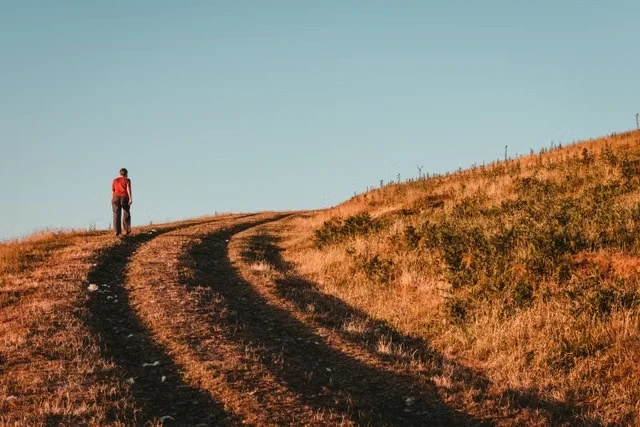
Solo travel is no longer a romantic detour from “real life”; it has become a disciplined method for reclaiming agency. People aren’t merely choosing solitude—they’re choosing direction. That shift matters because modern audiences are skeptical of generic wellness narratives and instead look for experiences that feel intentional, measurable, and personally owned.
Alongside solo itineraries, “solo rituals” are rising as practical micro-commitments: morning walking habits, journaling routines on trains, faith-inspired practices while away, or slow meals taken without performance. These rituals are treated as recovery scaffolding, designed to rebuild identity when daily routines have frayed confidence, focus, and emotional stamina.
The core idea is blunt: solo time is not a punishment or a novelty. It is a structured re-entry into the self—an opportunity to recover capacity, test personal boundaries, and restore a coherent sense of who you are when no one is watching. That’s why the trend signals for July emphasize self-directed experiences that fit real schedules, real budgets, and real psychological needs.
On This Page
Why Solo Travel Is Becoming a Recovery System, Not a Mood
Solo travel is increasingly framed as a recovery tool because it removes the constant negotiation required in shared plans. When there’s no group agreement to manage, you can redesign your day around recovery cues—sleep, movement, quiet meals, and deliberate pauses. This is autonomy with structure, not loneliness with branding.
Consider how identity often gets diluted by workplace rhythms, social obligations, and endless responsiveness. Solo time creates a controlled environment where you can hear your own priorities again. Publishers and retailers are noticing this because consumer demand is moving toward “self-directed experiences” that feel safe, repeatable, and psychologically coherent.
Autonomy as a Skill, Not a Personality Trait
Autonomy stops being a lofty slogan when travelers can practice it through choices that compound: where to start the day, what to skip, how long to linger, and when to stop pushing. The more intentional the decisions, the more quickly people feel capable again. That is why “solo-leaning themes” resonate beyond travel—autonomy is a daily performance people want back.
Crucially, autonomy also corrects decision fatigue. In a group, your preferences are diluted; you compromise by default. Solo travel reverses that equation: you can treat your calendar like a personal operating system. Recovery follows because the nervous system receives fewer conflicts and more predictable outcomes.
Recovery Capacity: Rest That Actually Lands
Recovery isn’t simply absence of stress; it’s the return of capacity. Solo travel supports that by enabling restorative routines—early mornings, low-traffic routes, offline breaks, and time to process emotions without conversational interruptions. Over time, these “micro-resets” become a skill set people carry home.
This is why the messaging is shifting away from “being alone” as a singular event. The emphasis is on rebuilding identity and recovering functioning. The ritual dimension makes that possible: travel becomes a sequence of recovery actions rather than a random set of sights.
Solo Rituals: The Structured Practices That Make Travel Therapeutic
Solo rituals are the missing ingredient in most casual travel. They turn time into an experience with intent: you don’t wander; you practice. A ritual could be as simple as an intentional first coffee, a pre-bed review of emotions, or a “no-screens after 8 p.m.” boundary that protects nervous-system recovery.
The authoritarian truth is this: without rituals, solo travel becomes reactive—chasing openings, managing uncertainty, and feeling guilty for resting. With rituals, you regain control of attention. That control restores identity because you repeatedly choose “what I need,” not “what the day demands.”
Ritual Design: Small Actions With Psychological Payoff
Effective solo rituals share one trait: they are short enough to survive real schedules and specific enough to change behavior. Instead of “be mindful,” choose “ten minutes of journaling before leaving your room.” Instead of “exercise,” choose “a daily walk with one question: what am I avoiding?”
When done repeatedly, rituals create a narrative bridge between travel and home. You’re not only sightseeing; you’re training your inner voice to be consistent. That’s why the trend ties solo living and self-directed experiences together—people want continuity, not a temporary escape hatch.
Identity Rebuilding Through Chosen Boundaries
Solo time reveals which boundaries you’ve been ignoring. Are you always available? Do you tolerate plans you don’t want? Do you abandon your preferences to keep peace? Solo travel gives you a mirror—and rituals become the method for changing what you accept.
Rituals also reduce post-trip confusion. Many people return and feel oddly “unresolved” because they never articulated what changed. A closing ritual—one letter to yourself, one lesson, one committed practice—turns the trip into identity work instead of a fleeting high.
# A minimalist “solo ritual plan” generator
# (Use it to define repeatable recovery actions.)
rituals = {
  "morning": ["10-min journal", "5-min breathing", "no-phone breakfast"],
  "midday": ["one quiet walk", "water + protein check", "single priority task"],
  "evening": ["offline hour", "gratitude list", "tomorrow’s intention (1 line)"]
}

for slot, actions in rituals.items():
print(f"{slot.title()}: {', '.join(actions)}")How to Treat Solo Travel as Structured Recovery: A Practical Framework
Approach solo travel like a program, not a purchase. Decide what you’re recovering from, choose a rhythm that supports that goal, and build rituals that reduce uncertainty. When you do this, the trip becomes an instrument—tuned for healing—rather than a gamble on feelings.
To make the logic concrete, use a simple recovery framework: signal, schedule, and closure. First, name the recovery signal you need—rest, connection, creativity, or boundaries. Then schedule rituals around it daily. Finally, close with a translation ritual that brings learning home.
We Also Published
Signal–Schedule–Closure: The Three Moves That Prevent “Waste”
Signal means diagnosing your needs without melodrama. Schedule means building predictable actions so your day doesn’t fracture. Closure means transferring insights to real life through one documented commitment. Without closure, you risk “returning empty,” because the trip never became identity data.
This is also where safety and confidence enter. Self-directed experiences don’t require reckless freedom; they require planning boundaries: transport buffers, emergency contacts, and ethical social engagement. The goal is not fearlessness; it’s controlled autonomy so recovery can happen.
Measuring Outcomes: What to Track on Purpose
Track outcomes like a professional: not every feeling, but observable markers. Did sleep improve? Did decision fatigue reduce? Did you return with at least one repeatable ritual? These measures are not cold—they’re how you prove recovery is working and keep motivation honest.
For readers seeking practical structure, this is the difference between “solo inspiration” and “solo transformation.” When you measure, you can refine. When you refine, the next trip becomes better—and the next batch of identity rebuilds accelerates rather than stalls.
From our network :
- CISA’s Ten-Advisory Wave: Why Generic Patching Fails in OT and How to Build Product-Specific PlaybooksCISA released ten ICS advisories in one week, exposing critical infrastructure risks. Generic patching fails in OT. Learn to build product-specific remediation playbooks.
- How AI Agents Will Change the Way We Manage Personal FinancesExplore how AI agents are transforming personal finance through automated budgeting, bill payment, and investment management, while examining the critical security protocols and governance frameworks required for safe deployment.
- Committed Mediterranean Precipitation Decline: Why Emissions Cuts Alone Cannot Restore Winter RainsNew NOAA research reveals that Mediterranean winter rains may decline irreversibly even with emissions cuts. Explore the science of committed climate change and regional impacts.
- Forbidden Matrix Patterns and Visible Lattice Points: A Geometric DictionaryExplore how multidimensional 0–1 matrices encode geometric truths, linking forbidden patterns to visible lattice points and hypergraph theory, with applications in combinatorics and computational geometry.
- Norbert’s Uncertain Path: Why Hawaii’s Storm Watch Demands Patience Over PanicTropical Storm Norbert strengthens in the Eastern Pacific with winds near 50 mph, forecast to reach Category 1 hurricane status by Friday. Long-range models disagree sharply on whether Hawaii faces any threat around September 19–23, making official guidance essential.
- The Final Descent: How ESA Retired the Legendary Cluster Constellation After 24 Years of Space Weather ScienceAfter 24 years mapping Earth’s magnetosphere, ESA’s Cluster mission concluded with a precisely controlled reentry over the South Pacific. This analysis explores the scientific legacy, engineering decisions, and debris mitigation principles behind one of space exploration’s most responsible retirements.
- Former Soap Stars Embark on Ambitious Writing Projects and Theatrical StagesDiscover how former soap opera actors are transitioning into independent scriptwriting and high-profile theatrical stage productions.
- Analyzing Hoya Corporation’s Midday Volume Shifts and Financial FundamentalsExamine Hoya Corporation’s midday trading volume contraction, technical moving averages, robust solvency ratios, and stellar quarterly earnings performance.
- The Hidden Cost of AI Convenience: Why Over-Permissioned Agents Are a Security Time BombDiscover why AI agents with excessive permissions create dangerous single points of failure, and learn how implementing least privilege principles can protect your organization from exploitation.
RESOURCES
- /r/SoloTravel: Where traveling solo is traveling social! - Redditreddit.comr/solotravel: A place for all of those interested in solo travel to share their experiences and stories!
- Ars Magica Solitaria - Solo Playing Rules - Atlas Games RPG Forumforum.atlas-games.comFeb 27, 2026 ... This chapter provides tools for the lone practitioner to experience the full breadth of life in Mythic Europe." Solo play…
- Where would you go as a grieving solo traveller? : r/solotravel - Redditreddit.comMar 26, 2026 ... The travel has period of structure and complete freedom and at least some structured socialization periodically. You will want solitude…
- 21 nourishing ways to spend time solo - Andjelka Jankovic | Substackandjelka.substack.comDec 4, 2024 ... ... ceremony by a ... Fire by friction handmade tools and feet in dirt. Solo holiday — Being a “solo…
- Ciara | Solo Travel Queen (@hey_ciara) - Instagraminstagram.comQuit my job to travel the solo. Regular girl showing you HOW & WHY to travel. Solo Travel Queen Houston heyciara1@gmail.com heyciara.com. Follow.
- Yes, after kids, vacations become trips—so take a solo mom vacationmother.lyWhat happens when a mom goes on a solo trip to the beautiful Conrad Punta de Mita hotel in Mexico? Self-care, a filled cup,…
- One confession I have is that the annual women's leadership retreat ...instagram.comSep 13, 2024 ... ... ritual for me to pause and be solo with the redwoods on the drive to Mendocino. Simply driving here…
- Artefact by Jack Harrison - itch.iomouseholepress.itch.ioSo hang on, this is now a solo RPG that involves drawing, and some writing -- well, mostly writing -- and resting and music.…
- Solo Travel for Every Generation—How to Choose the Best Triprd.comApr 4, 2026 ... ... structured,” LaFemina says. (Think: a ... tools, currency converters and community travel platforms can dramatically enhance a solo trip.
- 01
- 02
- 03
- 04
- 05
- 06
- 07
- 08
0 Comments