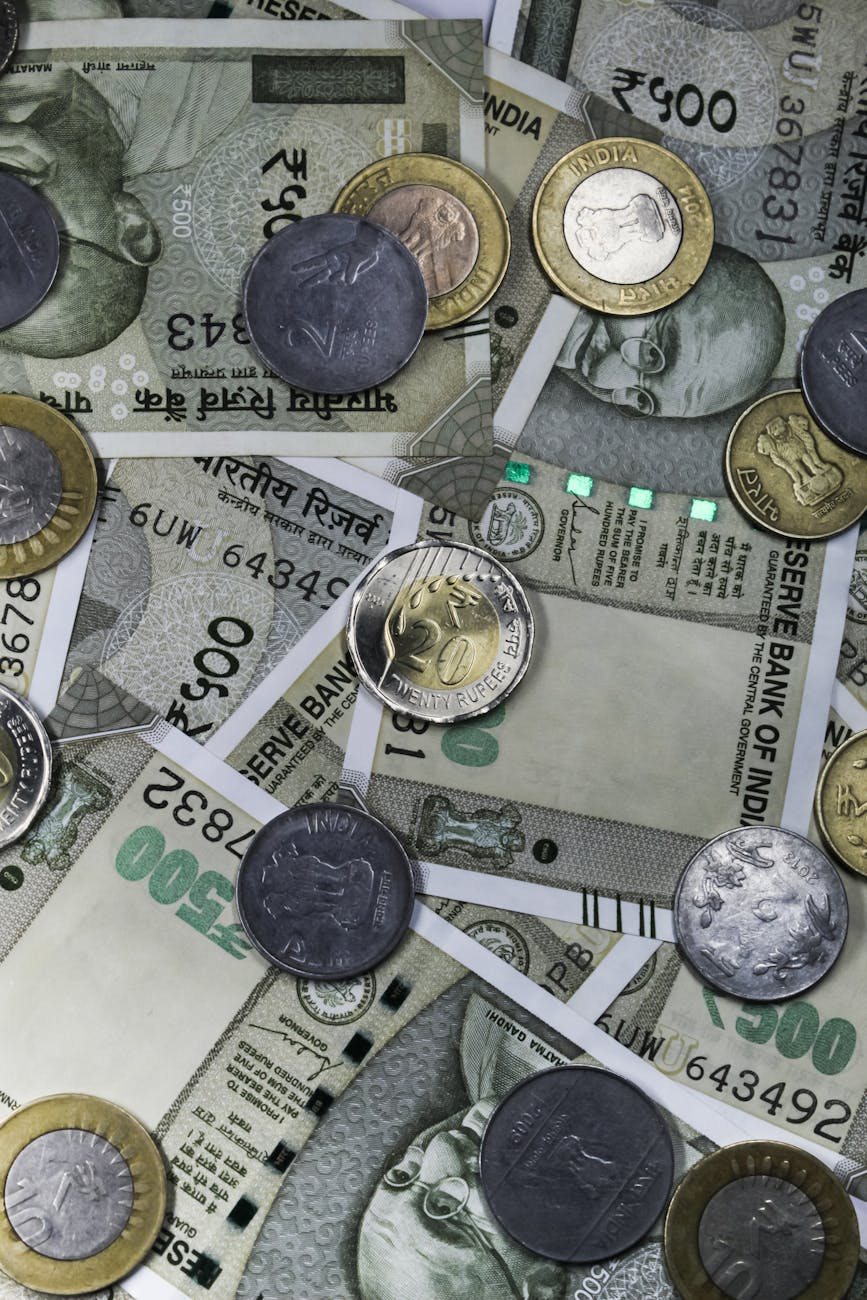
The Anatomy of the 95.63 Breach
Global Dollar Dominance and Risk-Off Sentiment
The international financial landscape is currently undergoing a massive transformation as investors seek refuge in the US Dollar. This global “risk-off” sentiment is fueled by escalating geopolitical tensions that have made emerging market assets less attractive.
As the US Federal Reserve maintains a hawkish stance to combat domestic inflation, the yield differential between Indian and American bonds has narrowed significantly. This shift encourages institutional investors to move capital back to developed markets.
The DXY Index, which measures the dollar against a basket of major currencies, has reached multi-year highs. This strength is not just a domestic phenomenon but a systemic challenge that forces the rupee into a defensive position.
Currency traders are increasingly betting against emerging market currencies as global liquidity tightens. The rupee, despite India’s relatively strong fundamentals compared to its peers, is caught in this broader wave of capital repatriation to the West.
The psychological impact of the rupee crossing the 95-mark cannot be understated. It triggers automated sell-offs in the algorithmic trading space, further accelerating the downward trajectory of the local currency against the greenback in real-time.
Crude Oil Dynamics and the Import Bill
India’s heavy reliance on imported energy remains its primary macroeconomic vulnerability. With international crude oil prices hovering around $107 per barrel, the demand for dollars to settle trade invoices has reached critical levels.
The widening trade deficit is a direct consequence of these elevated energy costs. Every dollar increase in the price of oil adds billions to India’s annual import bill, exerting constant downward pressure on the rupee.
Refineries and oil marketing companies are forced to purchase dollars in the spot market to fulfill their contractual obligations. This consistent demand creates a floor for the dollar, preventing any meaningful recovery for the Indian currency.
The current account dynamics are further strained by the rising costs of other essential imports like edible oils and fertilizers. These commodities are often priced in dollars, making them significantly more expensive as the rupee depreciates further.
Mathematically, the relationship between the trade balance and currency value can be expressed through the net balance of payments. The formula for the Current Account Deficit (CAD) is generally represented as follows:
Where ##X## represents exports, ##M## represents imports, ##NY## is net income from abroad, and ##NCT## stands for net current transfers between the nations.
Foreign Portfolio Investor (FPI) Outflows
Foreign Portfolio Investors have been net sellers in the Indian equity and debt markets for several consecutive months. This exodus is driven by a combination of global uncertainty and a search for higher risk-adjusted returns.
The massive sell-off in the National Stock Exchange (NSE) has resulted in a surplus of rupees being converted into dollars for repatriation. This process directly depletes the available liquidity of the greenback within the domestic banking system.
Market analysts note that the pace of FPI outflows has accelerated following the recent GDP growth downgrade. Investors are reassessing the long-term growth potential of the Indian economy relative to the current valuation of its stocks.
The volatility in the Indian VIX index reflects the growing anxiety among foreign participants. As uncertainty prevails, the tendency to liquidate positions in emerging markets becomes the default strategy for global fund managers seeking to preserve capital.
Structural shifts in global supply chains have also influenced investor behavior. While India remains a key destination for long-term FDI, the short-term portfolio flows remain highly sensitive to interest rate changes in the United States.
Psychological Thresholds and Market Panic
The breach of the 95.63 level represents more than just a numerical milestone; it signifies a shift in market sentiment. Traders often use these psychological levels to set stop-loss orders and determine future entry points.
When a currency hits a record low, it often leads to a “panic-buying” spree of the dollar by importers. They fear that the currency will depreciate even further, leading them to cover their future liabilities prematurely.
Speculators also play a significant role in exacerbating currency movements. By taking short positions on the rupee, they contribute to a self-fulfilling prophecy where the currency continues to lose value due to heavy selling pressure.
The Reserve Bank of India (RBI) often intervenes at these critical junctures to prevent “runaway” depreciation. However, the sheer volume of the current market move has made it difficult for the central bank to sustain a specific level.
Retail sentiment is also affected, as a weaker rupee is often associated with a weakening economy. This perception can lead to a reduction in domestic consumption as households brace for higher costs of imported goods and services.
Macroeconomic Implications and the Moody’s Downgrade
Analyzing the GDP Revision to 6.0%
Moody’s Ratings recently adjusted India’s 2026 GDP growth forecast downward from 6.8% to 6.0%. This significant revision highlights the growing concerns over the sustainability of India’s economic recovery in a high-interest-rate environment.
The agency cited subdued private consumption as a primary driver for this downgrade. As inflation eats into the disposable income of the middle class, the demand for non-essential goods and services has begun to stagnate.
High energy costs are acting as a tax on the entire economy, diverting funds from productive investment toward consumption of essential utilities. This shift hampers the long-term capital expenditure plans of both the government and private sector.
The downgrade also reflects the impact of tighter monetary policy. As the RBI raises rates to defend the rupee and control inflation, the cost of borrowing for businesses increases, leading to a slowdown in industrial activity.
Economists are concerned that a 6.0% growth rate may not be sufficient to generate the number of jobs required for India’s growing workforce. This creates a challenging socio-economic environment that requires urgent policy intervention.
Inflationary Pressures in the Domestic Market
A weaker rupee is a direct precursor to “imported inflation.” Since India imports a vast majority of its electronics, machinery, and energy, the increased cost of these items is passed on to the end consumer.
The transportation sector is particularly sensitive to these changes. As the price of imported crude rises, the cost of logistics and freight increases, leading to higher prices for food and other essential household commodities.
The Consumer Price Index (CPI) is expected to remain above the RBI’s comfort zone of 4% for the foreseeable future. This persistent inflation limits the central bank’s ability to lower interest rates to stimulate economic growth.
Core inflation, which excludes volatile food and energy prices, is also showing signs of stickiness. This suggests that the inflationary pressures are becoming structural, making them much harder to dislodge through traditional monetary policy tools.
The impact on the manufacturing sector is twofold. While exporters might benefit from a weaker rupee in the short term, the rising cost of imported raw materials often offsets any gains in competitiveness on the global stage.
- 01
- 02
- 03
- 04
The Widening Current Account Deficit (CAD)
The Current Account Deficit is a critical indicator of a country’s economic health, representing the gap between total imports and total exports. A widening CAD puts immense pressure on the national currency’s valuation.
With the rupee at 95.63, the cost of servicing external debt also increases. Indian corporations that have borrowed in dollars now face higher repayment costs in rupee terms, squeezing their profit margins and balance sheets.
The sustainability of the CAD depends on the country’s ability to attract foreign capital. However, with FPIs exiting and FDI slowing down, the gap is increasingly being funded through the drawdown of foreign exchange reserves.
Economists suggest that if the CAD exceeds 3% of GDP, it could trigger a sovereign rating review. This would further increase the cost of international borrowing and lead to a vicious cycle of currency depreciation.
To stabilize the CAD, India must focus on boosting its services exports and reducing its reliance on imported energy through renewables. However, these structural changes take years to implement and offer little relief in the short term.
Impact on Corporate Earnings and Capex
Corporate India is facing a “margin squeeze” as input costs rise faster than they can increase prices for consumers. This is particularly evident in the automotive, electronics, and consumer durable sectors which rely on global components.
The uncertainty regarding the rupee’s future value makes long-term business planning difficult. Many companies are delaying their capital expenditure (Capex) plans until there is more clarity on the exchange rate and interest rate trajectory.
Earnings reports for the upcoming quarters are likely to show the impact of foreign exchange losses. Companies with unhedged dollar exposure will be forced to book significant mark-to-market losses, affecting their stock market valuations.
Small and Medium Enterprises (SMEs) are the hardest hit, as they lack the sophisticated hedging tools available to large conglomerates. Many SMEs are struggling to remain viable as their operational costs spiral out of control.
The banking sector also faces indirect risks. As corporate profitability declines, the risk of non-performing assets (NPAs) increases, potentially straining the financial system’s ability to provide credit to the broader economy during this downturn.
Strategic Responses and Future Outlook
RBI Intervention Strategies and Forex Reserves
The Reserve Bank of India has a formidable war chest of foreign exchange reserves, but these are not infinite. The central bank must decide how much of these reserves to spend on defending a specific level.
Intervention typically involves the RBI selling dollars and buying rupees in the spot market. While this provides temporary support, it also sucks rupee liquidity out of the banking system, which can drive up short-term interest rates.
The central bank may also use the “NDF” (Non-Deliverable Forward) market to influence the rupee’s value offshore. This allows the RBI to manage volatility without immediately impacting the domestic supply of physical currency.
There is a growing debate among policymakers about the “optimal” level of the rupee. Some argue that a weaker currency is necessary to boost export competitiveness, while others fear the inflationary consequences of a rapid slide.
Ultimately, the RBI’s goal is to ensure “orderly” movement rather than defending a specific price point. They aim to prevent excessive volatility that could disrupt the financial markets or lead to a total loss of investor confidence.
Monetary Policy Adjustments and Interest Rates
The most potent tool at the RBI’s disposal is the repo rate. By increasing interest rates, the central bank can make the rupee more attractive to investors, thereby stemming the tide of capital outflows from the country.
However, raising rates is a double-edged sword. While it supports the currency, it also increases the cost of loans for home buyers and businesses, which can further dampen the already slowing GDP growth rate.
The Monetary Policy Committee (MPC) is facing a classic “trilemma.” It is impossible to simultaneously have a fixed exchange rate, free capital movement, and an independent monetary policy focused solely on domestic growth.
Market participants are currently pricing in a 50-basis point hike in the upcoming policy cycle. This move would be a clear signal that the RBI is prioritizing currency stability and inflation control over immediate economic expansion.
The effectiveness of rate hikes depends on the global context. If the US Fed continues to raise rates aggressively, the RBI may find itself forced to follow suit just to maintain the current status quo of the rupee.
Hedging Strategies for Importers and Exporters
In an environment of extreme volatility, hedging becomes a necessity rather than an option. Importers are being advised to increase their hedging ratios to protect themselves against further depreciation of the Indian Rupee.
Forward contracts allow businesses to lock in an exchange rate for a future date. This provides certainty in budgeting and ensures that a sudden spike in the dollar does not wipe out the company’s entire profit margin.
Exporters, on the other hand, stand to benefit from a weaker rupee. However, they must also be cautious, as a volatile currency can make their pricing unattractive to international buyers who prefer stability in their supply chains.
Currency options offer another layer of protection, providing the right but not the obligation to exchange currency at a specific rate. This allows firms to benefit if the rupee appreciates while being protected if it falls.
Financial literacy regarding forex risk management is becoming crucial for Indian business owners. Those who failed to hedge their exposure during the relatively stable years are now facing the brunt of the current currency crisis.
Long-Term Structural Reforms for Currency Stability
For the rupee to achieve long-term stability, India must address the underlying structural issues that lead to chronic trade deficits. This includes reducing energy dependence through the rapid adoption of green hydrogen and solar power.
Boosting domestic manufacturing through initiatives like “Make in India” is essential to reduce the import bill for electronics and machinery. This would fundamentally alter the demand-supply dynamics of the dollar within the country.
Attracting more stable forms of capital, such as Foreign Direct Investment (FDI), is preferable to relying on volatile FPI flows. FDI brings in long-term technology and management expertise, contributing to sustainable economic growth.
Deepening the domestic bond market would also provide the government with more diversified funding options. Inclusion in global bond indices is a step in this direction, as it encourages long-term institutional investment into Indian debt.
The future of the rupee depends on India’s ability to maintain a balance between growth and stability. While the current breach of 95.63 is a significant challenge, it also serves as a wake-up call for the necessary economic reforms.
- 01
- 02
- 03
- 04
- 05
- 06
- 07
- 08
0 Comments