
On This Page
The Paxton Landslide: A New Era for Texas Republicans
The recent primary results in Texas have sent shockwaves through the entire American political landscape. Ken Paxton’s overwhelming victory over John Cornyn marks a definitive turning point for the Republican Party in the state.
Voters clearly signaled their preference for a more aggressive, populist approach to governance over traditional institutionalism. This shift suggests that the old-guard GOP style is no longer sufficient to win major primary contests.
Paxton’s ability to mobilize a dedicated base despite significant personal and legal challenges is truly remarkable. It demonstrates a level of political resilience that few analysts predicted would be possible in this high-stakes cycle.
The margin of victory, nearing thirty percentage points, reflects a deep-seated desire for change among the grassroots. This was not just a narrow win but a complete repudiation of the existing party establishment.
As we move forward, the internal dynamics of the Texas GOP will likely become more aligned with national populist movements. This alignment will undoubtedly influence policy priorities and legislative strategies for years to come.
The Power of Grassroots Mobilization
Grassroots activists played a pivotal role in securing this historic win for the Attorney General. Their tireless efforts on the ground translated into a massive turnout that overwhelmed the traditional campaign infrastructure of Cornyn.
Digital organizing and local community meetings were the backbone of the Paxton strategy throughout the runoff. These efforts created a sense of urgency and shared purpose among voters who felt ignored by Washington elites.
The success of this mobilization effort highlights a significant shift in how modern political campaigns are won. Relying on television advertisements and corporate endorsements is no longer the guaranteed path to victory in Texas.
Volunteers across the state dedicated countless hours to phone banking and door-knocking for the Paxton cause. Their passion was fueled by a belief that the state needed a more combative representative in the Senate.
This grassroots energy is expected to carry over into the general election cycle later this year. It provides a solid foundation for the Republican ticket as they prepare to face a motivated Democratic challenge.
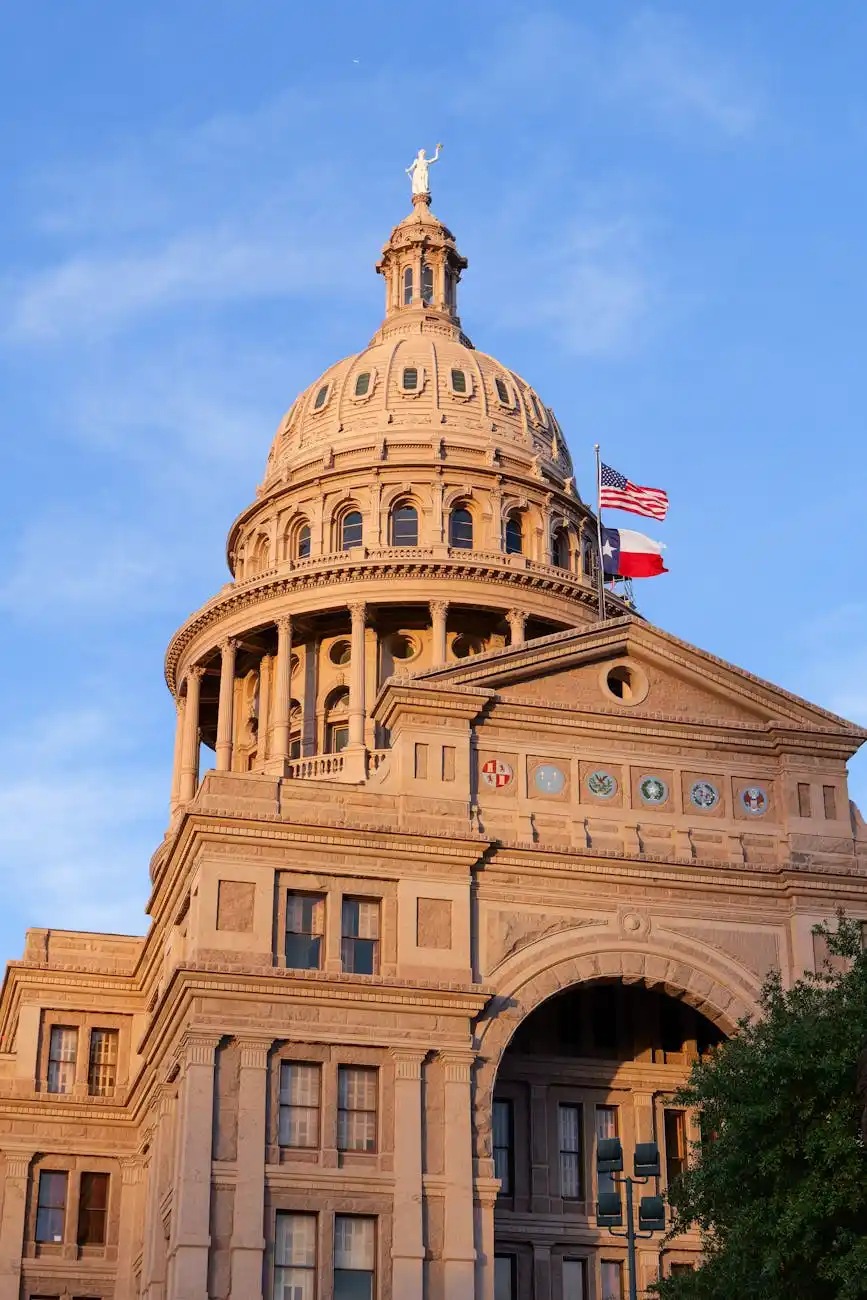
A dramatic digital illustration of the Texas State Capitol building at sunset, with a silhouette of a lone figure standing triumphantly on the steps, symbolizing a political shift, in a bold cinematic style.
Overcoming Legal and Political Hurdles
Ken Paxton’s political survival is a case study in resilience against sustained institutional opposition from all sides. Despite facing impeachment and various legal inquiries, he maintained a strong connection with his core voting base.
Supporters viewed these challenges not as disqualifying factors but as evidence of a targeted political witch hunt. This narrative effectively neutralized the impact of negative campaigning and media scrutiny during the primary race.
The ability to frame legal battles as badges of honor has become a hallmark of modern populist politics. Paxton mastered this strategy, turning potential liabilities into powerful talking points that resonated with frustrated Republican voters.
Political opponents within his own party found it difficult to land meaningful blows against his record. His focus on high-profile conservative victories in court shielded him from criticisms regarding his personal conduct or management style.
Ultimately, the voters decided that his legislative and legal results were more important than any pending controversies. This decision reflects a broader trend where policy outcomes take precedence over traditional ethical considerations in politics.
Border Security as a Primary Driver
Border security remained the most influential issue for Republican primary voters throughout the entire campaign season. Paxton’s aggressive legal actions against federal immigration policies positioned him as a champion for state-led enforcement efforts.
Many voters felt that Senator Cornyn had not been sufficiently vocal or effective on this critical issue. They sought a representative who would prioritize the physical security of the Texas border above all other concerns.
Paxton’s frequent appearances at the border and his lawsuits against the administration provided tangible evidence of his commitment. These actions resonated deeply with residents who feel the direct impact of current immigration trends daily.
The campaign successfully framed the race as a choice between a fighter and a career politician. By focusing on the border, Paxton tapped into the primary anxiety of the Texas Republican electorate in 2026.
This focus on sovereignty and security is likely to remain the central theme of the upcoming general election. It serves as a powerful unifying force for the diverse factions within the state’s Republican coalition.
The Impact of National Political Alignment
The influence of national political figures cannot be overstated in this particular primary contest in Texas. Explicit endorsements from the presidential level provided Paxton with the momentum needed to surge past the incumbent Senator.
This alignment suggests that the local GOP is now an integral part of a broader national movement. The distinction between state-level issues and national political priorities has become increasingly blurred for most primary voters.
Voters in Texas are looking for leaders who will stand firmly with the national party platform. Paxton’s victory confirms that loyalty to the national leadership is a prerequisite for success in deep-red states.
The defeat of John Cornyn sends a message that independence from the national party line is risky. Even long-serving incumbents must now navigate the complex demands of a highly polarized and nationalized political environment.
As the general election approaches, this national alignment will continue to shape the strategies of both parties. The Texas Senate race is no longer just a local affair but a key national battleground.
End of an Era: Why Cornyn’s Ouster Matters
John Cornyn’s exit from the political stage marks the end of a significant era in Texas history. For over two decades, he served as a stable and influential voice in the United States Senate.
His departure means the loss of a key negotiator who often bridged the gap between different factions. Cornyn’s experience in leadership roles provided Texas with a level of influence that is hard to replace.
The shift away from his brand of conservatism indicates a fundamental change in voter expectations and priorities. Stability and bipartisanship are no longer the primary virtues sought by the modern Republican primary electorate.
Analysts are now questioning how this change will affect the state’s ability to secure federal funding. Cornyn’s seniority was a valuable asset for advancing Texas interests in various legislative committees and appropriations processes.
The broader Republican caucus in Washington will also feel the impact of losing such a senior member. His exit creates a vacuum that will likely be filled by more ideologically driven and confrontational figures.
Loss of Institutional Seniority in DC
Seniority in the Senate often translates directly into legislative power and committee chairmanships for a state. With Cornyn’s defeat, Texas loses decades of accumulated influence that helped shape national policy and federal spending.
New senators, regardless of their passion, face a steep learning curve in the complex world of DC. It will take years for any successor to reach the same level of institutional knowledge and networking.
The loss of a former GOP Whip means Texas will have less say in the party’s internal strategy. Cornyn was instrumental in whipping votes and managing the legislative calendar for the Republican leadership team.
This transition could lead to a temporary decline in the state’s ability to influence major federal bills. Other states with more senior representatives may now find it easier to advance their own regional legislative agendas.
However, supporters of the change argue that fresh perspectives are more valuable than institutional seniority. They believe that a more vocal and uncompromising representative will ultimately achieve better results for the state’s residents.

A professional infographic-style illustration showing a scale balancing a traditional 'Old Guard' hat and a modern 'MAGA' cap, with the modern cap weighing significantly more, set against a background of the Texas flag.
The Collapse of the Moderate Coalition
The moderate-conservative coalition that once defined Texas politics appears to have finally collapsed under current pressures. This coalition previously allowed Republicans to maintain broad appeal across suburban and urban areas while keeping rural support.
Cornyn was the quintessential representative of this balanced approach, focusing on economic growth and traditional values. His failure to win the primary suggests that the "middle ground" has effectively disappeared in GOP politics.
Suburban voters, who were once the bedrock of the moderate wing, are now faced with a choice. They must decide whether to align with the new populist direction or look elsewhere for political representation.
The collapse of this coalition makes the party more ideologically pure but potentially more vulnerable in general elections. It remains to be seen if the new base can compensate for the loss of moderate voters.
Strategists are now re-evaluating how to win in a state that is becoming increasingly polarized and divided. The old playbook of appealing to the "sensible center" may no longer be a viable strategy in Texas.
We Also Published
Re-evaluating the 'Incumbency Advantage'
For decades, incumbency was considered the most powerful asset a politician could possess in a primary race. John Cornyn’s defeat proves that this advantage can be neutralized by a strong, loyalty-based challenge from the right.
The traditional benefits of incumbency, such as name recognition and fundraising prowess, were not enough to save him. Voters were more concerned with his perceived lack of alignment with the current party leadership and goals.
This result will likely encourage more primary challenges against established incumbents across the country in future cycles. No seat is considered "safe" if the incumbent is seen as out of step with the base.
Political science models may need to be updated to account for the power of modern endorsements. The influence of a single high-profile endorsement can now outweigh years of service and local community engagement.
Candidates must now work harder than ever to prove their loyalty to the grassroots throughout their entire term. Sitting on a massive campaign chest is no longer a guarantee of a successful re-election bid.
Future of Senate Republican Leadership
The departure of John Cornyn will undoubtedly trigger a significant reshuffling within the Senate Republican leadership ranks. As a key figure in the "old guard," his absence opens doors for a new generation of leaders.
We can expect a shift toward more populist and confrontational leadership styles in the coming years. This change will likely lead to more frequent clashes with the executive branch and the opposing political party.
The new leadership will need to balance the demands of a restless base with the realities of governing. Navigating this tension will be the primary challenge for whoever steps into the void left by Cornyn.
Legislative priorities may also shift toward more culturally focused issues rather than traditional economic or foreign policy. This reflects the changing interests of the voters who are now driving the party’s direction and agenda.
The overall tone of the Senate could become more polarized as moderate voices are replaced by ideological stalwarts. This evolution will have long-term consequences for how the upper chamber functions and passes major legislation.
- 01
- 02
- 03
- 04
The Talarico Challenge: Can Democrats Flip the Lone Star State?
James Talarico enters the general election as one of the most formidable Democratic candidates in recent Texas history. His focus on education and civil discourse offers a sharp contrast to the combative style of Paxton.
Democrats are hopeful that the primary results have created an opening among moderate and independent voters. They believe that Paxton’s hardline positions may be a bridge too far for many suburban families in Texas.
However, flipping Texas remains a monumental task that has eluded the Democratic Party for over thirty years. The state’s Republican lean is deep-seated and reinforced by a highly effective state-level party organization and infrastructure.
Talarico will need to build a diverse coalition that includes disenchanted Republicans, energized youth, and minority voters. His success will depend on his ability to frame the race as a choice between stability and chaos.
The national spotlight will be on Texas as this race becomes a litmus test for the state’s political future. Both national parties are expected to invest heavily in what could be a surprisingly competitive Senate contest.
Courting Disenchanted Moderate Republicans
A key component of the Talarico strategy involves reaching out to the hundreds of thousands who voted for Cornyn. These voters may feel alienated by the direction the party has taken under the new leadership.
By emphasizing common-sense solutions and bipartisan cooperation, Talarico hopes to provide a "safe harbor" for these voters. This approach requires a delicate balance of progressive values and moderate rhetoric to be effective.
Historically, many moderate Republicans have chosen to stay home rather than vote for a Democrat in general elections. Talarico’s challenge is to convince them that voting for him is a necessary step for the state.
Early outreach efforts have focused on issues like infrastructure and public school funding, which have broad appeal across party lines. These "kitchen table" issues are designed to bypass the more divisive cultural battles of the day.
Whether this strategy will yield enough votes to overcome the Republican majority is the central question of the race. It is a high-risk, high-reward gamble that could redefine the Democratic path in the South.

A high-contrast conceptual artwork of a suburban Texas neighborhood with campaign signs for Paxton and Talarico on opposite lawns, symbolizing the deep political divide and the battle for the suburbs.
Progressive Values vs. Populist Momentum
The general election will be a clash of two very different visions for the future of the United States. Talarico represents a modern, progressive approach that emphasizes social justice, environmental protection, and expanded healthcare access.
On the other side, Paxton embodies a populist momentum that prioritizes national sovereignty, traditional values, and deregulation. These two ideologies are currently in direct competition for the heart and soul of the Texas electorate.
The probability of a shift in voter sentiment can be modeled by looking at recent demographic trends in major cities. If ##P(Democrat) > 0.48##, the race could become a statistical toss-up in the final weeks.
Populist momentum is often driven by a sense of cultural grievance and a desire to protect a specific way of life. Talarico must find a way to address these concerns without compromising his own core principles.
This ideological battle will play out across television screens and social media feeds throughout the summer and fall. It will be a test of which message resonates more with the average Texas resident today.
Suburban Voter Sentiment and Demographics
The rapidly changing demographics of the Texas suburbs are a major factor in the state’s evolving political landscape. These areas are becoming more diverse and more educated, which traditionally favors the Democratic Party in national elections.
However, Republicans have historically maintained a strong grip on these regions through a focus on low taxes and safety. Paxton’s challenge is to keep these voters in the fold despite his more controversial reputation.
Talarico is betting that the "extremism" of the current GOP ticket will drive suburban women and independents toward his campaign. This demographic shift has been seen in other states and could finally happen in Texas.
Demographic change is a slow process, but its cumulative effect can be decisive in a close statewide race. The growth of the Hispanic and Asian American populations in suburban counties is particularly significant for future trends.
Both campaigns are pouring resources into these key battleground areas to win over undecided voters before the November deadline. The suburbs will likely decide the winner of this historic and high-stakes Senate contest.
Strategic Implications for the General Election
The strategic implications of this race extend far beyond the borders of Texas and into national political strategy. If a Democrat can win a Senate seat in Texas, the entire electoral map would be permanently altered.
Republicans must defend their home turf with everything they have to prevent a catastrophic loss of power. A defeat in Texas would signal a major crisis for the party’s national viability and future prospects.
For Democrats, a strong showing—even if they lose—would provide a roadmap for future contests in other red states. It would demonstrate that the populist shift in the GOP creates opportunities for a broader Democratic coalition.
The race will also serve as a test for the effectiveness of presidential endorsements in a general election setting. While powerful in primaries, their impact on the broader electorate is often more complex and less predictable.
As the campaign enters its final phase, the intensity of the rhetoric and the scale of spending will increase. Texas is now the center of the political universe, and the world is watching the outcome closely.
From our network :
- How AI Agents Will Change the Way We Manage Personal FinancesExplore how AI agents are transforming personal finance through automated budgeting, bill payment, and investment management, while examining the critical security protocols and governance frameworks required for safe deployment.
- Committed Mediterranean Precipitation Decline: Why Emissions Cuts Alone Cannot Restore Winter RainsNew NOAA research reveals that Mediterranean winter rains may decline irreversibly even with emissions cuts. Explore the science of committed climate change and regional impacts.
- Forbidden Matrix Patterns and Visible Lattice Points: A Geometric DictionaryExplore how multidimensional 0–1 matrices encode geometric truths, linking forbidden patterns to visible lattice points and hypergraph theory, with applications in combinatorics and computational geometry.
- Former Soap Stars Embark on Ambitious Writing Projects and Theatrical StagesDiscover how former soap opera actors are transitioning into independent scriptwriting and high-profile theatrical stage productions.
- Norbert’s Uncertain Path: Why Hawaii’s Storm Watch Demands Patience Over PanicTropical Storm Norbert strengthens in the Eastern Pacific with winds near 50 mph, forecast to reach Category 1 hurricane status by Friday. Long-range models disagree sharply on whether Hawaii faces any threat around September 19–23, making official guidance essential.
- The Hidden Cost of AI Convenience: Why Over-Permissioned Agents Are a Security Time BombDiscover why AI agents with excessive permissions create dangerous single points of failure, and learn how implementing least privilege principles can protect your organization from exploitation.
- CISA’s Ten-Advisory Wave: Why Generic Patching Fails in OT and How to Build Product-Specific PlaybooksCISA released ten ICS advisories in one week, exposing critical infrastructure risks. Generic patching fails in OT. Learn to build product-specific remediation playbooks.
- Analyzing Hoya Corporation’s Midday Volume Shifts and Financial FundamentalsExamine Hoya Corporation’s midday trading volume contraction, technical moving averages, robust solvency ratios, and stellar quarterly earnings performance.
- The Final Descent: How ESA Retired the Legendary Cluster Constellation After 24 Years of Space Weather ScienceAfter 24 years mapping Earth’s magnetosphere, ESA’s Cluster mission concluded with a precisely controlled reentry over the South Pacific. This analysis explores the scientific legacy, engineering decisions, and debris mitigation principles behind one of space exploration’s most responsible retirements.
RESOURCES
- Attorney General Ken Paxton Secures Major Victory Defending ...texasattorneygeneral.govApr 24, 2026 ... “My office has secured yet another major win for Texas by defending SB 4 before the Fifth Circuit,” said Attorney…
- Attorney General Ken Paxton Secures Victory Against San Antonio ...oag.state.tx.usJan 9, 2026 ... Attorney General Ken Paxton has secured victory against the City of San Antonio after the city allocated taxpayer dollars to…
- Attorney General Ken Paxton Secures Victory in the U.S. Supreme ...texasattorneygeneral.govApr 27, 2026 ... Attorney General Ken Paxton has yet again successfully defended Texas's Big Beautiful Map in the U.S. Supreme Court.
- Ken Paxton cruises to big win against incumbent Sen. John Cornyn ...houstonpublicmedia.org2 days ago ... Ken Paxton walks in to address the crowd after winning the Republican primary runoff election for U.S. Senate on Tuesday,…
- Ken Paxton Victory Tests Whether Texas Republicans Can Reunite ...nytimes.com2 days ago ... Ken Paxton's resounding victory in the Republican runoff for U.S. Senate solidified Mr. Trump's iron grip. And candidates backed by…
- Paxton's win over Cornyn sets up high-stakes Texas clash ... - PBSpbs.org1 day ago ... President Trump again proved his political power in Texas as his endorsed candidate in the Senate primary won in a…
- Paxton thanks Cornyn, pounces on Talarico after big Senate winfox4news.com2 days ago ... Texas Attorney General Ken Paxton delivers a fiery victory speech after winning the Texas Republican primary runoff for U.S. Senate,…
- MAGA candidate's win in Texas primary may also help Democrats in ...bbc.com2 days ago ... Texas Attorney General Ken Paxton easily defeated Senator John Cornyn in a Republican run-off primary on Tuesday night.
- Ken Paxton defeats John Cornyn in Texas U.S. Senate GOP runofftexastribune.org2 days ago ... Ken Paxton defeats John Cornyn for U.S. Senate GOP nomination ... The attorney general's victory is a crushing blow to…
- Ken Paxton wins Texas Senate runoff in MAGA victory over ... - Politicopolitico.com2 days ago ... Attorney General Ken Paxton defeated Sen. John Cornyn in the Senate GOP runoff Tuesday, cementing the influence of the far…
- Trump ramps up attacks on Talarico after Paxton's Texas Senate ...theguardian.com2 days ago ... Republican leaders rushed to throw their weight behind Ken Paxton following his big primary victory in Texas over the four-term…
- 01
- 02
- 03
- 04
- 05
- 06
- 07
- 08
0 Comments