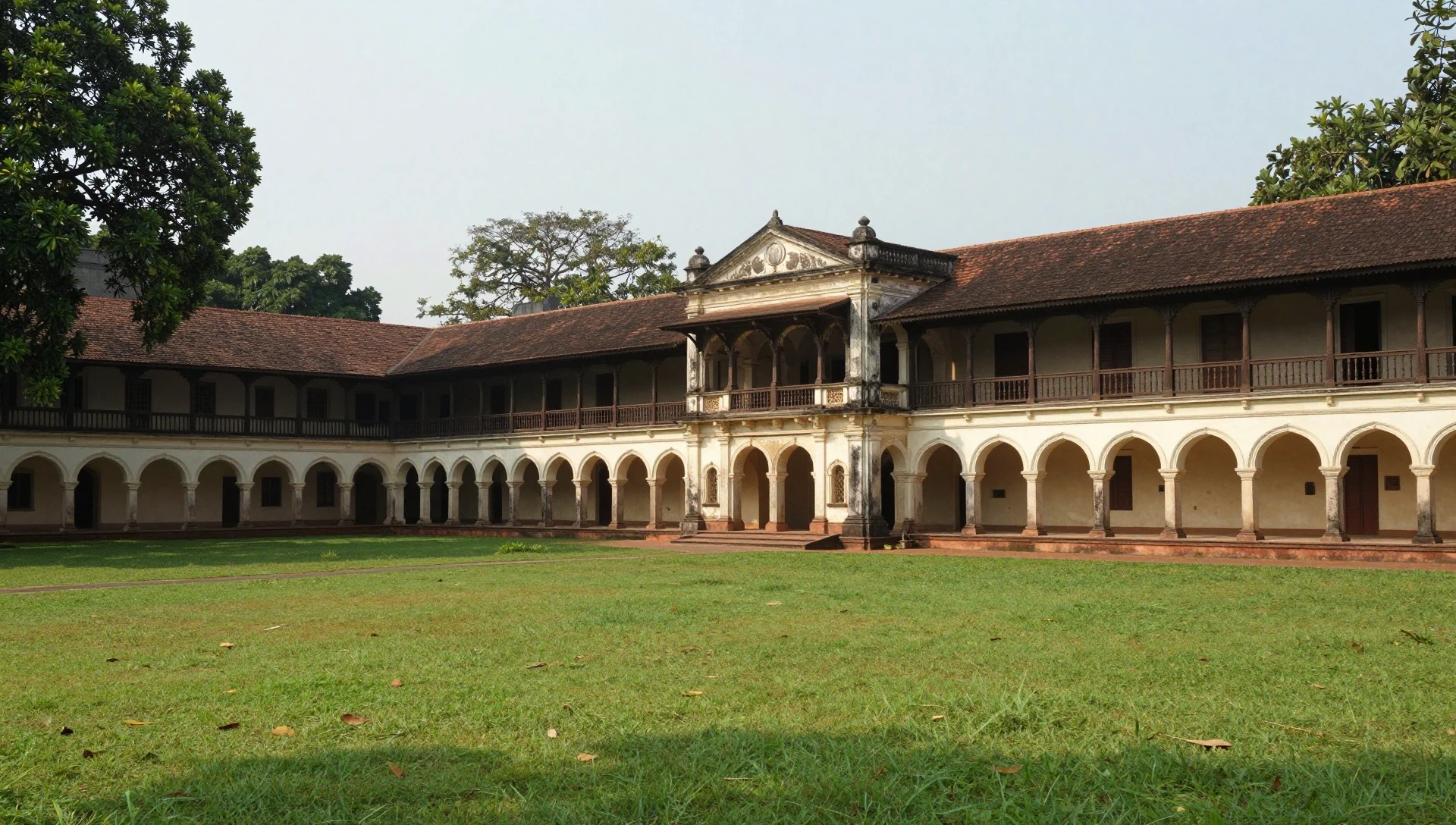
Gymkhana clubs occupy a peculiar position in the institutional landscape of South Asia: they are private, members-only establishments whose origins lie squarely in the British colonial administration of the nineteenth century, yet they endure as symbols of prestige in cities such as Lahore, Karachi, Delhi and Kolkata.
A recent Dawn article revisits these clubs and the politics of selective outrage that surrounds them, arguing that public criticism of colonial-era institutions is applied unevenly rather than consistently. The piece traces the clubs' historical roots and examines how society chooses which legacies to condemn and which to quietly preserve.
The central analytical claim is not that gymkhana clubs are beyond reproach, but that the outrage directed at them is selective, episodic and often instrumental. Critics who invoke colonial history against one institution frequently overlook comparable legacies embedded in legal codes, bureaucratic structures, educational systems and land records.
On This Page
This asymmetry matters because it reveals that public anger is rarely a neutral historical audit; it is a political resource deployed against selected targets. The article situates the clubs within a broader conversation about inherited institutions and the inconsistent moral accounting applied to them.
Understanding this argument requires separating three distinct questions: what these clubs historically were, what they are today, and why criticism of them clusters around particular moments rather than following a coherent principle.
The analysis below addresses each in turn, drawing on the documented history of colonial club culture, the economics of exclusive membership, and the comparative record of how post-colonial states have treated inherited institutions. The evidence suggests that selectivity, not severity, is the defining feature of the debate.
TL;DR Gymkhana clubs originated as segregated colonial institutions built for British officials and were later appropriated by post-colonial elites. A recent Dawn article argues that outrage against these clubs is selective rather than principled, applied to some colonial legacies while others escape scrutiny entirely. The core insight is that historical criticism functions as a political instrument, invoked against chosen targets and withheld from convenient ones. This analysis examines the clubs' origins, their present economic and social role, and the comparative record of how inherited institutions are judged, concluding that consistency of principle matters more than the intensity of any single denunciation.
The Colonial Architecture of the Gymkhana Club
Gymkhana clubs emerged in the mid-to-late nineteenth century as recreational and social hubs for British colonial officials, military officers and a narrow stratum of native notables. Their design encoded hierarchy directly into space: separate entrances, restricted bars, segregated lawns and membership committees with discretionary veto power.
The club was never merely a leisure facility; it was an instrument of governance, a place where administrative networks were cultivated and where colonial social order was rehearsed daily.
Origins and Institutional Design
The word "gymkhana" itself carries mixed provenance, blending Persian and Hindi roots associated with a place of assembly or a sporting contest. British administrators adapted the term to describe multi-purpose recreational compounds combining tennis courts, billiard rooms, dining halls and riding facilities.
The first such clubs appeared in British India during the 1860s and spread across the subcontinent alongside railway expansion and cantonment construction.
Membership was governed by nomination and committee ballot, a mechanism that gave existing members effective control over the composition of the institution. This structure was explicitly exclusionary: Indians were barred or admitted only as rare exceptions, and women's access was mediated through male relatives. The club thus functioned as a gatekeeping device, converting social proximity into economic and administrative advantage.
Architecturally, these compounds were designed for visibility and separation. Verandas faced inward toward manicured lawns, while boundary walls and gatehouses regulated entry from the surrounding city. The spatial logic mirrored the racial and class hierarchies of the colonial state, translating political inequality into physical distance that remains legible in many surviving club buildings today.
After independence in 1947, the clubs did not disappear; they transferred. The departing British membership was replaced by local civil servants, military officers, judges, industrialists and senior bureaucrats. The exclusionary machinery survived the change of personnel intact, which is precisely why the institutions remain contested: the form persisted while the justification for it dissolved.
The Economics of Exclusive Membership
Contemporary gymkhana clubs operate as quasi-public goods funded by private subscriptions, yet they occupy land often granted on concessional terms during the colonial period. This combination of private governance and historically subsidised assets creates a genuine public-interest question that has little to do with nostalgia and everything to do with resource allocation and transparency.
Membership fees vary widely, but entry is rarely a simple market transaction. Waiting lists stretching years, sponsorship requirements and committee discretion mean that access depends on social capital rather than willingness to pay.
Economists would describe this as rationing by network rather than by price, a mechanism that reproduces existing elite composition with remarkable efficiency across generations.
The clubs also generate measurable economic value: prime urban real estate, subsidised sporting infrastructure, and informal deal-making venues where contracts and appointments are discussed. Estimating this value is difficult because most clubs publish minimal financial information.
The opacity is itself analytically significant, since institutions that resist disclosure invite exactly the kind of selective suspicion the Dawn article describes.
Comparative data from similar institutions elsewhere suggests that transparency reforms reduce controversy without destroying institutional function. Clubs that publish membership criteria, land tenure terms and audited accounts attract less hostile attention than those that guard such information.
The lesson is procedural rather than ideological: disclosure defuses selective outrage by removing the informational asymmetry that sustains it.
Segregation, Memory and the Built Environment
The physical fabric of gymkhana clubs preserves colonial hierarchy in ways that are easy to overlook. Separate bars, restricted lawns and legacy signage survive in numerous establishments, sometimes retained as heritage and sometimes simply never updated.
These material traces keep the colonial origin visible, which is one reason the clubs attract periodic criticism that other inherited institutions escape.
Memory politics compounds the issue. A colonial-era bungalow converted into a government office rarely provokes debate, because its function has been fully absorbed into the post-colonial state. A club, by contrast, remains visibly exclusive and privately governed, so its colonial lineage reads as unbroken continuity rather than historical residue. Visibility, not severity, drives the outrage.
Scholars of urban heritage note that colonial built environments are typically judged by present use rather than original purpose. This creates an inconsistency: the same architectural vocabulary is celebrated in heritage hotels and condemned in private clubs.
The distinction rests on perceived access, which suggests that the real objection is contemporary exclusion rather than historical colonialism.
If that reading is correct, then the appropriate remedy is reform of access and governance, not demolition of history. Framing the debate around colonial origins may generate satisfying rhetoric, but it misdiagnoses the problem and leaves the exclusionary machinery untouched. Precision about what is actually objectionable is the precondition for any effective response.
Selective Outrage as a Political Instrument
The Dawn article's most consequential observation is that criticism of gymkhana clubs is applied unevenly. This is not a minor rhetorical point; it identifies a structural feature of public discourse in post-colonial societies, where historical grievance is mobilised selectively according to political convenience. The pattern deserves systematic examination rather than anecdotal treatment.
Defining Selectivity in Public Criticism
Selective outrage can be defined operationally: it is the application of a consistent-sounding principle to a subset of cases while exempting comparable cases that are politically inconvenient. The principle may be sound; the selectivity lies in its enforcement. Measuring selectivity therefore requires comparison across cases rather than scrutiny of any single denunciation.
A simple ratio captures the logic. If a society criticises ##n## colonial-legacy institutions out of ##N## comparable ones, the selectivity index is ##S = n/N##. A value near 1 indicates principled consistency; a value near 0 indicates instrumental targeting. The Dawn piece implicitly argues that ##S## is low for gymkhana clubs relative to other inherited institutions.
Applying this framework reveals why the debate feels incoherent. Critics invoke colonial origins against clubs while accepting colonial-era criminal codes, land revenue systems and administrative boundaries without equivalent objection.
The inconsistency is not hypocrisy in a trivial sense; it reflects the fact that some legacies are useful to the present order and others are convenient symbols of elite privilege.
This instrumental pattern is documented across many post-colonial states. Historians of decolonisation note that inherited institutions survive precisely because successor elites find them functional. Criticism therefore concentrates on institutions that confer visible advantage on competitors, while functional inheritances are quietly retained. Outrage tracks utility, not principle.
Why Some Legacies Escape Scrutiny
Colonial legal codes remain in force across much of South Asia, often with minimal amendment. Police procedures, evidence rules and land registration systems descend directly from nineteenth-century statutes. These inheritances shape daily life far more profoundly than any club membership, yet they attract little public controversy because they are diffuse and technically opaque.
Educational systems offer another instructive comparison. Curricula, examination structures and even academic calendars retain colonial design features. Reform debates occur, but they rarely frame the issue as colonial legacy in the way club criticism does. The difference is visibility and the presence of identifiable beneficiaries, not the depth of the colonial imprint.
Administrative boundaries and bureaucratic hierarchies similarly persist with limited challenge. District administration, civil service ranks and revenue collection structures were designed for colonial governance and adapted rather than replaced. Their continuity is treated as pragmatic necessity, while club continuity is treated as scandal. The double standard is structural, not accidental.
The pattern suggests a general rule: outrage attaches to institutions that are visible, exclusive and associated with identifiable elites. Diffuse inheritances escape because no single target presents itself. This is a cognitive and political economy of blame, and understanding it is more useful than moralising about individual critics.
The Comparative Record in Other Post-Colonial States
Kenya's Muthaiga Country Club and the various colonial-era clubs of Zimbabwe and South Africa followed similar trajectories: British-founded, exclusionary, and subsequently indigenised in membership while retaining restrictive entry. Public debate in those countries has likewise focused on visible exclusivity rather than on the colonial legal and administrative inheritances that shape governance more deeply.
India's experience offers a useful contrast. Several colonial-era clubs have faced litigation over land tenure and membership discrimination, producing incremental reforms in disclosure and access. The reforms came through legal process rather than moral condemnation, which suggests that institutional mechanisms outperform outrage as instruments of change.
In each case, the pattern is consistent: criticism intensifies when an institution is visible, exclusive and associated with a identifiable elite, and fades when the legacy is diffuse. This cross-national regularity strengthens the Dawn article's implicit thesis that selectivity is structural rather than a peculiarity of any single country's public culture.
The comparative evidence also cautions against overreading the clubs as uniquely problematic. Their colonial origins are shared with dozens of institutions that attract no comparable attention. Treating them as exceptional therefore says more about the politics of blame than about the institutions themselves, and any serious reform agenda should begin from that recognition.
We Also Published
Reform, Consistency and the Politics of Blame
If selective outrage is the problem, the solution is not to redirect anger toward every colonial inheritance indiscriminately, but to establish consistent criteria for judging inherited institutions. Such criteria would focus on present function, access and accountability rather than on historical origin alone. This reframing converts a rhetorical contest into a tractable policy question.
Criteria for Consistent Institutional Judgement
A defensible framework would assess institutions on three dimensions: whether they perform a legitimate present function, whether access is governed by transparent and non-discriminatory rules, and whether they are accountable to the public whose resources they use. Colonial origin would be relevant context but not an automatic disqualification.
Applied to gymkhana clubs, this framework yields specific questions. Do the clubs hold land on concessional terms that constitute a public subsidy? Are membership criteria published and applied consistently? Do the clubs disclose audited accounts? These are answerable questions, unlike the open-ended charge of colonial legacy.
Applied to legal codes and administrative systems, the same framework produces different but equally specific questions about efficiency, equity and accountability. The point is methodological: consistent criteria generate comparable scrutiny, which is precisely what selective outrage fails to provide. Consistency is not neutrality; it is the precondition for credible criticism.
This approach also has practical advantages. Specific questions can be answered, legislated upon and litigated. General denunciations cannot. The history of institutional reform in post-colonial states shows that change follows concrete legal and administrative pressure, not moral consensus, which tends to dissipate once public attention moves elsewhere.
Accountability Without Historical Erasure
Reforming gymkhana clubs need not require erasing their history. Heritage protection and governance reform are compatible: a club can retain its colonial architecture and archives while publishing membership rules and paying market-rate land rents. The two objectives address different concerns and can proceed simultaneously.
Accountability mechanisms already exist in most jurisdictions. Societies registration laws, charitable trust regulations and land revenue statutes provide instruments for oversight. The obstacle is enforcement and political will, not legal architecture. Where regulators have acted, disclosure has improved; where they have not, opacity has persisted.
Historical erasure, by contrast, is both impractical and analytically unhelpful. The colonial past is embedded in the built environment, the legal system and the administrative vocabulary of every South Asian state. Selective demolition of visible symbols would leave the deeper inheritances untouched while creating the illusion of reform.
The more defensible position is to preserve the record while reforming the institution. This distinguishes between memory and privilege, acknowledging history without perpetuating exclusion. It is a position that can withstand consistent application, which is more than can be said for the selective outrage the Dawn article identifies.
What the Selective Outrage Debate Reveals
The Dawn article's contribution is diagnostic rather than prescriptive. By naming selective outrage, it identifies a pattern that distorts public debate about inherited institutions across the region. The pattern matters because it directs attention toward visible symbols and away from consequential structures, producing reform that is theatrical rather than effective.
Recognising the pattern also disciplines criticism. A critic who acknowledges that colonial legal codes persist without equivalent objection is forced to specify what is uniquely objectionable about a private club. That specification is the beginning of a serious argument, and it is more valuable than any amount of generalised denunciation.
The broader implication extends beyond gymkhana clubs. Post-colonial states inherit entire institutional architectures, and the question of which inheritances to keep, reform or discard is a permanent policy challenge. Answering it requires consistent criteria, transparent evidence and institutional mechanisms, not episodic outrage calibrated to political convenience.
In that sense, the clubs are a test case rather than the main event. How a society judges them reveals how it judges its own past, and whether that judgement follows principle or convenience.
The Dawn article's value lies in making that choice explicit, which is the first step toward making it consistently.
From our network :
- How AI Agents Will Change the Way We Manage Personal FinancesExplore how AI agents are transforming personal finance through automated budgeting, bill payment, and investment management, while examining the critical security protocols and governance frameworks required for safe deployment.
- University Language Proficiency Exams: Why Institutional Tests Demand Different Preparation Than IELTS and TOEFLDiscover why university-specific language proficiency examinations differ fundamentally from IELTS and TOEFL, and learn strategic preparation approaches for institutional assessment success.
- Mobile Learning and VR in English: What Global Evidence Reveals About Effective Language TechnologyA systematic review across 14 countries reveals which language-learning technologies genuinely work. Mobile learning, AI, and VR show measurable benefits when pedagogically integrated. This evidence-based guide helps educators and learners select technology that delivers real return on investment.
- Live Online English Classes for Kids: Do They Actually Reduce Anxiety?A ten-week study reveals that synchronous online English classes can significantly reduce child language anxiety while improving listening and reading skills. Discover what makes these programs effective and how parents can select the right one.
- The Final Descent: How ESA Retired the Legendary Cluster Constellation After 24 Years of Space Weather ScienceAfter 24 years mapping Earth’s magnetosphere, ESA’s Cluster mission concluded with a precisely controlled reentry over the South Pacific. This analysis explores the scientific legacy, engineering decisions, and debris mitigation principles behind one of space exploration’s most responsible retirements.
- The Hidden Cost of AI Convenience: Why Over-Permissioned Agents Are a Security Time BombDiscover why AI agents with excessive permissions create dangerous single points of failure, and learn how implementing least privilege principles can protect your organization from exploitation.
- CISA’s Ten-Advisory Wave: Why Generic Patching Fails in OT and How to Build Product-Specific PlaybooksCISA released ten ICS advisories in one week, exposing critical infrastructure risks. Generic patching fails in OT. Learn to build product-specific remediation playbooks.
- Committed Mediterranean Precipitation Decline: Why Emissions Cuts Alone Cannot Restore Winter RainsNew NOAA research reveals that Mediterranean winter rains may decline irreversibly even with emissions cuts. Explore the science of committed climate change and regional impacts.
- Forbidden Matrix Patterns and Visible Lattice Points: A Geometric DictionaryExplore how multidimensional 0–1 matrices encode geometric truths, linking forbidden patterns to visible lattice points and hypergraph theory, with applications in combinatorics and computational geometry.
RESOURCES
- In Spectrum: Gymkhana: colonial origins and politics of selective ...dawn.com1 day ago ... The British did not establish clubs in colonial India merely for cricket, golf and other recreations. They formed part of…
- Gymkhana: colonial origins and politics of selective outrageunitedcultures.org19 hours ago ... The British did not establish clubs in colonial India merely for cricket, golf and other recreations. They formed part of…
- “The proposed takeover or closure of Delhi Gymkhana Club has ...instagram.comMay 28, 2026 ... ... colonial hangover versus decolonisation, privilege versus social ... selective dismantling of one institution cannot automatically be ...
- Communalism to commercialism: The Bombay Pentangular 1892 ...tandfonline.com[2] Chandavarkar, The Origins of Industrial Capitalism in India, 7. [3] An Indian term for club. In colonial Bombay such clubs were community-based and…
- Colonial Urban Development: Culture, Social Power and Environmentndl.ethernet.edu.etAllen, 1975,p.105), the club in the colonial society has not received the sociological attention it ... two clubs, the 'Imperial Delhi Gymkhana' and the…
- Lahore Gymkhana facts beyond the headlines - Facebookfacebook.com4 days ago ... Beyond race, class and colonial origins Its historical significance ... outrage over Gymkhana lease arrangement. The Lahore Gymkhana ...
- Centre cancels lease of Delhi Gymkhana Club, asks to vacate by 5th ...opindia.comMay 23, 2026 ... Race Course Mosque row: Selective outrage of Islamists exposed as ... The club's sprawling lawns, colonial-era buildings and tightly ...
- THE MAKING AND UNMAKING OF COSMOPOLITAN ELITESora.ox.ac.ukit hot baths in Japan or drinks at the Gymkhana Club in Delhi. ... The significance placed on eloquent English in the Indian Foreign…
- Communalism to Commercialism: Study of Anti-Pentangular ...jan.ucc.nau.educricket clubs of their own.16 These were later amalgamated to form the Islam. Gymkhana in 1892. Muslim cricket was pioneered by M B Lukmani…
- The Troubled House: Families, Heritance and the Reckoning of ...mdpi.comJan 19, 2023 ... This article explores the complexity of family history in the context of colonial pasts in British India; the possibilities offered…
- The Magic Mountains: Hill Stations and the British Rajpublishing.cdlib.orgIt argues that the colonial roots of conservation can be found in the desire ... club, that most exclusive and hidebound of British colonial…
- Best undergraduate dissertations of 2025 - University of Bristolbristol.ac.ukOct 1, 2026 ... 14; For football matches between the Gymkhana Club and Basgah Iran, see Naft ... colonial capitalist structures for Iran's post-colonial ...
- The Clubs of China - Seth Thévoz's Clubland Substackclubland.substack.comApr 16, 2025 ... ... colonies, clubs on mainland China remained dormant. The Japanese ... These clubs all borrowed from the leisure roots of…
- How Colonialism Preempted Modernity in Africasahistory.org.zabetter understanding of the different types of colonialism that took roots in differ- ... aries are probably the most misunderstood of all the groups…
- The Truth and Mister Blair. - The Orwell Societyorwellsociety.comJun 10, 2014 ... The Gymkhana Club, to which he had a right to belong, was ... Eric may well have met that other…
- 01
- 02
- 03
- 04
- 05
- 06
- 07
- 08
0 Comments