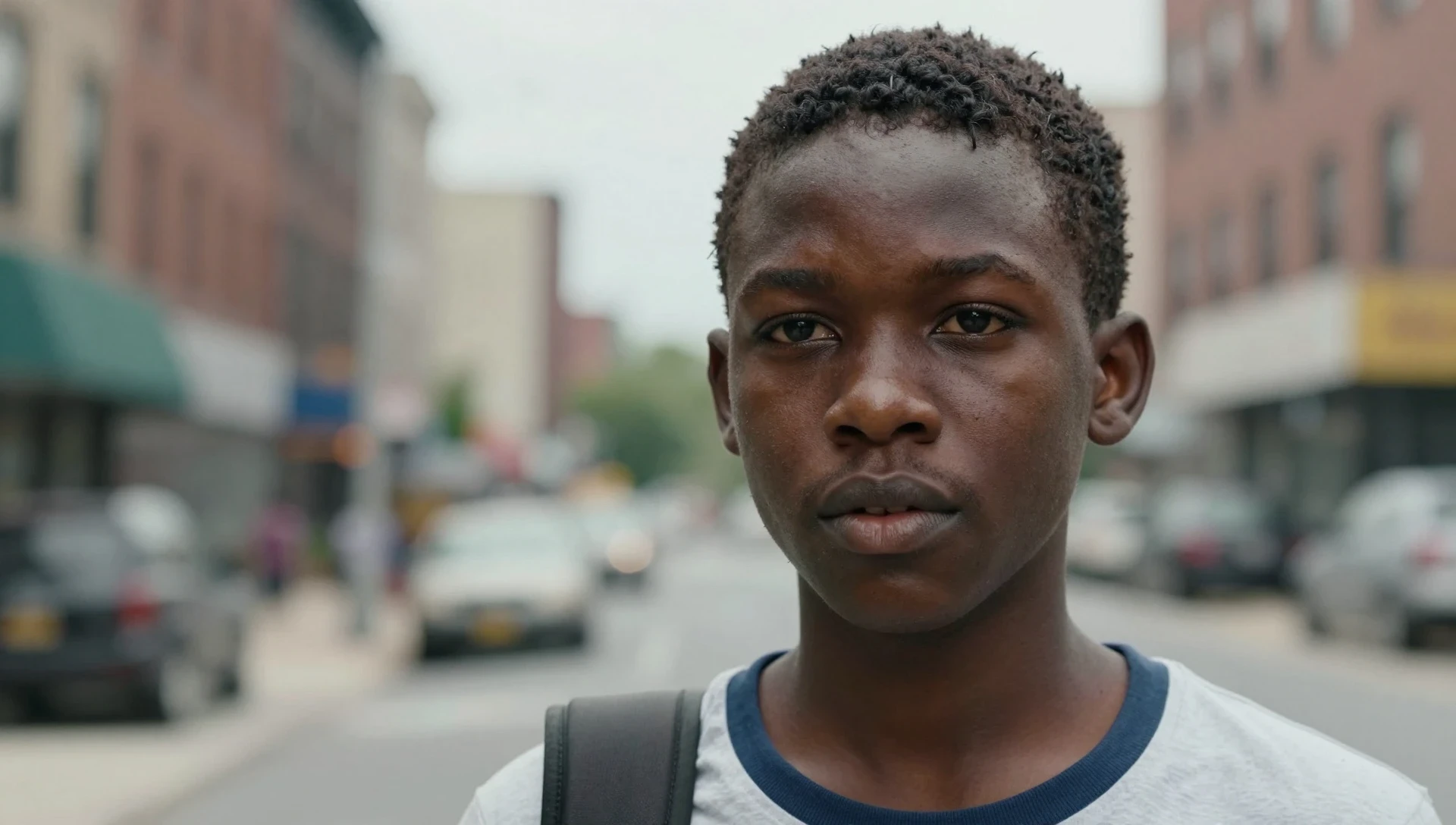
The killing of a fifteen-year-old Ghanaian boy in the Bronx has moved rapidly from a local homicide investigation into a matter of international diplomacy, drawing in the president of the United States, the mayor of New York City, and the government of Ghana within seventy-two hours.
Javits Frimpong was shot in the abdomen at roughly 9:30 a.m. on a Thursday near Crotona Park while walking to school, and was pronounced dead at St Barnabas Hospital.
The speed with which the case acquired a transnational dimension reflects both the compressed news cycle of American urban violence and the political weight that diaspora communities now command.
On This Page
President Donald Trump agreed to grant an immediate visa to the victim's mother, Doris Gyamfi, allowing her to travel from Ghana to see her son's body and say goodbye.
Mayor Zohran Mamdani announced the decision on Saturday following a telephone call with the president, an unusual direct channel between City Hall and the White House on an immigration matter.
The arrangement compresses a visa process that ordinarily takes weeks or months into a matter of days, and it signals how rapidly discretionary executive action can override standard consular procedure when political attention converges.
The case also carries a contested evidentiary dimension. The boy's father, Thomas Frimpong, told CBS News New York that his son had complained of repeated bullying during lunch periods at DreamYard Preparatory School, and that two students had recently been suspended after an altercation involving the teenager.
Ghana's ambassador to the United States, Victor Smith, called for a thorough and impartial investigation, citing reports of racial bullying. Authorities are seeking three boys aged roughly sixteen to eighteen who fled in black tracksuits and blue surgical masks; no arrests had been made and investigators had not established whether Javits was specifically targeted.
TL;DR A fifteen-year-old Ghanaian student, Javits Frimpong, was shot dead near Crotona Park in the Bronx on a Thursday morning while walking to school. President Trump approved an expedited visa for the boy's mother, Doris Gyamfi, after a call with New York Mayor Zohran Mamdani, enabling her to travel from Ghana to see her son's body. The father reported sustained bullying at DreamYard Preparatory School, and Ghana's ambassador demanded an impartial investigation into reports of racial harassment. Three suspects aged sixteen to eighteen remain at large, no arrests have been made, and investigators have not determined whether the victim was specifically targeted.
The Diplomatic Mechanics of an Expedited Visa
The visa concession sits at the intersection of immigration law, municipal politics, and foreign relations, and each of those systems operates on a different clock. A United States B-2 visitor visa for a Ghanaian applicant ordinarily involves a consular interview in Accra, documentary review, and administrative processing that can extend across weeks.
Granting immediate travel authorization to a grieving parent required intervention at the highest executive level, effectively bypassing the queue that governs ordinary applicants from the same country.
How Discretionary Authority Overrides Standard Procedure
American immigration statute vests broad discretion in consular officers and, above them, in the executive branch to expedite or deny entry. Humanitarian parole and expedited visa handling exist precisely for cases of urgent family need, yet access to those mechanisms is uneven and typically depends on advocacy.
The Frimpong case demonstrates that visibility, not eligibility, frequently determines outcomes. Families without a mayor's phone call and a presidential decision rarely see comparable speed.
The comparison with standard processing times is instructive. Ghanaian applicants for B-2 visas have historically faced interview wait times measured in months at the Accra embassy, and administrative processing adds further delay. A decision rendered within days therefore represents an exception of significant magnitude.
The mechanism is lawful and well precedented, but its selective application raises questions about equity that immigration scholars have documented for decades.
Mayor Mamdani's role deserves separate attention. A municipal executive has no formal authority over federal visa issuance, yet the call between City Hall and the White House produced a concrete result within forty-eight hours. This reflects the informal leverage that large-city mayors exercise when a case generates sustained media coverage.
It also illustrates how immigration enforcement and humanitarian relief are administered through personal channels as much as through published regulation.
The Political Economy of Attention
Presidential involvement in an individual homicide case is rare, and its occurrence here reflects several converging pressures. The victim was a child, the killing occurred on a school route in daylight, and the Ghanaian diaspora mobilized quickly. Each factor raised the political cost of inaction.
The visa decision cost the administration almost nothing materially while generating goodwill with an African government and with diaspora voters in several swing states.
Ghana's foreign ministry moved with comparable speed. Foreign Minister Samuel Ablakwa spoke with the father on Friday and assured the family that the government would work with American authorities to pursue accountability, conveying condolences from President John Mahama.
Ambassador Victor Smith's call for an impartial investigation added a formal diplomatic dimension, framing the case as a potential hate crime rather than an isolated act of violence.
Diaspora Politics and Consular Duty
Ghana maintains a substantial diaspora in the United States, concentrated in the Bronx, Brooklyn, and the Washington metropolitan area, and that population has developed organized advocacy capacity over two decades. When a child from that community dies violently, the response is no longer confined to a local police blotter.
Community organizations, church networks, and hometown associations transmit information to Accra within hours, and foreign ministries now treat such cases as tests of consular competence.
The Ghanaian government's public posture reflects this expectation. Ablakwa's call to the father and Smith's statement both signal that the state intends to be seen defending its nationals abroad. For a government facing domestic economic pressure, visible consular advocacy offers a low-cost demonstration of sovereignty and care.
The diplomatic language of "thorough and impartial investigation" is standard, but its repetition here carries domestic political weight.
Bullying, Race, and the Limits of School Safeguards
The evidentiary record on motive remains incomplete, and that incompleteness is itself the central fact of the case. The father's account describes sustained harassment at DreamYard Preparatory School, including incidents serious enough to prompt suspensions. The ambassador's statement references reports of racial bullying.
Yet investigators have not concluded that Javits was targeted, and the suspects' identities and motives remain unknown. Distinguishing between a targeted racial killing and a random armed encounter determines which legal frameworks apply.
What the Father's Account Establishes
Thomas Frimpong's statements to CBS News New York provide the most detailed available account of the school environment. He described a quiet boy who wanted to become a doctor, and he reported that his son had complained about bullying during lunch periods.
He also said two students had recently been suspended following an altercation involving Javits. These claims are specific and testable, and they place the school's disciplinary record squarely within the scope of any serious inquiry.
If the suspensions are confirmed by school records, they establish a documented pattern of conflict preceding the killing. That pattern would not by itself prove that the shooting was connected, but it would oblige investigators to examine whether the same individuals or their associates were involved.
The gap between a parent's account and a police finding is where most such cases are resolved or abandoned, and the quality of school record-keeping often determines which.
DreamYard Preparatory School has not publicly detailed its anti-bullying procedures or its response to the earlier incidents. New York City public schools operate under a citywide discipline code and a bullying reporting system, but compliance varies widely across buildings.
Whether the reported harassment was logged, investigated, and escalated is a question the school system will eventually have to answer, and it bears directly on civil liability.
Racial Bullying and the Hate Crime Question
Ambassador Smith's reference to racial bullying raises the possibility that the killing could be prosecuted as a hate crime under New York law, which permits enhanced penalties when a victim is selected because of race or national origin.
That determination requires evidence of the perpetrators' statements, associations, or conduct beyond the mere fact of a cross-racial killing. Prosecutors would need to establish motive with specificity, and the absence of arrests means no such evidence has yet been tested.
The distinction matters legally and politically. A hate crime designation carries heavier sentencing exposure and signals institutional recognition of a community's grievance. A random shooting produces a different response, focused on gun availability and street violence rather than bias.
Ghanaian community organizations in New York have pressed for the former framing, while police have emphasized that the investigation remains open on motive.
Juvenile Suspects and the Investigation
Police are seeking three boys believed to be between sixteen and eighteen, who reportedly fled wearing black tracksuits and blue surgical masks. Surveillance footage showed a teenager running from another person, a detail that establishes sequence but not identity.
No arrests had been made at the time of reporting, and the investigation's central task is matching footage to individuals and establishing which of the three fired the shot.
New York's juvenile justice framework treats sixteen- and seventeen-year-olds as adults for serious violent felonies under recent reforms, while fifteen-year-olds remain in family court absent transfer. The age range of the suspects therefore determines which court system would hear the case and what sentencing exposure would apply. That procedural detail will shape the outcome as much as the substantive facts.
The masks complicate identification and suggest advance preparation, though they may equally reflect pandemic-era habit or ordinary streetwear. Investigators have not characterized the shooting as a planned ambush. Establishing whether the encounter was premeditated, spontaneous, or connected to the earlier school conflict requires witness cooperation that has not yet materialized publicly.
We Also Published
Gun Access, School Routes, and Community Response
The killing occurred at 9:30 in the morning on a route children walk to school, a circumstance that amplifies public alarm beyond the individual tragedy. Firearm homicides among American adolescents have risen over the past decade, and the Bronx records among the highest rates of gun violence in New York City.
A daytime shooting near a park and a school therefore engages debates about weapons access, street outreach, and the geography of violence simultaneously.
The Geography of Risk in the Bronx
Crotona Park sits in a district that has experienced sustained investment in violence interruption programs alongside persistent firearm incidents. Community-based outreach workers, hospital-based intervention teams, and school safety personnel operate in overlapping jurisdictions that do not always communicate.
The Frimpong case exposes the seams: a boy reportedly reported bullying at school, was allegedly harassed during lunch, and was killed on the street between home and classroom.
School routes are a recognized category of risk in urban safety planning, yet most interventions concentrate on the building itself. Crossing guards, safe passage programs, and after-school escorts address dismissal hours more than morning commutes.
A shooting at 9:30 a.m. falls outside the typical coverage window, and that timing gap is a concrete policy problem rather than an abstraction.
Diaspora Outrage and Its Channels
The killing sparked outrage in Ghana and among Ghanaian communities across the United States, expressed through vigils, social media mobilization, and direct contact with elected officials. Diaspora organizations in the Bronx have long functioned as informal consular intermediaries, and their rapid escalation of the case helped generate the political attention that produced the visa decision. This pattern of community-driven escalation is now a recognizable feature of transnational tragedy.
Ghanaian media covered the killing extensively, and the story dominated domestic bulletins for several days. That coverage created pressure on Accra to act visibly, which in turn reinforced the American response.
The feedback loop between diaspora grief, home-country media, and diplomatic communication compressed what might once have taken weeks into a single weekend of official activity.
The longer-term question is institutional rather than emotional. Whether the case produces changes in school bullying enforcement, consular rapid-response protocols, or violence interruption coverage on school routes depends on follow-through that outlasts news cycles. Historically, most such cases fade after the funeral, and the policy residue is thin.
The Frimpong family's access to the president and the mayor is exceptional; the conditions that produced the killing are not.
Accountability and the Unresolved Questions
Three suspects remain at large, and the investigation's progress will determine whether the case yields convictions or joins the substantial share of Bronx homicides that go unsolved. Clearance rates for firearm homicides in New York City have improved but remain well below the levels recorded in the 1990s.
Witness cooperation, surveillance analysis, and community trust are the binding constraints, and each is fragile in the aftermath of a high-profile killing.
Ghana's request for a thorough and impartial investigation places the case under external scrutiny that local prosecutors rarely face. That scrutiny is useful but limited: foreign governments can request, not compel.
The substantive work belongs to the New York Police Department and the Bronx district attorney, whose decisions on charging and bias designation will be read closely in Accra and in the Bronx alike.
What the Case Reveals About Transnational Justice
The Frimpong killing compresses several distinct policy domains into a single event: immigration discretion, school safety, gun access, diaspora politics, and the machinery of international consular protection. Each domain has its own experts, budgets, and failure modes, and none coordinates reliably with the others.
The result is a case in which a grieving mother's travel depended on a presidential phone call while the underlying conditions that produced the death remain untouched.
Discretion, Visibility, and Unequal Access
Executive discretion in visa matters is broad, lawful, and unevenly distributed. Families with political connections, media attention, or organized community backing obtain relief that identically situated families do not.
This is not a novel observation, but the Frimpong case makes it concrete: the difference between weeks and days was a mayor's telephone call. Acknowledging that mechanism honestly is a precondition for any serious debate about immigration administration.
The same logic applies to investigative resources. High-profile homicides receive more detective hours, more forensic attention, and more prosecutorial scrutiny than routine killings in the same precinct. The Ghanaian government's request for impartiality is, in effect, a request that the case be treated as ordinary rather than exceptional, which is precisely what visibility tends to prevent.
Schools as the First Line of Detection
If the father's account is accurate, the school system had documented warning signs before the killing. Suspensions following an altercation involving Javits constitute institutional knowledge that a conflict existed.
Whether that knowledge was acted upon, shared with families, or escalated to safety personnel is the central accountability question for the education system, and it is answerable through records rather than speculation.
New York City's bullying reporting requirements are detailed on paper and inconsistently implemented in practice. Schools with strong leadership log incidents, contact parents, and coordinate with safety agencies; others treat reporting as administrative burden.
The gap between policy and practice is where most prevention fails, and it is measurable if anyone chooses to measure it.
The Measure of a Response
Judging the response requires distinguishing between symbolic and structural action. The visa decision is symbolic in the sense that it addresses a family's immediate need without altering any system. It is also concrete and consequential for Doris Gyamfi, who will be able to see her son's body and say goodbye. Both things are true, and reducing the case to either dimension misreads it.
Structural action would look different: published data on bullying reports and their resolution, expanded safe-passage coverage during morning hours, and clearer protocols for consular notification when a national is killed abroad. None of these requires new legislation.
Each requires administrative attention that typically arrives only after a death, and rarely survives the next news cycle.
The Frimpong family's loss is not a policy case study, and treating it as one risks obscuring the specific grief at its center. Yet the questions the killing raises are legitimate and answerable.
Whether New York and Accra answer them depends on whether the attention that produced a visa in seventy-two hours can be sustained long enough to produce records, protocols, and arrests.
From our network :
- How AI Agents Will Change the Way We Manage Personal FinancesExplore how AI agents are transforming personal finance through automated budgeting, bill payment, and investment management, while examining the critical security protocols and governance frameworks required for safe deployment.
- The Hidden Cost of AI Convenience: Why Over-Permissioned Agents Are a Security Time BombDiscover why AI agents with excessive permissions create dangerous single points of failure, and learn how implementing least privilege principles can protect your organization from exploitation.
- Live Online English Classes for Kids: Do They Actually Reduce Anxiety?A ten-week study reveals that synchronous online English classes can significantly reduce child language anxiety while improving listening and reading skills. Discover what makes these programs effective and how parents can select the right one.
- Forbidden Matrix Patterns and Visible Lattice Points: A Geometric DictionaryExplore how multidimensional 0–1 matrices encode geometric truths, linking forbidden patterns to visible lattice points and hypergraph theory, with applications in combinatorics and computational geometry.
- Mobile Learning and VR in English: What Global Evidence Reveals About Effective Language TechnologyA systematic review across 14 countries reveals which language-learning technologies genuinely work. Mobile learning, AI, and VR show measurable benefits when pedagogically integrated. This evidence-based guide helps educators and learners select technology that delivers real return on investment.
- University Language Proficiency Exams: Why Institutional Tests Demand Different Preparation Than IELTS and TOEFLDiscover why university-specific language proficiency examinations differ fundamentally from IELTS and TOEFL, and learn strategic preparation approaches for institutional assessment success.
- Committed Mediterranean Precipitation Decline: Why Emissions Cuts Alone Cannot Restore Winter RainsNew NOAA research reveals that Mediterranean winter rains may decline irreversibly even with emissions cuts. Explore the science of committed climate change and regional impacts.
- CISA’s Ten-Advisory Wave: Why Generic Patching Fails in OT and How to Build Product-Specific PlaybooksCISA released ten ICS advisories in one week, exposing critical infrastructure risks. Generic patching fails in OT. Learn to build product-specific remediation playbooks.
- The Final Descent: How ESA Retired the Legendary Cluster Constellation After 24 Years of Space Weather ScienceAfter 24 years mapping Earth’s magnetosphere, ESA’s Cluster mission concluded with a precisely controlled reentry over the South Pacific. This analysis explores the scientific legacy, engineering decisions, and debris mitigation principles behind one of space exploration’s most responsible retirements.
RESOURCES
- Javits Frimpong, 15, mourned by Bronx community - ABC7 New Yorkabc7ny.com2 days ago ... The teen's mother is trying to travel to New York to see her son's body. The shooting comes as city…
- Mother of Teen Killed in the Bronx Gets Visa After Mamdani-Trump ...nytimes.com2 days ago ... Javits Frimpong, 15, died on Thursday after being shot close to his home near Crotona Park, the police said. The…
- Mamdani says Trump to grant visa to mother of boy killed in Bronx ...aljazeera.com24 hours ago ... ... Ghanaian boy who was shot dead in the Bronx will be granted a visa. ... list 3 of 3The…
- The teen, Javits Frimpong, was on his way to school in a Bronx ...facebook.com1 day ago ... ... teen-killed-in-bronx- shooting/74303890?utm_campaign=snd- autopilot. wesh.com. Mamdani says Trump agrees to grant visa to mother of Ghanaian.
- Fifteen-year-old Javits Frimpong was shot dead on his way to school ...instagram.com7 hours ago ... ... visa to the mother of 15-year-old Ghanaian teenager Javits Frimpong, who was tragically shot dead in the Bronx. The…
- Mamdani says Trump agrees to grant visa to mother of Ghanian teen ...wsls.com1 day ago ... The teen, Javits Frimpong, was on his way to school in a Bronx neighborhood shortly before 9:30 a.m. Thursday when…
- Mayor Mamndai posted to X on Saturday, saying the mother of 15 ...instagram.com2 days ago ... Javits Frimpong's mother will be granted a visa so she can say goodbye to her son who was shot and…
- Bullied Ghana teenager shot to death on his way to school in Bronxtimesofindia.indiatimes.com1 day ago ... US President Donald Trump has agreed to grant an immediate visa to the mother of 15-year-old Javits Frimpong, who was…
- Trump agree to grant visa to mother of Ghanaian boy wey dem kpai ...bbc.com1 day ago ... Outrage and reactions ova killing of Javits Frimpong. Di mother of di murdered teenager, Doris Adu Gyamfi, wey dey live…
- Trump agreed to grant visa for Ghanaian mom of slain Bronx teen ...nypost.com1 day ago ... “Javits Frimpong's mother deserves to say goodbye to her son in person. I just got off the phone with President…
- Mamdani says Trump agreed to grant visa to Javits Frimpong's ...thegrio.com1 day ago ... Javits Frimpong's family mourns the slain Bronx teen as A ... 15-year-old Ghanaian teen Javits Frimpong was fatally shot in…
- Mamdani Says Trump Agrees to Grant Visa to Mother of Ghanian ...usnews.com1 day ago ... ... visa. The teen, Javits Frimpong, was on his way to school in a Bronx neighborhood shortly before 9:30 a.m.…
- Mamdani says Trump has agreed to grant visa to mother of Ghanian ...thehindu.com1 day ago ... Mamdani claims Trump will grant a visa to the late Ghanaian teen Javits Frimpong's mother amid a Bronx shooting tragedy.
- Trump Grants Immediate US Visa To Mother Of Ghanaian Teenager ...saharareporters.com15 hours ago ... Trump Grants Immediate US Visa To Mother Of Ghanaian Teenager Javits Frimpong Shot Dead In New York ... Ghanaian community…
- Mamdani: Trump agrees to grant visa to mother teen killed - CTV Newsctvnews.ca1 day ago ... The teen, Javits Frimpong, was on his way to school in a Bronx neighbourhood shortly before 9:30 a.m. Thursday when…
- 01
- 02
- 03
- 04
- 05
- 06
- 07
- 08
0 Comments