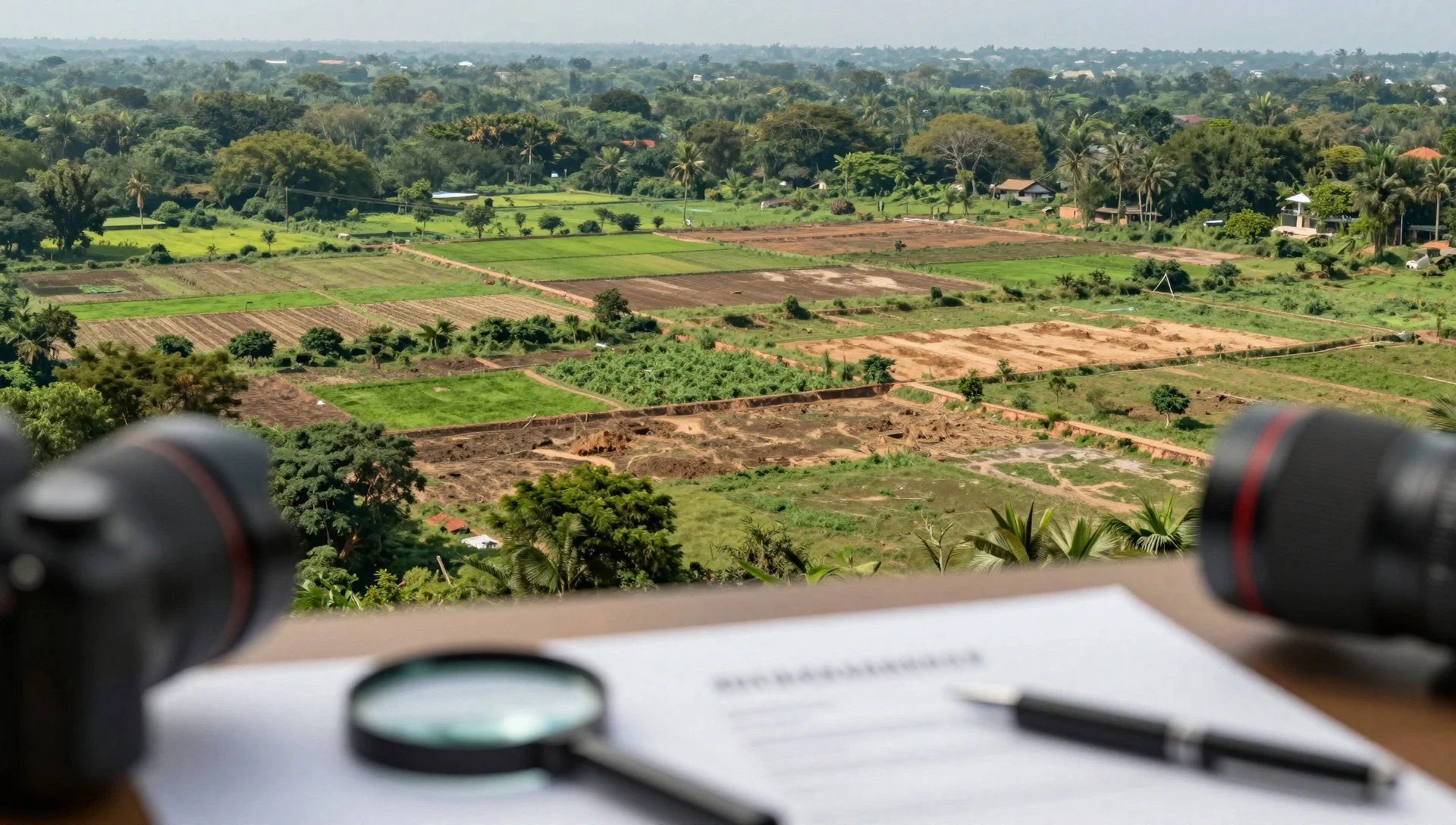
Kerala's political establishment has entered a confrontation over the fiscal architecture of one of India's most unusual infrastructure financing vehicles. On 31 October 2026, Leader of the Opposition Pinarayi Vijayan characterised the state government's order for a Vigilance and Anti-Corruption Bureau probe into a KIIFB-financed land acquisition in Kannur as a "sub-standard political drama."
The investigation concerns 4,896 acres acquired at a stated cost of ₹12,240 crore, a transaction executed during the previous LDF administration.
The dispute is not merely procedural. It tests whether a state-level extra-budgetary borrowing entity can be subjected to conventional anti-corruption scrutiny without paralysing the investment pipeline it was designed to accelerate.
On This Page
Vijayan argues the acquisition traces to a process initiated roughly two decades earlier and continued under the previous UDF government, making the framing of it as a recent decision factually misleading. The Satheesan-led government counters that procedural lapses justify an independent inquiry.
Beneath the exchange lies a documented evidentiary thread: an expert committee chaired by former bureaucrat Sudha Pillai reviewed KIIFB operations and questioned the rationale for concentrating such a large share of spending on land acquisition in a single district. That finding supplies the technical predicate for scrutiny, independent of party politics.
This analysis examines the transaction's scale, the institutional mechanics of KIIFB, and the governance questions the probe raises.
TL;DR Pinarayi Vijayan has dismissed a Vigilance probe into KIIFB's ₹12,240 crore acquisition of 4,896 acres in Kannur as politically motivated theatre, noting the land process began two decades ago and continued under the prior UDF government. The Satheesan administration ordered the VACB inquiry without a departmental report, citing procedural lapses. A Sudha Pillai-led expert committee had already questioned the concentration of KIIFB spending on Kannur land. The case crystallises the tension between extra-budgetary infrastructure financing and conventional accountability mechanisms in Kerala.
The Kannur Land Acquisition and the Politics of Timing
The core factual dispute turns on chronology. Vijayan asserts the Kannur acquisition is the continuation of a land-assembly process that began approximately twenty years ago and persisted through the previous UDF government's tenure.
If that timeline holds, the decision cannot be characterised as a recent LDF initiative, and the government's framing becomes a question of political selection rather than factual discovery.
What the ₹12,240 Crore Figure Represents
The acquisition covers 4,896 acres at an aggregate cost of ₹12,240 crore, implying an average outlay of roughly ₹2.5 crore per acre. That unit economics matters because land assembly at this scale in northern Kerala involves heterogeneous parcels, resettlement obligations, and valuation disputes that rarely resolve at a uniform rate.
KIIFB financing means the expenditure is serviced through the board's borrowing programme rather than the state's annual budget. This structure allows large capital commitments without immediate fiscal deficit impact, but it also defers the accountability question: who authorised the valuation, and against which benchmark was it tested?
The Twenty-Year Continuity Argument
Vijayan's continuity argument is analytically significant because it reframes culpability. A process spanning multiple administrations distributes decision-making across different governments, making a targeted probe of one period appear selective. The counter-argument is equally coherent: continuity of intent does not immunise any single tranche of expenditure from procedural review.
Both propositions can be true simultaneously. A long-running acquisition programme may be legitimate in conception while individual transactions within it exhibit documentation gaps. The Vigilance inquiry's credibility therefore depends on whether it examines the specific procedural record or merely the political provenance of the decision.
Why Kannur and Palakkad Are Contested Ground
The government's stated development rationale links the acquisitions to Kannur International Airport and the Kochi–Bengaluru industrial corridor. Vijayan contends that blocking industrial growth in these districts would harm employment and economic progress, framing the probe as an obstacle to investment rather than a safeguard of public funds.
This is the substantive stakes of the dispute. Kannur's airport connectivity and Palakkad's position on the industrial corridor represent genuine growth assets. If scrutiny deters future land assembly, the cost is measured in delayed projects and foregone employment rather than in the ₹12,240 crore alone.
We Also Published
KIIFB, the Sudha Pillai Findings, and the Accountability Gap
KIIFB was created to fund large infrastructure through innovative borrowing instruments, including masala bonds, outside the state's conventional budget cycle. That design delivers speed but complicates oversight, because expenditure decisions sit with a board rather than a department subject to routine legislative appropriation scrutiny.
How the Financing Structure Works
The board raises capital against future revenue streams and allocates it to projects approved through its own governance process. Land acquisition financed this way converts borrowed money into illiquid assets, which is defensible only if the land is deployed for productive infrastructure within a reasonable horizon.
This is where the Sudha Pillai committee's observation acquires weight. A review committee questioning the rationale for the large share of spending on Kannur land acquisition is not making a political statement; it is interrogating the asset-liability match that underpins the entire KIIFB model.
The Missing Departmental Report
Vijayan's sharpest procedural objection is that the government ordered the VACB investigation with pre-conceived notions, without a department-level investigation or any report. This matters because anti-corruption inquiries typically rest on a preliminary factual foundation, not on political direction.
If no departmental assessment preceded the order, the probe risks being characterised as an instrument of political signalling. Conversely, if the expert committee's findings constitute sufficient predicate, the absence of a departmental report is less decisive than Vijayan suggests.
VACB and the Question of Institutional Use
The Vigilance and Anti-Corruption Bureau is a specialised investigative body whose credibility depends on perceived insulation from executive direction. Vijayan's claim that the move misuses the VACB according to a politically motivated plan is therefore an attack on institutional neutrality, not merely on the probe's subject matter.
Every such allegation carries a reciprocal cost. If the probe is politically driven, it damages the VACB. If the allegation of political motivation is itself unfounded, it damages the credibility of those who made it. Both institutions bear reputational exposure.
Precedent for Extra-Budgetary Vehicles
Kerala is not alone in using off-budget entities to finance infrastructure. Several states operate similar vehicles, and the national debate over public financial management has increasingly focused on contingent liabilities that sit outside headline deficit figures.
The Kannur case therefore has implications beyond one district. If a state's flagship extra-budgetary vehicle becomes vulnerable to investigation each time political power changes hands, the model's viability depends on something more fragile than credit markets: political continuity.
- 01
- 02
- 03
- 04
Reading the Political Economy Behind the Probe
The confrontation between Vijayan and the Satheesan government reflects a broader pattern in Indian state politics: infrastructure decisions made under one administration become investigative targets under the next. The pattern is not unique to Kerala, but the scale of KIIFB's balance sheet makes the stakes unusually high here.
What the Investigation Must Establish
A credible inquiry would need to establish three things: whether the land valuation followed prescribed procedure, whether the acquisition's scale was justified by project requirements, and whether the financing structure obscured costs that should have been disclosed to the legislature.
Each of these is a technical question answerable through documents. The political noise around the probe is largely a distraction from this documentary core. If the VACB produces a reasoned report addressing these points, the process will have served a legitimate function regardless of its political origins.
The Employment and Investment Argument
Vijayan's warning that blocking industrial growth in Kannur and Palakkad would harm employment deserves analytical weight. Infrastructure corridors generate employment through construction, logistics, and ancillary services, and delays compound costs across the project lifecycle.
Yet the argument cuts both ways. Investment deterred by corruption risk is also a cost, and investors price governance uncertainty into their decisions. The optimal outcome is not the abandonment of scrutiny but its completion with speed and transparency.
Implications for Kerala's Fiscal Credibility
Kerala's fiscal position is already constrained by high revenue expenditure commitments and limited own-tax revenue growth. KIIFB's borrowing capacity depends on lender confidence in the state's repayment discipline and in the board's governance standards.
A prolonged, inconclusive investigation would raise borrowing costs and delay project execution. A swift, evidence-based resolution would strengthen the model's credibility. The difference between these outcomes is measured in basis points on future bond issuances.
Comparative State Practice
Other Indian states have faced similar questions about off-budget borrowing vehicles, and the general response has been to strengthen disclosure rather than dismantle the structures. Kerala's choice between these paths will signal how it balances growth ambition against accountability.
The Kannur transaction, at ₹12,240 crore for 4,896 acres, is large enough to matter for the state's fiscal narrative. It is also small enough, relative to KIIFB's total portfolio, that a reasoned resolution could preserve the model while correcting its procedural weaknesses.
What to Watch Next
The decisive variable is whether the VACB investigation produces a documented report within a defined timeframe. A probe that concludes with specific findings will clarify the procedural record; one that lingers without conclusion will deepen the political contestation.
Secondary indicators include KIIFB's future bond pricing, the pace of land assembly in Palakkad, and whether the state government introduces disclosure reforms for off-budget vehicles. Each of these will reveal whether the Kannur episode becomes a corrective precedent or a recurring political weapon.
From our network :
- The Final Descent: How ESA Retired the Legendary Cluster Constellation After 24 Years of Space Weather ScienceAfter 24 years mapping Earth’s magnetosphere, ESA’s Cluster mission concluded with a precisely controlled reentry over the South Pacific. This analysis explores the scientific legacy, engineering decisions, and debris mitigation principles behind one of space exploration’s most responsible retirements.
- Forbidden Matrix Patterns and Visible Lattice Points: A Geometric DictionaryExplore how multidimensional 0–1 matrices encode geometric truths, linking forbidden patterns to visible lattice points and hypergraph theory, with applications in combinatorics and computational geometry.
- The Hidden Cost of AI Convenience: Why Over-Permissioned Agents Are a Security Time BombDiscover why AI agents with excessive permissions create dangerous single points of failure, and learn how implementing least privilege principles can protect your organization from exploitation.
- University Language Proficiency Exams: Why Institutional Tests Demand Different Preparation Than IELTS and TOEFLDiscover why university-specific language proficiency examinations differ fundamentally from IELTS and TOEFL, and learn strategic preparation approaches for institutional assessment success.
- CISA’s Ten-Advisory Wave: Why Generic Patching Fails in OT and How to Build Product-Specific PlaybooksCISA released ten ICS advisories in one week, exposing critical infrastructure risks. Generic patching fails in OT. Learn to build product-specific remediation playbooks.
- Mobile Learning and VR in English: What Global Evidence Reveals About Effective Language TechnologyA systematic review across 14 countries reveals which language-learning technologies genuinely work. Mobile learning, AI, and VR show measurable benefits when pedagogically integrated. This evidence-based guide helps educators and learners select technology that delivers real return on investment.
- How AI Agents Will Change the Way We Manage Personal FinancesExplore how AI agents are transforming personal finance through automated budgeting, bill payment, and investment management, while examining the critical security protocols and governance frameworks required for safe deployment.
- Committed Mediterranean Precipitation Decline: Why Emissions Cuts Alone Cannot Restore Winter RainsNew NOAA research reveals that Mediterranean winter rains may decline irreversibly even with emissions cuts. Explore the science of committed climate change and regional impacts.
- Live Online English Classes for Kids: Do They Actually Reduce Anxiety?A ten-week study reveals that synchronous online English classes can significantly reduce child language anxiety while improving listening and reading skills. Discover what makes these programs effective and how parents can select the right one.
RESOURCES
- Resources will be updated soon.
- 01
- 02
- 03
- 04
- 05
- 06
- 07
- 08
0 Comments