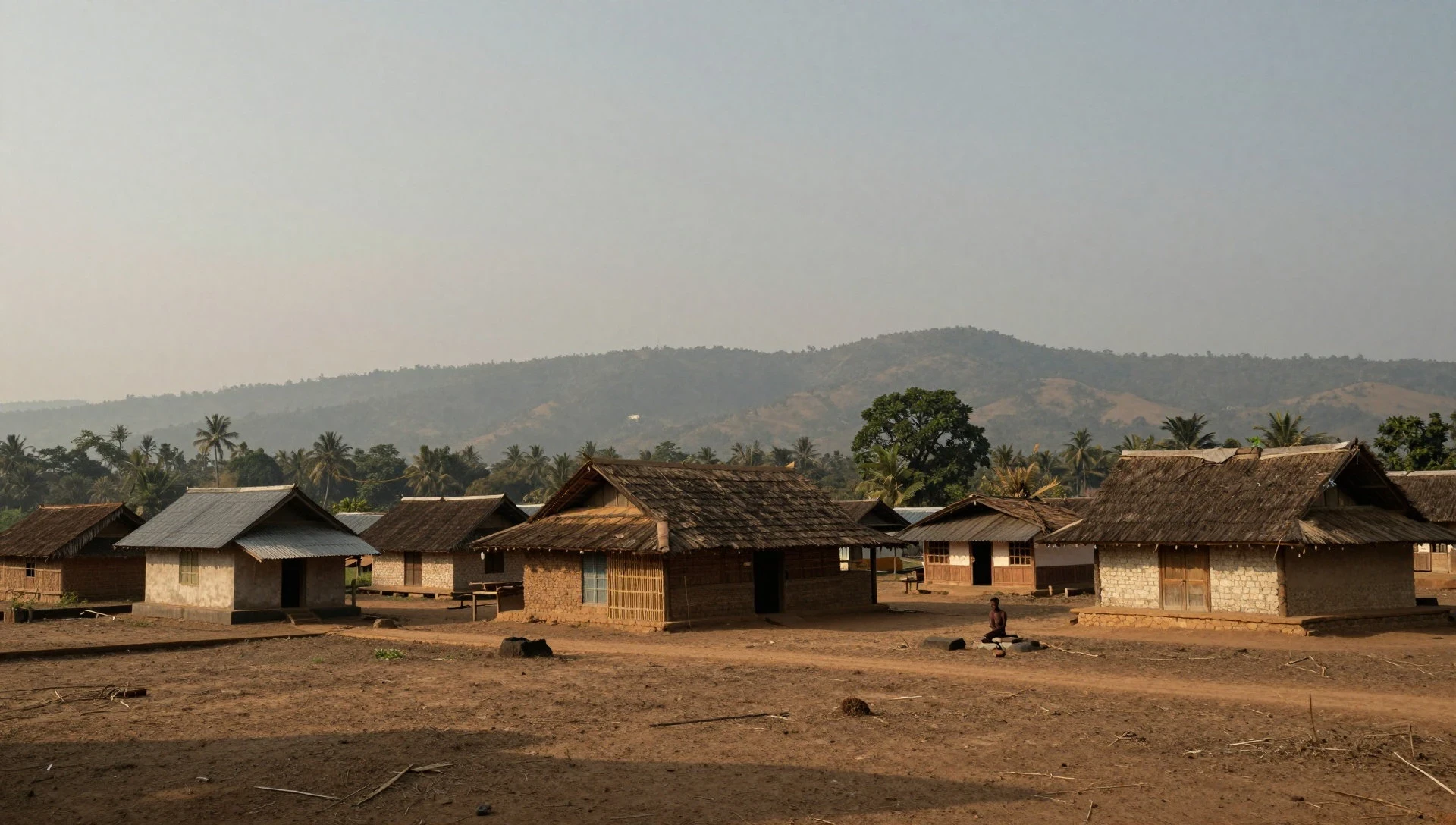
Twelve infant deaths in Attappady, a tribal-dominated block spread across Kerala's Palakkad district, have reopened one of the state's most persistent public health disputes. Ten of the deceased children belonged to indigenous communities, a proportion that sharpens the political charge of the episode.
The state government has ordered an expert investigation, while tribal organisations insist the mortality figures are symptoms of structural deprivation rather than isolated clinical failures.
The numbers cited by tribal activists extend well beyond a single year. Since 2011, they estimate 124 infant deaths in the region, alongside roughly 300 abortions, 90 intrauterine deaths and about two dozen stillbirths recorded since 2012.
On This Page
The 2013 episode, when 47 tribal infants died, first drew national attention to Attappady; observers now describe an attrition rate of approximately ten child deaths annually, sustained across more than a decade.
What distinguishes this crisis is the convergence of health indicators with questions of land, nutrition and maternal wellbeing. Widespread anaemia among pregnant women, underweight mothers and low birth weight among newborns form a mutually reinforcing cycle of risk.
This analysis examines the mortality record, the clinical and socio-economic drivers behind it, and the accountability questions the expert investigation must confront.
TL;DR Twelve infant deaths in Attappady this year, ten of them among tribal families, have triggered an expert inquiry in Kerala. Tribal organisations argue that malnutrition, anaemia, maternal underweight and landlessness, not healthcare alone, drive the mortality record of 124 infant deaths since 2011. The 2013 spike of 47 deaths established the pattern; sustained action on nutrition, maternal health and land rights remains the unresolved test.
The Mortality Record: What the Attappady Figures Actually Show
The Attappady data set is unusual because it spans more than a decade and combines live-birth outcomes with pregnancy loss. Tribal activists place infant deaths at 124 since 2011, a figure that averages roughly ten per year.
Around 300 abortions, 90 intrauterine deaths and two dozen stillbirths since 2012 complete a picture of cumulative reproductive health stress rather than episodic tragedy.
The 2013 Inflection Point
Forty-seven tribal infant deaths in 2013 transformed Attappady from a local concern into a state-level crisis. That year established the benchmark against which every subsequent annual count is measured.
The fact that roughly a decade later the region still records about ten deaths annually suggests that the interventions triggered by 2013 did not alter the underlying determinants of infant survival.
Comparisons with Kerala's broader record are stark. The state has historically reported infant mortality rates among the lowest in India, a reputation built on institutional delivery, immunisation coverage and female literacy. Attappady's persistent losses therefore represent an internal divergence, not a generalised state failure. The gap between Kerala's aggregate performance and this tribal block is the analytical core of the problem.
Attribution matters here. A single-year count of twelve deaths can be read as a spike or as continuity, depending on the baseline chosen. Tribal observers favour the long-run view, arguing that annual attrition of about ten children is the more honest metric. The expert investigation will need to reconcile both readings before any policy response can be judged credible.
Reading the Pregnancy Loss Data
The 300 abortions, 90 intrauterine deaths and two dozen stillbirths recorded since 2012 are analytically significant because they precede infant mortality in the causal chain. High rates of pregnancy loss typically signal maternal nutritional deficiency, untreated infection and inadequate antenatal monitoring.
When these losses cluster in one tribal block, the explanation shifts from individual behaviour to systemic service gaps.
Demographic arithmetic reinforces the concern. A block recording roughly ten infant deaths annually alongside substantial pregnancy loss is losing a measurable share of each birth cohort. Over fifteen years, the cumulative effect on community size and household composition becomes visible.
Mortality at this scale is not merely a health statistic; it is a demographic event with social consequences.
Reporting quality also deserves scrutiny. Civil registration in remote tribal habitations is often incomplete, and activist counts may capture deaths that official records miss. Conversely, official figures may classify causes in ways that obscure nutritional origins. The expert investigation's first methodological task is to establish a verified denominator before interpreting any rate.
Kerala's Internal Divergence
Kerala's aggregate infant mortality performance has long anchored its human development reputation. Attappady complicates that narrative by demonstrating that aggregate indicators can conceal severe localised deprivation. A state can post exemplary averages while a specific tribal population experiences outcomes closer to national or sub-national averages elsewhere in India.
This divergence is not accidental. Tribal habitations in Attappady are characterised by dispersed settlement, difficult terrain and limited transport connectivity, all of which raise the cost of accessing antenatal and emergency obstetric care. Distance becomes a clinical variable when a complication requires referral within a narrow window. Geography, in this setting, functions as a determinant of survival.
The comparison with Kerala's coastal and central districts is instructive. Those regions benefit from dense facility networks and reliable road access, enabling timely intervention. Attappady's topography and settlement pattern invert that advantage. Any credible policy response must therefore address service delivery design, not simply staffing levels at existing facilities.
Clinical and Social Drivers Behind Infant Mortality
Infant mortality in Attappady cannot be reduced to a single cause, and the evidence points instead to a cluster of interacting risk factors. Maternal anaemia, underweight status at conception, low birth weight among newborns and delayed care-seeking form a sequence in which each element amplifies the next. Interventions targeting only one link in that chain tend to produce limited results.
Anaemia and Maternal Nutritional Status
Widespread anaemia among pregnant women is the most frequently cited clinical finding in Attappady. Anaemia raises the risk of preterm delivery, low birth weight and maternal complications during labour. When prevalence is high across an entire population, individual supplementation programmes struggle to compensate for underlying dietary deficiency and infection burden.
Underweight mothers compound the problem. Maternal body mass index below threshold values is associated with restricted fetal growth, and the resulting low birth weight infants face elevated neonatal mortality risk. The relationship is dose-dependent: the lower the maternal weight, the higher the probability of adverse outcome. Population-level underweight therefore translates directly into population-level infant loss.
Nutritional status is not solely a matter of food availability. It reflects dietary diversity, infection exposure, antenatal care quality and women's access to rest during pregnancy. In Attappady, these determinants intersect with poverty and landlessness. A clinical intervention that ignores the socio-economic substrate will treat symptoms while the underlying vulnerability persists.
Landlessness and Economic Precarity
Tribal organisations consistently link the health crisis to landlessness. Without secure land tenure, households lack a stable agricultural base, fuelwood access and collateral for credit. The result is chronic income volatility, which in turn constrains dietary quality and the ability to fund travel for medical care. Land policy thus becomes health policy in practical terms.
Economic precarity also shapes care-seeking behaviour. When a household must choose between a day's wage and a clinic visit, the wage often prevails, particularly for routine antenatal checks. This calculus is rational under conditions of scarcity but produces delayed detection of complications. The health system's design must account for that rationality rather than assume non-compliance.
Migration for seasonal labour adds another layer. When pregnant women or their partners move for work, continuity of antenatal care breaks down. Records do not follow patients across jurisdictions, and high-risk pregnancies may go unmonitored for weeks. Fragmented care pathways are a structural feature of labour-dependent tribal economies, not an anomaly.
Access, Distance and Service Design
Attappady's settlement pattern disperses tribal hamlets across hilly terrain, and road connectivity to health facilities remains uneven. For obstetric emergencies, the critical variable is time to definitive care. A facility that is adequately staffed but three hours away offers limited protection when haemorrhage or obstructed labour develops.
Referral systems compound the distance problem. Effective emergency obstetric care requires reliable transport, pre-notification of receiving facilities and blood availability on arrival. Where any of these elements fails, the referral chain becomes a source of delay rather than a solution. Tribal health advocates have long argued that these operational gaps, not staff absence alone, drive outcomes.
Cultural and linguistic dimensions of service delivery also matter. Trust in health workers influences whether families present early or late. Where past interactions have been marked by insensitivity or communication failure, reluctance to seek care is understandable. Service design that incorporates tribal health workers and local languages addresses this barrier directly.
We Also Published
Accountability, Investigation and the Policy Test
The political dispute surrounding the deaths has produced a familiar sequence: public accusation, official denial, then an expert inquiry. What matters analytically is whether the investigation's mandate extends beyond clinical case review to the socio-economic determinants tribal organisations have identified. A narrow audit of hospital protocols would leave the structural drivers untouched.
What the Expert Investigation Must Establish
First, the inquiry must verify the mortality denominator. Activist counts and civil registration data diverge, and credible rate calculation requires reconciliation. Second, it must classify causes using standard perinatal audit methods, distinguishing nutritional, obstetric, infectious and care-delay factors. Without that classification, policy responses remain speculative.
Third, the investigation should map care pathways for each death, recording time from symptom onset to first contact, referral and definitive treatment. This timeline approach converts individual tragedies into system diagnostics. Where delays cluster at a specific node, the intervention target becomes evident. Case-by-case pathway analysis is standard practice in maternal death reviews and should apply here.
Fourth, the mandate must include land and livelihood data. If landlessness correlates with adverse outcomes, the inquiry should say so explicitly. Health investigations often stop at the clinic door, leaving the social determinants formally unexamined. Attappady's history suggests that boundary is precisely where the explanation lies.
Why Previous Interventions Underdelivered
The 2013 crisis generated attention, committees and programme announcements. Yet the annual attrition rate of roughly ten deaths has persisted. This pattern suggests either that interventions addressed the wrong determinants or that implementation faltered at the last mile. Both possibilities warrant examination, and they are not mutually exclusive.
Nutrition programmes often operate through supplementary feeding, which addresses caloric intake but not dietary diversity or infection burden. Maternal health programmes focus on antenatal visits, which are ineffective if women present late. Land reform commitments stall in administrative and legal complexity. Each intervention is individually reasonable but collectively insufficient when deployed in isolation.
Implementation capacity is the recurring constraint. Remote tribal habitations require staffing models that account for isolation, and retention of health workers in such postings is difficult. Programmes designed at the state level frequently assume implementation conditions that do not exist locally. The gap between design and delivery is where outcomes are lost.
- 01
- 02
- 03
- 04
Measuring Success Beyond Annual Counts
Annual death counts are necessary but insufficient as a performance metric. A credible monitoring framework would track maternal anaemia prevalence, low birth weight incidence, antenatal care timing and referral completion rates. These intermediate indicators respond faster than mortality and reveal whether programmes are functioning before deaths accumulate.
Consider the arithmetic of risk. If anaemia prevalence among pregnant women falls from a high baseline to a moderate one, the expected reduction in low birth weight follows a predictable gradient. Tracking that gradient provides early evidence of programme effect. Mortality counts, by contrast, are noisy at small numbers and can mislead in either direction.
Community participation in monitoring is equally important. Tribal organisations have generated the most consistent data on Attappady's losses, yet they are often excluded from formal review mechanisms. Incorporating their records and observations into official surveillance would improve both coverage and trust. Data collection is never politically neutral in a contested setting.
The Political Economy of Attention
Attappady's mortality record follows a pattern common to marginalised regions: attention concentrates after a visible spike, then dissipates. The 2013 episode produced national coverage and state commitments; the intervening years produced roughly ten deaths annually with limited public scrutiny. Attention cycles, not epidemiological trends, have driven the policy response.
This dynamic has distributional consequences. Communities without political voice depend on episodic outrage to secure resources, an unreliable mechanism at best. Institutionalising surveillance and reporting would decouple resource allocation from media cycles. The expert investigation offers an opportunity to build such a mechanism, provided its recommendations include standing monitoring obligations.
The comparison with Kerala's overall health governance is instructive. The state's routine systems perform well where populations are dense and accessible. Where they are not, performance depends on exceptional effort rather than standard process.
Attappady tests whether Kerala's administrative model can be adapted to its most difficult terrain and its most excluded citizens.
The Attappady record resists simplification. Twelve deaths this year, ten among tribal children, sit atop a decade-long pattern of roughly ten annual losses and substantial pregnancy wastage. Kerala's aggregate health indicators remain exemplary, yet this tribal block demonstrates that averages can conceal concentrated deprivation. The expert investigation is a necessary step, but its value depends on scope.
If the inquiry confines itself to clinical protocols, it will replicate the limitations of previous responses. If it examines nutrition, maternal status, land tenure, transport and care pathways together, it can produce a diagnostic account that matches the problem's structure.
Tribal organisations have already supplied the essential insight: the crisis is social and economic as much as medical.
The policy test is straightforward. Sustained reduction in Attappady's infant mortality requires intermediate indicators to move: anaemia prevalence down, birth weights up, antenatal contact earlier, referrals completed. Those movements are measurable within months, not years. Whether Kerala's administration treats them as obligations or as optional aspirations will determine the next decade's count.
From our network :
- Committed Mediterranean Precipitation Decline: Why Emissions Cuts Alone Cannot Restore Winter RainsNew NOAA research reveals that Mediterranean winter rains may decline irreversibly even with emissions cuts. Explore the science of committed climate change and regional impacts.
- Forbidden Matrix Patterns and Visible Lattice Points: A Geometric DictionaryExplore how multidimensional 0–1 matrices encode geometric truths, linking forbidden patterns to visible lattice points and hypergraph theory, with applications in combinatorics and computational geometry.
- The Final Descent: How ESA Retired the Legendary Cluster Constellation After 24 Years of Space Weather ScienceAfter 24 years mapping Earth’s magnetosphere, ESA’s Cluster mission concluded with a precisely controlled reentry over the South Pacific. This analysis explores the scientific legacy, engineering decisions, and debris mitigation principles behind one of space exploration’s most responsible retirements.
- University Language Proficiency Exams: Why Institutional Tests Demand Different Preparation Than IELTS and TOEFLDiscover why university-specific language proficiency examinations differ fundamentally from IELTS and TOEFL, and learn strategic preparation approaches for institutional assessment success.
- CISA’s Ten-Advisory Wave: Why Generic Patching Fails in OT and How to Build Product-Specific PlaybooksCISA released ten ICS advisories in one week, exposing critical infrastructure risks. Generic patching fails in OT. Learn to build product-specific remediation playbooks.
- Live Online English Classes for Kids: Do They Actually Reduce Anxiety?A ten-week study reveals that synchronous online English classes can significantly reduce child language anxiety while improving listening and reading skills. Discover what makes these programs effective and how parents can select the right one.
- Mobile Learning and VR in English: What Global Evidence Reveals About Effective Language TechnologyA systematic review across 14 countries reveals which language-learning technologies genuinely work. Mobile learning, AI, and VR show measurable benefits when pedagogically integrated. This evidence-based guide helps educators and learners select technology that delivers real return on investment.
- The Hidden Cost of AI Convenience: Why Over-Permissioned Agents Are a Security Time BombDiscover why AI agents with excessive permissions create dangerous single points of failure, and learn how implementing least privilege principles can protect your organization from exploitation.
- How AI Agents Will Change the Way We Manage Personal FinancesExplore how AI agents are transforming personal finance through automated budgeting, bill payment, and investment management, while examining the critical security protocols and governance frameworks required for safe deployment.
RESOURCES
- How infant deaths in Keralam's Attappady expose a deep-rooted ...thehindu.com2 days ago ... Tribal activists say the crisis demands action beyond healthcare, addressing malnutrition, anaemia and deep-rooted social issues. Updated - ...
- 12 infants, including 10 tribals, have died in Attappady this year ...facebook.com2 days ago ... How infant deaths in Keralam's Attappady expose a deep-rooted health, social crisis https://mrf.lu/2pF7h. thehindu.com. How infant deaths in ...
- Infant deaths in Keralam's Attappady renew calls for health-care ...thehindu.com6 days ago ... The baby was born to Raji and Suneesh from Dhonikkundu tribal ... The family of the 15-day-old baby also alleged…
- “Everything is provided free, but they are still hesitant to access ...pmc.ncbi.nlm.nih.govIn 2013, the Kerala Department of Health responded to high levels of infant mortality in Attapadi by implementing reparative measures including upgraded health ...
- Trends in Family Planning Methods: An Intergenerational Study of ...openurl.ebsco.com... tribal pockets within the state such as Attappady have a high prevalence of maternal health issues and infant death rates. The present study…
- Attappady has enough food — but babies are still dying of ...thenewsminute.comDec 24, 2021 ... ... infant deaths in Attappady. To address this, the state government ... This disenfranchisement has led to the health crisis…
- Examining the Triple Burden of Malnutrition - MDPImdpi.comSep 15, 2023 ... ... infant mortality among the tribal population in Attappadi ... issues that perpetuate health disparities among tribal communities in Kerala.
- Analysis based on Attappady Tribal Development Block, Keralaresearchgate.netMar 26, 2023 ... suffering from environmental issues, land degradation, malnutrition, lack of social and human capital etc. which culminated in a crisis with ...
- lessons from Attappady, India | Discover Sustainability | Springer ...link.springer.comFeb 8, 2021 ... ... tribes in Attappady had an infant mortality ... Degradation in health status of tribal women in Kerala with reference…
- How land restoration could address malnutrition among India's ...theconversation.comOct 7, 2025 ... “The doctor said the baby is in a sensitive state,” said Neethu who is from the Irula community in Attappadi…
- Millet Village Attappady, Kerala: Choice for Healthy Food ...heraldopenaccess.usJan 16, 2023 ... By eating their traditional foods, the tribal community can lower its infant death rate. This will make it possible for…
- Trends in Family Planning Methods: An Intergenerational Study of ...vc.bridgew.eduMay 23, 2024 ... ... tribal pockets within the state such as Attappady have a high prevalence of maternal health issues and infant death…
- Myths and Misconceptions about Sexual and Reproductive Health ...e-asianwomen.orgAttappady, a tribal block in Kerala, India, has been criticized worldwide for its increasing rates of infant mortality and malnutrition (Manikandan, 2014). The ...
- Economics - Worldwidejournals.comworldwidejournals.comApr 23, 2015 ... Problems in Attappady tribal Block in Kerala. Dr.Haseena V.A ... The newspapers have come up with shocking estimates of infant…
- Comprehensive Nutrition Assessment of Tribal Population in ...nin.res.inDespite multiple coordinated initiatives to address the issues of poverty, malnutrition, and infant mortality, Kerala's indigenous community has not.
- 01
- 02
- 03
- 04
- 05
- 06
- 07
- 08
0 Comments