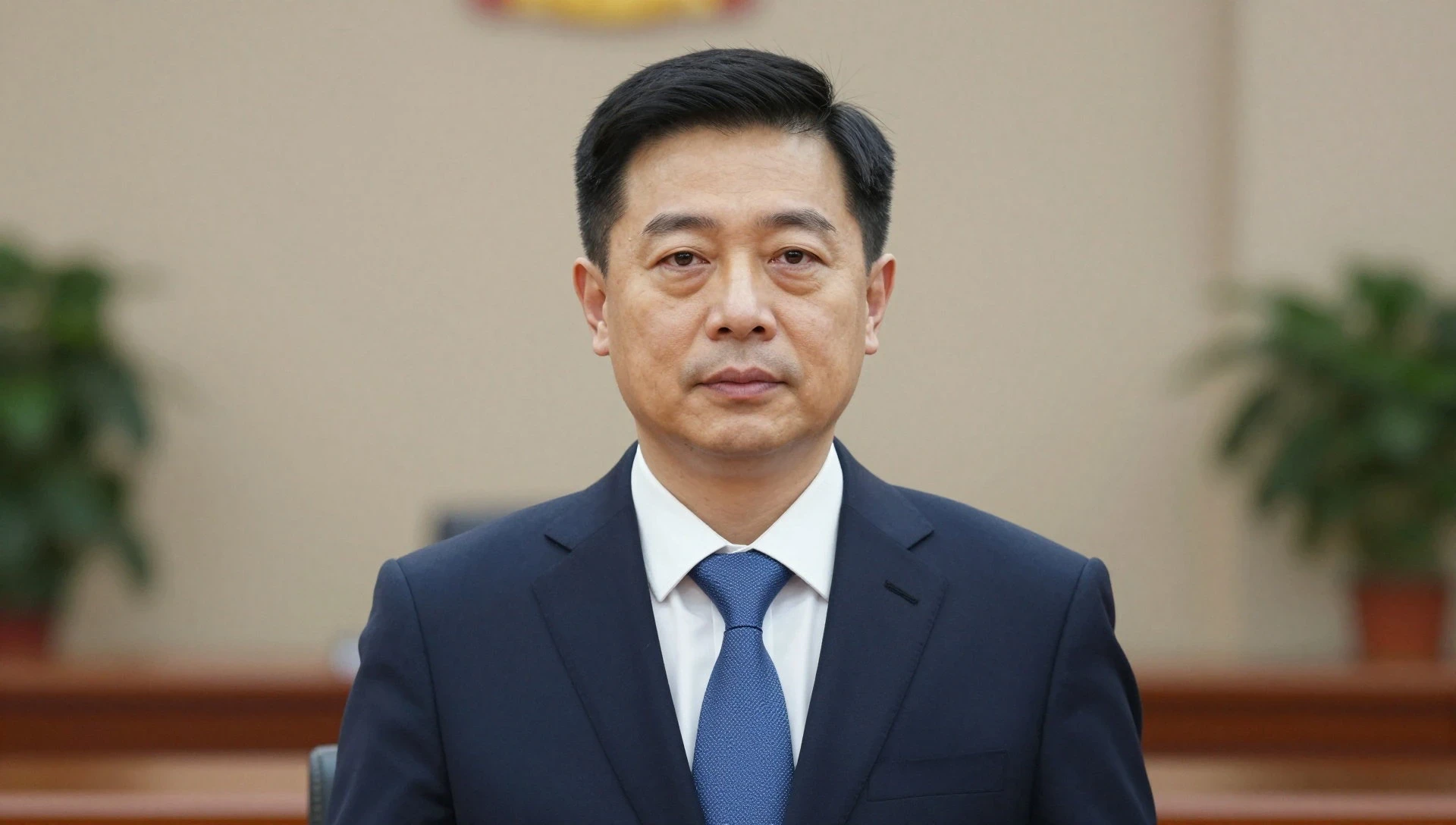
Liu Yandong's death at 80 closes a career that illustrates, with unusual clarity, how the People's Republic of China converts a thin demographic presence into a durable political instrument.
She belonged to a small cohort of women who reached the Politburo, the party's apex, and she did so without ever holding the general secretary's chair or commanding a military region.
Her significance therefore lies less in any single office than in the structural function she performed across four decades of party life.
On This Page
The New York Times reported the death on 31 October 2026 without disclosing cause, location, or family details, a reticence consistent with how Beijing handles the passing of senior figures. That reporting gap is itself informative.
For a figure who sat on the Politburo from 2007 to 2017 and served as a vice premier, the absence of granular detail signals the controlled information environment surrounding elite biographies.
Reading her record requires attention to ratios rather than anecdotes. Women have never exceeded roughly one in twenty of full Politburo members, and Liu was frequently the only woman in the room at the Standing Committee's outer ring.
This analysis examines what her trajectory reveals about gender quotas, factional balance, and the institutional machinery that produced her.
TL;DR Liu Yandong (1945–2026) was among the very few women to enter China's top political leadership, serving on the Politburo from 2007 to 2017 and as vice premier from 2013 to 2018. Her career demonstrates how the Communist Party uses carefully selected female cadres to project modernity while preserving male dominance of decision-making bodies. Her death, reported by The New York Times on 31 October 2026, invites a structural reading of elite recruitment rather than a purely biographical one.
The Architecture of Female Representation in Chinese Elite Politics
China's top leadership is not formally closed to women, yet the arithmetic of representation is stark. Across the twenty-four full members of the 19th Politburo, exactly one was female. The 20th Politburo, constituted in 2022, retained a single woman. Liu Yandong's tenure belongs to this pattern of token presence rather than parity.
Counting the Seats: Women in the Politburo Standing Committee
No woman has ever sat on the Politburo Standing Committee, the seven-member body that effectively governs the country. This is the single most consequential fact about Chinese gender politics at the elite level. Liu's ceiling, the full Politburo, was itself a rarity achieved by only a handful of women since 1949.
The historical roster is short enough to enumerate. Deng Yingchao, wife of Zhou Enlai, served on the Politburo. Jiang Qing, Mao's wife, held Politburo membership during the Cultural Revolution. Wu Yi, the trade negotiator, entered the Politburo in 2002. Liu Yandong followed in 2007, and Sun Chunlan succeeded her in 2017.
That sequence yields roughly five women across seven decades of full Politburo membership. Against hundreds of male members in the same period, the ratio sits below two percent. Any claim that the system has opened structurally to women must contend with these figures rather than with individual exceptions.
The Standing Committee's composition reinforces the point. Its membership has ranged from five to nine since 1949, and every seat has gone to a man. The body's decisions on economic policy, security, and personnel are therefore made without female participation at the decisive tier.
The Vice Premiership as a Gendered Portfolio
Liu served as one of four vice premiers from 2013 to 2018, overseeing education, health, science, and culture. This portfolio assignment is not neutral. Female vice premiers in China have consistently been routed toward social policy rather than finance, defence, or industry.
Wu Yi's career offers the instructive contrast. She handled trade negotiations and health emergencies, yet never received the macroeconomic brief. The pattern suggests a division of labour in which women manage welfare delivery while men control capital allocation and coercive capacity.
Liu's education brief carried real budgetary weight. China's education spending crossed four percent of GDP during her tenure, a threshold long promised and finally met. She also steered the rollout of rural healthcare insurance expansion, programmes with measurable output but limited fiscal authority.
The distinction matters analytically. Social portfolios generate visible deliverables and international goodwill, yet they sit downstream of the Standing Committee's fiscal decisions. Influence over outcomes is therefore indirect, mediated by budget ceilings set elsewhere.
Recruitment Filters and the Cadre Pipeline
Female cadres enter the party pipeline at roughly thirty percent of new recruits, a figure that collapses at each promotion tier. The attrition is steepest between provincial and central levels, where the pool of eligible women narrows to a handful of names.
Liu's own path ran through the Communist Youth League, a classic springboard for elite careers. Her Tsinghua University chemistry training and subsequent party school credentials fit the technocratic template that dominated post-1990 recruitment. Gender was a filter she passed, not a ladder she climbed.
Scholars of Chinese elite politics describe a "princess party" phenomenon in which revolutionary lineage confers advantage. Liu's background was not aristocratic in that sense, which makes her ascent more dependent on patronage networks and institutional loyalty than on inherited standing.
The pipeline's shape has consequences. When the eligible female pool is small, the women who reach the top tend to be exceptionally cautious, since any misstep removes the only female seat available. Risk aversion becomes a structural trait rather than a personal one.
We Also Published
Reading the Silence: What the Obituary Does Not Say
The New York Times report is brief, and its brevity is analytically meaningful. No cause of death, no funeral arrangements, no family survivors, and no retrospective assessment of policy legacy appear in the initial dispatch. Chinese state media coverage followed a similarly restrained template.
Information Control Around Elite Deaths
Beijing maintains a graduated protocol for announcing the deaths of senior officials. Standing Committee members receive elaborate obituaries and public mourning. Politburo members receive shorter notices, and vice premiers often receive a single-line dispatch from Xinhua.
This hierarchy of mourning functions as a status signal. The length of an obituary, the rank of attending officials, and the wording of the honorific all communicate the deceased's standing within the system. Liu's treatment will be read by China watchers as a data point about her factional alignment.
Foreign correspondents face additional constraints. Access to official biographies, hospital records, and family statements is tightly managed. The Times dispatch therefore reflects what was verifiable at publication rather than what was known, a distinction worth preserving in any assessment.
Comparisons with Western obituary practice are instructive. American newspapers routinely publish detailed accounts of cause, family, and contested legacy within hours. The Chinese system produces a controlled minimum, and analysts must infer the rest from protocol and precedent.
Gender as a Signal in Party Communications
Official Chinese biographies of female leaders consistently foreground diligence, modesty, and service rather than strategic acumen. Liu's published profile emphasised her scientific training and her work on rural education, framing her as a capable administrator rather than a political heavyweight.
This framing serves a dual purpose. It projects modernity to international audiences, demonstrating that women can reach senior office. Simultaneously, it reassures conservative constituencies that female advancement does not threaten male control of the security and economic apparatus.
The result is a communication strategy that treats female leaders as evidence of institutional openness while leaving the distribution of power unchanged. Liu's career functioned within this logic, and her obituary will likely reproduce it.
Comparative data sharpen the point. Rwanda's parliament is over sixty percent female by constitutional design. China's Politburo sits near four percent without any quota mechanism at the apex. The gap illustrates how formal commitments to gender equality can coexist with entrenched male monopoly.
Legacy, Succession, and the Future of Female Advancement
Liu Yandong's departure from the political stage in 2018, and her death in 2026, bracket a period in which female representation at the apex neither expanded nor contracted. Sun Chunlan's Politburo tenure continued the single-seat pattern. The 20th Politburo maintained it.
Policy Footprints in Education and Health
Her most measurable legacy lies in education finance. Public spending on education rose from roughly 3.3 percent of GDP in 2012 to above 4 percent by 2015, a shift partly attributable to vice-premier advocacy. Rural school consolidation and teacher subsidy programmes also advanced under her brief.
Health policy produced similar gains. The rural cooperative medical scheme expanded coverage to more than 95 percent of the rural population during the 2010s. Liu's coordination role across ministries was instrumental in aligning provincial implementation with central targets.
These achievements carry a caveat. Social spending increases depend on revenue growth, and China's fiscal position has tightened since 2020. The durability of Liu-era commitments will be tested by provincial budget constraints and demographic pressure from an ageing population.
Assessment of her legacy therefore requires separating programme design from fiscal sustainability. The institutional architecture she helped build is real; whether it survives the next decade of slower growth is a separate question with its own arithmetic.
Why the Female Ceiling Has Not Moved
The structural explanation rests on three factors. First, the promotion pipeline filters women out at provincial level, where governorships and party secretary roles serve as prerequisites for central advancement. Second, patronage networks form in male-dominated settings such as military regions and state enterprises.
Third, the Standing Committee's consensus model rewards long tenure in security and economic portfolios, precisely the briefs rarely assigned to women. The combination produces a ceiling that individual talent cannot breach without systemic change to portfolio allocation.
Reform proposals circulate within Chinese academic circles, including targets for female provincial governors and expanded alternate membership. None has been adopted at the apex. The political cost of altering the Standing Committee's composition appears, for now, higher than the reputational benefit.
Liu's career thus stands as both an achievement and a diagnostic. It demonstrates that the system can produce a female vice premier, and it demonstrates with equal clarity that the system has no mechanism for producing a second, third, or fourth simultaneously.
What Her Death Means for the Next Generation
For younger female cadres, Liu's career offers a template with a visible ceiling. The path through the Youth League, a technical degree, and social policy portfolios can reach the Politburo. It has not yet reached the Standing Committee, and no successor has been publicly groomed.
The absence of a designated female heir is itself a finding. Succession in Chinese elite politics is negotiated through factional balance, and the female seat appears to be allocated only when coalition arithmetic requires it. When it does not, the seat remains empty.
International observers should resist reading Liu's death as a turning point. It is better understood as a data point confirming continuity. The structures that produced her, and that limited her, remain intact and are unlikely to change without a deliberate revision of promotion criteria.
Her legacy will be measured in two ledgers. The first records education and health spending that improved millions of lives. The second records a political system that still treats female leadership as an exception to be managed rather than a norm to be institutionalised.
Frequently Asked Questions
Readers encountering Liu Yandong's name for the first time often ask what distinguished her from other senior officials and why her death attracted international coverage. The answers lie in the intersection of gender, institutional position, and the information politics surrounding elite biographies.
Who Was Liu Yandong?
Liu Yandong was a Chinese Communist Party official born in 1945 who rose to the Politburo and served as vice premier from 2013 to 2018. She was one of very few women ever to hold full Politburo membership and the only woman on that body during her tenure.
Why Is Her Gender Significant?
Because the Politburo Standing Committee has never included a woman, and full Politburo membership has gone to roughly five women in seven decades. Her presence was statistically exceptional and structurally revealing about how the party allocates senior office.
What Did She Oversee as Vice Premier?
Her portfolio covered education, health, science, culture, and sports. Education spending crossed four percent of GDP during her tenure, and rural medical insurance coverage expanded substantially. These are measurable outputs, though fiscal authority remained with the Standing Committee.
How Was Her Death Reported?
The New York Times reported the death on 31 October 2026, noting her age and political standing without disclosing cause, location, or family details. Chinese state media followed a restrained protocol consistent with her rank.
From our network :
- How AI Agents Will Change the Way We Manage Personal FinancesExplore how AI agents are transforming personal finance through automated budgeting, bill payment, and investment management, while examining the critical security protocols and governance frameworks required for safe deployment.
- Live Online English Classes for Kids: Do They Actually Reduce Anxiety?A ten-week study reveals that synchronous online English classes can significantly reduce child language anxiety while improving listening and reading skills. Discover what makes these programs effective and how parents can select the right one.
- Mobile Learning and VR in English: What Global Evidence Reveals About Effective Language TechnologyA systematic review across 14 countries reveals which language-learning technologies genuinely work. Mobile learning, AI, and VR show measurable benefits when pedagogically integrated. This evidence-based guide helps educators and learners select technology that delivers real return on investment.
- University Language Proficiency Exams: Why Institutional Tests Demand Different Preparation Than IELTS and TOEFLDiscover why university-specific language proficiency examinations differ fundamentally from IELTS and TOEFL, and learn strategic preparation approaches for institutional assessment success.
- The Final Descent: How ESA Retired the Legendary Cluster Constellation After 24 Years of Space Weather ScienceAfter 24 years mapping Earth’s magnetosphere, ESA’s Cluster mission concluded with a precisely controlled reentry over the South Pacific. This analysis explores the scientific legacy, engineering decisions, and debris mitigation principles behind one of space exploration’s most responsible retirements.
- CISA’s Ten-Advisory Wave: Why Generic Patching Fails in OT and How to Build Product-Specific PlaybooksCISA released ten ICS advisories in one week, exposing critical infrastructure risks. Generic patching fails in OT. Learn to build product-specific remediation playbooks.
- Committed Mediterranean Precipitation Decline: Why Emissions Cuts Alone Cannot Restore Winter RainsNew NOAA research reveals that Mediterranean winter rains may decline irreversibly even with emissions cuts. Explore the science of committed climate change and regional impacts.
- Forbidden Matrix Patterns and Visible Lattice Points: A Geometric DictionaryExplore how multidimensional 0–1 matrices encode geometric truths, linking forbidden patterns to visible lattice points and hypergraph theory, with applications in combinatorics and computational geometry.
- The Hidden Cost of AI Convenience: Why Over-Permissioned Agents Are a Security Time BombDiscover why AI agents with excessive permissions create dangerous single points of failure, and learn how implementing least privilege principles can protect your organization from exploitation.
RESOURCES
- Status of China's women leaders on the eve of 19th Party Congressbrookings.eduMar 30, 2017 ... Cheng Li writes that at a time when male-dominance in political leadership is being challenged in many parts of the…
- Woman could break Chinese political glass ceiling - CNNcnn.comNov 8, 2012 ... “If Liu Yandong is appointed to the Politburo Standing Committee, it would be a milestone for female political representation in…
- Assessing institutional rules in China's elite selection: The case of ...brookings.eduApr 19, 2017 ... China's Vice Premier and head of the Beijing 2022 delegation Liu Yandong waves as she is ... representation in China's…
- Women fail to crack China's glass ceiling as party picks new leadersreuters.comOct 25, 2017 ... Yet one group is chronically under-represented among the political elite: women. Advertisement · Scroll to continue. The founding father of ...
- China and the Pivotal 18th Party Congress: Problems and Prospectscarnegieendowment.orgOct 18, 2012 ... Regarding who might ascend to the Standing Committee, Fewsmith said that the sole female Politburo member Liu Yandong is likely…
- Women and Girls - Page 5 - The New York Timesnytimes.comLiu Yandong, Rare Woman Among China's Political Elite, Dies at 80. The former vice premier was one of just six women to have served…
- The Communist Party of China — Where Are the Women?thechinastory.orgMar 8, 2023 ... The systemic underrepresentation of women in China's elite politics ... Liu Yandong 刘延东 (2007–2017) and Sun Chunlan 孙春兰 (2012–2022) ...
- Where are the powerful Chinese women? - BBC Newsbbc.comOct 26, 2012 ... In 1975, China ranked 12th in global rankings measuring female political ... The promotion of Liu Yandong to the highest…
- WOMEN IN CHINESE POLITICS AFTER THE 20TH PARTY ...orcasia.orgThe systemic underrepresentation of women in China's elite politics has been further entrenched in the 20th Party Congress ... Liu Yandong and “Iron Lady”…
- China's Liu Yandong carries the hopes – and fears - The Guardiantheguardian.comOct 16, 2012 ... Yet in Chinese politics women remain a glaring absence. The annual ... Feminists say better representation is crucial to addressing…
- China's Communist Party remains a boys' clubscmp.comNov 12, 2012 ... Liu Yandong, the only woman in the 25-member Politburo. Photo: AFP ... Analysts attribute women's lower representation to traditional Chinese ...
- Obamacare Dealt Yet Another Blow as Premiums Jump Againmessaging-custom-newsletters.nytimes.com2 days ago ... The premier's comments represent a major change in British policy ... Liu Yandong, Rare Woman Among China's Political Elite, Dies…
- Liu Yandong, China's former vice premier and a former member of ...instagram.com5 days ago ... Liu Yandong, China's former vice premier and a former member of the elite Politburo, died in Beijing on Wednesday, state-run…
- Where Are All the Women in China's Anticorruption Campaign?cfr.orgFeb 9, 2016 ... ... Chinese government is Vice Premier Liu ... Chinese People's Political Consultative Conference, China's two top representative bodies.
- China's new leadership and Tibetsavetibet.orgNov 16, 2012 ... But Liu Yandong, the most senior female politician in China ... China's political elite. While the upper strata of the…
- 01
- 02
- 03
- 04
- 05
- 06
- 07
- 08
0 Comments