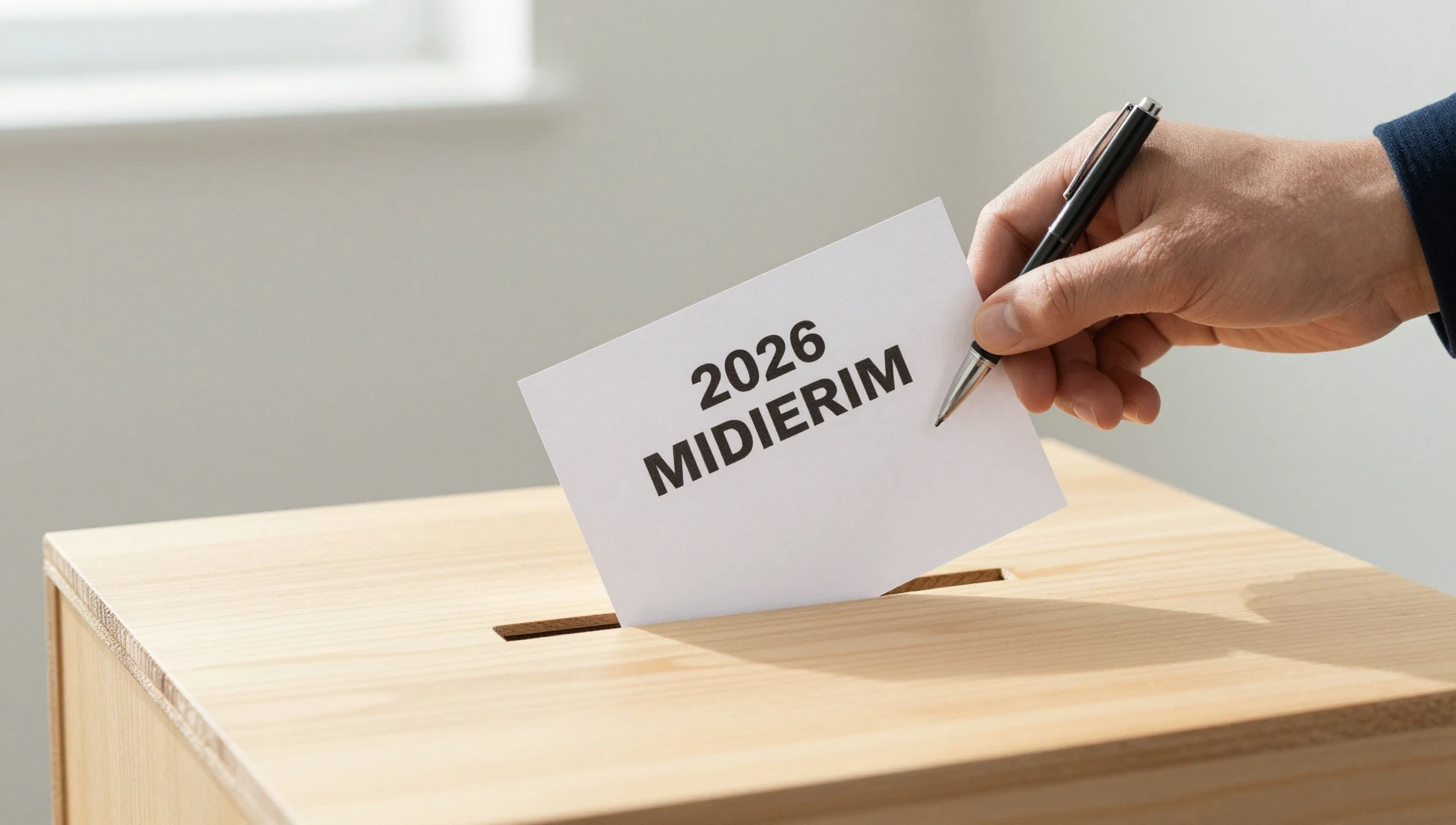
Public radio's voter-guide infrastructure represents one of the least examined but most consequential civic assets in American media. As the November 3, 2026 midterm elections approach, NPR member stations across the United States have assembled localized voter guides covering state and local races, Senate and gubernatorial contests, and ballot measures addressing abortion, LGBTQ+ rights, and taxes on billionaires.
The effort is coordinated nationally but executed locally, with each station tailoring its guide to the districts, candidates, and questions its audience will actually encounter at the ballot box.
The scale of this undertaking matters because it fills a gap that commercial media has largely abandoned. Local newspapers have contracted sharply over the past two decades, and broadcast consolidation has thinned out regional political coverage.
On This Page
Public radio stations, funded through a mix of member contributions, corporate sponsorships, and the Corporation for Public Broadcasting, have retained local newsrooms in many markets where no comparable institution survives. Their voter guides are therefore not supplementary material but, in numerous communities, the primary structured source of down-ballot information.
What distinguishes these guides is their practical orientation. They explain how and where to vote, decode the mechanics of local races that rarely attract national attention, and draw on reporting from the communities themselves.
Several stations publish Spanish-language editions, and others produce region-specific resources for places such as Maricopa County in Arizona, Southern Colorado, the Tampa area, and South Florida. The result is a distributed civic reference library rather than a single national product.
TL;DR Ahead of the November 3, 2026 midterm elections, NPR member stations across the United States are publishing localized voter guides covering state and local races, Senate and governor contests, and ballot measures on abortion, LGBTQ+ rights, and billionaire taxes. The guides explain how and where to vote, decode down-ballot contests, and appear in multiple languages and regional editions, from KQED in California and LAist in Los Angeles to WBEZ in Illinois and WABE in Georgia. They constitute a decentralized civic infrastructure that substitutes for thinning commercial local coverage.
The Architecture of Localized Voter Information
The defining feature of the 2026 public radio effort is decentralization executed under a shared editorial standard. NPR member stations operate as independent licensees, each with its own newsroom, editorial leadership, and community obligations.
A national directive to produce voter guides therefore translates into dozens of distinct products, shaped by the races and ballot questions that matter in each state and metropolitan area. This structure produces variation in format but consistency in purpose.
From National Coordination to Station-Level Execution
National coordination supplies the framework: shared timelines, editorial guidance, and a common commitment to nonpartisan presentation. Station-level execution supplies the substance. KQED produces a statewide California guide, while LAist publishes its Voter Game Plan for Los Angeles County voters. WBEZ partners with the Chicago Sun-Times for Illinois coverage, and WABE handles Georgia. Each outlet adapts the template to its own market.
This division of labor has practical consequences. A voter in Los Angeles and a voter in Atlanta receive guides built on the same principles but populated with entirely different candidates, measures, and procedural instructions.
The model assumes that civic information is inherently local and that national templates alone cannot substitute for knowledge of a specific county's polling places or a specific state's ballot language.
Coverage Scope: Races, Measures, and Down-Ballot Contests
The guides extend well beyond the marquee Senate and gubernatorial races. They address state legislative contests, county offices, judicial retention questions, and municipal measures that typically receive scant attention.
Ballot measures on abortion access, LGBTQ+ rights, and taxes on billionaires feature prominently, reflecting the substantive policy questions voters will decide directly rather than through representatives.
Down-ballot coverage carries particular civic weight. Research on voter behavior consistently shows that voters skip contests lower on the ballot when they lack information. By explaining local races in plain terms and situating them within community reporting, the guides reduce the information cost of completing a full ballot. That effect compounds across thousands of individual voting decisions.
Language Access and Regional Editions
Language accessibility distinguishes several of the 2026 guides. Some stations publish Spanish-language editions, extending the information to voters who might otherwise rely on informal translation or abstain. Regional editions further refine the approach, with dedicated resources for Maricopa County in Arizona, Southern Colorado, the Tampa area, and South Florida, each shaped by distinct demographics and electoral histories.
Alabama Public Radio, Alaska Public Media, and Hawaiʻi Public Radio illustrate the geographic breadth of participation. These stations serve audiences far from the largest metropolitan markets, where commercial local news is often thinnest.
Their inclusion confirms that the effort is national in reach while remaining attentive to the specific informational needs of sparsely covered regions.
Why Localized Guides Matter in a Fragmented Media Market
The 2026 guides arrive at a moment of structural stress for local political information. Newspaper employment in the United States has fallen by more than half since 2008, and the number of counties classified as news deserts continues to grow.
When commercial outlets retreat, the informational burden shifts to public institutions and nonprofit newsrooms, which operate under different incentives and different constraints.
The Local News Deficit and Its Electoral Consequences
Scholarship on local news and civic participation has documented a consistent relationship between the presence of local political coverage and voter knowledge, turnout, and split-ticket voting. Communities without dedicated local reporting tend to see greater reliance on national narratives, which rarely address county offices or municipal ballot measures. Public radio guides respond directly to that deficit.
The mechanism is straightforward. Voters who encounter clear, nonpartisan explanations of a down-ballot race are more likely to cast a vote in it. The guides lower the cost of acquiring that information by consolidating candidate backgrounds, ballot language, and procedural details into a single accessible resource. The effect is modest per voter but substantial in aggregate.
Nonpartisan Positioning and Editorial Trust
Public radio's credibility depends on visible nonpartisanship, and the voter guides are designed to preserve it. They present candidate information and ballot measure explanations without endorsements, leaving judgments to readers.
This positioning distinguishes the guides from partisan voter guides distributed by campaigns and advocacy organizations, which typically frame races and measures to favor particular outcomes.
Trust in media has declined across most segments of the American public, but public broadcasting has generally retained higher confidence ratings than commercial television and online news sources. That residual trust gives the guides an audience reach that newer civic-tech platforms struggle to match. The guides leverage an existing relationship between station and listener rather than building one from scratch.
Multilingual Reach and Underrepresented Communities
Spanish-language editions address a practical barrier that English-only guides cannot overcome. Roughly one in eight U.S. residents speaks Spanish at home, and naturalized citizens in Spanish-speaking households are a growing share of the electorate.
Providing ballot information in the language voters use daily reduces the risk that language gaps translate into abstention on complex measures.
Regional editions for Maricopa County, Southern Colorado, the Tampa area, and South Florida reflect similar attention to local demographics. These are places where population growth, migration patterns, and competitive electoral margins converge. Tailoring guides to those conditions acknowledges that a single statewide document cannot serve every community equally well.
We Also Published
Operational Realities and the Road to November 3
Producing dozens of localized guides within a single election cycle imposes real operational demands. Newsrooms must track filing deadlines, verify candidate information, translate ballot language into accessible prose, and update content as races shift. The work is unglamorous and largely invisible, but it determines whether the guides remain accurate through Election Day.
Editorial Workflows and Verification Standards
Verification is the central editorial challenge. Ballot measure language is often dense and legally technical, requiring careful paraphrase without distortion. Candidate biographical information must be checked against official filings. Stations typically assign dedicated editors to the guides and coordinate with national desk resources for consistency, though final responsibility rests locally.
The distributed model creates both resilience and risk. A station with a strong local newsroom can produce a thorough guide; a smaller station with limited staff may offer a leaner version.
The variation is visible in the depth of coverage across states, but the shared commitment to accuracy and nonpartisanship holds the network together.
Distribution Channels and Audience Reach
Distribution extends beyond the station website. Guides are promoted through broadcast segments, newsletters, social channels, and community partnerships with libraries and civic organizations. Some stations coordinate with local election officials to ensure procedural details match official guidance. The multiplatform approach reflects the reality that voters encounter information through many channels.
Reach estimates remain imprecise, but public radio's combined audience across broadcast and digital platforms is substantial. A single station's guide may reach tens of thousands of readers in a competitive market. Aggregated across the network, the guides constitute one of the largest coordinated civic information efforts of the 2026 cycle.
What the Guides Signal About Civic Infrastructure
The 2026 voter guides illustrate a broader pattern: civic information is increasingly produced by mission-driven institutions rather than market-driven ones. Public radio occupies a middle ground, sustained by listener support and public funding while operating with editorial independence. Its voter guides are a practical expression of that model's purpose.
Whether the guides measurably increase turnout or ballot completion is difficult to establish without controlled study. But the infrastructure itself carries value. A functioning democracy requires accessible, trustworthy information about candidates and measures, and the public radio network has built a durable mechanism for supplying it, election after election.
Reading the Guides as a Civic Signal
Beyond their immediate utility, the 2026 voter guides reveal how public media conceives of its role. The investment in local races, ballot measures, and language access reflects a judgment that democracy operates at the granular level of county offices and municipal questions. National coverage, however extensive, cannot substitute for that granular knowledge.
Accountability and the Limits of the Model
The model has limits. Station budgets vary widely, and guide quality tracks newsroom capacity. Some communities receive richly detailed resources; others receive basic information. The network's decentralized structure, which enables local responsiveness, also produces unevenness that a centrally produced guide would avoid. Acknowledging that trade-off is essential to honest assessment.
Accountability mechanisms remain informal. Stations answer to their listeners and to editorial standards rather than to a single regulator. Errors are corrected through public processes, and updates are issued as races evolve.
The absence of formal oversight is a feature of the public media tradition, but it places responsibility squarely on individual newsrooms.
What Voters Should Expect Before Casting Ballots
Voters consulting the guides should expect practical orientation rather than persuasion. The documents explain ballot language, describe candidate backgrounds, and clarify procedural questions such as registration deadlines and polling locations. They do not endorse, and they generally avoid framing measures in terms that presuppose an outcome. That restraint is central to their credibility.
Readers should also verify details against official election authority sources, since deadlines and procedures can change. The guides function best as a starting point for informed participation, not as a substitute for the ballot itself. Used that way, they reduce the friction that keeps eligible voters from completing their ballots.
The Longer Arc of Public Media and Elections
Public radio's engagement with elections extends back decades, but the voter-guide format has matured alongside digital publishing. Earlier iterations were broadcast segments and printed pamphlets; contemporary versions are searchable, updatable, and shareable. The format's evolution mirrors broader changes in how citizens find and verify information before voting.
The 2026 cycle will test whether that infrastructure can sustain attention through a crowded news environment. If the guides succeed, they will have demonstrated that local, nonpartisan civic information remains viable even as commercial models falter. That outcome would carry implications well beyond a single election cycle.
From our network :
- The Final Descent: How ESA Retired the Legendary Cluster Constellation After 24 Years of Space Weather ScienceAfter 24 years mapping Earth’s magnetosphere, ESA’s Cluster mission concluded with a precisely controlled reentry over the South Pacific. This analysis explores the scientific legacy, engineering decisions, and debris mitigation principles behind one of space exploration’s most responsible retirements.
- Forbidden Matrix Patterns and Visible Lattice Points: A Geometric DictionaryExplore how multidimensional 0–1 matrices encode geometric truths, linking forbidden patterns to visible lattice points and hypergraph theory, with applications in combinatorics and computational geometry.
- CISA’s Ten-Advisory Wave: Why Generic Patching Fails in OT and How to Build Product-Specific PlaybooksCISA released ten ICS advisories in one week, exposing critical infrastructure risks. Generic patching fails in OT. Learn to build product-specific remediation playbooks.
- Live Online English Classes for Kids: Do They Actually Reduce Anxiety?A ten-week study reveals that synchronous online English classes can significantly reduce child language anxiety while improving listening and reading skills. Discover what makes these programs effective and how parents can select the right one.
- The Hidden Cost of AI Convenience: Why Over-Permissioned Agents Are a Security Time BombDiscover why AI agents with excessive permissions create dangerous single points of failure, and learn how implementing least privilege principles can protect your organization from exploitation.
- Mobile Learning and VR in English: What Global Evidence Reveals About Effective Language TechnologyA systematic review across 14 countries reveals which language-learning technologies genuinely work. Mobile learning, AI, and VR show measurable benefits when pedagogically integrated. This evidence-based guide helps educators and learners select technology that delivers real return on investment.
- How AI Agents Will Change the Way We Manage Personal FinancesExplore how AI agents are transforming personal finance through automated budgeting, bill payment, and investment management, while examining the critical security protocols and governance frameworks required for safe deployment.
- University Language Proficiency Exams: Why Institutional Tests Demand Different Preparation Than IELTS and TOEFLDiscover why university-specific language proficiency examinations differ fundamentally from IELTS and TOEFL, and learn strategic preparation approaches for institutional assessment success.
- Committed Mediterranean Precipitation Decline: Why Emissions Cuts Alone Cannot Restore Winter RainsNew NOAA research reveals that Mediterranean winter rains may decline irreversibly even with emissions cuts. Explore the science of committed climate change and regional impacts.
RESOURCES
- 2026 midterm election voter guides from across the country - NPRnpr.org3 days ago ... NPR member stations are gathering information for voters — from voter guides down to local races. Scroll through to find…
- CPR News' voter guide to the 2026 midterm electioncpr.orgSep 24, 2026 ... Welcome to your Colorado Public Radio Voter Guide. The midterm election is Tuesday, Nov. 3, 2026, and ballots will be…
- WBEZ Chicago - WBEZ Chicagowbez.org2026 Illinois Midterm Elections Voter Guide. Be prepared for the midterms by ... © 2026 Chicago Public Media Inc. | Privacy Policy | Terms…
- Iowa voter guide: Candidates running in the 2026 electionsiowapublicradio.orgOct 15, 2026 ... Learn about the candidates running in the 2026 midterm elections, including in key races for Iowa governor, U.S. Senate and…
- Louisville's 2026 General Election Voter Guidelpm.orgOct 13, 2026 ... Kentucky Public Radio comprises four NPR member stations that together broadcast across the entire state: WKMS in Murray, WKU Public…
- WFYI's 2026 Voter Guidewfyi.orgCoverage of the 2026 general election from WFYI Public Media.
- 2026 California Voter Guide - CalMatterscalmatters.orgGet ready for California's 2026 election. This independent voter guide has everything you need to know to vote wisely.
- 2026 midterm election voter guides: Find local resources in ... - WNYCwnyc.org3 days ago ... NPR member stations are gathering information for voters — from voter guides down to local races. Scroll through to find…
- WAMU | American University Radiowamu.orgThe Politics Hour: What's at stake locally in the 2026 midterm elections ... D.C. 2026 Midterm Voter Guide. With longtime D.C. Delegate Eleanor Holmes ...
- 2026 midterm election voter guides: Find local resources in ... - WUWFwuwf.org3 days ago ... NPR member stations are gathering information for voters — from voter guides down to local races. Scroll through to find…
- 2026 midterm election voter guides: Find local resources in ... - WBURwbur.org2 days ago ... NPR member stations are gathering information for voters — from voter guides down to local races. Scroll through to find…
- 2026 Voter Guide: California, Bay Area and National Elections | KQEDkqed.orgShould state and local governments have the option to provide public funding for election campaigns? ... Should local tax measures placed on the ballot…
- Missouri voter guide: Amendments and propositions on November ...kcur.org6 days ago ... 21, 2026 ahead of the midterm election. Missouri Amendment 7 ... © 2026 Kansas City Public Radio. About KCUR ·…
- 2026 midterm election voter guides: Find local resources in ... - WEKUweku.org3 days ago ... NPR member stations are gathering information for voters — from voter guides down to local races. Scroll through to find…
- 2026 midterm election voter guides: Find local resources in ... - WKMSwkms.org3 days ago ... NPR member stations are gathering information for voters — from voter guides down to local races. Scroll through to find…
- 01
- 02
- 03
- 04
- 05
- 06
- 07
- 08
0 Comments